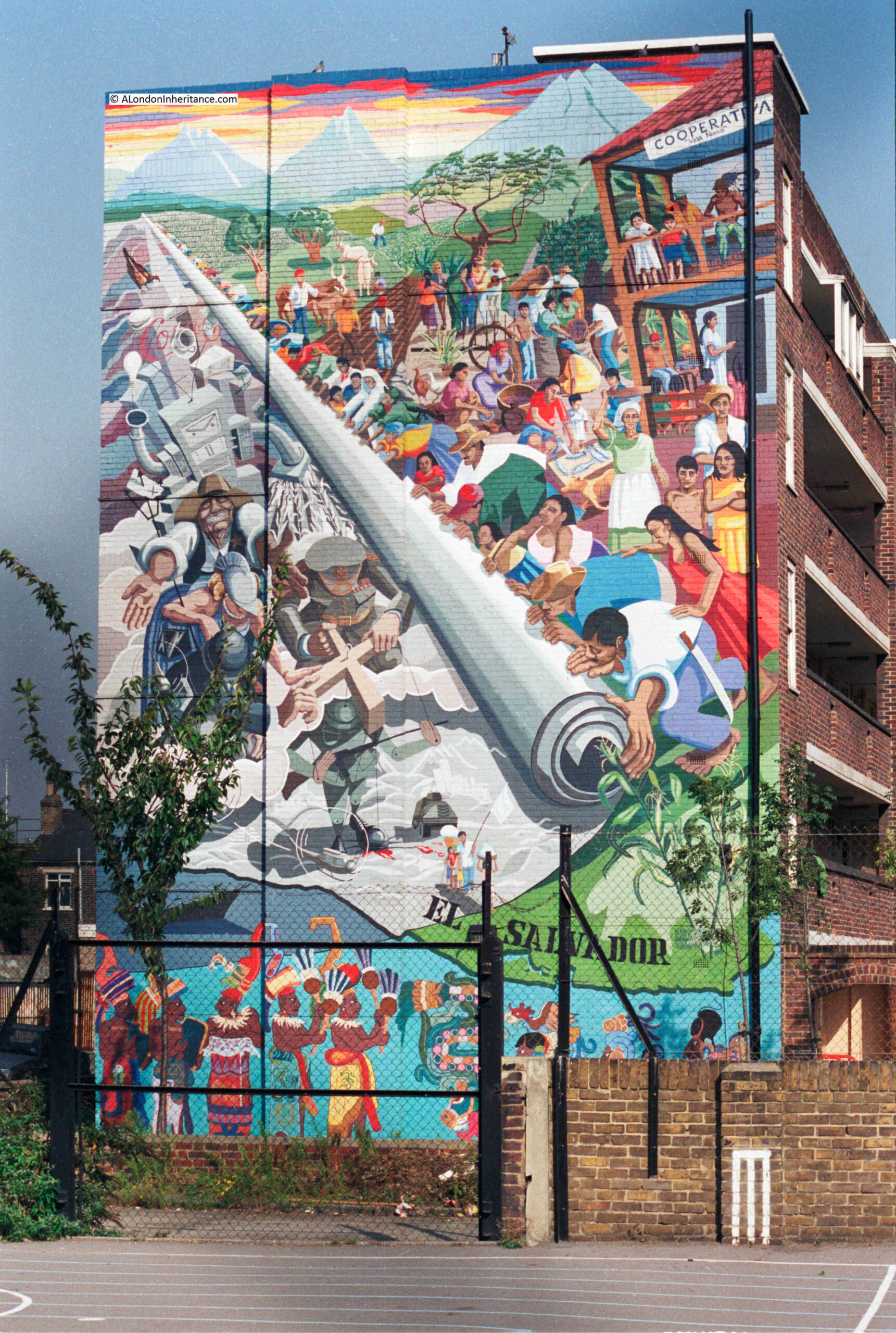
A couple of weeks ago, my post was about His and Hers Hairdressers in Middleton Road, Hackney. After finding the location of my father’s mid 1980s photo of the hairdresser, I continued on towards Newington Green, where one of the approach roads is Mildmay Road, and at the junction of Mildmay and Wolsey Roads, is the location of another of my father’s 1980s photos, this time of a rather wonderful mural:
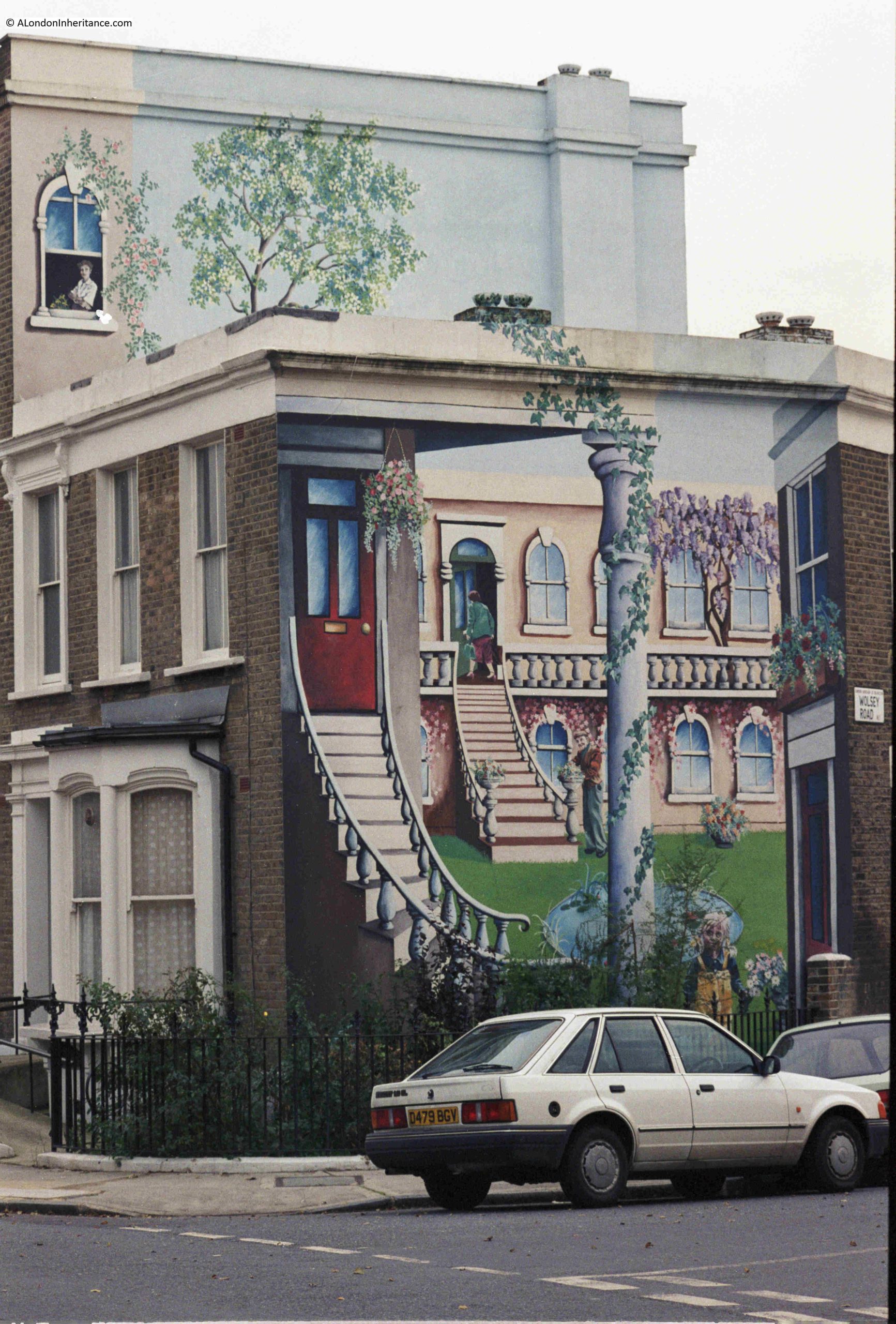
The mural is remarkable, not just for the subject, the colour and the detail, but also for the three dimensional affect the mural achieves, and that it extends not just along the end wall of the two storey house, but continues across to the third storey of the adjacent house.
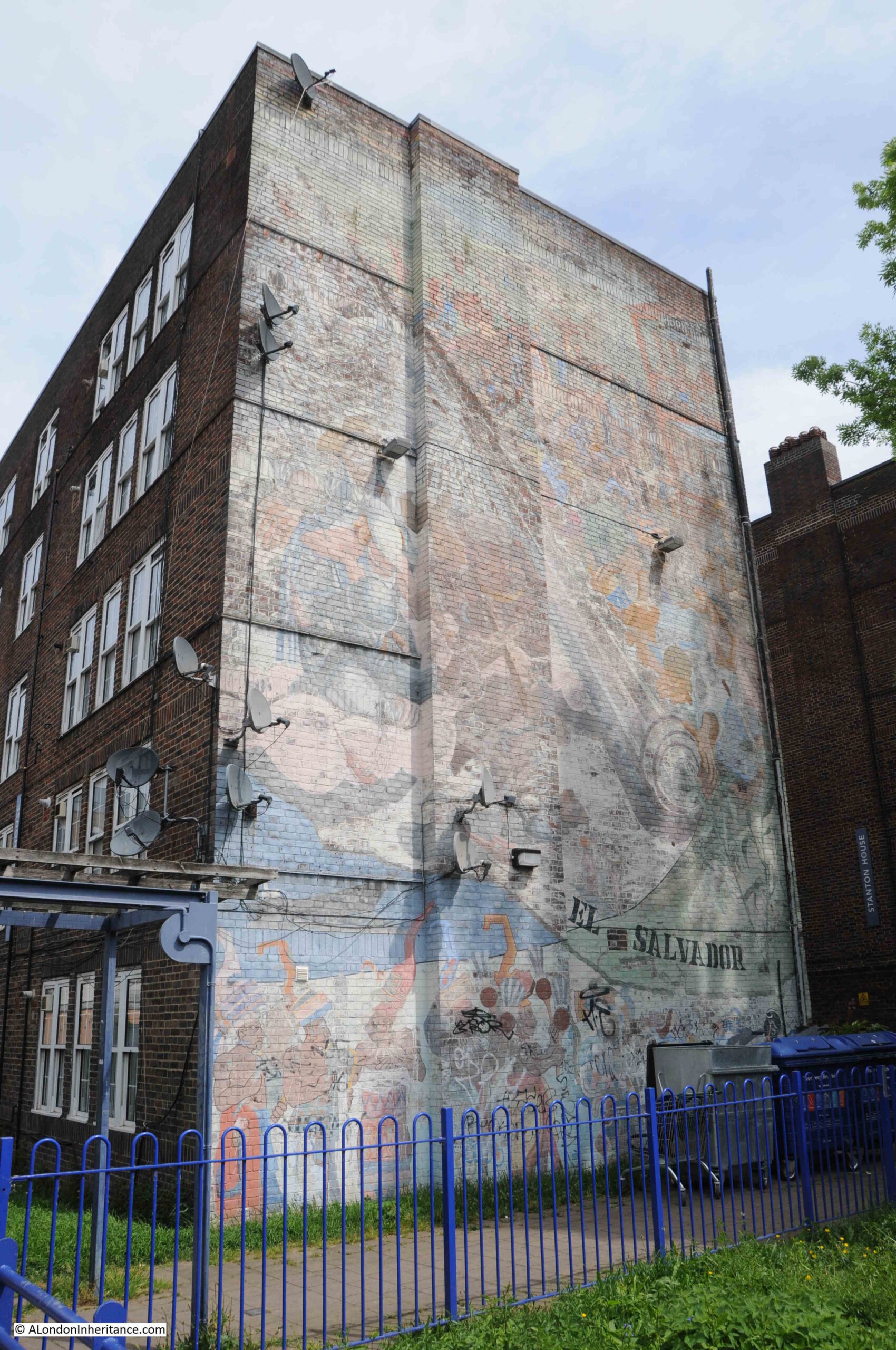
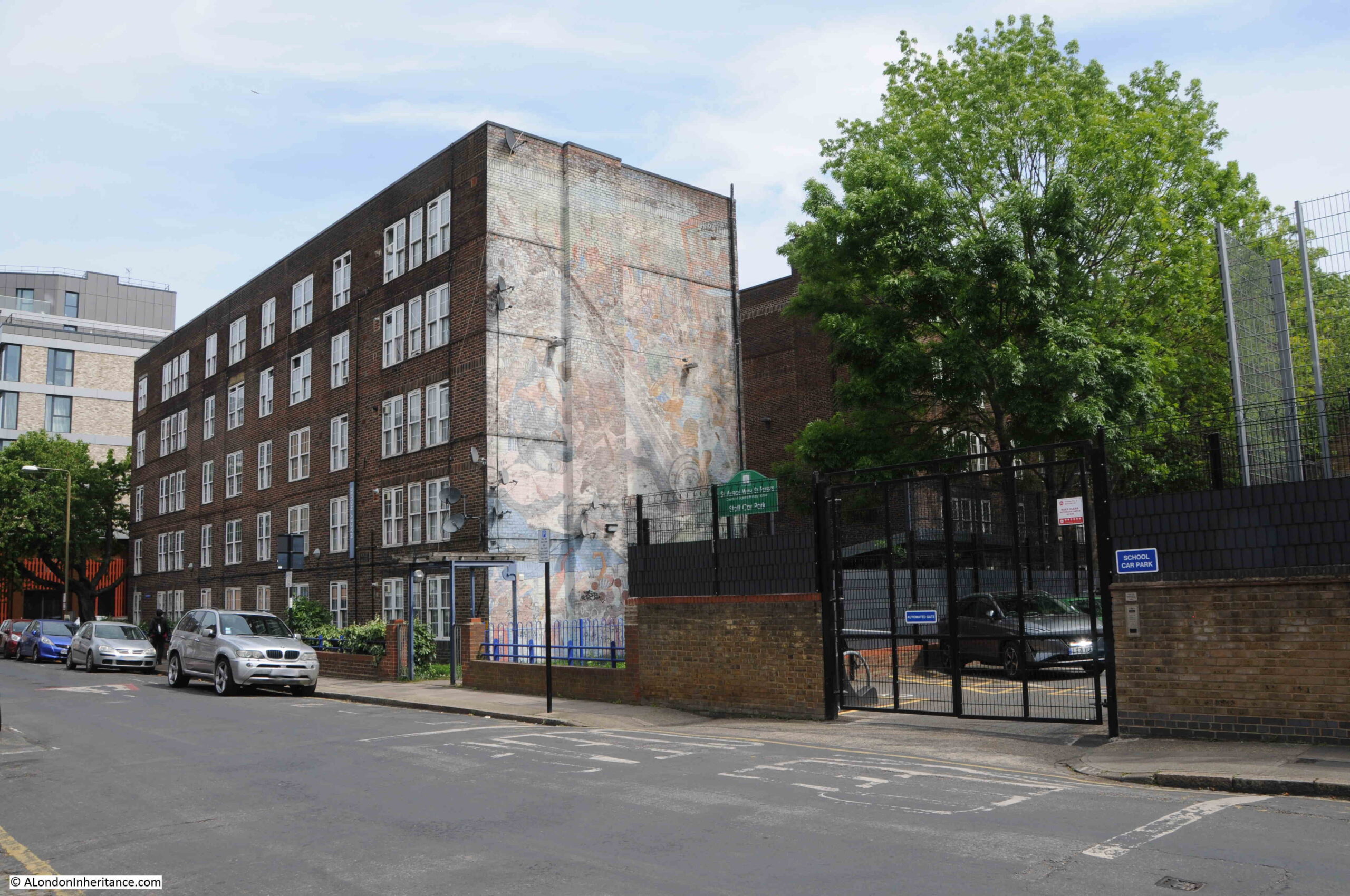
The forty years between the above photo and the mural today, have not been kind to this wonderful artwork, and in 2026 we see a very faded mural, with much of the colour and detail gradually disappearing:
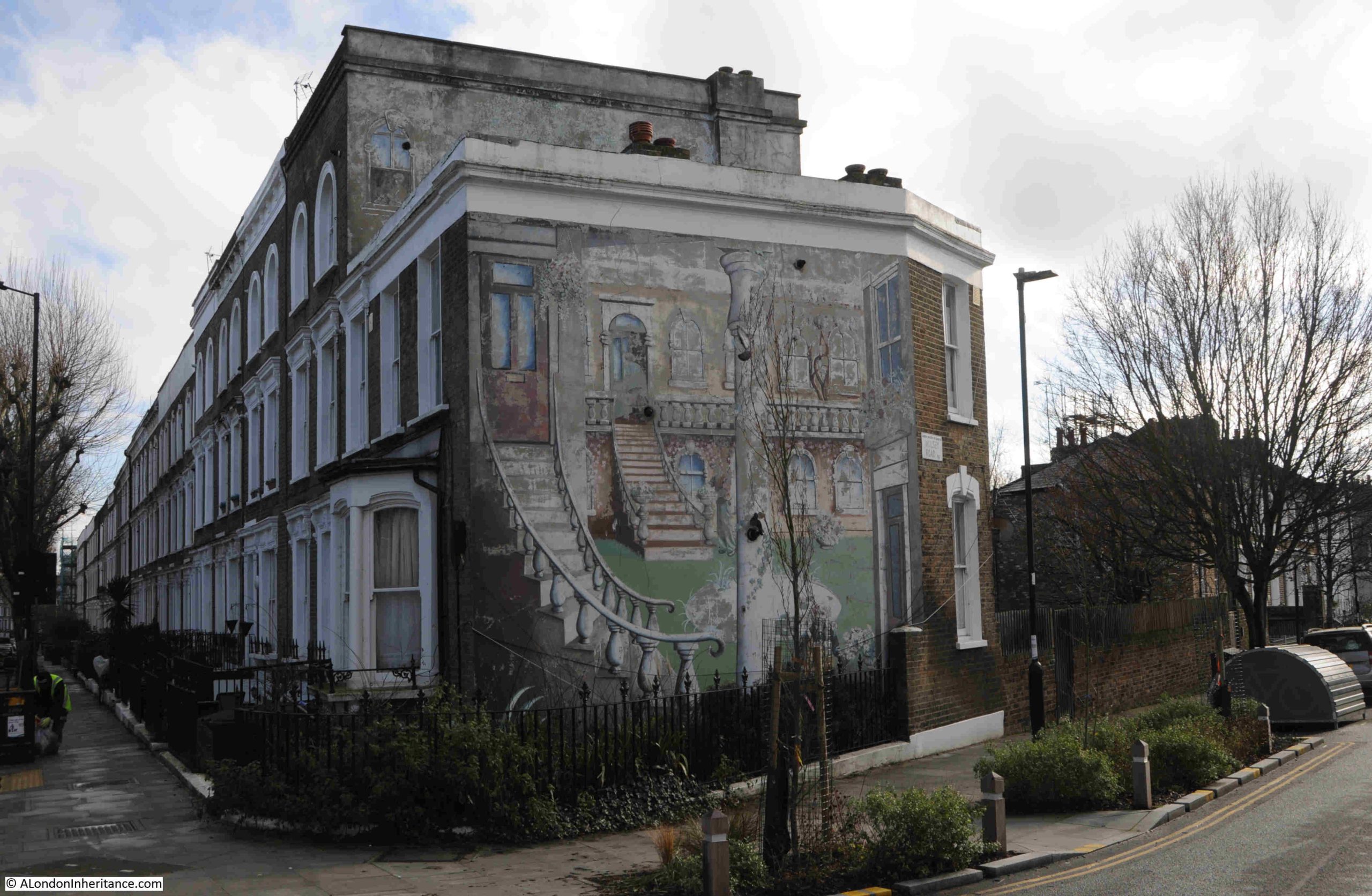
I cannot find any information as to the exact date of the mural, who created the work, and any meaning behind the image, and why on this particular building.
Comments with any information would be greatly received.
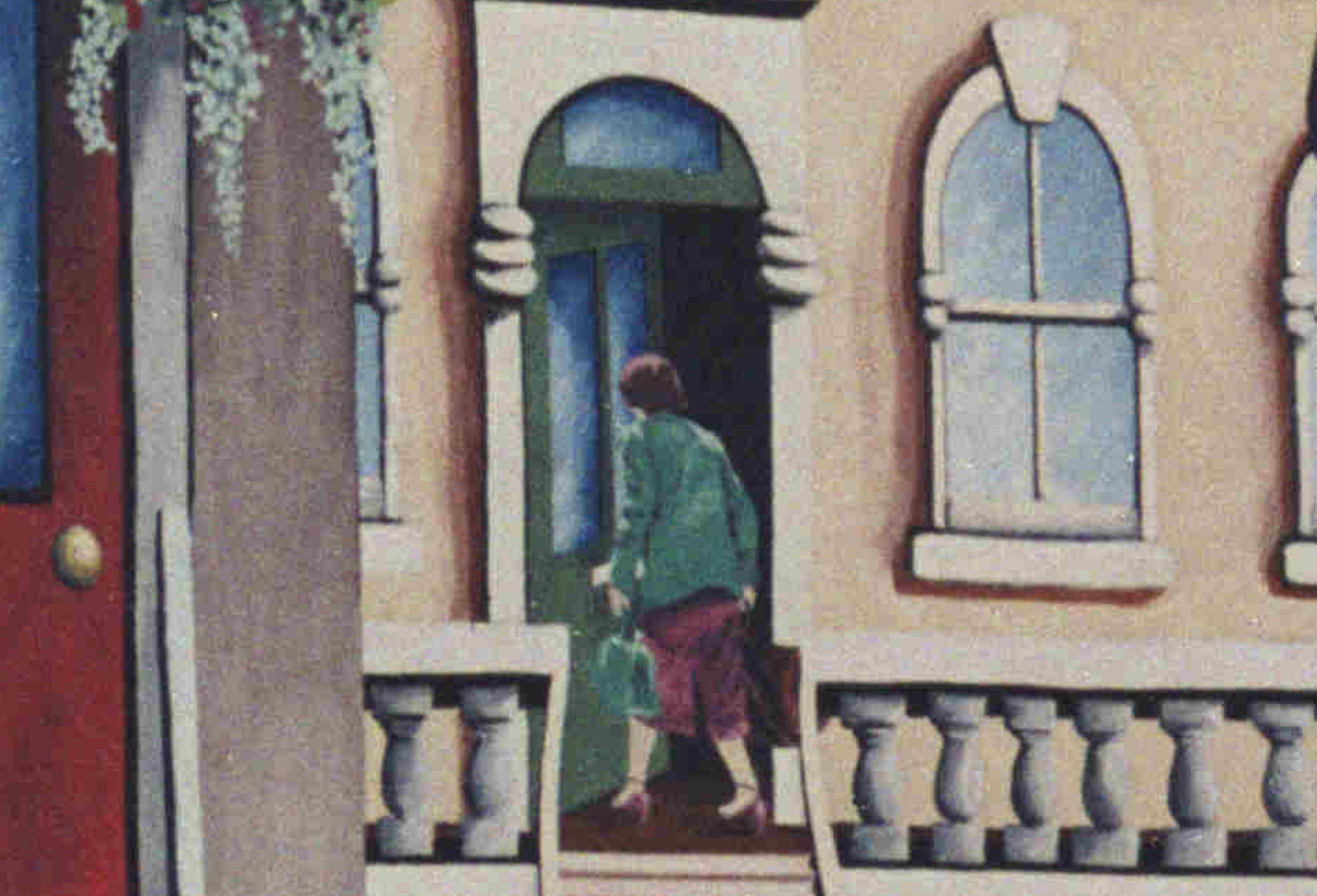
In the 1980s photo, we can see details which raise questions, for example there is a green door reached by some stairs leading up from the grass. The door is partly open, and a woman carrying two bags is going through the doorway.
Why is the woman there, who is she, was she a resident of the house, creator or sponsor of the mural?
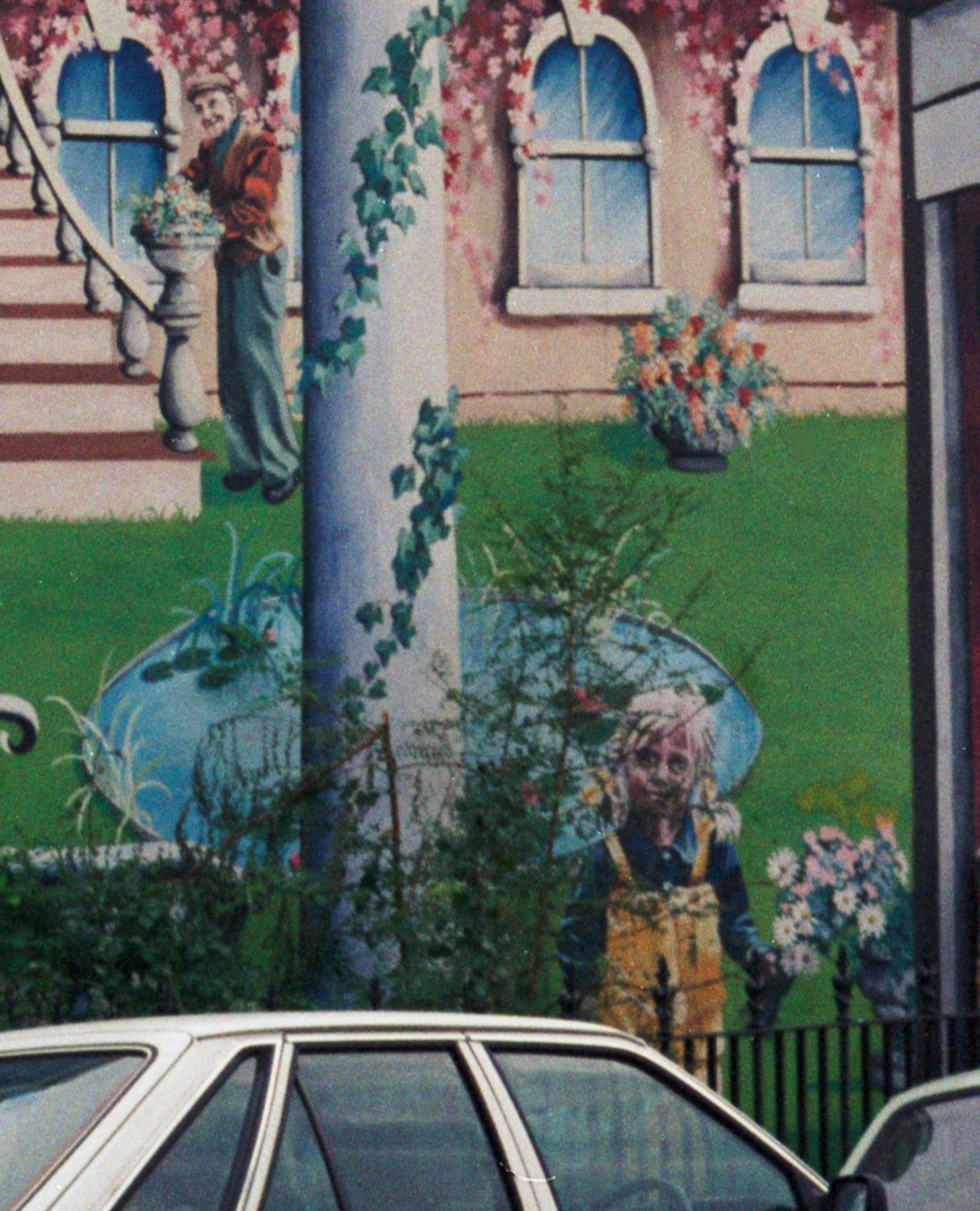
There is also a man at the base of the stairs, and a girl stands on the edge of the grass, holding a bunch of flowers, and looks out towards Mildmay Road. Were they also part of the same family?:
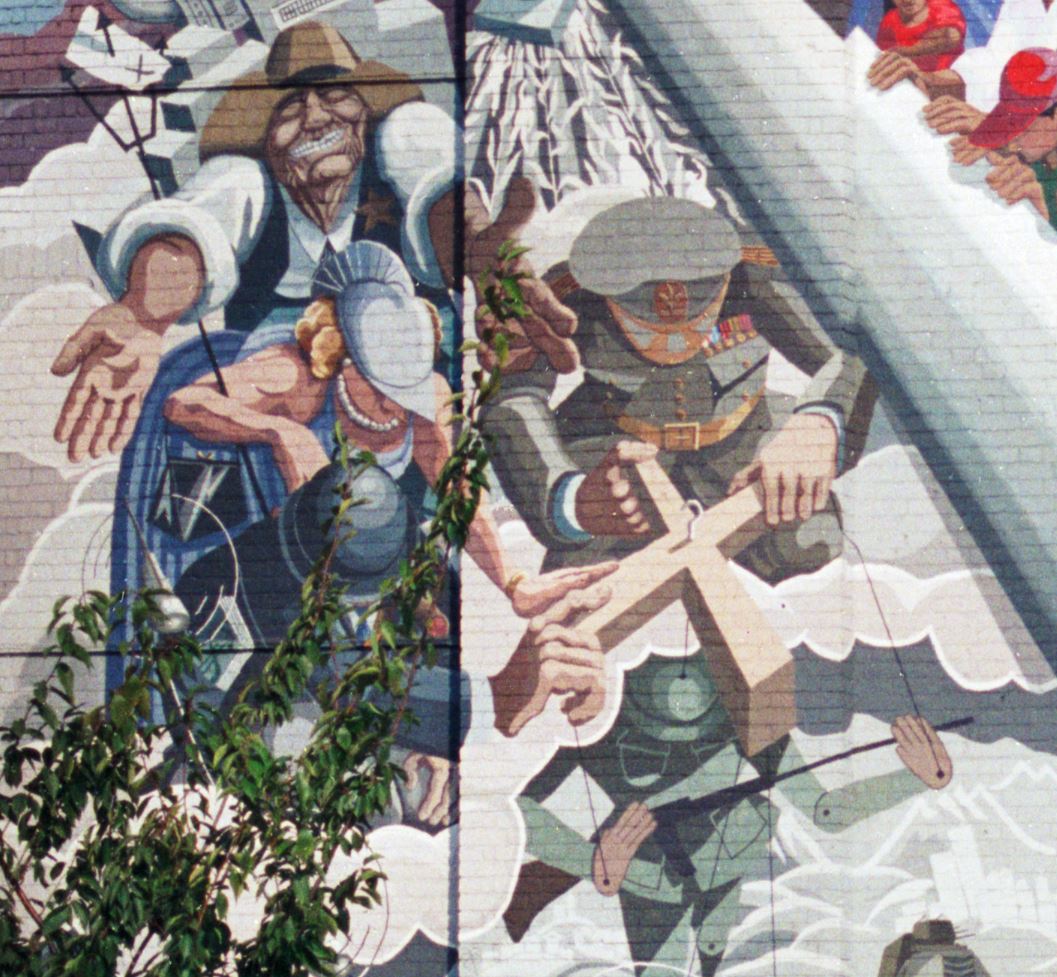
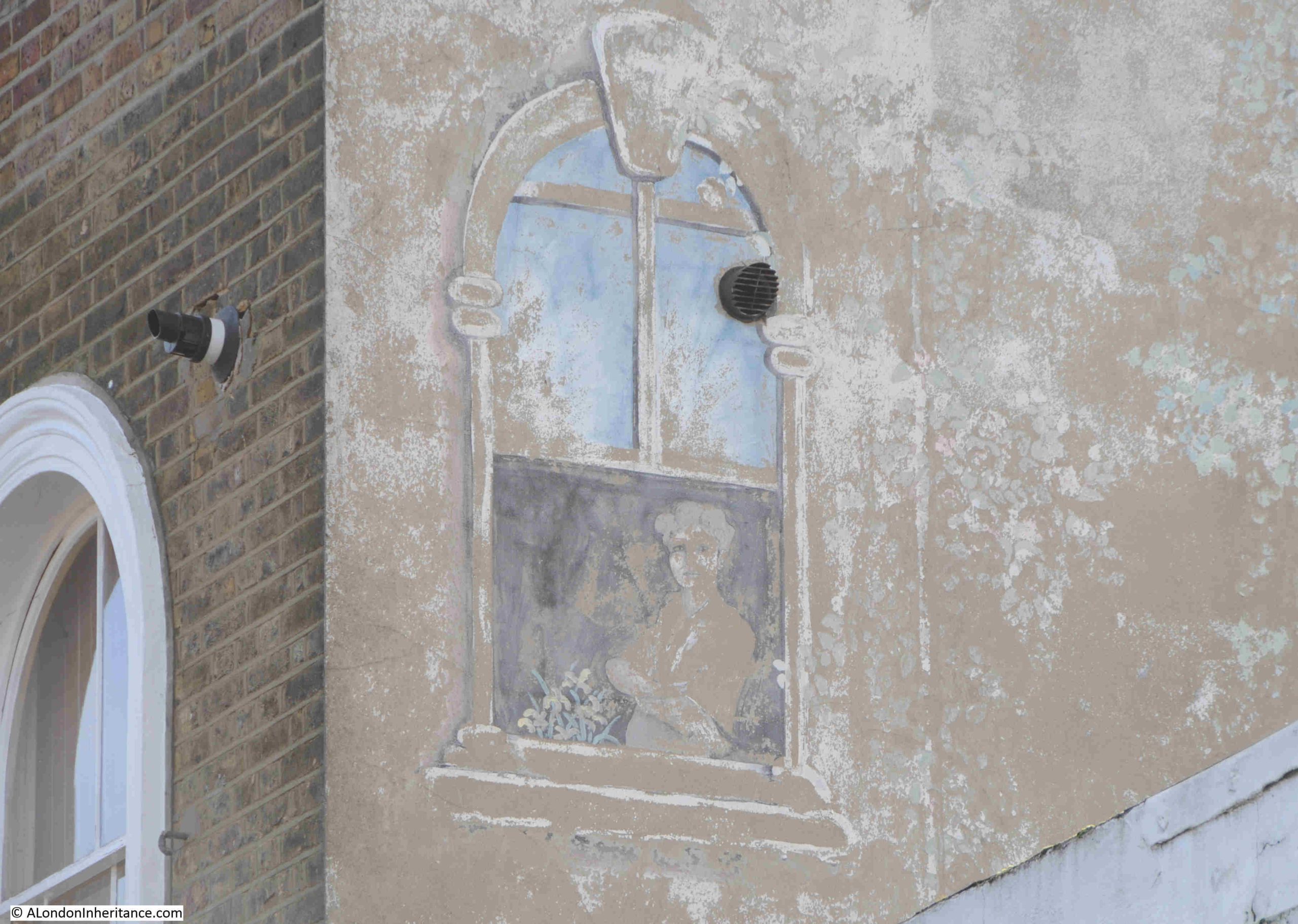
My father’s second photo of the mural was a close up of the part of the mural on the upper floor of the adjacent house, where a woman is looking out of an open window. I wonder if she is the same woman who was going in through the green door?
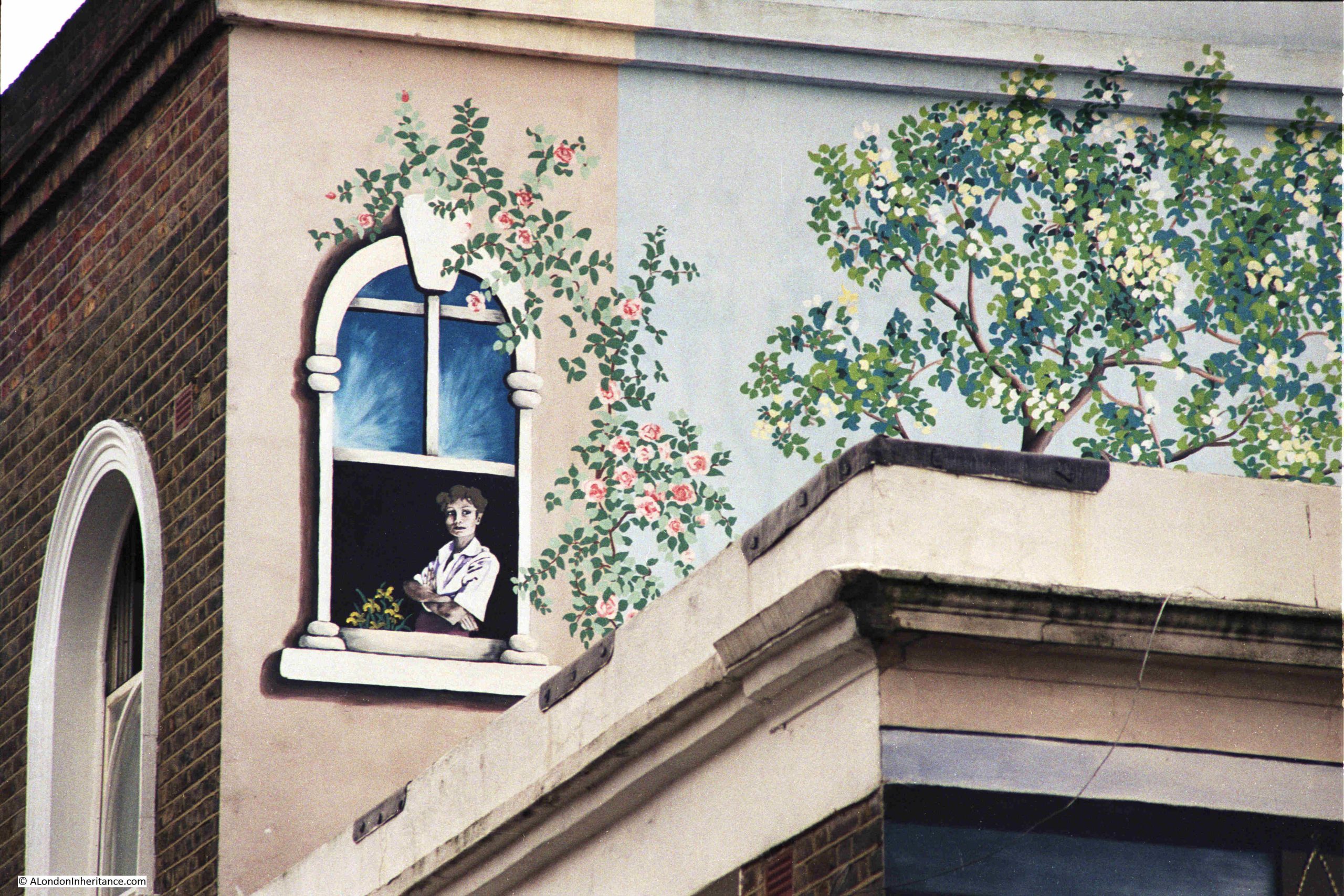
Forty years later, and this section of the mural exists in outline only, with just some of the blue sky in the upper part of the window remaining:
In Wolsey Road we can see that the three dimensional aspect of the mural is still clear. The mural covers a flat wall, and as well as the individual elements of the mural, the two sets of stairs, and the column, the two windows on the right of the mural are painted in such as way as to give the impression that they are on an angled wall:
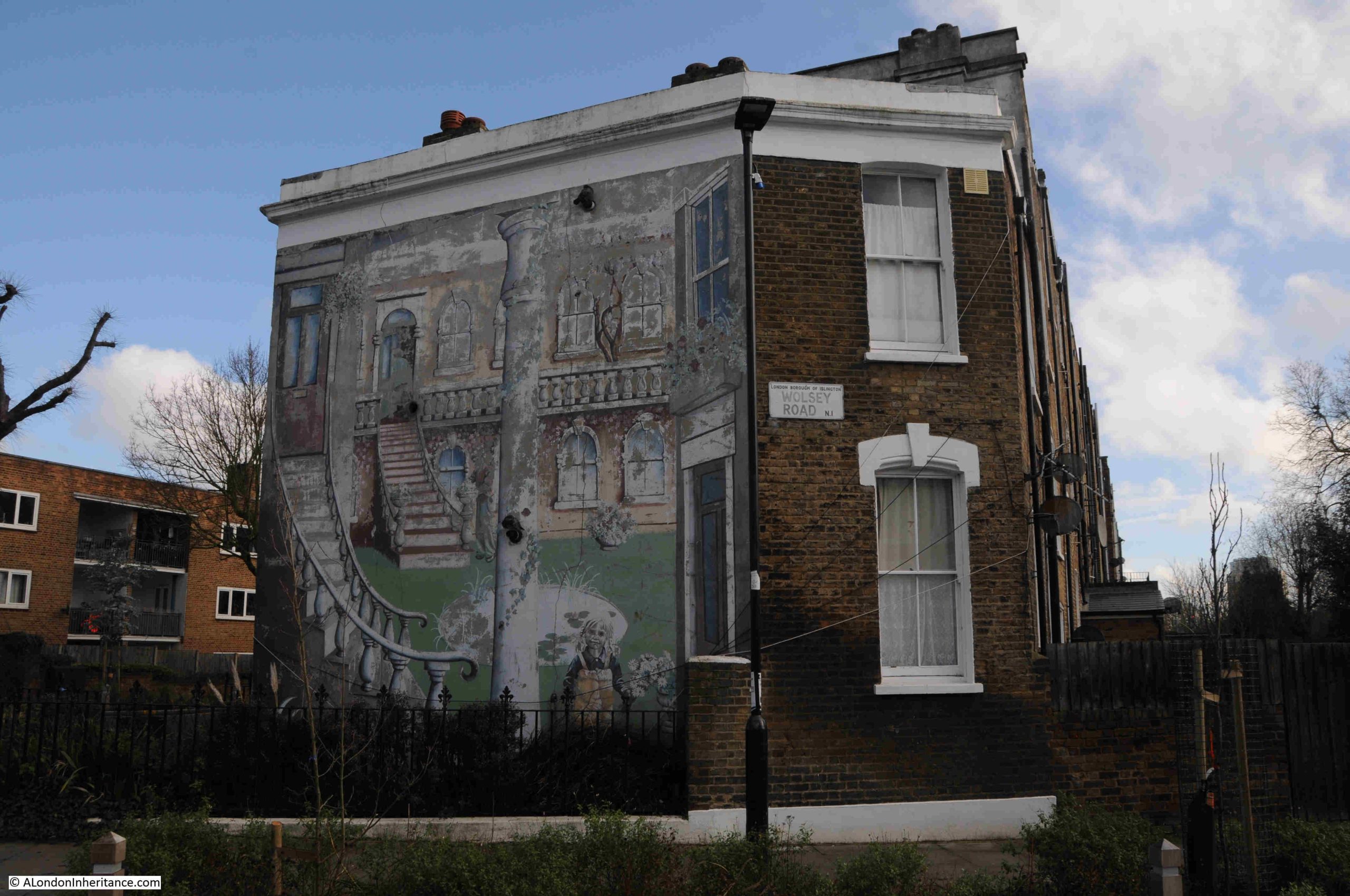
After forty years, the mural is faded, flaking and losing colour, but enough remains to show what it was like when created, as my father’s 198o’s photos confirm.
The mural is an example of what can be found whilst walking the streets of London, and the pleasure of wandering along London’s ordinary streets is a message I hope I have been able to get across in the last couple of posts on my search for some 1980s photos – The Flower Sellers and London Fields and His & Hers Hairdressers, Middleton Road, Hackney, and is a theme I want to continue in this week’s post, with no deep historical insights, just some views of the streets as I walked up from Middleton Road to Mildmay Road.
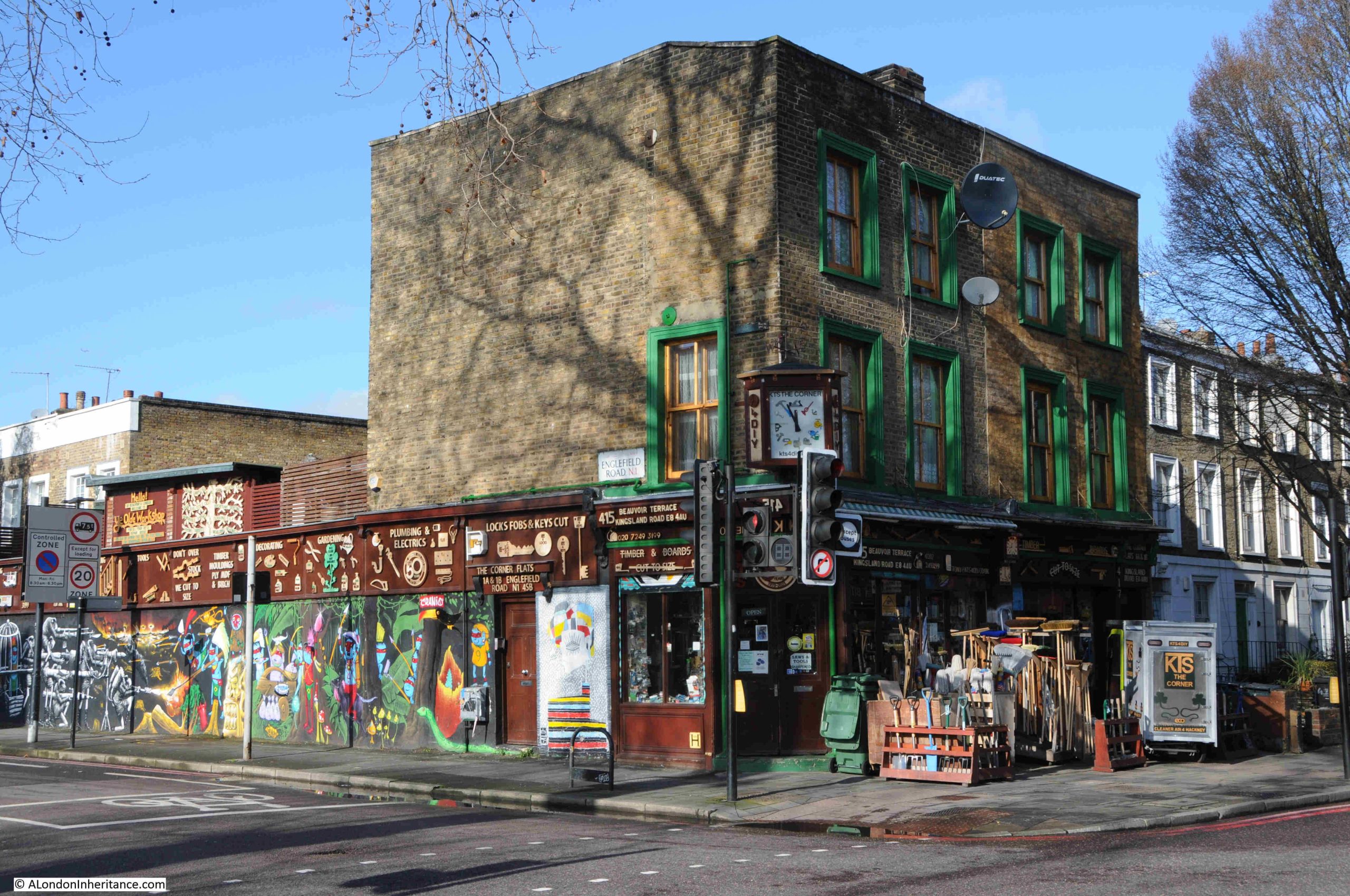
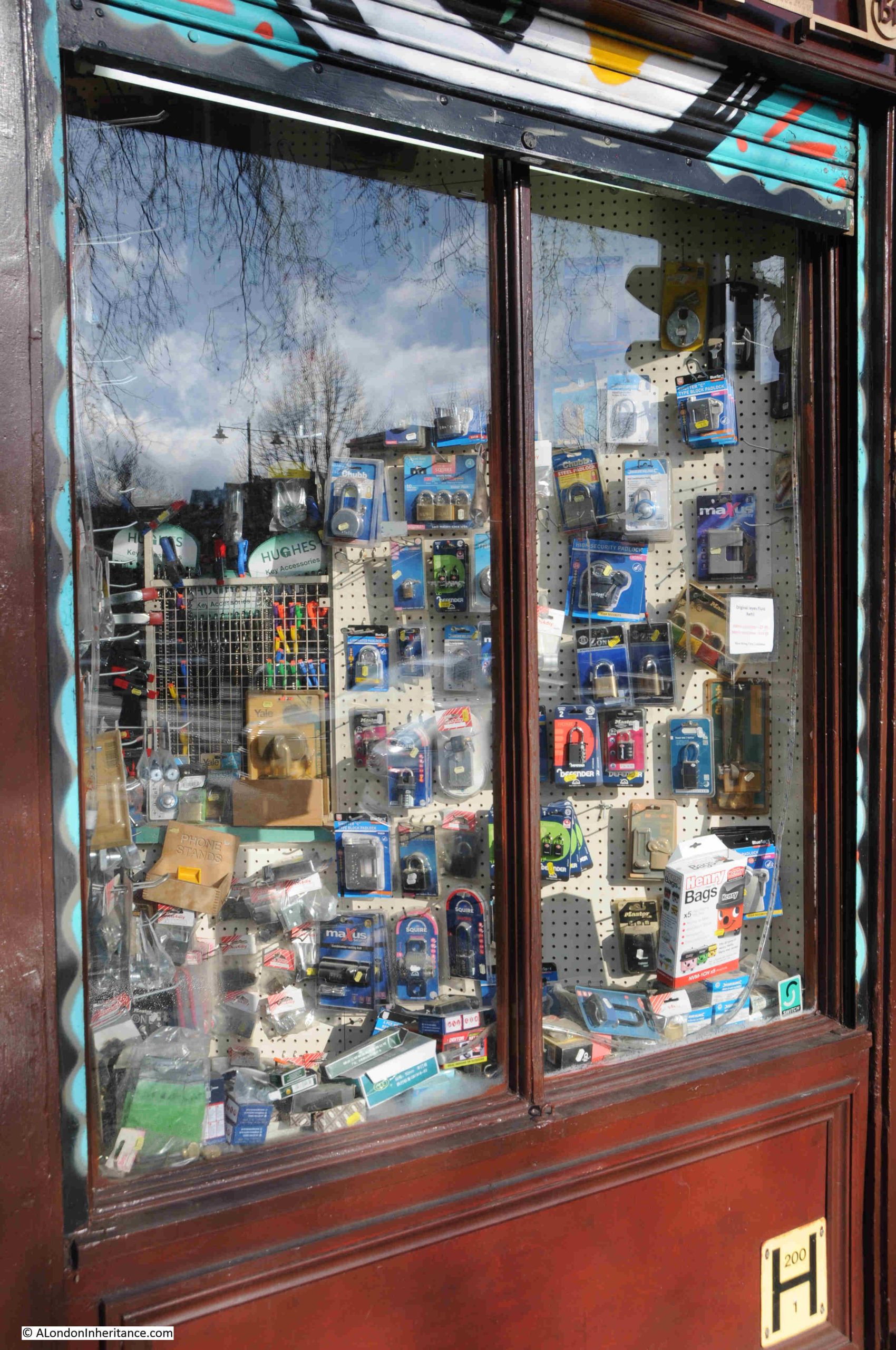
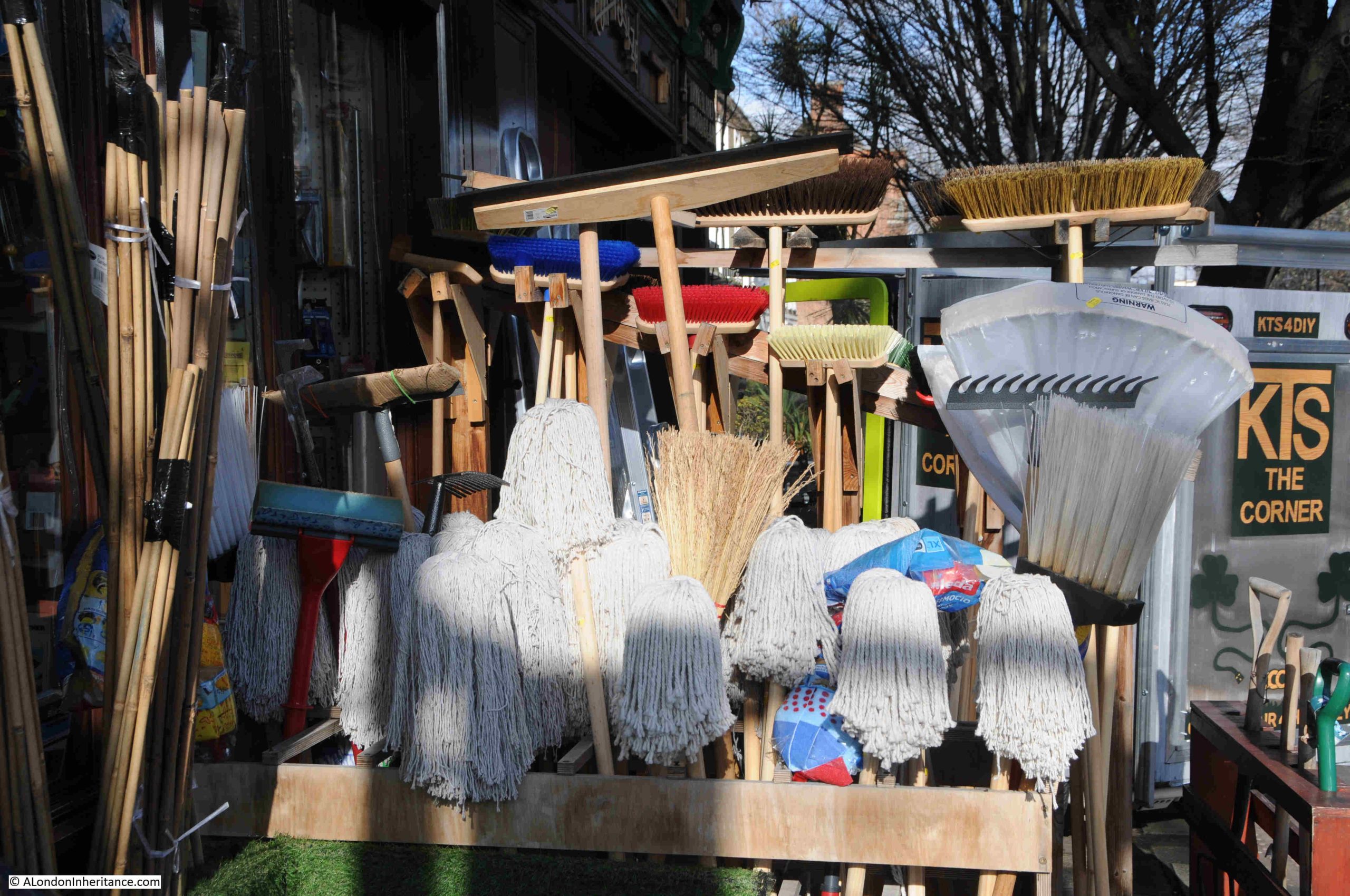
The route took me along Kingsland Road, where at the junction with Englefield Road is KTS DIY, a family run business, which according to their website has been there since 1973:
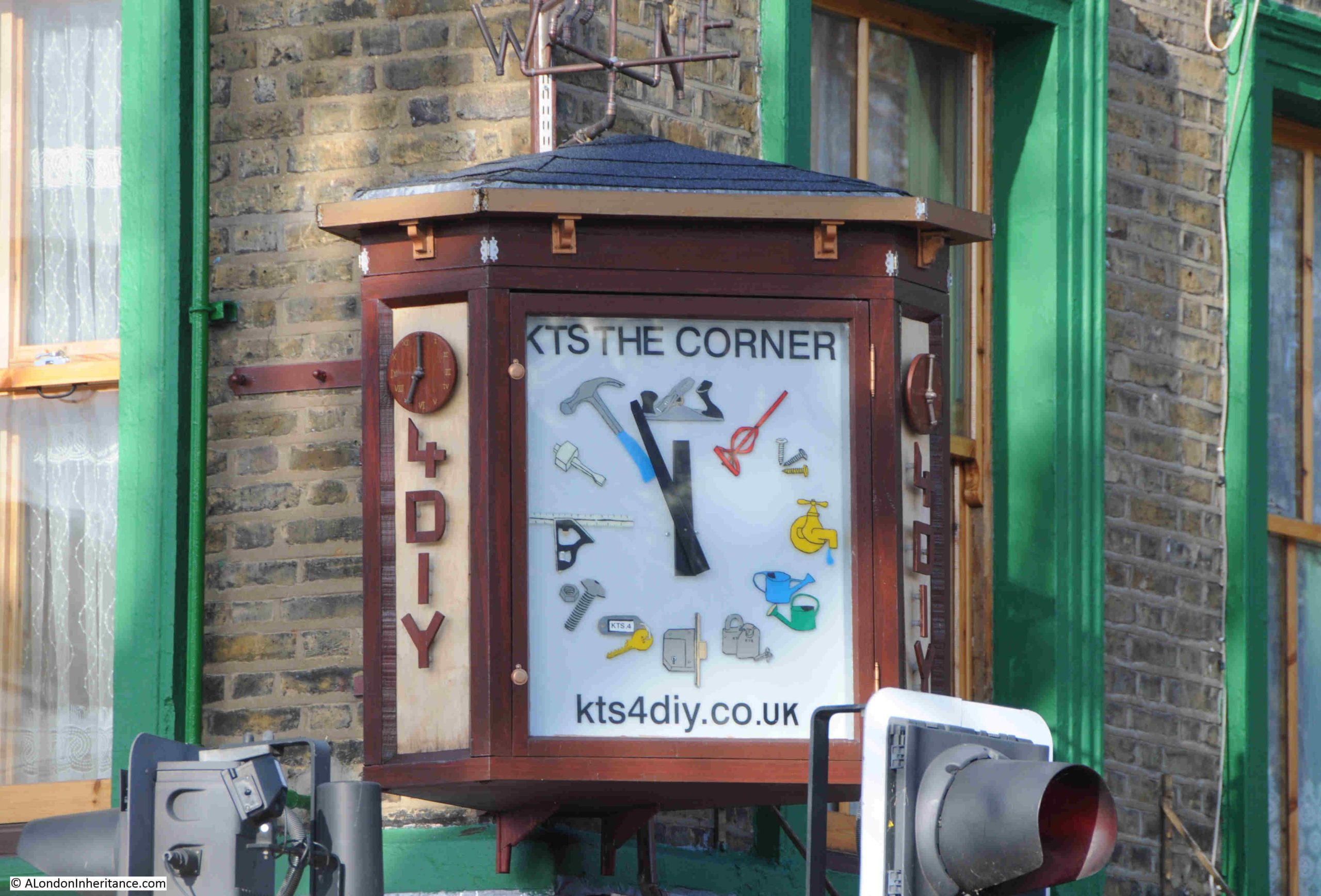
The clock on the corner of the building:
The store stocks a phenomenal range of DIY, building and household maintenance and cleaning equipment. The window display is just a very small part of what can be found inside:
Mops and brooms in the February sunshine on Kingsland Road:
Opposite KTS DIY is the Haggeston, a pub which also has regular live music:
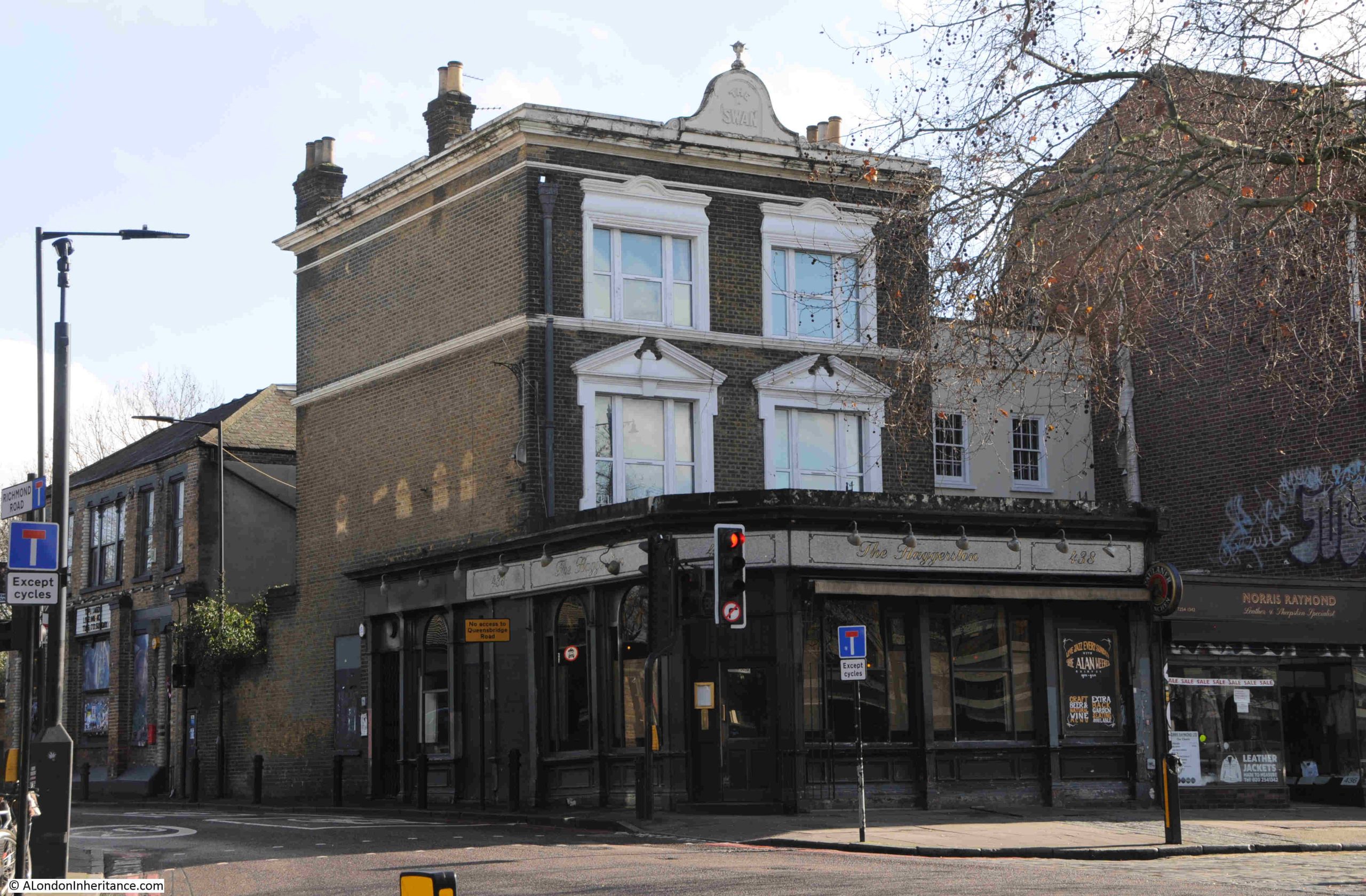
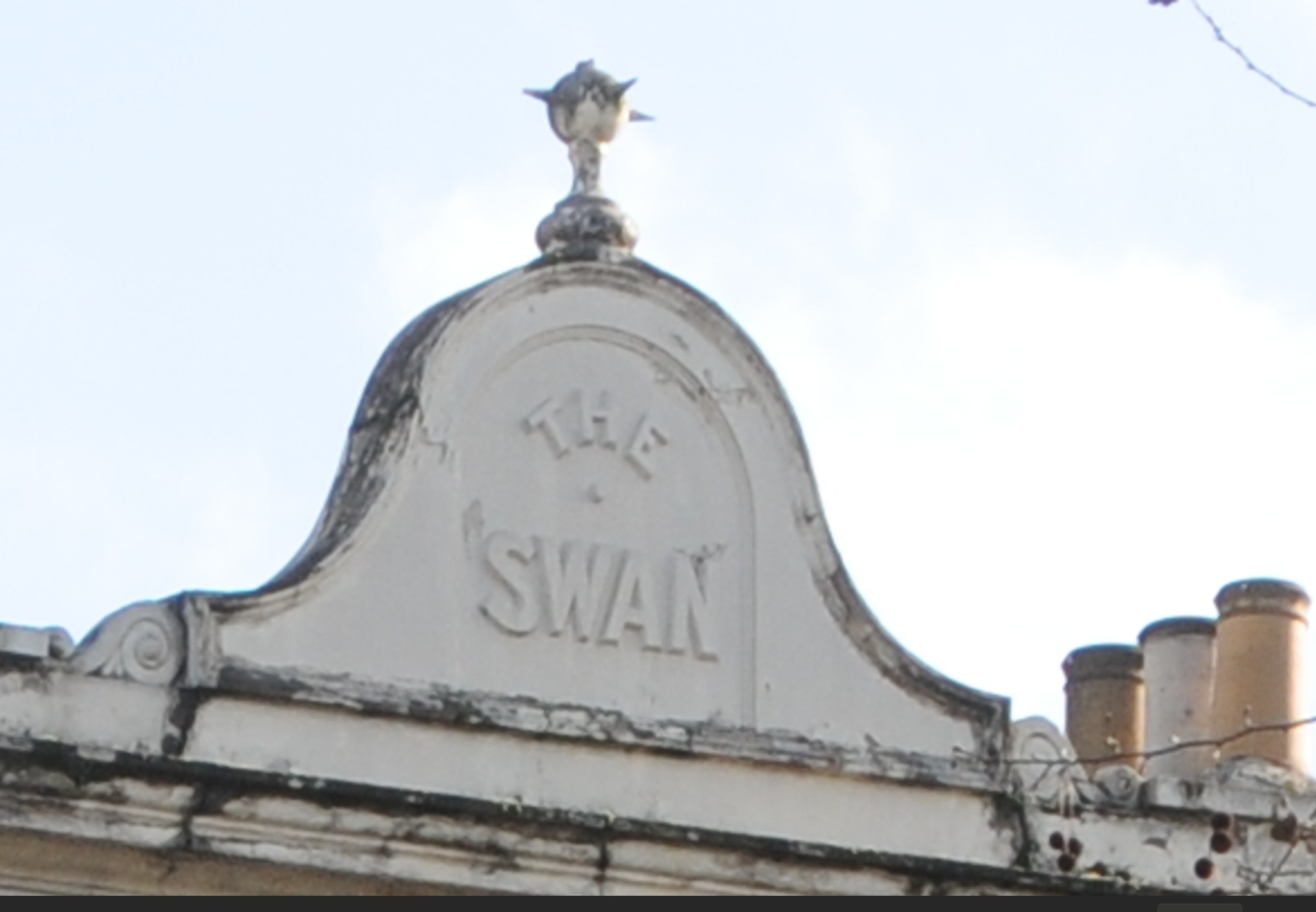
The current name of the pub dates from around 2009, and the original name of the pub was the Swan, as still displayed along the top of the building:
The Swan probably dates to the late 18th century. It was mentioned in an advert in the Morning Advertiser on the 15th of August 1807, an advert for the lease of a house, which gives a good impression of what this now densely built up area was like at the start of the 19th century:
“A neat, genteel brick-built detached dwelling house, with garden, and most pleasantly situated in the fields, near the Swan, Kingsland Road, an easy and pleasant walk from the Royal Exchange, and completely screened from the dust of the public road.”
It is good to know that back in 1807, advertisers of property used the same underestimates of distances in their adverts, as I am not sure the two and a third miles from the Swan to the Royal Exchange could be called and “easy and pleasant walk” for all.
The advert also demonstrates how pubs were used as a local reference points for many forms of public notice.
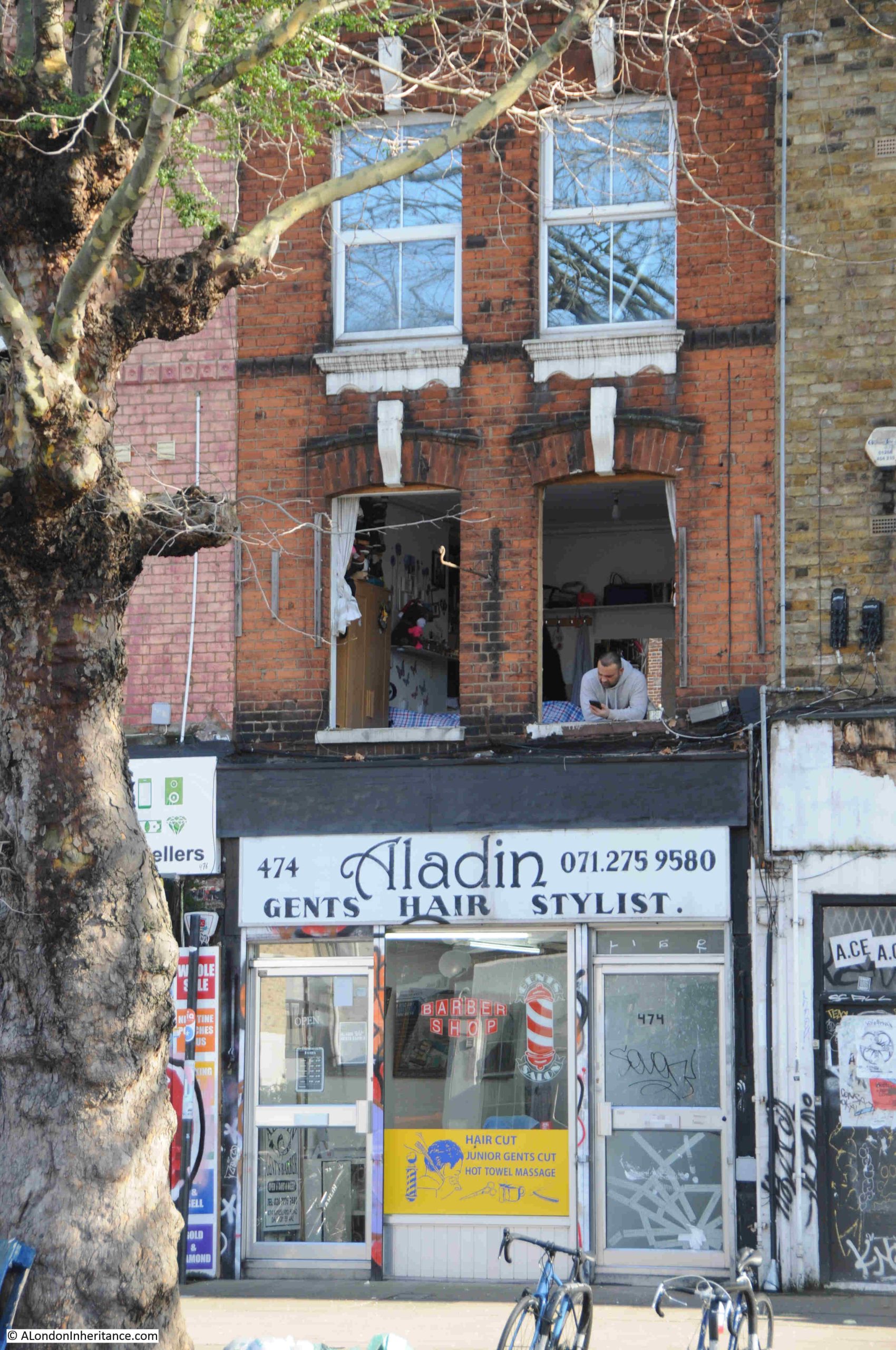
Further along Kingsland Road, and I am not sure what has happened to the windows on the first floor of this building:
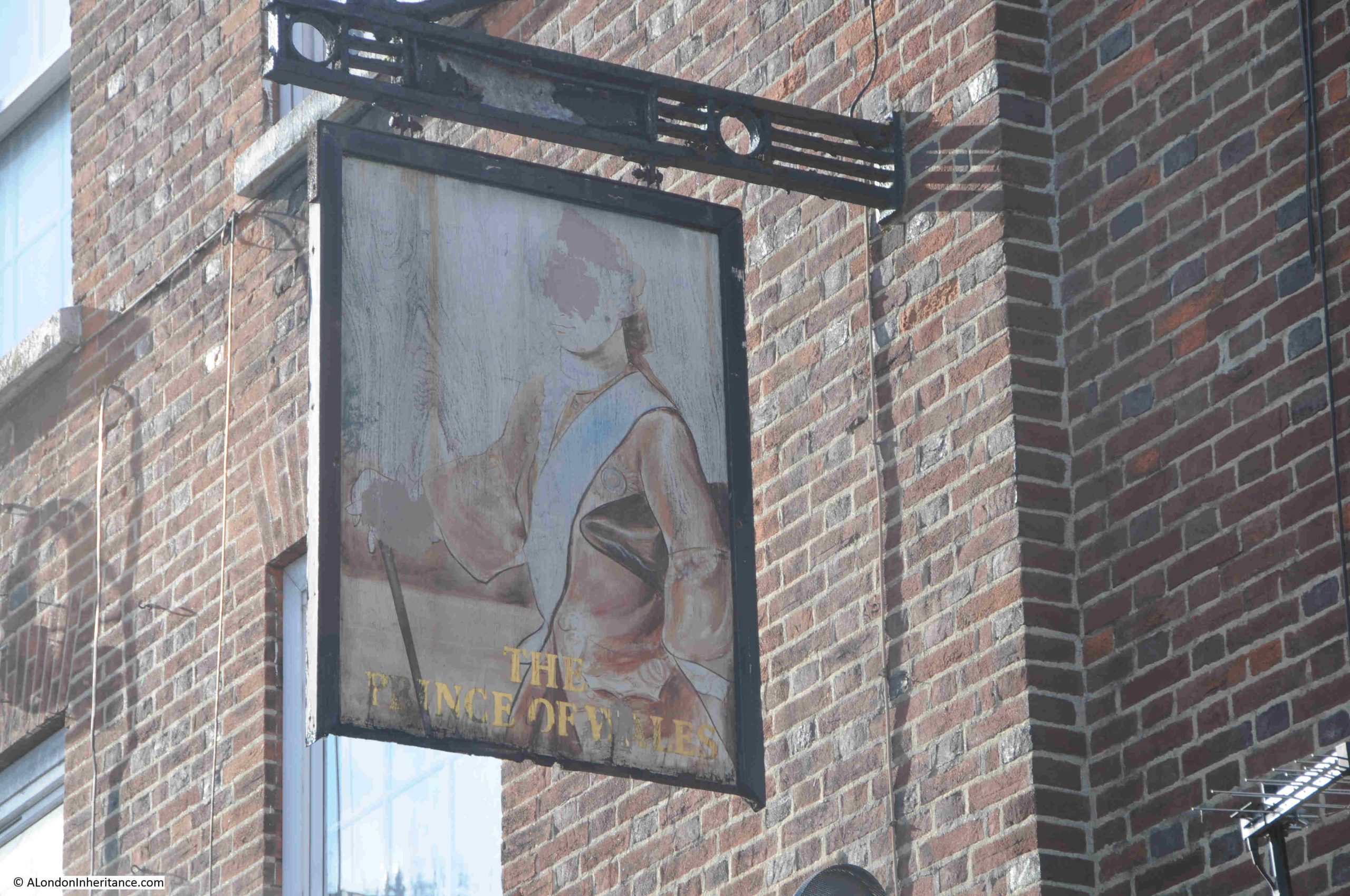
As with the mural on Mildmay Road, along Kingsland Road is the gradually fading sign of the Prince of Wales:
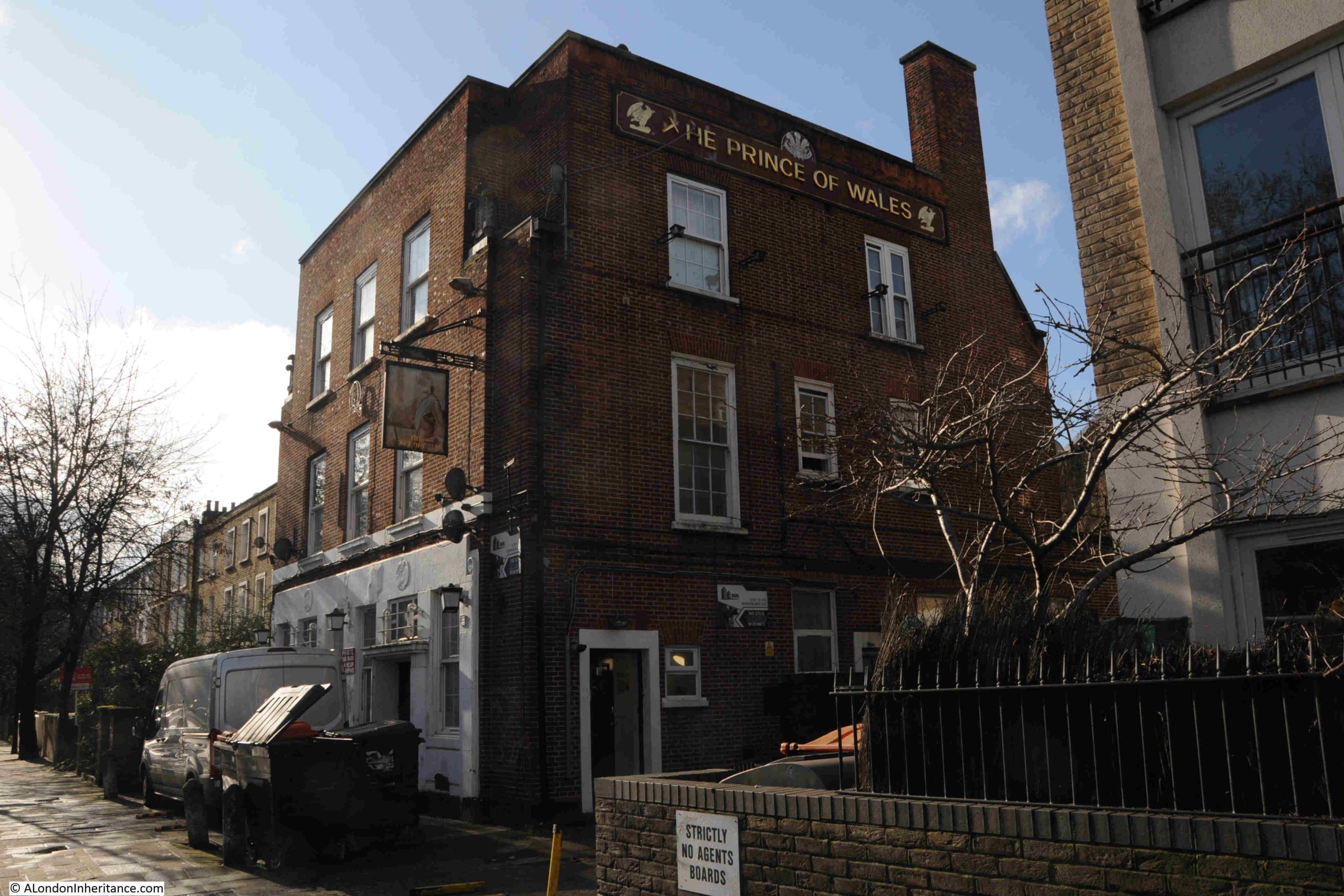
Despite closing around 26 years ago and converted to residential, the Prince of Wales name is still displayed at the tope of the building, a 1930 rebuild of the previous pub on the site:
A short distance further along Kingsland Road is another closed pub, the Lamb, which dates from the early 19th century. The building is now a nightclub:
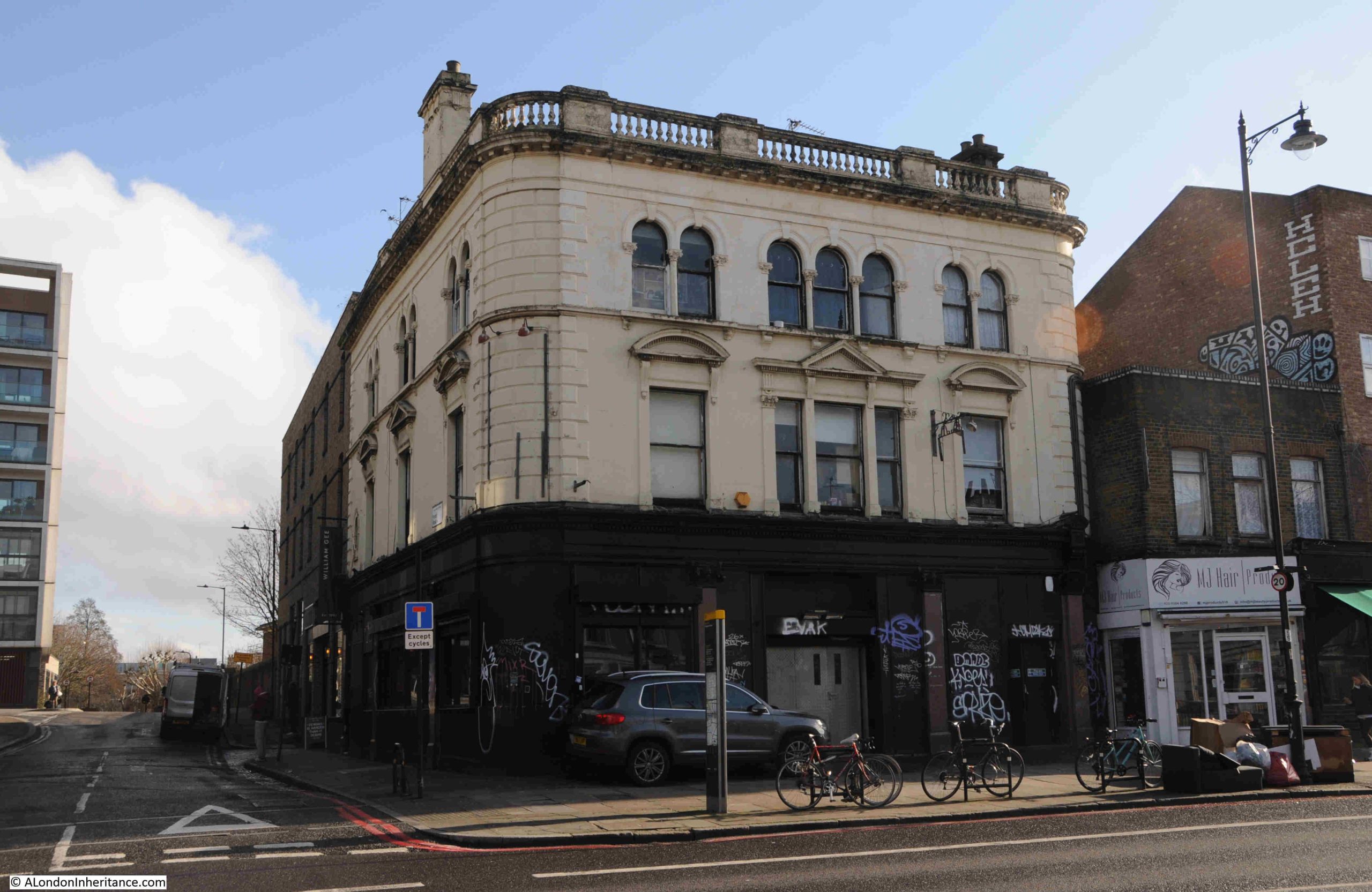
There were many pubs along Kingsland Road, reflecting both the importance of the road and density of the housing that was built in the fields to east and west of the road in the 19th century.
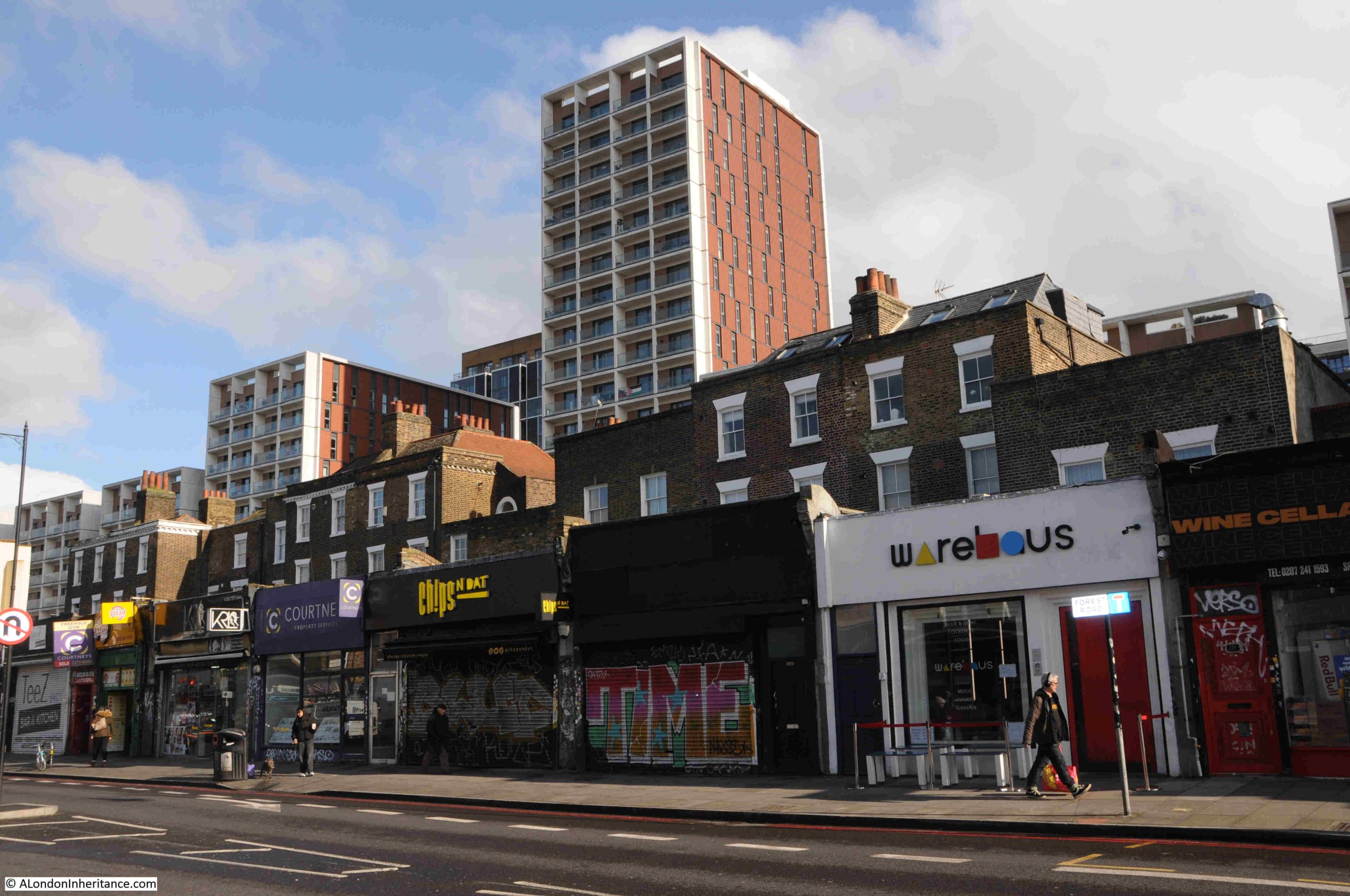
Kingsland Road is also home to terrace houses built during the late 18th and early 19th centuries. These were fine houses at the time, and frequently ground floor shops were added at a later date, built over the gardens that separated the house from the street:
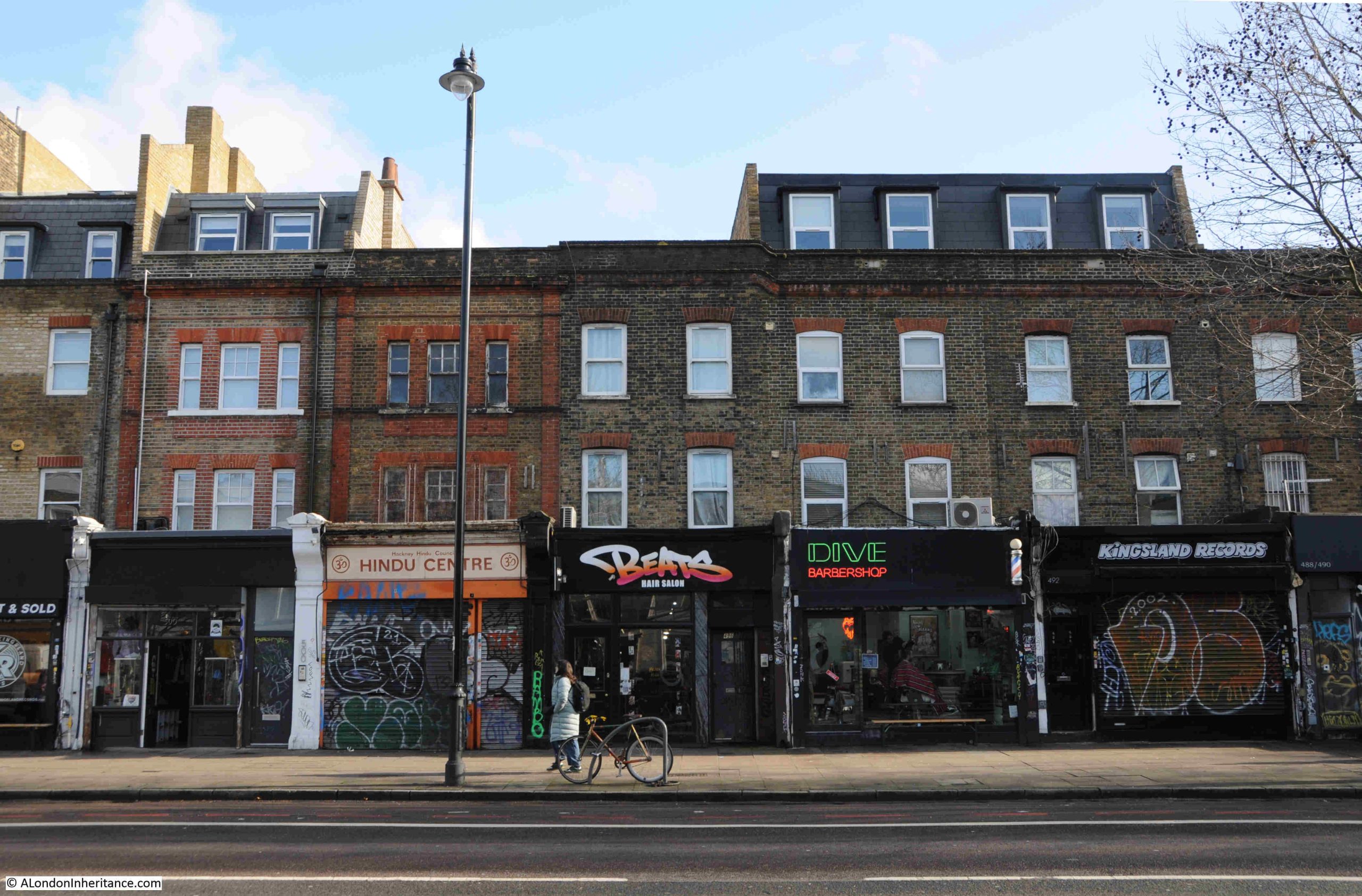
The two semi-detached houses in the centre of the following photo are late 18th / early 19th century and are Grade II listed. At the time of the listing (1975), the building housed a factory, but now looks to ne residential, with shops taking up the space in front of the ground floor of the building:
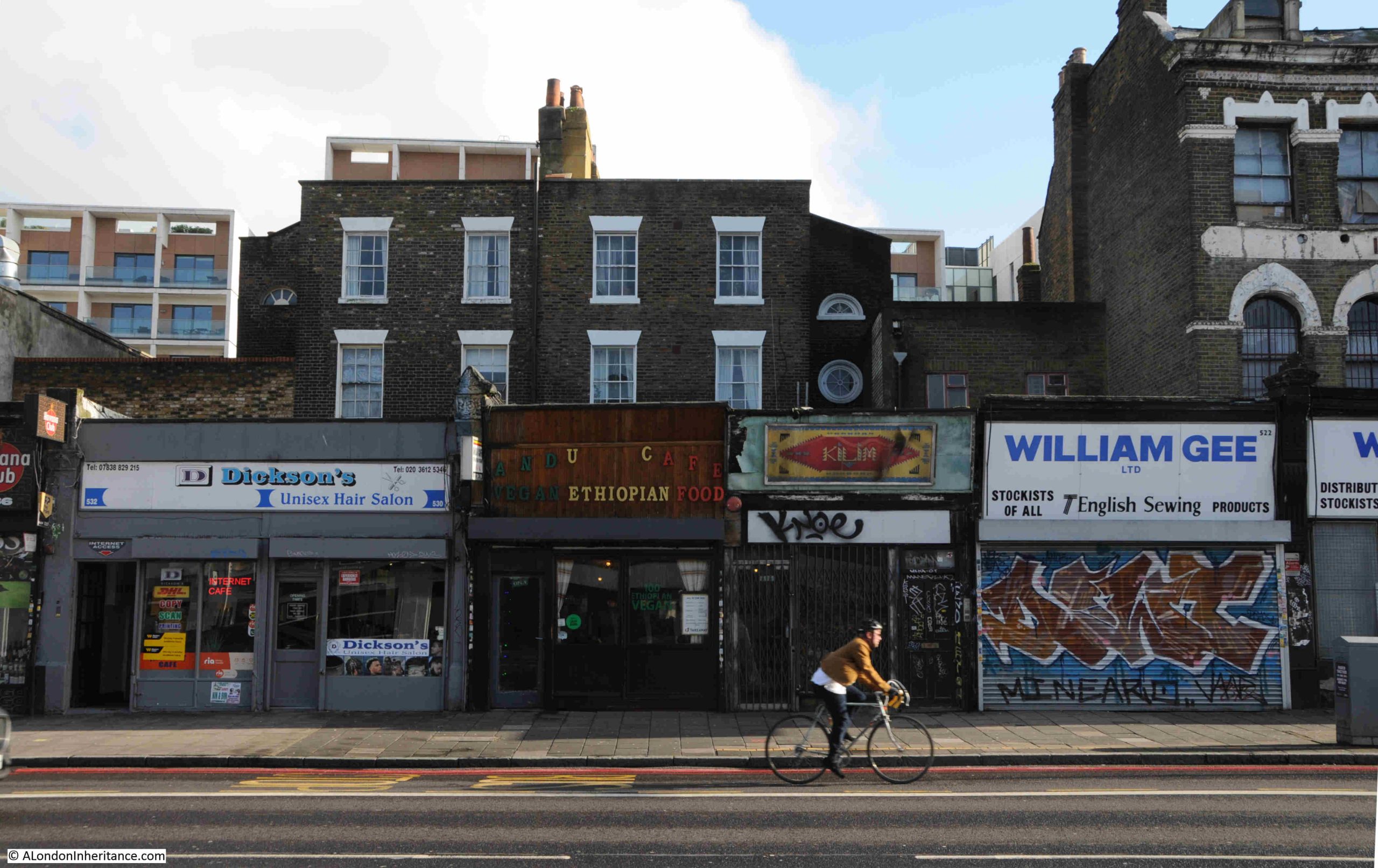
The two larger buildings behind the shops in the following photo are also Grade II listed and date from the late 18th century. One can imagine how impressive these buildings appeared, before the shops and when the whole façade was visible from the street:
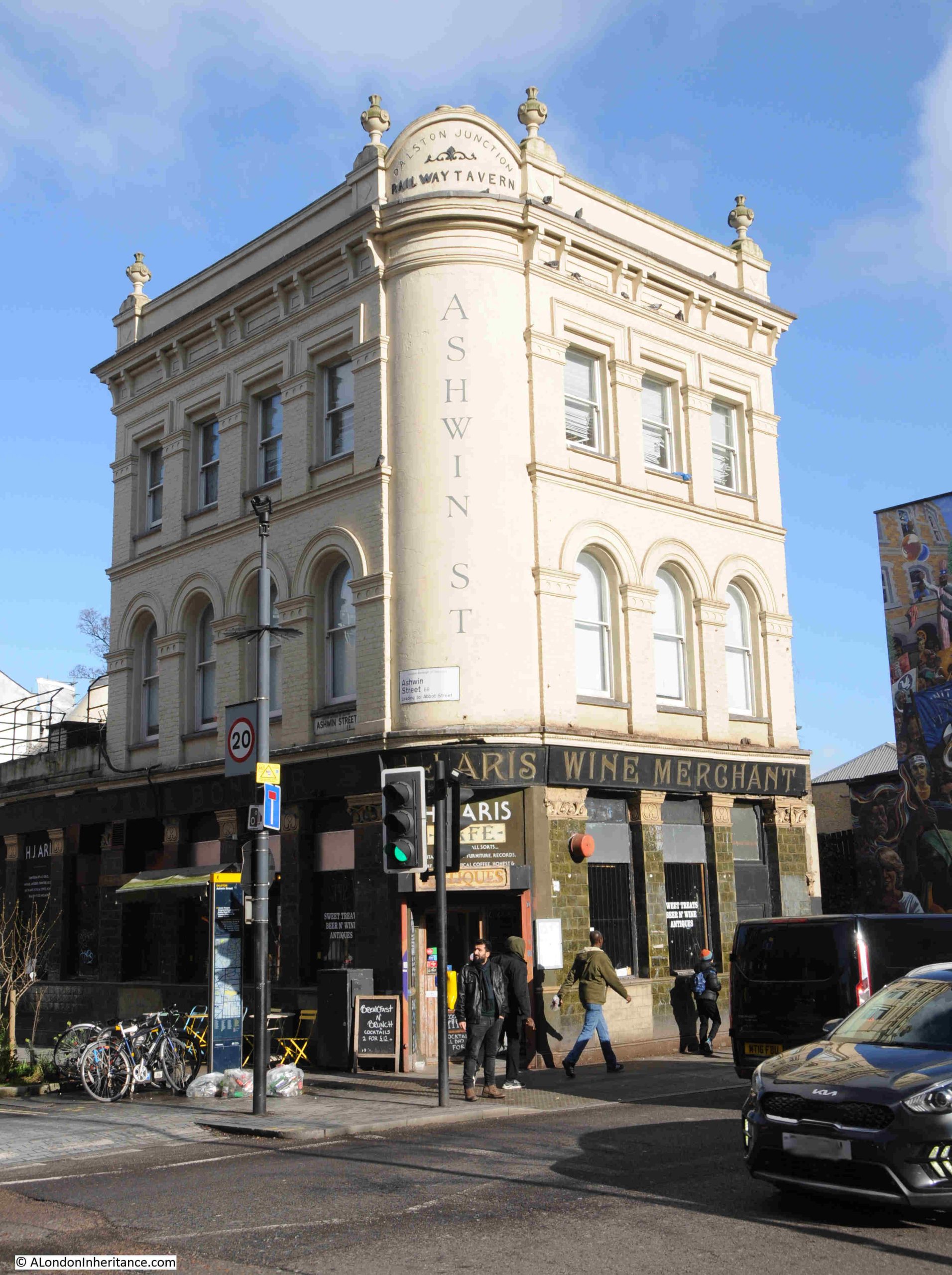
A slight detour down Dalston Lane from Kingsland Road is the old Railway Tavern, so named because it was almost opposite the original Dalston Junction station building, which has been rebuilt as part of a residential development.
The Railway Tavern is now a café / antique store:
The reason for the slight detour down Dalston Lane is to find another 1980s mural, however unlike the mural in Mildmay Road, this one is in a far better condition:
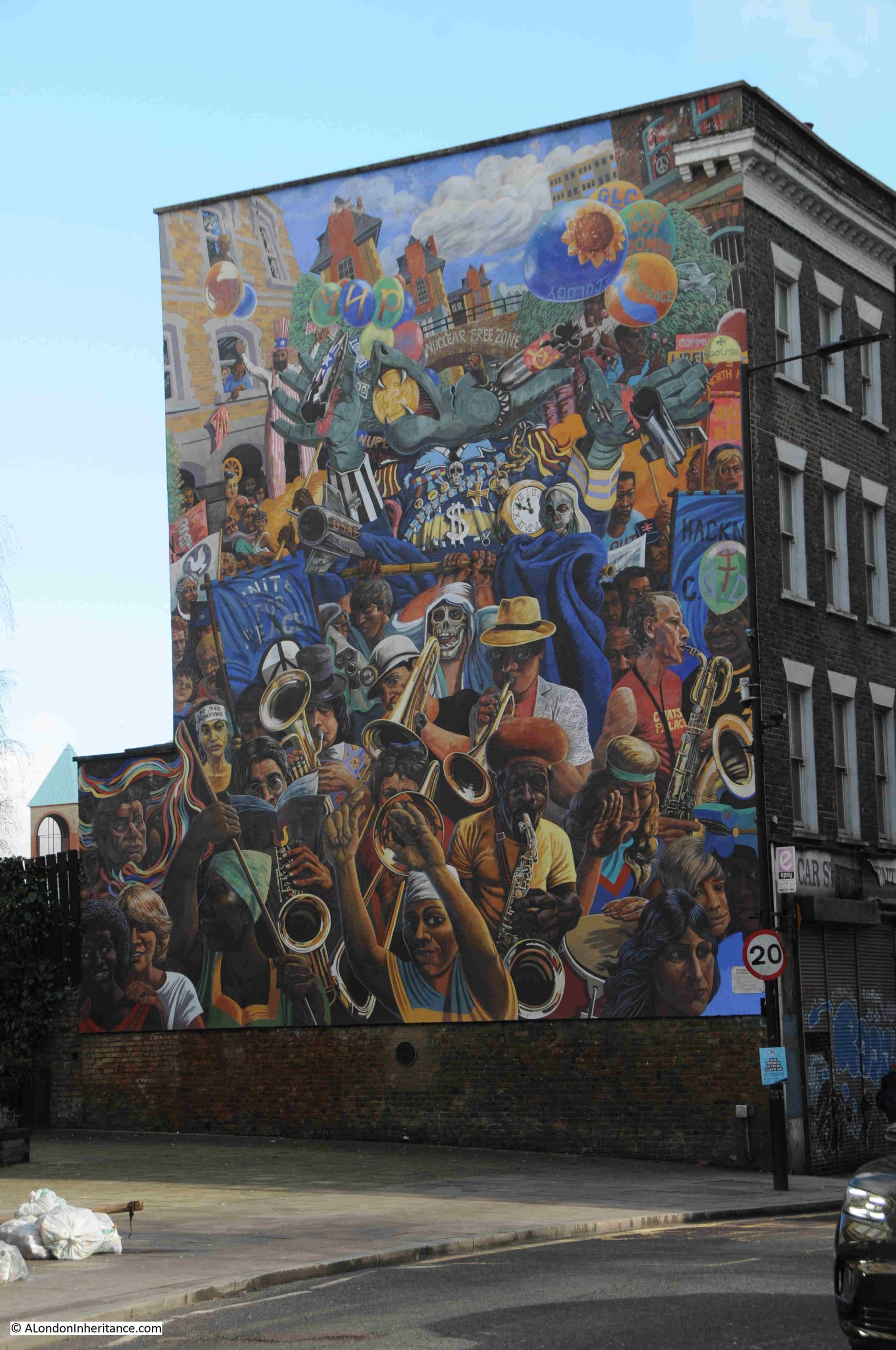
This is the Hackney Peace Carnival mural. The design dates from 1983 when it was created by Ray Walker to celebrate the Greater London Council’s Peace Year, and it was completed in 1985 after being finished by Ray Walker’s wife Anna Walker along with Mike Jones, following the death of Ray Walker in 1984.
Ray Walker is shown in the mural to the lower left:
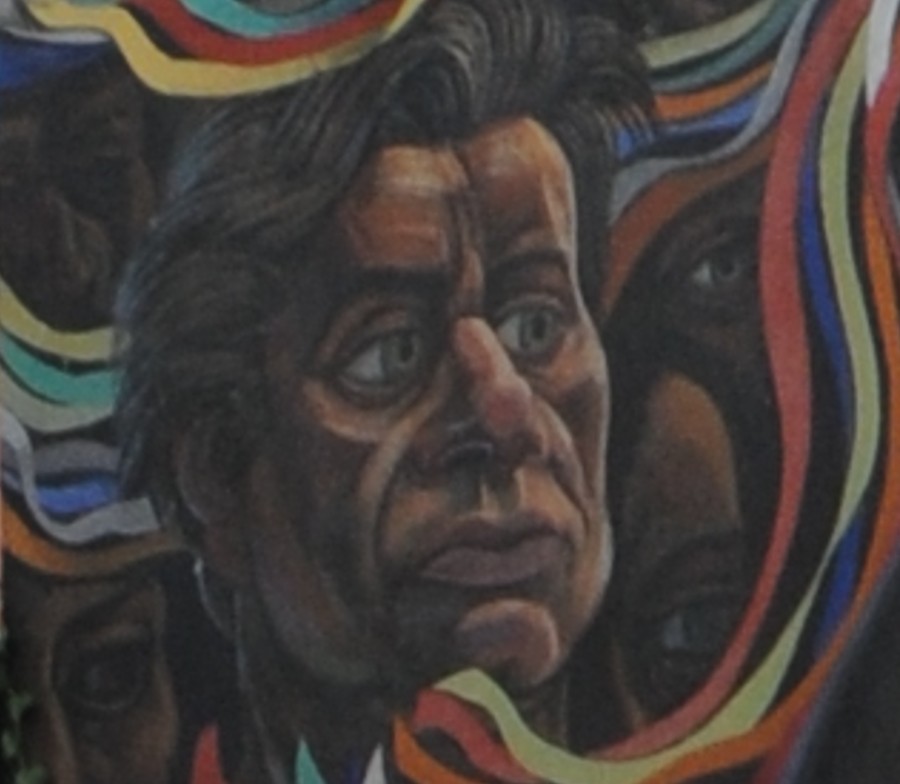
And Anna Walker is at lower right:

The excellent condition of the Dalston Lane mural compared to the Mildmay Road mural, when they are around the same age, is mainly down to the significant 2014 restoration of the Hackney Peace Carnival mural.
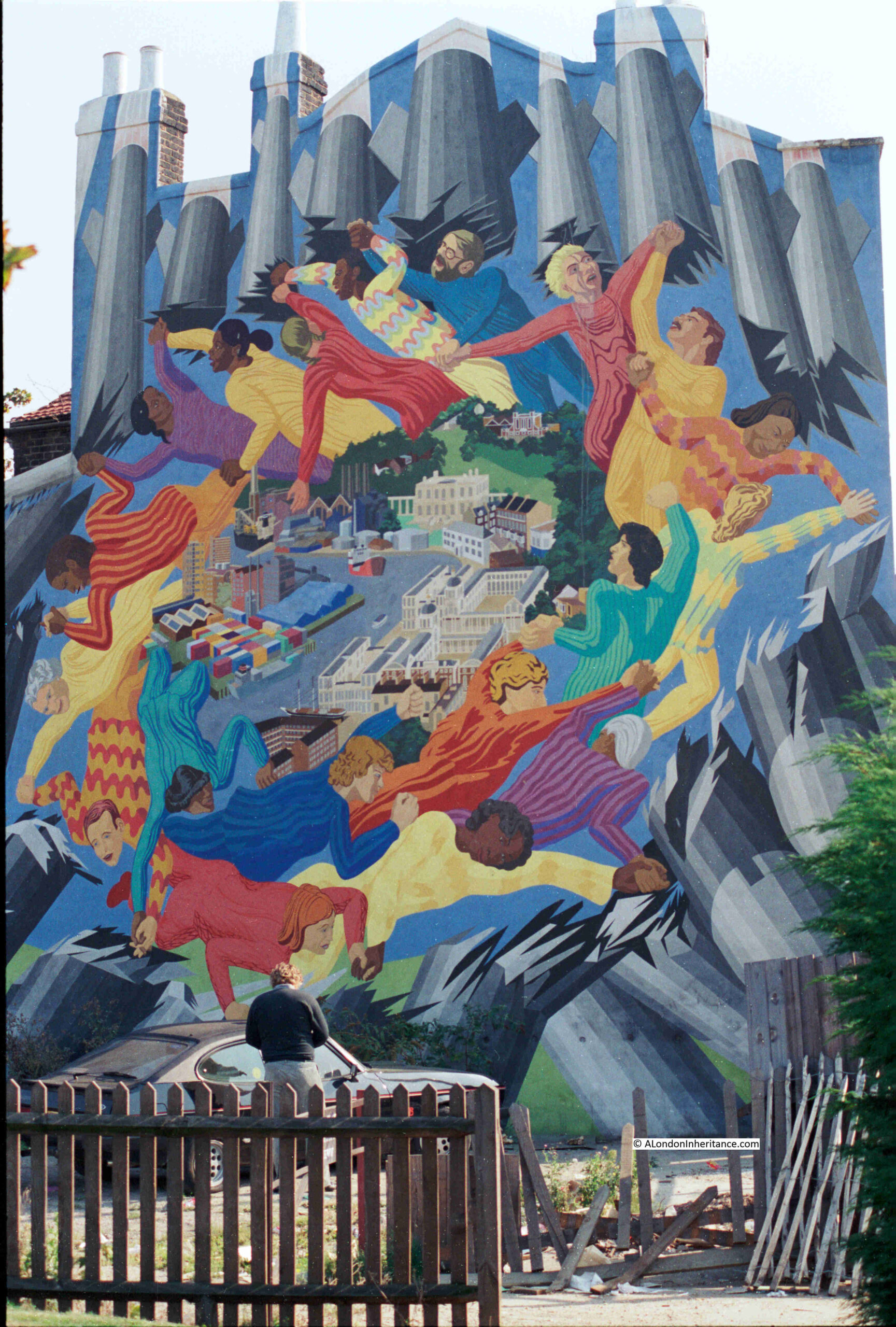
The 1980s seemed to be a prolific period for murals across the streets of London and GLC initiatives such as the 1983 Peace Year were responsible for a number of these, another of which was in Greenwich and was the Wind of Peace mural in Creek Road:
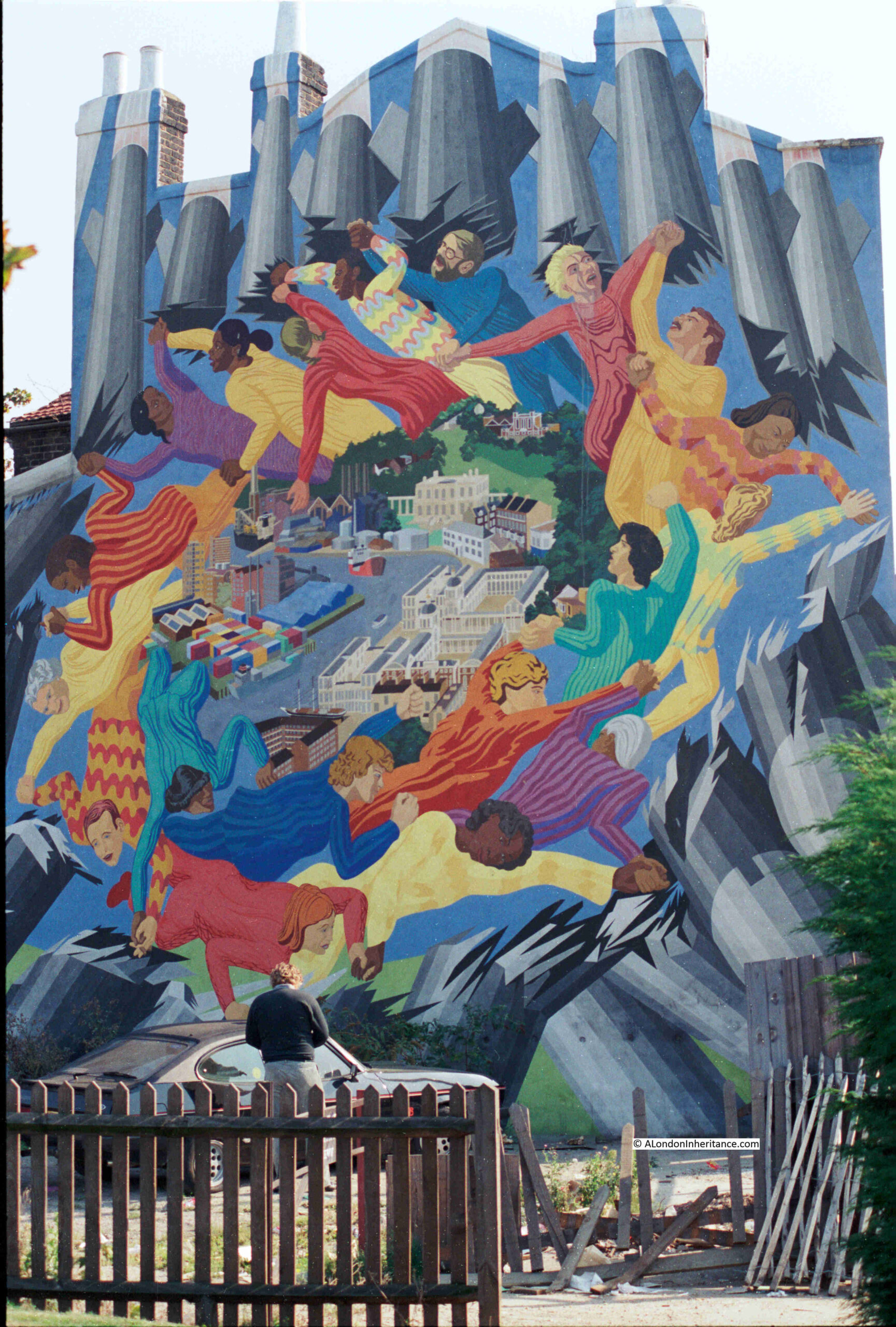
The Wind of Peace was commissioned by the London Muralists for Peace initiative, and painted by artists Stephen Lobb and Carol Kenna. It replaced an earlier mural showing the river and the land alongside the river in Greenwich.
The Wind of Peace has been lost as the building has been demolished. I wrote about the mural, along with another Greenwich mural in this post on the sad fate of two Greenwich murals.
From Dalston Lane, I then returned to Kingsland Road, and headed up to Mildmay Road via Boleyn Road, to find the mural at the start of today’s post.
A short post, with no maps, no deep dive into the area’s history, but I hope it demonstrates why walking the streets of London can be such as pleasure.