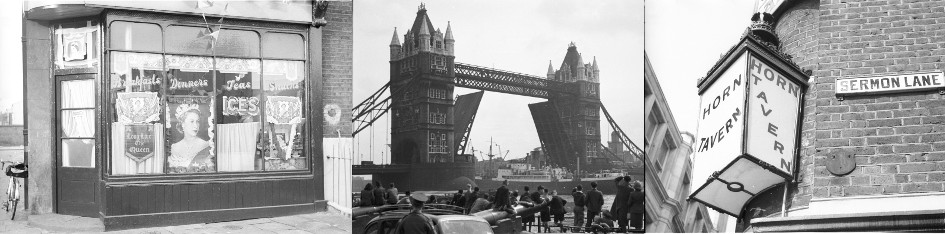
Firstly, an update to the second part of the Rocque Ring walk: I have been away for the last couple of weeks with very limited Internet access, so have been unable to correct an error I made in the post on the 30th of August. I stated that the memorial in Christchurch Gardens was to Chopin, where I should have stated that it is a memorial to Henry Purcell. Another example of a disconnect between brain and fingers as I had written Purcell in my notes when I walked the route. Thanks to those who pointed this out, and the post is corrected.
Now to a new walk exploring the Ancient and Interesting Borough of Bermondsey.
I can remember the first time I heard the name Bermondsey. It was in the early / mid-1970s (cannot remember the exact year), and the radio was on at home. It was Good Friday, and they were broadcasting a feature about events on the day in London.
Part of the feature was on the Widow’s Son pub in east London, when on Good Friday, a bun is added to the net hanging over the bar.
The other part of the feature was about an event in Bermondsey. I cannot remember what the event was, but the name Bermondsey, an area in south London, and whatever the event was, sounded fascinating and rather exotic (I was very young at the time).
Over the years, I have been to various places in Bermondsey more times than I can remember, it is a fascinating place to explore, but that early memory of somewhere a bit different has always stayed.
The title of this walk comes from a 1930s edition of a guidebook produced by the Metropolitan Borough of Bermondsey, and highlights that whilst in the 1930s Bermondsey was a centre of industry, with a population of over one hundred and eleven thousand, it was also a very old and historic borough.
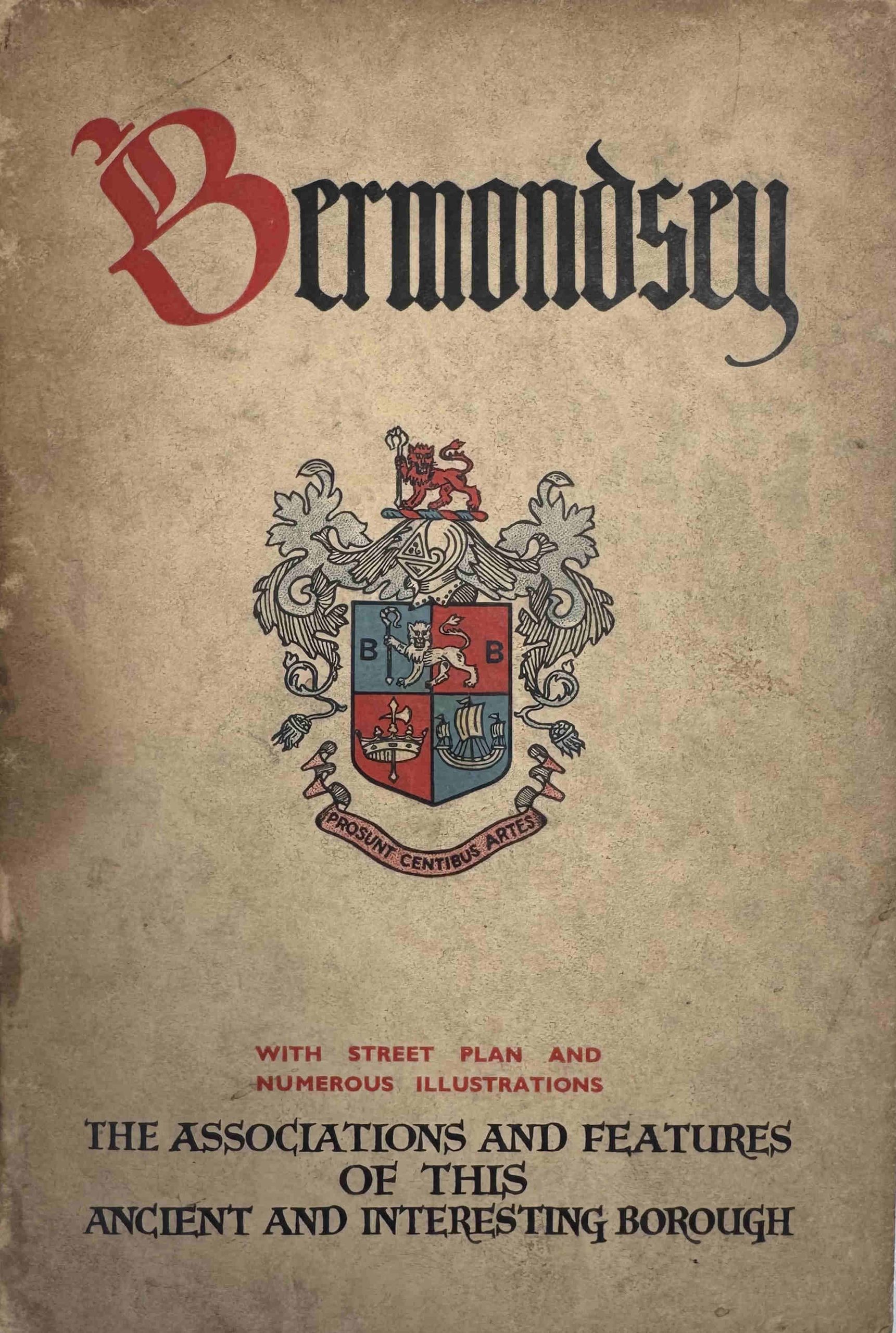
The industry which was so much a part of 1930s Bermondsey and described in the guidebook, is also now part of that long history.
This walk explores Bermondsey’s transformation from a land of marsh and water, and includes the historic Abbey, London’s first railway terminus, industries such as the production of leather and processing of seal skins and furs, a ground-breaking charity that supported girls who worked in factories, Jacob’s Island, the slum made famous by Charles Dickens in Oliver Twist, pubs, Thames river stairs, the remains of a medieval manor house, and much more.
The walk starts from London Bridge Station (southern exit from the concourse of the railway station (not the underground) into St Thomas Street, next to Café Nero) and ends at the Angel pub, which is about a 7 minute walk from the Bermondsey Jubilee line station.
The walk lasts around 2 hours 30 minutes and covers just under two and a half miles.
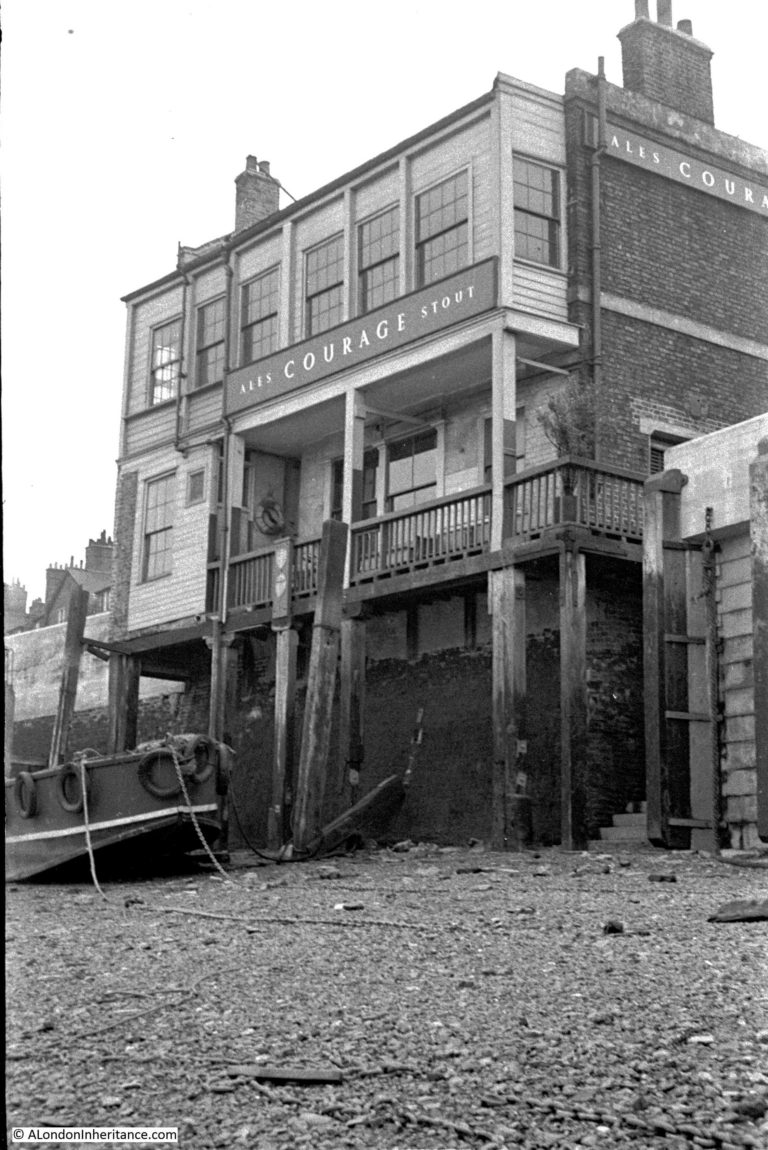
The Angel, where the walk ends, photographed by my father in 1951:
All dates for this new walk can be found on my Eventbrite page at the following link:
I will be adding some more dates for this walk (and my other walks), so if a convenient date is not available, click the Follow button at the Eventbrite page, and you should get a notification when new dates are online,
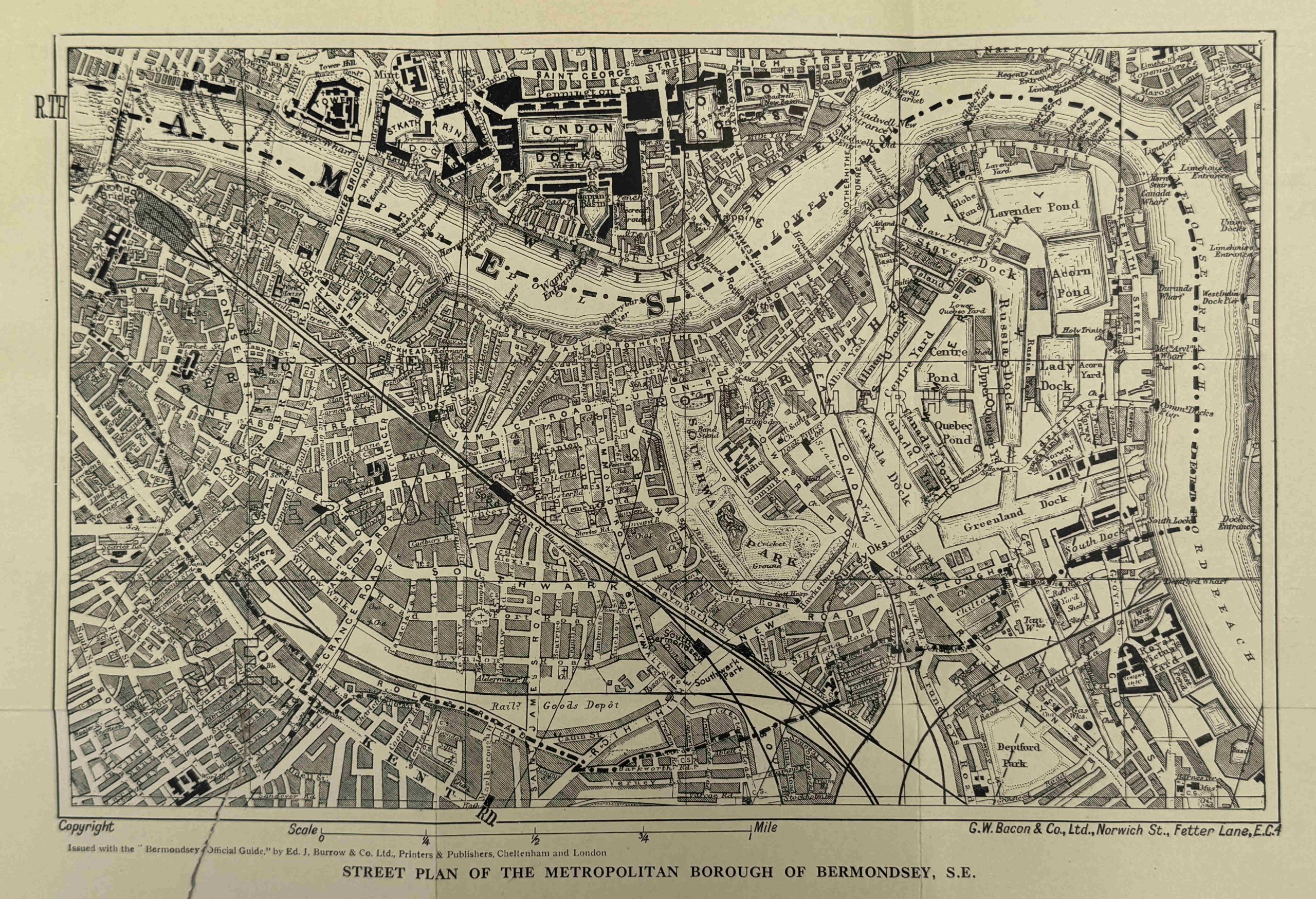
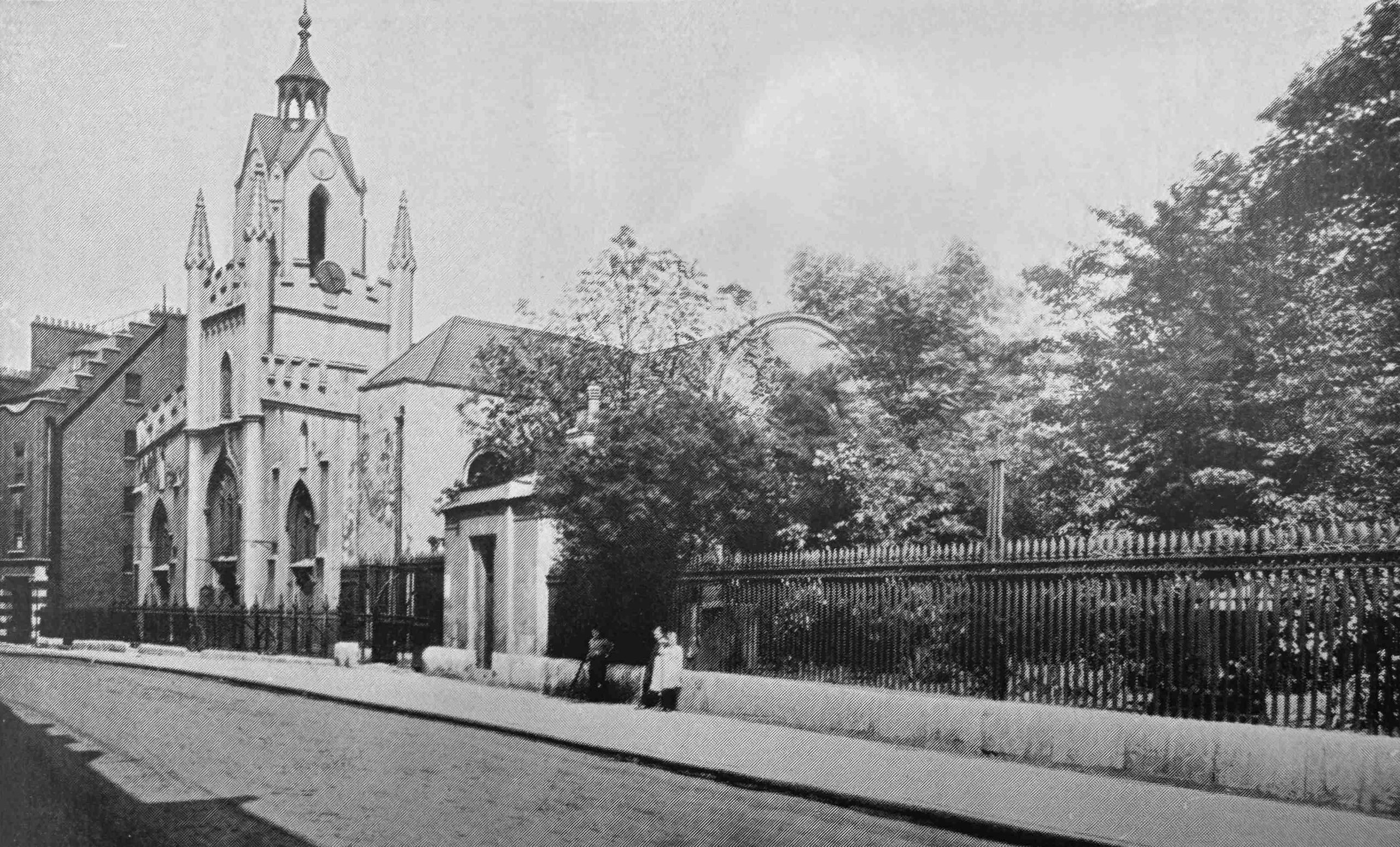
A small sample of images from the 1930s guide, including a Street Plan of the Metropolitan Borough of Bermondsey:
Old houses in Grange walk:
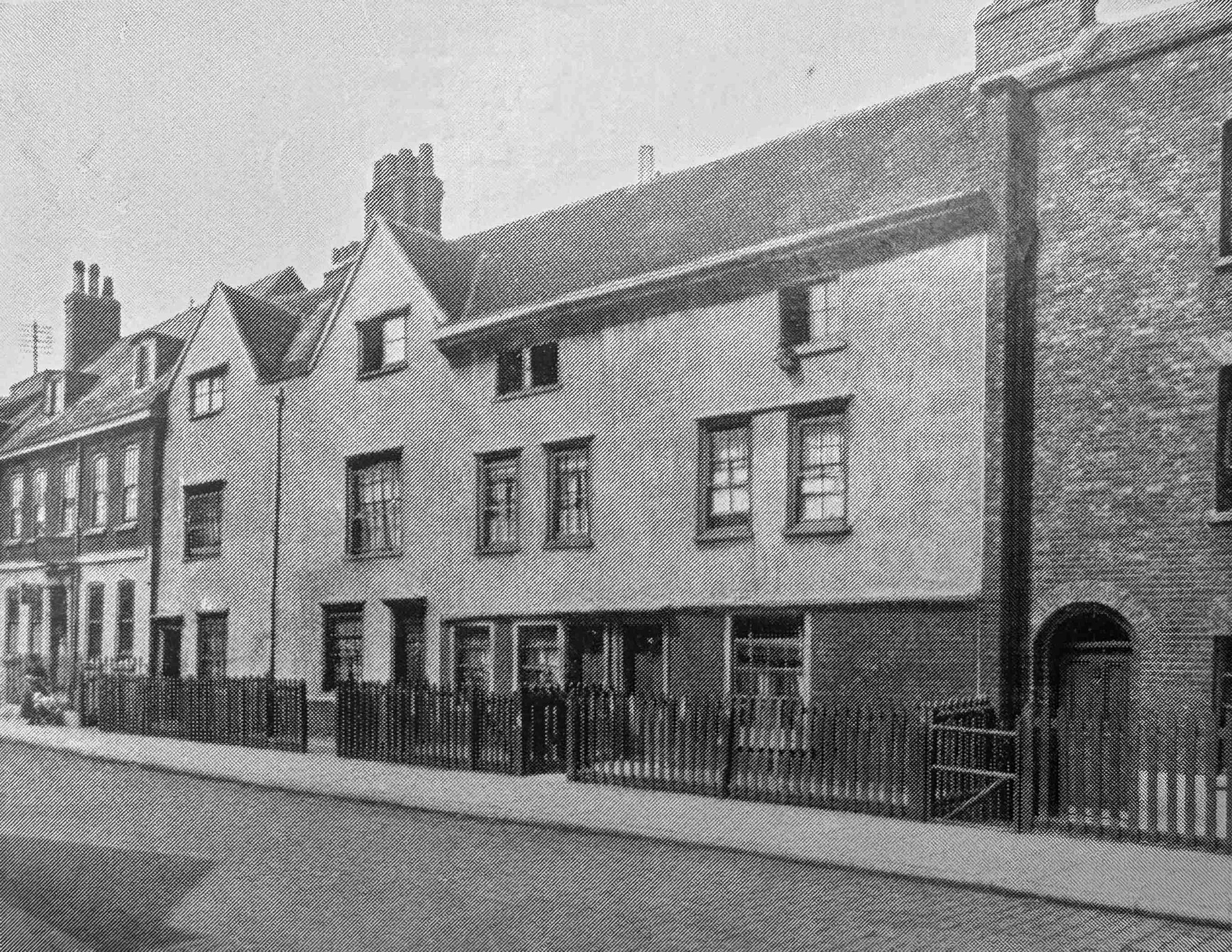
Municipal Offices, Spa Road:
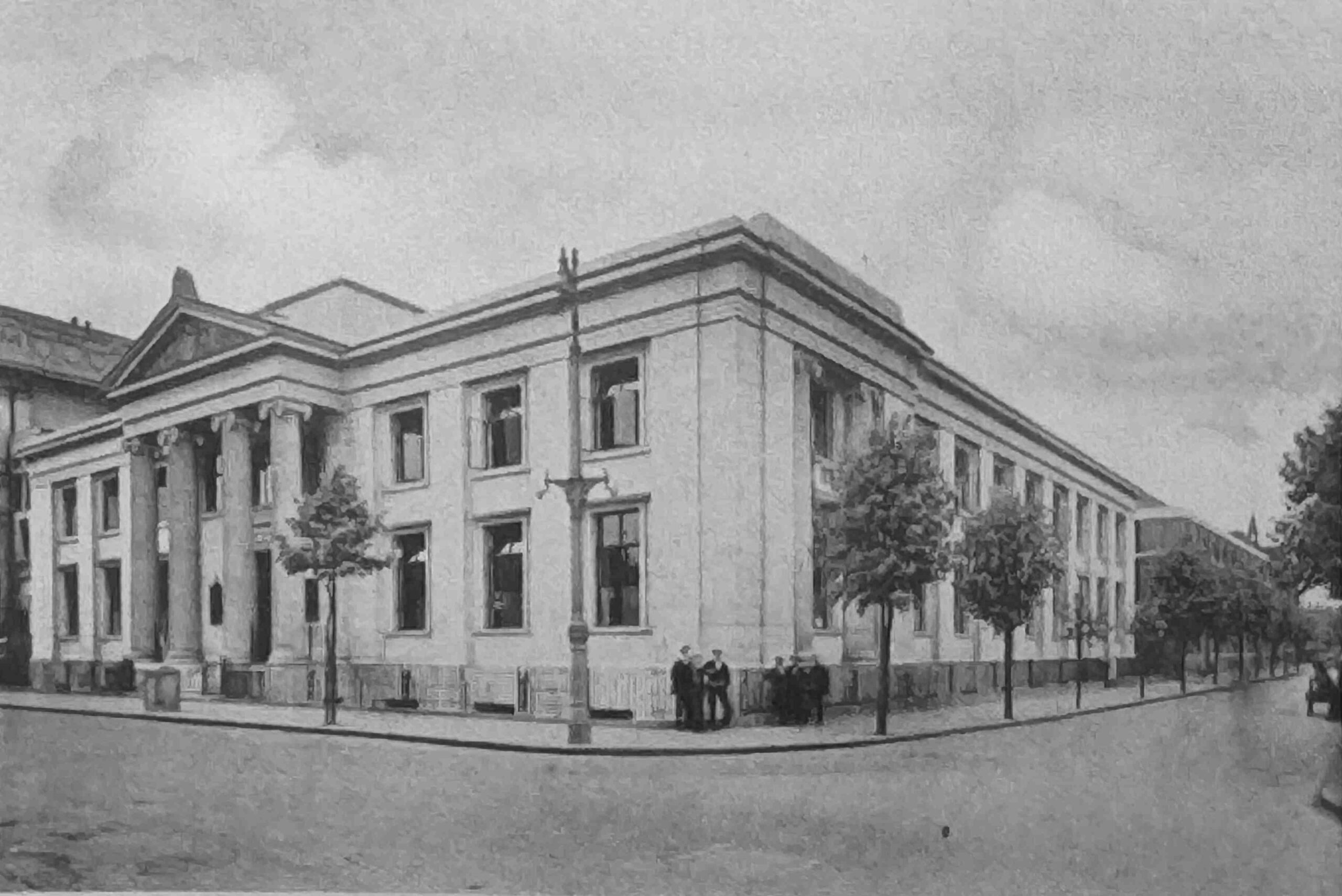
Bermondsey Parish Church with Recreation Ground Adjoining:
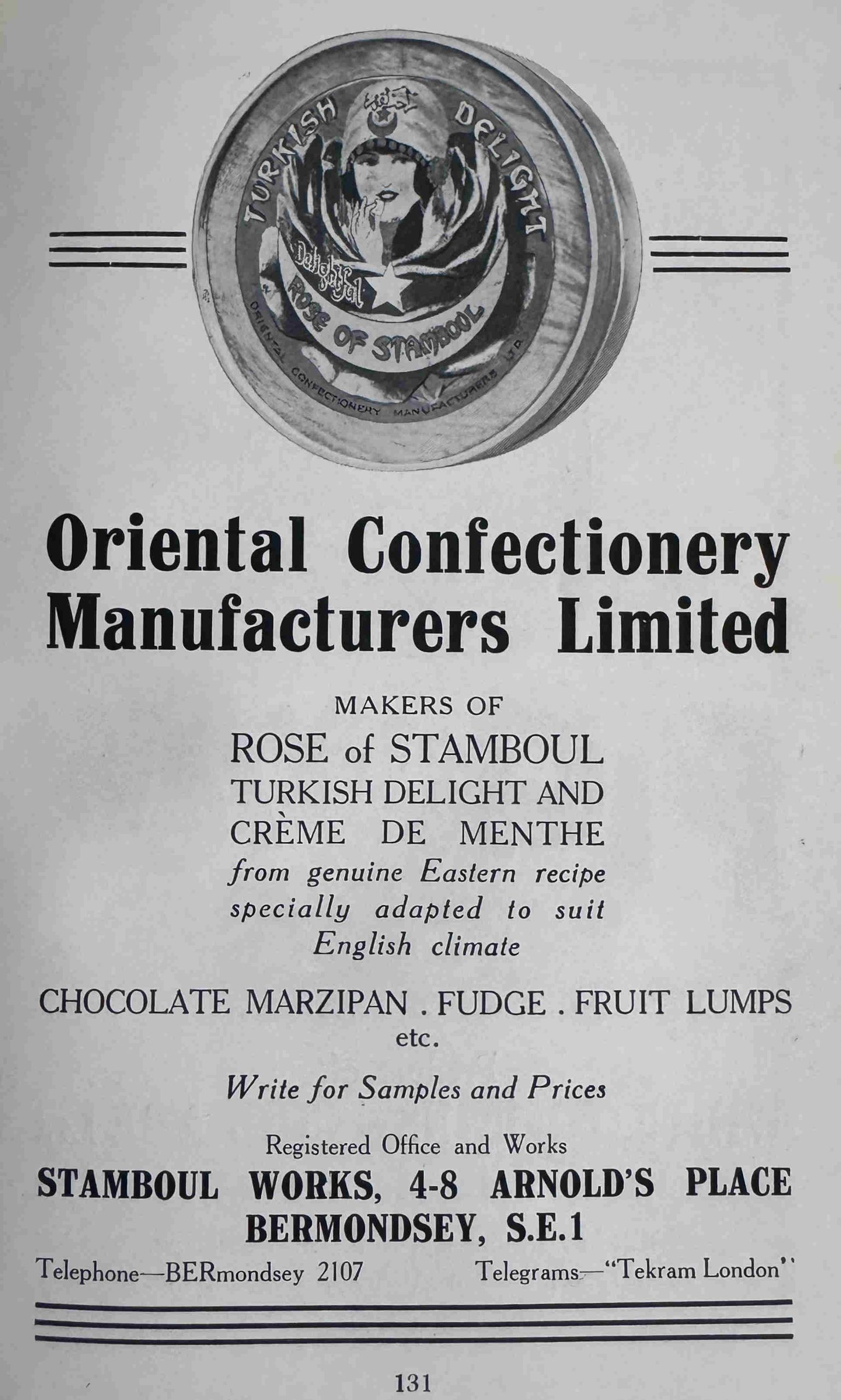
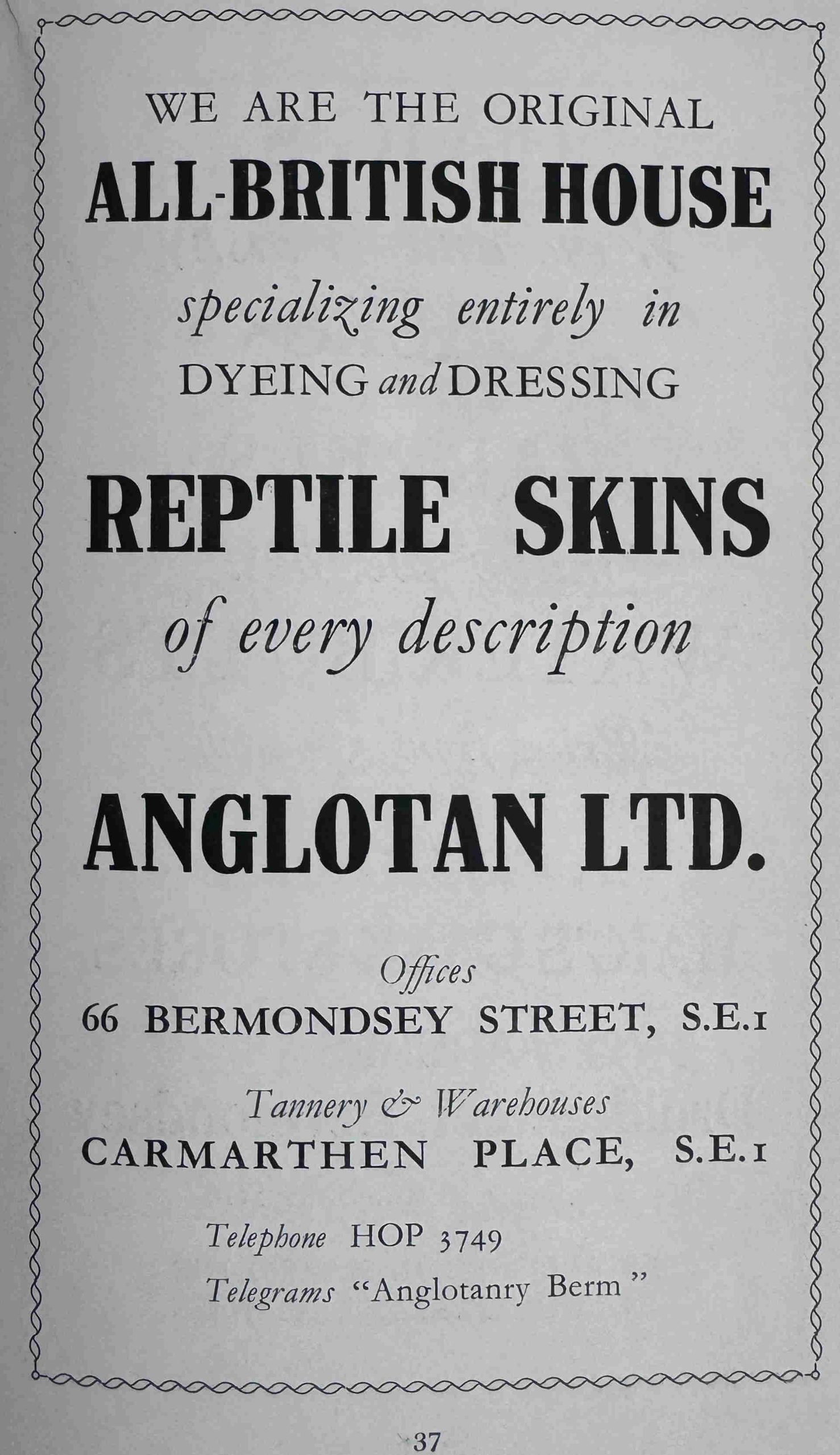
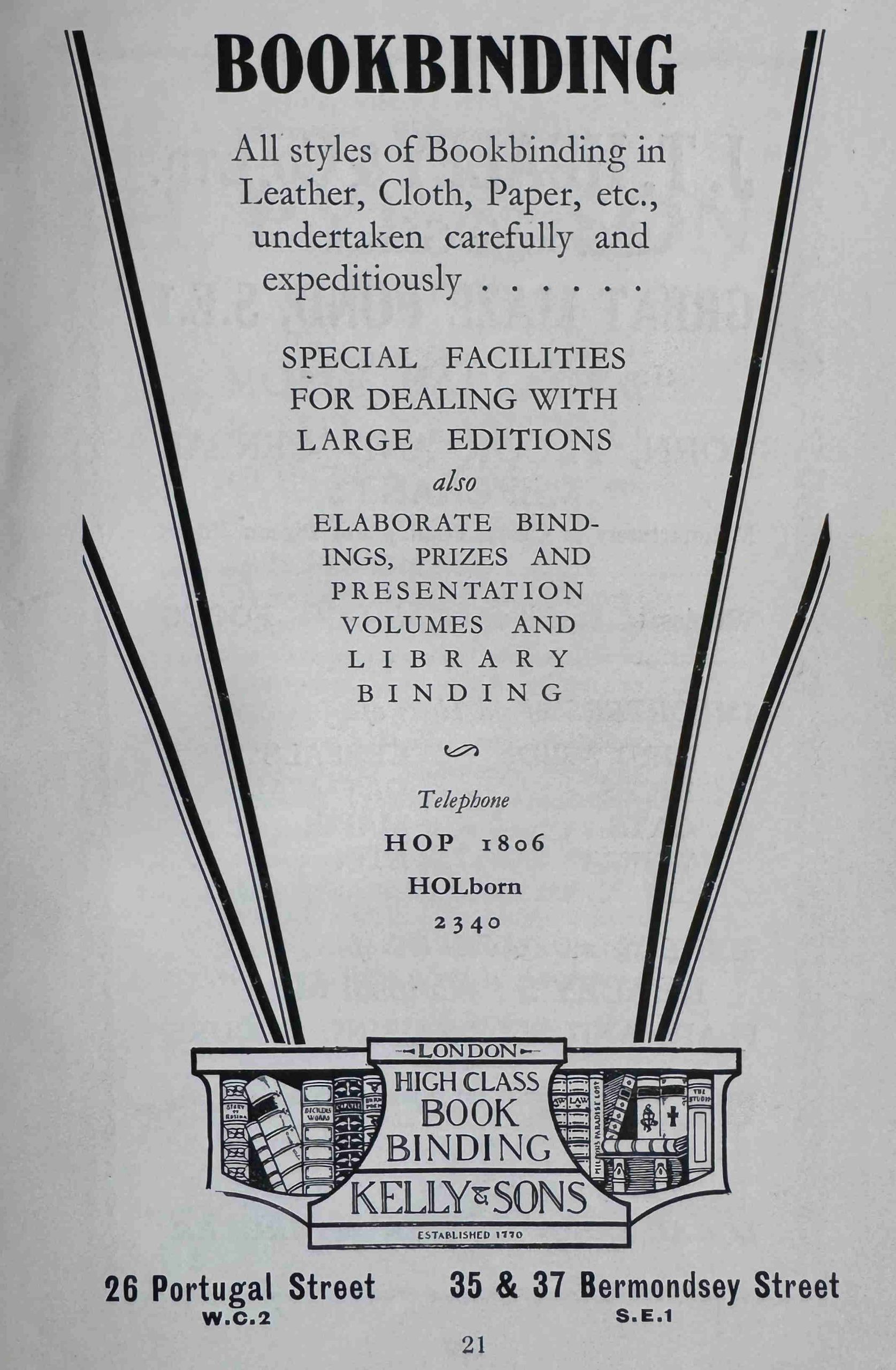
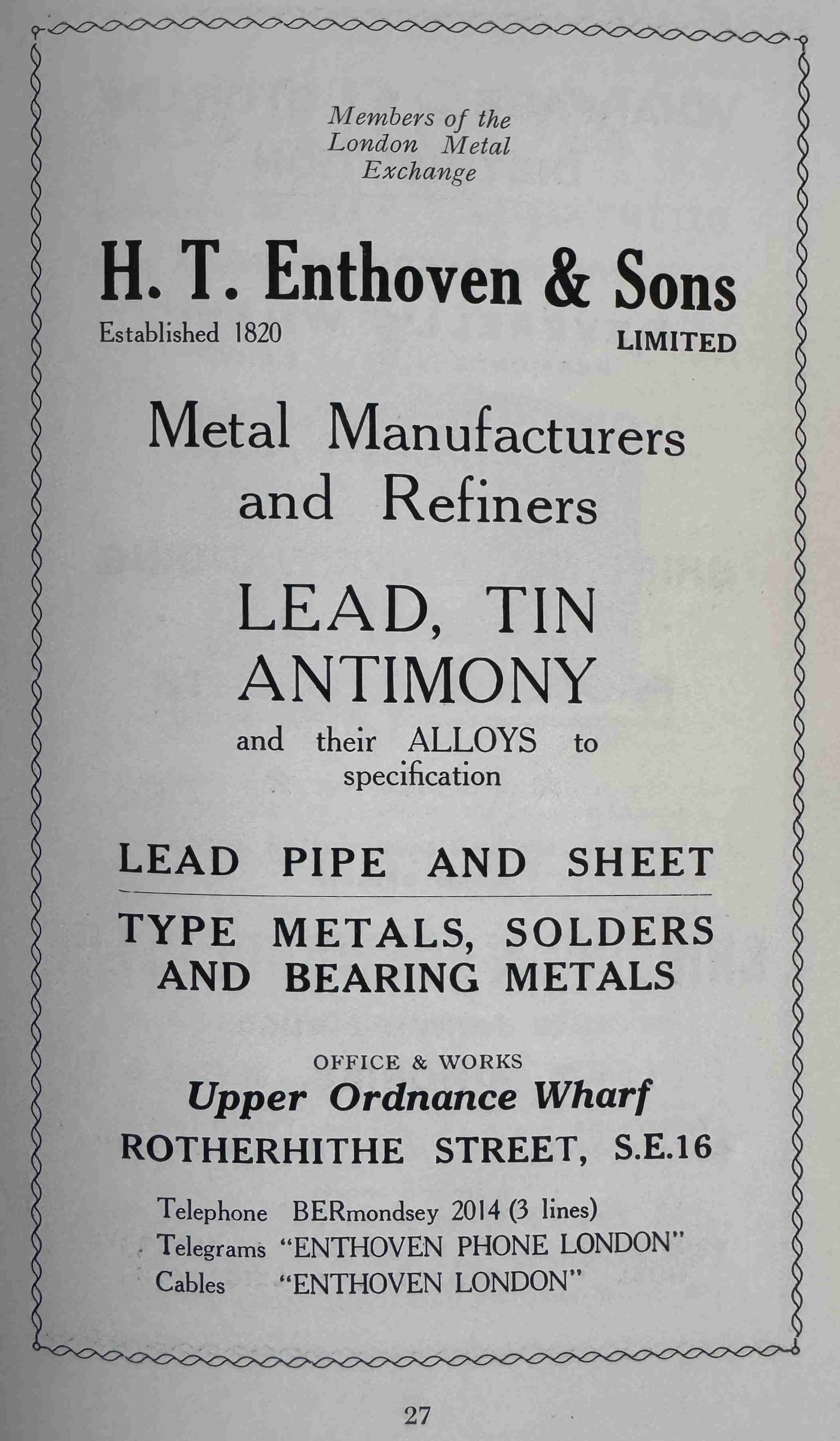
As well as a detailed history of Bermondsey and description of the borough in the early 1930s, the guide book includes numerous pages of adverts for the businesses that manufactured, exported, imported, and traded in Bermondsey.
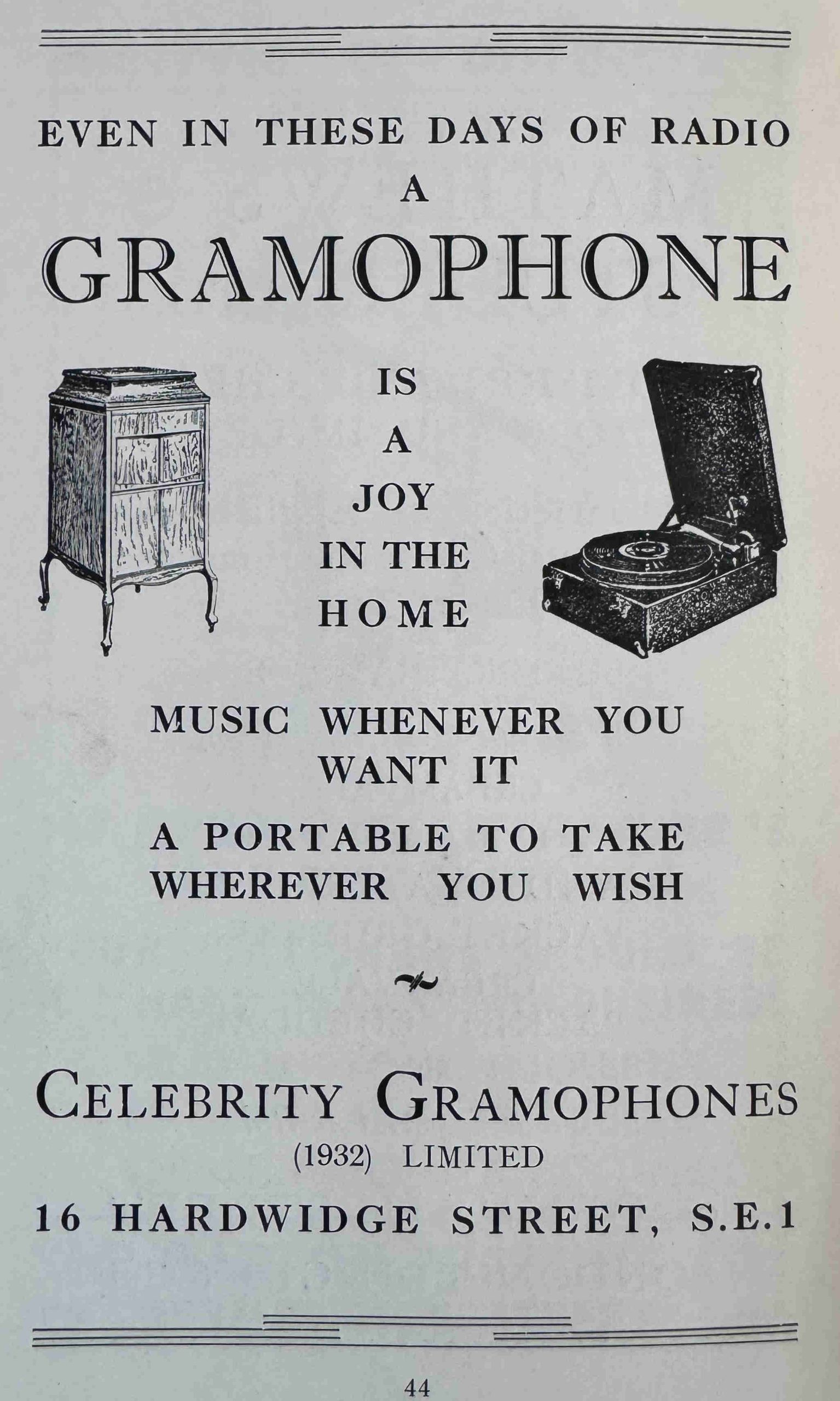
A small sample which gives an idea of the breadth of industry and business in Bermondsey, which included the Oriental Confectionary Manufacturers Limited:
Celebrity Gramophones:
Anglotan Ltd. – the All-British House for Reptile Skins:
Kelly & Sons – High Class Book Binding:
H.T. Enthoven & Sons Limited – Metal Manufacturers and Refiners:
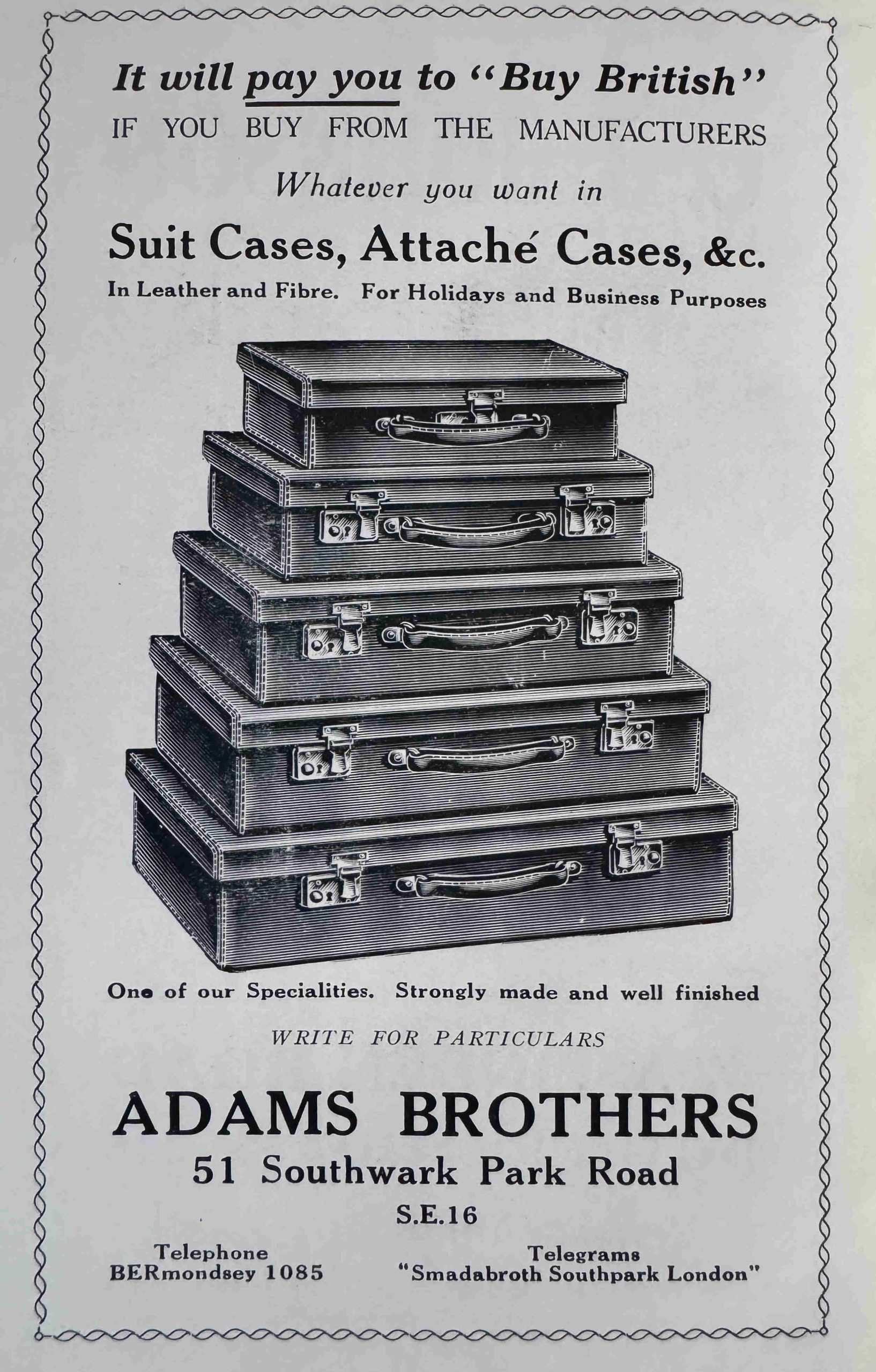
Adams Brothers – Suit Cases, Attaché Cases, &c. It will pay you to Buy British:
Bermondsey today is a very different place to that described in the 1930s guide book, but these adverts show only a small snapshot of the long history of an Ancient and Interesting Borough.
Booking for all dates at the following link: A London Inheritance Walks
Thank you for including the advertisement for Enthoven & Sons. My father worked for them in the early 1960s, as a manual labourer.
I wonder if people got annoyed about music being played on portable gramophones like they do from mobile phones today.
I was interested to see another bookbinders in bermondsey st, prob way before my time though.
I worked in another bindery in bermondsey st, Zaehnsdorfs, form 1986-1993 was at 175 r (i think) building is still there with another floor added as its now flats etc.
We was bought out by Aspreys of Bond street in 1988 and we joined up with the other big bindery Sangorski and Sutcliffe and then became SSZ’s as sangorskis were already owned by Asprey, we all moved into bermondsey street.
Anglotan hide merchants had the telephone number HOP 3749 that was on the Hopbinder exchange, a reminder that the area round about was the centre of the hop industry.
Very interesting reading about Bermondsey because I was born in Bermondsey in Farncombe Street 1936. The street got bombed in the war , we had to move but still in Bermondsey. Peak Ferens Biscuit Factory was there and the pickle factory, you had a choice of where to get a apply into one factory after another. I worked in Shuttleworth Sweet Factory for 2yrs then 2yrs at a carboard tube factory… small tubes for… like Ajax etc:
quite a variety of working places…with the Vacancy notice pinned on the factory doors.
Is the book still available to buy ?