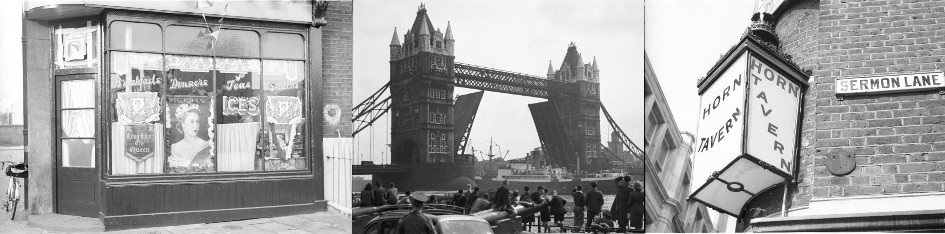
Back in October, in a post on two London churches and a Battersea Gas Holder (no connection between them – just some random features of London), I wrote about All Hallows Staining and the 50 Fenchurch development. I was rather frustrated that you could not get a view of the tower of the church on stilts as the main development went on around the ancient remains of All Hallows Staining.
A comment from a reader (thanks Brian J) informed that a view of the building site and the church was available from the viewing area at 120 Fenchurch Street – one of the new public viewing spaces on top of a recent City development.
The Garden at 120, to give the space its correct name, has been on my list of places to visit, but stupidly I had not made the connection between the viewing area and the building site directly in front.
I fixed that last week, with a visit to explore another view across the City.
The Garden at 120 is free, does not require a ticket and following a very brief wait in a small queue, the inevitable security check, then the lift took me to the 15th floor, which leads directly out to the viewing area:
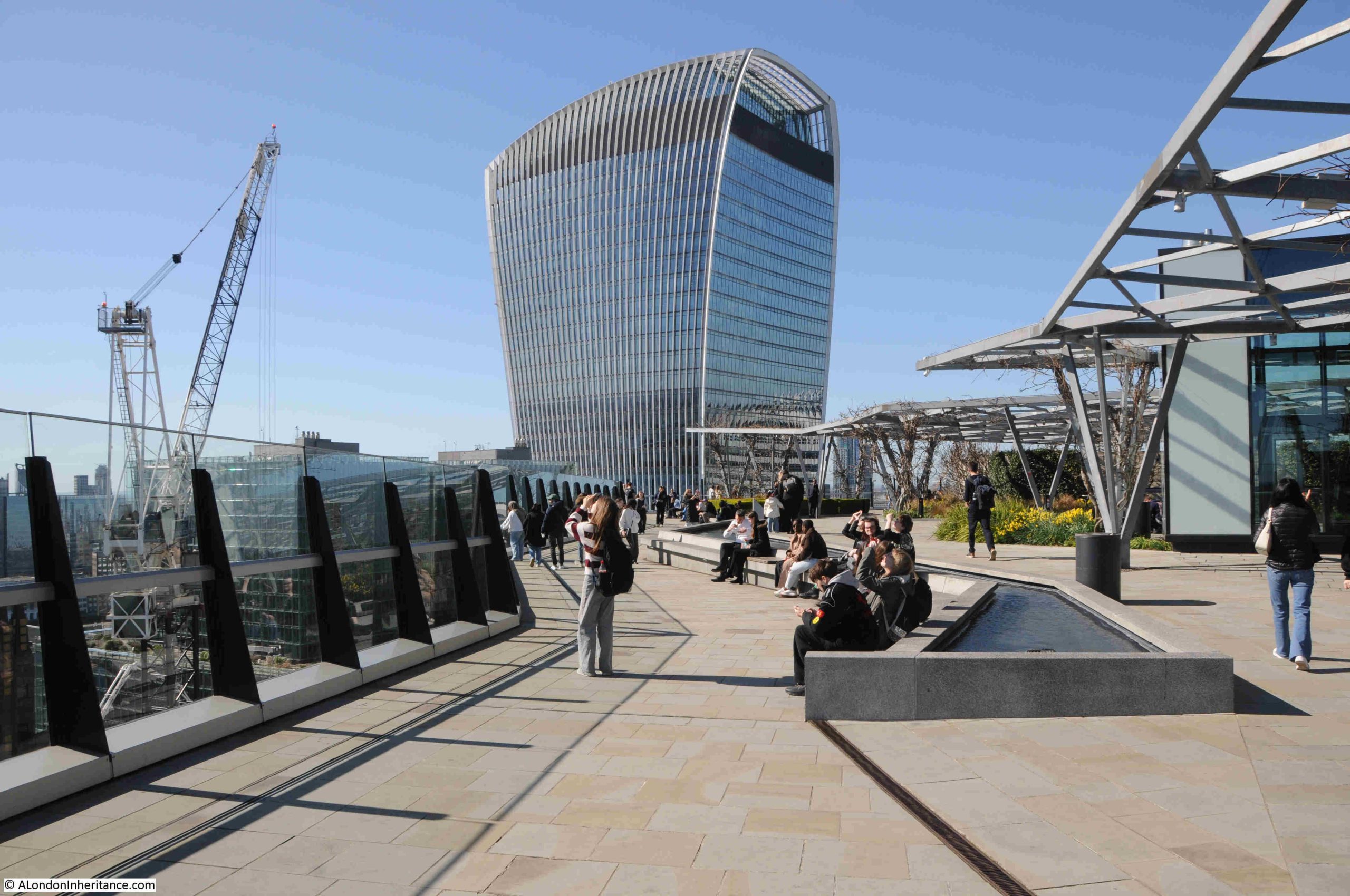
The above view is of the south facing part of the viewing area, which also runs around all four sides.
The weather was superb, however I immediately found some problems with taking photos through glass panels looking south, with the sun shining directly into the panels – lots of reflections and strange optical effects, which can be seen in the following photo looking directly down onto the tower of All Hallows Staining:
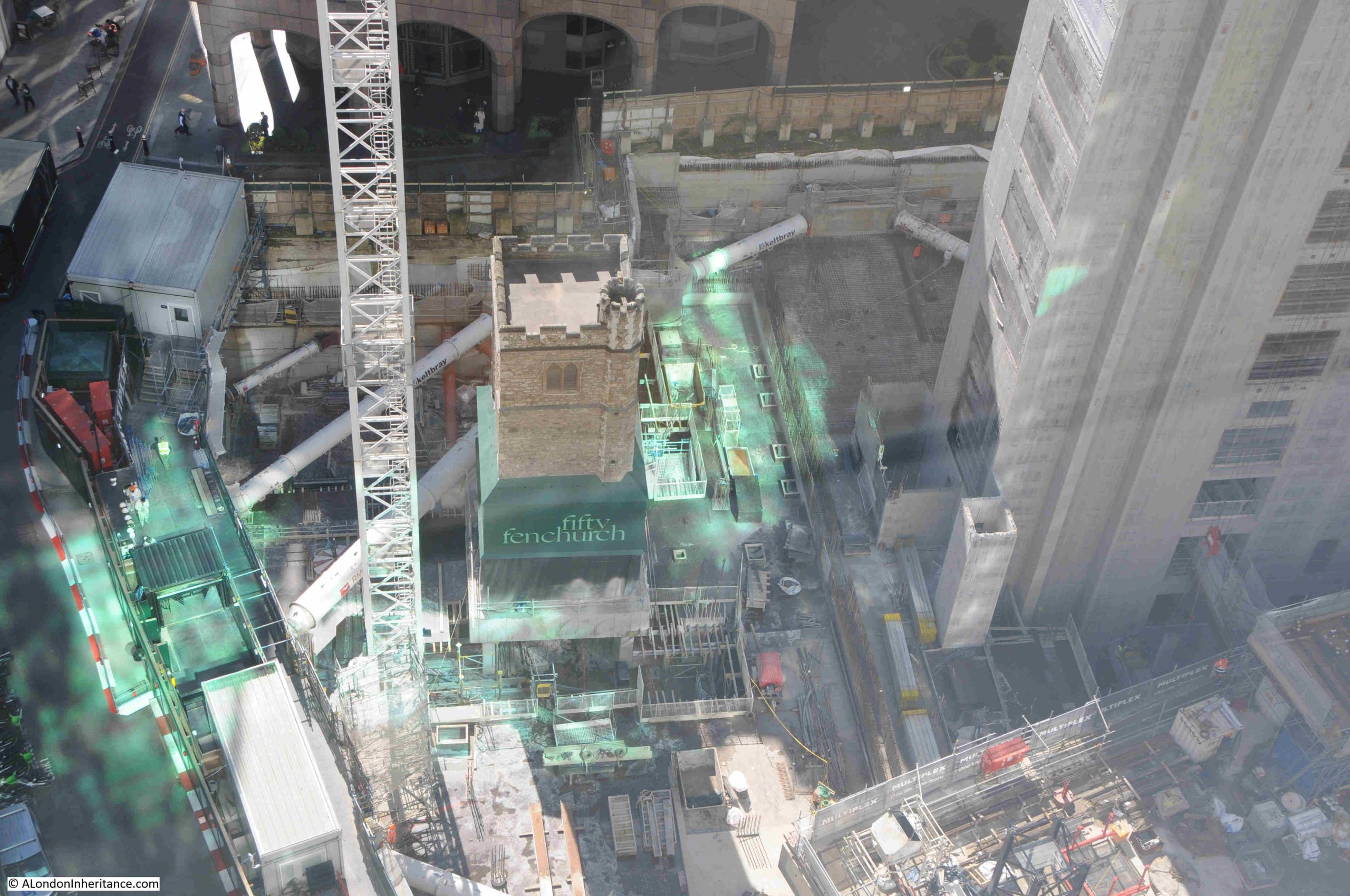
It is just possible to see the tower, standing isolated in the middle of an extensive building site, with the large round metal excavation support struts supporting the retaining walls around the excavation. A view from another angle:
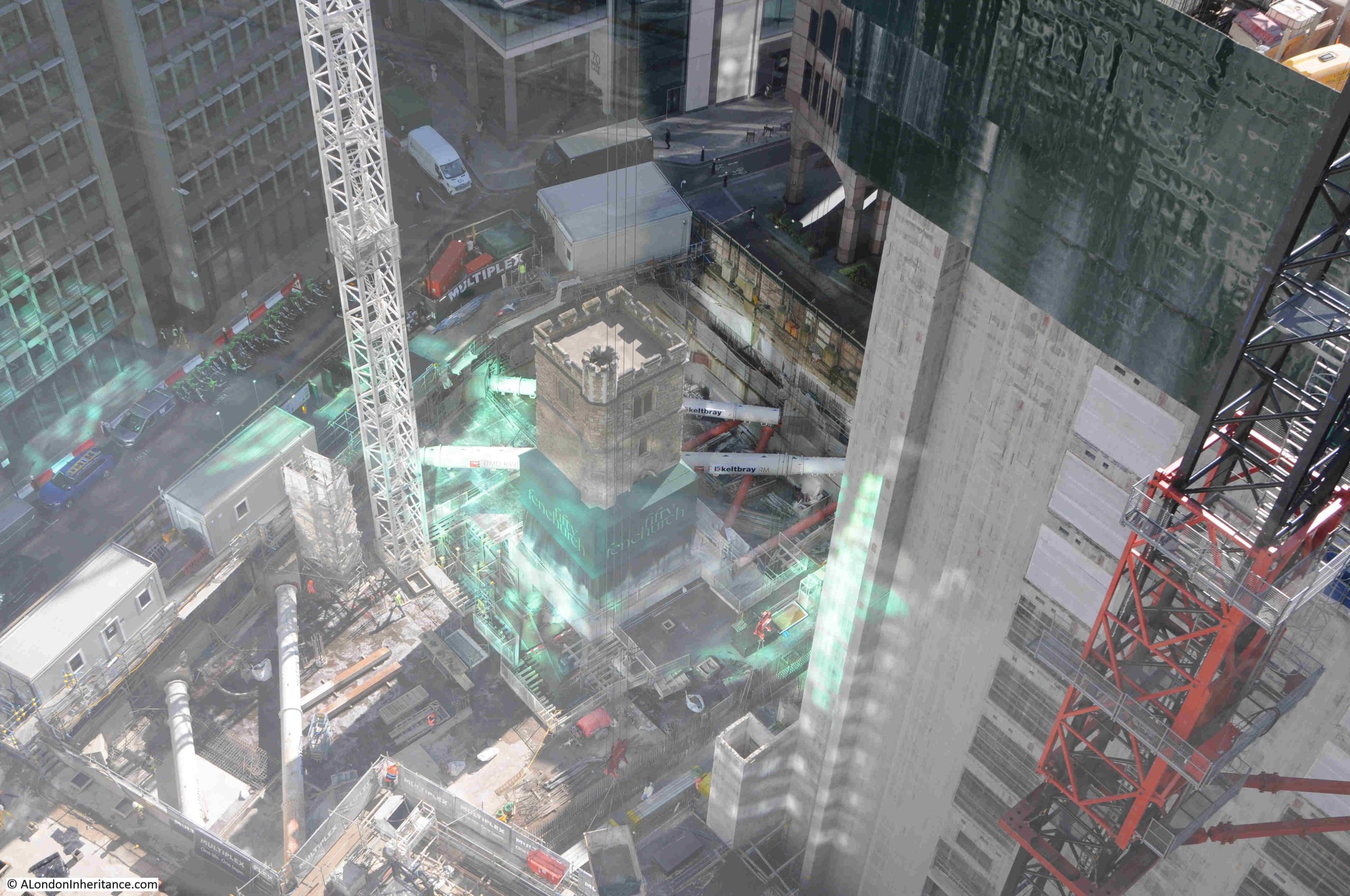
The development in front of 120 Fenchurch Street is Fifty Fenchurch, and when complete will be a 36-storey building, so will be much taller than 120 Fenchurch Street and will block part of the view to the south from the 15th floor garden.
As with almost all new towers in the City, Fifty Fenchurch will also include a public viewing gallery, but strangely this will be at level 10 rather than the roof or upper floors of the building, so the viewing gallery will be lower than the Garden at 120.
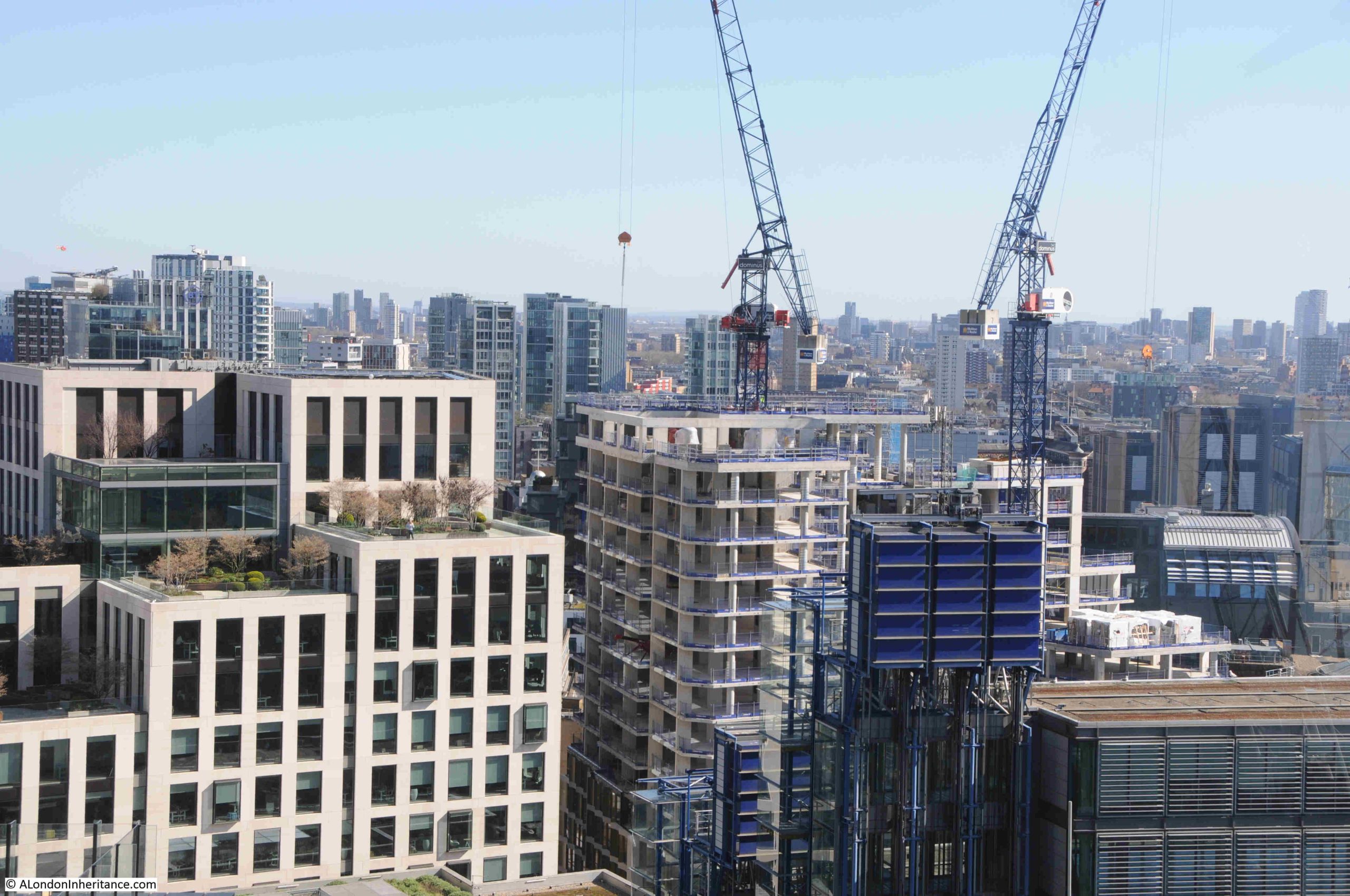
The current upper level of Fifty Fenchurch – the inner concrete core, which still has someway to go:
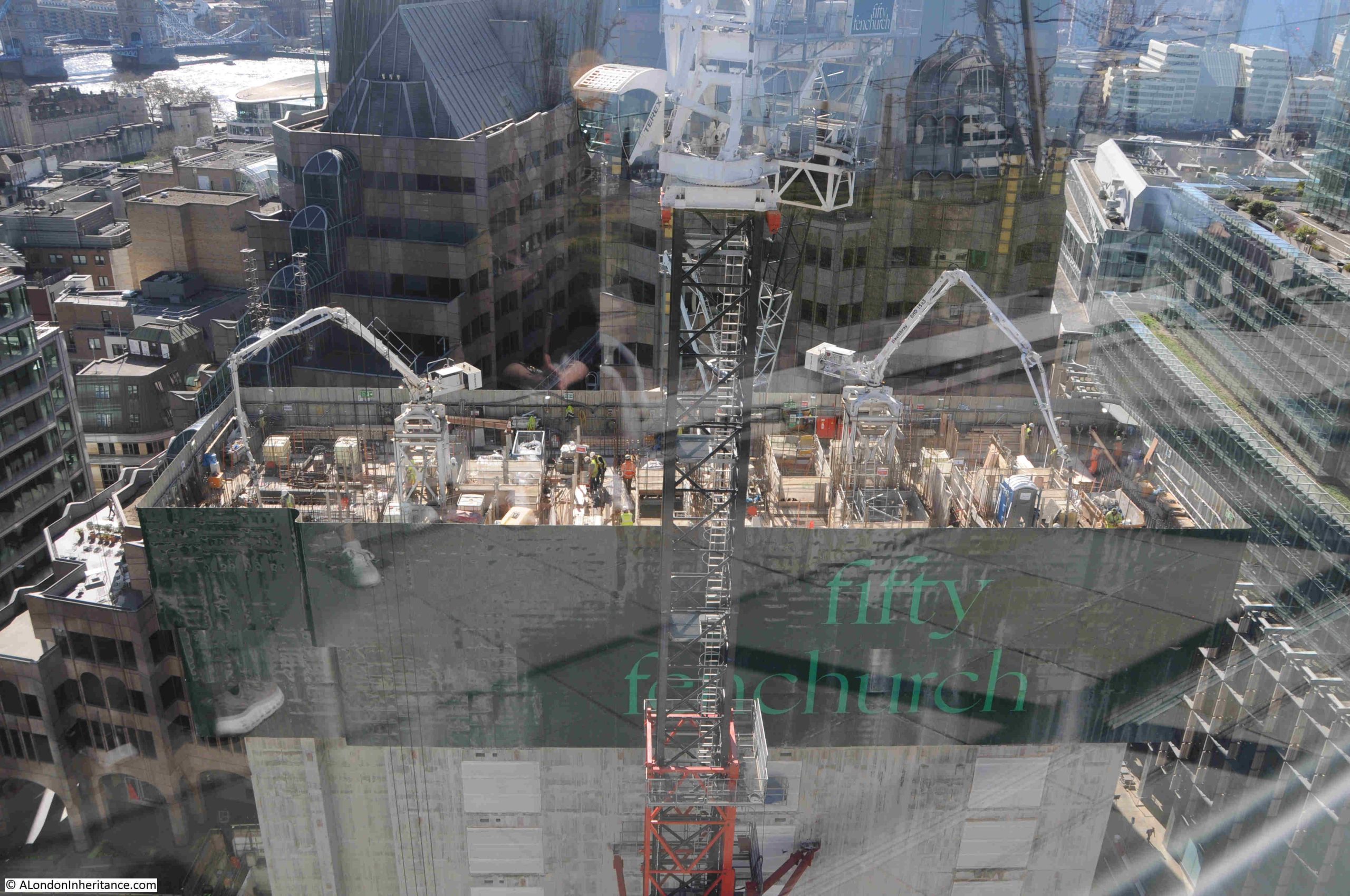
If you have a head for heights, then a job as a crane operator must provide some fascinating views of both construction sites and the wider area, although I would not fancy the climb up the ladders within the central frame to reach the cabin:
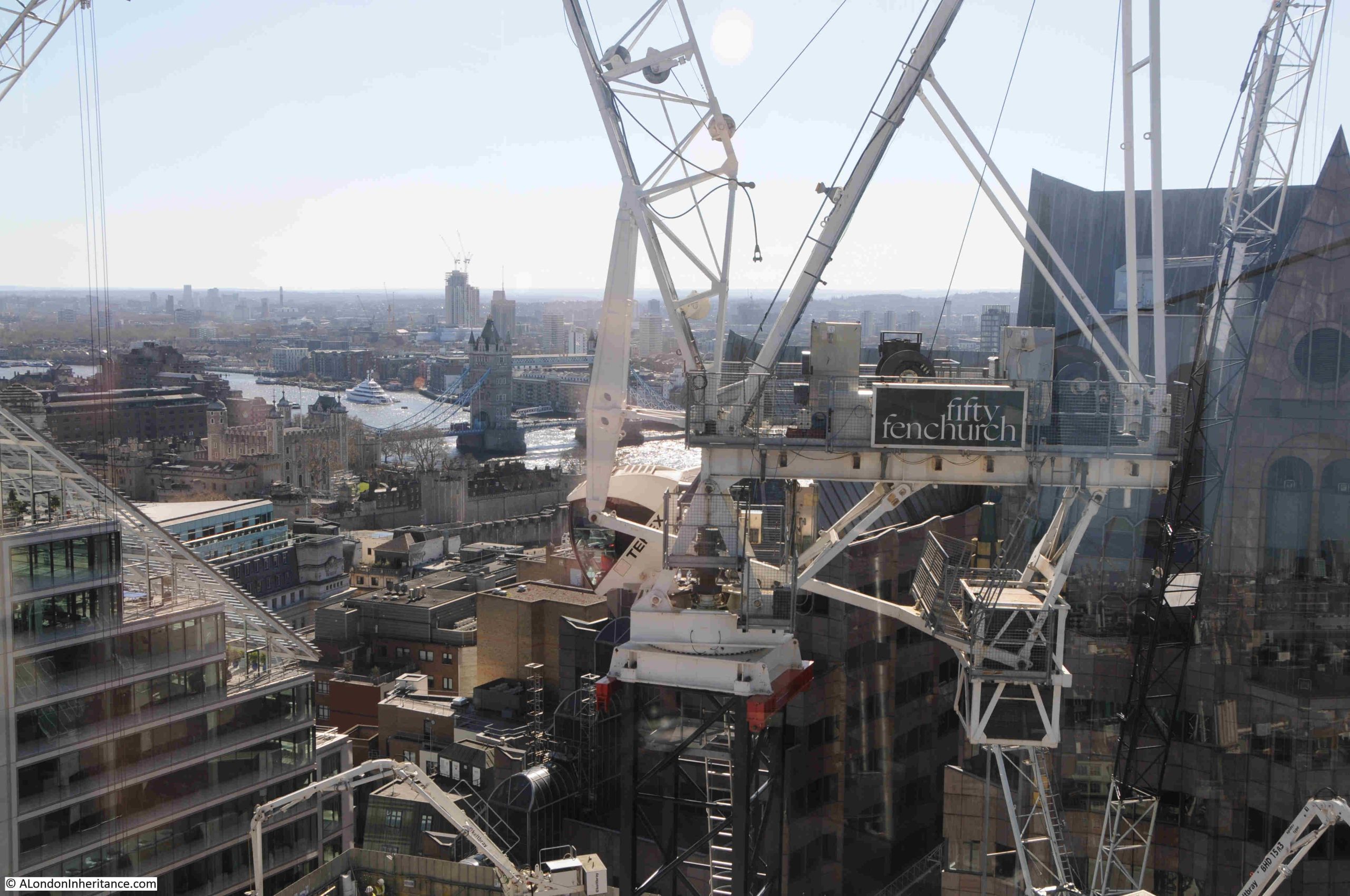
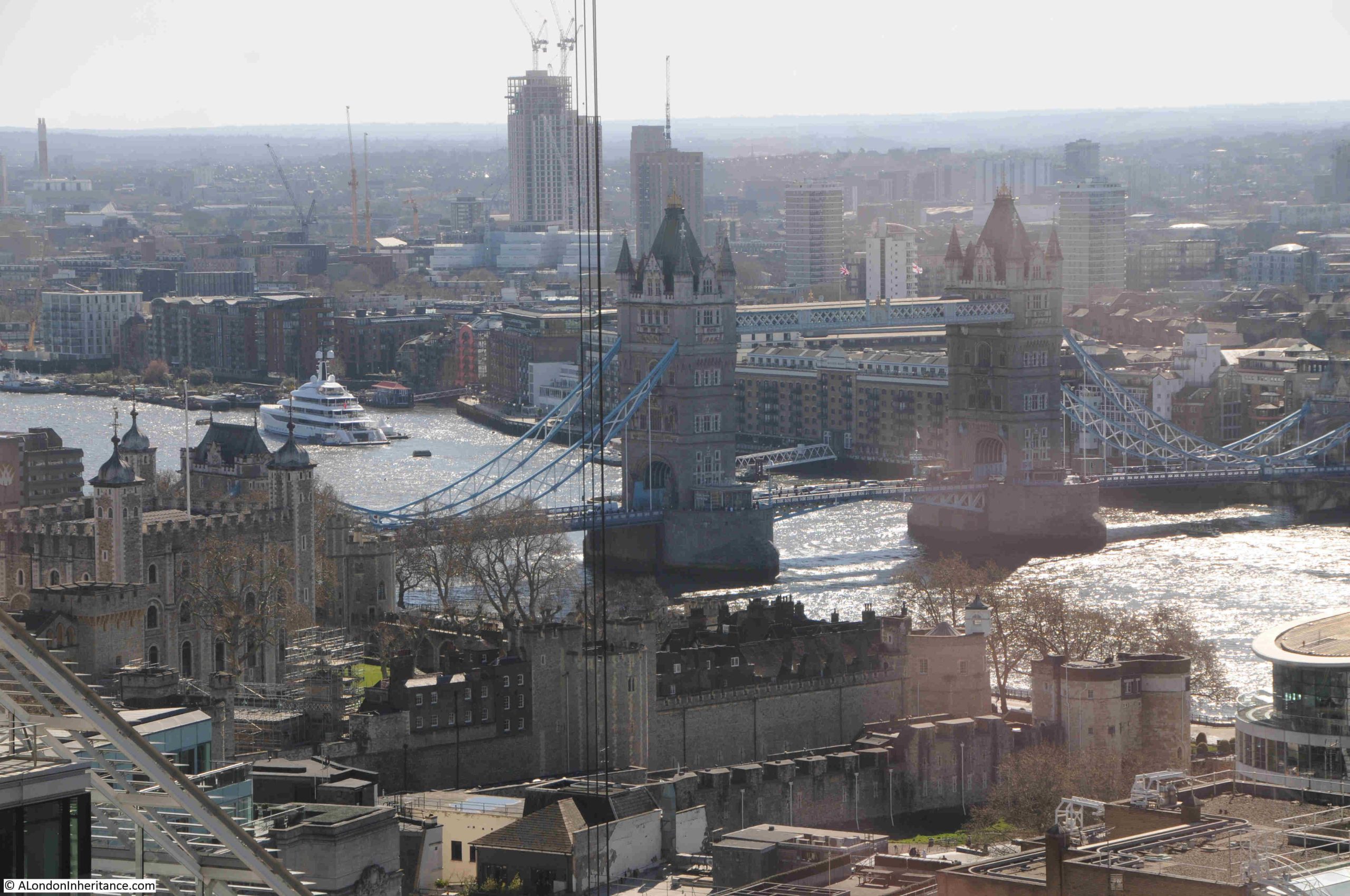
Tower Bridge:
Immediately to the west of 120 Fenchurch Street is Fountain House:
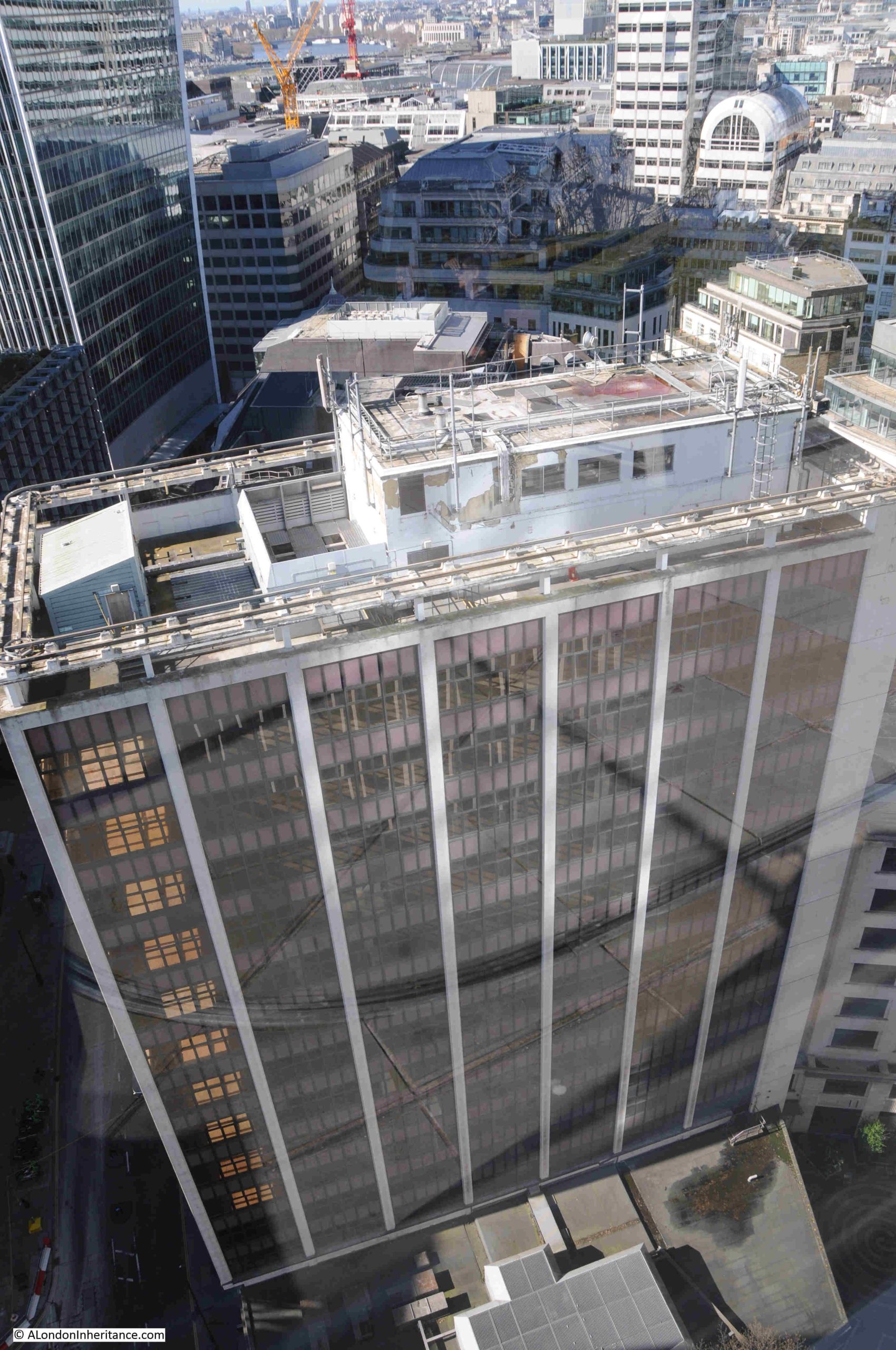
Fountain House was built between 1954 and 1958 to a design by W.H.Rogers and Sir Howard Robertson (Consulting). It was the first London building constructed to the tower and podium formula where a large podium occupies the full area of the plot of land, with a much small central space occupied by a tower block. I have written about the building in this post.
It will probably not be there for much longer, as the City of London Corporation has approved a new development with two new towers, one of 31 storeys and the other with 34, and on the 17th floor there will be a publicly accessible external garden terrace, so there will be three public viewing terraces all next to each other, so visitors to one, will be able to look across to visitors at the other two.
The development replacing Fountain House will also be much taller than 120 Fenchurch Street, so with Fifty Fenchurch to the south, Garden at 120 will be slowly surrounded by higher blocks.
Another building, also with a public viewing gallery is the Walkie Talkie, or more officially. 20 Fenchurch Street. The plan for the replacement of Fountain House implies that the following view of the Walkie Talkie will be obscured from the Garden at 120:
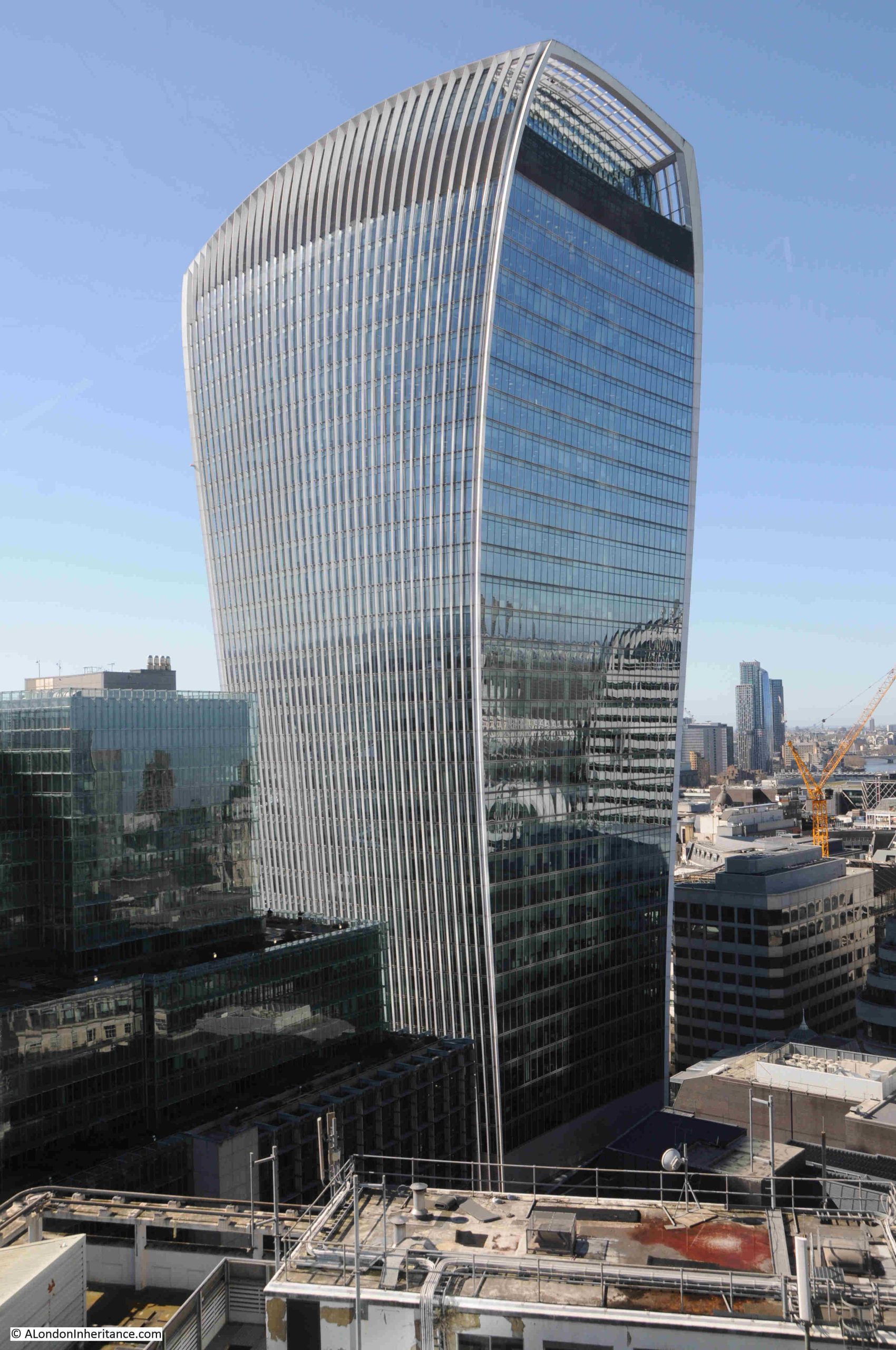
In a few years, you will be able to spend an entire day out visiting the four public viewing terraces all within a short distance along Fenchurch Street.
View towards the west with a small stretch of the Thames from Blackfriars Railway Bridge up to Waterloo Bridge:
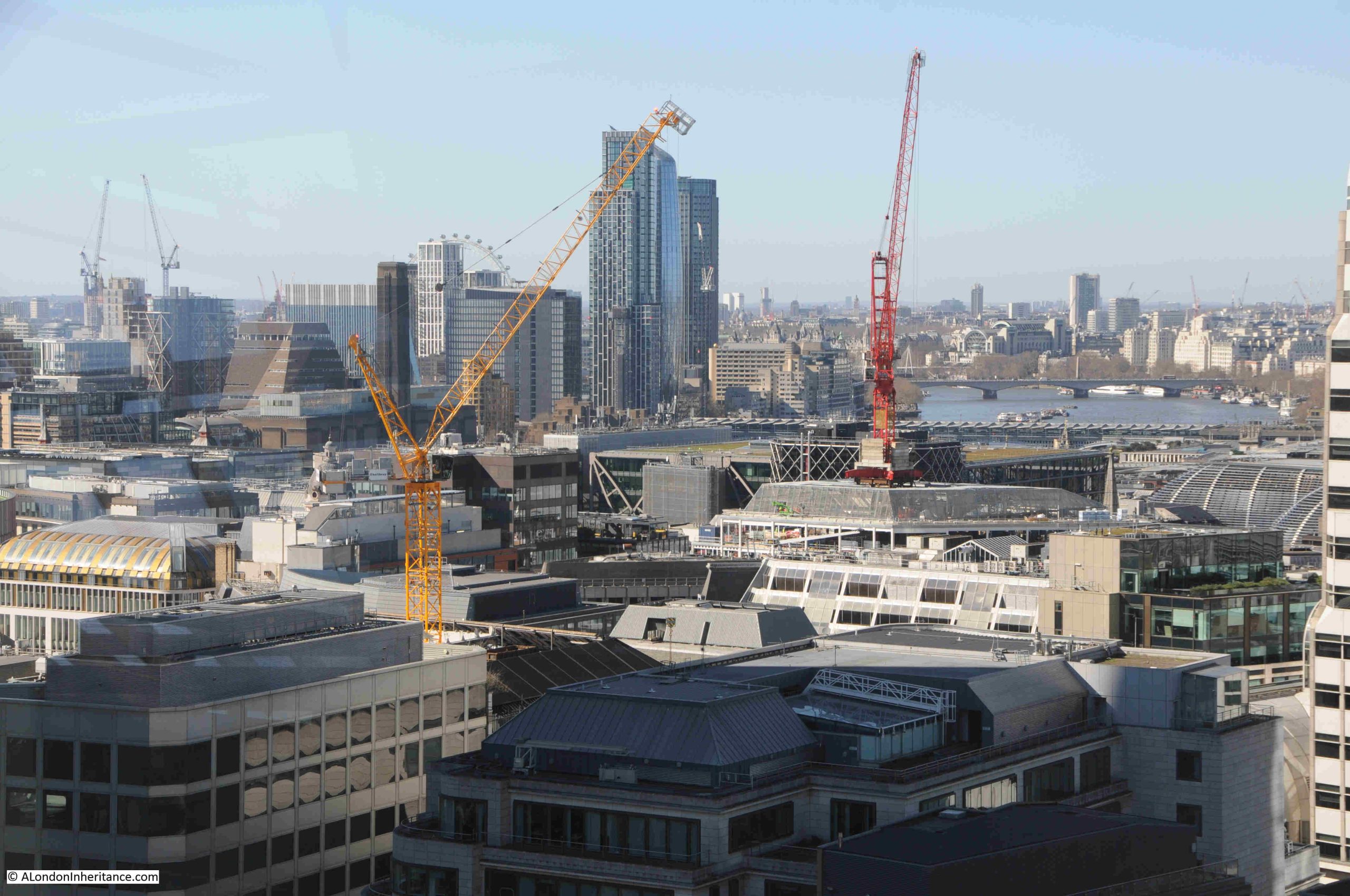
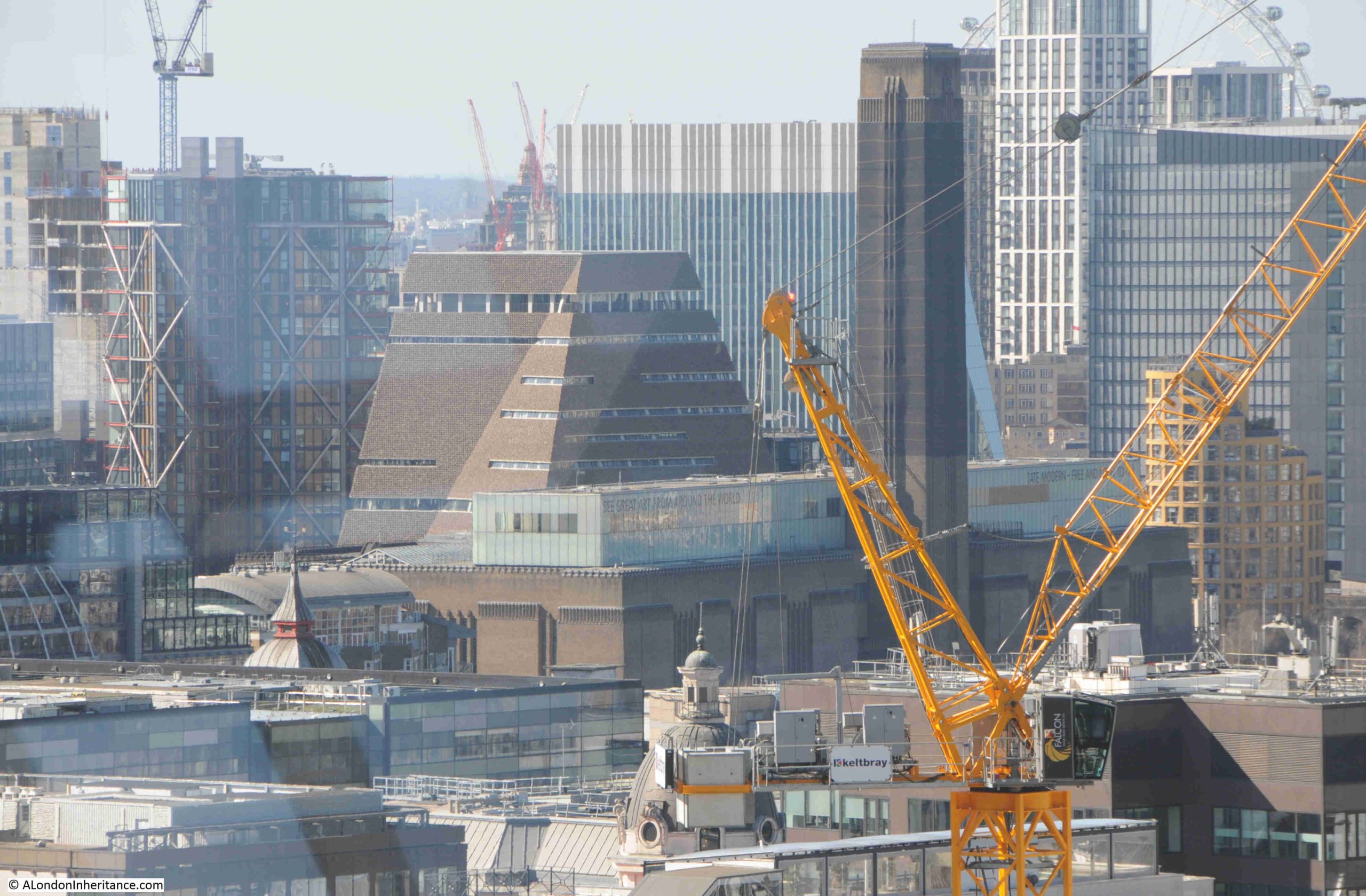
There is another viewing gallery in the above photo, just to the left of the yellow crane, is the Blavatnik Building of Tate Modern, and on the 10th floor is a viewing gallery:
The following photo illustrates how the scale of the modern City has grown exponentially from the historic City, and how historic buildings are reduced to filling in the ever decreasing gaps.
The Lloyd’s of London building is on the right, with the blue cranes along the roof, and the tall tower in the centre is the recently completed One Leadenhall:
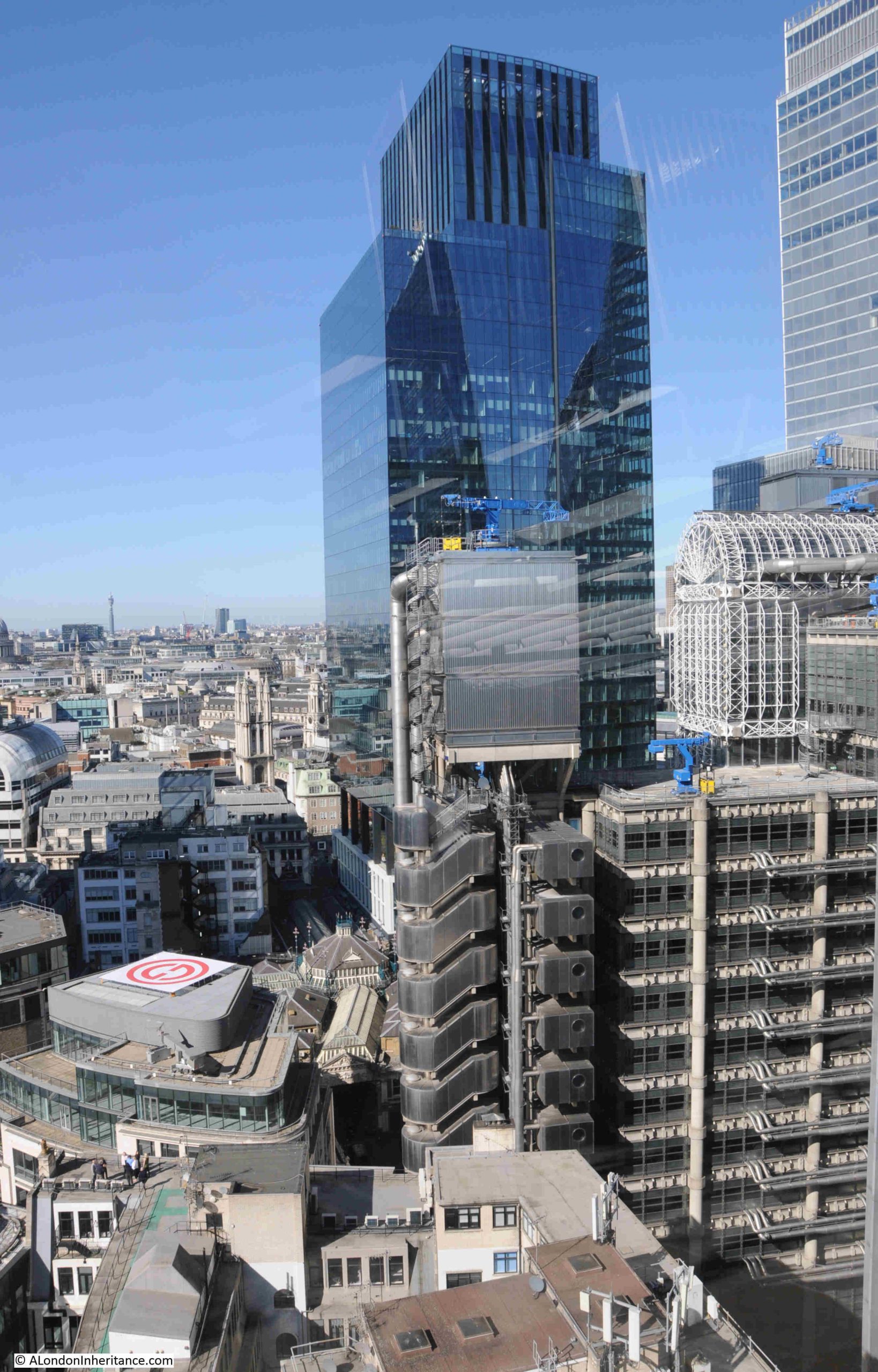
If you look to the lower left of One Leadenhall and the Lloyd’s of London building, you will see a very different structure – the roof of Leadenhall Market:
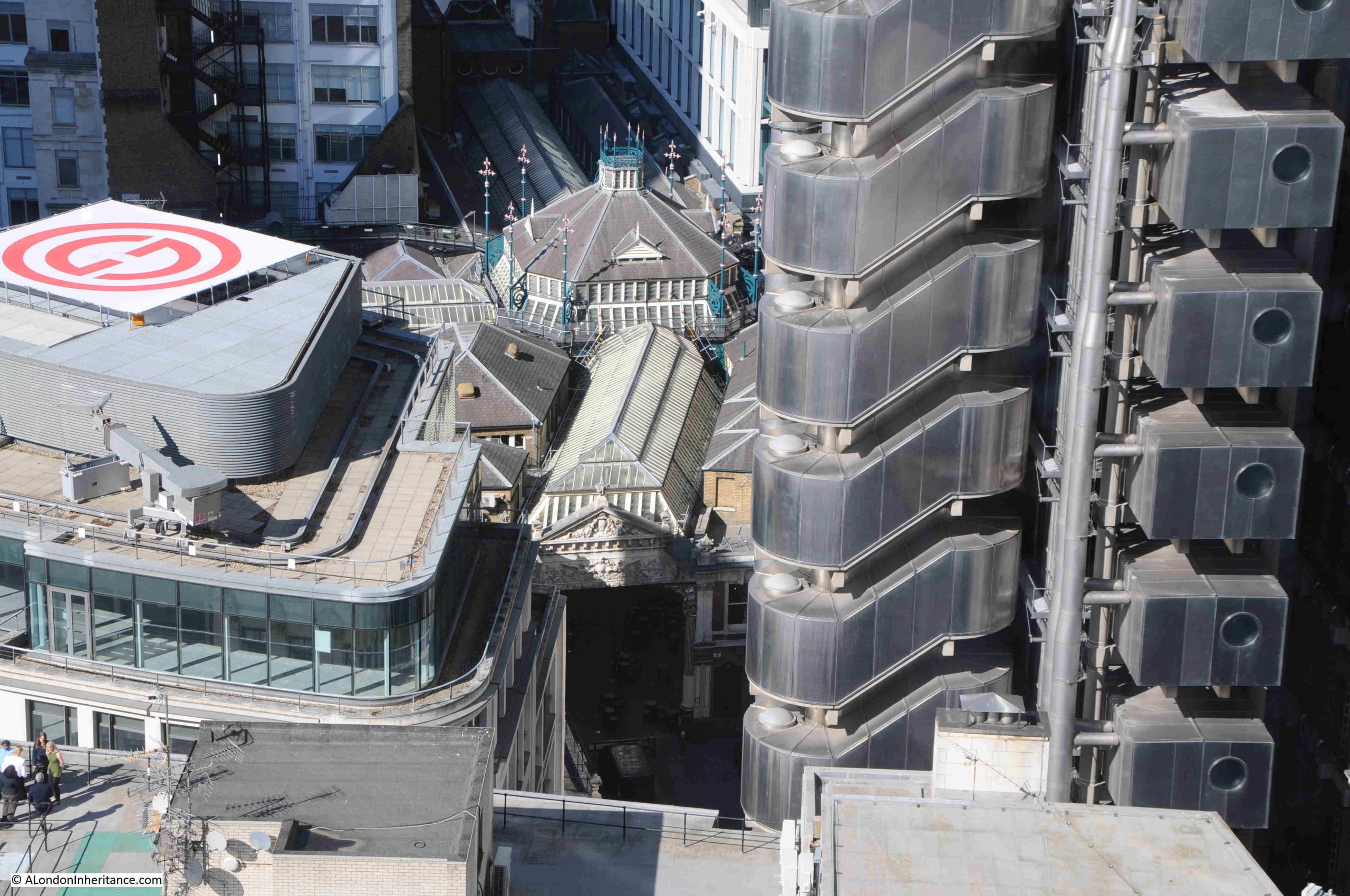
Although a market has been at the site for centuries, the current market buildings date from 1881, and the height and footprint of buildings in the City has grown so much in the following 145 years, at a scale that, whilst Victorian architects and builders were ambitious, would probably have been beyond their imagining.
There is a brief sequence early on in the 2013 Star Trek film – Into Darkness, where a bomb explodes in an underground facility in the City, and the CGI generated view of the City still shows St. Paul’s Cathedral, but it is surrounded by incredibly tall towers, much higher than we see in the City today.
The film is based in 2259, in 233 years time, and based on the rate of growth since the current Leadenhall Market buildings were completed, the CGI in Star Trek will probably be an accurate vision of the future London.
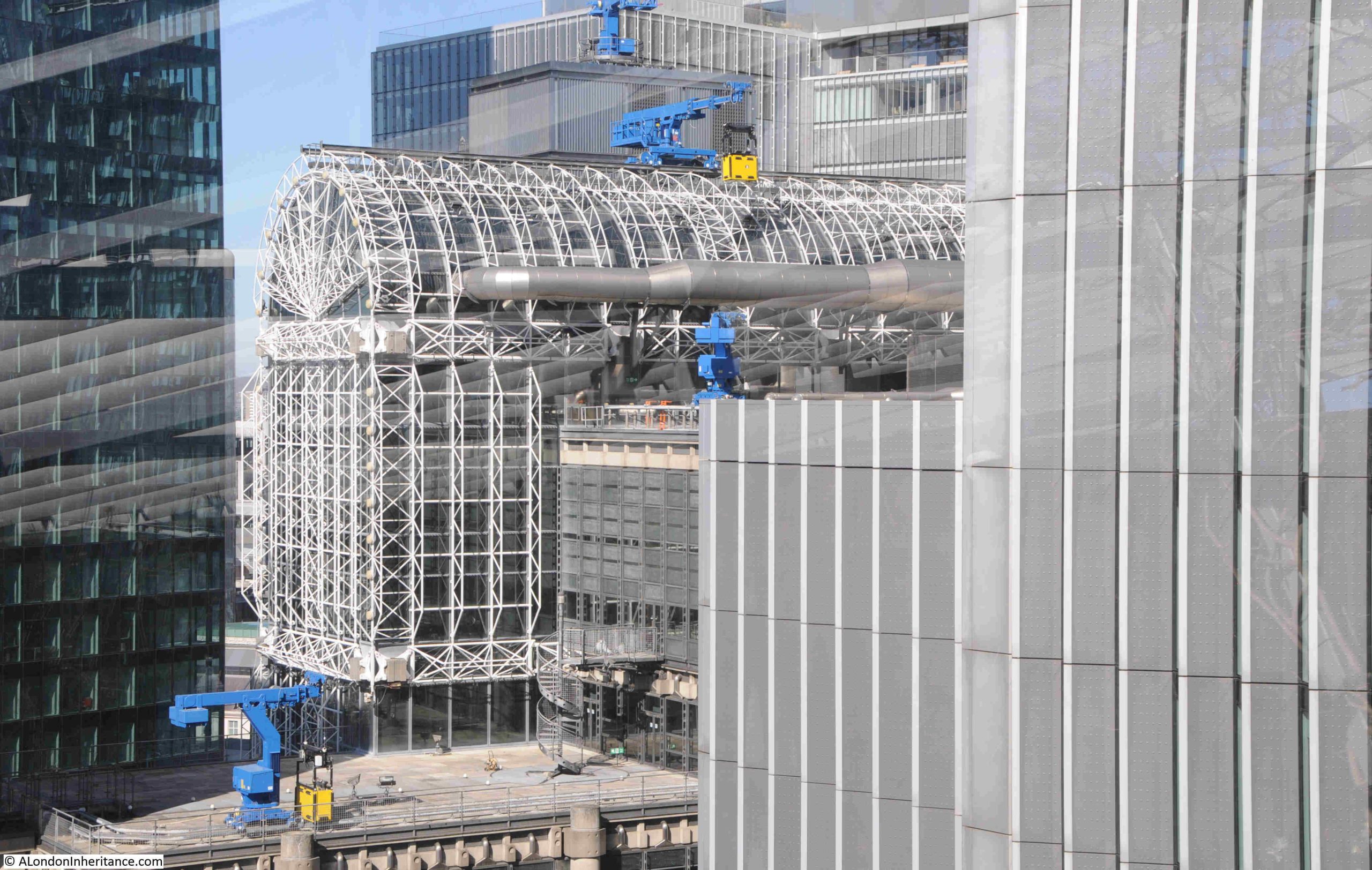
More of the Lloyd’s of London building – watching the blue crane along the top slowly moving along the roof line was interesting:
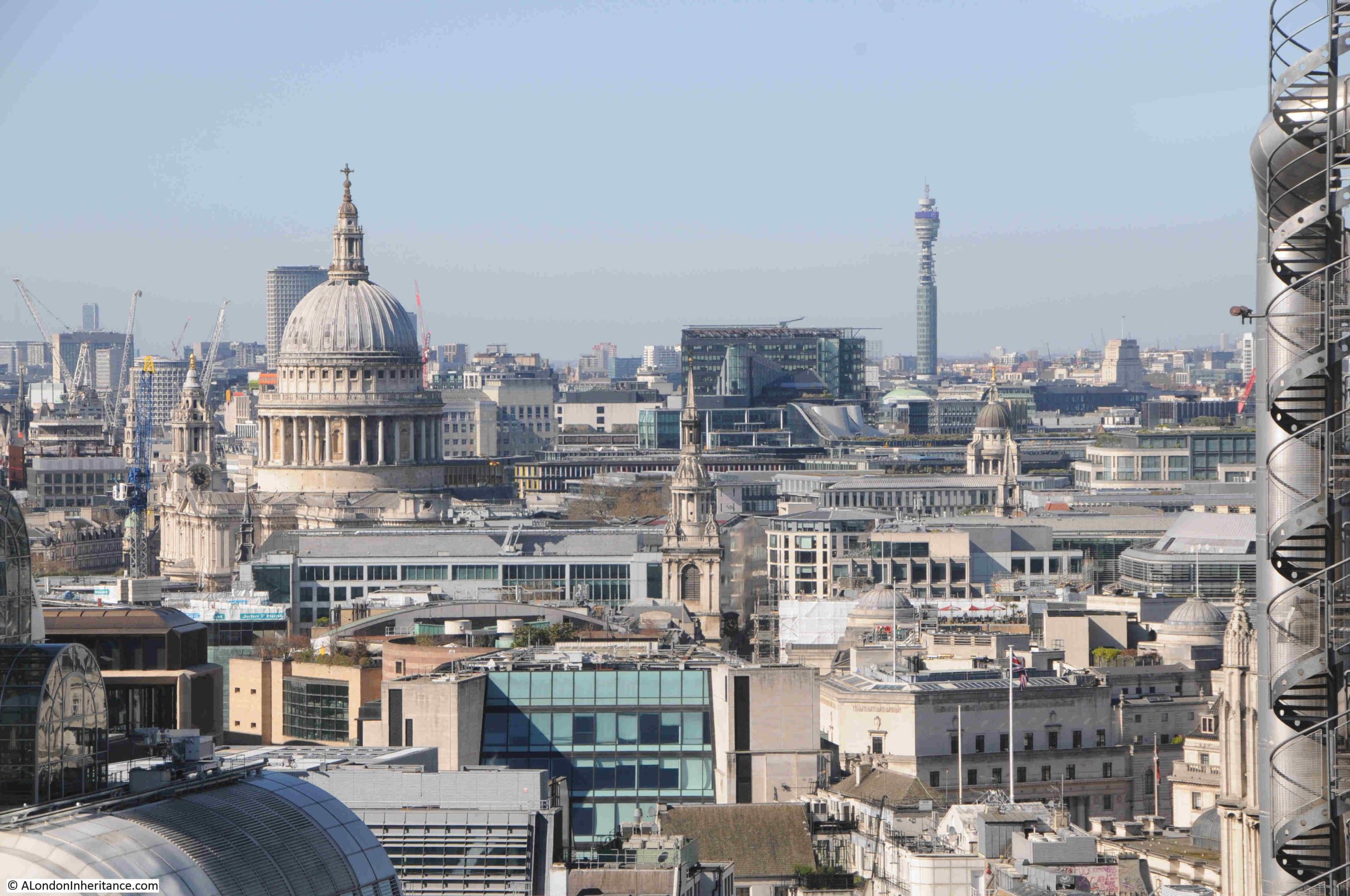
St. Paul’s Cathedral and the Post Office / BT Tower:
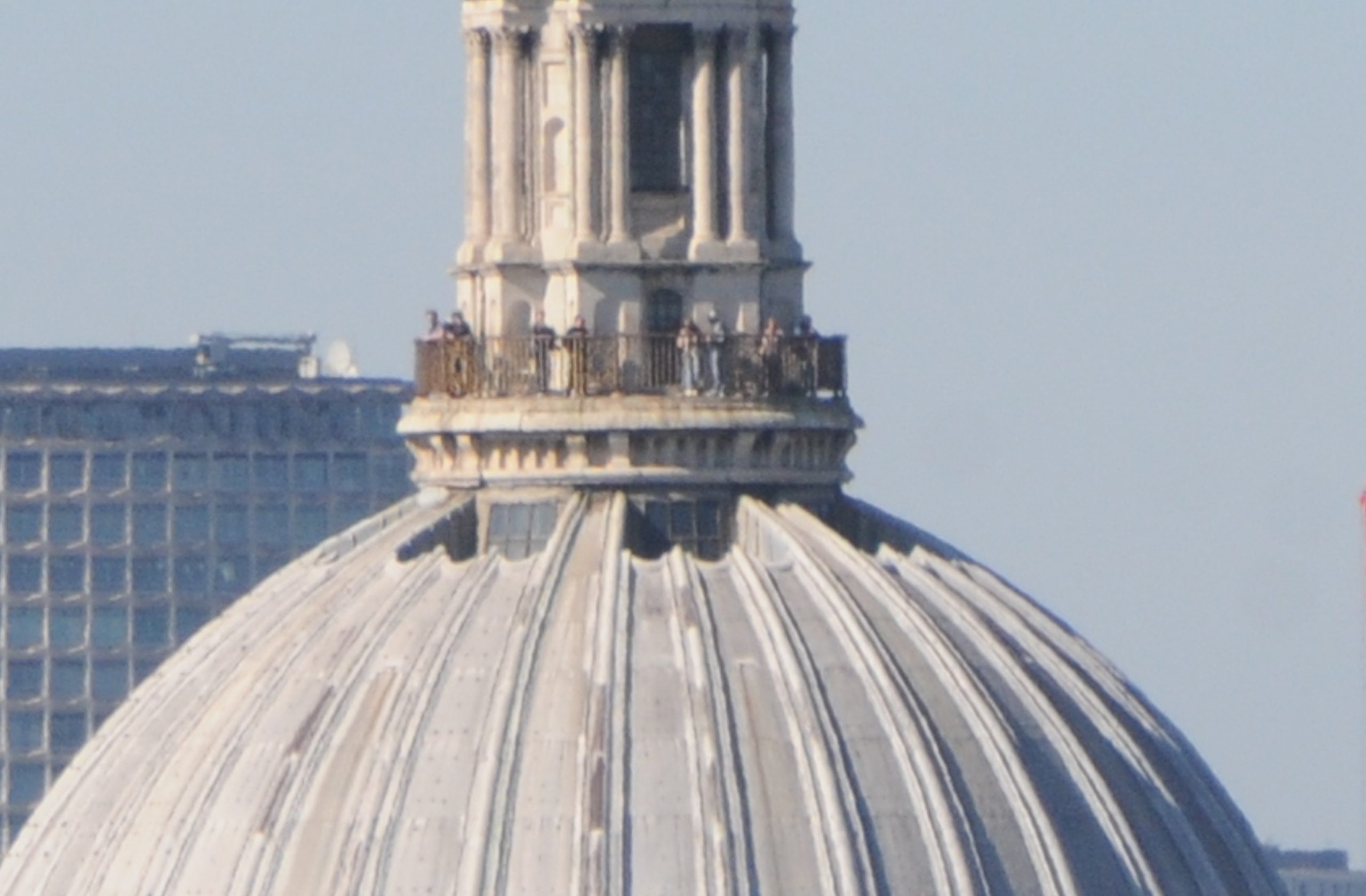
St. Paul’s Cathedral also has a couple of viewing galleries, including the Golden Gallery at the top of the dome, and from the Garden at 120 you can look across at other people enjoying the view of the city:
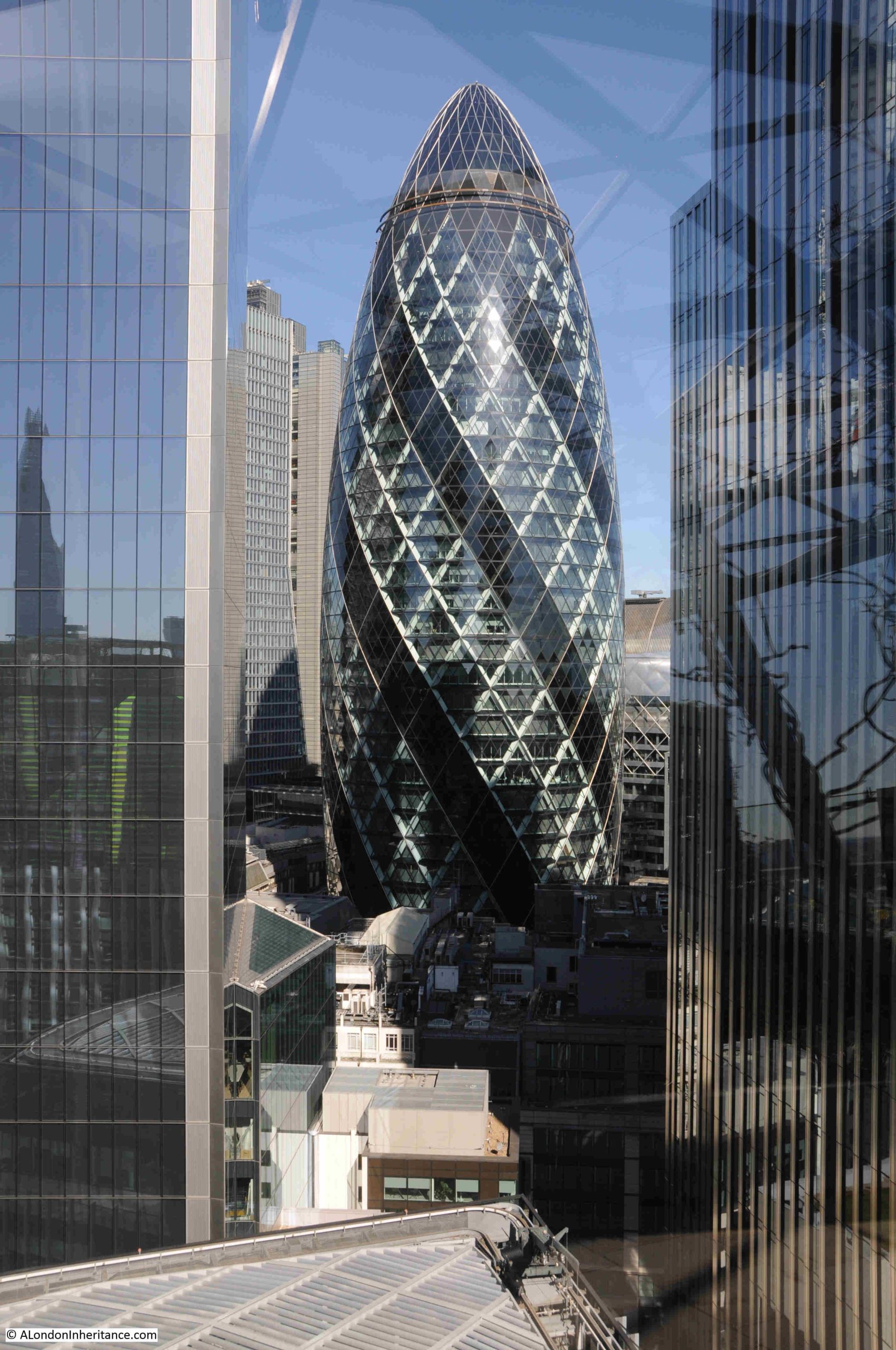
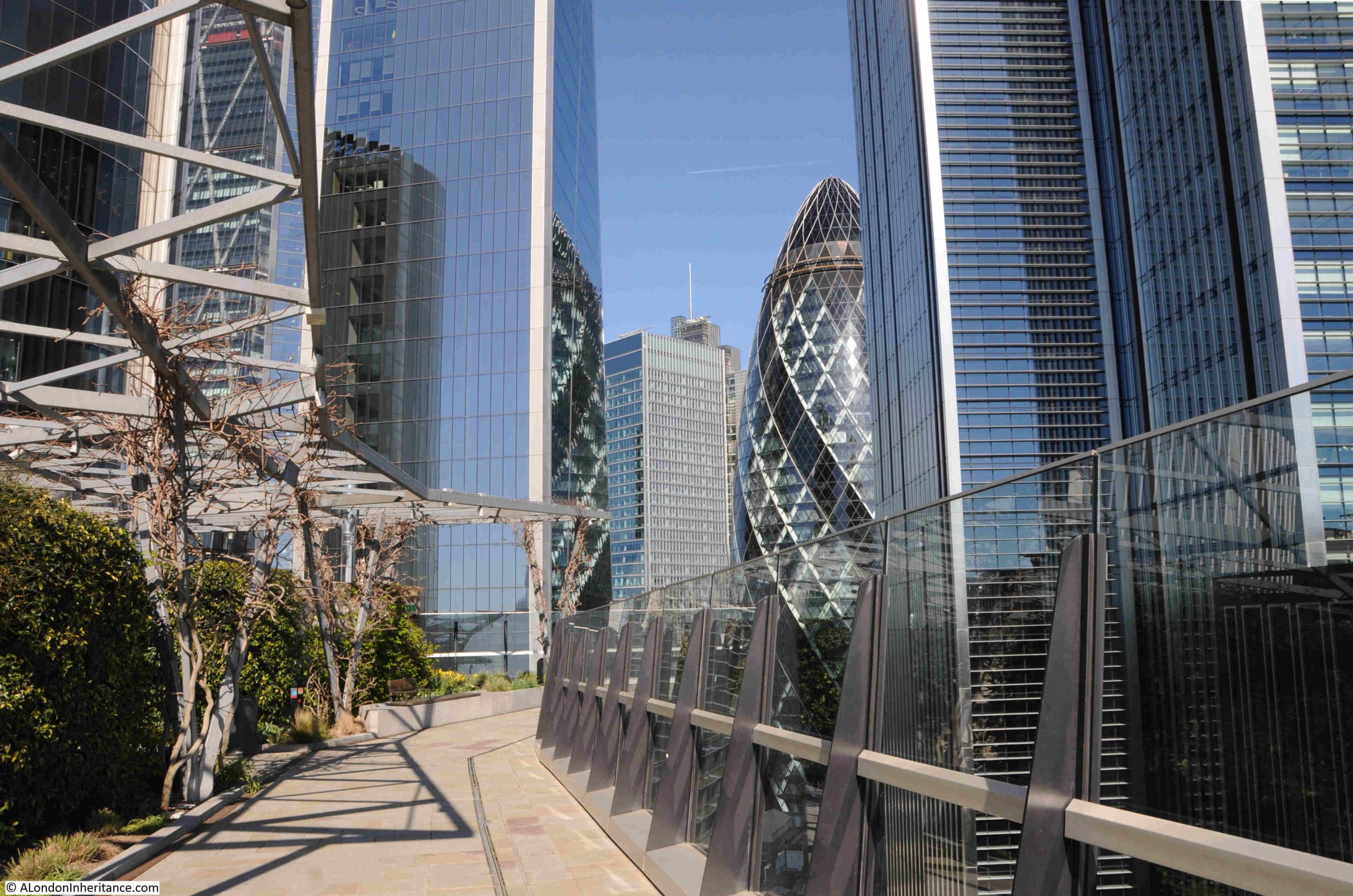
Because The Garden at 120 is on the 15th floor of, by recent standards, a relatively modest building, as you walk to the north of the garden you are looking between gaps in much taller buildings, although this does provide some interesting compositions, where other buildings are framed between towers, including this view of the Gherkin – 30 St. Mary Axe, a building which does not have a viewing gallery at the top, although it did have a bar at the top, which offered good views across London. The bar closed at the start of the year for renovations:
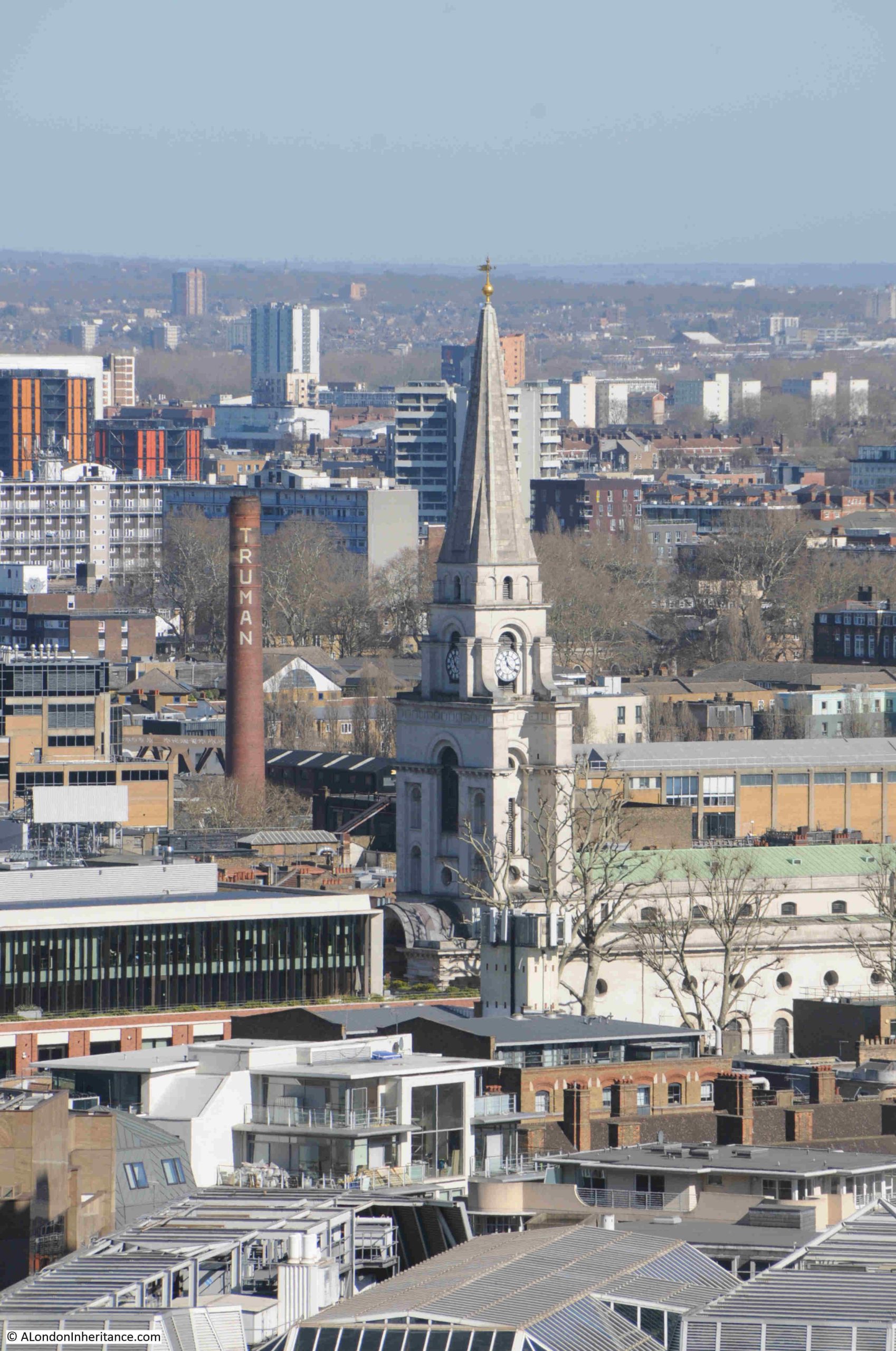
Through another gap we can see Christ Church Spitalfields and the chimney of the old Truman brewery:
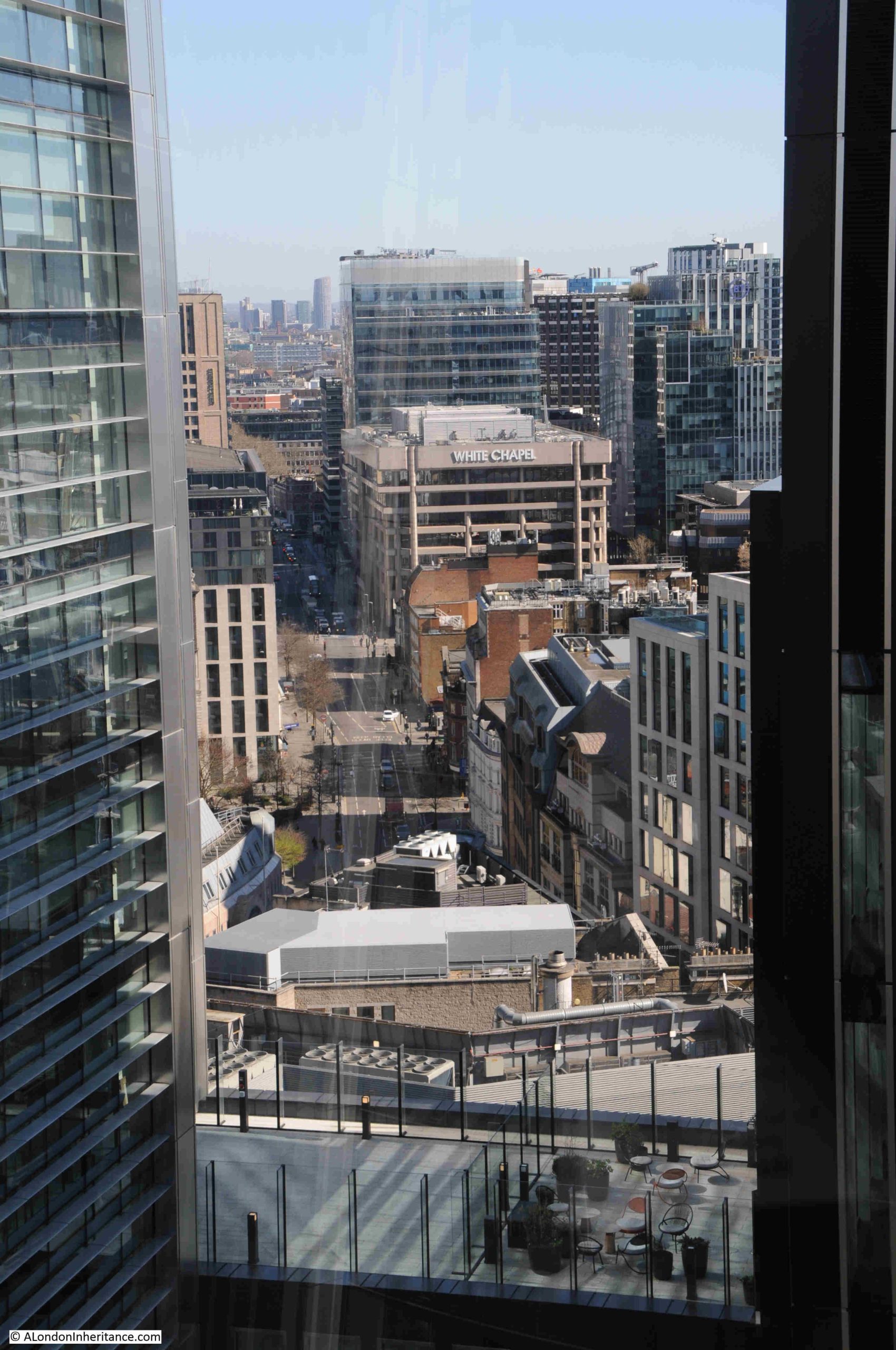
The Whitechapel building stands out on the corner of Whitechapel High Street (the road to the left of the building), and Mansell Street:
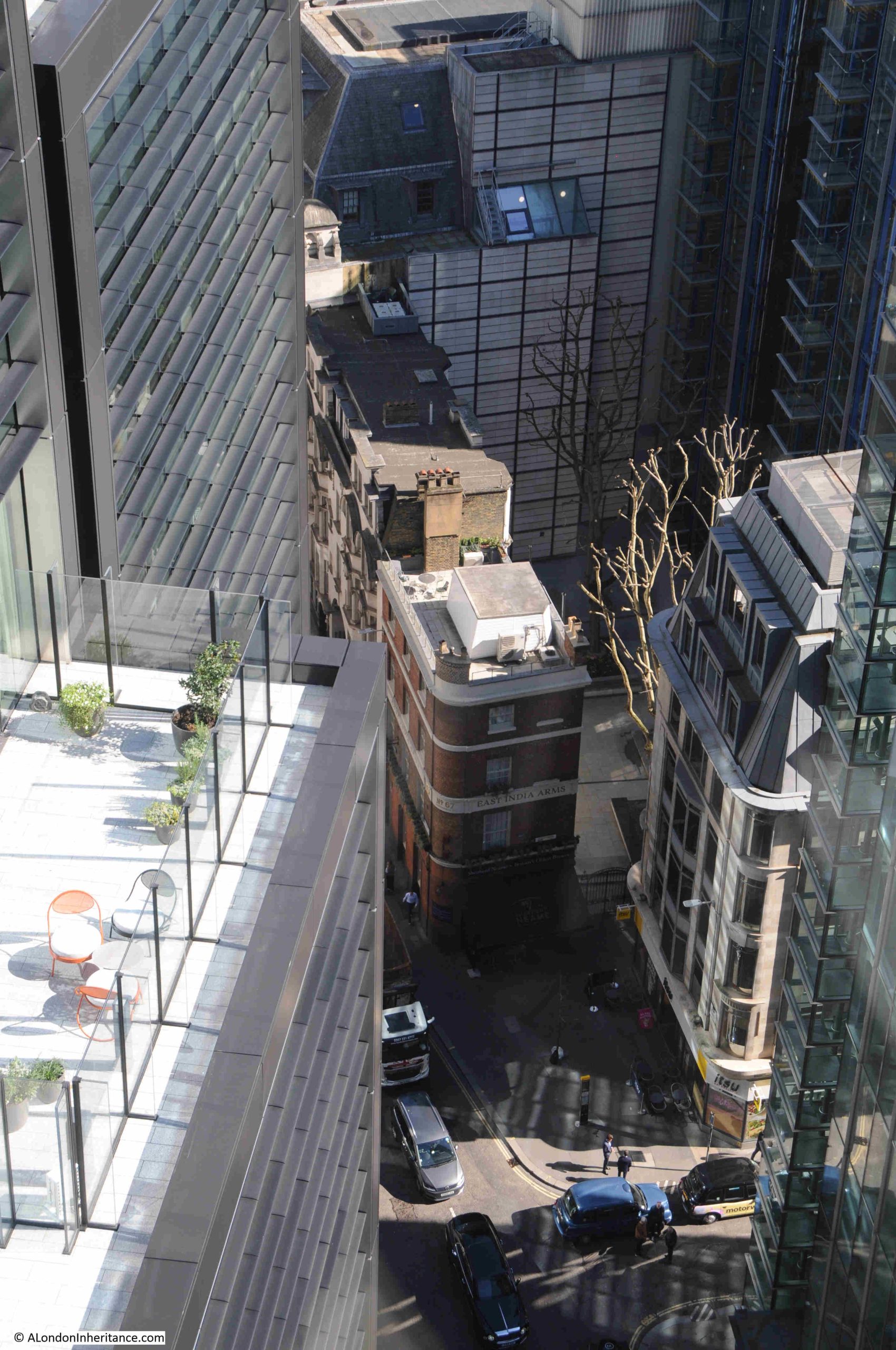
Looking down to a very small part of Fenchurch Street, at the junction with Fenchurch Place, we can see a small part of a terrace of 19th / early 20th century offices, with the distinctive brick built East India Arms pub on the corner:
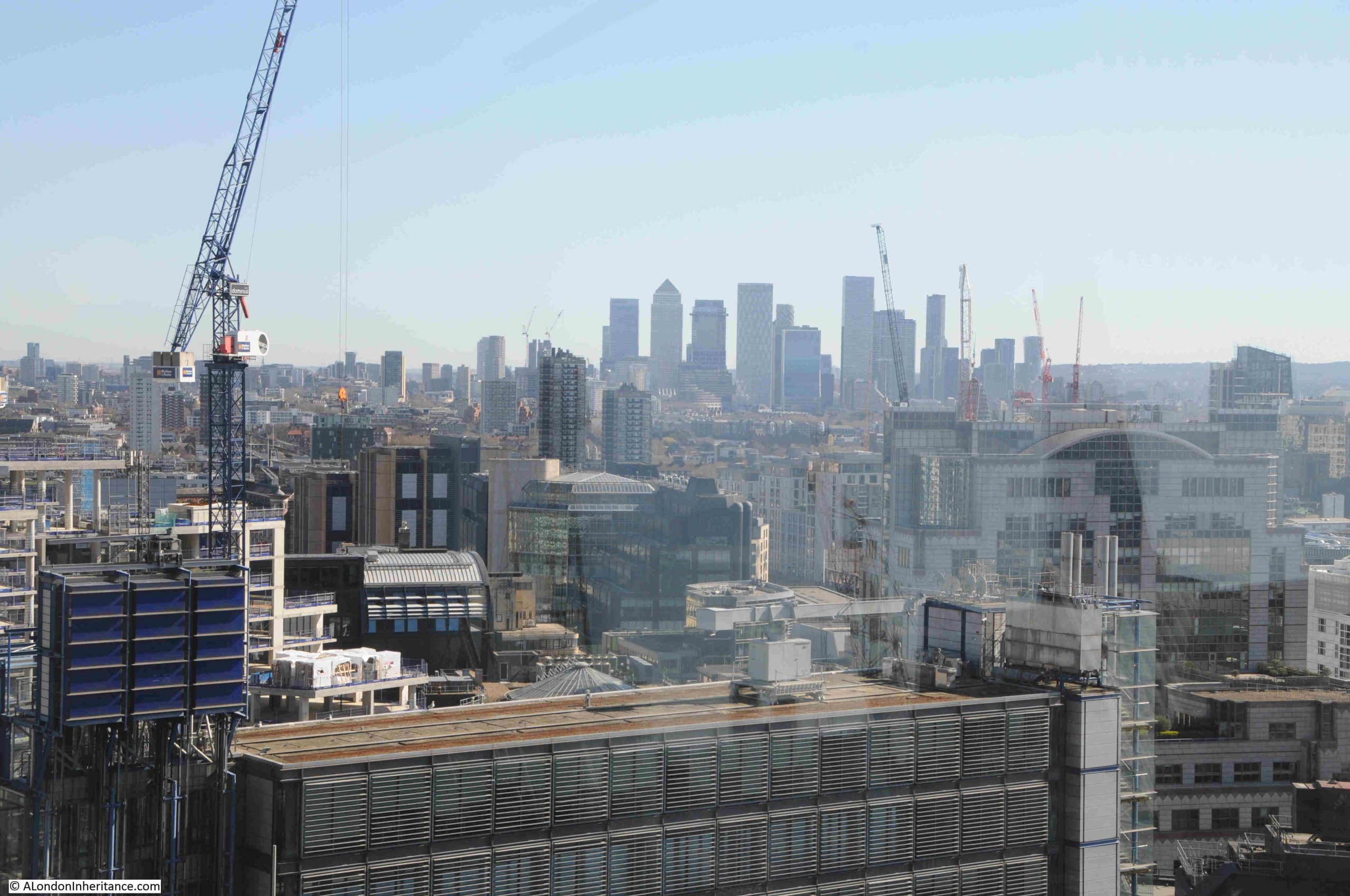
View to the east:
The office and residential towers of Canary Wharf and the Isle of Dogs:
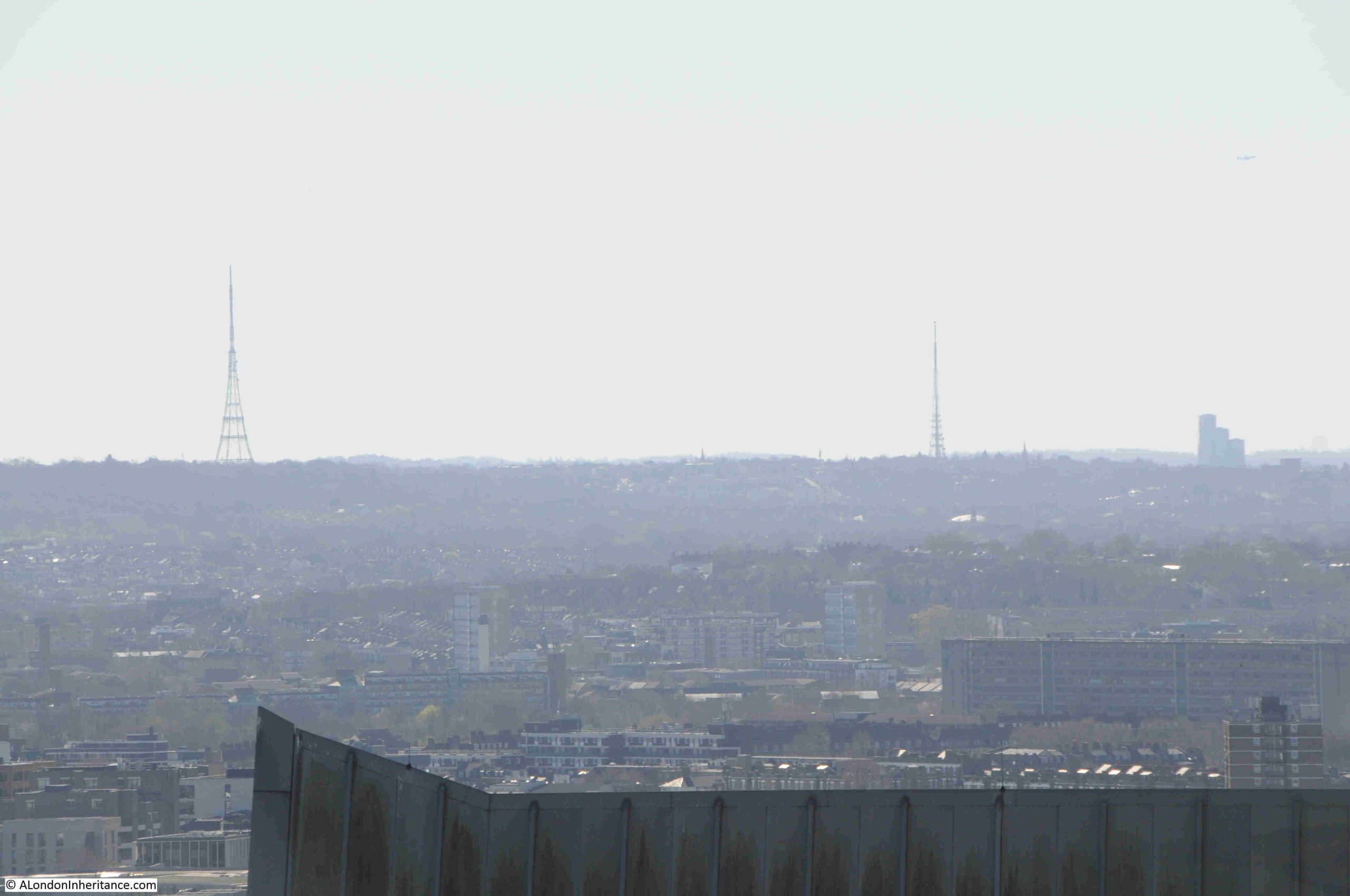
On the horizon, looking to the south, there are two tall radio masts. The one on the left is at Crystal Palace. The mast to the right is at Beaulieu Heights, next to South Norwood Hill:
I find it fascinating to see how far you can see from height, and zooming in between these two masts is the following view:
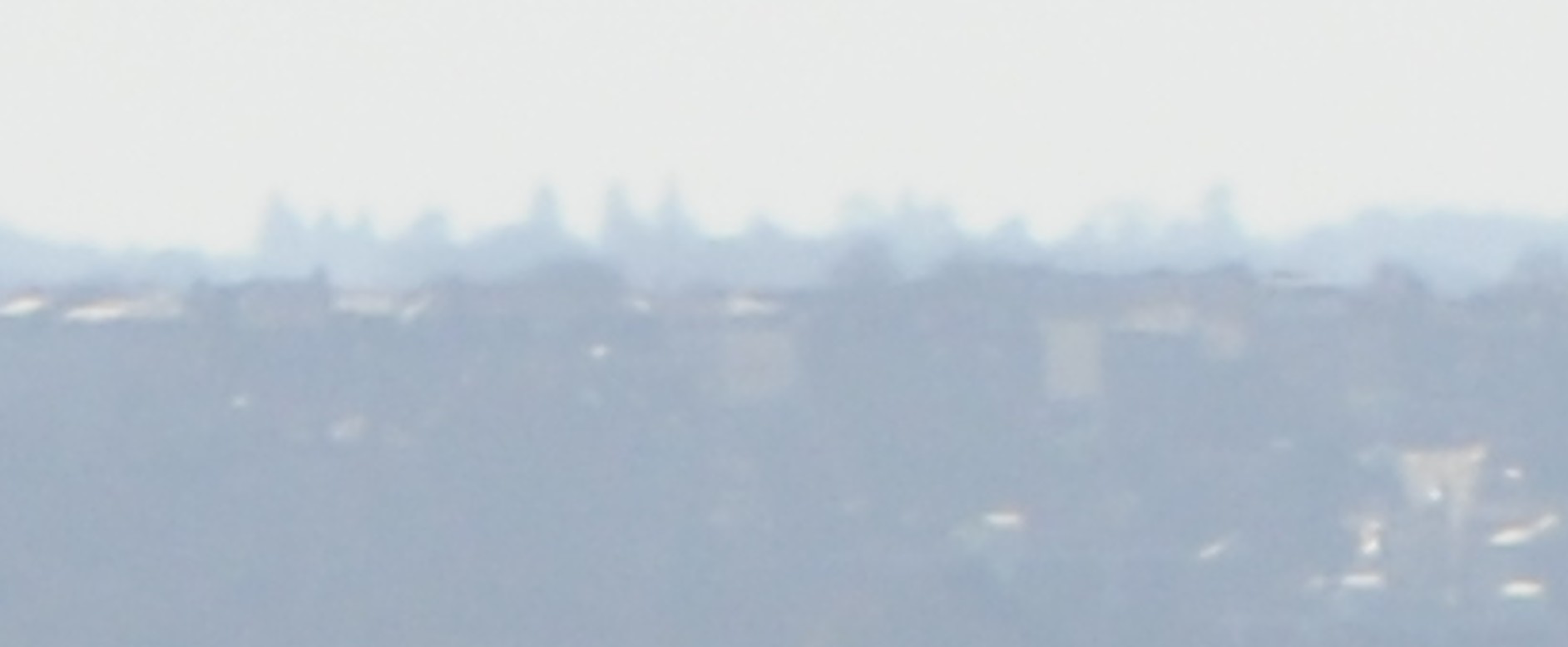
I have no idea what the shadows are on the distant horizon. I did wonder if it was Croydon, however checking on a map, and Croydon is further to the right, and following the line between the two masts from Fenchurch Street, there are no significant clusters of buildings, so I have idea what they are.
I have not mentioned the Garden part of the name of the Garden at 120.
The garden is around the central core of the roof space, with a walkway around the perimeter.
The garden was designed by landscape architects Latz+Partner, and does consist of a good amount and variety of plants. View along the walkway on the eastern side of the roof, with planting on the left:
Having various forms of planting seems to be a core part of the majority of proposals for new towers in the City.
Fifty Fenchurch will include a public roof garden and winter garden at level 10, whilst the Fountain House replacement will have an external garden terrace.
Whilst this may be viewed as greenwashing, it does follow the approach of Fred Cleary, who campaigned and worked for much more planting, flowers and gardens as part of the post war redevelopment of the City, and as described in his 1969 book “The Flowering City”.
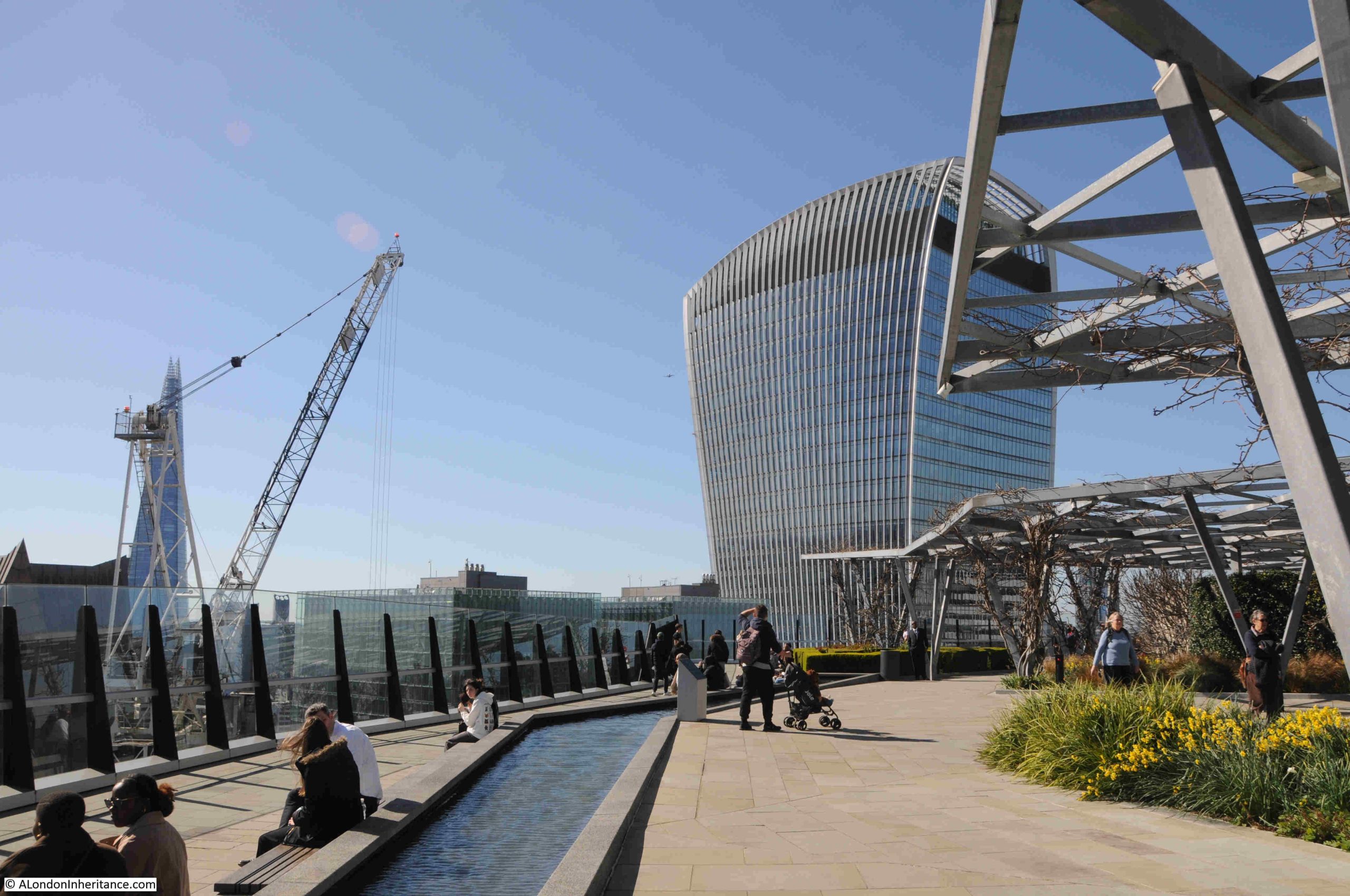
The southern side of the Garden at 120, with the main viewing area looking south and planting to the right:
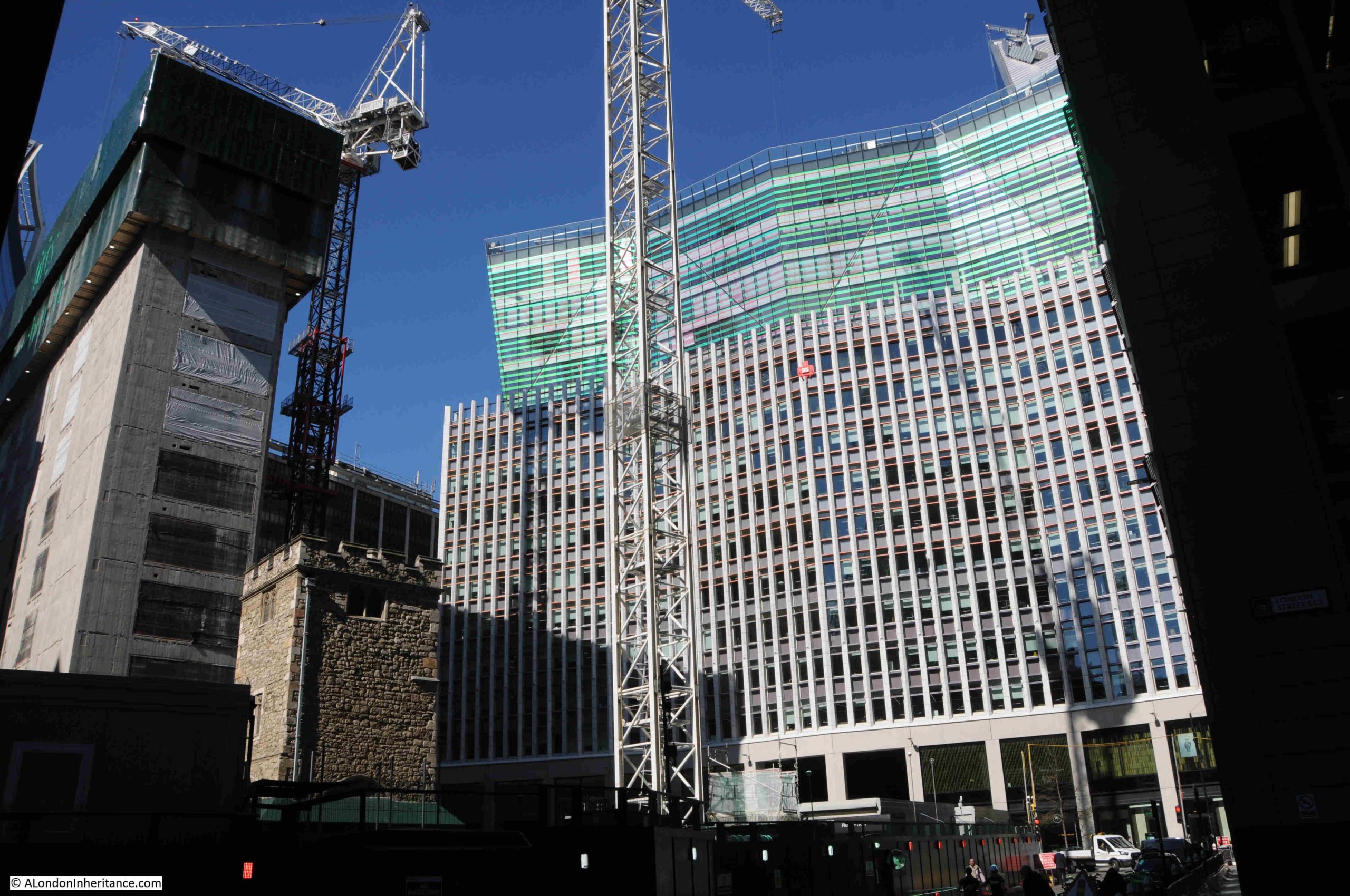
Back on ground level, I walked across to the east of the Fifty Fenchurch building site, next to the tower of All Hallows Staining and looked back at the building with the Garden at 120 on the roof:
There are a growing number of places across London to look across the city from above, and each offers a different perspective of an ever changing city.
It is also interesting to visit these places across the years to see the rapid change taking place, and the view from the Garden at 120 will change significantly in the coming years when Fifty Fenchurch and the Fountain House site developments are completed.