Category Archives: London Churches

Queen Victoria Street and Upper Thames Street – A Lost Road Junction

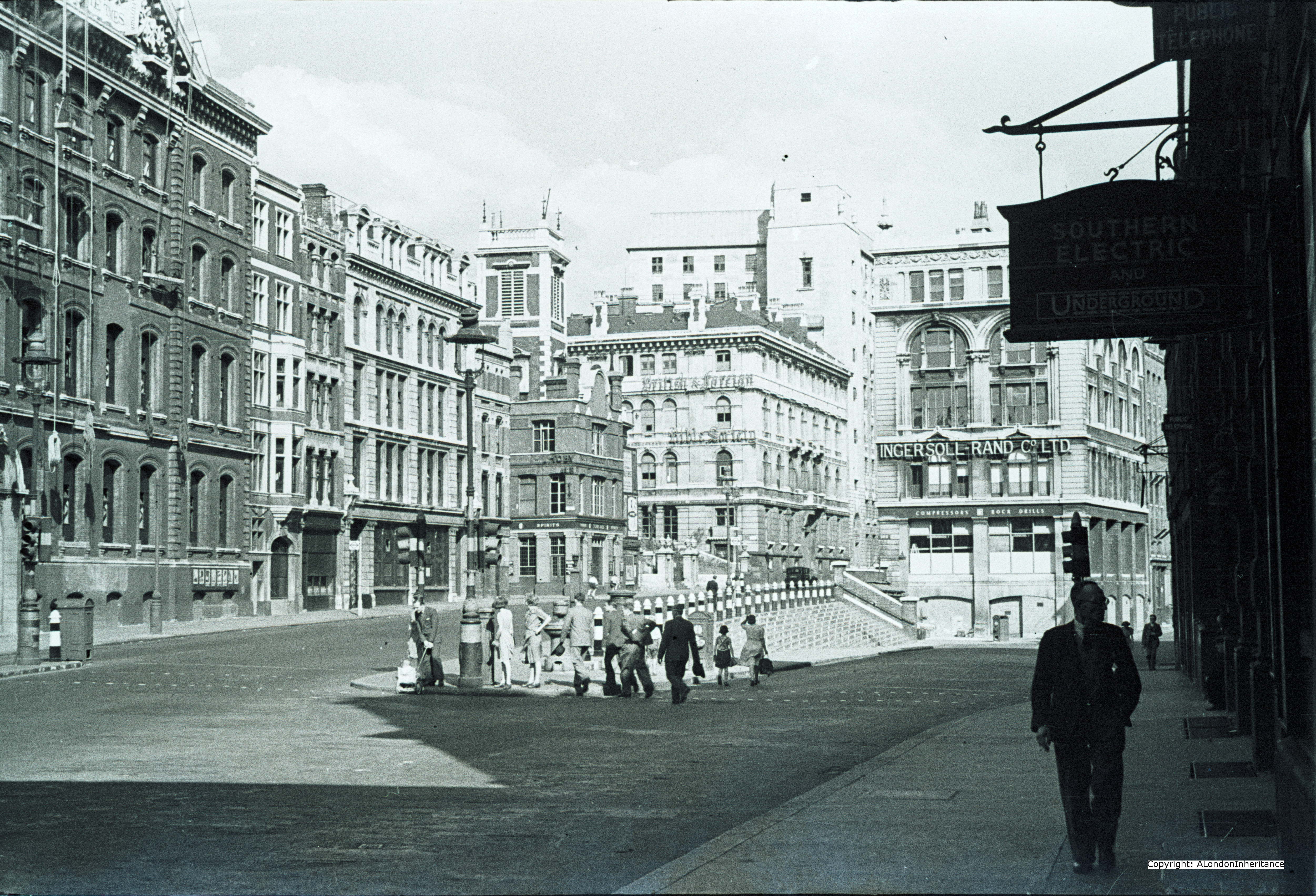
Very much like last week’s post, this week’s was initially a bit of a puzzle and I could not locate where the following original photo had been taken.

Dads photo qvs

There are no street names and no instantly recognisable buildings. I could not recall anywhere in central London with two streets joining, separated by a long length of steps. My only clue was the rather dark sign on the right hand side stating Southern Electric and Underground.

After checking the London stations of the Southern Railway I finally found where the photo was taken, but only because the buildings in the middle distance of the photo are still there, the rest of the scene is completely different.

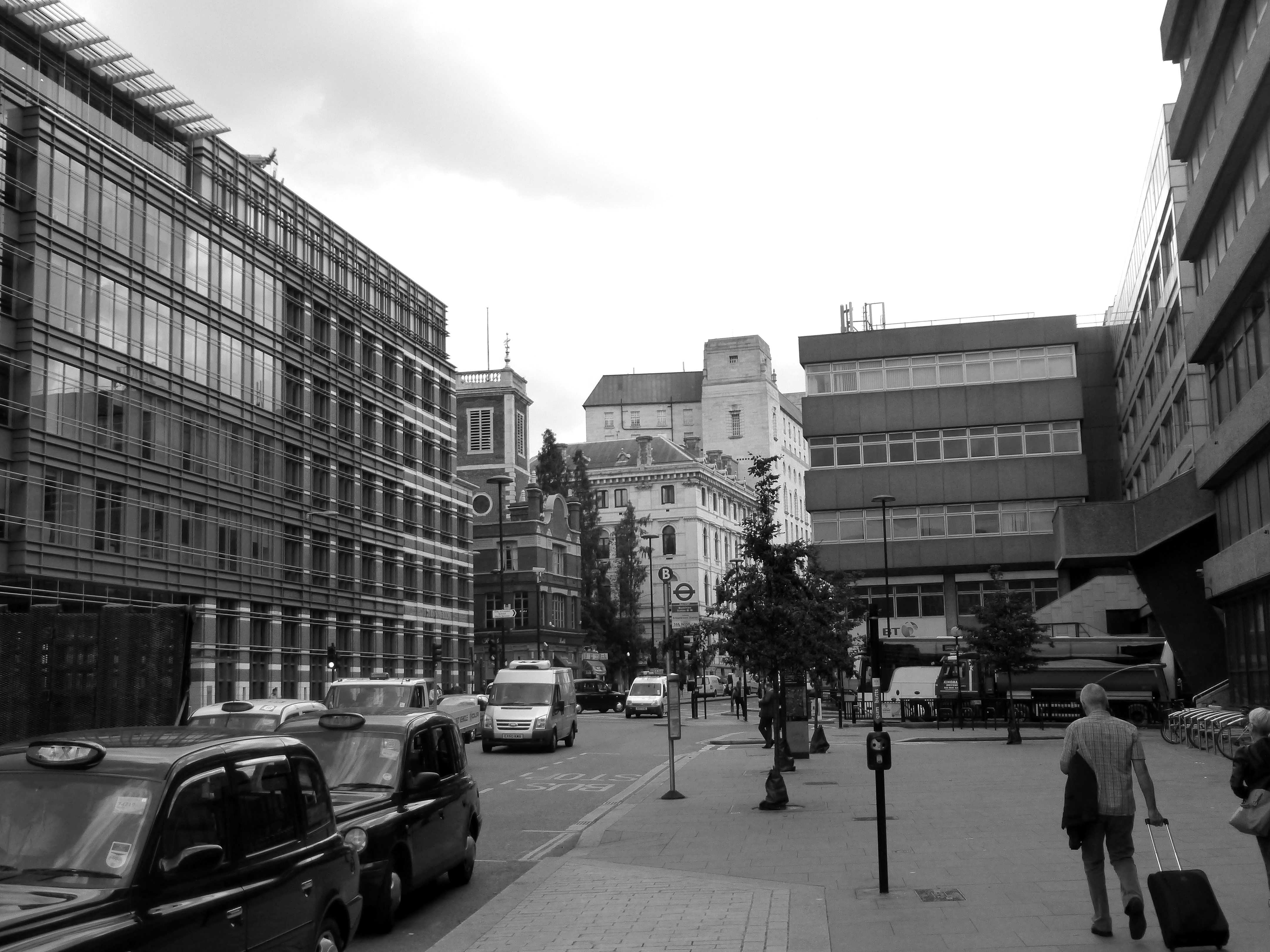
The location is outside Blackfriars Station, looking east up Queen Victoria Street and my 2014 photo from the same position is shown below:

P1020341-BW

The foreground has completely changed, but what confirms the scene is the church tower (St Andrew by the Wardrobe) and the buildings around the church (the building behind the church is the British & Foreign Bible Society and the taller building behind that is the original Post Office Faraday building, opened on the 4th May 1933 and one of the main hubs for London telephone services).

John Stow in his 1603 Survey of London was rather dismissive of the church of St. Andrew, with the single sentence “then turning up towards the north, is the parish church of St. Andrew in the Wardrobe, a proper church, but few Monuments hath it”.

The “Wardrobe” reference in the church name is to the King’s Wardrobe that was moved out of the Tower of London in the reign of King Edward the Third. This was in a great house built by Sir John Beauchampe, Knight of the Garter, Warden of the Sinke Portes and Constable of Dover. He died in 1359 and his executors sold the house to King Edward the Third. Following this sale, the parson of St. Andrew’s complained to the King that “the said Beauchamp had pulled downe divers houses in their place to build the said house.”

As well as the buildings in the foreground, even the level of the streets has been changed with the level on the right being taken up to that of Queen Victoria Street thereby removing the steps at the road junction. It would be good to think that some part of those steps were left and are buried beneath the current street level adding to the layers of history buried beneath the City’s surface.

This small area is also a good example of how continuous development has reshaped London over the years, not just the buildings, but also the main thoroughfares through the City, and how the City has tried to manage the increasing volume of traffic passing within and through the City.

Queen Victoria Street is the main street on the left of both photos. In the long history of London, this, as the name implies, is a recent road.

It was fully opened to the public on Saturday 4th November 1871 and to quote from “The Face of London” by Harold P. Clunn:

“Queen Victoria Street was constructed by the late Metropolitan Board of Works as a continuation of the Victoria Embankment, with the object of providing London with a new main artery from the Mansion House to Charing Cross. It was the greatest improvement carried out in the City of London during the nineteenth century. Not only did it provide invaluable relief to the enormous traffic of Cheapside, but it completely altered the appearance of the City centre.”

The photos also demonstrate how the City has responded in recent decades when even Queen Victoria Street and the centre of the City were unable to manage the increasing volumes of traffic.

In the original photo there is a road that drops away to the right. This is the original route of Upper Thames Street which, with Lower Thames Street was the main through road running parallel to the River Thames and connected to all the short lanes and wharfs leading down to the river.

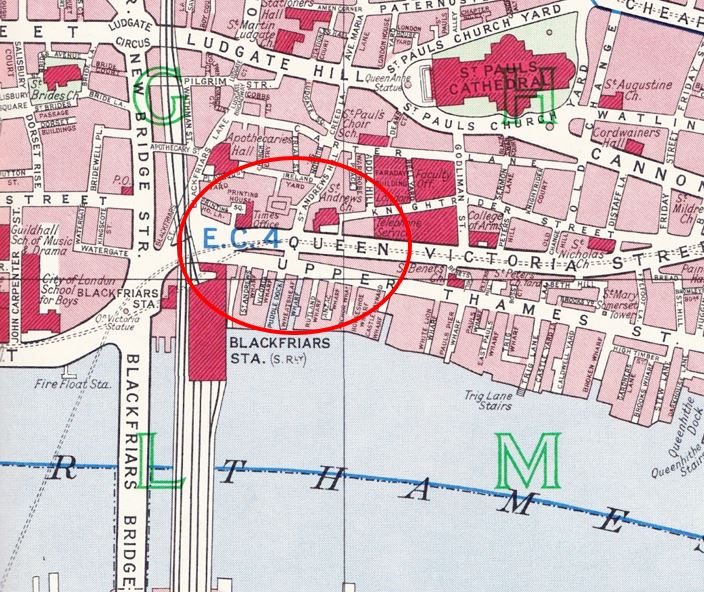
The following map is from Bartholomew’s Greater London Street Atlas of 1940, with the area of today’s post identified by the red oval.

QVS Map 1

The original photo was taken in front of Blackfriars Station looking up Queen Victoria Street and the road turning right below the steps can be clearly identified in the map as Upper Thames Street.

In recent decades the route of Upper Thames Street has been relocated to run far closer to the river, and rather than joining Queen Victoria Street, it nows runs underneath the river side of Blackfriars Station, underneath Blackfriars Bridge straight into the Embankment.

The following Google map shows the area as it is now with the re-routing of Upper Thames Street.


View Larger Map

Not clearly visible in the 2014 photo is the road, just past the bus stop, that leads down underneath the complex of buildings around Blackfriars Station to Upper Thames Street. This road is Puddle Dock, a reference to the original dock that was on this site.

Stow names this as Pudle Wharfe in 1603 and states almost against this wharf there is “one ancient building of stone and timber, builded by the Lords of Barkley and therefore called Barklies Inne. This house is now all ruine and letten out in severall tenements”

Puddle Dock was also probably the landing place for the first Baynard’s Castle which was built in this area by William the Conqueror. The role of Baynard’s Castle was to protect the western edge of the city as the Tower of London protected the east. The first Baynard’s Castle lasted from the 11th to the 14th century following which it was replaced by the second Baynard’s Castle further to the east.

Development of the Puddle Dock area started in 1952 when the Corporation of London offered the trustees of the Mermaid Theatre the lease of a bombed warehouse at Puddle Dock. The theatre opened in 1959 and is just under the building to the right on the road named Puddle Dock. The theatre has survived many attempts at closure and redevelopment and is now mainly a conference and events centre.

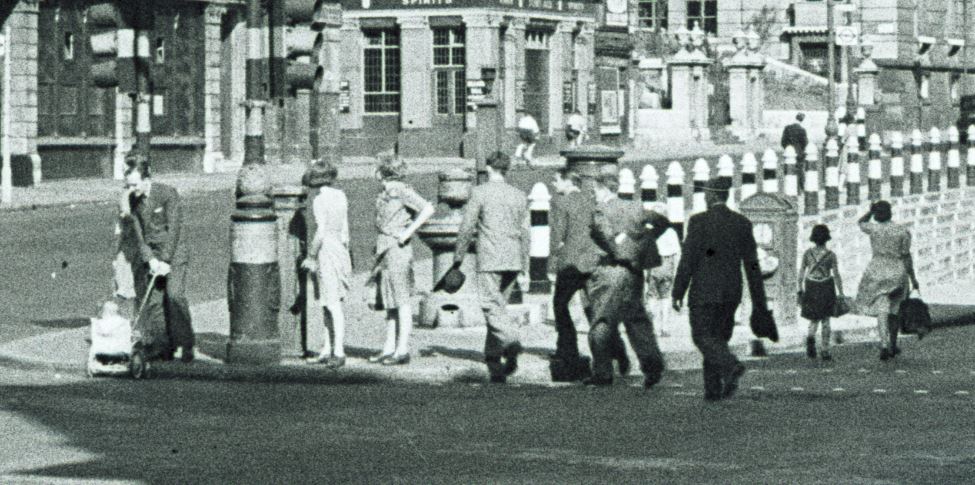
Returning to the original photo, I find it fascinating to look at the people in these photos. The following is an enlargement of the group of people in the centre.

QVS people

The photo was taken on a weekend but note the very formal dress of the men. They have all probably just arrived on a train into Blackfriars and are heading off into the City. The man on the left appears to have a typical pushchair of the time. The adult and child on the right possibly heading down Upper Thames Street to visit the Tower of London?

The streets around them must have seemed permanent. I wonder what they would have thought of the same location today?

The sources I used to research this post are:

  • The Face of London by Harold P. Clunn published 1951
  • London by George H. Cunningham published 1927
  • Old & New London by Edward Walford published 1878
  • Bartholomew’s Reference Atlas of Greater London published 1940
  • Stow’s Survey of London by John Stow, 1603 (Oxford 1908 reprint)

 alondoninheritance.com

The Butterworth Charity at St. Bartholomew the Great

One of the many things I love about London is that there are still customs being performed, away from the crowded “tourist” areas of the city which have been on-going for many years.

One of these is the Distribution of the Butterworth Charity which takes place every Good Friday in the churchyard of the Priory Church of St. Bartholomew the Great in West Smithfield. Within my father’s photo collection there are photos he took of this about 65 years ago, so to experience the same event, I took the short walk from St. Paul’s underground station to St. Bartholomew’s ready for the 11:30 start, where I joined a crowd of about 80 people arranged around the edge of the churchyard, on a mild, sunny April morning.

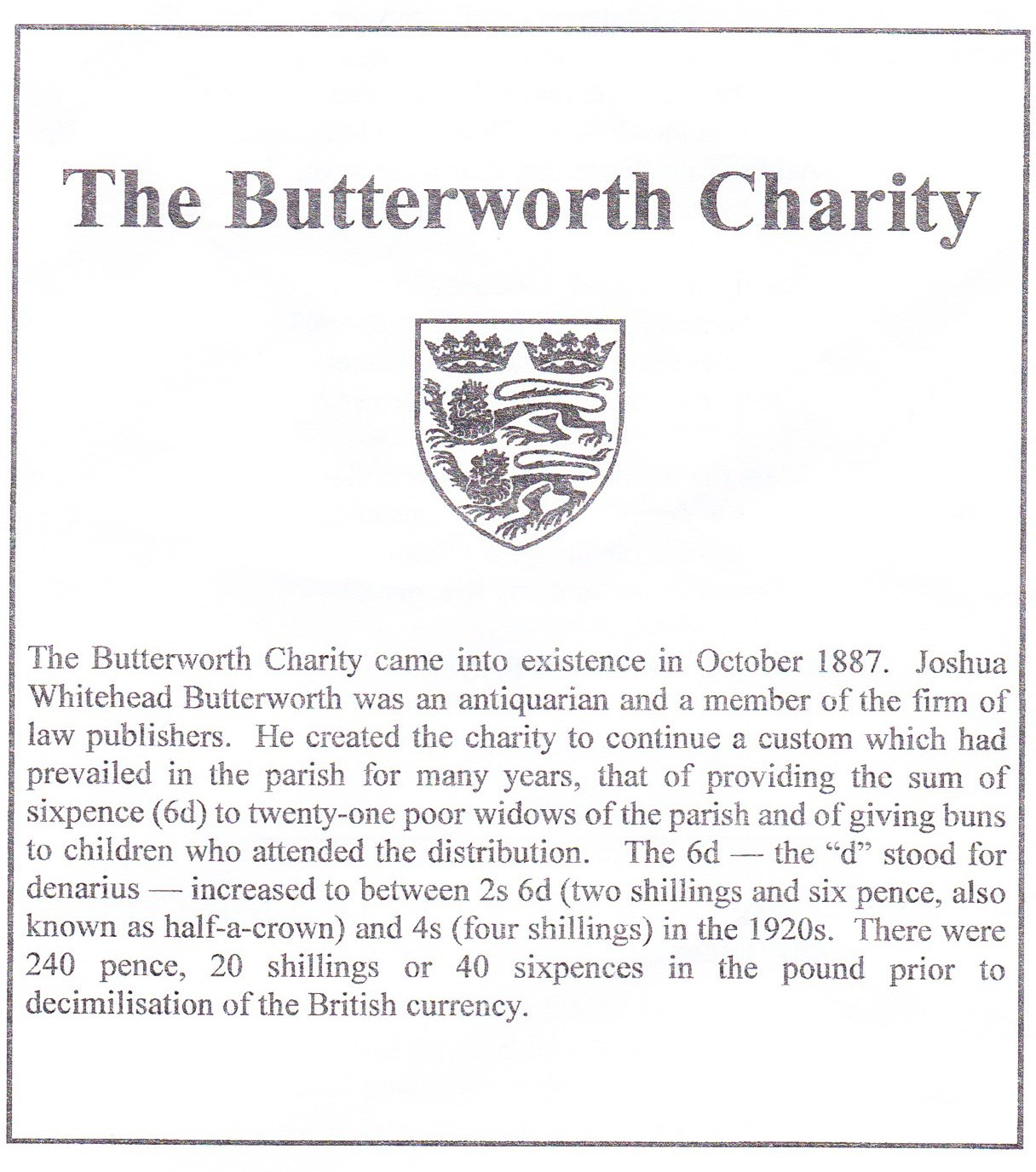
Rather than my explanation of the background to the Butterworth Charity, I will reproduce the following from the back of the Order of Service sheet:

Butterwork service text 1

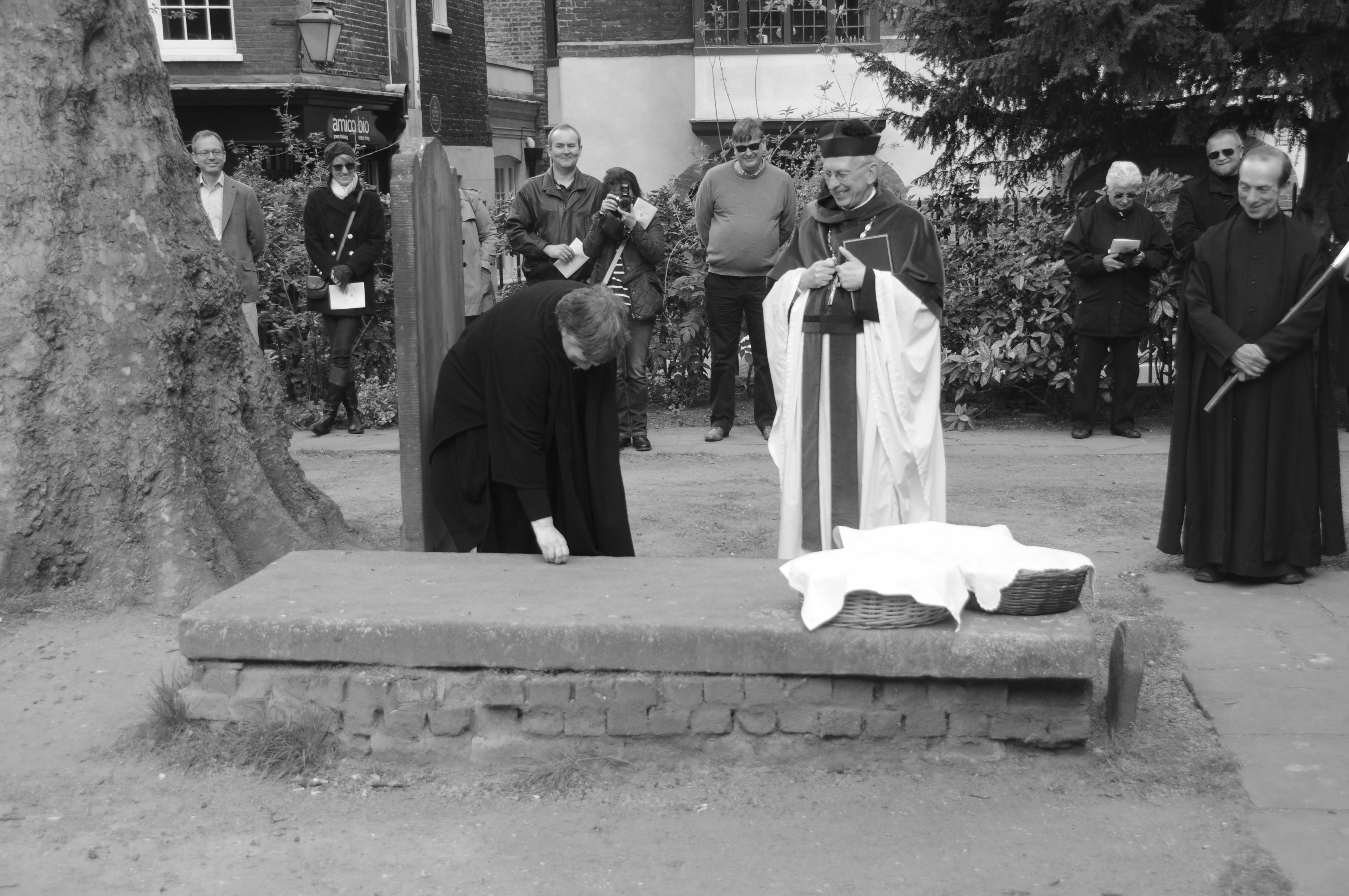
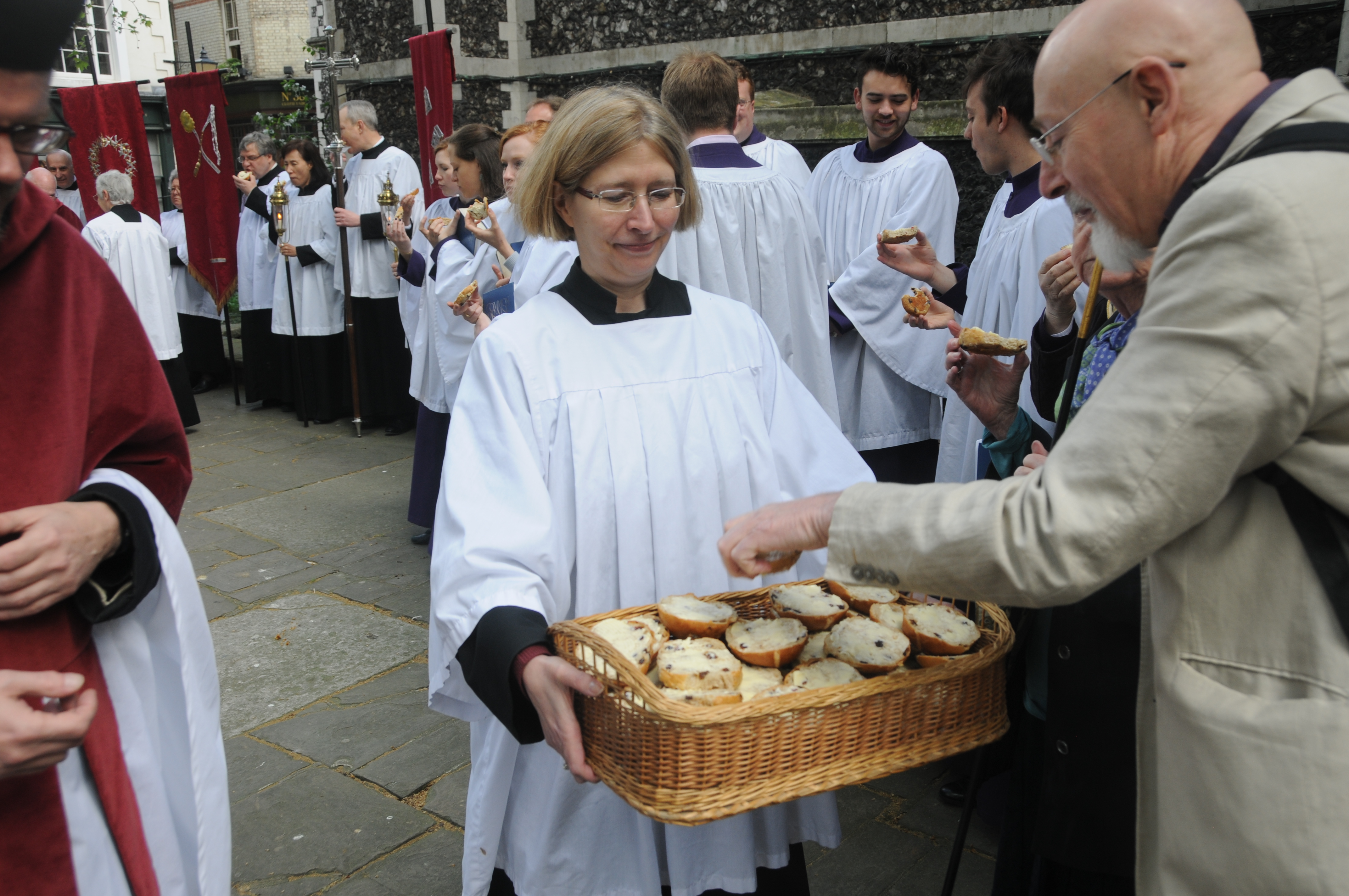
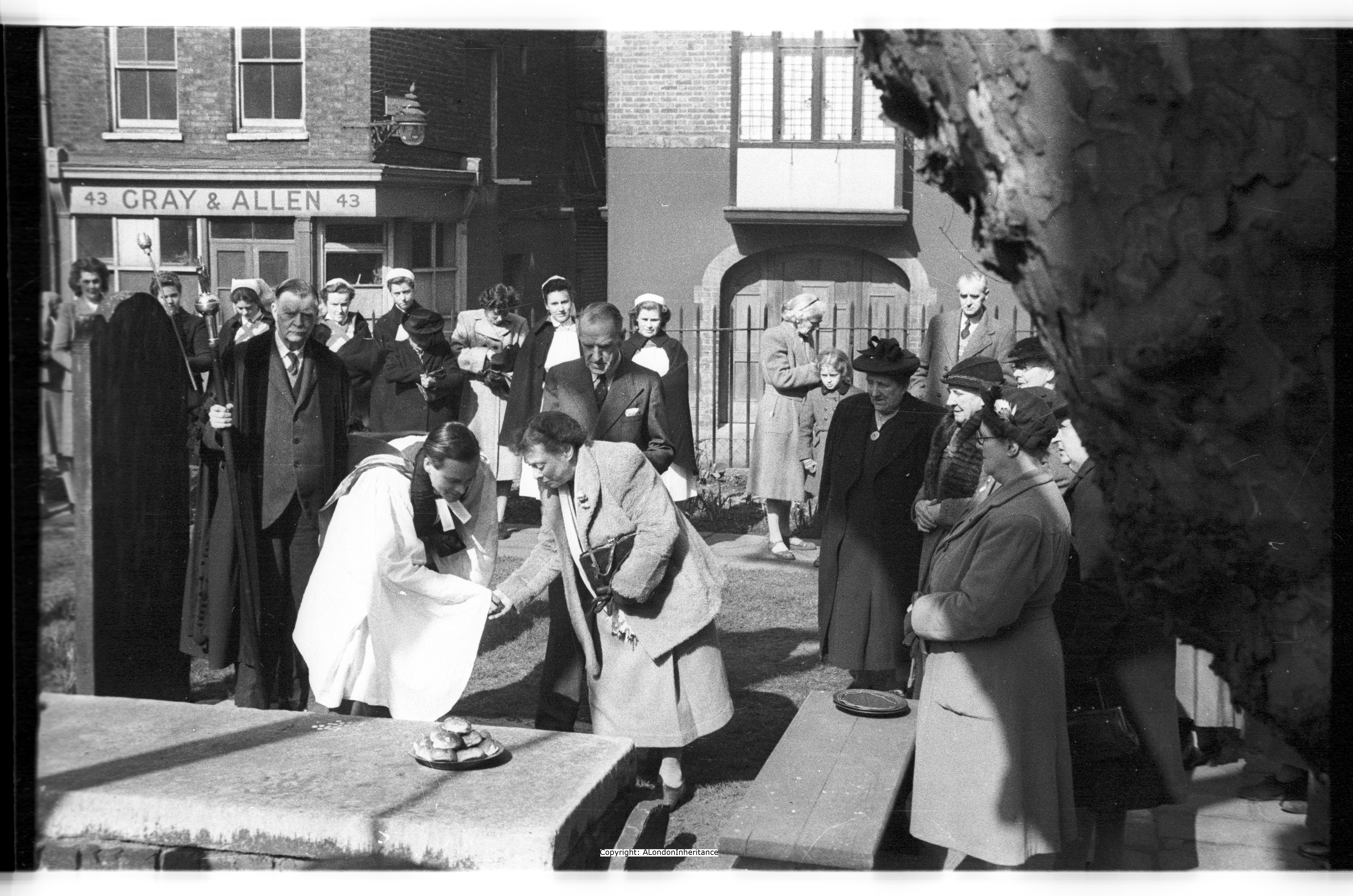
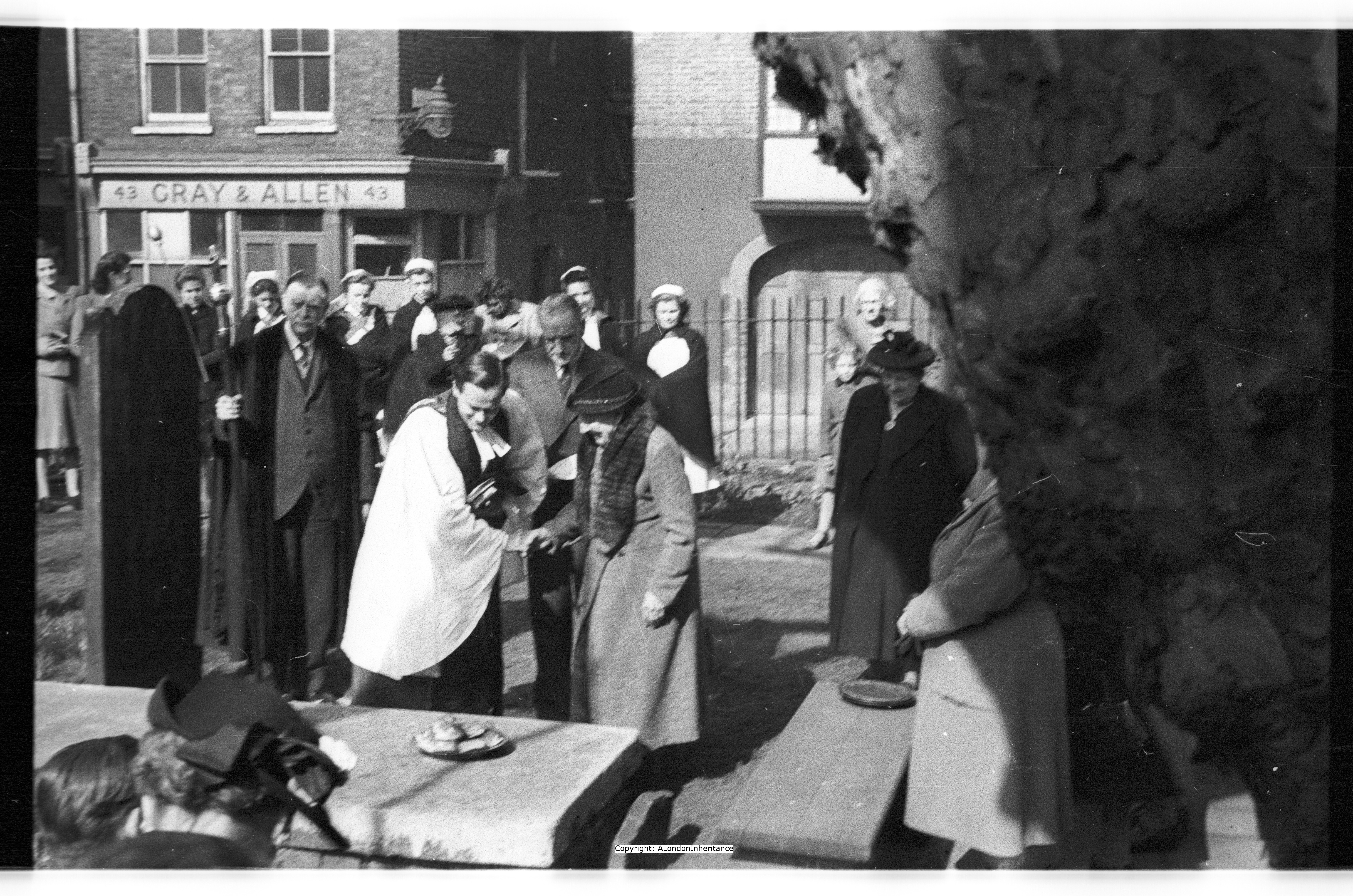
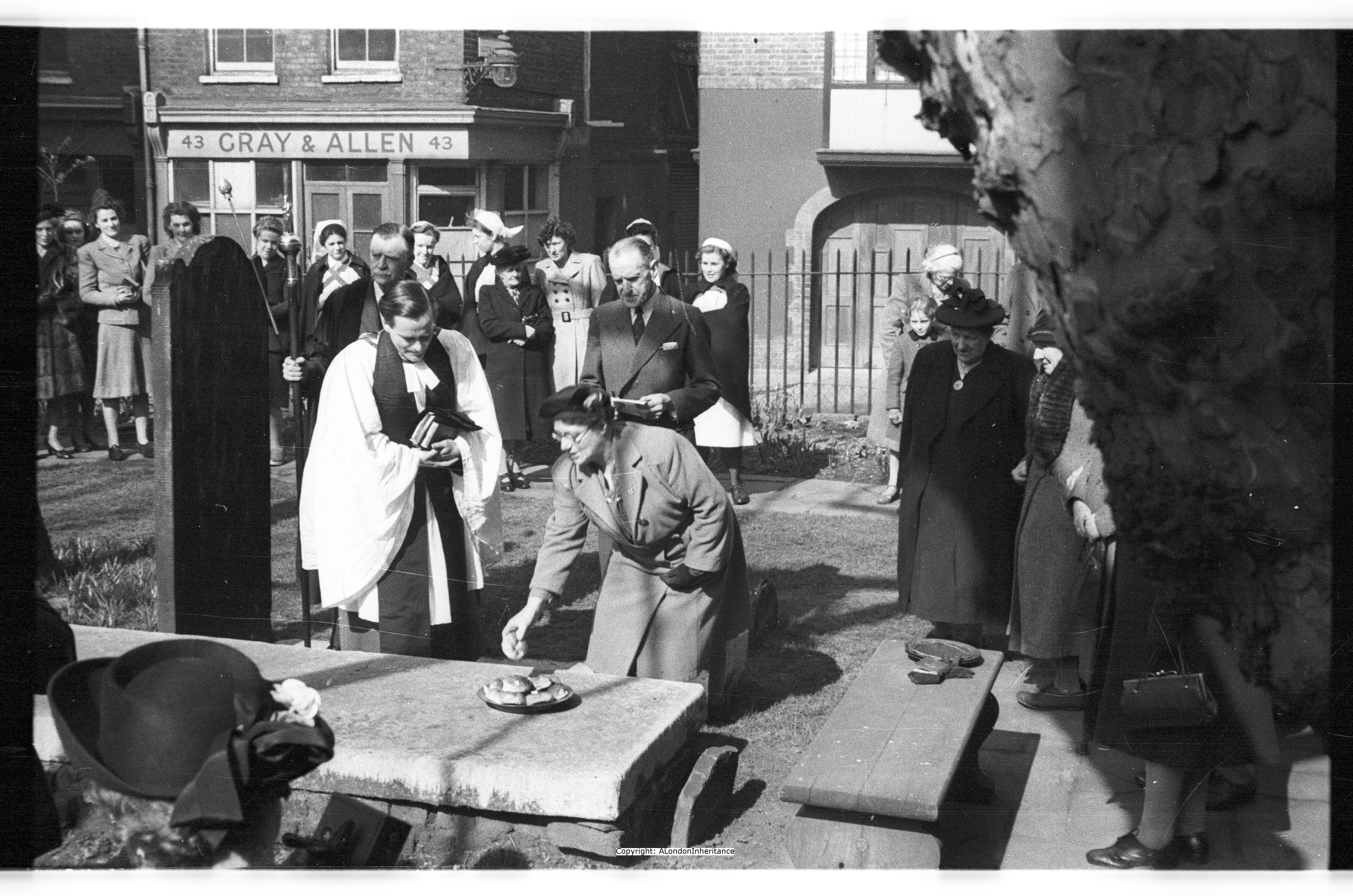
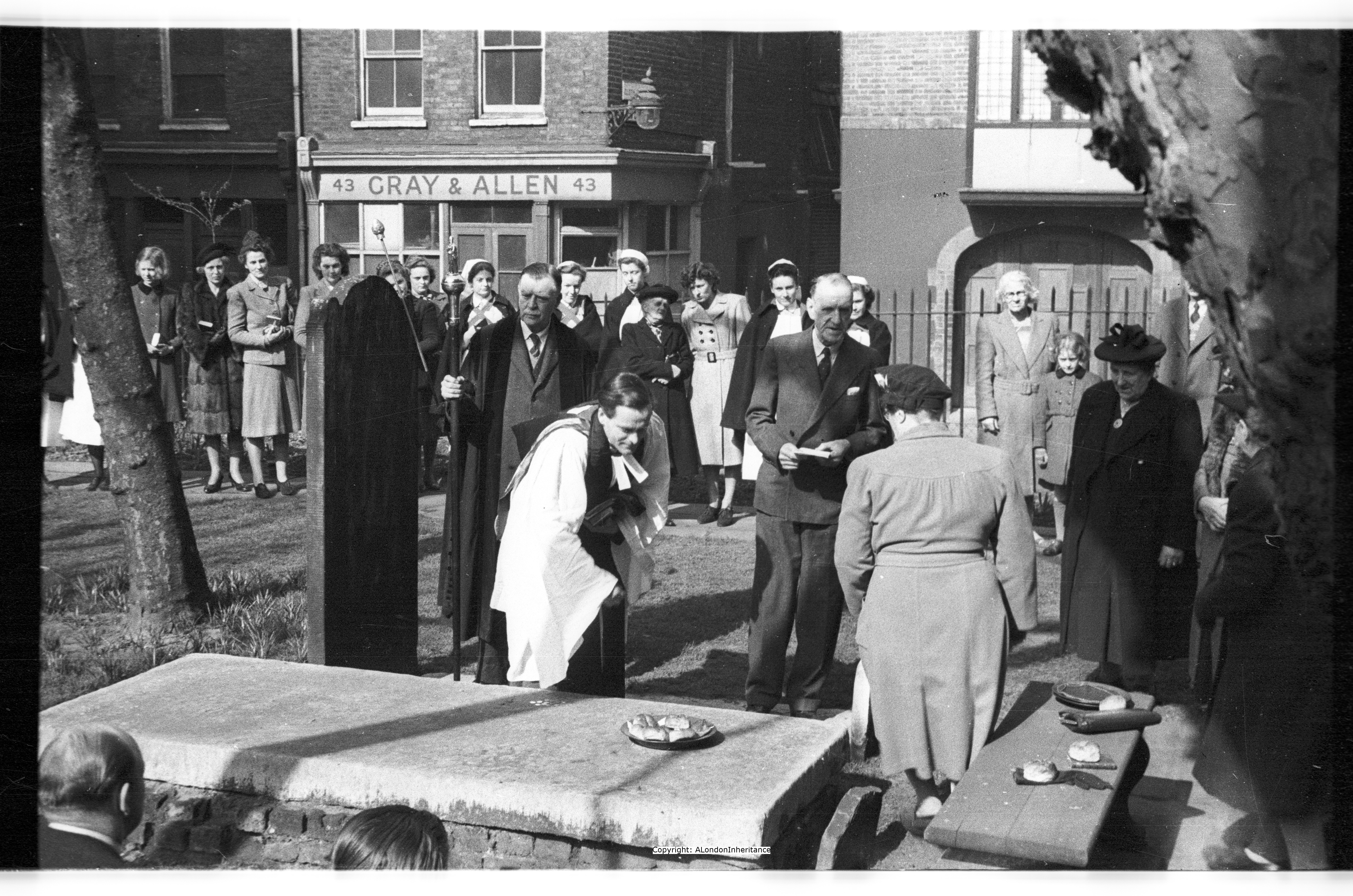
The ceremony takes the form of a church service in the graveyard with the distribution of the charity part way through. The form now is a token distribution of money to a poor widow of the parish (there was only one “volunteer” for this) followed by distribution of buns to all who attended.

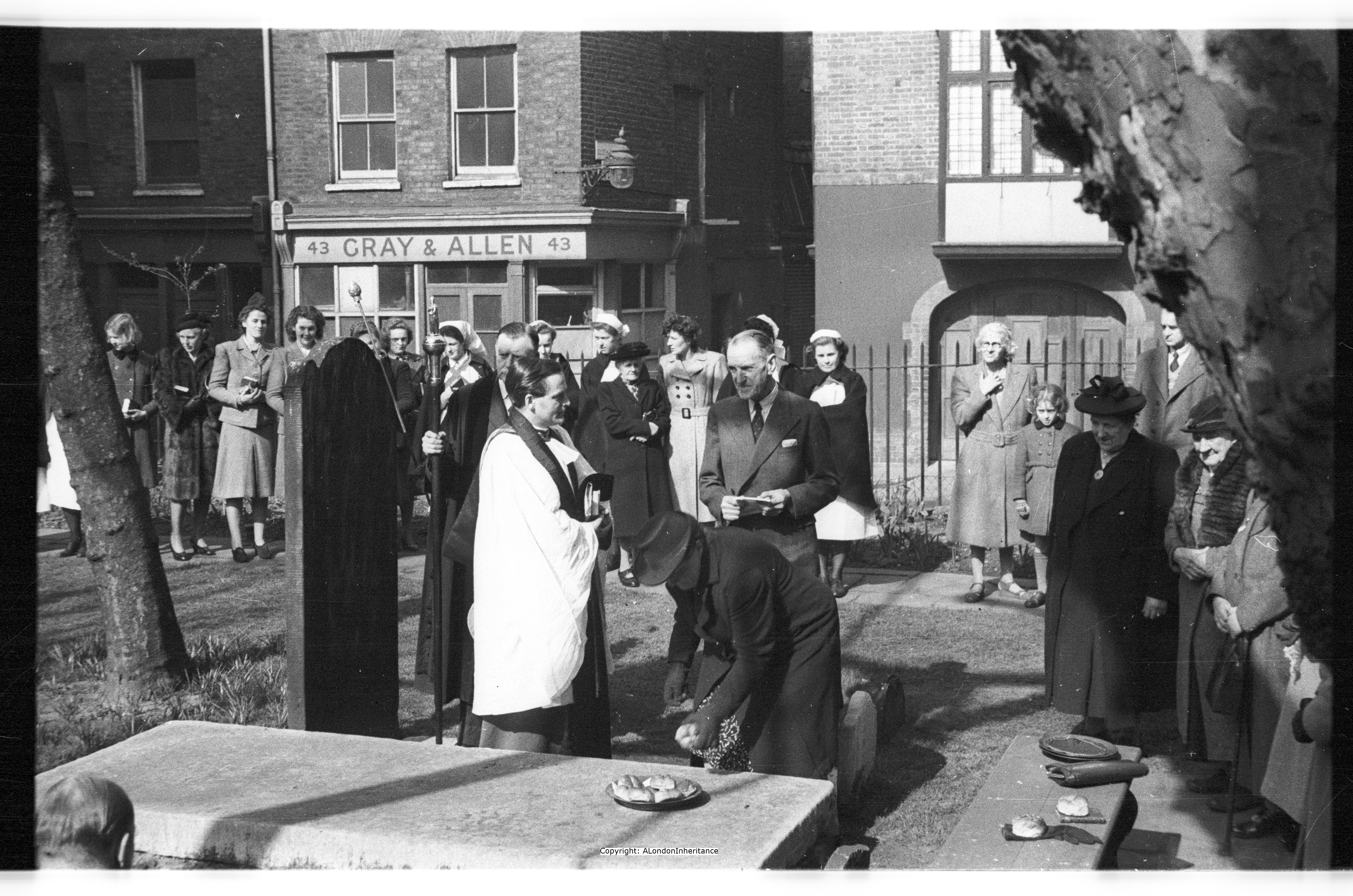
The following is my father’s photo of the distribution from about 65 years ago:

Dads Butterworth 4 with copy

The ceremony is held on the same flat gravestone every year. What I also find interesting in these photos are the people in the background. Note in the above the nurses in uniform, who had probably come from the adjacent St. Bartholomew’s Hospital. The widows of the parish are waiting to the right of the photo. The following is my photo from the 2014 distribution. I have converted this to black & white to give an up to date photo which compares more easily with my father’s original. Often I find that comparing a colour photo with black & white can over emphasise the differences.

DSC_1125 BW

The buildings along Cloth Fair at the back of the churchyard are the same. The tree to the left has grown considerably, fashion has changed and these days there are not so many “poor widows” in the parish to collect the distribution of the charity, however the scene has not changed that much in 65 years, and I suspect is much the same going back to the start of the Butterworth Charity over 100 years ago.

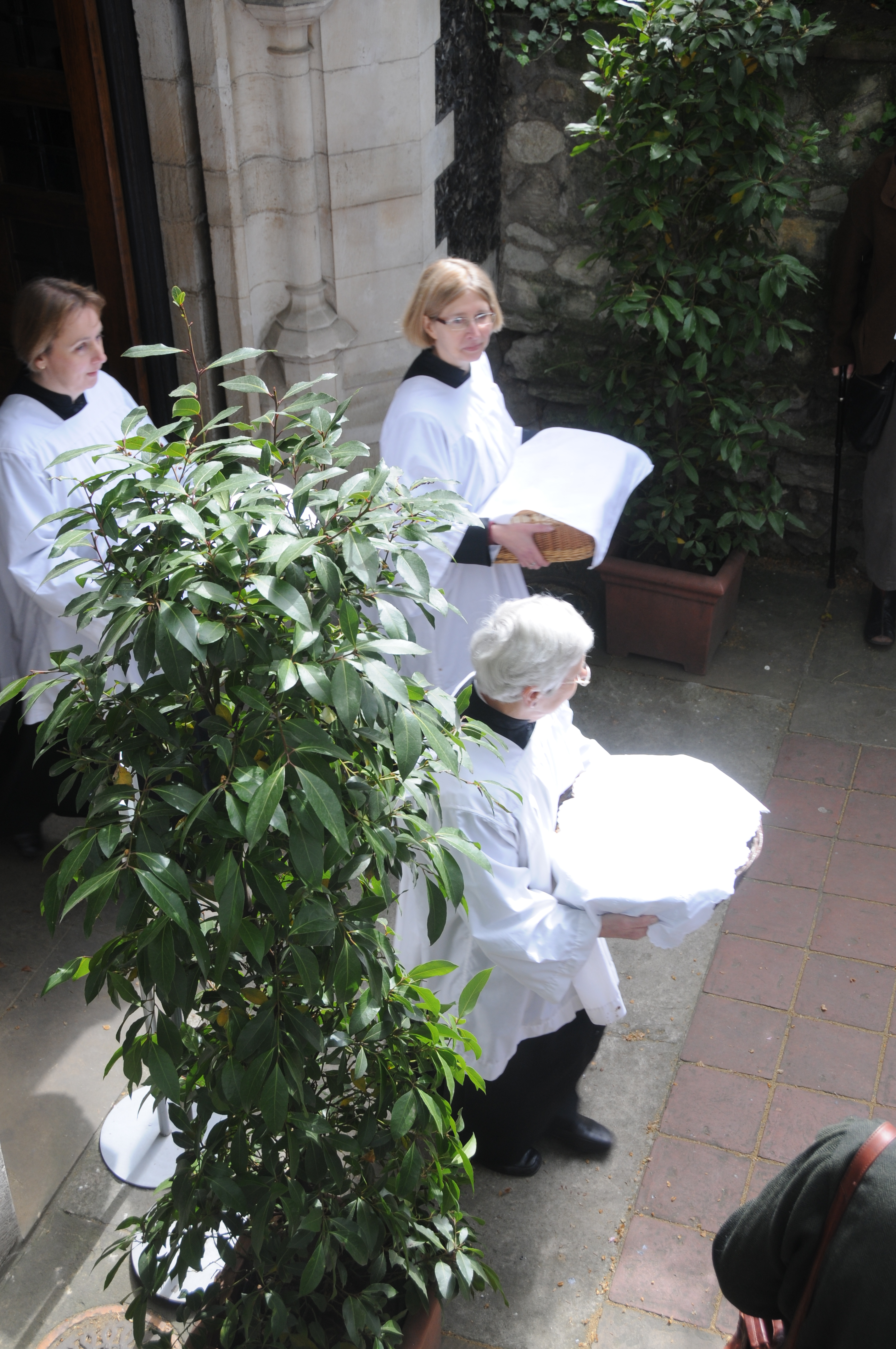
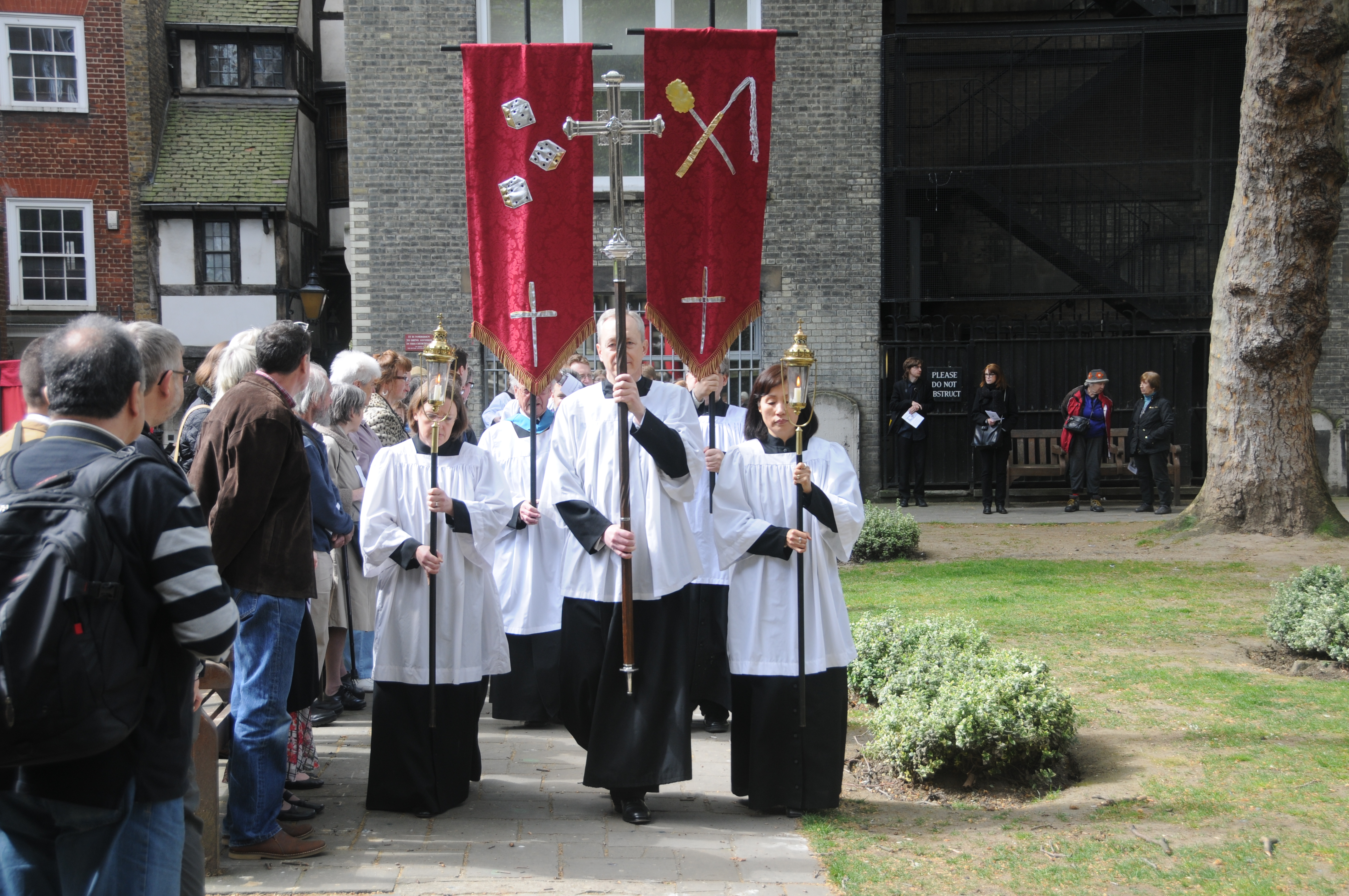
The following photos are from 2014:

The buns emerge from the church:

DSC_1117 veritcal

The procession along the edge of the churchyard:

DSC_1119

The service:

DSC_1123

The buns are distributed:

DSC_1128

The following are the rest of the original photos taken by my father:

Dads Butterworth 1 with copy Dads Butterworth 2 with copy Dads Butterworth 3 with copy Dads Butterworth 5. with copy

It was a perfect start to an Easter weekend.

alondoninheritance.com


St Zachary, St Alban and Blowbladder Street

Back in the City, my next stop was a short walk down Gresham Street to find another small garden in the centre of the city.

This photo is the garden on the former churchyard of St John Zachary taken by my father just after the war.

Site of the church and churchyard of St John Zachary

Site of the churchyard of St John Zachary

The church was partially destroyed in the Great Fire of London in 1666, and was not rebuilt and what remains is the site of the former churchyard. During the blitz the site was converted into a garden and the site won the Best Garden on a Blitzed Site award just after the war. It has remained a garden ever since.

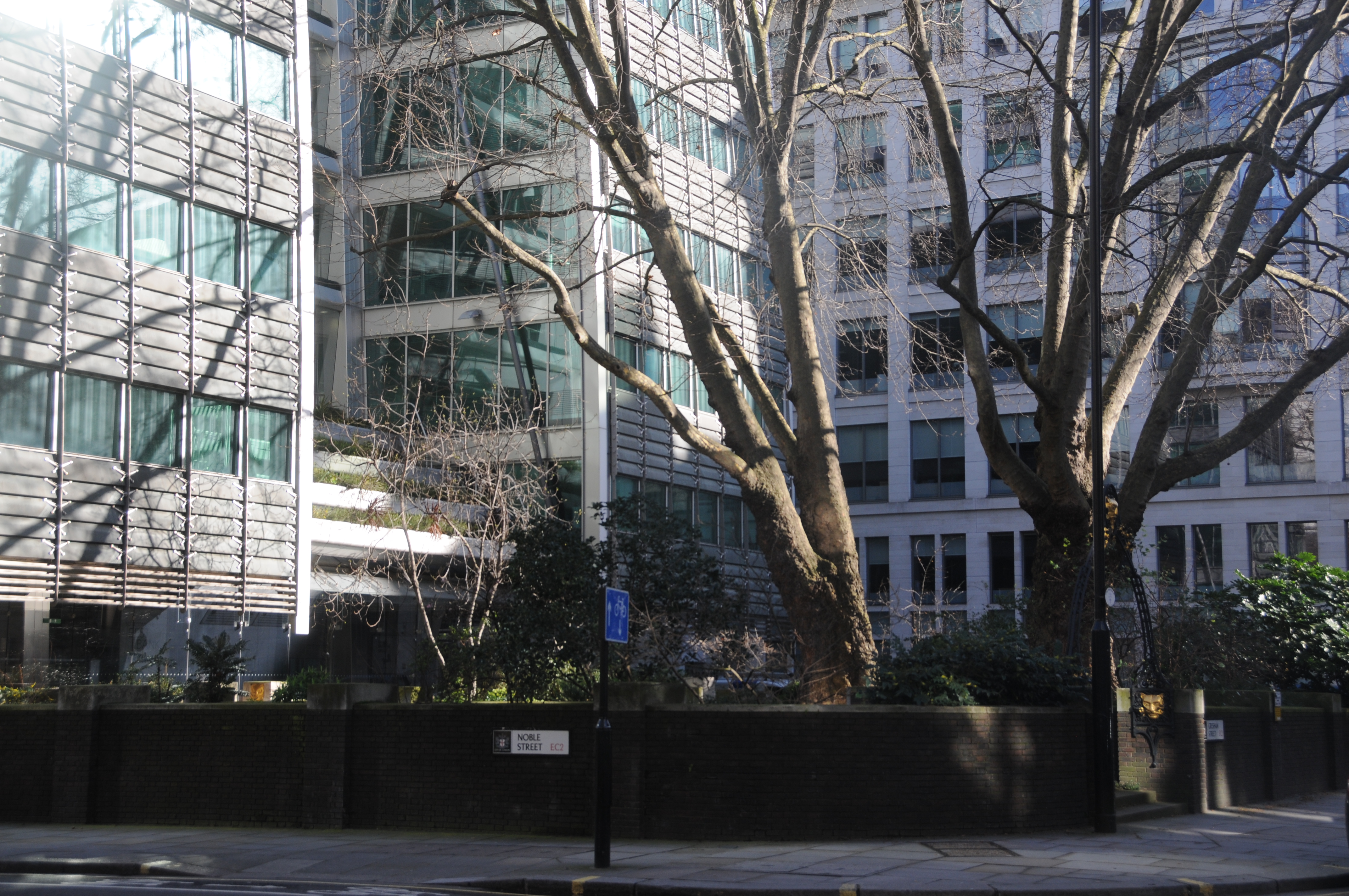
The following photo is taken from roughly where I believe may father took the above photo.

Looking towards the garden at the site of the churchyard of St John Zachary

Looking towards the garden at the site of the churchyard of St John Zachary

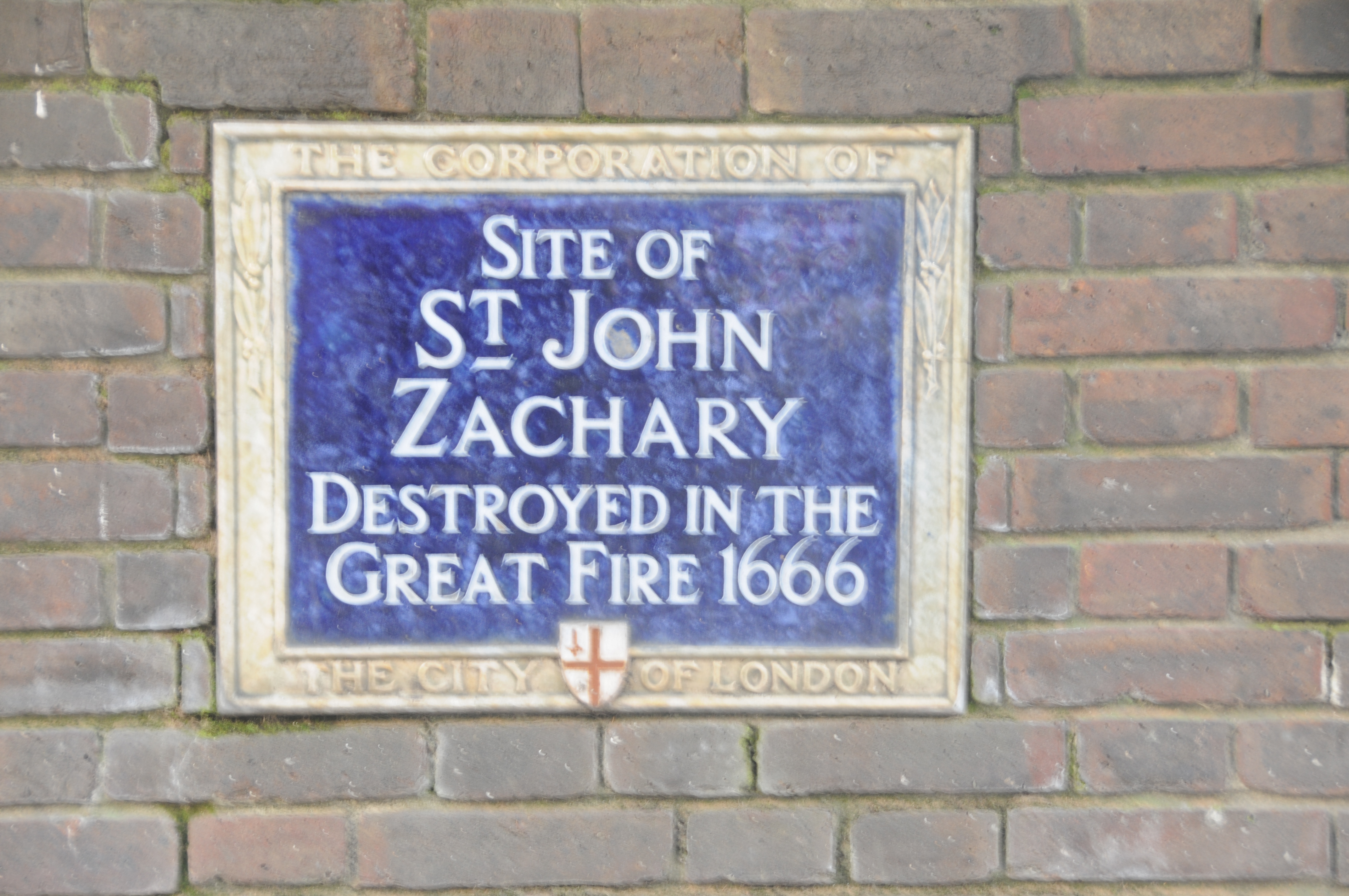
The plaque on the wall in the original photo has moved to the right and although not visible is on the wall heading to the right of the above photo.

What looks like the original plaque, now slightly relocated.

What looks like the original plaque, now slightly relocated.

I am sure this is the angle the original photo was taken from, as checking the map, the church tower seen in the background of the original photo is St. Alban in Wood Street, Whilst this is now obscured by office blocks, it can clearly be seen in the following map in the correct position from where I took the later photo, from the cross roads, looking across the garden.


View Larger Map
I always like finding locations that appear in the background of photos, so I took a walk round to St Alban and what I found is either one of the most depressing views, or a wonder of survival. The following photo is looking down Wood Street from Gresham Street looking at the tower of St. Alban.

The tower is the only surviving part of the church and where once it had stood clear of the surrounding buildings, it is now surrounded on all sides by towering office blocks that are getting steadily higher and higher. It is no longer a church, the tower now houses the offices of a corporate finance advisory firm.

I am really pleased that the church tower has survived so we continue to have tangible evidence of the number of churches that once supported the population of the City of London and the Wren architecture of these churches that were generally rebuilt after the Great Fire, however I still find it very depressing that a building that once stood taller than its surroundings and held a special place in the daily lives of the population, is now dwarfed by the size and architectural style of the surrounding buildings. Almost being crowded out of a location that has functioned as a church for many hundreds of years.

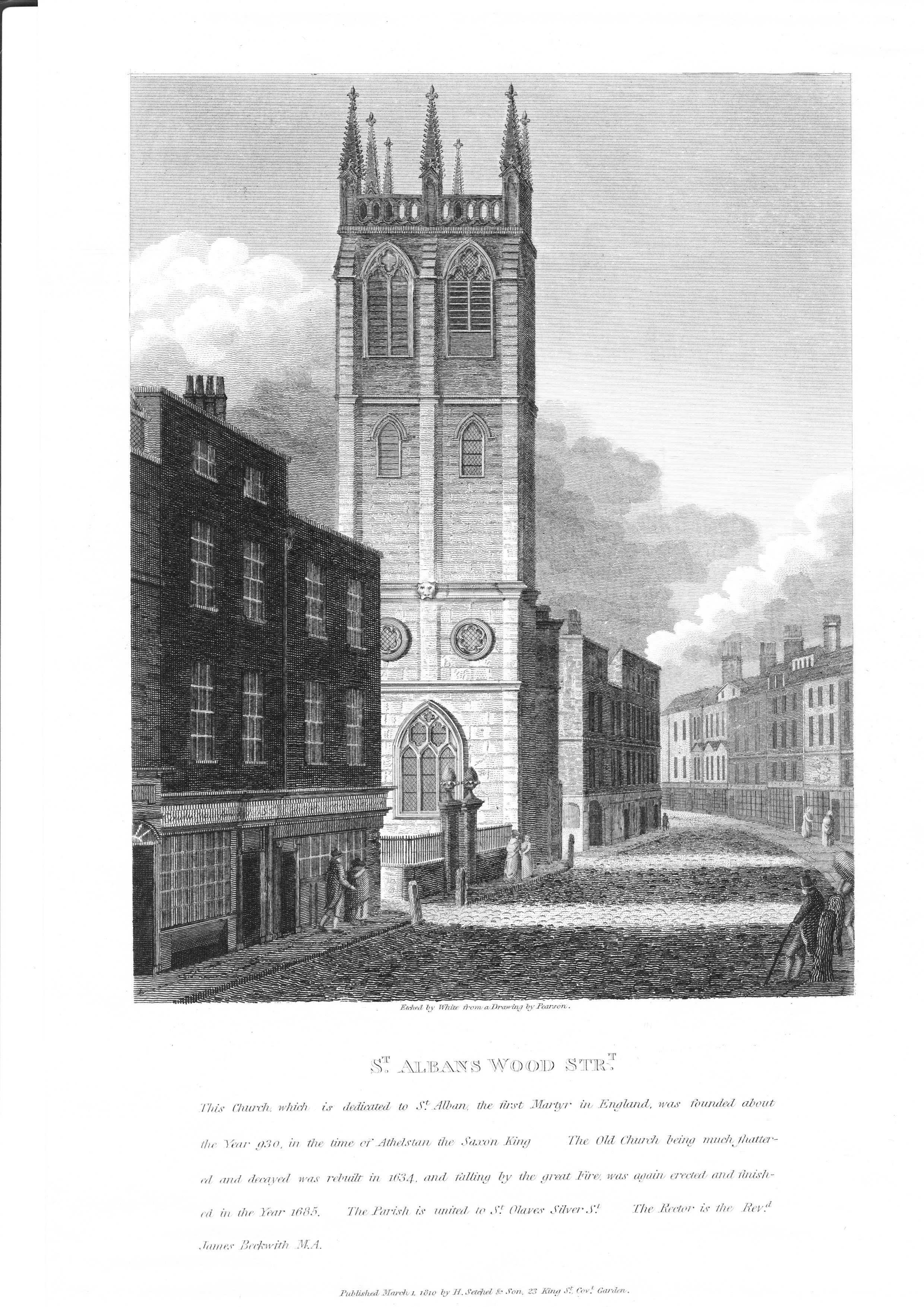
The following engraving of St Alban from 1810 shows the church standing clear of its surroundings as it would have done from when it was rebuilt between 1682 and 1685 and the later half of the 20th century when the surrounding office blocks were constructed. The change that the tower has seen in the last 330 years is incredible.

A view of the Wren church of St. Alban Wood Street as it stood in the early nineteenth century (1810). Engraved by William Johnstone White from an original drawing (now in the British Museum) by William Pearson.

A view of the Wren church of St. Alban Wood Street as it stood in the early nineteenth century (1810). Engraved by William Johnstone White from an original drawing (now in the British Museum) by William Pearson.

Where once, standing on the top of the tower would have provided wonderful views over the city, with only the spires of the other city churches breaking above the roof level. Now, you would be staring straight into the floor of an office, with many other floors stretching above.

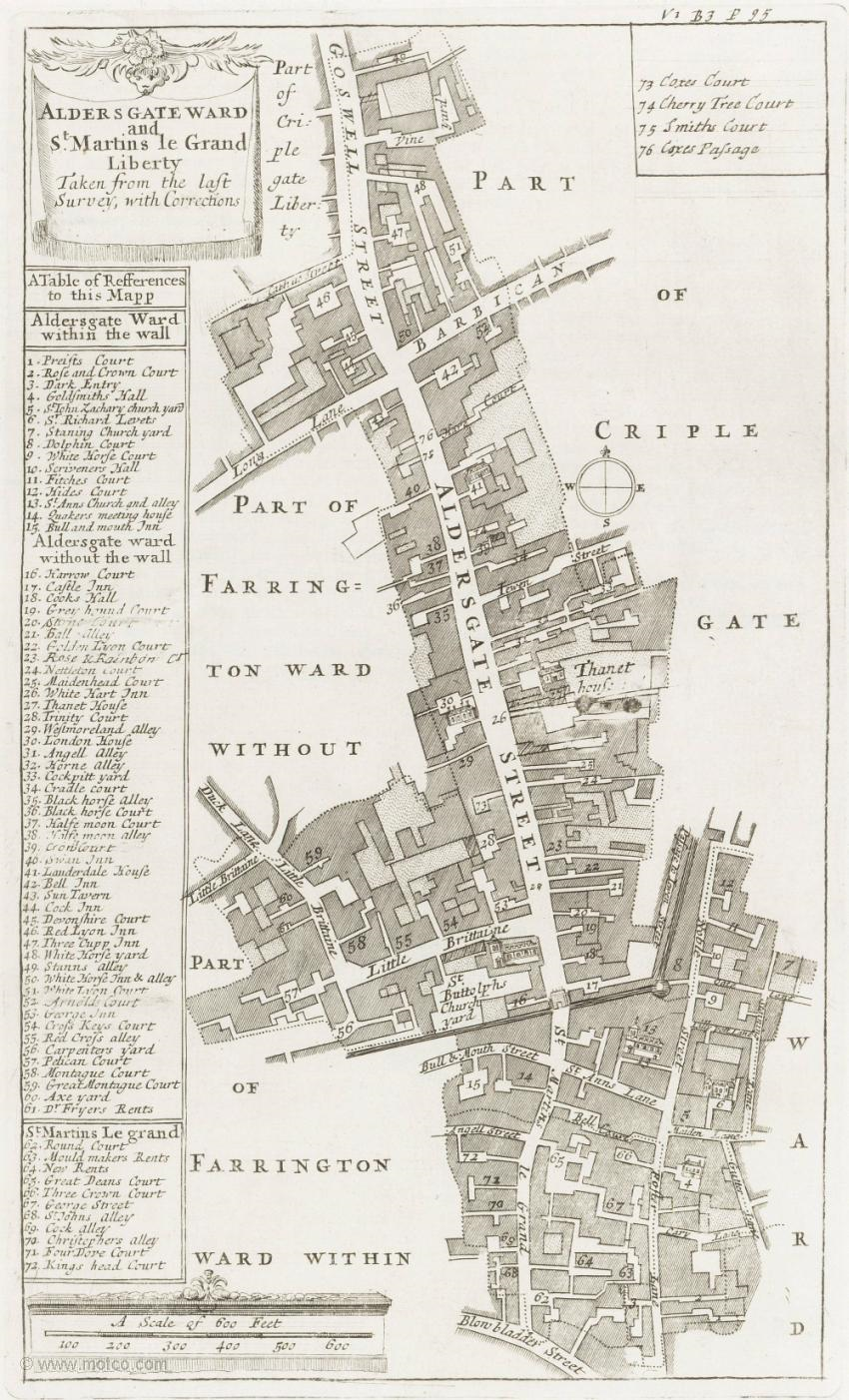
The streets in the surrounding area also tell a story of both continuity and change. The following map is of Aldersgate Ward from John Strype’s  ‘A Survey of the Cities of London and Westminster’ which was first published in 1598. (reproduced with the kind permission of Motco Enterprises Limited )

Map of Aldersgate Ward from John Strype's John Strype's ‘A Survey of the Cities of London and Westminster’

Map of Aldersgate Ward from John Strype’s  ‘A Survey of the Cities of London and Westminster’

The churchyard of St. John Zachary is labelled as number 5 in the bottom right of the map (just to the left of A in WARD).

Noble Street (which still exists) is clearly visible running vertically past the churchyard, however Gresham Street does not exist. Maiden Lane running past the churchyard where Gresham Street is now.

If you continue to the bottom of the map there is the wonderfully named Blowbladder Street. Aligning this with current mapping, this is now part of Cheapside.

Defoe gives an origin of the name Blowbladder Street in his “A Journal of the Plague Year” where he states: ” and which had its name from the butchers, who used to kill and dress their sheep there (and who it seems had a custom to blow up their meat with pipes to make it look thicker and fatter than it was, and were punished there for it by the Lord Mayor)”.

Time to move on, but next time you see a church tower standing clear above the surrounding buildings or landscape, please remember the tower of St. Alban fighting to retain a link with the past against the tide of encroaching office blocks.

alondoninheritance.com

The First Bomb And A Church Shipped To America

A dark, wet and windy Thursday evening in February. I am browsing through a couple of thousand of scanned photos that my father took across London just after the war. Negatives, many of them on old nitrate film that are now being viewed on technology not imagined when these photos were taken. I have long wanted to find the current locations of these photos and see how London has since changed.

Where to start? One photo stands out as the logical start point for my journey. It represents the point where the impact of the Second World War first came to central London. The start of the destruction of the city and the resulting rebuilding during the following 65 years.

I print out the photo and a couple of days later find myself standing in Fore Street.


View Larger Map

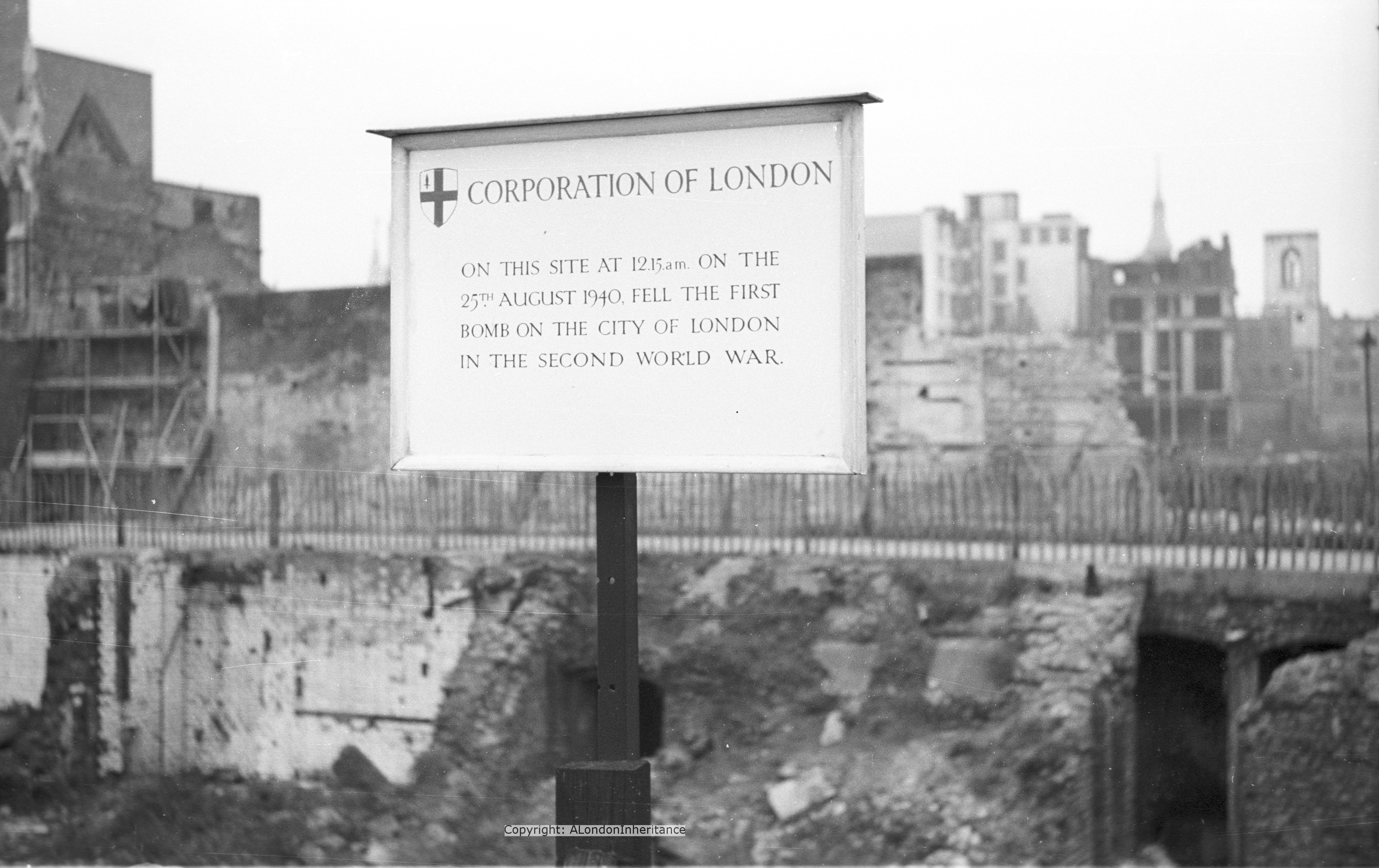
This photo was taken in Fore Street just after the war. The Corporation of London have erected a sign to mark this point as the location where the first bomb fell on the city.
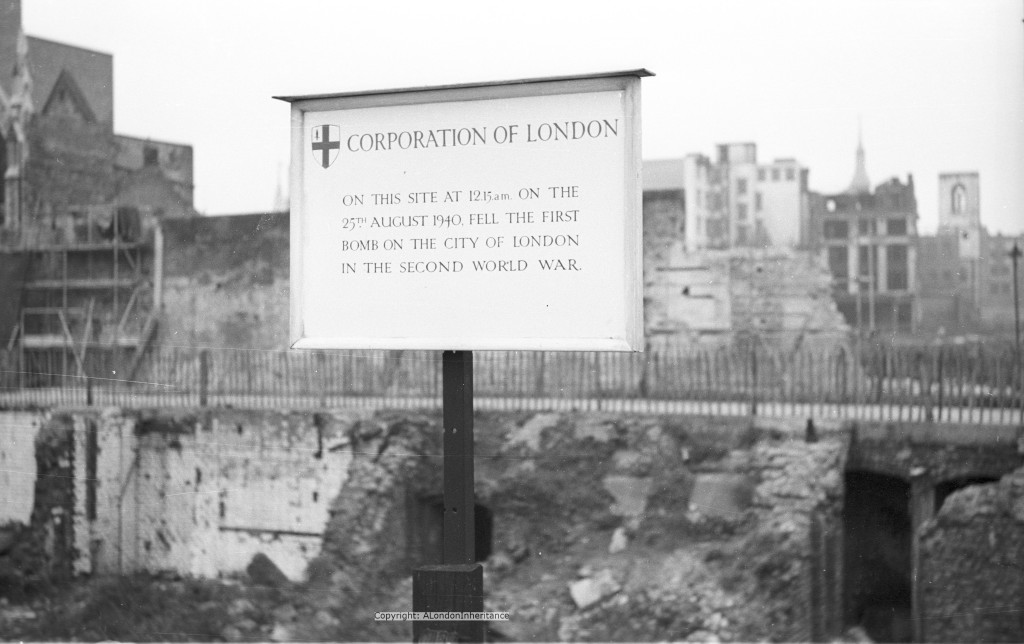
Site of the first bomb on central London during the Second World War

Site of the first bomb on central London during the Second World War

After this first attack on the 25th August 1940, heavy bombing started on Saturday September 7th and continued for the next 57 nights. London then endured many more months of bombing including the night of the 29th December 1940 when the fires that raged were equal to those of the Great Fire of 1666. Hundreds of people were killed or injured, damage to property was enormous and 13 Wren churches were destroyed. Or the night of the 10th May 1941 when over 500 German bombers attacked London. The alert sound at 11pm and for the next seven hours incendiary and high explosive bombs fell continuously across the city.

Behind the sign is a devastated landscape, not a single undamaged building stands, to the right of the photo, the shell of a church tower is visible. All this, the result of months of high explosive and incendiary bombing.

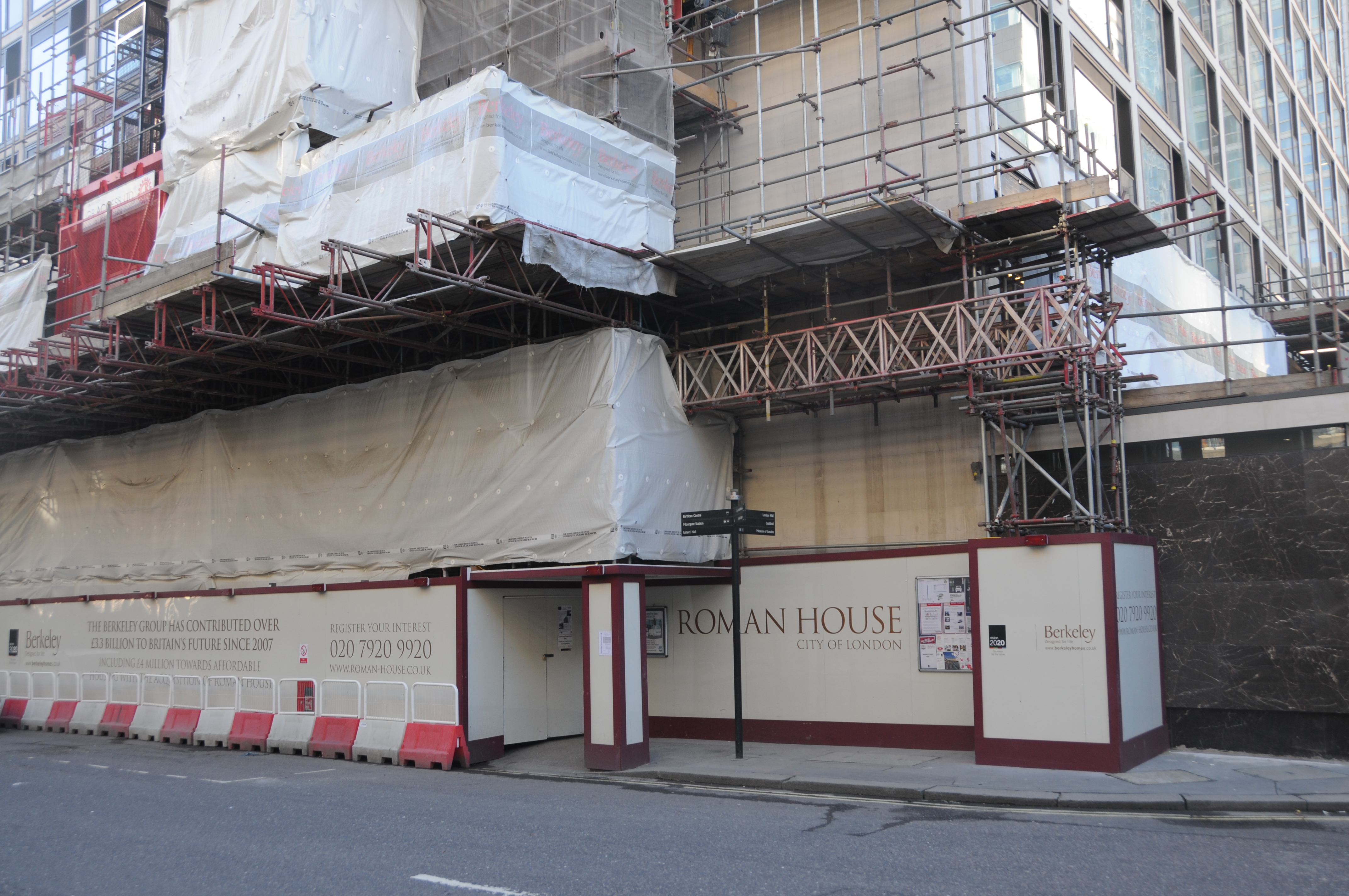
Fore Street is between Moorgate Station and the Museum of London and is in the shadow of the Barbican buildings and the towering office blocks along London Wall. The temporary sign has long gone and was replaced by a stone plaque on the building that stands at the end of Fore Street where it leads into Wood Street, however my visit is not well timed. As is typical with London buildings, the one with the plaque is going through a refurbishment and the side is completely covered. I just hope that in the enthusiasm for rebuilding, this marker of a key event in London’s history will survive.
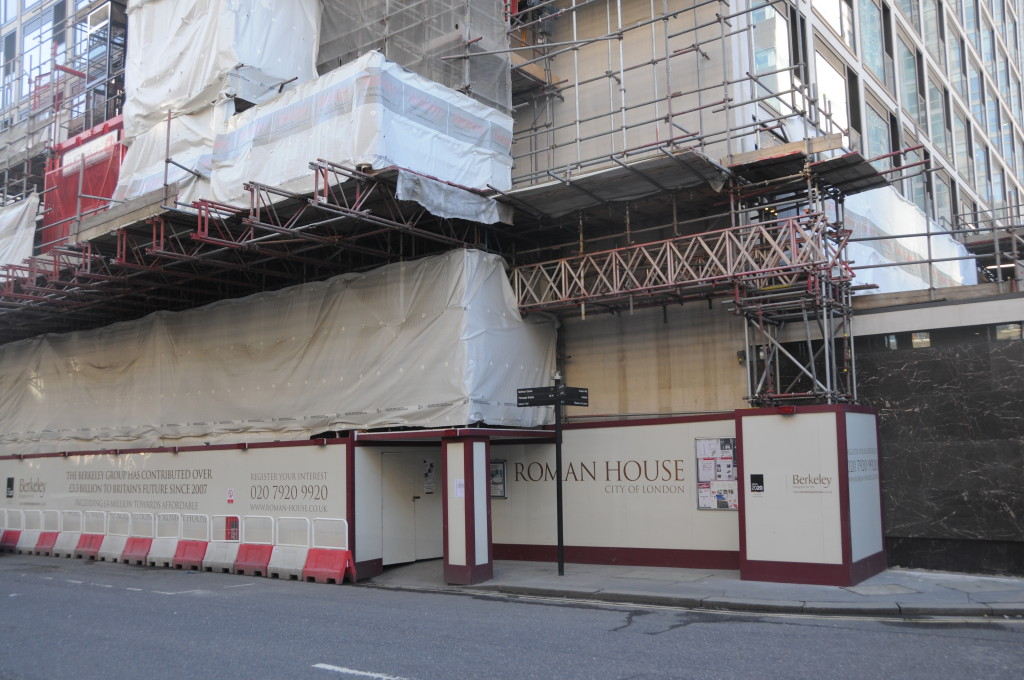
The plaque should be on the wall behind all this building work.

The plaque should be on the wall behind all this building work.

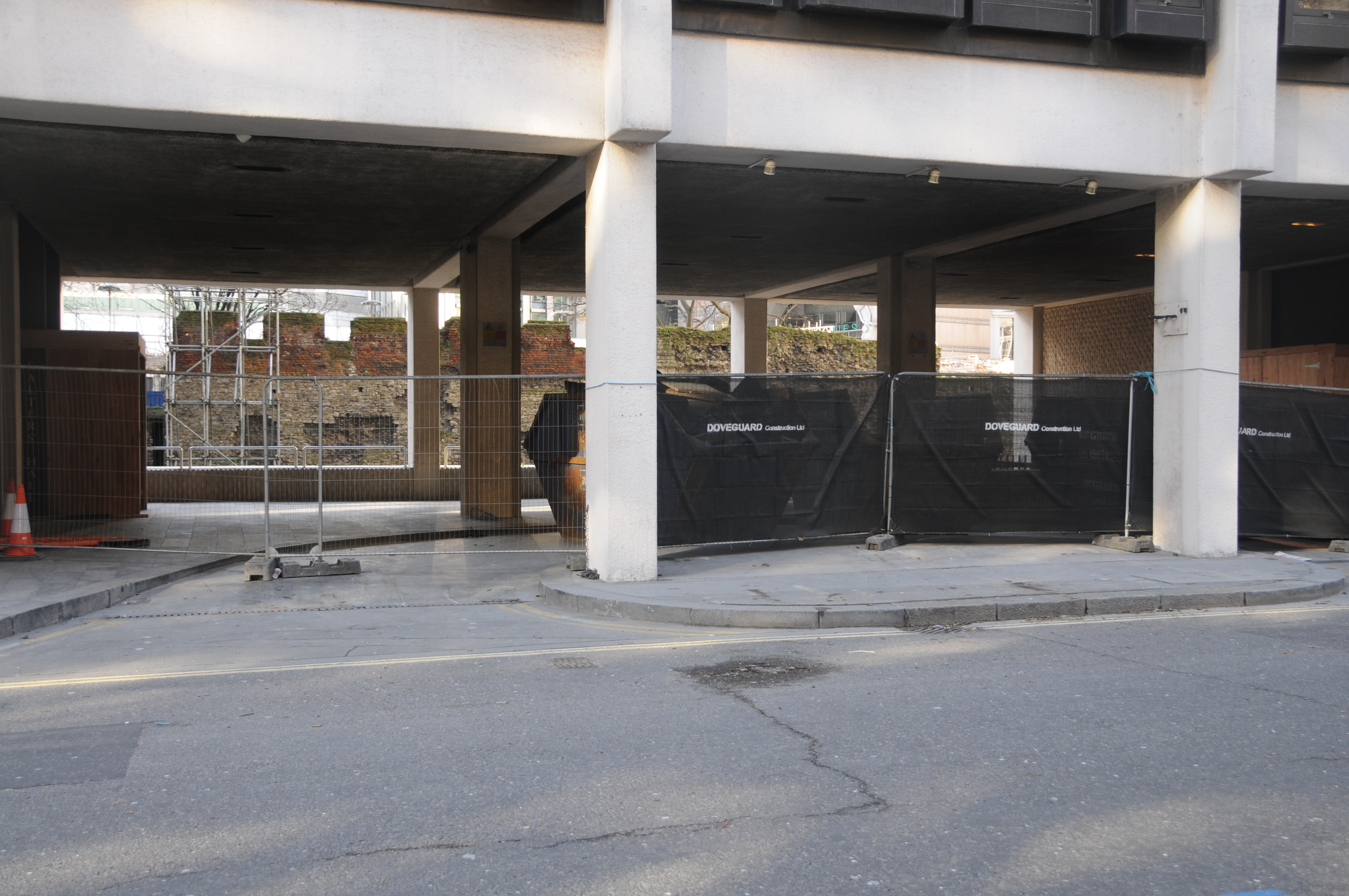
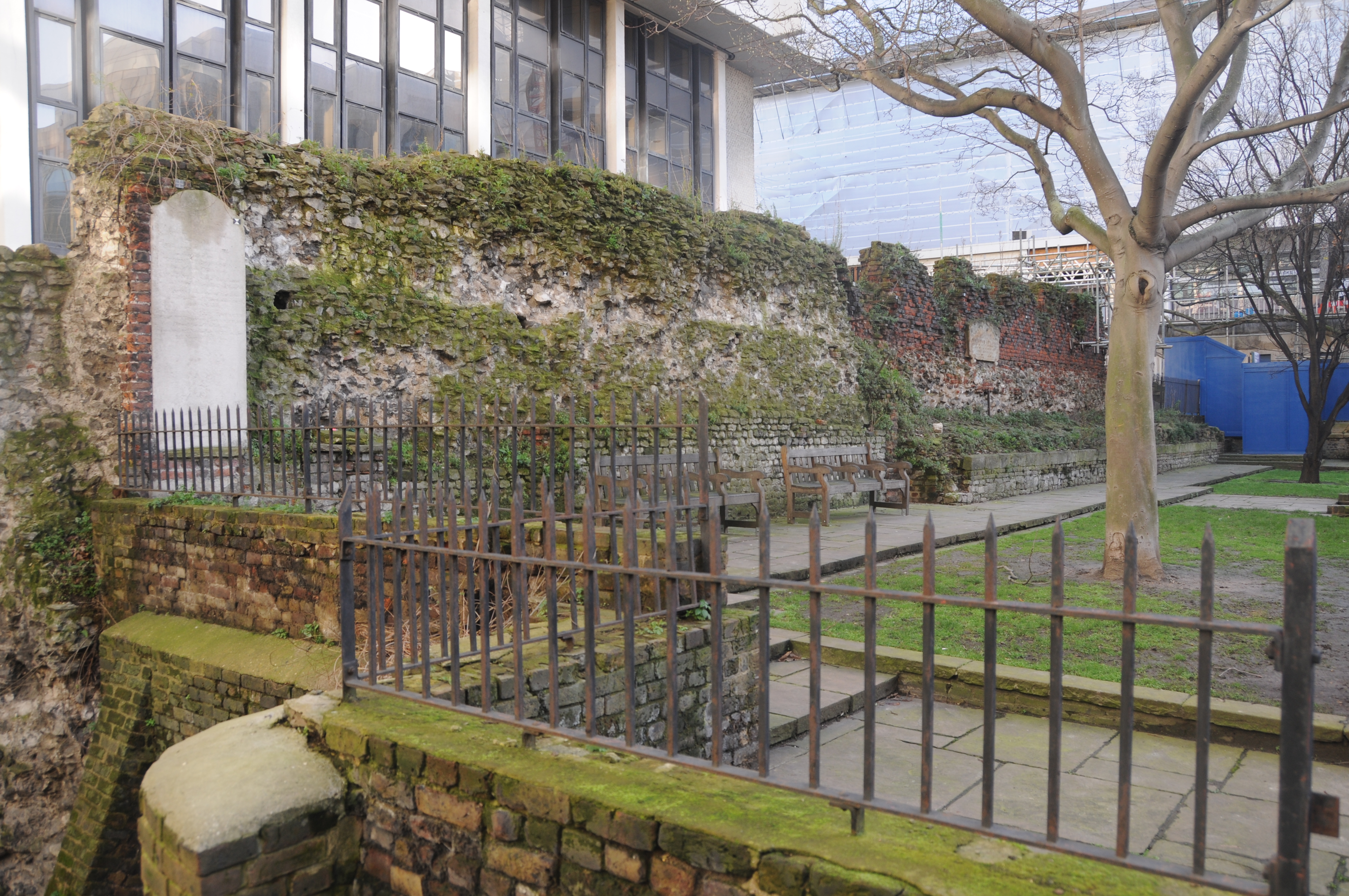
But does anything from the original photo survive? Unlikely, but I decide to look around. Behind the fencing in the original photo, there is a wall, walking down Fore Street and looking through the building entrance I see a wall, castellated on the top on the left of the wall and straight topped to the right. The wall I see through the gap looks the same as the wall in the original photo (although the angle is different, the original must have been taken towards the corner of Fore Street and Wood Street).
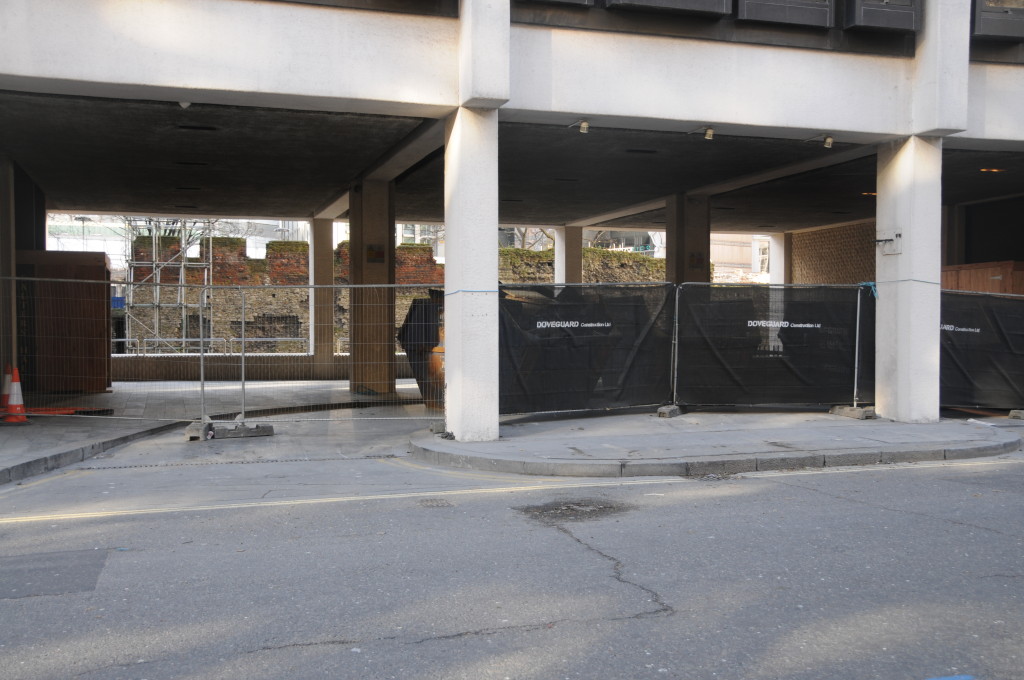
Looking towards the remains of the Roman Wall from Fore Street

Looking towards the remains of the Roman Wall from Fore Street

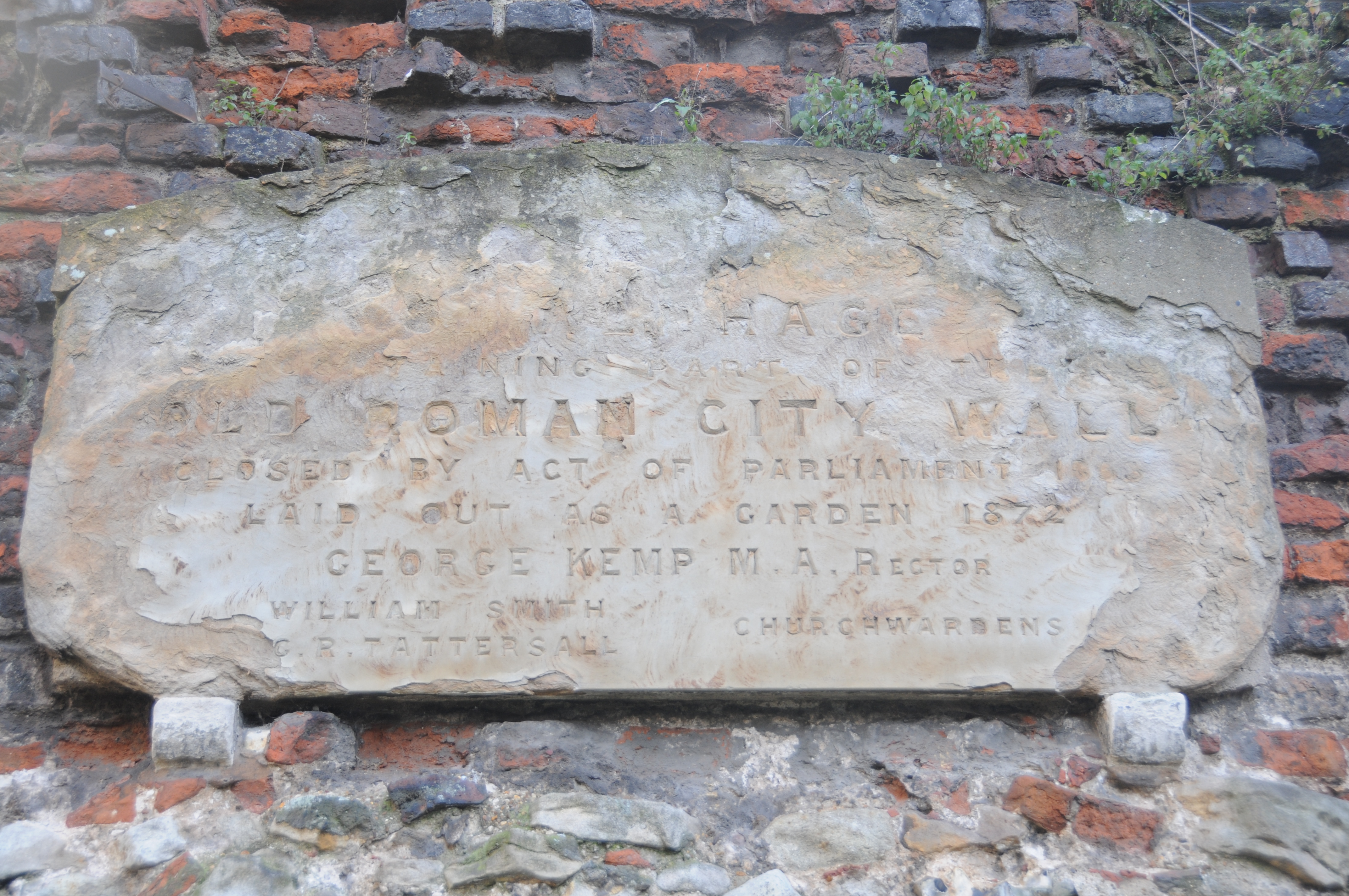
Plaque on the Roman Wall

Plaque on the Roman Wall

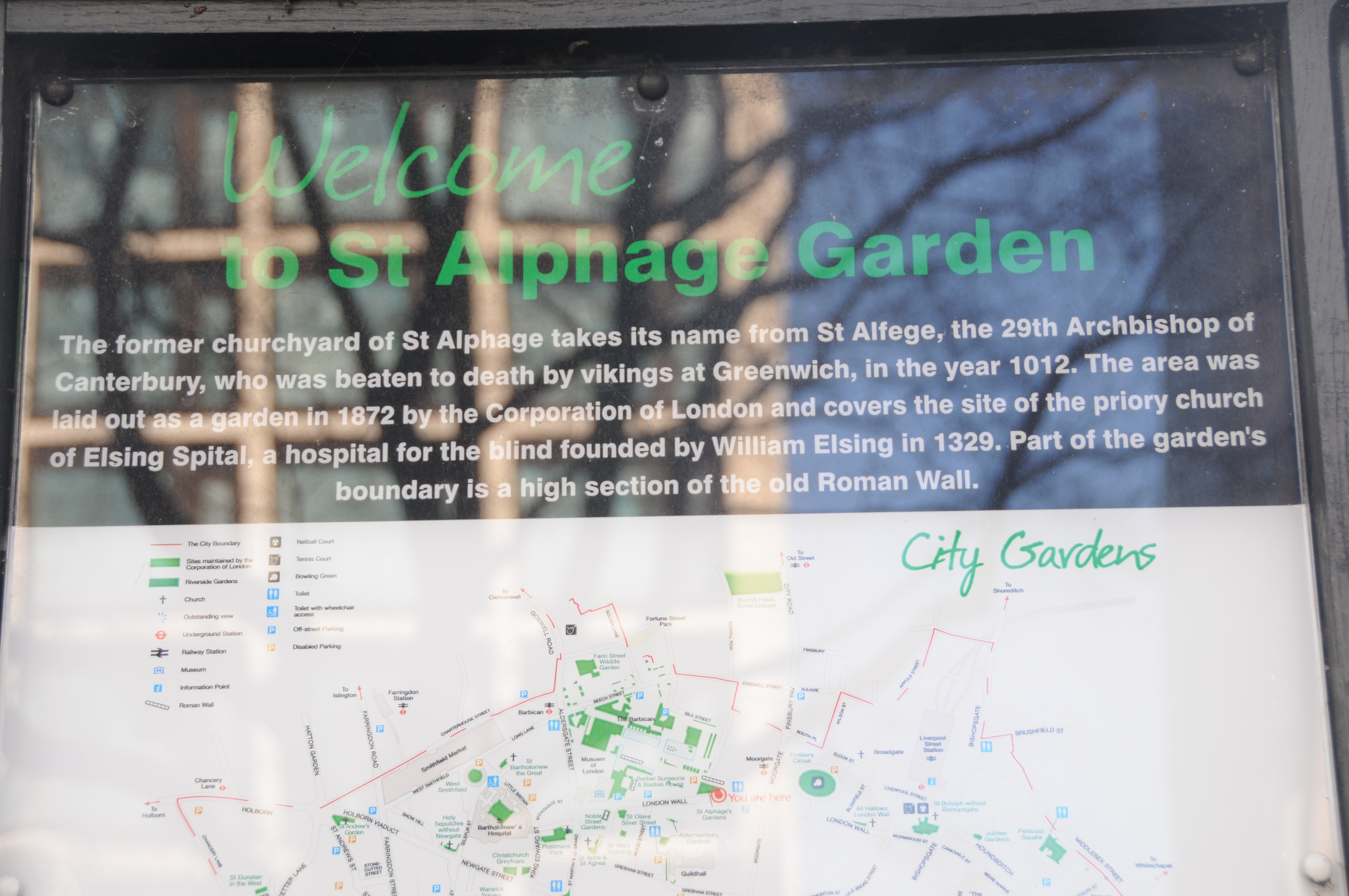
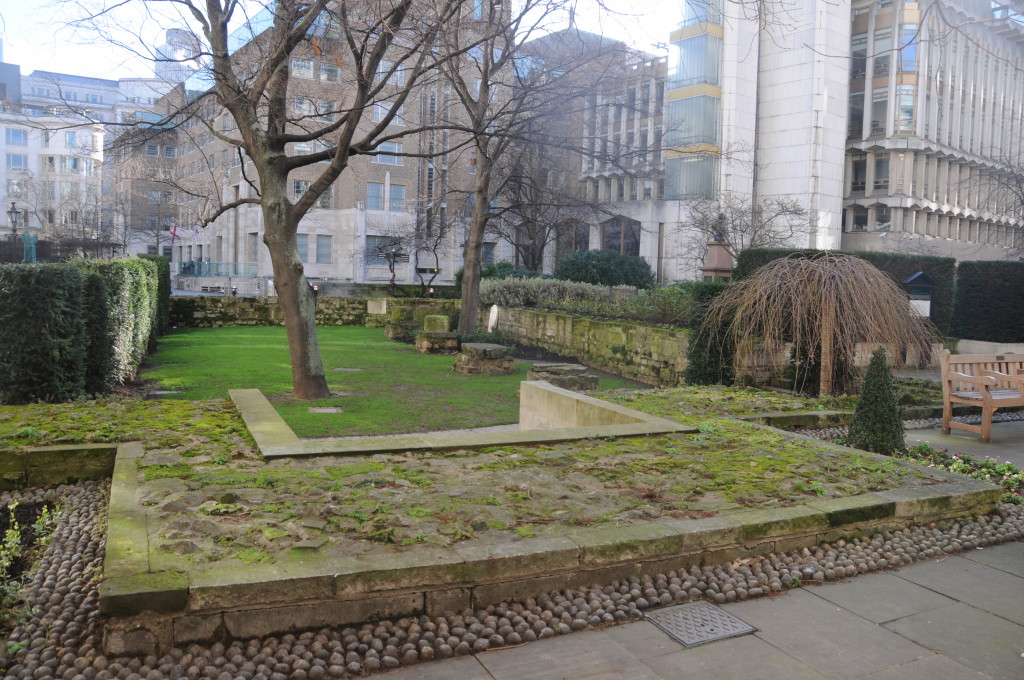
I find my way to the back of the building to a small garden, the former churchyard of St Alphage and here stands the wall, a lengthy section of the old Roman Wall. The garden is small, surrounded on all sides by towering offices and I suspect, the majority of the day in their shadow.
The garden at the former churchyard of St Alphage

The garden at the former churchyard of St Alphage

Despite all the building of the last 65 years, there are many locations like this throughout the city. To me, they are the deep foundations of the city, anchoring the city to the bedrock of history reaching back to the Roman foundation of the city as a commercial centre.

Apart from the Roman Wall, the only other structure that may have survived is the church tower seen in the right hand edge of the original photo. The city of London originally had dozens of churches and many of these still survive, if not as working churches, but as the remaining shell of the building, or just a single tower.

If the church tower still stands, it is hidden behind the office blocks of London Wall, so a quick walk across London Wall in the general direction of where the church should be found.

Nothing!

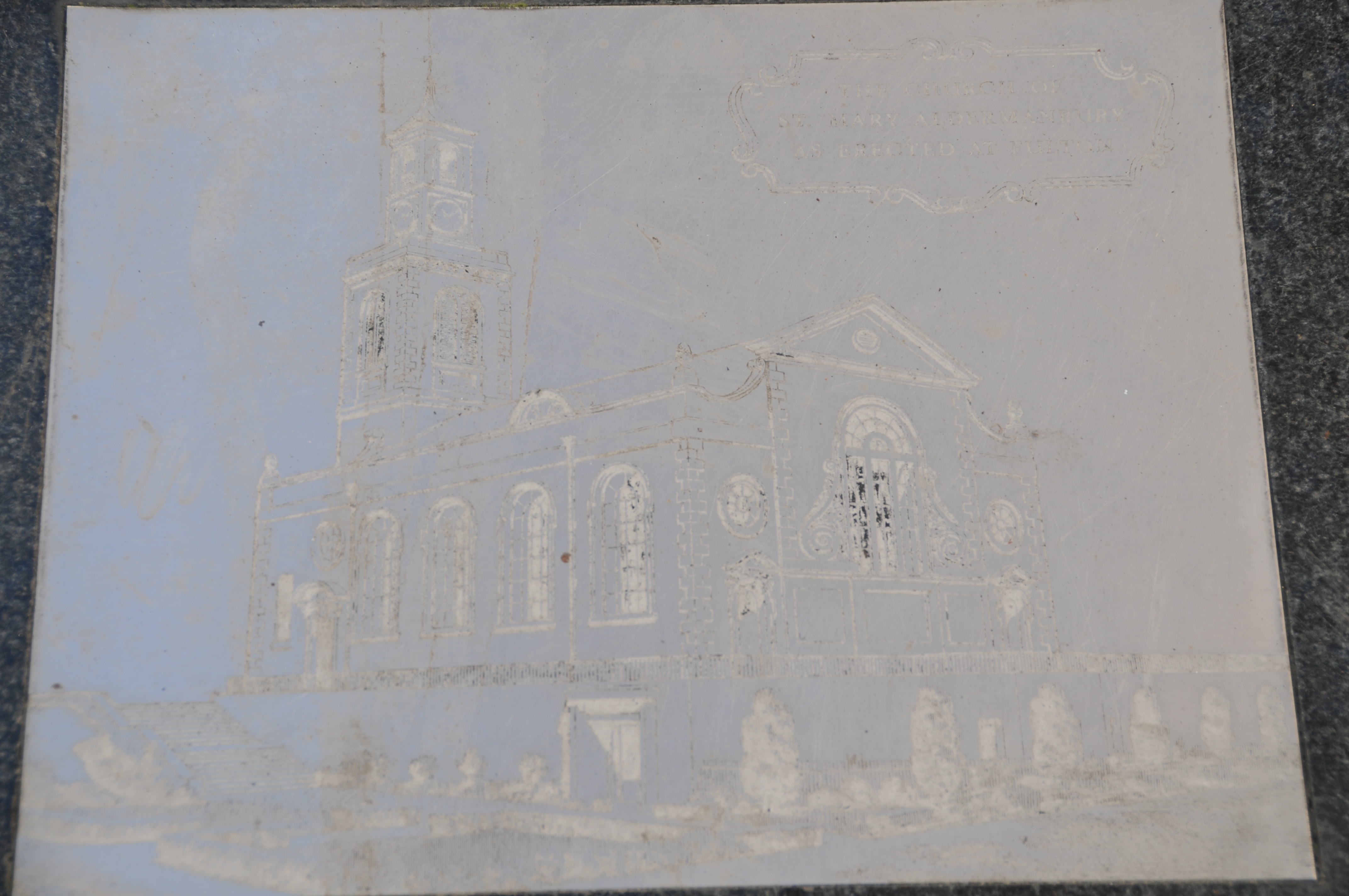
But I do find another small garden, at the end of which there is a plaque on the ground. The plaque has an etching of a church which has the same tower and window style as the one in the
photo. Checking the map, the alignment with the original photo looks right.
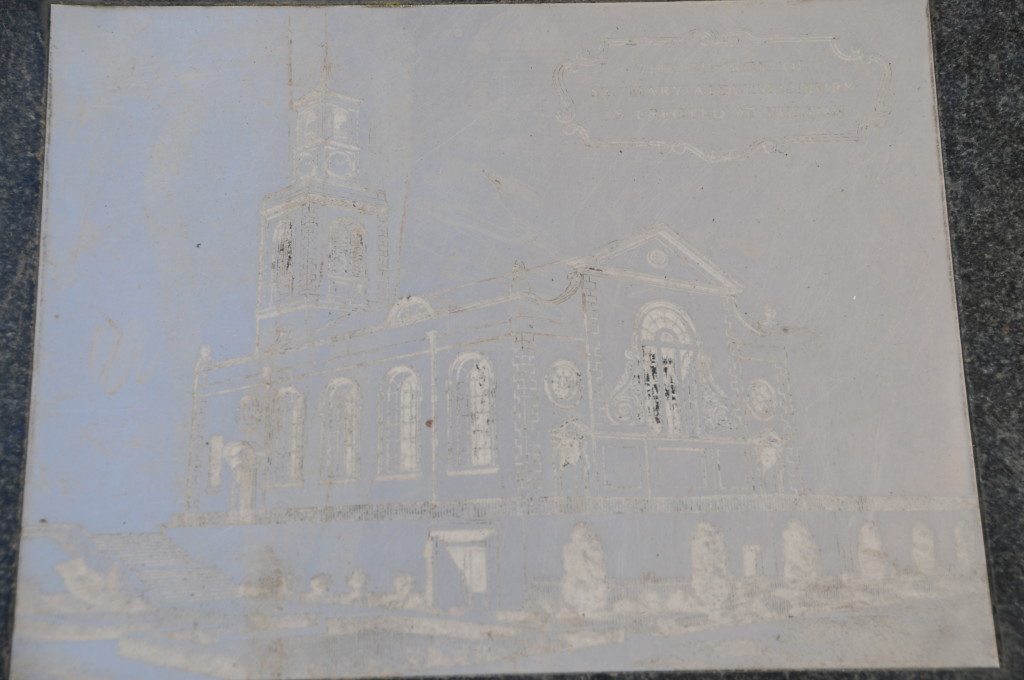
The plaque in the garden of St Mary Aldermanbury

The plaque in the garden of St Mary Aldermanbury

This is the site of St Mary Aldermanbury. Records of a church on this site date back to 1181. The original church was destroyed in the Great Fire of London in 1666. As with so many other churches destroyed during the Great Fire, a Wren church was rebuilt on the site. This is the church that was damaged in Second World War.
The garden of St Mary Aldermanbury
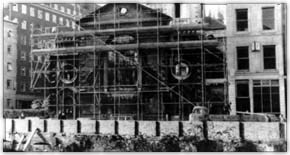
The garden of St Mary Aldermanbury

Scaffolding surrounds the Church of St. Mary in London, England. Photograph courtesy of the National Churchill Museum Collections’

Scaffolding surrounds the Church of St. Mary in London, England.
Photograph courtesy of the National Churchill Museum Collections’

After the war, the heavily damaged church had the unique distinction of being taken apart, shipped to Fulton, Missouri in the USA in 1965, and rebuilt to mark the visit of Churchill to Westminster College in 1946. The church now sits above the National Churchill Museum.

Westminster College was the location of Churchill’s speech that included the famous phrase “An iron curtain has descended across the continent”
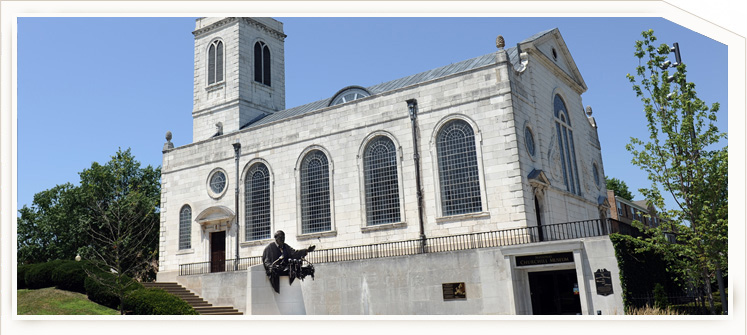
St Mary Aldermanbury now rebuilt at the National Churchill Museum. Photograph courtesy of the National Churchill Museum Collections’

St Mary Aldermanbury now rebuilt at the National Churchill Museum.
Photograph courtesy of the National Churchill Museum Collections’

The tower is the church tower that can be seen in the background of the original photo. The National Churchill Museum can be found here along with more information on the move and rebuilding of the church.
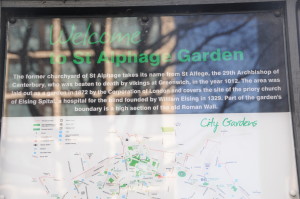
Sign at the entrance to the garden on the site of the church of St Alphage

Sign at the entrance to the garden on the site of the church of St Alphage

I wonder how many of the many thousands of people who work next to these locations, who walk along these streets everyday, understand the history around them.

Despite the incredible amount of construction work over the past 65 years and which continues with buildings getting higher and more out of touch with their immediate surroundings, there is still so much to be found across the city.
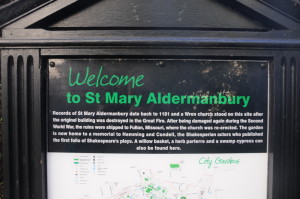
Sign at the entrance to the garden at St Mary Aldermanbury

Sign at the entrance to the garden at St Mary Aldermanbury


That is my first photo. My next stop is another city garden, where nearby I find an almost fantasy like link to another world, followed by a walk to the Thames to explore a wider view of London.


alondoninheritance.com