In the middle of the 17th century, Putney was a small village to the west of London with a population of around 900. A bridge had not yet been built across the Thames, but a regular ferry did provide a means of crossing between Fulham and Putney. Close to the river and ferry crossing was a church, the parish church of St. Mary’s, and in 1647 the church was the location of one of the many key events of the Civil War.
Rather than the violence of battle, St. Mary’s was the location of a debate, between members of the Army Council and representatives from within the Regiments of the New Model Army. A debate that became known as the Putney Debates, an event that would probably have been a footnote in the history of the mid-17th century, had it not been for the actions of one man in writing down the first three days of the debates, and a chance find of this record almost 250 years later.
St. Mary’s Putney in March 2026:
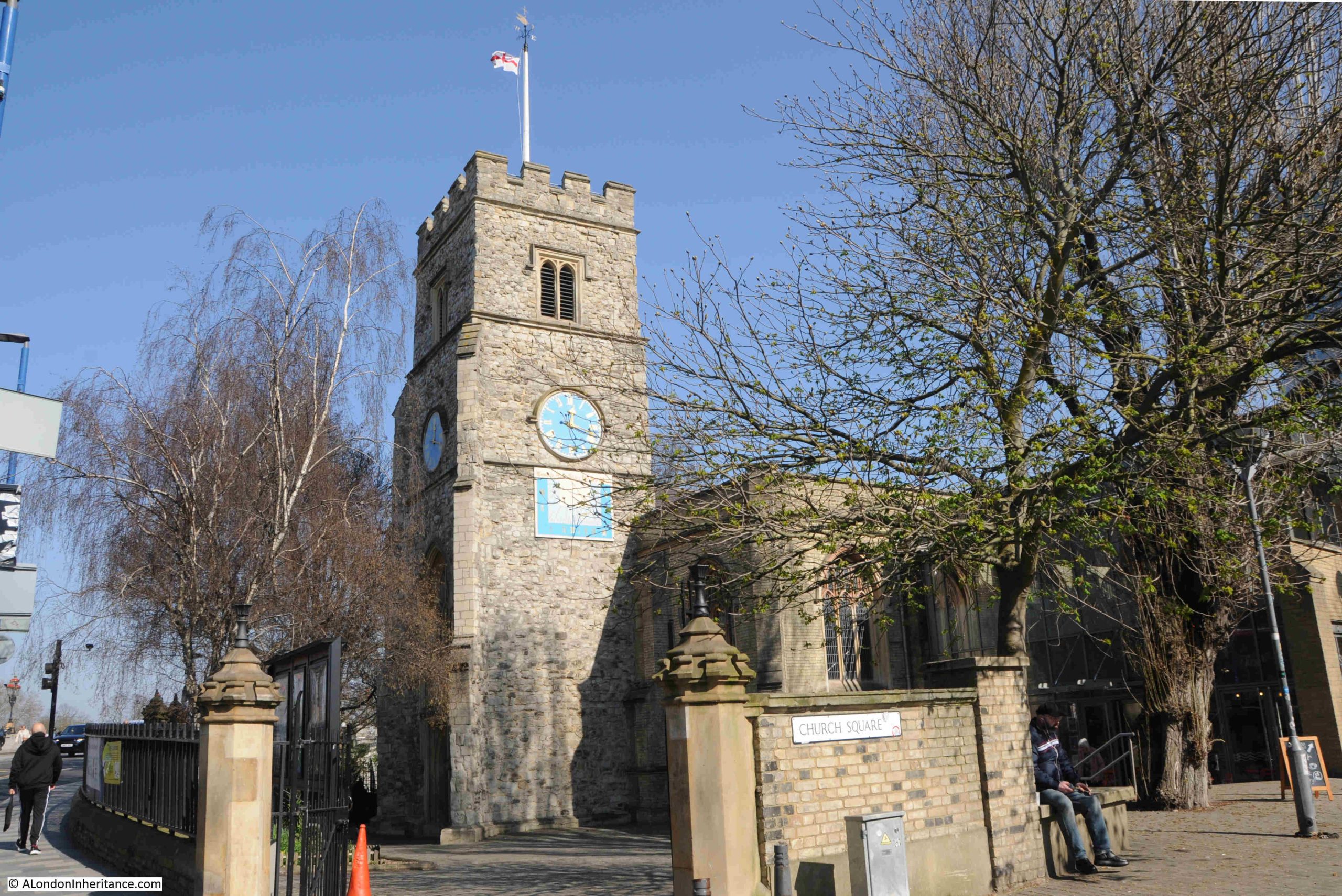
A church has been here since at least the 13th century, when there was a written mention of the church in 1292, and the location follows the historic trend of locating churches next to key crossing points.
You can see this around the City of London, with the number of churches located next to the old gates of the City wall such as St. Giles Cripplegate and St Botolph Without Aldgate, as well as river crossings where St Andrew, Holborn is alongside what was the approach from the west, to the crossing of the River Fleet.
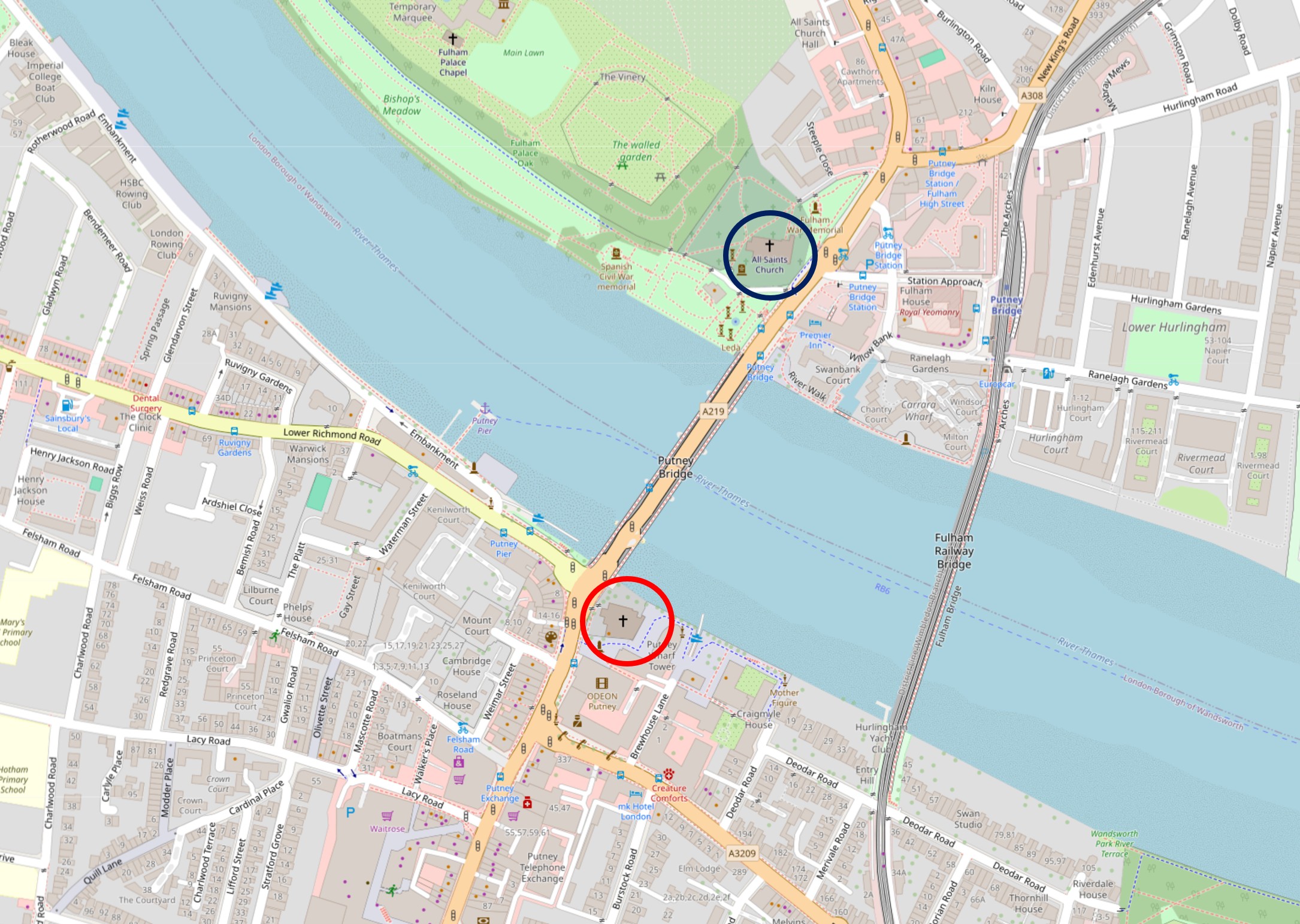
The following map shows St. Mary’s (red circle) adjacent to the current bridge (the second bridge at the site, and also close to the earlier ferry crossing), with a second church in a similar position on the opposite bank of the river; All Saints Fulham (dark blue circle) (© OpenStreetMap contributors):
By 1647, the Civil War appeared to be over, with the New Model Army’s victory at the Battle of Naseby in June 1645, the Siege of Oxford in April 1646, with Charles I managing to escape and joining a Scottish Army, who handed Charles I back to Parliament in January 1647 in exchange for an initial £100,000.
The first half of the 17th century was a time of radicalism, religious dissenters, new ideas and thought about the role of Parliament, the Monarchy, individual liberty, religious toleration etc. and many of these streams came to a head by 1647.
There were Levellers (whose views included religious tolerance and equality of all before the law), and Fifth Monarchist Men, a stream of Protestants who believed that the Kingdom of God would arrive at the end of four earlier kingdoms, the Babylonian, Persian, Greek and Roman kingdoms, with the execution of Charles I signalling the end of the Roman kingdom.
There were those who wanted Charles I to be brought to trial, and there were those (including Cromwell), who wanted an agreement that was more compatible with the King, where he would continue to have a role, although much reduced.
Charles I was being held captive at Hampton Court and there were many discussions about what to do with him. Cromwell was communicating with the King to try and find a way forward, but this led to complaints from the Army that Cromwell was more in favour of Charles I than his own soldiers.
Parliament was also concerned about the continued existence of the New Model Army. The army would require continued funding, and could also become a threat to Parliament, as the army was a more radical organisation.
Regiments within the Army included agitators who would spread and campaign for radical causes. Many of these were aligned with prominent radicals in the City of London.
In October 1647, agitators within five cavalry regiments of the New Model Army published “The Case of the Armie Truly Stated”. The document criticised senior officers within the Army (including Cromwell), for negotiating with Charles I, and also demanded what at the time were radical causes; democracy, equality before the law, extension of the vote, and for soldiers to receive the pay that was owed to them.
A sense of the contents of the document can be gained from the title and opening paragraph:
“The case of the Armie truly stated,: together with the mischiefes and dangers that are imminent, and some suitable remedies, humbly proposed by the agents of five regiments of horse, to their respective regiments, and the whole Army. As it was presented by Mr. Edmond Bear, and Mr. William Russell, October 15. 1647. unto his Excellency, Sir Thomas Fairfax. Enclosed in a letter from the said agents : also his Excellencies honourable answer thereunto.
Whereas the grievances, dissatisfactions, and desires of the Army, both as Commoners and Soldiers, hath been many months since represented to the Parliament; and the Army hath waited with much patience, to see their common grievances redressed and the rights and freedomes of the Nation cleared and secured; yet, upon a most serious and conscientious view of our Narratives, Representations, Ingagement, Declarations, Remonstrances, and comparing with those the present state of the Army and Kingdome, and the present manner of actings of many at the Head Quarters, we not only apprehend nothing to have been done effectually, either for the Army or the poore oppressed people of the nation, but we also conceive, that there is little probabillitie of any good, without some more speedy and vigorous actings.”
A large contingent of the Army were based around Putney, and the church had already been used for meetings. Churches were good for meetings because they offered a large space, and were also a religious building, and prayer was often a key part of meetings and debates held by members of the Army and the radicals.
Today, access to St. Mary’s is via the new building to the side, which has a café on the ground floor. Walking through the café and turning left into the church provides the following view:
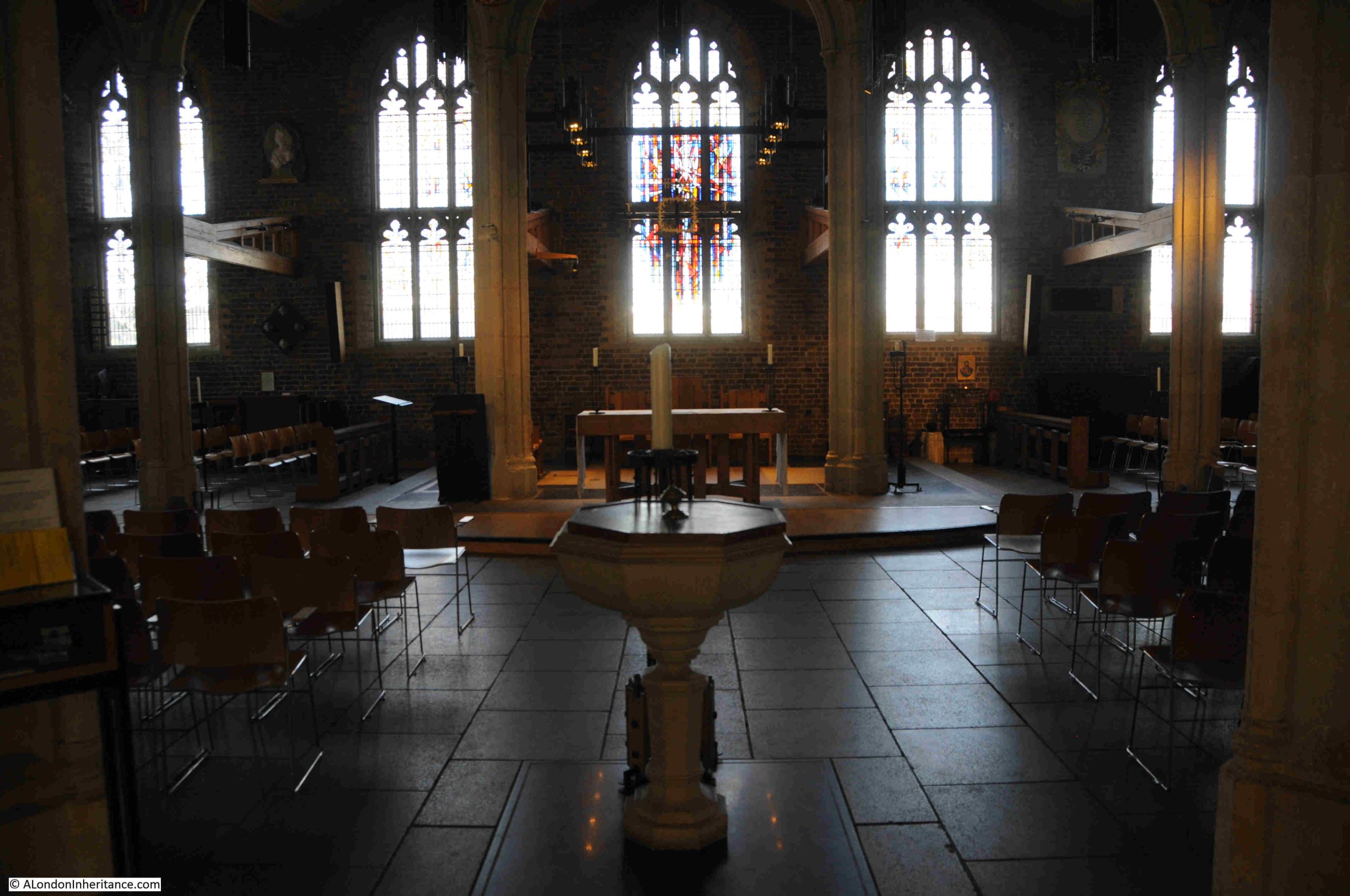
On walking into the church, was I looking at the same church that Oliver Cromwell would have seen back in 1647?
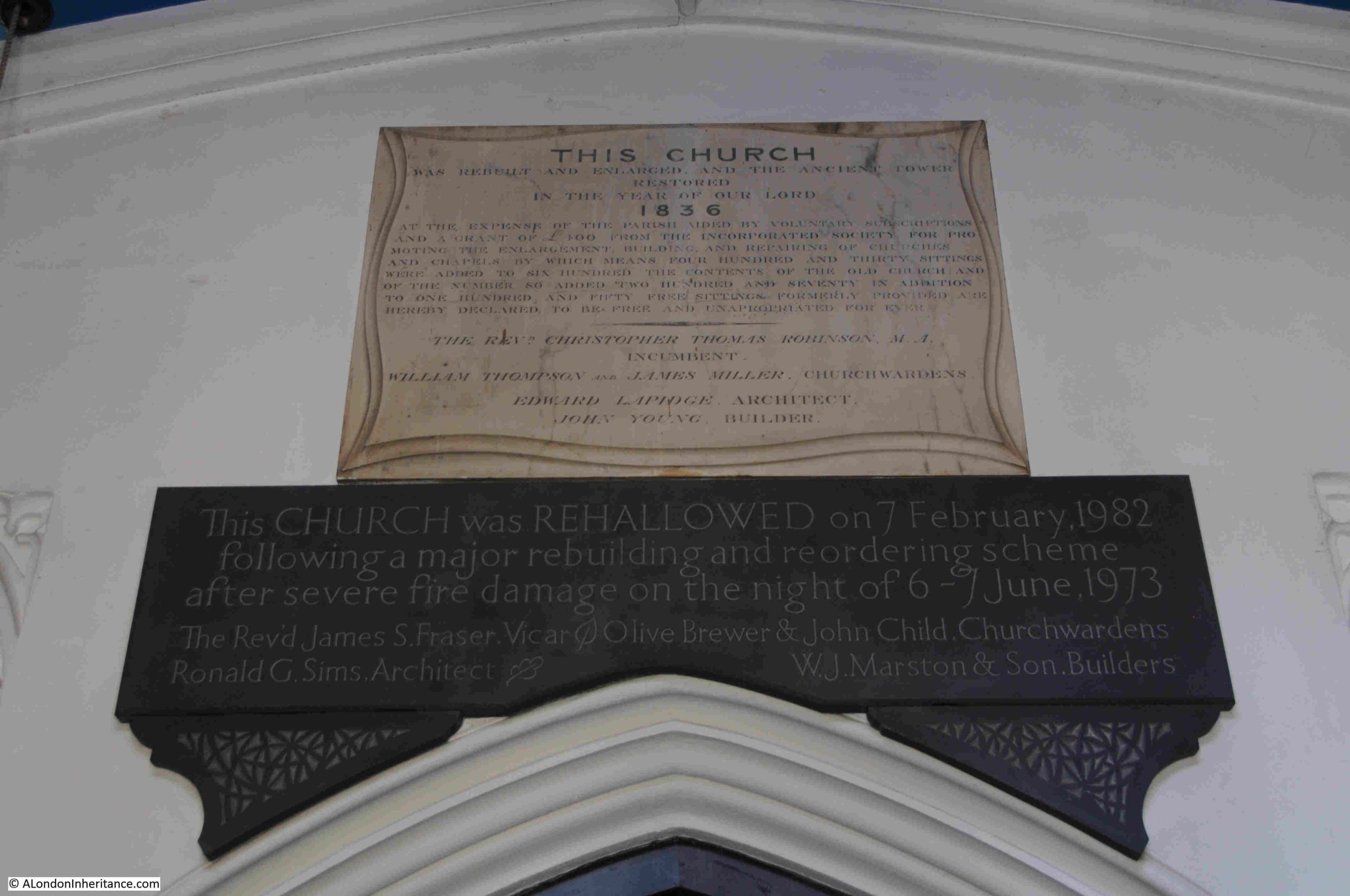
Unfortunately not. The church was enlarged and substantially rebuilt in 1836, and in 1973 an arson attack destroyed much of the church, requiring a significant rebuild, which was completed nine years later when the church was re-hallowed on the 6th of February 1982.
Although it is a very different church, it is still the place where the debates where held, and a place where Oliver Cromwell, senior officers and members of the New Model Army, religious and political radicals, argued and debated on the future direction Parliament and the country, religious freedoms and the fate of the King.
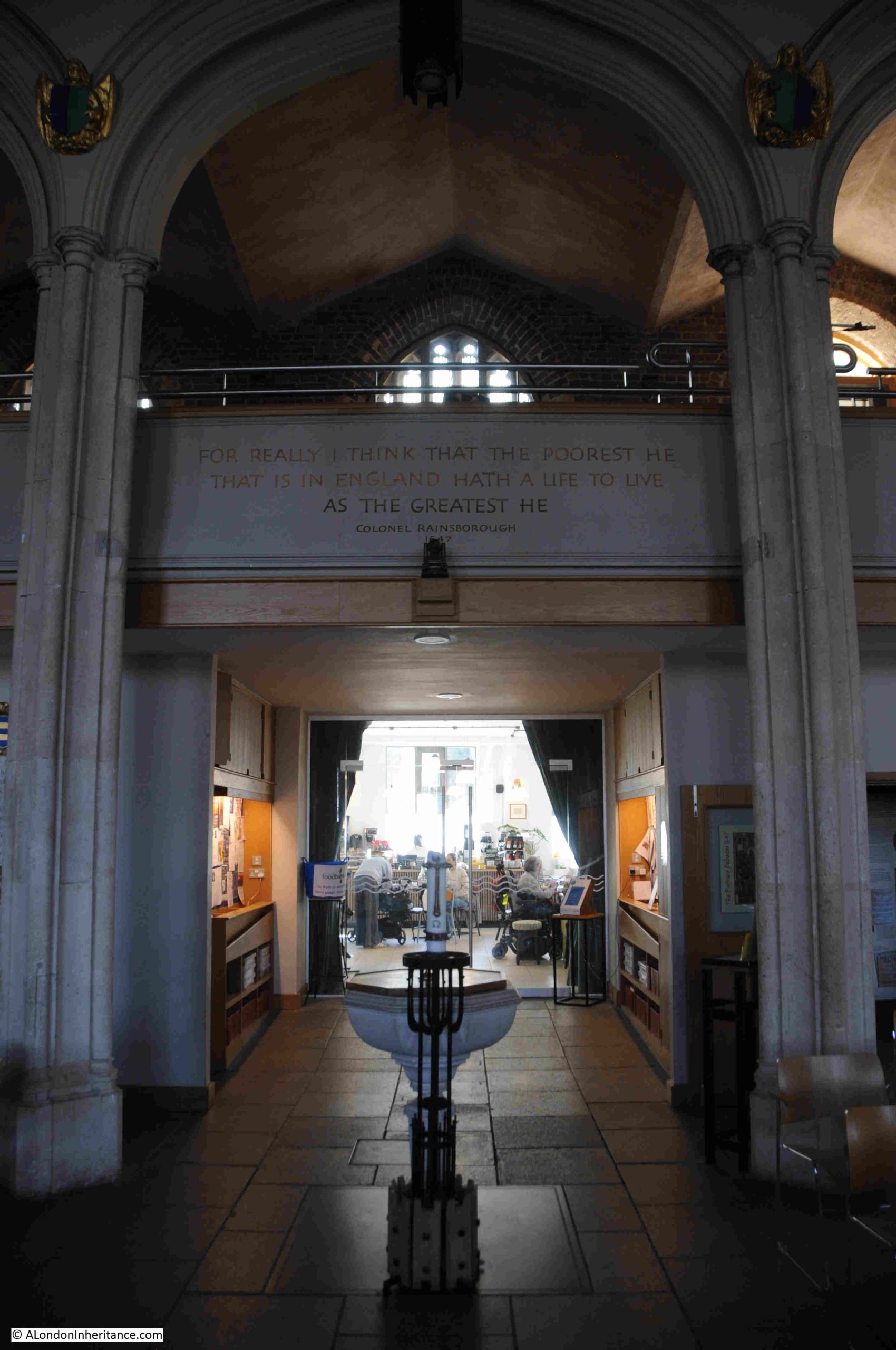
Inside the church, looking back towards the café entrance:
One of those involved in the debates was Colonel Thomas Rainsborough.
Rainsborough was born in Wapping in 1610, the eldest son of William Rainsborough who was a member of the Levant Company, who gained their charter from Elizabeth I in 1592, with the right to trade with the Ottoman Empire, and neighbouring states in the eastern Mediterranean.
Thomas Rainsborough would also become a member.
At the start of the Civil War, Rainsborough was appointed Captain of one of the ships of the Navy. The Navy had sided with Parliament, and during the Civil War, the Navy’s main roles were supporting coastal towns and cutting off supply routes to Royalist forces, and one of his successes during this period was the capture of a ship carrying supplies and reinforcements to the King.
He transferred to the Army and in May 1645 became a Colonel in the New Model Army and was part of a number of battles and sieges, including the siege of Oxford, the base of Charles I which surrendered in June 1646, and the siege of Worcester, which surrendered the following month.
Rainsborough was a supporter of the Levellers, and also opposed negotiations with the king. In the Putney Debates he was frequently in opposition to the views of Oliver Cromwell and Henry Irelton, a Major-General in the New Model Army, supporter of Cromwell, and who was married to Bridget Cromwell, Oliver Cromwell’s eldest daughter.
A quote from one of Rainsborough’s arguments at the Putney Debates is above the entrance to the church from the café, as can be seen in the above photo, with a close up shown below:
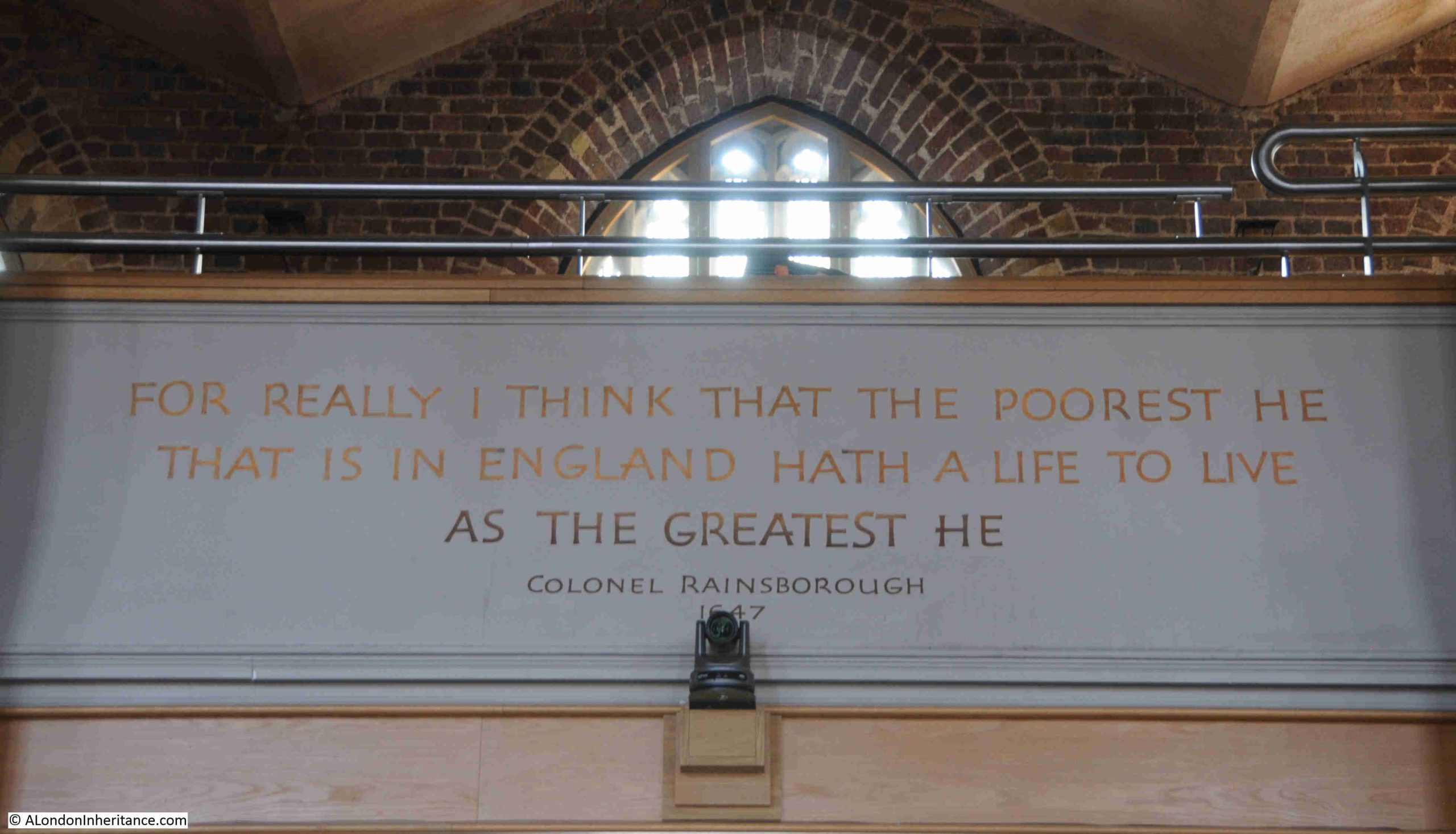
The phrase (in bold) is from the following part of one of Rainsborough’s arguments:
“I desired that those that had engaged in it [might be included]. For really I think that the poorest he that is in England hath a life to live, as the greatest he; and therefore truly, sir, I think it’s clear, that every man that is to live under a government ought first by his own consent to put himself under that government; and I do think that the poorest man in England is not at all bound in a strict sense to that government that he hath not had a voice to put himself under; and I am confident that, when I have heard the reasons against it, something will be said to answer those reasons, insomuch that I should doubt whether he was an Englishman or no, that should doubt of these things.”
A very clear argument for equality and democracy, and good to see these words from Thomas Rainsborough are on display in the church where the debates took place, with the caveat that it was a view of equality and democracy in the mid 17th century.
There was no argument for equality of men and women, or for women to be able to vote on who represented them in Parliament, and the debates also included arguments for how far democracy should go, for example that the poor and servants should be excluded. As representatives of the army, there was general agreement that soldiers should be given the vote.
Whilst we should not compare the middle of 17th century with today, the Putney Debates were a step in the right direction.
The interior of the church today – a very different place to when Rainsborough was part of the Putney Debates, Cromwell was here, along with other senior members of the army and representatives and agitators from the regiments:
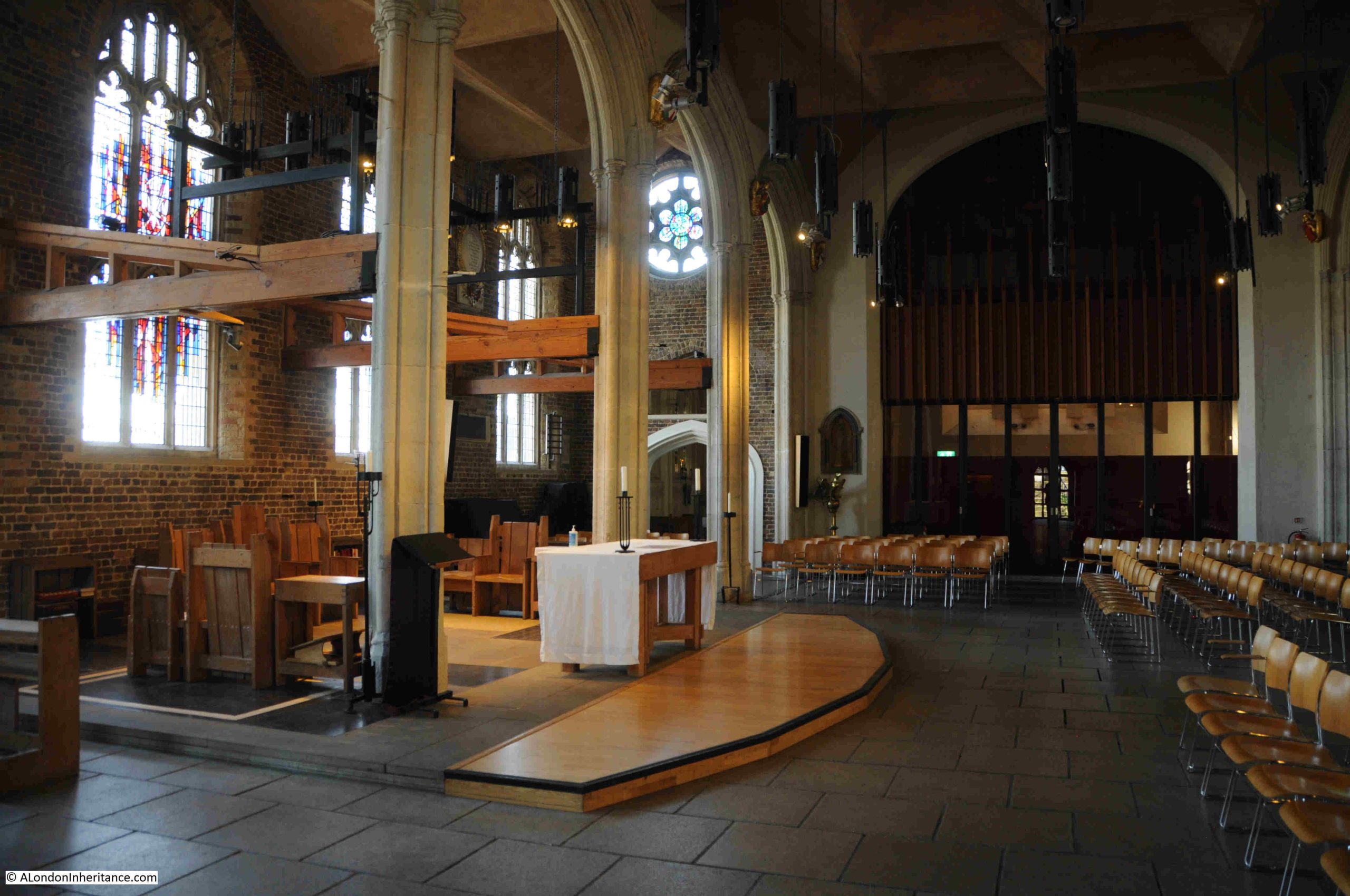
The church is Grade II* listed, and the following from the Historic England listing provides an idea of just how much the church was changed in 1836 and 1837:
“This involved alterations to the tower, widening the nave, the addition of expanded aisles in yellow stock brick and the addition or replacement of windows in the Perpendicular Gothic style. In addition, the galleries in the aisles and west end of the church which had originally been installed in the early part of the C17 were replaced, a single-storey vestry added in the south-east corner and the Bishop West chapel moved from the south to the north aisle.”
The rebuild after the 1973 arson attack further changed the church, as follows:
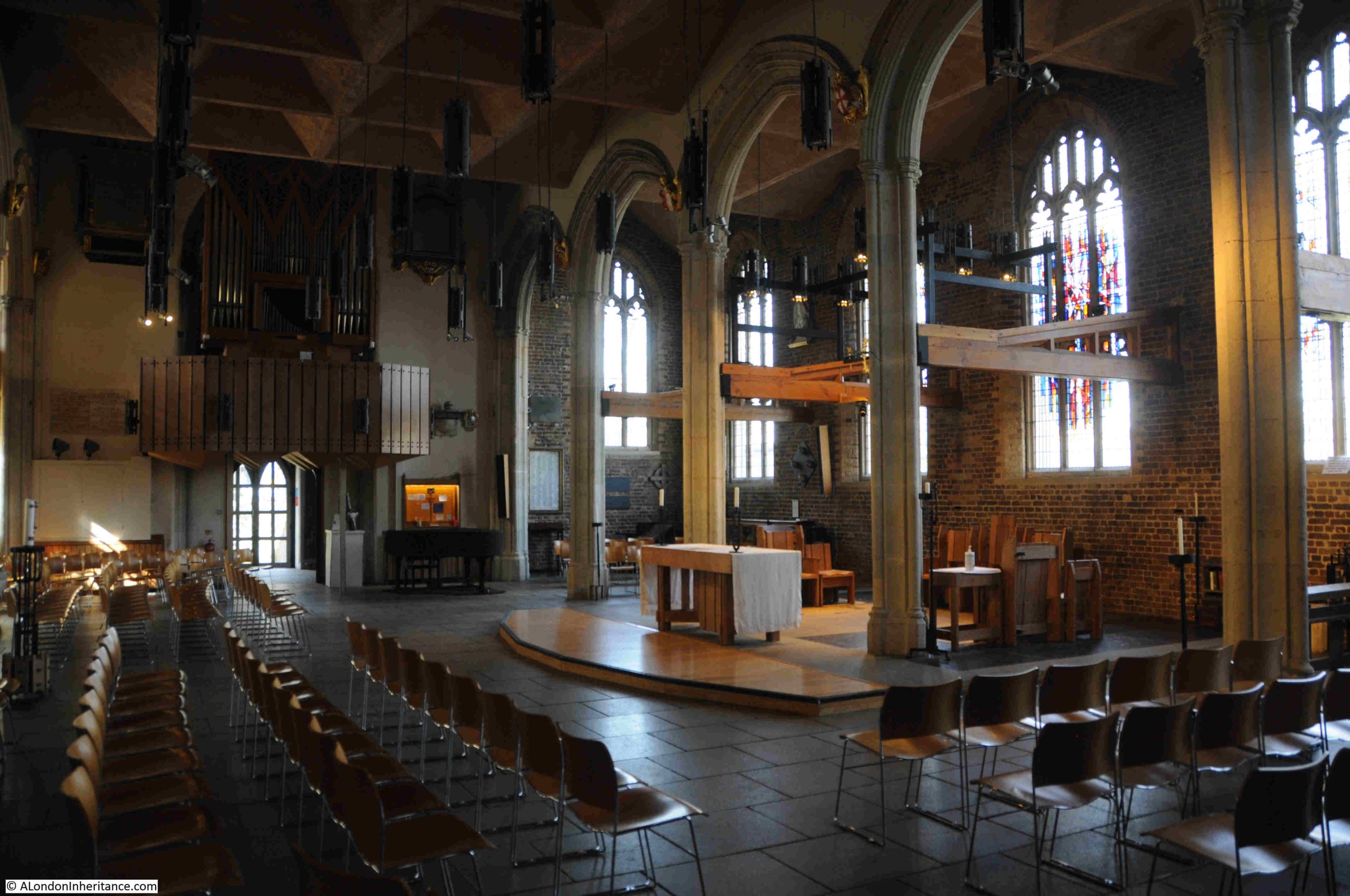
“As well as installing a new roof, Sims moved the altar and sanctuary to a central location on the north side of the nave, installed a glazed meeting room in the former chancel and added an organ loft in a gallery in front of the tower. The C19 pews were replaced with chairs.”
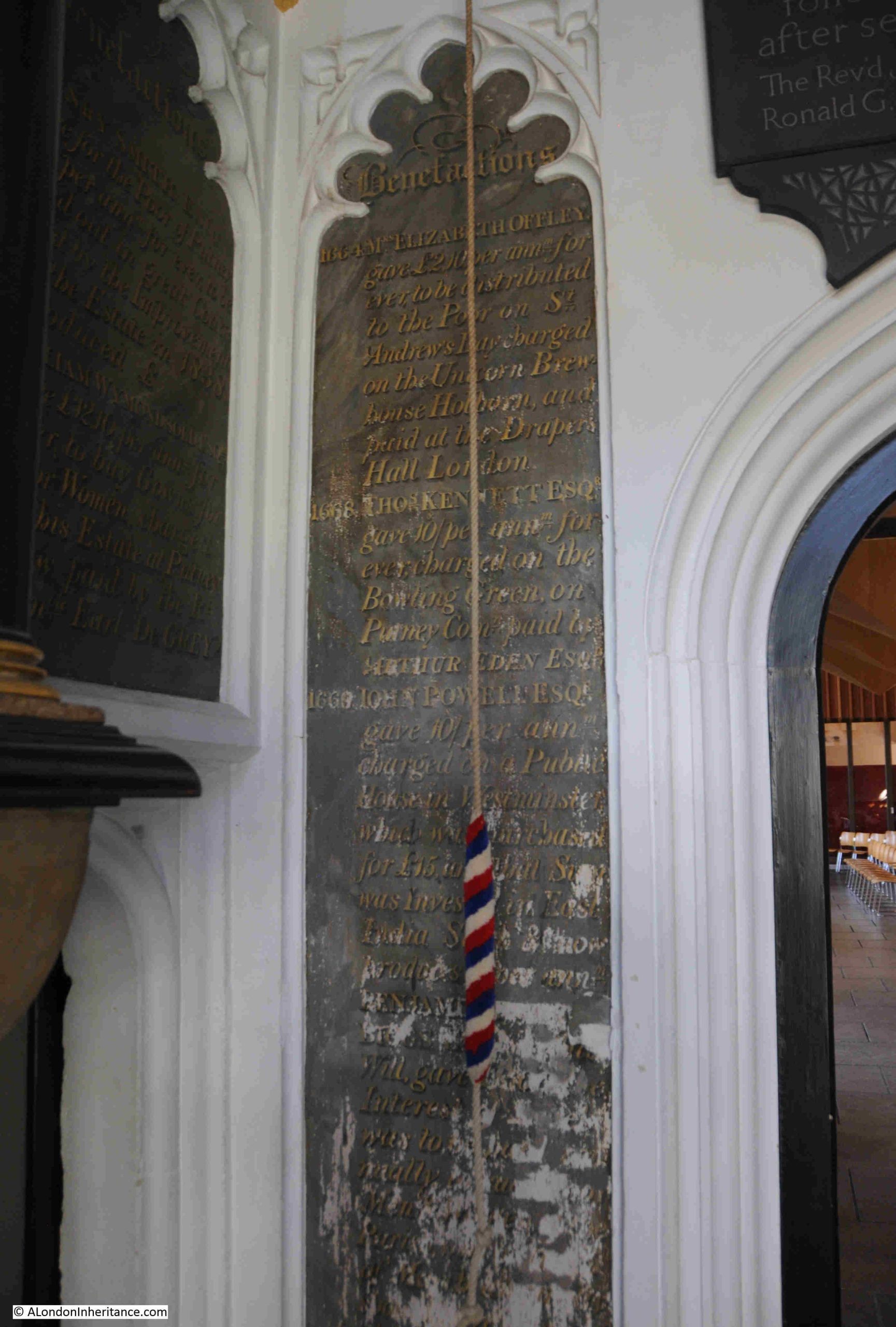
17th century benefactors to the parish are recorded in the church, and these included Elizabeth Offley, who in 1664 gave a regular sum of money to be distributed to the poor on St. Andrew’s Day, the sum was charged on the Union Brewhouse in Holborn, and was paid in at Drapers Hall, and in 1669, John Powell gave a sum of £10 per annum, charged on a public house in Westminster:
The following plaques in the church record the 1836 rebuild and enlargement of the church (top), and the lower plaque records the rebuild after the 1973 fire:
The fact that Thomas Rainsborough’s argument, as well as a record of the rest of the first three days of the Putney Debates survives is down to the original record, and a later discovery.
The Putney Debates were recorded by William Clarke, who probably had the help of a number of assistants with recording the live debates.
The Clarke Papers, published by the Camden Society in 1891 provide some background:
“William Clarke who was probably born about 1623, was admitted a student of the Inner Temple in 1645. When the New Model Army was organised, John Rushworth was appointed Secretary to the General and Council of War, with William Clarke and another assistant as subordinates. Clarke acted as secretary to the commissioners who negotiated the surrender of Oxford in June, 1646, and to those who tried to arrange terms between Parliament and the Army in July 1647. He seems to have taken part in the invasion of Scotland in July 1650, and from the autumn of 1651 to the Restoration was Secretary to to Army of Occupation in Scotland.
Not long after the Restoration, Clarke was knighted and, on 28th January 1661, appointed Secretary at War. Sir William Coventry described him to Pepys as one of the ‘sorry instruments’ by whom Monck was lucky enough to effect great things.
Clarke accompanied Monck to sea in 1666, and was mortally wounded in the battle with the Dutch off Harwich on the 2nd of June 1666. He was buried in the chancel of Harwich Church.”
Following Clarke’s death, his books and papers were left to his son George Clarke, who preserved the archive, and would go on to bequeath his father’s archive along with his own library to Worcester College, Oxford.
And there they remained until the later years of the 19th century when a young historian by the name of Charles Firth, who would later become the Regius Professor of History at Oxford University, found a set of manuscripts laying in a cupboard at Worcester College.
Firth edited the manuscripts for the Camden Society (now the Royal Historical Society), and they were published, almost 250 years after the original debates, with Clarke’s record of the arguments of radicals, agitators, the commanders of the New Model Army, and those with opposing views on the future of King Charles I.
Another view of the church, looking towards the organ loft above the door, which was part of the post 1973 fire restoration:
The views of many of the agitators influenced the Putney Debates, but they would grow as the Civil War ended, the Commonwealth was established after the end of the Second Civil War and the execution of Charles I resulted in the country becoming a Republic, with Cromwell being given the role of Lord Protector, with the considerable powers that the role included.
To show how agitators viewed the evolution of the Commonwealth and the role of Cromwell, we can look at the role of Edward Sexby, one of those at the Putney Debates.
Sexby served in Cromwell’s regiment at the start of the Civil War.
During his time in the army, he helped to spread Leveller ideas, and helped to set up the Council of Agitators, which brought together like minded representatives from across the army with a view to petition for soldiers rights.
Sexby was the main representative of the Leveller contingent at the Putney Debates, where he argued for the rights of all men, and strongly argued against Cromwell’s dealings with Charles I.
During the Commonwealth, Sexby viewed Cromwell’s role as Lord Protector as being against the principles on which the Civil War had been fought.
Sexby tried to organise with those he viewed would be against the Protectorate. He was nearly arrested in 1655, but escaped to Europe. He was involved with plots to assinate Oliver Cromwell, and also published a phamplhet titled “Killing no Murder”, in which he argued that the killing of a tyrant (as he viewed Cromwell), was justified.
The plots to assassinate Cromwell failed, and Sexby returned to England in 1657 to try and organise new conspiracies against Cromwell, however he was arrested, imprisoned and interrogated in the Tower of London, where he died in January 1658 of fever, before he could be brought to trial.
Part of the church that probably would still be recognised by those who attended the Putney Debates is Bishop West’s Chantry Chapel:
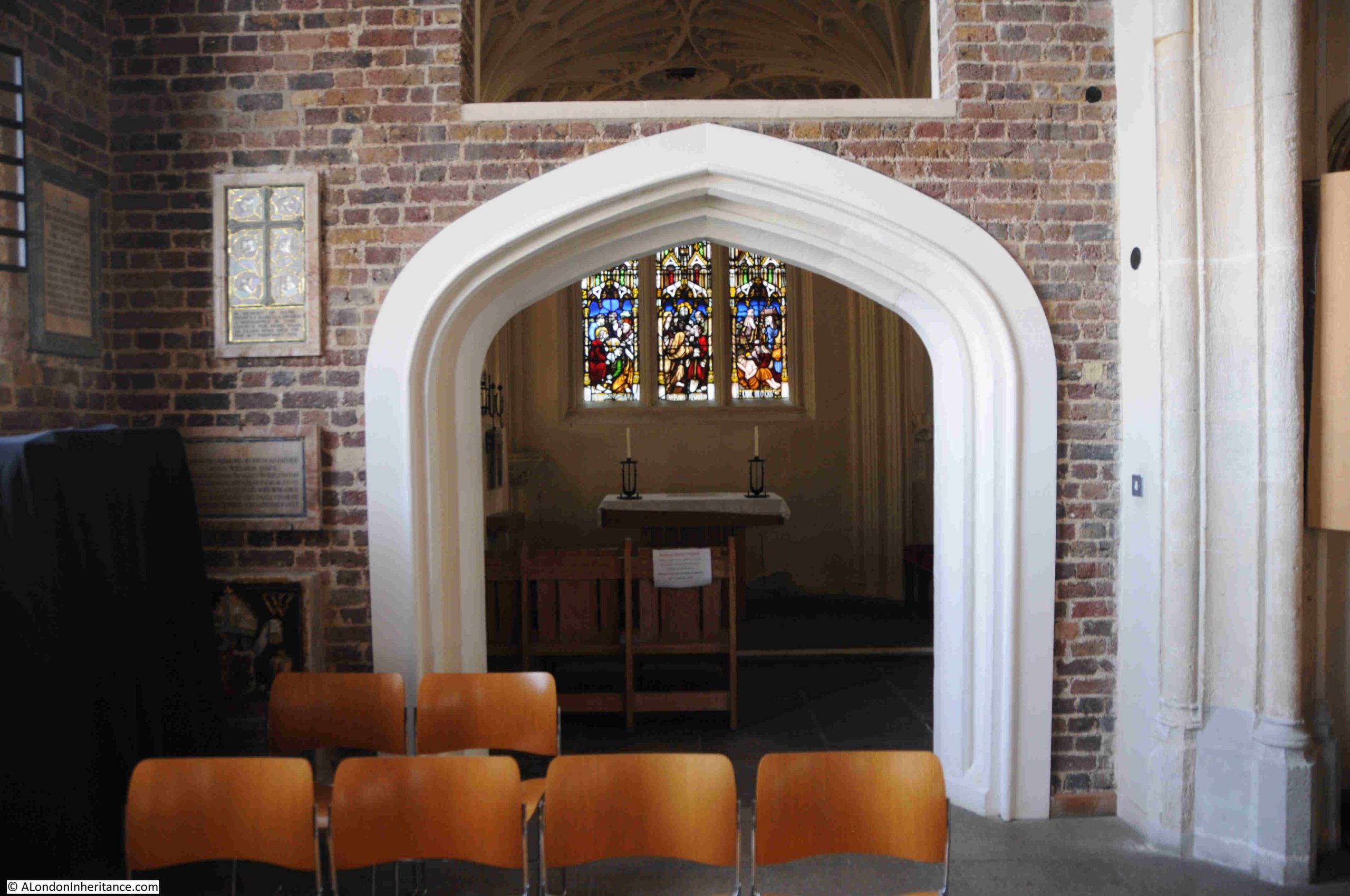
Bishop West was Nicholas West, who was born in Putney in 1461 to Katherine and Robert West who may have been a fishmonger.
He attended Eton College and Cambridge, became chaplain to Henry VII, was Dean of Westminster in 1510 and Bishop of Ely in 1515.
His legacy to the church in the village of his birth was the chapel, built at some point between the years 1515 and 1530.
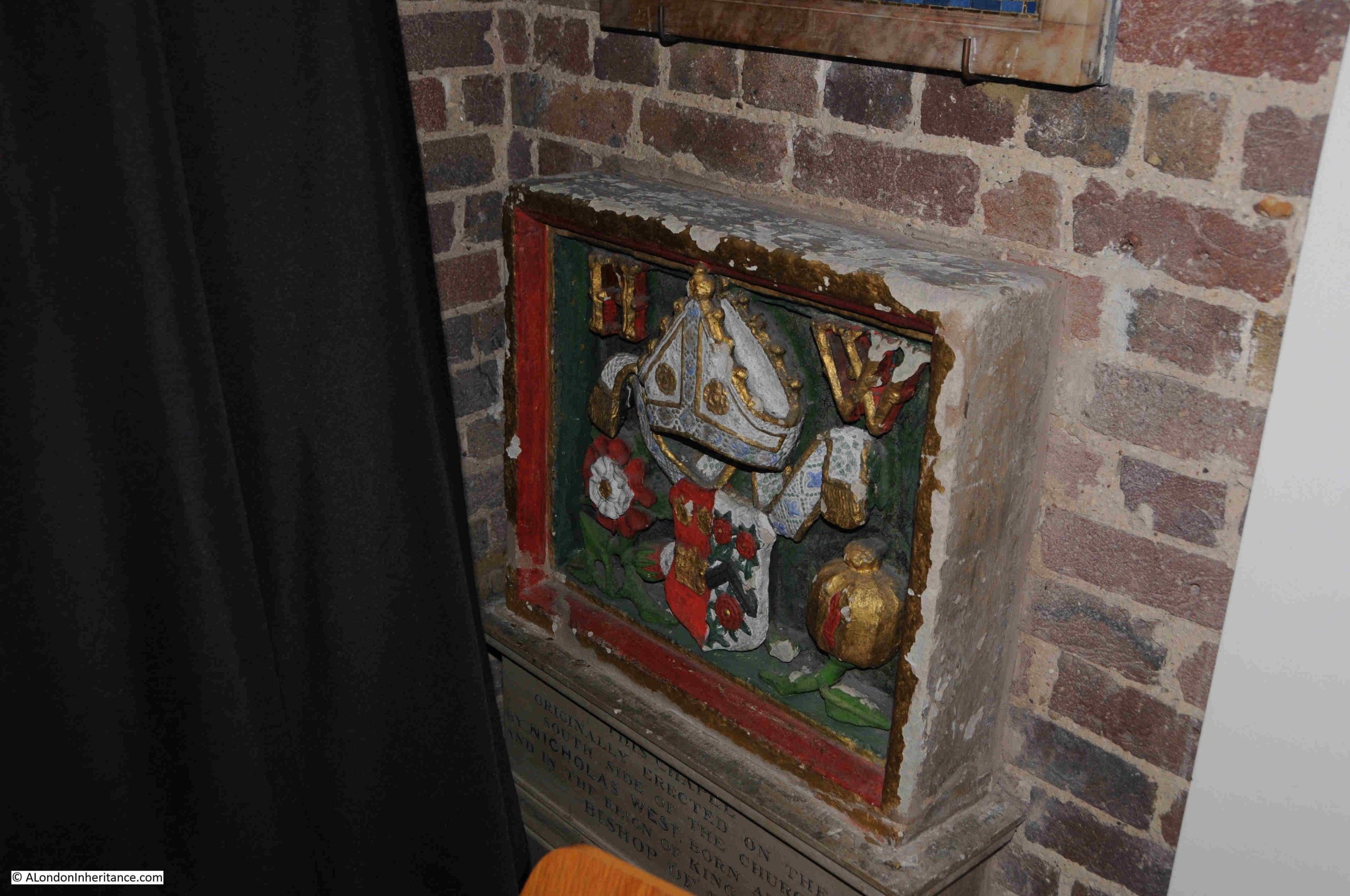
The chapel was originally on the south side of the church, but as part of the 1836 rebuild and restorations, the chapel was moved to the north.
The arms of Bishop West, which include a Bishop’s Mitre and the Tudor Rose:
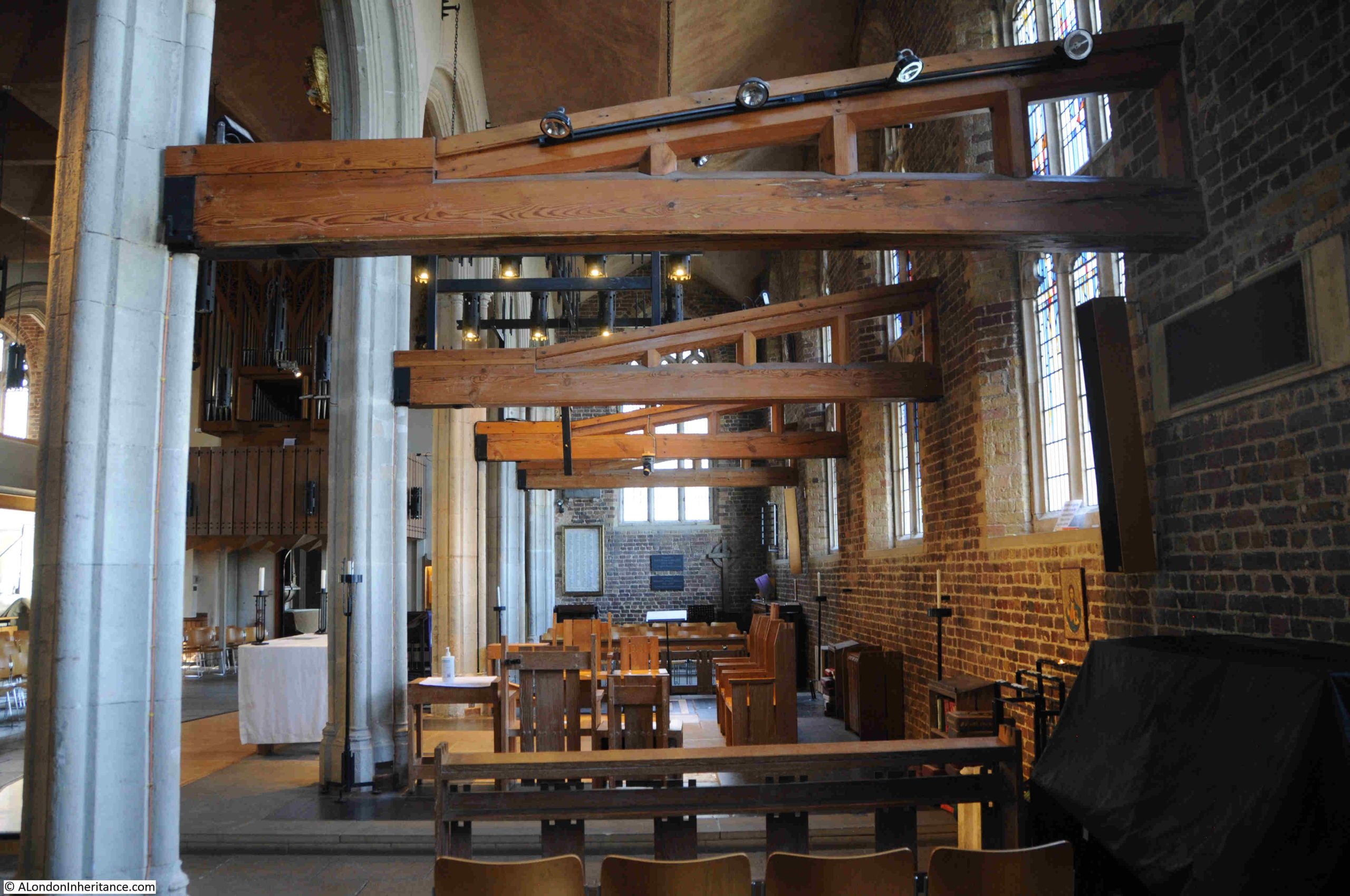
Looking along the north side of the church:
There are not that many monuments in the church, presumably the 1836 rebuilt and the 1973 fire resulted in the loss of many of these.
The monument to Sir Thomas Dawes (died 1655), and his wife Dame Ivdith Dawes (died 1657):
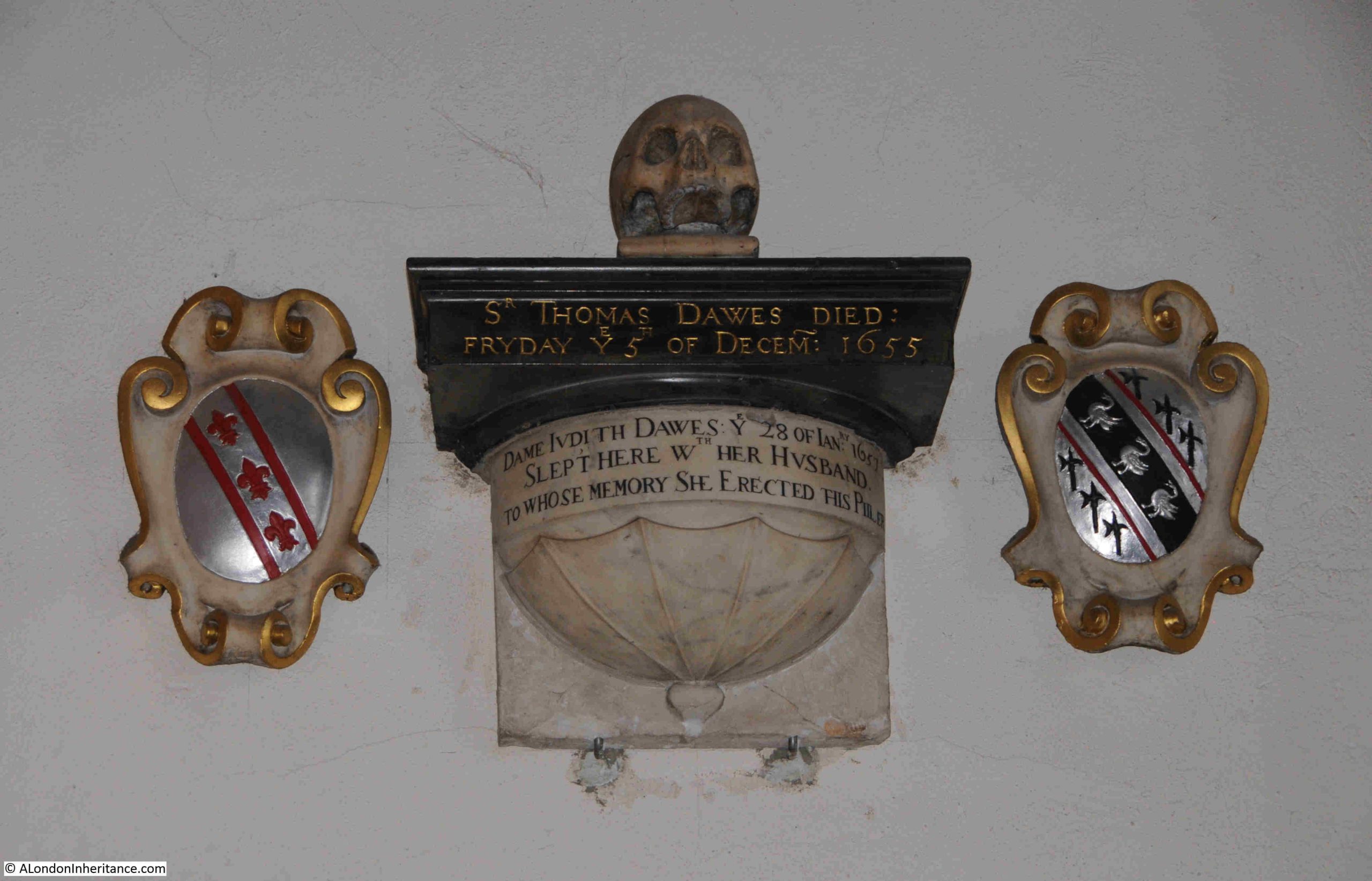
Sir Thomas Dawes was an important land owner in Putney, but lost most of his lands, and suffered imprisonment and heavy fines during the Civil War and Commonwealth.
The 17th century clerics heads are the only items remaining from the monument to Robert Gale who died in 1659:
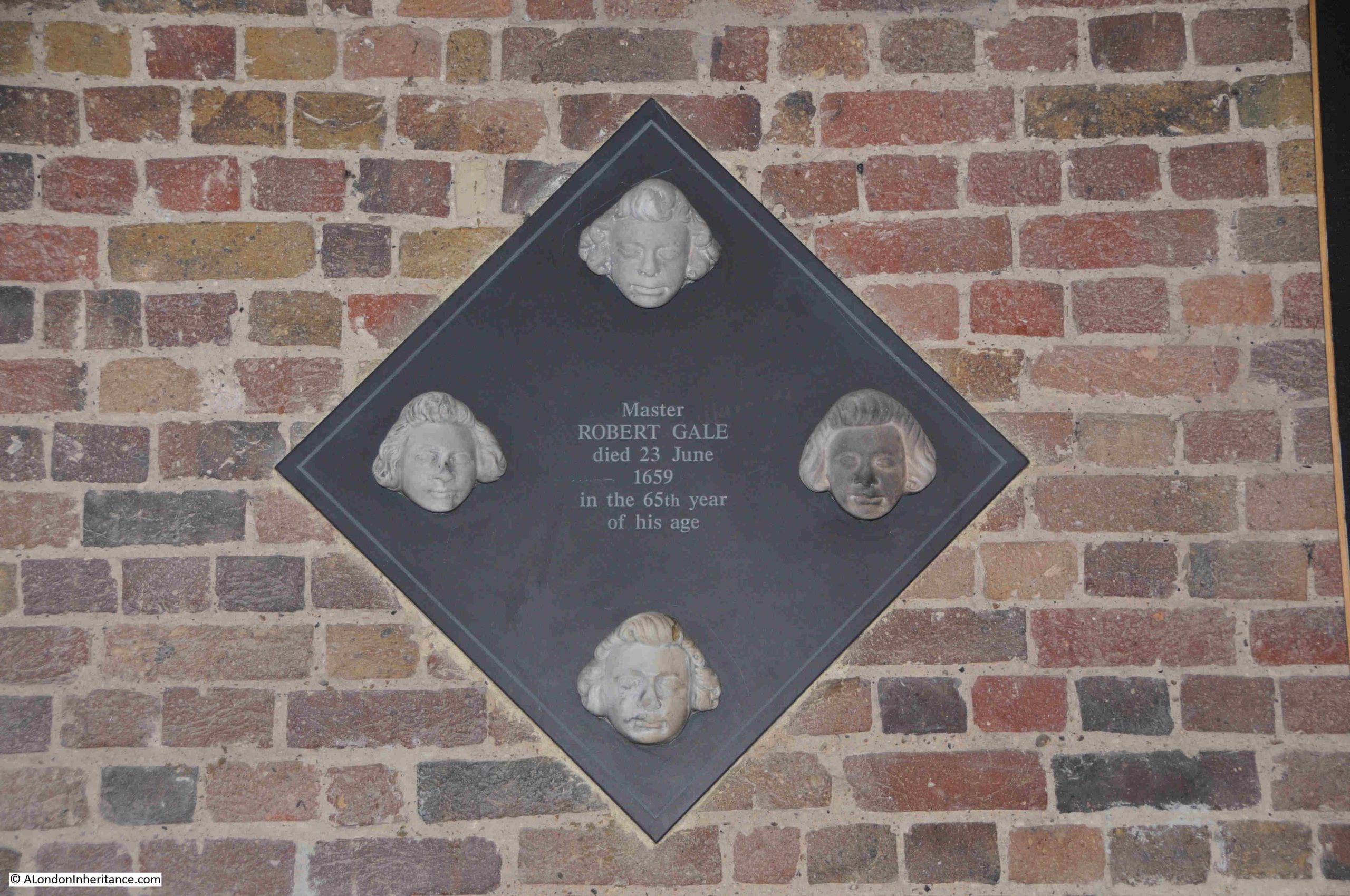
Robert Gale was chaplian to the Countess of Devonshire, who was a supporter of the Royalist cause.
In her house at Roehampton, she arranged meetings with other Royalist supporters, and also wrote letters in code to Royalists in exile in Europe (Robert Gale was one of those who helped her with her letters), and on the restoration of the monarchy, Charles II was a visitor to Countess Devonshire at Roehampton.
A look towards the south of the church, with the entrance / exit to the café in the centre:
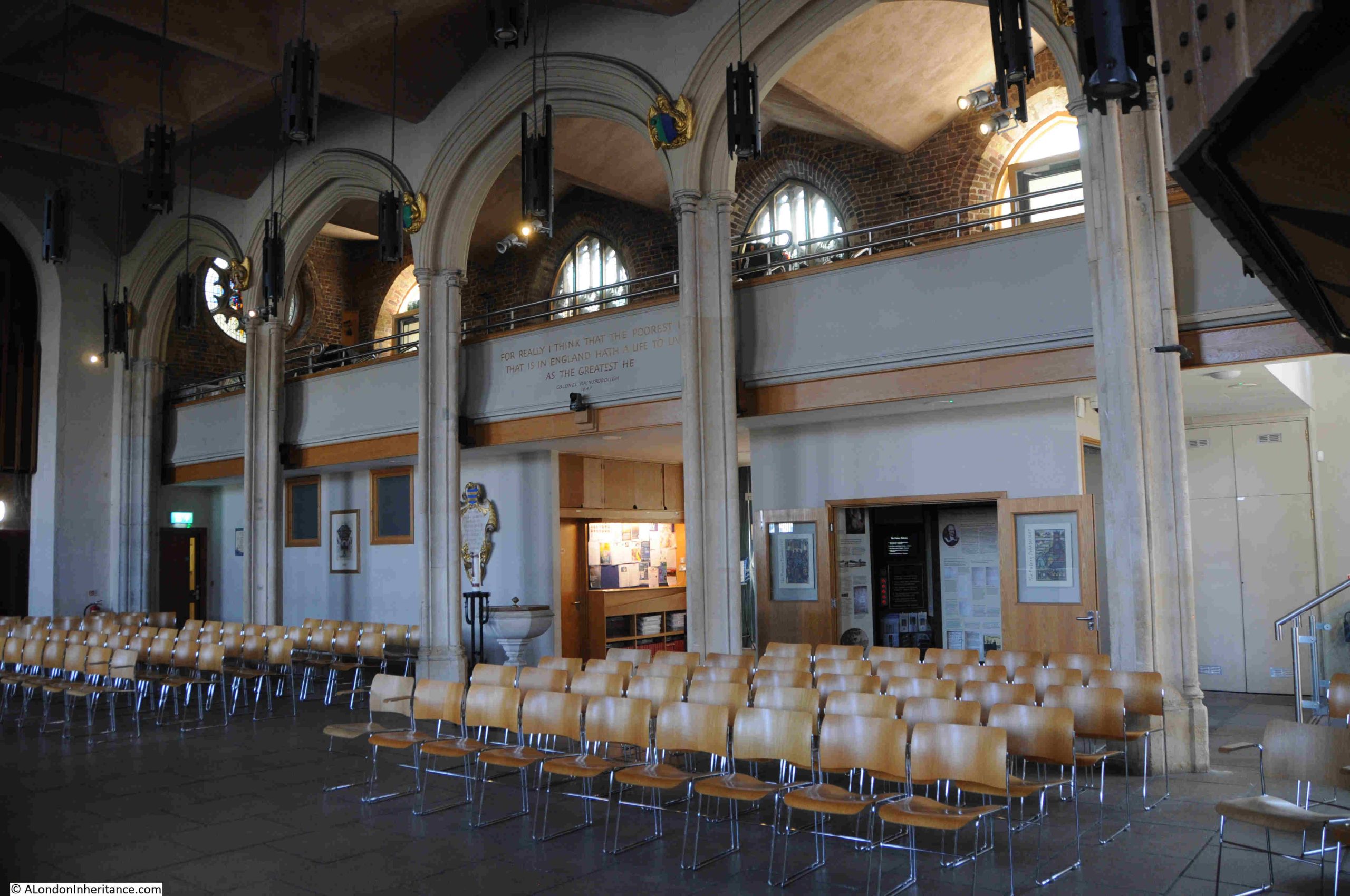
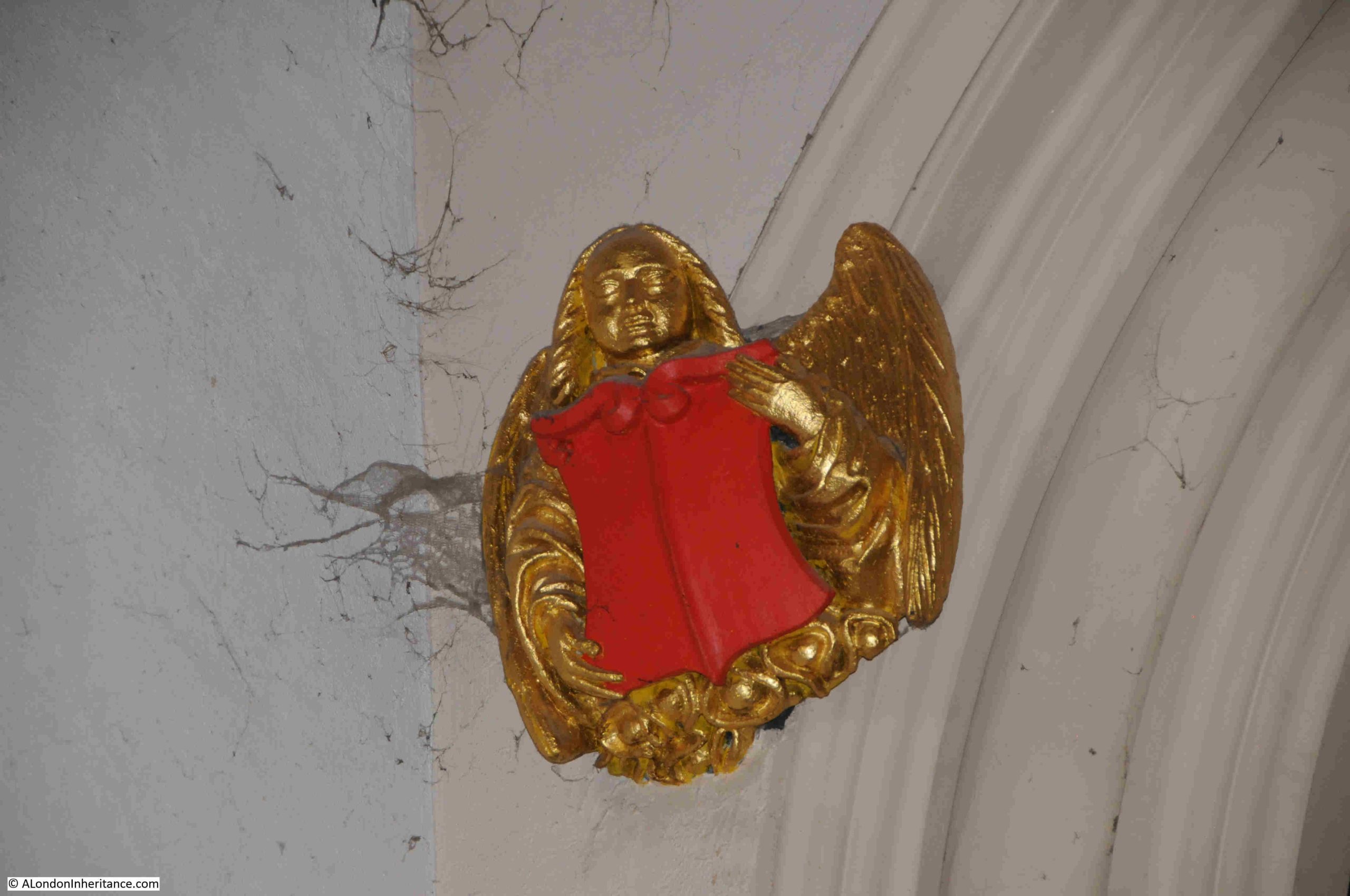
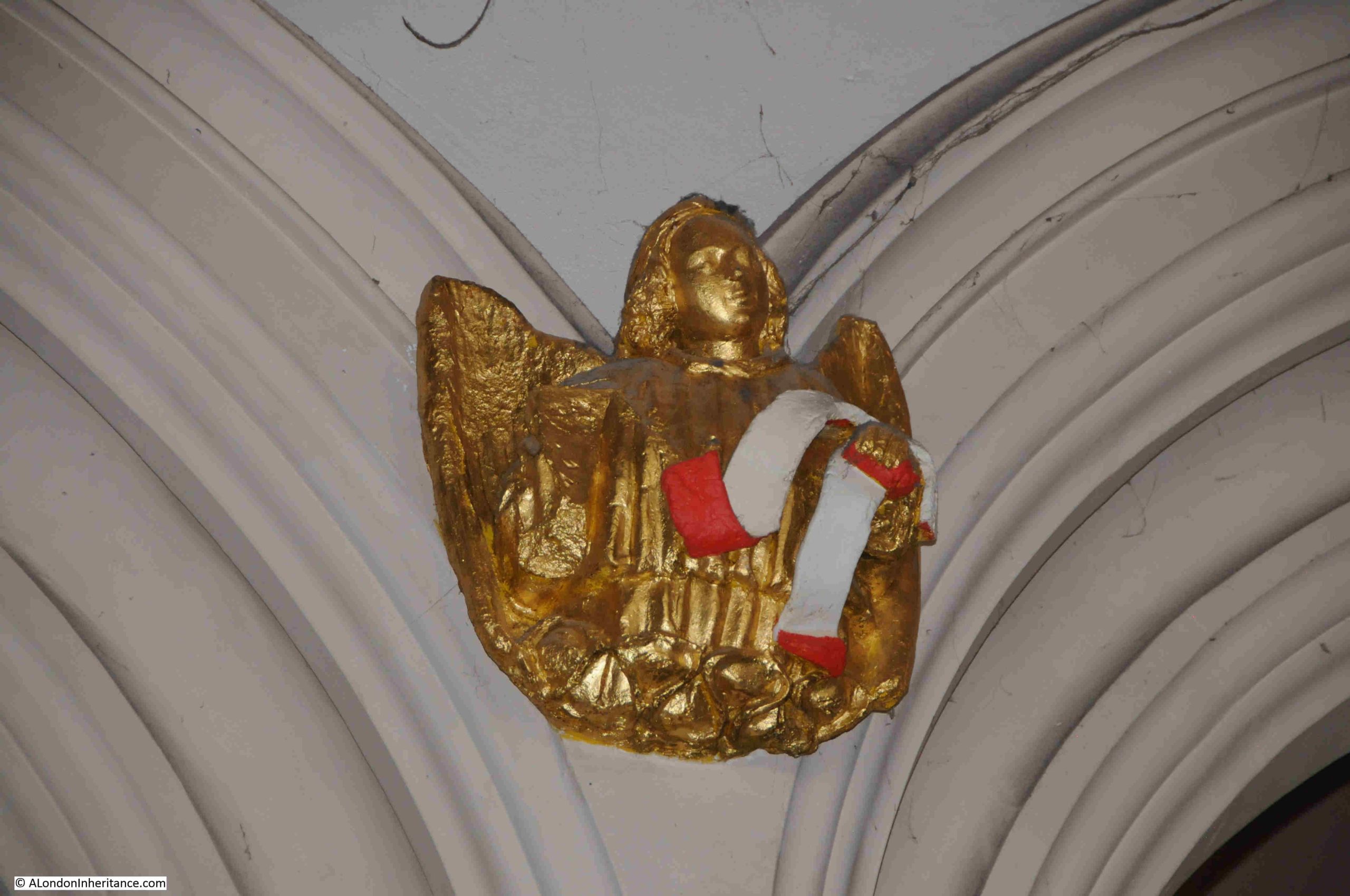
There is a small exhibition about the Putney debates in the alcove behind the two doors to the right of the above photo, and at the top of each column is the figure of an angel. There is no mention of these figures in the Historic England listing so I have no idea of their age:
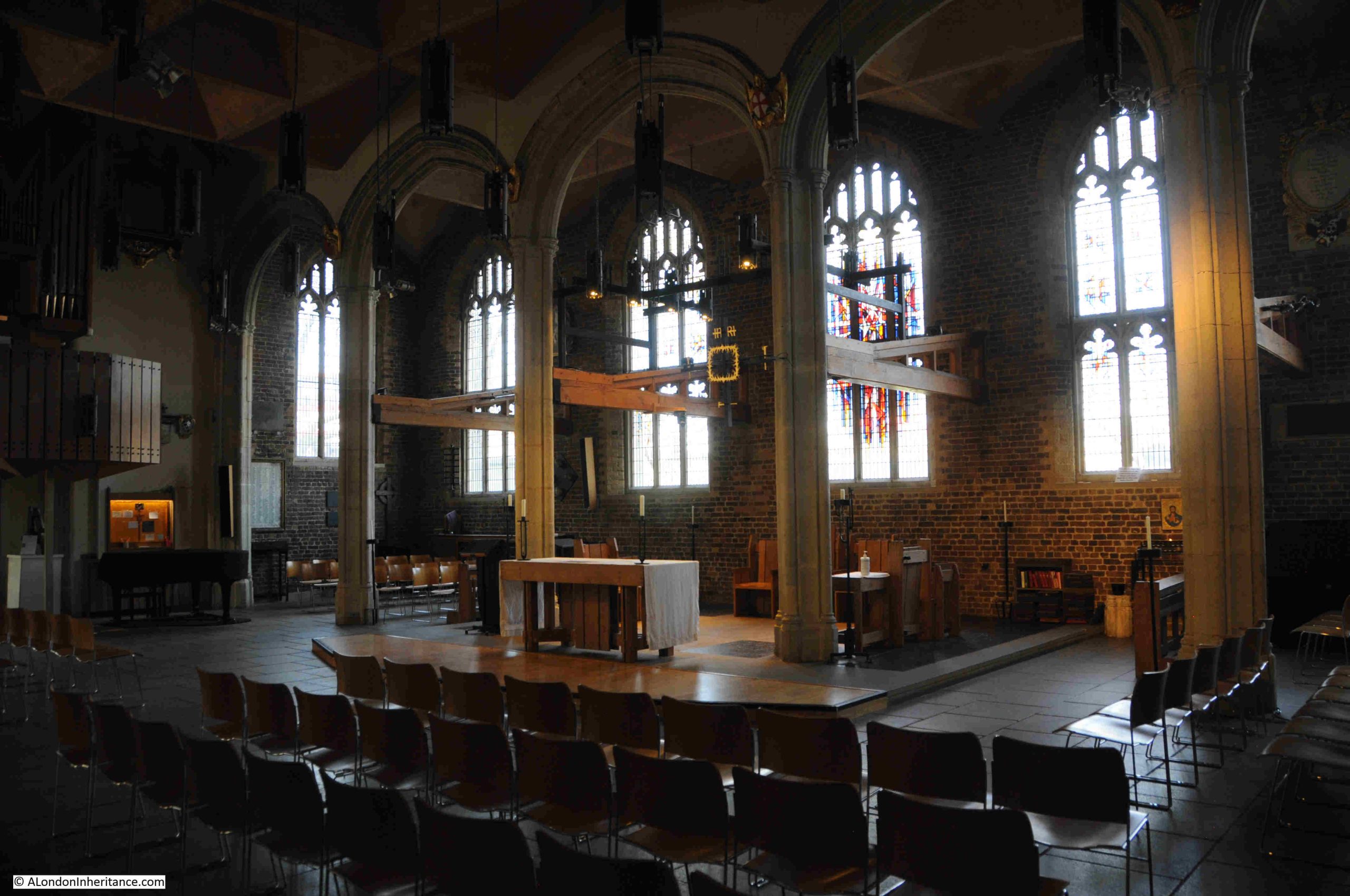
A final view of the interior of the church, an unusual layout with the altar in the centre, towards the northern side of the church. I suspect that this layout would have been approved by many of those attending the debates. There were no alter rails around the alter, or any other form of separation with the congregation and the act of service would have been visible to all:
The main issue that the army command and the agitators within the regiments failed to agree on was how far across society should the ability to vote be granted.
The Leveller position put forward by the agitators was that all freeborn English men should be granted the vote, whilst the army command, including Cromwell, went only as far as land owners being given the vote.
A compromise was reached that all soldiers who served in the army and had fought for Parliament should be given the vote. Maintaining army discipline seems to have been the main reason why the army command agreed to this compromise.
The Putney Debates also seem to have changed Cromwell’s opinion regarding Charles I. The agitators did not agree that negotiations should continue with the king, and argued that he should be put on trial. Again, to keep the army onside, after the Putney Debates, Cromwell appears to have hardened his attitude towards Charles I.
The “Agreement of the People” that came out of the Putney Debates was to be put to a mass meeting of the army, however Cromwell along with other senior members of the army were concerned about the growing influence of the Levellers within the army, so they disbanded the Army Council before the mass meeting could be arranged, and ordered the agitators and other representatives of the soldiers to return to their regiments.
Three separate, smaller meetings were then arranged with the regiments, however all these plans were thrown into disarray when Charles I escaped from Hampton Court, an action which brought together the New Model Army against a common enemy, and which would lead to the Second Civil War.
Although St. Mary’s is now a very different church to the one in which the Putney Debates were held due to the 1830s restoration and enlargement and the rebuild following the fire of the 1970s, it on the original site.
During my visit, whilst the adjoining café was busy, for the time that I was having a good look around the church, I was on my own, and it was easy to imagine a smaller church, full of the victors of the first civil war, each expecting the outcome of the previous years of fighting to be the opportunity to progress their own deeply held views.
Whilst Cromwell asserted his control over the army, his position during the Commonwealth as Lord Protector was seen by those who were agitators as almost becoming like a king.
Many of the ideas about the freedom to vote, religious tolerance and rule by an elected Parliament rather than a hereditary monarch would come into being over the following centuries and the 17th century began the transition from a late medieval to the modern world.
William Clarke’s record provides us with a view of how these ideas were being discussed and argued, in a church by the Thames in Putney.
Resources
William Clarke’s text of the Putney Debates can be found by clicking here.
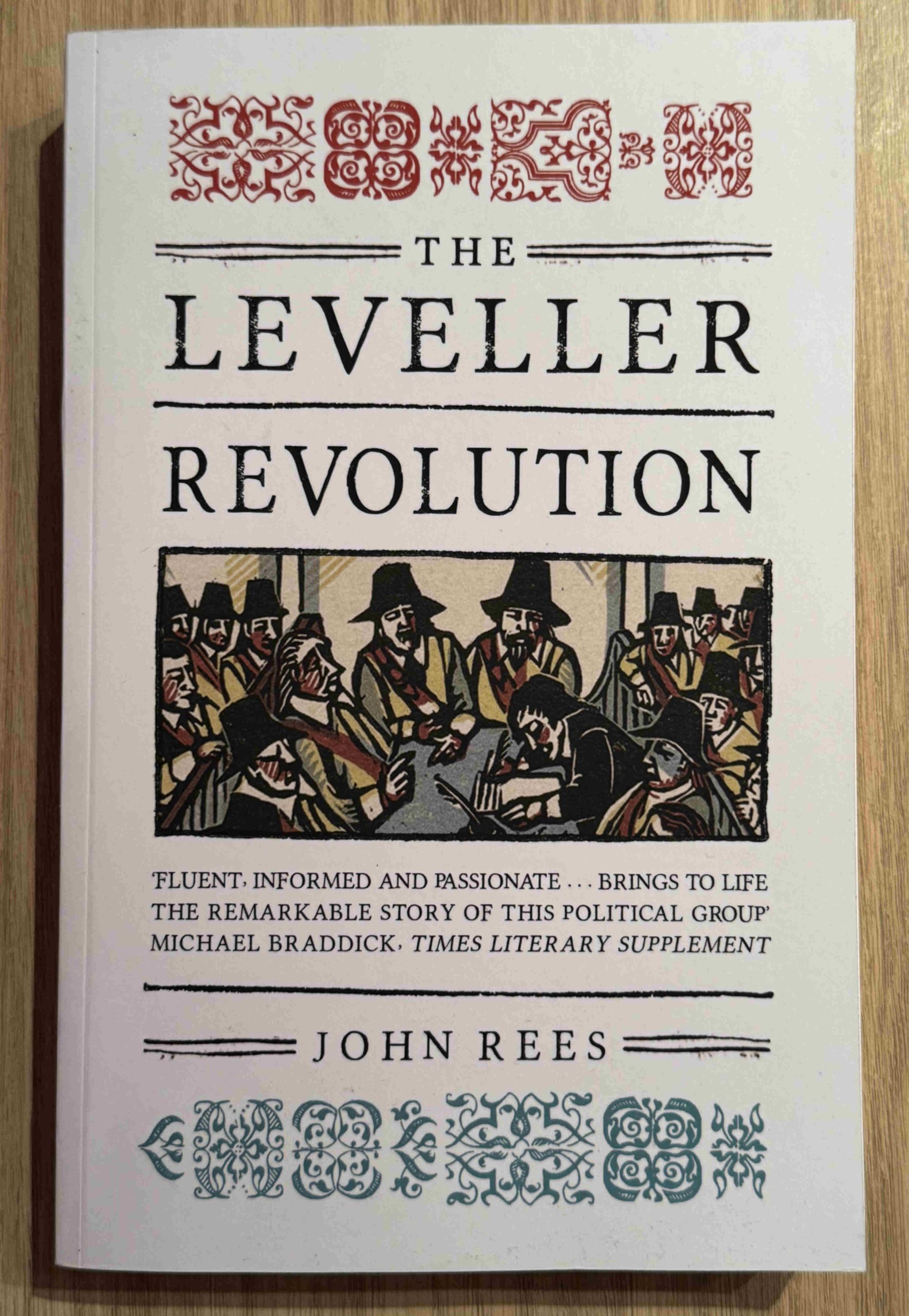
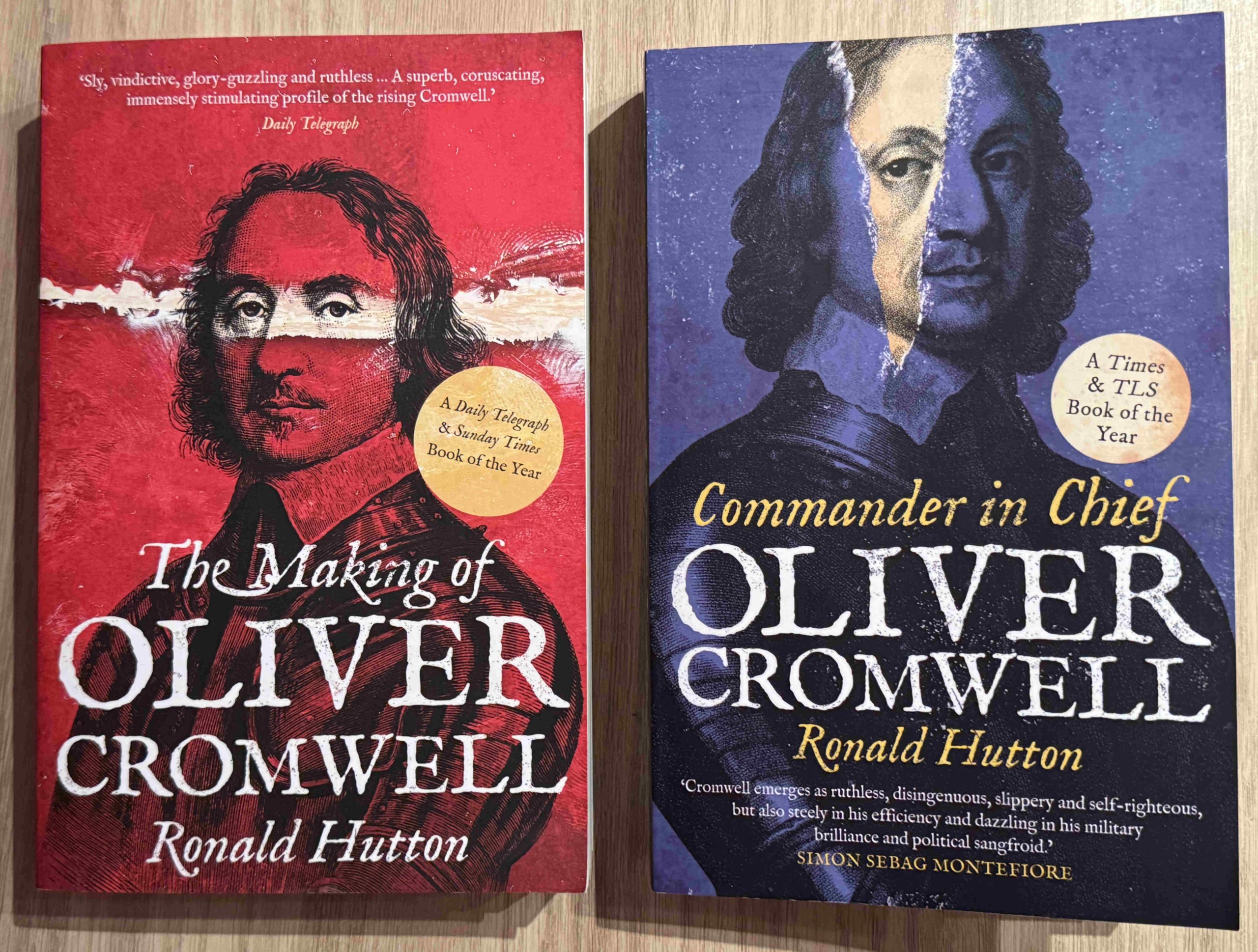
I have read a number of books over the last months about the Civil War, and the ideas that were part of the radical thinking of the period. Three excellent books that cover Cromwell, the Civil War and the Levellers are:
The Leveller Revolution by John Rees:
Along with The Making of Oliver Cromwell and Commander in Chief Oliver Cromwell, both by Ronald Hutton:
I will feature more books in future posts about this fascinating period in history.