Category Archives: Out Of London

Borley Rectory – The Most Haunted House In England

As long term readers of the blog will know, as well as London photos, my father also took many photos from around the country, as after National Service, he along with some friends went on very long cycle rides, staying overnight in Youth Hostels. A popular post-war means of exploring the country,

There are two photos which I would not have had any chance of identifying, if he had not left notes for these two:
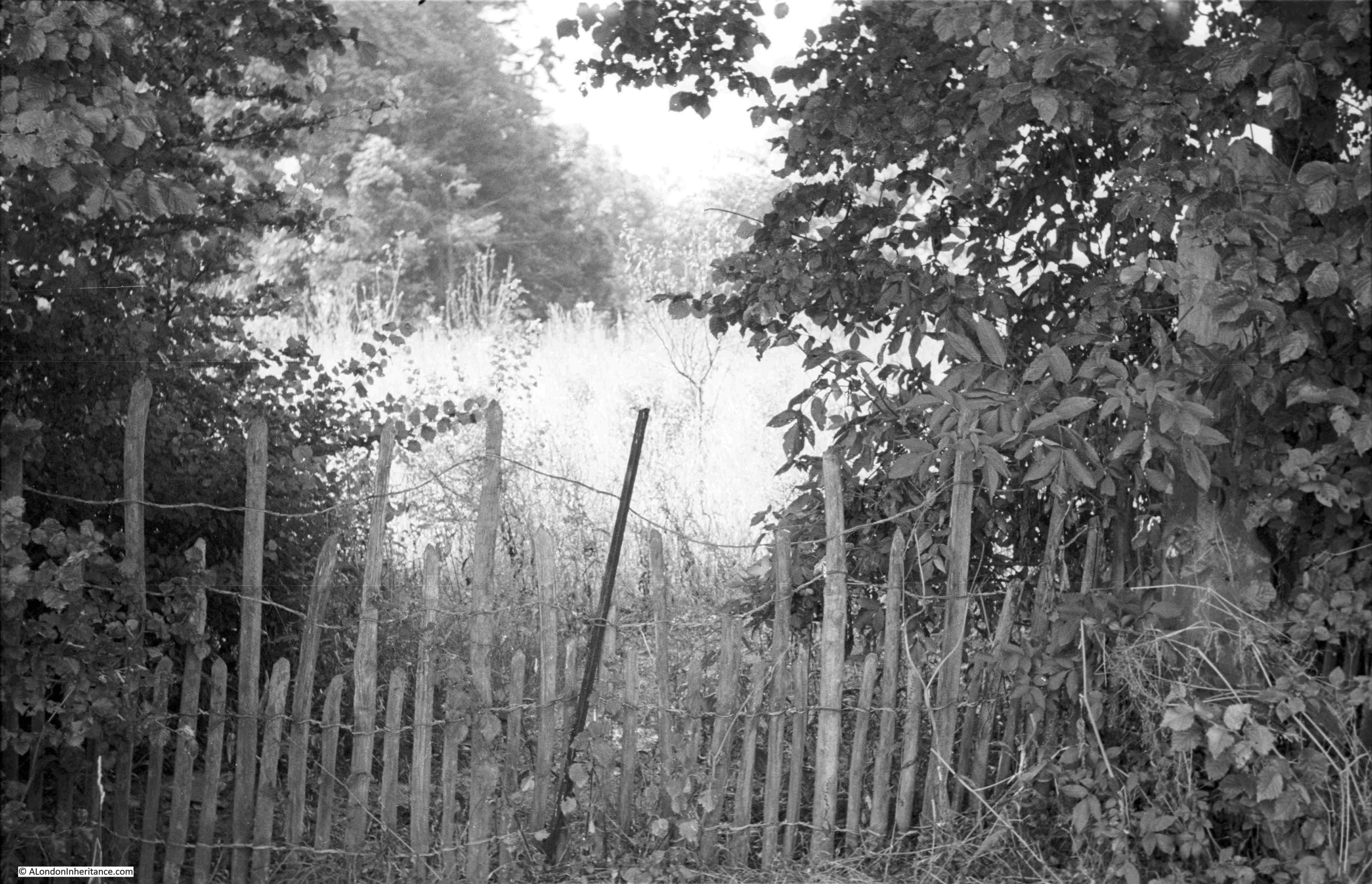
The note with the photos read “Borley Rectory, 21st July 1952”:
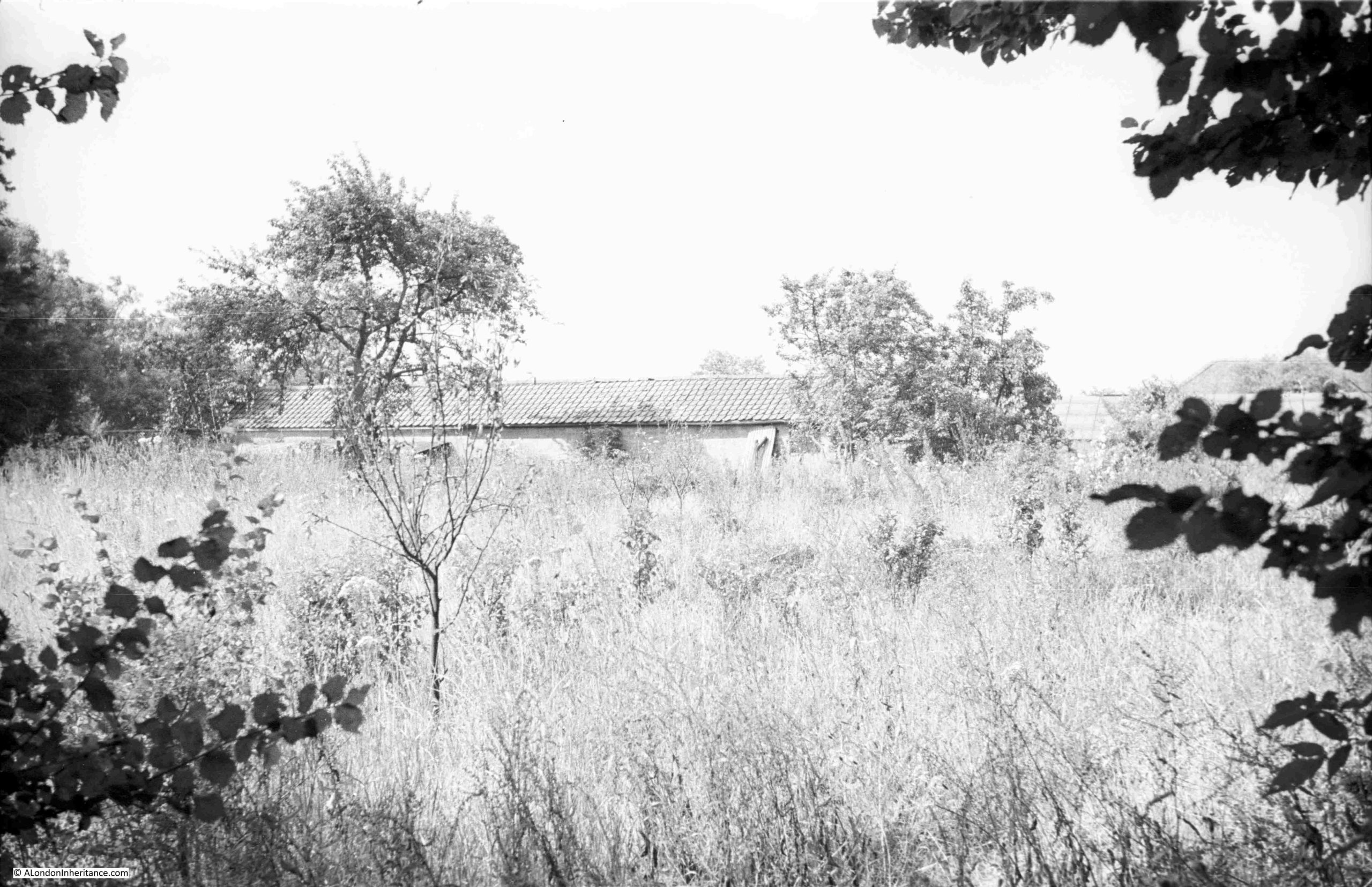
The two photos show what looks like an overgrown field, with no sign of any rectory. The reasons for this will become clear later in the post.

First coming to national attention in 1929, the rectory would soon become know as the most haunted house in England,

Borley is a very small village in north Essex, to the north-west of Colchester, and the rectory was built in 1863 by the Rev. Henry Bull. It seems to have been known for low level ghostly phenomena for some time, for example on the 28th of July 1900, four sisters of the Rev. Bull saw the figure of a nun on the rectory lawn.

The site on which the rectory was built appears to have been the subject of local legends for many years. In a 1956 report on the Borley hauntings by the Society for Psychical Research, it was noted that:

“According to legend, discredited in 1938, Borley Rectory was built on the site of a 13th century monastery, with a nunnery nearby at Bures. The legend told how an eloping monk and nun were caught and put to death. Apparitions of the nun, the coach in which they fled, and a headless coachman figure in stories current in the late 19th century.”

It is always a headless coachman, and there are numerous examples of this type of apparition from across the country. The legend that the rectory was built on the site of a 13th century monastery seems to have just been a local story, with no foundation in fact.

The Rev. Henry Bull was succeeded by his son Harry, who also became the rector of Borley and whilst he moved to another house in the villages, his father’s sisters still lived in the rectory.

The Rev. Harry Bull died in 1927, and two years later, the Rev. G. Eric Smith took over the living of Borley and moved to the rectory.

The Reverend and his wife were so concerned by the rumours that the rectory was haunted, that they got in touch with the Editor of the Daily Mirror for help with contacting a psychical researcher.

Borley Rectory:
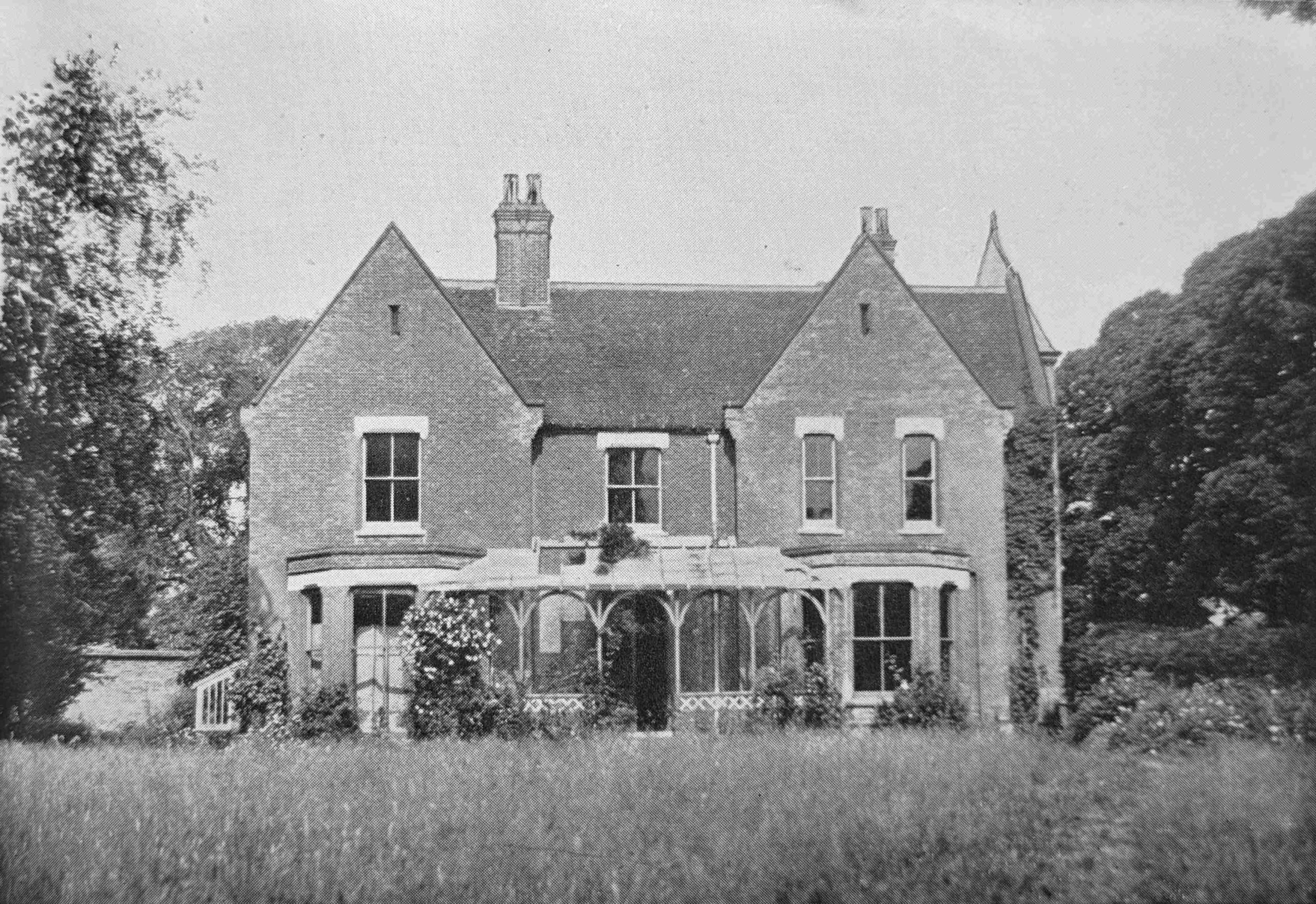
Image source: The End of Borley Rectory by Harry Price, 1946.

Following the Rev. Smith’s request to the Daily Mirror, the newspaper arranged for Harry Price to visit the rectory. In the 1920s Price was one of the best known and most prolific physic journalists of his generation, and he did expose the fraudulent activities of many mediums, so he had some credibility in the research of ghostly phenomena.

The Daily Mirror published an article on the 12th of June 1929 announcing that Harry Price was being sent to investigate, and also published details from a witness who had experienced the phenomena that apparently plagued the rectory:

“HAUNTED ROOM IN A RECTORY. OLD SERVANT’S STORY OF A MIDNIGHT VISITOR. LAYING THE ‘GHOST’. Psychic Expert to Investigate Suffolk Mystery.

One of the leading British psychological experts is to investigate the mystery of the ‘ghost’ of Borley Rectory, Suffolk, described in the Daily Mirror.

In an effort to lay the ghost by the heels, and either prove or disprove its existence, Mr. Harry Price, honorary director of the National Laboratory of Psychic Research, is to conduct the investigation. Mr. Price is famous in this country for his research work and his exposures of psychic phenomena.

Striking confirmation of the weird experiences of the present and past occupants of the rectory is forthcoming from Mrs. E. Myford of Newport, Essex. In a letter to the Daily Mirror Mrs. Myford reveals that forty-three years ago, when she was a maid at the rectory, similar phenomena were quite openly discussed in the rectory and neighbourhood.

Much of my youth was spent in Borley and district, with my grandparents, writes Mrs. Myford, and it was common talk that the rectory was haunted. Many people declared that they had seen figures walking at the bottom of the garden. I once worked at the rectory, forty-three years ago, as an under-nursemaid, but I only stayed there a month, because the place was so weird.

The other servants told me my bedroom was haunted, but I took little notice of them because I knew two of the ladies of the house had been sleeping there before me. But when I had been there a fortnight something awakened me in the dead of night. Someone was walking down the passage towards the door of my room, and the sound they made suggested that they were wearing slippers.

As the head nurse always called me a six o’clock, I thought it must be she, but nobody entered the room, and I suddenly thought of the ‘ghost’. The next morning I asked the other four maids if they had come to my room, and they all said that they had not and tried to laugh me out of it.

But I was convinced that somebody or something in slippers had been along the corridor, and finally I became so nervous that I left. My grandparents would never let me pass the building after dark, and I would never venture into the garden or the wood at dusk.”

Then on the 14th of June 1929, the Mirror published an update, covering the first visit of Harry Price to the rectory:

WEIRD NIGHT IN ‘HAUNTED HOUSE’ SHAPE THAT MOVED ON LAWN OF BORLEY RECTORY. STRANGE RAPPINGS. ARTICLES FLYING THROUGH THE AIR SEEN BY WATCHERS.

There can no longer be any doubt that Borley Rectory, is the scene of some remarkable incidents.

Last night Mr. Harry Price, director of the National Laboratory for Psychical Research, his secretary, Miss Lucy Kaye, the Rev. G.E. Smith, Rector of Borley, Mrs. Smith and myself were witnesses to a series of remarkable happenings.

All these things occurred without the assistance of any medium or any kind of apparatus, and Mr. Price, who is a research expert only and not a spiritualist, expressed himself puzzled and astonished at the results. To give the phenomena a thorough test, however, he is arranging for a séance to be held in the rectory with the aid of a prominent London medium.

The first remarkable happening was the dark figure I saw in the garden. We were standing in the summer house at dusk watching the lawn when I saw the apparition which so many claim to have seen, but owing to the deep shadows it was impossible for one to discern any definite shape or attire. But something certainly moved along the path along the other side of the lawn, and although I immediately ran across to investigate, it had vanished when I reached the spot.

Then as we strolled toward the rectory discussing the figure, there came a terrific crash and a pane of glass from the roof of a porch hurtled to the ground. We ran inside and upstairs to inspect the rooms over the porch, but found nobody. A few seconds later we were descending the stairs, Miss. Kaye leading and Mr. Price behind me, when something flew past my head, hit an iron stove in the hall, and shattered.

With our flashlamps we inspected the broken pieces and found them to be sections of a red vase which, with its companion, had been standing on the mantlepiece of what is known as the blue room and which we had just searched.

We sat on the stairs in darkness for a few minutes and just as I turned to Mr. Price to ask him whether we had waited long enough something hit my hand.

This turned out to be a common mothball, and had dropped from apparently the same place as the vase. I laughed at the idea of a sprit throwing mothballs about, but Mr. Price said that such methods of attracting attention were not unfamiliar to investigators. Finally came the most astonishing event of the night.

From one o’clock until nearly four in the morning all of us, including the rector and his wife, actually questioned the spirit or whatever it was and received the most emphatic answers.

A cake of soap on the washstand was lifted and thrown heavily on to a China jug standing on the floor with such force that the soap was deeply marked. All of us were at the other side of the room when this happened. Our questions which we asked out loud, were answered by raps apparently made on the back of a mirror in the room, and it must be remembered that no medium or spiritualist was present.”

The reference in the above articles to the “National Laboratory for Psychical Research” implies the credibility of an independent research organisation, however the “National Laboratory” was the creation of Harry Price, and of which he was director.

The entrance to the rectory from the road, showing that it was a more substantial building than appears from just a view from the front:
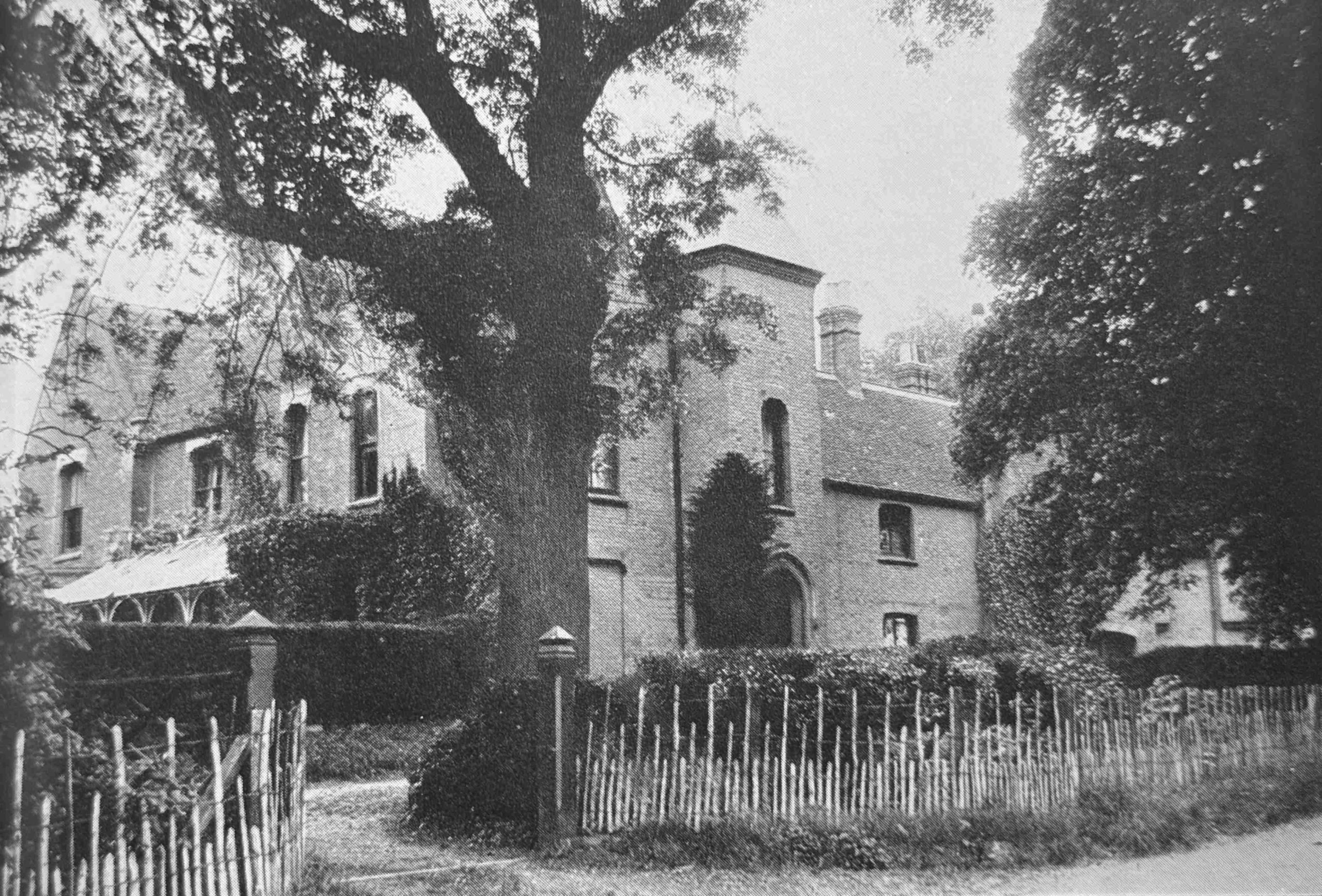
Image source: The End of Borley Rectory by Harry Price, 1946.

Perhaps it should not have been a surprise that as soon as a psychic researcher, sent by a national newspaper got involved, that the phenomena in the rectory became more intense.

The Rev. Smith and his family left the rectory and moved to Long Melford, not just because of the ghostly happenings, but also the “nuisance created by the publicity”.

All then went quiet. The Rev. Smith and his family moved to a new parish in Norfolk, and Borley remained without a rector until the 16th of October 1930 when the Rev. Lionel A. Foyster moves in with his family, and the ghostly phenomena start again, this time with increasing violence.

One of the phenomena witnessed during the Foyster’s time in the rectory was wall writing, where appeals were made to Marianne (the wife of Rev. Foyster):
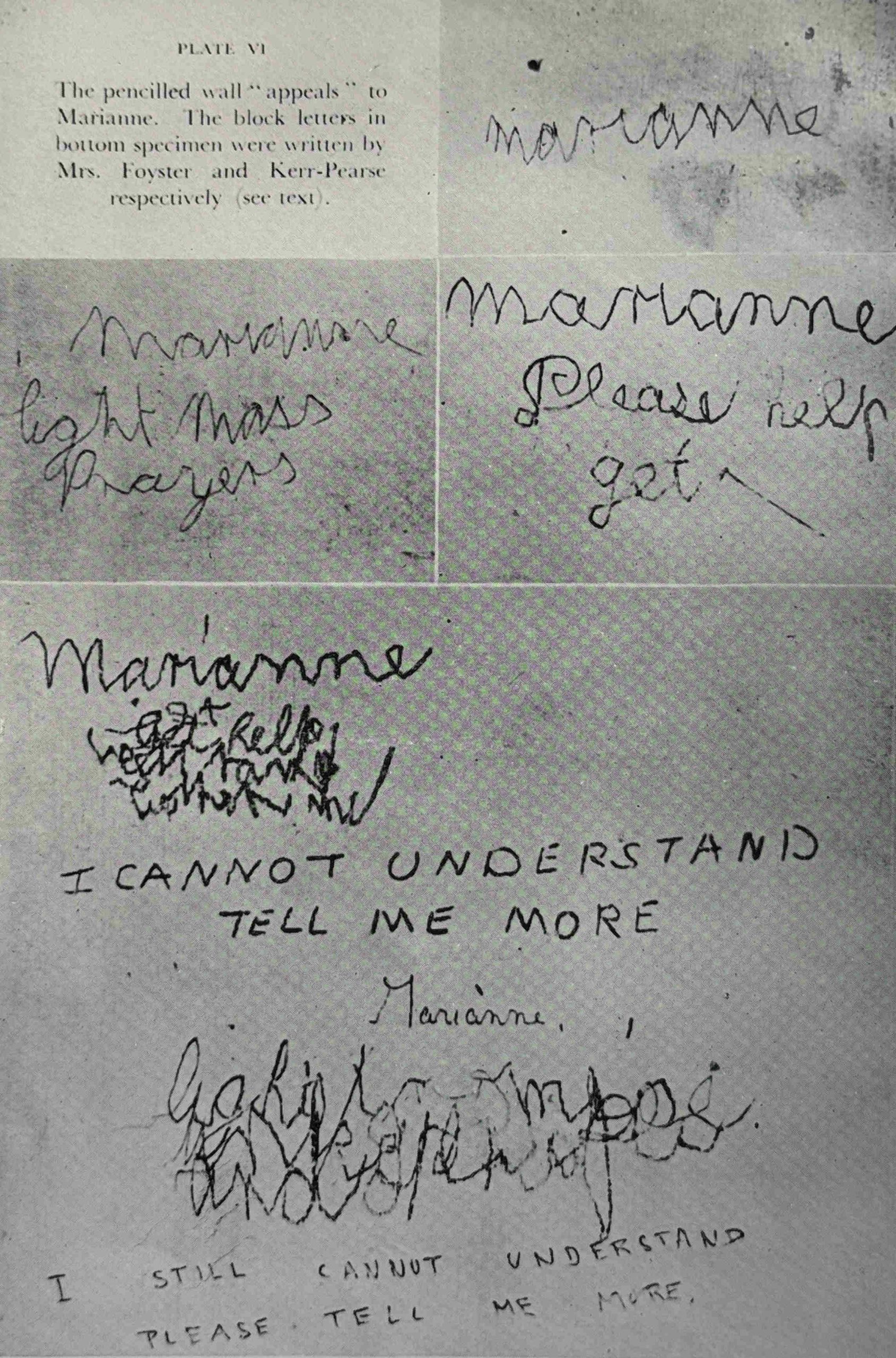
Image source: The End of Borley Rectory by Harry Price, 1946.

Rev Foyster was a cousin to the Rev. Harry Bull, and the sisters were still living close by as they got in contact with Harry Price to ask him to make a return visit.

An exorcism was held, and the phenomena abruptly cease.

In October 1935, the Foyster family move out, and the rectory is left unoccupied. The next rector of Borley receives the Bishop’s permission to live elsewhere, then the livings of Borley and nearby Liston are combined, making the rectory at Borley redundant.

In May 1937 Harry Price again visited the rectory and decided to rent the building for a year. He advertised in The Times for people to join him in a comprehensive investigation, and 48 individuals are signed up, with a rota of visits to monitor the rectory.

One of those involved arranged for a planchette to be used. A planchette was a heart shaped piece of wood, mounted on wheels, and with a hole for a pencil. Those at the sitting where the planchette was used, would gently put their hands on the planchette, and it would move, guided by any spirits who wished to communicate. The pencil writing the results on paper below the planchette.

This method was used between October and November 1937, and the scripts generated by the planchette provided considerable details about the nun from the original legends. Her name was given as either Mary or Marie Lairre, and she had come from France. The scripts claim that she had been murdered, she was a novice and died at the age of 19 in 1667, and that her remains could be found at the end of the wall or in the well.

Later, in 1943, Price excavated the wells in the cellars of the rectory and found human bones at the bottom of the well. They were assumed to be those of the nun and in May 1945 they were buried in the churchyard at Liston.

Throughout Price’s tenancy of the rectory, strange phenomena continued to be observed and felt. There were cold spots, strange noises, taps, bangs, footsteps and whistles, horses hoofs, lights etc.

In May 1938, Price’s tenancy of the rectory ends, and the rectory is purchased by a Captain Gregson, who also reported minor phenomena, as did visitors to the old rectory.

During the night of the 27th of February 1939, Borley Rectory is destroyed by fire. During the fire, strange phenomena continue, including the sighting of strange figures walking in the flames, and strange happenings continue to be reported in the months after the fire, although the rectory is now a ruin:
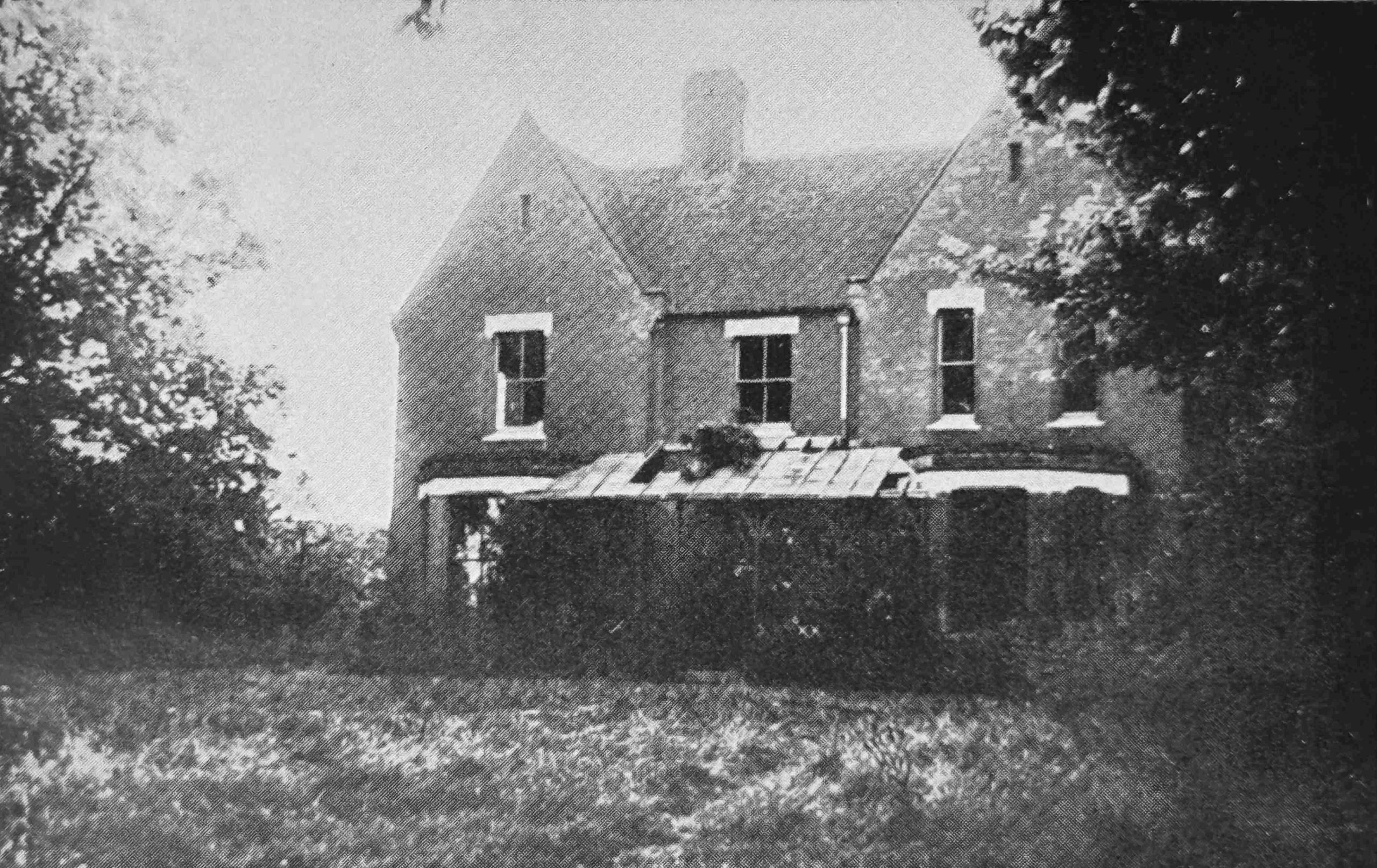
Image source: The Haunting of Borley Rectory, Volume 51, Part 186 Society for Psychical Research

The saga at the rectory had received continuous national coverage during the 1930s, and in 1940 Price capitalised on the public’s interest in the story of the rectory with the book “The Most Haunted House in England”.

The book resulted in many more people getting in contact with Price, to report their strange experiences at the site.

The remains of the rectory were demolished in 1944, however interest in the story continued and many people still visited the site (including my father and his friends), and some people also held seances on the site.

The following photo shows an aerial view of the site, with the location of the demolished rectory highlighted by the arrow. The photo helps locate my father’s photos as the second photo at the top of the post has some low rise buildings in the background, and these can be seen in the centre of the following photo:
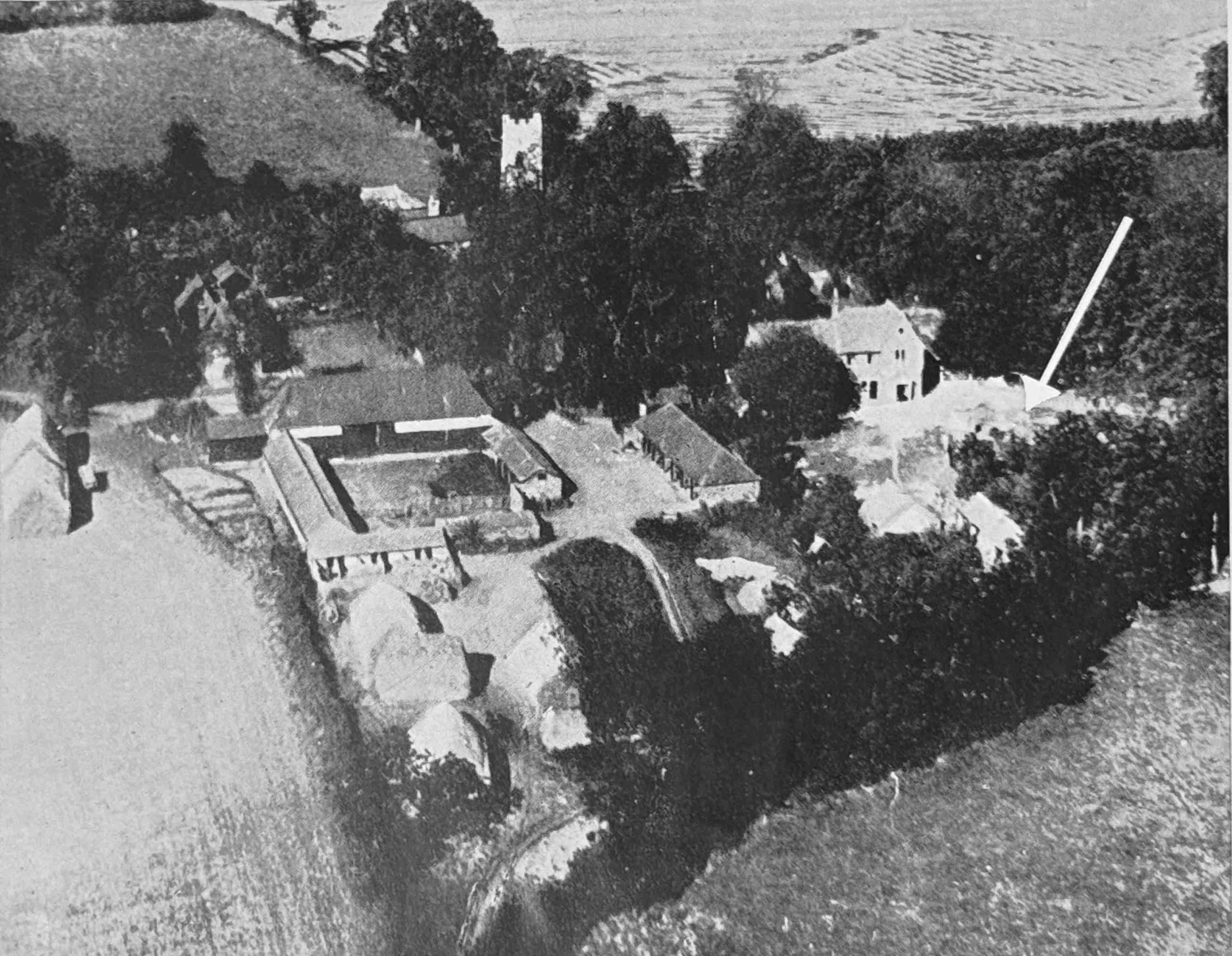
Image source: The Haunting of Borley Rectory, Volume 51, Part 186 Society for Psychical Research

In 1946, Harry Price published his second book on the subject “The End of Borley Rectory”, repeating as the sub-title “The Most Haunted House in England”.

Two years later, on the 29th of March, 1948 Harry Price died of a heart attack in his home at Pulborough in West Sussex. His papers and archive were deposited with the University of London.

There had always been rumours about the phenomena observed at Borley Rectory, and after Price’s death, these rumours started to gain greater credibility.

In 1948, a Mr Charles Sutton who was on the staff of the Daily Mail accused Harry Price of fraudulently producing many of the phenomena observed when Sutton visited with Price in 1929, although quite why he had left it so long to make public these claims is unknown.

In 1949, Mrs Smith, the wife of the Rev. G. Eric Smith, who took over the living of Borley and moved into the rectory in 1928, wrote to the Daily Mail asserting her disbelief that the rectory was haunted.

In 1956, the Society for Psychical Research (still going and “Founded in 1882, the SPR was the first organisation to conduct scholarly research into human experiences that challenge contemporary scientific models”), published the results of a “Critical Survey of the Evidence” into the haunting of Borley Rectory in their Proceedings (Volume 51, Part 186, January 1956):
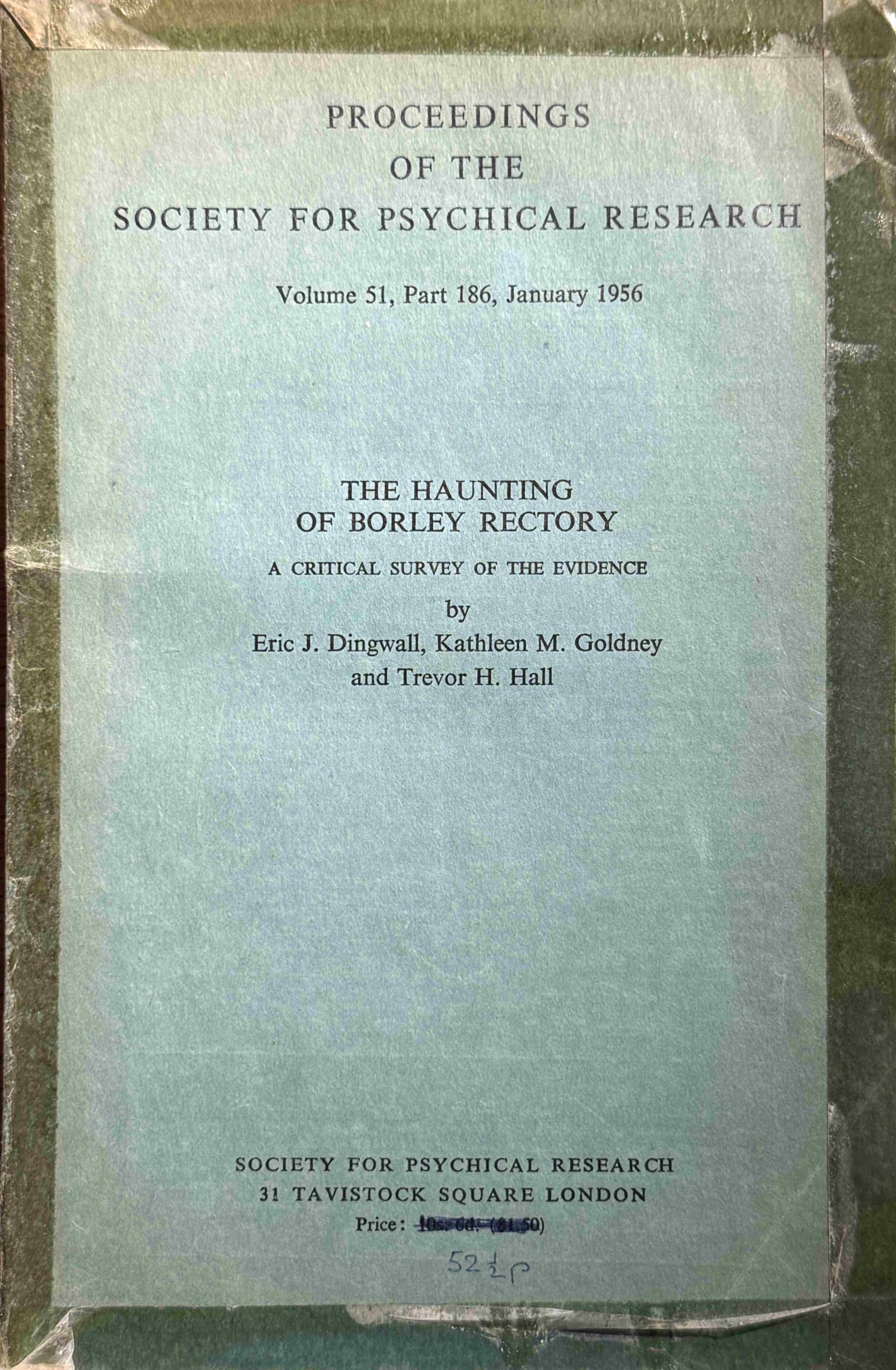
The report is an in depth and comprehensive survey of the haunting, and looks at all the evidence available, although it does make the point that the evidence was not of the type that would stand in a court of law, as the evidence mainly consisted of the reports of all those who had witnessed phenomena, rather than tangible evidence of a supernatural cause.

The rectory was large and had acoustic properties that could have explained many of the strange noises.

The Rev. Harry Bull, as well as being the rector of Borley also had an interest in spiritualism, and this could have influenced both his view of the rectory, as well as how the phenomena were perceived by others.

The report also looked at Harry Price, who was described as possessing a “complex personality whilst to others the motives which inspired him were simple and clear-cut. He was a man of abounding energy and had a wide range of interests and a practical acquaintance with a good many technical matters from numismatics to radio communication and conjuring. Trained as an engineer, he ran his own amateur workshop and some of his apparatus and gadgets were of first class workmanship”.

Whilst many of these skills could have been used to create the phenomena observed at the rectory, the report states that there is no firm evidence to suggest that Price did this, and with his death, and the distance of time, it was impossible to prove.

The report does refer to his career as a journalist on the subject, and that it was possible to regard Price as “a brilliant if cynical journalist who used the material gathered in his laboratory or in the field in such a way that its publicity value was highest. As we have seen, if the material lacked sensational elements it would seem that he was prepared at times to provide these himself. On the other hand, his motives may have been more complex; he may have thought that there was some genuine basis on which to build his stories, and that, by supplying what he thought to be the proper psychological milieu, the genuine elements could easily emerge”.

The report also focuses on the influence of suggestion, and how, “once the mind has been affected, belief can be strengthened and simple events misinterpreted in order to fit them into the desired pattern”.

Harry Price surrounded by items from his ghost hunting kit:
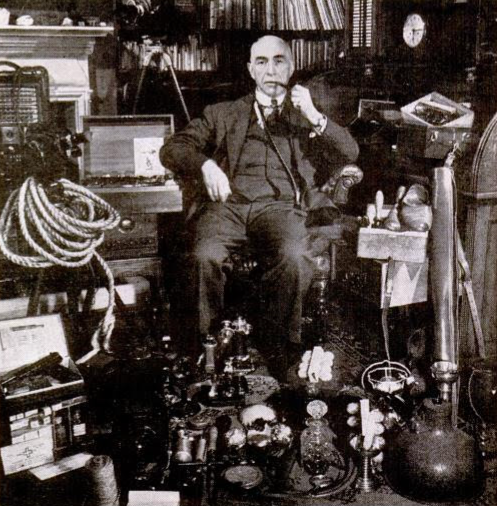
Attribution: Noel F. Busch, Public domain, via Wikimedia Commons

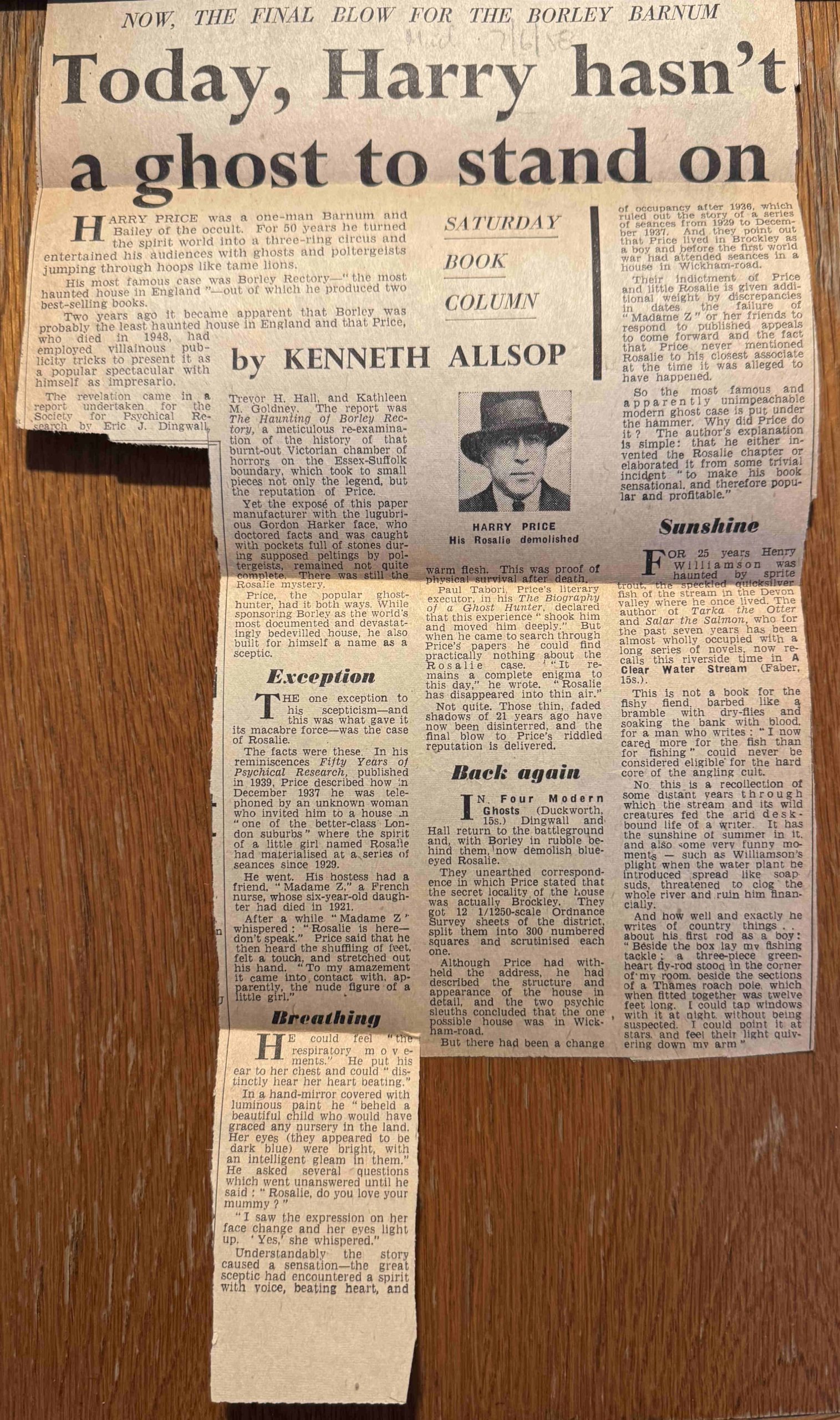
My father had a copy of the book “The End of Borley Rectory” by Harry Price, and inside there is a cutting from the Daily Mail from the 7th of June, 1958, with the headline “Today, Harry hasn’t a ghost to stand on”.

The article refers to the 1956 Society for Psychical Research report as demolishing the Borley haunting, and then looks at a new book which challenges one of Price’s other notable cases, that of a young girl named Rosalie who appeared during a séance after Price was invited to “one of the better class London suburbs“:
Despite all the challenges to the authenticity of the Borley hauntings, stories about the old rectory and the site continued for long after Price’s death. In 1954, two years after my father’s visit, there were still newspaper articles being published. One full page article ended with the following:

“Recently I stood in the long grass which has grown over the foundations of the Rectory and talked with a man who for the last three and a half years has lived in the coach-house which escaped the fire.

Mr. Williams is a retired engineer who keeps a chicken farm there. Quiet, matter of fact, and the least mystical person I have ever met, he is not normally at all forthcoming about the haunting. Publicity, he knows, will only bring more coach-loads of curious sightseers and more mediums who will fall into trances by the Nun’s Walk.

But he admits, frankly and quite unemotionally, that he has experienced things which have no normal explanations.

He told me of how he had sometimes woken in the night to find a light – a glow he called it – hovering in his bedroom and that once he heard quite distinctly footsteps following him across the courtyard at the back of his house. He turned round, but there was no one behind him. Suspecting a trick, he ran round the corner of the house. Still no one.

Had he seen the nun? Mr. Williams took his time before answering, and then said, slowly; ‘Well, I think perhaps I may have. I was in one of the chicken houses at the time. It was broad daylight and I saw a figure pass the window, – just a vague outline, really, you couldn’t say it was a man or woman – and then disappear.

When? Oh, last summer that was – just before the chicken-house was burnt down.”

And with that, can I wish you a very happy Christmas, and if you do get any strange noises, lights, or apparitions of nun’s at this dark time of year – I suggest you do not contact the national press and ask for the assistance of a psychical researcher.
The Greshams of Norfolk and London

Almost 12 years ago, the blog started as a means of recording then and now photos based on my father’s photos, but since 2014 it has also been a way for me to explore London and the city’s history (or rather take more interest in what I used to walk past, and I still have lots more of my father’s photos to post about).

As well as taking more notice whilst walking London, it is also fascinating to find connections between the city and the wider country, and one of these connections is the subject of this week’s post.

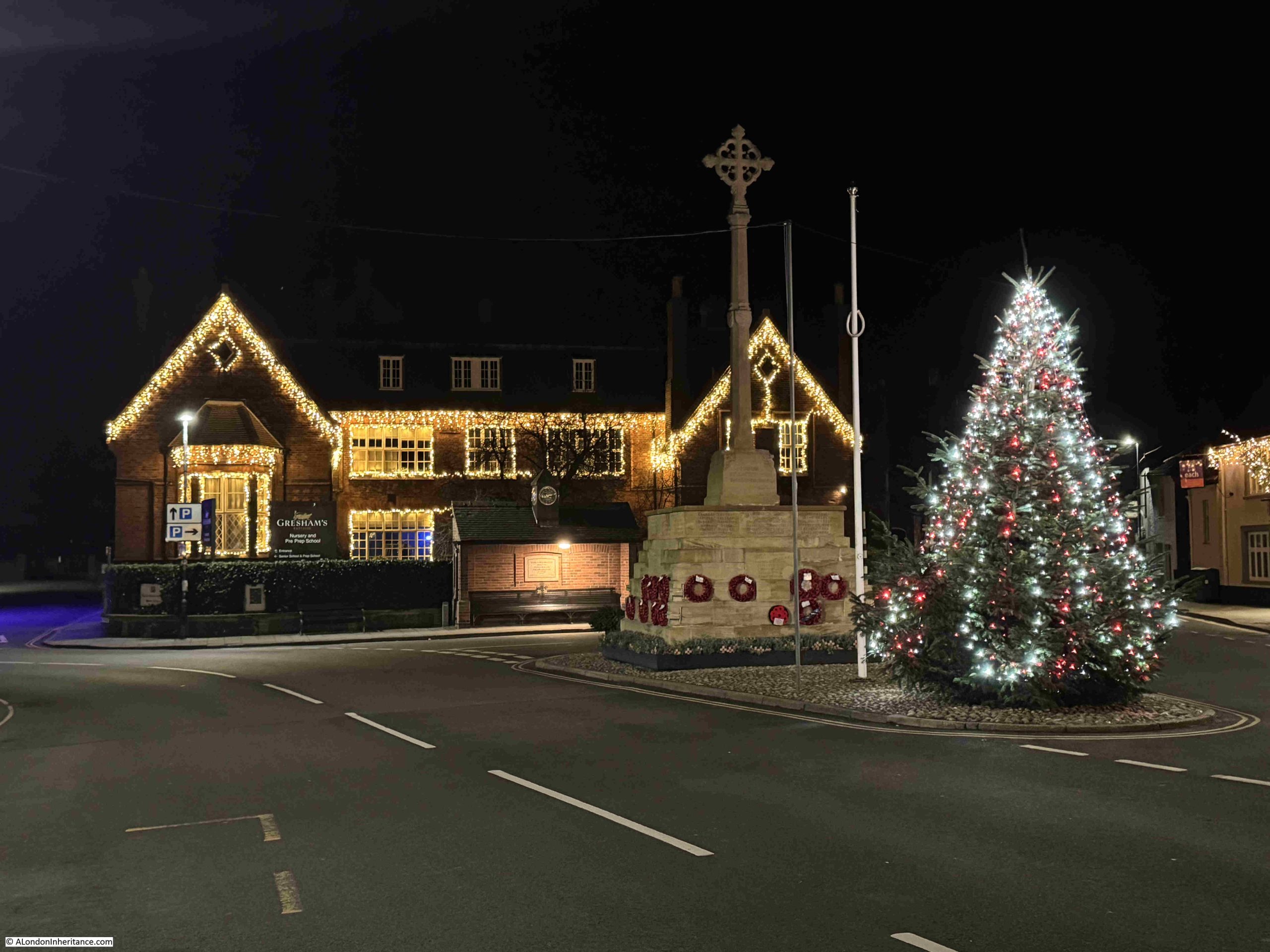
A couple of week’s ago, we were in the small town of Holt in north Norfolk (thanks to A & C for the suggestion and company). and at the western end of the Market Place, there was a building which had a very familiar symbol for the institution that occupies the building:

The building is the home of Gresham’s Nursery and Pre Prep School, and further west there is a much larger part of Gresham’s School, and what initially caught my attention was the image of the grasshopper, which is on the sign board and also on one of the school busses that went through the centre of the town:

The name Gresham is a key part of London history, and the grasshopper is the crest above the Gresham family coast of arms.

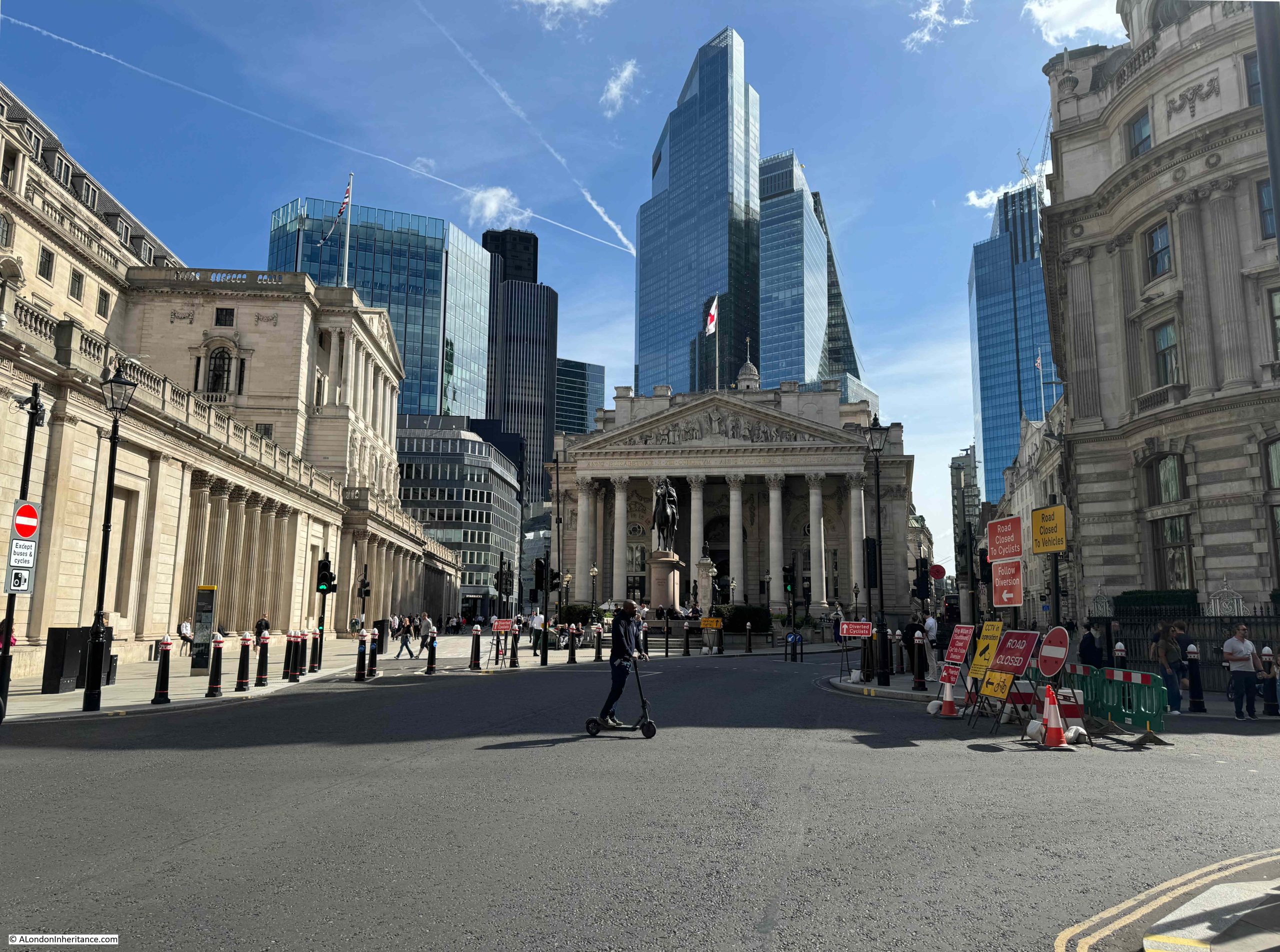
The Gresham grasshopper can also be found in a central part of the City of London. The following photo is of the Bank junction with the Royal Exchange in the centre of the photo:

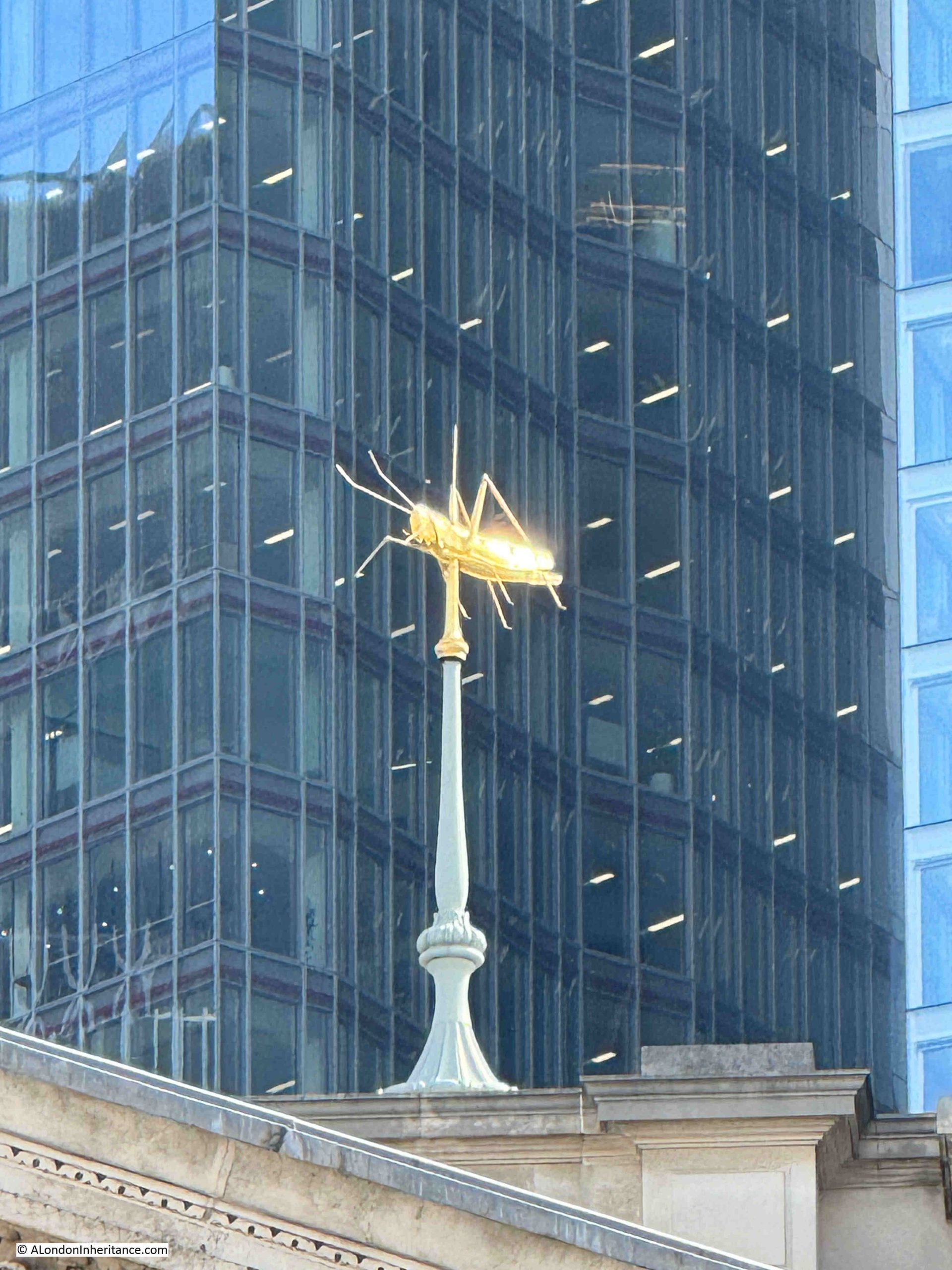
Not easily visible in the above photo, but on the weather vane of the small tower on the roof of the Royal Exchange is another Gresham grasshopper:

So why does the name Gresham, and the symbol of a grasshopper appear both in Holt and in the centre of the City of London?

Firstly, Holt is in the far north of the county of Norfolk, not far from the North Sea coast, and surrounded by agricultural land. The following map shows the location of the town of Holt (© OpenStreetMap contributors):

The Gresham family had long held land in this part of Norfolk, having descended from Ralph de Braunche who fought with, and came over during William the Conqueror’s invasion of England in 1066.

He was granted land in Norfolk (as part of a great transfer of land ownership from the earlier pre-conquest Saxon land owners, to those who had supported William during and after 1066), and at some point in the following years, the family took the Gresham surname from the village in north Norfolk where the family were land owners, and near where they had settled in the 14th century.

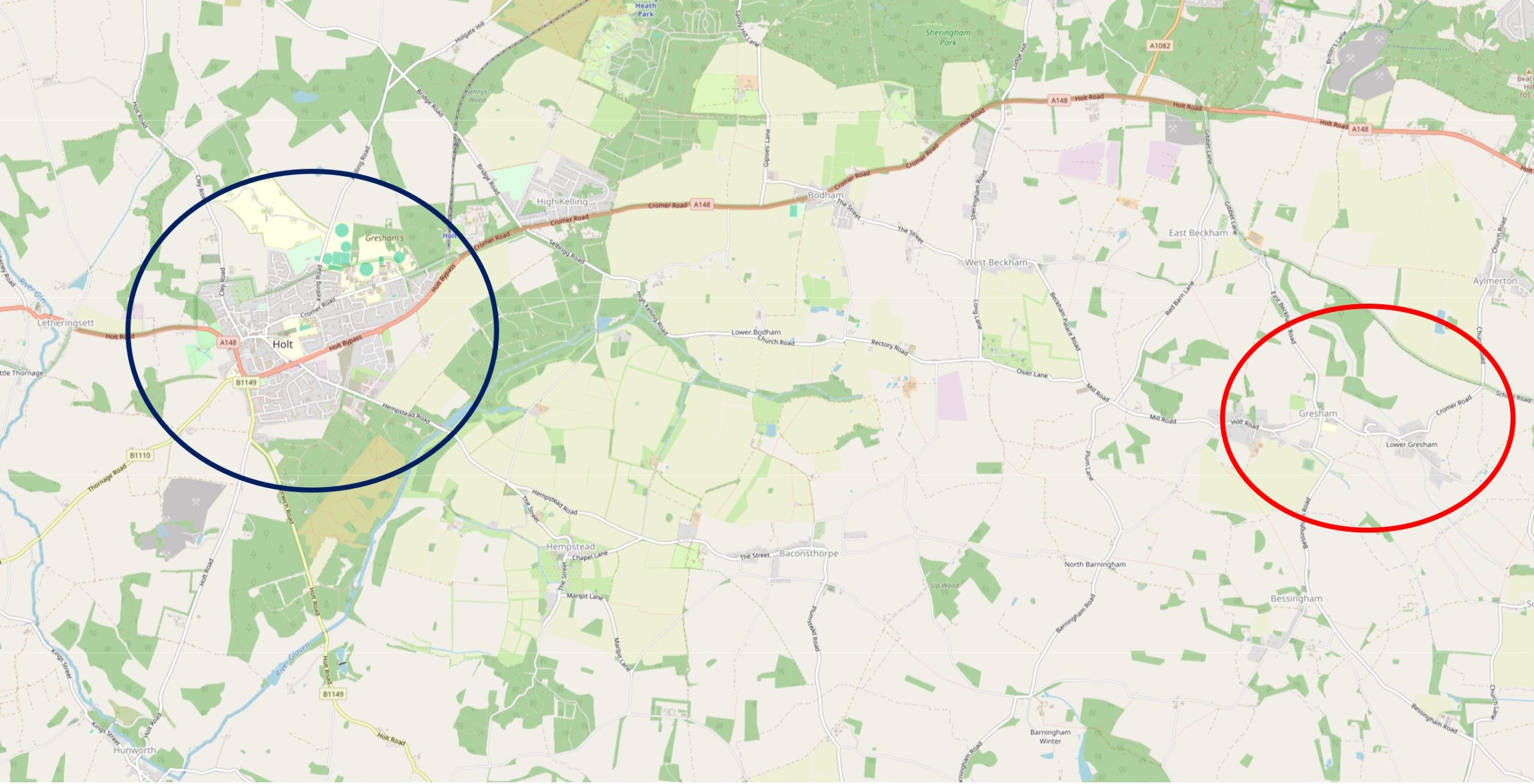
In the following map, I have ringed Holt in blue to the left, and the village of Gresham in red, to the right (© OpenStreetMap contributors):

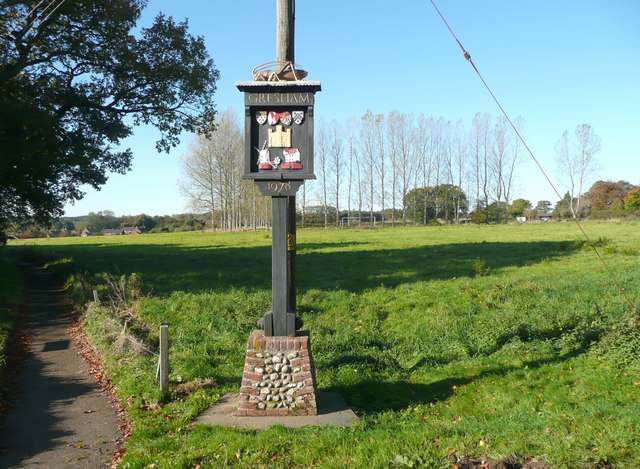
We did not get a chance to visit the village of Gresham, however Geograph has an image of the village name sign, which also has a Gresham grasshopper:

© Copyright Humphrey Bolton and licensed for reuse under this Creative Commons Licence. Image source: https://www.geograph.org.uk/photo/1051802

In the early 15th century, members of the family had settled in Holt, and had built a Manor House at the eastern end of Market Place, on the site of the current Pre Prep School shown in the photo at the start of the post, and it was in this Manor House that Sir John Gresham was born, at some point around the year 1496.

His father was also a John Gresham, and as well as Holt, he was also involved with business in London, an involvement which would grow considerably in the following years.

Sir John Gresham had been apprenticed to John Middleton, a textile dealer in the City of London when he was 14, and when he was 21, he became a member of the Worshipful Company of Mercers.

He became heavily involved with the Tudor Court of Henry VIII and helped Thomas Wolsey and Thomas Cromwell with trade, and his provision of finance, arms and men in support of Henry VIII’s military ambitions helped build his popularity with the King.

He was also Lord Mayor of the City of London in 1547.

Returning to Holt, it was Sir John Gresham that founded the school which still exists to this day, and the need for a school appears to have been due to a gap in local education left by the Dissolution of the Monasteries in 1539.

In the early 16th century, much formal education was provided by religious establishments, and Sir John Gresham had attended the school at Beeston Regis Priory. This school was closed in 1539 during the Dissolution of the Monasteries, and there was no other option to replace the Priory.

The first school was in the family manor house which had been extended specifically for the purpose, and Letters Patent from Queen Mary in 1555 provided royal approval for the school.

He would not though live to see the formal opening of the school as he died in his London home on the 23rd of October 1556, a short time before the school opened.

He was buried in St. Michael’s Bassishaw, a parish church in Basinghall Street, however the grave, monument and church were destroyed during the Great Fire of London in 1666.

Sir John Gresham, founder of the school in Holt, member of the Mercer’s Company, Lord Mayor of the City of London:

Attribution: Flemish school, artist unknown., Public domain, via Wikimedia Commons

Whilst Sir John Gresham is mainly remembered in the town of Holt as the founder of Gresham’s school, it is his nephew, Sir Thomas Gresham who left a mark on London that is still very much in evidence today.

Sir John Gresham’s brother was Sir Richard Gresham.

He seems to have followed a very similar career path to his brother John as he was a member of the Mercer’s Company, Lord Mayor of the City of London in 1537, involved in the Court of Henry VIII, and a significant trader in goods with the Low Countries, the area of Europe now mainly occupied by the Netherlands, Belgium and Luxembourg.

He also provided goods for the King, and Richard amassed a significant fortune as a result of his trading activities.

Richard had four children, one of whom was the future Sir Thomas Gresham, and is believed to have been born in 1519 in Richard’s house in Milk Street in the City of London.

Sir Thomas Gresham was also a Mercer and had been apprenticed to his uncle Sir John Gresham. He would go on to amass far more wealth than his father or uncle, engaged in trade throughout London and Europe, and in many ways he was one of the original driving forces in establishing the City of London as one of the major financial and trading centres in the world.

He would serve three different monarchs – Edward VI, Mary I and then Elizabeth I, and what is intriguing was the apparent ease of transition between different monarchs as he seamlessly went from the staunchly Catholic Mary I to the Protestant Elizabeth I.

As well as a house in the City of London, he also spent considerable periods of time over a period of around 30 years, living in the city of Antwerp, then the major trading hub of Europe, and a city which had a Bourse, a place where a trading and credit market would operate, and where traders in both goods and finance would meet to agree loans, make foreign exchange trades, trade goods etc. all the different types of trading activity that would soon make London the main trading hub of the world.

Gresham seems to have had a remarkable memory and ability to calculate trades, and would make money on the small differences between currencies, borrowing and lending rates etc. He also attempted to influence rates, for example by providing friendly merchants with amounts of money so that they could make a trade which would raise or lower the value of the currency being traded, just in advance of when Gresham had to make a trade.

The earlier trade changing the rate at which his later trade would take place in a way that was beneficial to Gresham, was indicative of how Gresham would try and manipulate markets to his own advantage.

He was apparently extremely self confident to the point of arrogance, and would do everything needed to get a good outcome from a trade, a loan or borrowings. An example of his approach to raising capital is through his marriage in 1544 to an apparently wealthy widow, Anne Ferneley, whose husband, a wealthy merchant had died at a young age.

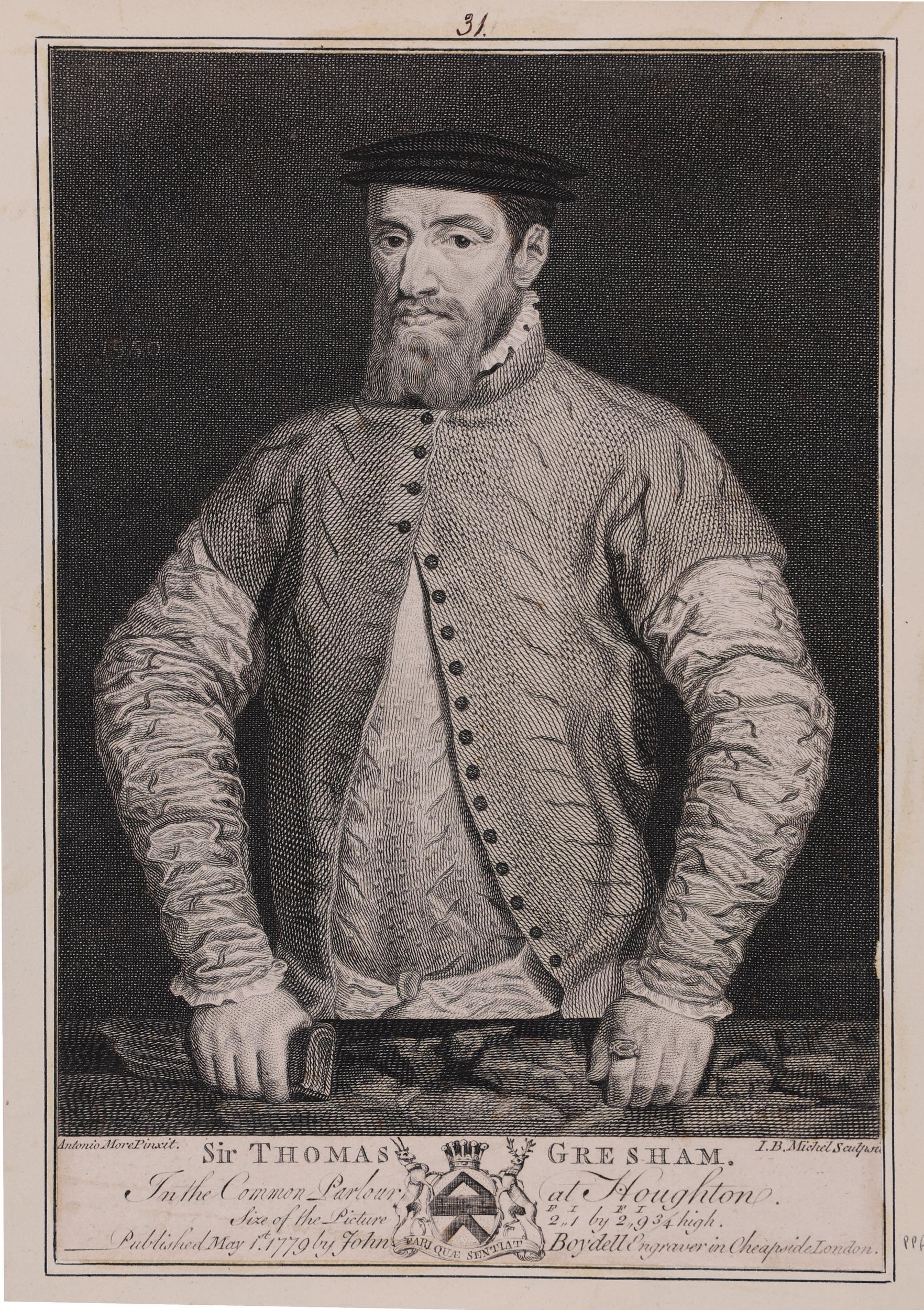
Thomas Gresham:

(© The Trustees of the British Museum. Shared under a Creative Commons Attribution-NonCommercial-ShareAlike 4.0 International (CC BY-NC-SA 4.0) licence.):

His time in Antwerp was not all about trade. He became fluent in multiple European languages, experienced the impact and benefits of the renaissance, and saw the benefits that a formal education had to commercial trade. He built up an extensive network of informants across Europe, and he also understood the importance that having a Bourse would be to the trading life of a city. All themes that would later influence his plans for the City of London.

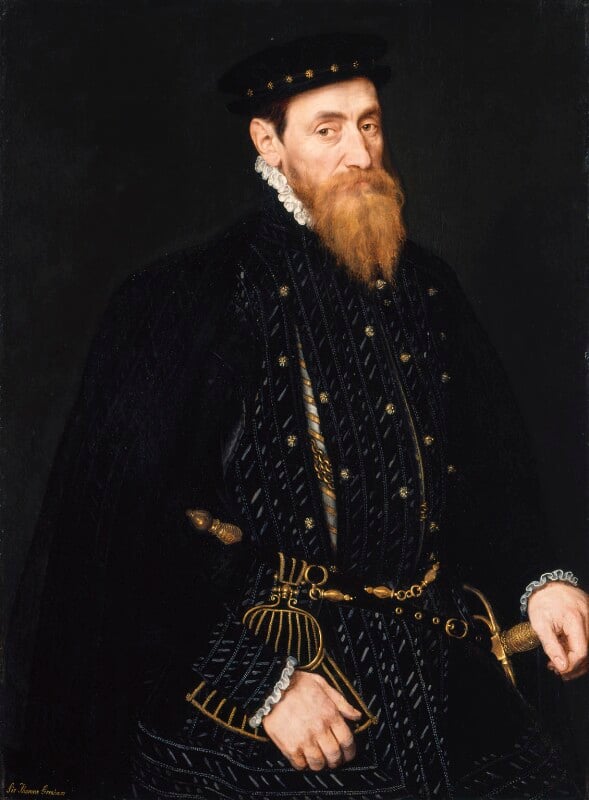
Sir Thomas Gresham, painted by an Unknown Netherlandish artist, circa 1565:

Attribution: Attribution-NonCommercial-NoDerivs 3.0 Unported. Source National Portrait Gallery, London

Gresham was involved in so many financial innovations, from ways to improve personal accounting through to how the country’s finances were managed and initiatives to improve the global standing of England’s currency.

One example of the later, was with the strength of Sterling.

Today, the value of the UK’s currency is more dependent on measures such as interest rates, trade deficits, GDP etc. however in the 16th century, the value of the currency was linked to the metal in which the coin was minted, and much of England’s coinage was viewed as “debased” – meaning that the face value of the coin was more than the value of the metal in which it was minted.

A common cause of debasing a coin was through clipping, where small pieces of a coin around the edge, were clipped off. Doing this to a sufficient number of coins provided a large amount of valuable metal, however the value of the metal of the clipped coins was now less than their face value.

When using coins for trade, such as to purchase goods for import, continental traders were not happy to accept English coins without weighing and testing their metal content, to ensure they were getting the value of payment expected. This took time, and reduced the value of English coinage to foreign traders.

Initiatives had been tried to recall all the coinage in circulation with little success, and during Elizabeth I’s reign, Gresham was the brains behind the plans for Secretary of State William Cecil to recall and remint the currency in circulation, as a way of restoring the correct value to the country’s coinage.

The concept of debased coinage replacing coinage that aligned with face value was later framed as Gresham’s Law – “Bad money drives out good”, although the issue around debased coinage, and its impact on coinage as a method of trade, store of value etc. had been known for many years before Gresham.

Thomas Gresham was also a champion of double-entry book keeping and he appears to have been one of the first to have used and introduced the technique into England.

Double-entry is where separate entries are written using two accounts for credits and debits, and was a method that Gresham encountered during his time in Antwerp. The technique was used considerably by European merchants, and appears to have originated with Italian merchants.

Gresham’s double entry journal covering the period from the 26th of April 1546 to the 10th of July 1552 has survived and shows how meticulous Gresham was in using this accounting method for his own, personal finances.

The period covers part of his time as a trader in Antwerp, when he was bringing in goods from England to trade and sell, as well as goods he purchased in Antwerp to sell in England.

Gresham called the profit and loss account in his ledger his account of “damage and gain”, which is a rather good way of describing losses and profits.

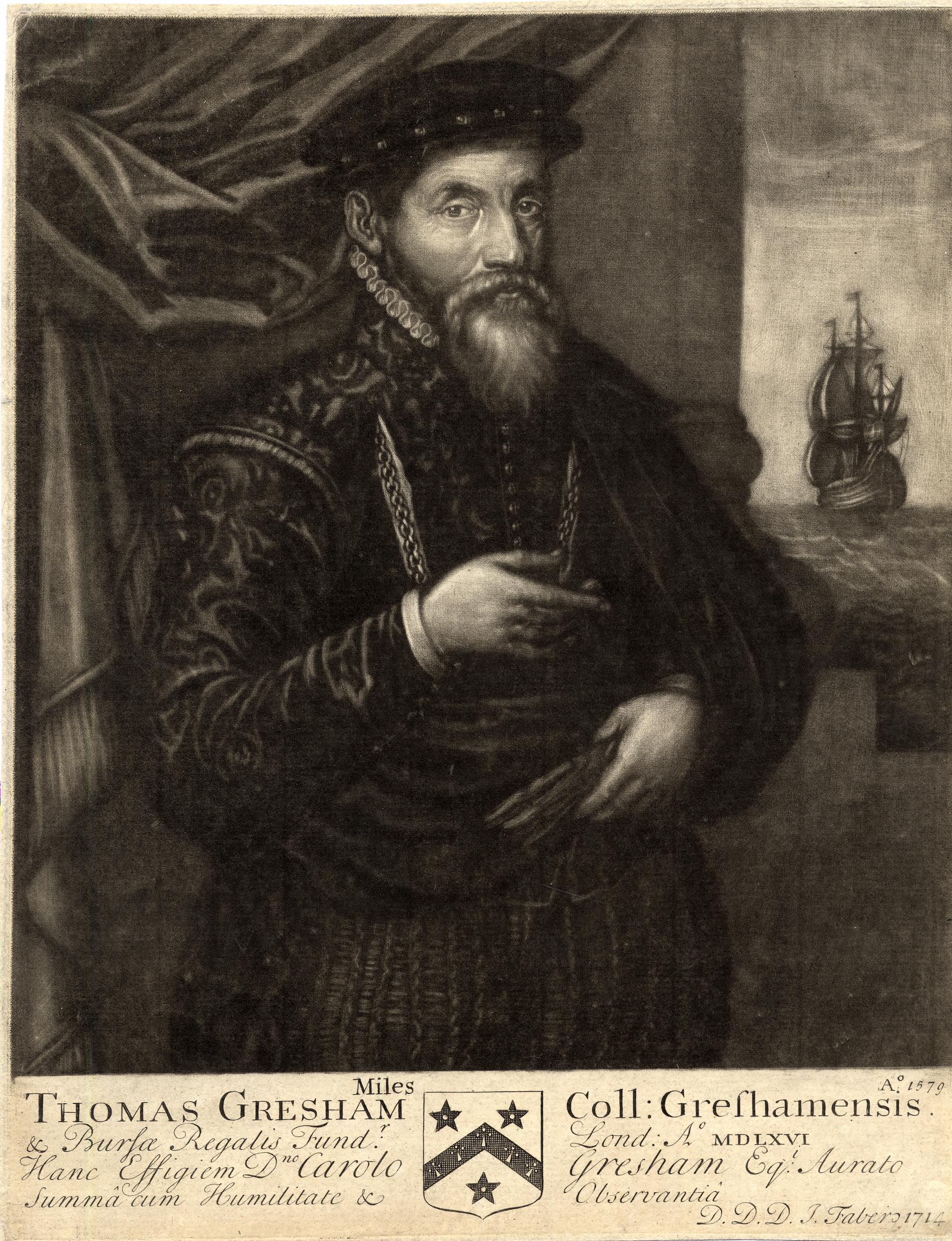
Another print of Thomas Gresham, and what I like about this print is the ship to his right. Paintings, prints etc. would often include things that were important of representative of the person portrayed. The print may be symbolic of Gresham’s interest and influence in global trade and commerce. The print also records his founding of Gresham College:

(© The Trustees of the British Museum. Shared under a Creative Commons Attribution-NonCommercial-ShareAlike 4.0 International (CC BY-NC-SA 4.0) licence.):

It is impossible to overstate Gresham’s importance to the financial health of the country, the rapidly growing importance of the City of London as a financial and trading centre, free trade, trading and accounting techniques etc. But there were many other ways in which Thomas Gresham had a considerable impact on the future of the City of London. One of which is still very active and follows its founding principles, the second is still physically here, but no longer has the purpose that Gresham intended. This is:

The Royal Exchange

In the 16th century, trading in the City of London was carried out on the street, or in the small houses and shops that lined streets such as Cornhill and Lombard Street, and there had been calls for a dedicated place where people could meet to trade, agree prices, and generally conduct business of all types.

Sir Richard Gresham first became aware of the opening of a Bourse, or trading centre in Antwerp, one of the major trading centres of Europe. Sir Richard pushed for such a building to be constructed in the City of London, however despite the project receiving royal support, there was no suitable space available.

The proposal was taken up by his son, Sir Thomas Gresham, who was also very well aware of the Bourse from his many years in Antwerp, where he worked on behalf of the Crown, as well as trading on his own account.

Gresham put his own money into the project, along with significant funding generated through public subscriptions, and which supported the purchase of a block of land in Cornhill Street, a short distance from what is now the Bank junction, and occupying the same site as the current Royal Exchange.

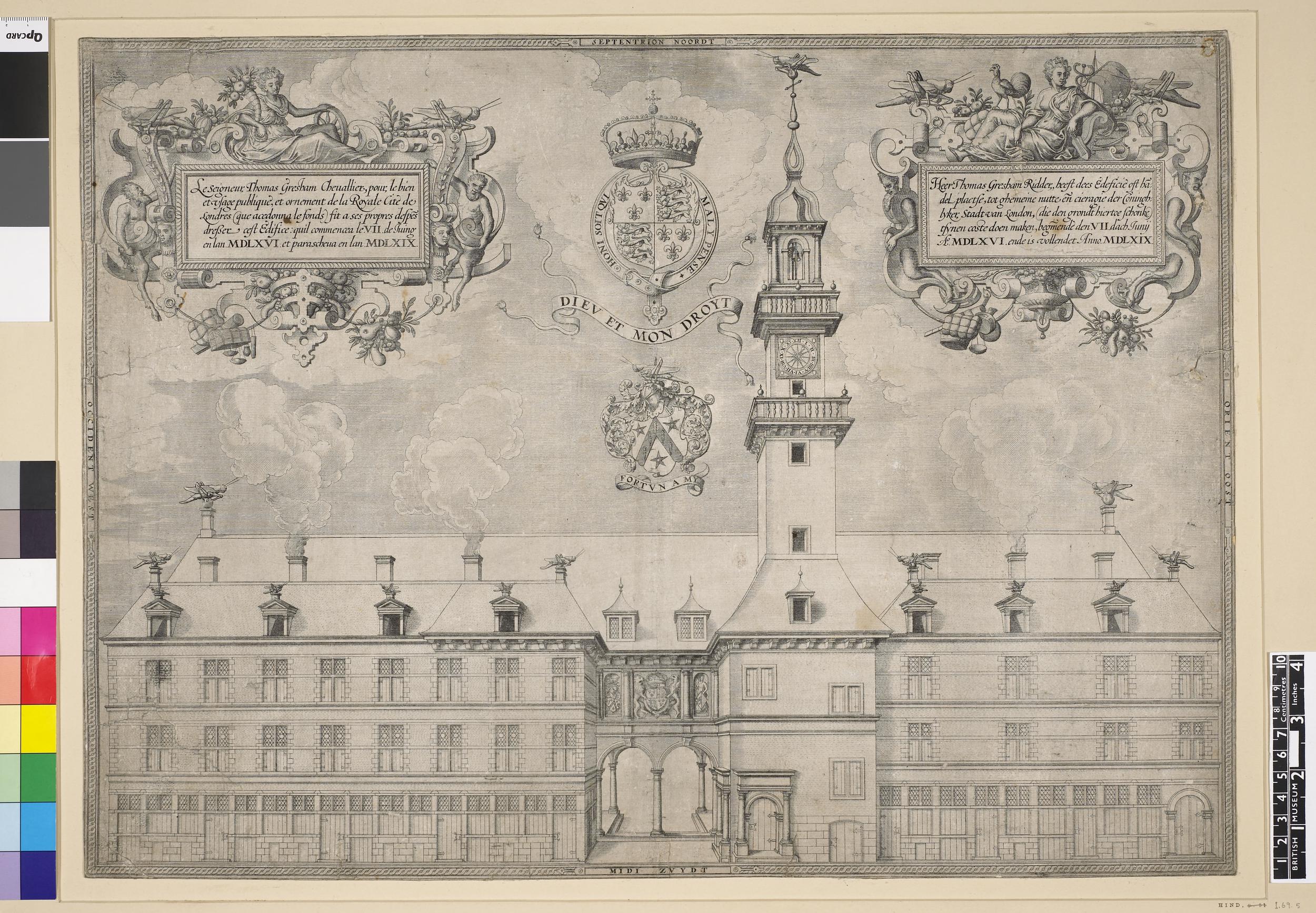
The building was opened by Queen Elizabeth I in January 1570, and it was the first, large, Renaissance style building in the City. Gresham had intended that the new Exchange was named after him, however at the opening, Elizabeth I gave it the name Royal Exchange, and Gresham obviously had to retain the Queen’s favour, so the Exchange retained the name Royal.

Sir Thomas Gresham’s Royal Exchange:

(© The Trustees of the British Museum. Shared under a Creative Commons Attribution-NonCommercial-ShareAlike 4.0 International (CC BY-NC-SA 4.0) licence.):

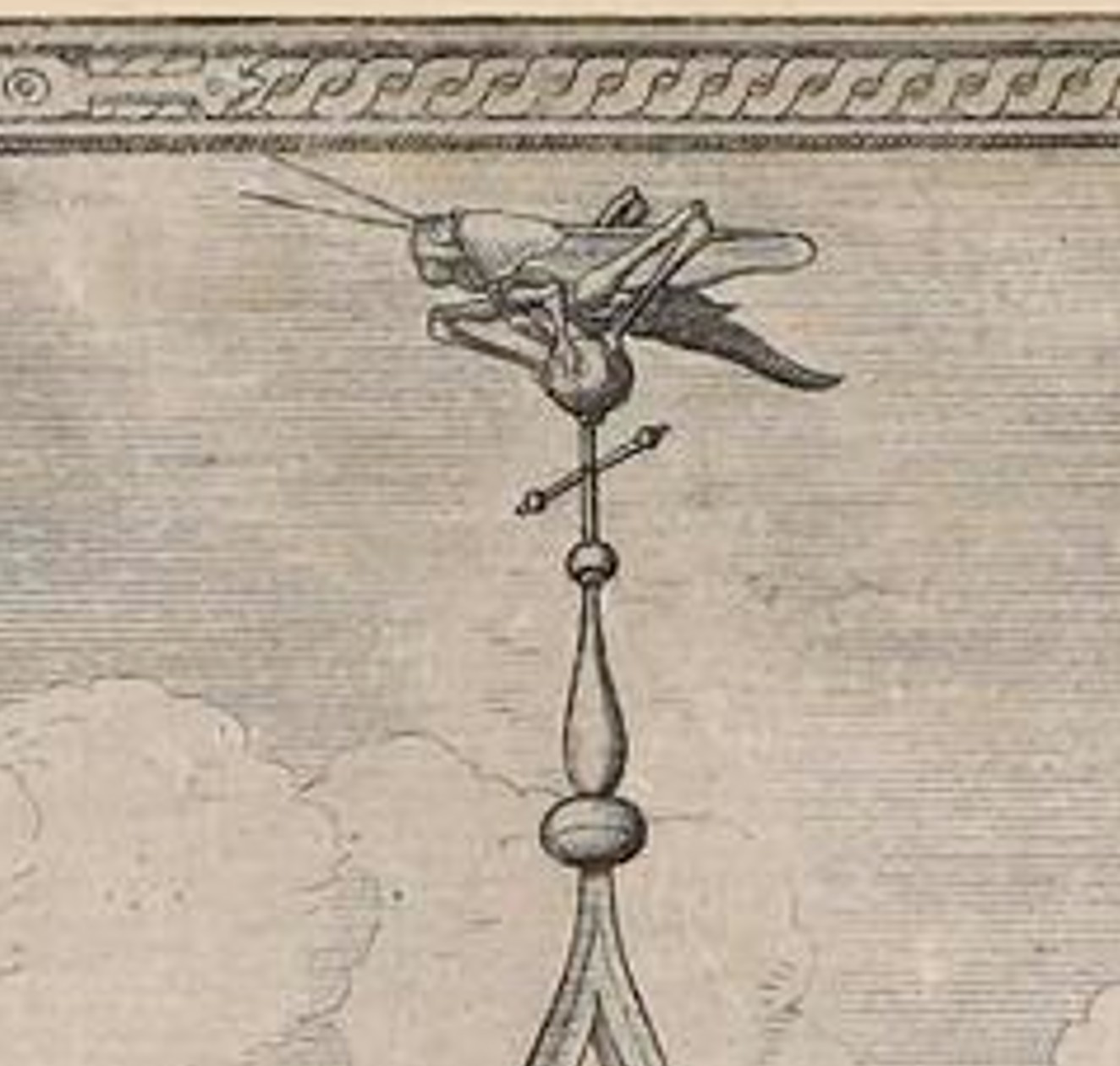
On top of the tower in the above print is a grasshopper, as still to be seen on the current Royal Exchange, and at Gresham’s School in Holt, Norfolk. The following is an enlargement of the grasshopper from the above print:

The purpose of the Royal Exchange was to provide a place where trades could be carried out, where people could meet, offices could be rented etc. and followed the approach Gresham had seen in the Antwerp Bourse.

Providing a central place for face to face trading was more efficient than being distributed across the city, and the opening of such an impressive Exchange greatly enhanced the City of London’s growing reputation for trade, commerce and finance.

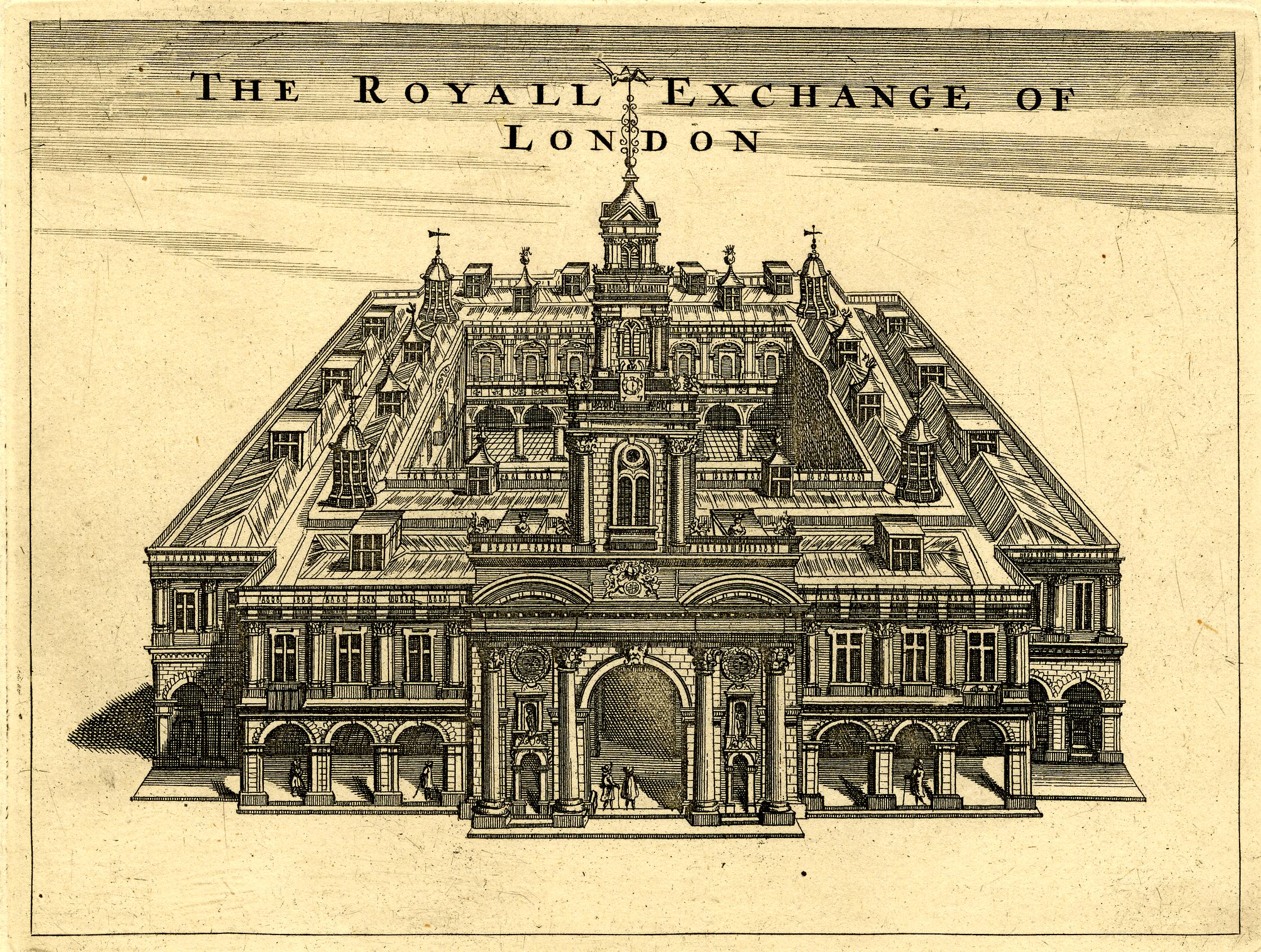
This first Royal Exchange was destroyed during the 1666 Great Fire, and was soon rebuilt following a design by Edward Jarman.

The second Royal Exchange, from a print of the late 17th / early 18th centuries, again with a grasshopper on the top of the tower:

(© The Trustees of the British Museum. Shared under a Creative Commons Attribution-NonCommercial-ShareAlike 4.0 International (CC BY-NC-SA 4.0) licence.):

This second iteration of the Royal Exchange lasted until 1838, when, as with the first, it was also burnt down.

The Royal Exchange was soon rebuilt, following a competition to find a design. The competition was won by the architect William Tite, who seems to have also been one of the judges of the competition.

Tite’s design follows the layout of the original two Exchanges, with a central courtyard surrounded by four wings of offices and shops, however Tite’s design changed the main entrance from facing onto Cornhill, now to face onto the Bank junction.

The buildings that had once occupied the triangular space in front of the Exchange were demolished, and it was opened up so that the full Corinthian portico of the new building faced directly onto the Bank junction, and seems almost to mirror the Mansion House across the junction.

The new Royal Exchange was opened in 1844 by Queen Victoria, and this is the building that we still see today, and which retains the grasshopper shown in the photo earlier in the post.

The use of the Royal Exchange as a place for general, face to face trading and commerce faded in the late 19th century as specialist trading exchanges were set up to provide a place where trades could be made, meetings held, and news received in a specific and related set of commodities or services.

In 1939, the building became the offices of the Guardian Royal Exchange Assurance Company, and in the late 1980s, the company made substantial changes to the interior of the building, which included replacing the original roof, and an additional upper floor.

In 2001, the building was again refurbished, and reopened as a centre for luxury shops, restaurants and bars, and the Royal Exchange retains this function today.

Although Sir Thomas Gresham was instrumental in the founding and construction of the Royal Exchange. it never carried his name, just the Gresham family’s grasshopper symbol as a weathervane. His name though has been, and still is, recorded in a number of London places, including the 1845 Gresham Street, which was a rebuilding of earlier streets Lad Lane and Cateaton Street.

Gresham’s name is also still in use with a significant London educational institution, in which Gresham was again instrumental in founding. This is:

Gresham College

In Antwerp, Sir Thomas Gresham experienced the way that an education in trade, scientific and technical developments would benefit the commercial life of a country to such an extent that through his Will, in 1597, Gresham College was established, to be run and administered by the City of London Corporation and the Mercer’s Company.

Gresham College was an attempt by Gresham to provide an education to those of the City, traders, merchants and mariners, who had not had a formal education.

The college provided free lecturers that were delivered by Professors appointed by the City of London Corporation and the Mercer’s Company.

The Mercers appointed professors in Law, Physic and Rhetoric, whilst the City of London appointed professors in Divinity, Astronomy, Geometry and Music.

Until 1768, the College was based a Sir Thomas Gresham’s former home at Bishopsgate. When the site was redeveloped, it moved to the Royal Exchange, and then to a new, dedicated building on the corner of Gresham Street and Basinghall Street, the college later held lectures at a number of different locations, ending up at Mercers Hall, before finally moving to the current location of Barnard’s Inn Hall  in 1991.

Remarkably, given that Gresham College is over 400 years old, the approach is basically the same as when the college first started.

Professors are appointed for a three year term and each professor, along with visiting professors, will provide free lectures during their term.

Lectures can be attended in person, or watched online. Many of the past lectures are also available to watch online.

Lectures cover an extremely varied range of subjects, ranging from “How It Ends: What We Know about the Fate of the Universe” by Professor Chris Lintott, who is Gresham Professor of Astronomy:

through to “Modern Pagan Witchcraft” by Professor Ronald Hutton, the Gresham Professor of Divinity:

A could be expected, there is also a very large archive of lectures on London’s history, as well as lectures on Sir Thomas Gresham.

The website of Gresham College can be found by clicking here.

The Watch Now option along the top of the page takes you to a page where a sample of lectures are listed, as well as a topic list along the top of the page.

There is also a search option, and as an example, entering the term “London” brings up a large list of London related lectures.

The last lecture of 2025 is this Wednesday, the 17th of December, and is on the subject of a Tudor Christmas. You can book to attend in person, or to watch the lecture live online.

If you have finished reading all the back issues of London Archaeology mentioned in last week’s post, then the lecture archive of Gresham College provides another wonderful source of learning on not just London, but so many other different aspects of the wider world.

It is a wonderful resource, all thanks to Sir Thomas Gresham.

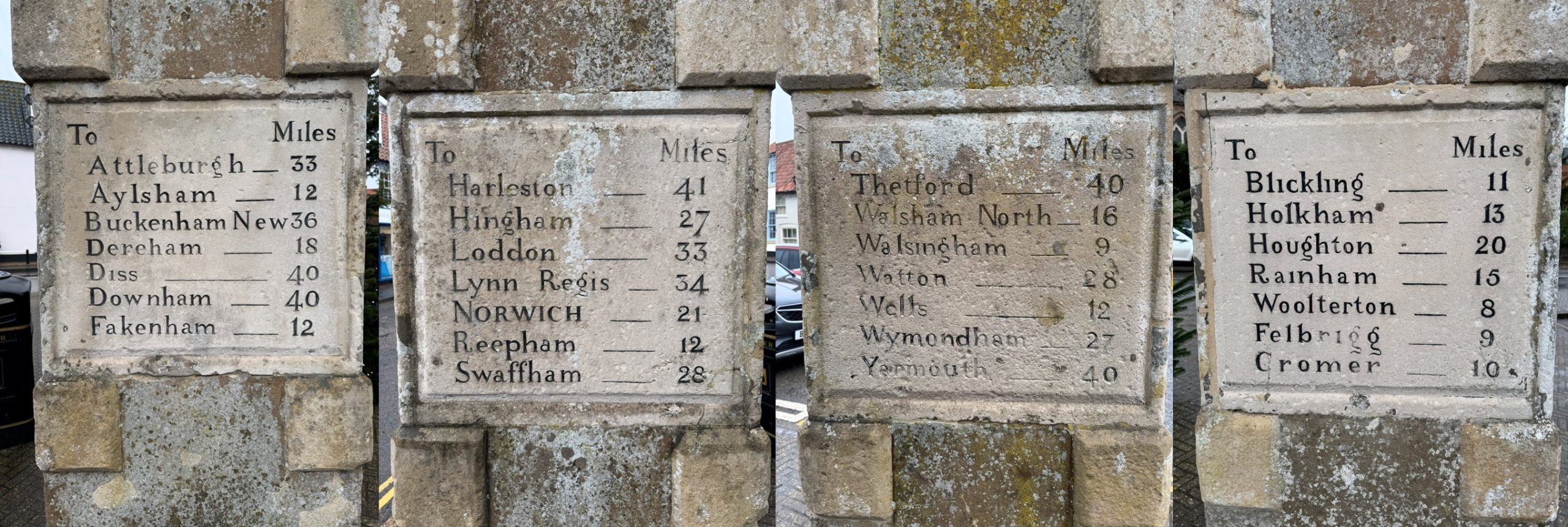
Returning to Holt, and as you walk back west along Market Place from the site of Gresham’s old manor house, and at the end of High Street, there is a wonderful Grade II listed, mid-18th century milestone:

I wondered if London was listed on the milestone, however all the miles and destinations were to local towns and villages, with the furthest being 41 miles away:

An indication of how relatively remote Holt was at the time, and a long way from any direct roads to London, with a trip to Norwich probably being required to pick up the main road to London.

The Gresham’s were a fascinating family. Whilst Sir John Gresham was active in London, and a Lord Mayor of the City of London, his lasting monument is Gresham School in Holt.

It was his nephew Sir Thomas Gresham who left a lasting reminder of his life in London, apparently one of the richest and most well connected men in England at the time.

If you would like to follow up on the story of Sir Thomas Gresham, there are some lectures on his life in the collection at Gresham College, and the book Gresham’s Law by John Guy (who also presents some of the lectures), is excellent:

In the game of who from history you would invite to a dinner party, Gresham would be high up on my list, although by the end he would probably have left with a large profit after selling me some wool and providing a loan – all at rates beneficial to Gresham.

Felixstowe Martello Towers, Bawdsey Radar and Sutton Hoo

For this week’s post, I am covering some of my father’s photos which were taken whilst cycling and youth hostelling around the country with friends from National Service.

On the 22nd of July, 1952, they were in the outskirts of Felixstowe, and encountered a couple of Martello Towers, along with a leading edge technology from the Second World War.

The Martello Tower on the Felixstowe Ferry golf course is the main building in the above photo, and if you look to the right, in the distance is a second Martello Tower.

Martello Towers date from the early years of the 19th century, and were built due to the perceived threat of invasion by the French forces of Napoleon Bonaparte.

The Felixstowe Martello Towers are part of a chain along the southern and eastern coast of England. A chain of 74 towers were constructed between Felixstowe and Dover, and these were then extended further along the Essex and Suffolk coast with another 29 towers all the way to Aldeburgh.

The name Martello is not from the person who came up with the idea or design of a circular defensive tower, rather the place where the British Navy first saw the effectiveness of such a design.

On the 7th of February, 1794, the British Navy were attacking the French in Corsica, and were firing cannonballs at a circular gun tower at Mortella Point. The circular design, along with very thick walls resulted in the cannonballs deflecting, or bouncing off the gun tower

The design was then copied for the Martello Towers along the English Coast. (Martello seems to have been a misspelling of the word Mortella).

Martello Towers were frequently constructed to assist shore based gun batteries, and to defend the point where rivers entered the sea, to prevent enemy ships from sailing inland. The two Felixstowe Martello Towers are to the south of the River Deben which leads inland to Woodbridge.

A short distance to the south is where the Rivers Orwell and Stour reach the sea, and there were two large forts on either side of the combined channel of these two rivers.

A 24-pounder anti-ship gun was the usual armament mounted on the roof of the towers, and this gun had a range of about one mile out to sea, and would have fired on an invader attempting to reach the shore, or enter the nearby rivers.

Internally, the Martello Towers had rooms for the officers and men who were stationed at the tower, along with supplies for their weapons and roof mounted gun, as well as supplies of food and water.

The Martello Towers had a very short operational life, and they never fired a shot in anger at any attacking ships, as after the defeat of Napoleon at the Battle of Waterloo in 1815, the threat of invasion by the French disappeared.

Some Martello Towers were retained by the Navy, some were used by the Coastguard, used for anti-smuggling operations, some had additional defensive weapons installed during the First and Second World Wars, and some became wireless radio stations for ship to shore communications.

Now redundant, the surviving towers are now often converted to residential, owned by councils, used by the volunteer National Coast Watch organisation, open for public access, or, in the case of the first Felixstowe Martello Tower that I am visiting, apparently closed and surrounded by a golf course.

The main and distant Martello Towers in my father’s photo are both Grade II listed. Another view:

When I visited the tower, there were plenty of golfers on the course, so it would not have been popular with them, or perhaps safe from flying golf balls, to wander onto the course to take photos from the same angle as my father, but in the above photo he had no such problems, and as well as the tower, to the left and in the distance is another feature of defending the country from European attackers that I will explore later in the post.

To get close to the first Martello Tower, it was a walk along the sea wall, with a warning to keep to this route:

They really do not want you to wander onto the course:

I was able to get up a grass bank to get a wider view of the tower, the entrance to the River Deben, and the opposite bank of the river:

The Martello Tower up close:

A sketch from June the 28th, 1837 showing the Felixstowe Martello Tower:

Image: © The Trustees of the British Museum. Shared under a Creative Commons Attribution-NonCommercial-ShareAlike 4.0 International (CC BY-NC-SA 4.0) licence.

The text below the sketch states that “The Martello Towers are used by Preventive Men”, and the following report issued by the Custom House, London on the 4th of April, 1825 illustrates the work of the Preventive Men:

“Whereas it has been represented to the Commissioners of his Majesty’s Customs, that on the night of the 23rd, Robert Wallis, Chief-boatman, and the Preventive Men belonging to the station at Newtown, Isle of Wight, were out on duty for the prevention of Smuggling, and towards Freshwater, fell in with a company of Smugglers, to the number of Forty-five or Fifty, who dropped their Tubs, and whilst the said Chief-boatman and some of the Preventive Men were endeavouring to secure one of the Smugglers, the whole company immediately fell upon them and severely beat and wounded the Chief-boatman, and broke his Cutlass, and also beat one of the Preventive Men, and took from him his Pistol, and the Smugglers having overpowered them, picked up their Tubs and escaped.”

A reward of £50 was then offered for any person who “shall discover, or cause to be discovered, any one or more of the said offenders.”.

The area of the east coast around Felixstowe would have offered numerous landing places for smugglers, along with the rivers Deben, Orwell and Stour offering routes to inland landing and hiding places, so smuggling would have been an ongoing problem for the authorities.

In one of my father’s photo, there is a second Martello Tower in the distance, so we continued along the sea wall to find this tower:

This second tower is on the side of the estuary of the River Deben, and appears to have been converted to residential:

The location of the two Martello Towers is shown in the following map, with tower 1 being the tower on the golf course and tower two being the one apparently now residential. The River Deben is running inland, and the map shows how these were positioned to defend the river entrance (© OpenStreetMap contributors):

To the south is Felixstowe, with the larger entrance to the Rivers Stour and Orwell. This river entrance continue to be important in the life of the country, as it provides access to the major container port of Felixstowe.

In the above map, I have marked Bawdsey, and the following is an extract from one of my father’s photos of Martello Towers, that shows the view across to the north bank of the River Deben, and large aerial towers at Bawdsey:

There is a fascinating parallel between the Martello Towers and these tall aerial towers across the River Deben. One is early 19th century and the other is a mid 20th century approach to defending the east coast from attack.

In the above photo, just below the second tower from the left, it is just possible to see Bawdsey Manor.

Grade II* listed Bawdsey Manor was built between 1886 and 1908 using a wide mix of architectural styles, originally as a holiday home for the family of Sir Cuthbert Quilter, but it soon became their main, family home.

The house and grounds passed through the Quilter family until 1937, when William Eley Cuthbert Quilter sold the estate to the Air Ministry, who were looking for a site to conduct research and development of the new technology of radar.

At the outbreak of war in 1939, Bawdsey Manor became both a training school and an operational radar station, and the aerial towers we see in my father’s photo were part of the radar installation.

The story of the development of radar for wartime use starts in 1935 when it was demonstrated that a system where a pulsed radio signal enabled aircraft to be detected as the radio pulse was reflected by an aircraft back to a radio receiver.

The Government approved an initial £60,000 to build 5 stations, and by September 1939 a chain of 20 stations had been built along the east coast. The system could detect aircraft up to 120 miles distant, a distance which provided around 20 minutes warning – a remarkable achievement given that it was just four years since the concept had been demonstrated.

The system consisted of smaller 75 metre tall wooden towers which supported receiving aerials and 100 metre tall steel lattice towers for the transmitter aerials.

These two types of tower can both be seen in my father’s photo.

The system became known as “Chain Home” and by the end of 1945 there were over 100 Chain Home radar stations, primarily around the coast of England, Scotland and Wales.

Continuous technical development during the war resulted in considerable improvements both in the use of radio technology, and the interpretation of the reflected signal.

One technical innovation was the development of the Cavity Magnetron by Harry Boot and John Randall of the University of Birmingham, which allowed high power microwave radio systems to be built, and that resulted in much smaller, accurate and more compact radar units to be deployed around the coast and importantly in aircraft, where systems were able to detect a periscope from a submarine above the sea surface.

The Cavity Magnetron is basically the same technology that powers your Microwave oven today, and during the war, along with jet engine technology, the design of the Cavity Magnetron was given free to the US, in return for their production capabilities.

A close up view of the steel lattice towers at Bawdsey from the Imperial War Museum collection:

THE BATTLE OF BRITAIN 1940 (CH 15337) The transmitter aerial towers at Bawdsey CH (Chain Home) radar station, Suffolk, May 1945. Copyright: © IWM. Original Source: http://www.iwm.org.uk/collections/item/object/205196697

The following work by William Thomas Rawlinson shows an unnamed radar station on the east coast of the country with the same two types of aerial towers as photographed by my father:

A CH (Chain Home) Radar Station on the East Coast (Art.IWM ART LD 5735) image: Standard steel transmitter towers in the foreground with wooden receiver towers in the background. In the foreground are piles of tires, some vegetation and a line of barbed wire fencing. Copyright: © IWM. Original Source: http://www.iwm.org.uk/collections/item/object/22519

The above work was purchased by the War Artists Advisory Committee who were responsible for the purchase, and or commissioning of a comprehensive collection of artworks showing various aspects of the last war. See this post for London related images from the War Artists Advisory Committee collection.

One of the key factors in the success of radar, was the display equipment and the operators ability to interpret the signals being received by the radar system.

Bawdsey, as with many of the other Chain Home radar stations, had a local receiver room, where the signals received by the wooden receive aerial masts would be displayed and interpreted.

The next two photos show the receiver room at Bawdsey:

ROYAL AIR FORCE RADAR, 1939-145. (CH 15331) Chain Home: Flight Officer P M Wright supervises (right) as Sergeant K F Sperrin and WAAF operators Joan Lancaster, Elaine Miley, Gwen Arnold and Joyce Hollyoak work on the plotting map in the Receiver Room at Bawdsey CH, Suffolk. Copyright: © IWM. Original Source: http://www.iwm.org.uk/collections/item/object/205210716

Interpretation required some considerable skill, with the signal being displayed as a line moving across a Cathode Ray Screen. A returned signal would result in a dip in the line, with the distance being measured by how far along the line the dip occurred, and the size of the dip showing the strength of the returned signal, and therefore some indication of the type and number of aircraft being intercepted:

ROYAL AIR FORCE RADAR, 1939-1945 (CH 15332) Chain Home: WAAF radar operator Denise Miley plotting aircraft on the CRT (cathode ray tube) of an RF7 Receiver in the Receiver Room at Bawdsey CH. Her right hand has selected the direction or heightfinding and her left hand is ready to register the goniometer setting to the calculator. Copyright: © IWM. Original Source: http://www.iwm.org.uk/collections/item/object/205196699

The air ministry continued to use Bawdsey as a training school and radar station up to 1974, when the site closed for four years, and from 1979 to 1986 it reopened as an air defence unit, when it was home to Bloodhound air defence missiles – a missile system intended to hit soviet bombers attacking British nuclear bomber bases.

I have not been able to find a date for when the towers were demolished.

Since release by the air ministry, Bawdsey Manor has been empty for periods of time, has been an international language school, and now is a PGL residential adventure centre for schools and groups.

From the second Martello Tower, we can look across the River Stour to Bawdsey Manor:

A daily foot and bike ferry runs across the Stour to Bawdsey from May to September, and there is a museum dedicated to radar and Bawdsey history near the manor, which is open on Thursdays, Sundays and Bank Holidays.

The above photo shows a fishing boat returning as it enters the River Deben from the sea. It is fascinating to think of the thousands of ships and boats that have made the same journey, and a very short distance from the Felixstowe Martello Towers is a location where the remains of a ship that may have made this journey was discovered:

Sutton Hoo

As the radar towers were being built at Bawdsey, and the Second World War was about to break out, a remarkable discovery was being made a few miles to the north under one of the burial mounds at Sutton Hoo.

The Sutton Hoo estate had been purchased by Edith Pretty after her marriage to Frank Pretty. She was the daughter of a wealthy industrialist, and had spent much of her early life travelling.

In 1930 she gave birth to a son, however four years later, her husband died.

Tranmer House (originally Sutton Hoo House), Edith Pretty’s home on the Sutton Hoo estate:

The Sutton Hoo estate included a number of burial mounds, located along the higher ground of the estate, where it rises up from the River Deben.

Possibly because of her earlier experiences of archaeological excavations seen during her travels, she appears to have had an interested in the purpose of the burial mounds, and if there were any remaining objects and evidence of their original purpose, to be found inside.

In 1938 she commissioned Basil Brown, a local, Suffolk amateur archaeologist, to excavate three of the burial mounds.

These mounds had been “robbed” in the past – an activity where people would dig down to find and take anything of value that they could find.

Despite having been robbed, sufficient evidence was found to show that one of the mounds had contained a ship, that there had been cremation burials, and that a range of valuable and exotic items had been buried.

Basil Brown returned to Sutton Hoo the following year, 1939, and started work on the largest mound on the site, and it was here that he found the rivets of a ship and the complete outline of the wooden planks of a ship which had long rotted away.

The discovery of the intact outline of a large ship within a burial mound caused some excitement at both local and national museums and archaeological institutions, and the dig at Sutton Hoo was taken over by a team led by Charles Phillips of Cambridge University.

In what had been the middle of the ship, a collapsed burial chamber was found, which remarkably was still intact and had not been robbed over the previous centuries.

As the burial chamber was excavated, around 263 objects were found, including some remarkable gold jewellery, silver bowls, coins and the remains of a helmet.

An inquest to determine the status of the treasure found at Sutton Hoo was held soon after the discovery, where it was decided that it belonged to Edith Pretty, however she donated it the same year to the British Museum, where it can be seen today.

For many years, there was no mention of Basil Brown as the original finder of the ship burial, however the British Museum have now corrected this, and he is named as the original finder of this nationally important, Anglo-Saxon discovery.

Edith Pretty died in 1942, and her son went to live with an aunt. The house was taken over by the War Office to home Land Girls, before being sold to the Tranmer family (hence the current name of the house)_ and in 1998, the Trustees of the Annie Tranmer Trust (Annie was the last of the Tranmer family to live at Sutton Hoo), donated the house and estate to the National Trust.

The National Trust have done an excellent job at opening up the estate. There is an exhibition centre at the start, with replicas of many of the finds which are now at the British Museum.

The ground floor of Tranmere House is open, and there are various exhibits about the discovery, Basil Brown and Edith Pretty, and a short walk from the house is the area where the burial mounds can be found, and the National Trust have built a tower with viewing gallery where it is possible to appreciate the size of the site, which is not that clear when walking around the site, as shown in the following panorama from the viewing gallery (the mounds are much flatter today today when when they were created):

And in the following copy of the above photo, I have marked the location of the ship burial. The National Trust have put up markers at the two ends of the ship, so the yellow line shows the 27 metre length and the orientation of the ship discovered by Basil Brown:

A ground level view along the yellow line in the above photo, with one of the ship markers in the foreground, and the other end of the ship can be seen by the second marker on the horizon:

The ship buried at Sutton Hoo is believed to have been dragged up from the River Deben, a short distance from the burial site, although it must have required considerable effort to drag a large wooden ship up the steep slope from the river.

View from the top of the viewing tower, where the River Deben can be seen with the town of Woodbridge on the opposite bank:

The ship burial appears to date from the Anglo-Saxon period, somewhere around the early 7th century. This type of ship burial, along with the range and quality of goods buried in the ship imply that the burial was that of a very important person.

There is no firm evidence to identify who was buried under the mound, however the majority of evidence suggests that it was Raedwald, who was King of the East Angles, and who died somewhere around the years 624 and 625.

Among the finds which are now on display in the British Museum is the helmet, where the surviving pieces of iron and tinned copper alloy have been added onto a reconstruction of the helmet:

Image: © The Trustees of the British Museum. Shared under a Creative Commons Attribution-NonCommercial-ShareAlike 4.0 International (CC BY-NC-SA 4.0) licence.

A gold belt buckle:

Image: © The Trustees of the British Museum. Shared under a Creative Commons Attribution-NonCommercial-ShareAlike 4.0 International (CC BY-NC-SA 4.0) licence.

Many of the finds included silver bowls from Byzantium and precious stones from places as remote as Sri Lanka, showing that early 7th century, Anglo-Saxon England was not isolated, but was connected with global trade routes, and that some in Anglo-Saxon society were wealthy enough to afford not just the raw materials, but also the craftsmen to create the objects found at Sutton Hoo. Considerable expertise and specialist tools would have been needed to create these objects.

Another gold belt buckle, with inlaid garnet:

Image: © The Trustees of the British Museum. Shared under a Creative Commons Attribution-NonCommercial-ShareAlike 4.0 International (CC BY-NC-SA 4.0) licence.

A number of coins were found within the burial, which helped with dating, one of which is the following gold coin:

Image: © The Trustees of the British Museum. Shared under a Creative Commons Attribution-NonCommercial-ShareAlike 4.0 International (CC BY-NC-SA 4.0) licence.

There is a sort of connectedness between the Martello Towers, Bawdsey Radar and the Sutton Hoo Anglo-Saxon ship burial.

They are all to be found in this very small area due to their location close to the sea and the River Deben. The Anglo-Saxons used the river as a route to the sea, where many of the finds from the ship burial may well have arrived, either as raw materials and made in England, or as manufactured products.

The sea was also a route for invasion, and the area was defended firstly by gun emplacements on fortified Martello Towers, and then by radar detecting attacking enemy aircraft.

I always try and find a London connection when visiting the sites of my father’s photos from across the country, even though they may be very tenuous, and after Sutton Hoo, we crossed the River Deben into Woodbridge, where there is a rather nice milestone showing that we were 77 miles from London, on the main route from London to the east cost and Lowestoft and Great Yarmouth, a route now mainly replaced by the A12:

alondoninheritance.com

Negretti & Zambra, Admiral FitzRoy, James Glaisher. From London to Orkney via Greenwich

I have just put up the final dates until next summer for these two walks if you would like to explore these areas with me, using my father’s photos from the late 1940s:

The South Bank – Marsh, Industry, Culture and the Festival of Britain on Sunday 20th of October. Click here to book.

The Lost Streets of the Barbican on Saturday the 2nd of November. Click here to book.

This post was not in my long list of posts to write. It was a chance discovery that resulted in a fascinating set of connections that led back to London. (I am probably guilty of over using the word fascinating, but I really found this one so interesting).

And in a weird coincidence, shortly after, I found a related plaque and tree in London, that I have walked past hundreds of times and never noticed.

The story starts in early September, when we were in Orkney for a few days, the cluster of islands off the north coast of Scotland.

Orkney has long been somewhere we have wanted to visit – Neolithic stone circles, henges and standing stones, a Neolithic village older than Stonehenge and the Egyptian pyramids, lots of walking and a stunning coast.

We had taken the ferry from Scrabster on the coast of the Scottish mainland, over the Pentland Firth and arrived at Stromness, the second largest town in Orkney.

At this point, London seemed a very distant place, and London and the blog were not on my mind.

Walking along the street that runs the length of the older part of Stromness, we reached a slightly wider open space in front of Stromness Parish Church:

And on the left as you looked at the church there was a large, rectangular white box:

The box held a barometer and thermometer of some age:

And this is where the London connection comes in as the instrument was made by the scientific instrument company of Negretti & Zambra who were based in London.

In 1864 Negretti & Zambra published a little book with the title of “A Treatise on Metrological Instruments”, and the book included details of the type of instrument installed at Stromness in Orkney, as one of their public barometers:

The barometer in Stromness was one of Negretti & Zambra’s Fishery or Sea-coast Barometers, and the book included the following description of the instrument, which is shown to the left of the above page from the book:

“The frame is of solid oak, firmly secured together. The scales are very legibly engraved on porcelain by Negretti and Zambra’s patent process. The thermometer is large, and easily read; and as this instrument is exposed, it will indicate the actual temperature sufficiently for practical purposes.
The barometer tube is three-tenths of an inch in diameter of bore, exhibiting a good column of mercury; and the cistern is of such capacity, in relation to the tube, that the change of height in the surface of the mercury in the cistern corresponding to a change of height of three inches of mercury in the tube, is less than one-hundredth of an inch, and therefore, as the readings are only to be made to this degree of accuracy, this small error is of not importance.

The cistern is made of boxwood, which is sufficiently porous to allow the atmosphere to influence the mercurial column; but the top is plugged with porous cane, to admit of free and certain play.”

Detail of the scale at the top of the column of mercury, which is in the glass tube in the middle:

The scales either side are marked with the height of the mercury column in inches of mercury – the way in which atmospheric pressure was, and still is, measured (although millimeters and millibars are also used instead of inches).

On the left are the forecast weather conditions for the height of mercury if the height of the column of mercury is rising, and on the right are the expected weather conditions for a falling column of mercury.

At the very top of the scale we can see the names of Negretti & Zambra as the manufacturers of the device, and on the right we can see their locations; 1 Hatton Garden, 122 Regent Street and 59 Cornhill, so this is a company with a considerable London heritage.

The top of the scale in more detail is shown below:

The company of Negretti & Zambra was founded in 1850 by Enrico Negretti and Joseph Zambra.

Enrico Negretti (who also used the first name of Henry) was an Italian, born in 1818, and who had emigrated to London at the age of 10. In London, he served an apprenticeship as a glassblower and thermometer maker.
Joseph Zambra was born in Saffron Walden in Essex in 1822, and also had Italian heritage as his father had emigrated from Como. Zambra learnt the skills he would later use in their company as his father was an optician and barometer maker.
Zambra moved from Saffron Walden to London in 1840, living within the Anglo-Italian community which was based around Leather Lane in Holborn, and it was here that he met Negretti, and with complimentary skills, they decided to go into partnership to form the firm of Negretti & Zambra on the 23rd of April, 1850, and operating from 11 Hatton Garden, where they specialised in the manufacture of barometers and thermometers.
Whilst they did make and sell barometers for home use, their reputation came from the design and manufacture of barometers and thermometers with an accuracy, ease of use, and robustness, that could be used in very difficult locations, and for measuring temperature and pressure where they had not been measured before, for example by taking deep sea temperature measurements.

They held a number of patents in both the design and manufacture of instruments, and they were the only English manufacturers to win a medal at the 1851 Great Exhibition and as recorded at the top of the scale on the Orkney barometer, they were appointed opticians and scientific instrument makers to Queen Victoria.

The range of instruments manufactured by the company expanded rapidly, and their 1864 Treatise on Metrological Instruments includes a catalogues of instruments for the home, for portable use , for use up mountains, marine barometers, storm glasses, botanical thermometers, brewers thermometers, instruments to measure humidity, instruments to measure the amount of rainfall, and others to measure steam pressure and to measure pressure in a vacuum.

Their catalogue included a drawing of their three central London locations at Cornhill in the City, Hatton Garden / Holborn Viaduct, and Regent Street:

So the Stromness, Orkney barometer was made in London, but why is it there?

This is where Vice-Admiral FitzRoy, the next name comes into the story.

Robert FitzRoy was born on the 5th of July, 1805 in Ampton, Suffolk and he had a very wide ranging career, being an officer in the Royal Navy, a Governor of New Zealand, and was interested in scientific matters, particularly the weather and the storms that were so dangerous to travelers on the sea.

He was the Captain of HMS Beagle, when Charles Darwin was onboard on their almost five year voyage around the world between 1831 and 1836.

FitzRoy became a member of the Royal Society in 1851, and three years later was appointed as the head of a new organisation within the Board of Trade that was tasked with the collection of weather data from ships at sea and coastal ports. This would evolve into what we know today at the Met Office.

Weather data was important, as in the middle of the 19th century there was no systematic method of weather data collection from across the country and also no weather forecasting.

Whilst this was a relatively small problem for those on land, it could often be a matter of life and death for those at sea, and there were numerous ship wrecks and deaths as a result of storms that hit without any warning.

An example from 1858 in the Inverness Chronicle covering the waters around Orkney shows the impact:

“MELANCHOLY LOSS OF SIX MEN – Early last month the herring-fishing boat Margaret, of Tonque, in the parish of Lewis, after prosecuting the herring fishing here, left for home, in company with hundreds of others, which were overtaken by a heavy gale of north-easterly wind soon after passing through the Pentland Firth. the boats fled in all directions, where there was the shadow of a chance of shelter.

Many reached the lochs of the west coast of Sutherland; one reached Skaill Bay, in Orkney; one crew was picked up by an American vessel and landed here, their boat being subsequently found and taken to Stornoway. meanwhile, intelligence of the safe arrival of the Lewis crews, with the exception of that referred to, has reached; and the appearance of a portion of the wreck of their boat, driven ashore at Birsay, in Orkney, leaves no room to doubt their sad fate.

When last seen the boat was about ten miles off Cape Wreath, making for the Minch of Lews, on the evening of Friday the 10th, when other boats in their company was parted from them by the violence of the storm.”

FitzRoy wanted to make weather information, including some indication of the forecast weather, available for fishermen, such as those in the above article, and for shipping in general.

His scheme was to distribute barometers to fishing communities and coastal villages around the country, and Negretti and Zambra were responsible for the manufacture of the barometers.

According to the Treatise on Metrological Instruments by Negretti and Zambia, FitzRoy was responsible for the wording on the barometer scale, with the predictions for weather based on whether the column of mercury was rising or falling and the height of the column. Fitzroy’s wording can be seen on the Orkney barometer.

Barometers were loaned free of charge to poor fishing communities, or were funded by a wealthy local, or through voluntary donations. This last method was used for the barometer in Orkney, which is recorded at the very top of the instrument, which can just be seen in one of the photos earlier in the post.

The barometer was sent from London to Orkney on the 27th of October 1869, and it was number 98 in the chain of barometers around the coast. The first barometers in the network seem to have been sent to their coastal location in early 1861, and the network expanded rapidly over the coming years.

The arrival of the barometer was recorded in the Orcadian newspaper on the 20th of November 1869:

“BAROMETER – The barometer, which we mentioned last week was to be sent here for the guidance of fishermen and others, has arrived; but as yet no suitable site has been obtained for its erection. The barometer is the gift of the Royal National Lifeboat Institution, and was consigned to their honorary secretary here – Mr. James R. Garriock – in whose shop window it is now on view. A register of its indications is, we understand, to be kept, and will be exhibited alongside the instrument. In front of the barometer is a thermometer.”

The Stromness, Orkney barometer was installed a couple of years after FitzRoy’s death, but became part of FitzRoy’s initial barometer network, where readings of the barometer were telegraphed back to Fitzroy’s Meteorological Office in London, where the collection of data was used to put out rudimentary weather forecasts.

These first forecasts were very basic, for example the following is from the Yorkshire Gazette on the 13th of February, 1864 – one of the first forecasts sent out from London:

“WEATHER FORECAST – Admiral Fitzroy telegraphs that a gale may be expected, most probably from the southward.”

A very simple, but very valuable forecast if you were a fisherman.

In the 1860s, problems within the Meteorological Office, and the many challenges with other organisations and users of the forecasting service (for example as the forecast came from the Met Office which was part of the Board of Trade, a Government department, it was seen to be an official pronouncement and therefore subject to far more criticism and challenge than a local forecast). FitzRoy also had financial problems and suffered from depression.

Possibly due to all these pressures, Robert FitzRoy took his own life on the 30th of April, 1865.

There were many, long obituaries in the newspapers of the time, with the following being typical of the first few sentences:

“ADMIRAL FITZROY – The public have lost a valuable servant and humanity a friend, unwearied in his efforts to save life, in the death of Admiral Robert FitzRoy, the head of the Meteorological department of the Board of Trade, who committed suicide on Sunday morning. The sad event took place at Lyndhurst House, Norwood, Surrey. The unfortunate gentleman had been for several days in a very low state; but nothing in particular was apprehended by his fronds, who considered the marked change in his manners owing to over study, and this, no doubt, has been the cause of the catastrophe.”

Robert Fitzroy’s legacy was the Met Office, that is still responsible for providing weather forecasts today, along with the few remaining barometers he designed and were installed in fishing and coastal villages around the British Isles, such as the one in Stromness, Orkney.

Negretti and Zambra continued to capitalise on their relationship with Robert FitzRoy, and the barometers that they had produced for him, after his death.

Thomas Babington took over the Meteorological Office after FitzRoy’s death, and wrote to Negretti and Zambra, complaining that their advertising was implying that all barometers used by Fitzroy were made by Negretti and Zambra and that they were using the “absurd title of storm barometer”, which implied that their barometers had an ability to predict storms.

Babington’s letter does not seem to have changed Negretti and Zambra’s marketing strategy, as they continued advertising in much the same way as before.

Vice-Admiral Robert FitzRoy:

There is one other name I need to track down, along with the connection to Greenwich.

On the body of the Stromness barometer is the following label:

The statement that the barometer reads correctly with Greenwich Standard was signed by James Glaister, F.R.S.

Firstly why Greenwich?

If you were distributing a network of barometers around the country and receiving their readings centrally in London, and making forecasts based on these readings, it was essential that you could trust the reading from each barometer, and that they were correctly calibrated, so that if they were all in the same place, they would all have the same reading.

This is where Greenwich came in to the process. the Royal Observatory at Greenwich is well known for its astronomical work, but the institution was also responsible for many other scientific activities, and one of the departments at the Royal Observatory was the Department of Meteorology and Magnetism, and James Glaister was the Superintendent of this department for 34 years, including the period when the barometers were being dispatched across the country.

I assume the process must have been that they were manufactured by Negretti & Sambra in central London, then sent to the Royal Observatory at Greenwich, where they were calibrated and checked against a standard barometer reading at the observatory.

The label with James Glaisher’s signature was then attached, and the barometer shipped to the coastal location where it was to be installed.

James Glaisher was a fascinating character. Born in Rotherhithe on the 7th of April 1809, the son of a watchmaker which probably contributed to his interest in scientific instruments.

The family moved from Rotherhithe to Greenwich, and Glaisher’s first experience of the Royal Observatory came from a visit when he was aged 20.

His first job was working on the principal triangulation of the Ordnance Survey in Ireland. This was the process of measuring distances and heights, essential to producing accurate maps.

After this he worked at the Cambridge University observatory, under Professor George Airy, who would become Astronomer Royal at Greenwich in June 1835, and Airy bought Glaisher from Cambridge to Greenwich and the two continued to work together.

In 1838 Airy put Glaisher in charge of the new magnetic and meteorological department which Airy had established at Greenwich, and he would work in this role for almost 40 years. One part of his new role was making and managing the recording of meteorological observations, and he was also responsible for ensuring the accuracy of the instruments used, and by 1850 he was the recognized authority in the country for the verification of meteorological instruments, which is why his name is on the barometer in Stromness, Orkney.

He was one of the founders of the British Meteorological Society, and was elected as the society’s first secretary.

James Glaisher:

James Glaisher by Samuel Alexander Walker. albumen carte-de-visite, 1860s
NPG x22544© National Portrait Gallery, London

Although Glaisher’s work at the Greenwich Royal Observatory was important, and contributed considerably to the measurement and observations of the weather, and in the type and accuracy of the instruments used, to the general public he was best known for his ballooning exploits. These were carried out under the auspices of the British Association for the Advancement of Science, with the intention of making observations and measurements at high altitudes.

The following is a report from the 18th of April, 1902 on James Glaisher’s 93rd birthday, and covers his ballooning exploits in some hair raising detail:

“SEVEN MILES IN THE AIR – NONAGENARIAN BALLOONIST’S REMARKABLE RECORD. Mr. James Glaisher, F.R.A.S, who made the highest balloon ascent ever recorded, has just celebrated his 93rd anniversary of his birthday. Mr. Glaisher will be remembered by the world’s scientists as the father of meteorology in England. He founded the Royal Meteorological Society in 1850, and from 1841 until the present time has supplied the quarterly and annual meteorological reports published by the Registrar-General. Now he thinks it is time he handed over the task to another. It was on September 5, 1862 that Mr. Glaisher, accompanied by Mr. Coxwell, a dentist and aeronaut, made the most famous of his balloon ascents.

‘I was a married man’ he said in the course of a conversation the other day, ‘and I did not think a married man ought to go ballooning, but I found that I must go up myself if I wanted observations properly taken, so I took to ballooning and made 29 ascents.

The September ascent was from Wolverhampton. The balloon soared up above the clouds and Mr. Glaisher, as was his custom, kept his eyes on his instruments and his notebooks until he recorded a height of 28,000ft. Then he found that he had lost the use of his limbs, and he saw Mr. Coxwell climb up to the ring and try to seize the valve rope, but Mr. Coxwell’s hands were so benumbed that he could not use them. He seized the valve-rope in his teeth and thus tugged the valve open.

Meanwhile Mr. Glaisher had fallen unconscious, with his head over the side of the car. He was unconscious for 13 minutes, and when he recovered, the balloon, which had been going up at a rate of 1000ft a minute, was descending at the rate of 2000ft a minute. During the interval it is calculated that the balloon rose to a height of over seven miles.

Another of Mr. Glaisher’s adventures happened at Newhaven. While he and Mr. Coxwell were high up the clouds parted, and they found themselves all but over the sea. Mr. Coxwell hung on to the valve-rope so long that the balloon lost all its gas, and fell two or three thousand feet to the earth. The car and the instruments were smashed, but the balloonists escaped with slight injuries.”

The wonderfully described “Mr. Coxwell, a dentist and aeronaut” was Henry Coxwell, who, as well as being a dentist was a professional balloonist and Glaisher partnered with Coxwell so he could takes scientific measurements during the ascent which Coxwell controlled.

Coxwell made a number of ascents across London, many for show, including from Cremorne Gardens (Chelsea), Woolwich and Mile End Road.

The Wolverhampton ascent is remarkable. Most commercial jet airliners will travel at somewhere between 5.5 and 7 miles at their cruising altitude. Just imagine looking out of an airliner’s windows at that height and seeing two Victorian balloonists in their wicker basket.

James Glaisher and Henry Coxwell illustrated in their balloon:

James Glaisher; Henry Tracey Coxwell by Negretti & Zambra albumen carte-de-visite, late 1862 3 1/2 in. x 2 1/2 in. (90 mm x 62 mm)
Given by John Herbert Dudley Ryder, 5th Earl of Harrowby, 1957
Photographs Collection NPG x22561

Surprisingly, both Glaisher and Coxwell both lived a long life, and both died peacefully, rather than in a balloonoing accident. James Glaisher lived to the age of 93 and Henry Coxwell reached the age of 80.

The 2019 film The Aeronauts was based on Glaisher and Coxwell’s highest ascent, with Eddie Redmayne playing James Glaisher, however Henry Coxwell was completely left out of the film, with the character of the balloon’s pilot being Amelia Wren, played by Felicity Jones.

The Great Storm of 1987

Robert Fitzroy founded the Met Office in 1854, and began the process of gradually producing more and more accurate weather forecasts.

By a rather strange coincidence, soon after returning from Scotland, I was walking past Charing Cross Station, somewhere I have walked hundreds of times, and noticed for the first time, a couple of plaques on one of the pillars outside the station which record one of the most dramatic weather events for a very long time. They also remind us how over 100 years after the founding of the Met Office, forecasting was still difficult:

The top plaque records the “Great Storm” that struck south east England in the early hours of Friday the 16th of October 1987, and that in “four violent hours London lost 250,000 trees”:

I well remember that storm. I got home late that evening after a leaving do for a work colleague at, if I remember rightly, the Punch & Judy in Covent Garden, and it seemed to be getting very windy.

Overnight, the chimney on our house came apart, brick by brick, but luckily no further structural damage.

After the storm, Angus McGill of the Evening Standard launched an appeal to replace many of London’s lost trees (McGill is commemorated on the lower plaque), and the oak tree at the eastern edge of the station boundary is one of the trees planted as a result of the appeal.

The tree is in the photograph below, and the two plaques are on the left hand pillar behind the tree:

Well over 100 years after Fitzroy founded the Meteorological Office, in 1987, forecasting the weather was still a challenge, and Michael Fish’s forecast on the Thursday before the storm has become somewhat infamous as an example of getting a forecast wrong (in reality, high winds were forecast, but the storm tracked slightly further to the north and was a deeper low than had been forecast):

The Orkney Islands

The Orkney Islands are really rich in history and natural landscapes. Probably best known for Scapa Flow, the large, sheltered body of water between the islands, where the German Navy High Seas Fleet was scuttled in the First World War, and used by the British Navy of the First and Second World Wars as a Naval Base, there is much else to discover.

Some examples;

The Italian Chapel

We left Kirkwall in bright sunshine and after a short drive to the chapel found ourselves in thick fog.

The Italian Chapel was built by Italian prisoners of war during the Second World War, who were based on the main Orkney island, and were used to build the causeways between the main island and South Ronaldsway.

The chapel was mainly built and decorated using concrete, one of the few available materials at the time, and is really remarkable:

The Standing Stones of Stenness:

Four upright stones of an original twelve, that date back over 5,000 years.

Ring of Brodgar:

A 5,000 year old stone circle, originally of 60 stones, with 36 surviving today, and at least 13 prehistoric burial mounds.

Skara Brae Prehistoric Village:

A remarkable, 5,000 year old Neolithic settlement, first uncovered by a storm in 1850 when part of the site was revealed when some of the sand dunes that had been covering the settlement for centuries were blown away.

A number of the individual houses still have some of their stone furniture in place.

Brough of Birsay:

A tidal island, reached when the tides are right, across a causeway. The island has Pictish, Norse and Medieval remains.

Leaving Stromness (where the barometer is located), on the ferry to the Scottish mainland:

The Stromness barometer is number 98 of around 100 barometers installed around the coast by Robert FitzRoy’s project. It continued to be read until 2005, and was restored in 2014 using funding from the Townscape Heritage Initiative.

Stromness library includes a book about FitzRoy and his barometers, as well as the operators manual for the barometer.

Whilst the barometer aims to forecast the weather, it also tells a fascinating story of the mid-19th century, with Negretti and Zambra being London’s foremost scientific instrument makers. Vice-Admiral Robert FitzRoy founding the Met office, as part of the Board of Trade, and James Glaisher, who ran the Meteorological and Magnetic Department of the Royal Observatory at Greenwich, and who was a daring balloonist in his quest to measure temperature, pressure etc. of the atmousphere.

I know I overuse the word, but this is a really fascinating story, of which I have just scratched the surface.

alondoninheritance.com

A Wet January Evening in the City, and the Festival of Britain

A mix of subjects in this week’s post.

Firstly, if you would like to hear me say erm far too many times whilst I talk about the blog, I had a chat with Liam Davis who hosts a weekly podcast on Shoreditch Radio, where he invites guests from all walks of life to talk about London.

There is also a good discussion with Feargus Cribbin of the London Pub Map.

If the embedded widget below does not work, you can find the podcast at this link.

A Wet January Evening in the City of London

Not the most promising of headings, but hopefully I will show you why it is worth it.

The period between Christmas and the first full working week in the new year is a strange one in the City of London.

There are not too many people around, there will be those who have taken an extended break over Christmas and the first few days in January, also, working from home is a very attractive way of working at this time of year.

Although Christmas is rapidly fading from memory, there are still plenty of decorations and lights. Add to that a very wet start to the year, and an evening when the rain gets heavier by the hour, and the City takes on a very melancholy appearance.

The majority of people on the City’s streets are taking the sensible approach of heading home as quickly as possible, however it is also a good time for a little exploration.

Personally, I prefer the summer. A bit of warmth, plenty of sunshine, long evenings, however London looks good at almost any time of year, and to demonstrate, I took a walk from Liverpool Street down to the Bank, taking a series of photos as I went, with light rain to start, and heavy rain at the Bank preventing a longer walk.

I started at Exchange Square, which is an open space between office blocks at the end of the shed over the platforms of Liverpool Street Station.

It is a very unique place, providing an unusual view of the station and the structure of the roof above the platforms. I have written a dedicated post about the area, which you can find here, but the purpose of my latest visit was just to admire the view.

The trees in Exchange Square are currently decorated with lights:

Wet January Evening in the City

The view from this space is good during daylight, but after dark it takes on a very different aspect, with the lights of the square, the station, and the tower blocks behind.

I assume that if the proposed development above Liverpool Street station goes ahead, then the view of the office blocks in the distance will be blocked by the new tower built over the station:

Wet January Evening in the City

From the fencing between the square and the station, we can look down on the platforms:

Wet January Evening in the City

Artificial lighting after dark brings out a different level of detail within the roof over the station platforms:

Wet January Evening in the City

Exchange Square lights:

Wet January Evening in the City

There are plenty of people using the station, but not as busy as on a working day outside of the Christmas / New Year period:

Wet January Evening in the City

The McDonald’s at the station entrance:

Wet January Evening in the City

One of the good things about walking while it is raining are the reflections of lights on the surface of the streets, creating pools of colour. This is by one of the entrances to Liverpool Street underground station, with the Railway Tavern at the corner on the right:

Wet January Evening in the City

Entrance to Liverpool Street Underground Station:

Wet January Evening in the City

View back to the station entrance, with purple lighting, and the brightly lit interior of the station in the background:

Wet January Evening in the City

Entrance to the office building that is on the site of Broad Street Station:

Wet January Evening in the City

View back towards Liverpool Street Station. The alternative view, if the proposed development goes ahead, can be seen in this pdf. The view does not seem to appear on the projects website, only in the pdf of Exhibition Materials.

Wet January Evening in the City

Taxis waiting outside the station:

Wet January Evening in the City

The view along Bishopsgate:

Wet January Evening in the City

The main streets are much quieter than usual, and the alleys and courts that can be found across the City are dead:

Wet January Evening in the City

Ball Court, leading off Cornhill:

Wet January Evening in the City

The tragically closed Simpsons, in Ball Court:

Wet January Evening in the City

View east along Cornhill:

Wet January Evening in the City

Colour from the basement:

Wet January Evening in the City

Cornhill looking west towards the Bank junction, with St. Paul’s Cathedral just visible in the distance:

Wet January Evening in the City

At the rear of the Royal Exchange:

Wet January Evening in the City

The towers of the City above the “relatively” low rise buildings around the Bank:

Wet January Evening in the City

At the Bank junction, in front of the Royal Exchange looking along Cornhill, and the rain was getting heavier:

Wet January Evening in the City

The Royal Exchange with the towers of the City:

Wet January Evening in the City

Looking down Lombard Street:

Wet January Evening in the City

No. 1 Poultry, between Poultry (right) and Queen Victoria Street (left):

Wet January Evening in the City

A final look back towards the east of the City:

Wet January Evening in the City

The rain was very heavy by the time I reached the Bank, and as water and the electronics in a camera do not mix that well, I joined the few remaining commuters walking into the Bank station to head home.

The Festival of Britain – Land Travelling Exhibition

If you have followed the blog for a few years, you will know that I am really interested in the Festival of Britain. The primary site for the festival in 1951, was on the Southbank, in the area between County Hall and Waterloo Bridge.

There were though festival sites all across the country, as the intention was for the country to be involved, not just a London centric festival.

Each of the main festival exhibitions had their own festival guide book. All were based on the same format and design as the Southbank festival site, but with a different colour to the cover page where the Abram Games famous festival emblem featured.

I have been trying to collect all the festival guide books for some years, and I recently got hold of a copy of the guide book for the travelling element of the 1951 exhibition:

Festival of Britain Travelling Exhibition

This guide book covered the land travelling exhibition, which visited Birmingham, Leeds, Manchester and Nottingham. As the land travelling exhibition, this would reach major inland cities, where the exhibition on an old aircraft carrier covered major coastal locations (link to this at the end of the post).

The introduction provides the background to the travelling exhibition:

The Festival Exhibition is visiting four of our major inland centres of industry: Manchester, Leeds, Birmingham and Nottingham. It is therefore appropriate that the main theme of this Exhibition should be the British people and the things they make and use: our past and present achievements in technology and industrial design, and how these provide us to day with manifold opportunities to enrich our daily lives.

The things that will be seen in this Exhibition are not ordinary, average products, but some of the best things that this country is producing at the present time. They are things that we can be proud of, that can inspire and fill us with confidence in the future; and they are a challenge to British industry to emulate the achievements shown here.”

For a travelling exhibition, this was a complex undertaking with thousands of display items grouped into sections as the visitor walked through the exhibition.

The themes were: Materials and Skill, Discovery and Design, People at Home, People at Play, People at Work, People Travel, and the route and individual displays within each section are shown in the following double page map from the guide book:

Festival of Britain Travelling Exhibition

The focus on technology and industrial design was appropriate for the locations of the exhibition as these were still major industrial centres. It also followed the overall theme of the future, presenting an optimistic view of the future following years of war, rationing and austerity. An attempt to show what the country could make, as there was still an urgent need to reduce imports, grow exports and sell for foreign currency, and to provide a unifying experience which would involve everyone across the country.

Unlike the Southbank Festival guide book, which contained long written sections describing the displays, the guide book for the Travelling Exhibition was mainly a catalogue of all the individual items on display, however it does contain some brilliant drawings of the exhibition areas.

The following image is titled “The Façade”, and shows the main entrance to the exhibition:

Festival of Britain Travelling Exhibition

The image looks as if it is a Hollywood film premier rather than an exhibition of technology and industrial design.

The timetable for the travelling exhibition was as follows:

  • MANCHESTER – At the City Hall, Deangate. Open from Thursday, 3rd May to Saturday, 26th May inclusive
  • LEEDS – On Woodhouse Moor (Woodhouse Lane and Raglan Road Corner), Leeds. Open from Saturday, 23rd June to Saturday, 14th July inclusive
  • BIRMINGHAM – At the Bingley Hall, King Alfred’s place. Open from Saturday, 4th August to Saturday, 25th August inclusive
  • NOTTINGHAM – At Broadmarsh, Lestergate, Nottingham. Open from Saturday, 15th September to Saturday, 6th October inclusive.

The exhibition was open seven days a week, with a morning start, and closing at 11:00 pm, including Sunday, although on Sunday’s the exhibition opened at 2:30pm, as I assume there was still an expectation that people would be going to church on a Sunday morning.

The travelling exhibition was not the only Festival of Britain event organised in these cities, for example, in Birmingham, newspapers were also advertising other Festival of Britain events such as a City of Birmingham Show in Handsworth Park, with events including a dog Show, a Rabbit Show and ending with fireworks. There was also a military tattoo at the Alexandra Sports Stadium and a Festival of Opera and Drama at the Midland Institute and Moseley and Balshall Heath Institute.

The next image shows the Corridor of Time:

Festival of Britain Travelling Exhibition

The Corridor of Time was introduced in the guide book as follows:

“The things that have been made in each age have depended upon the degree of man’s mastery over the materials of the earth and the development of his skill in making and using tools and machines. The story of the ascent of man, the ‘tool-using animal’, from the most primitive times to the present day is told in striking and symbolic form in the Corridor of Time. As we advance with time and see the achievements of the past mirrored in the future, we cannot but be optimistic of the possibilities for man that lie ahead.”

At the end of the Corridor of Time the visitor entered the arena where there was an information desk where “industrial enquiries will be directed to a special information room staffed by representatives of the Council of Industrial Design and of industry”.

It is interesting as to who the exhibition was aimed at, as at times the guide book almost sounds like a description of a trade show, rather than an exhibition that was aimed at the general population.

To help people attend the exhibition from the towns and villages surrounding the four cities, British Rail offered cheap day return tickets, and for Birmingham this offer applied to all stations within an 80 mile radius of the city.

The following image shows “The Arena” which led from the Corridor of Time to the rest of the exhibition:

Festival of Britain Travelling Exhibition

From the Arena, we enter the “People at Home” section of the exhibition, which in the guide book is illustrated by an image of “The Garden Room” of the “House of the Future”:

Festival of Britain Travelling Exhibition

The Garden Room is a view of what would be happening in the future with the popularity of conservatories and large windows facing onto a back garden, however in the exhibition there was a recognition of the housing problems that the majority of the population continued to face:

“THE BED-SITTING ROOM – With smaller houses and scare accommodation, this form of room has taken on a new importance in recent years. Special efforts and imagination can make the bed-sitting room very congenial, either for the adult living apart from the family or as a place of privacy for the older child.”

We then come to the “People at Play” section, which is illustrated with “The Fashion Theatre”:

Festival of Britain Travelling Exhibition

The People at Play section included displays on:

  • Outdoor Sports and Games
  • Hobbies (Amateur Photography, Amateur Radio, Painting and Home Cinematography)
  • Leisure Wear (which was displayed by “actress mannequins” in a continuous performance in the Theatre of Fashion)
  • The Rolling English Countryside (walking, rambling, mountaineering, cycling , rowing and canoeing)
  • Indoor Sports and Games

A look at the list above might imply that the exhibition was aimed at the affluent middle class, however taking Amateur Photography and Cycling as two example, that is exactly what my father was doing in 1951. He started off with a Leica camera purchased cheaply from a serviceman returning from Germany after the war, and cycled the country with friends after National Service, staying at Youth Hostels, which was a very cheap way of seeing the country.

We then come to the “People at Work” section, with an image of the same name:

Festival of Britain Travelling Exhibition

“Britain’s industrial achievements and engineering skill are renowned throughout the world. We were pioneers and leaders in industrial engineering in the 18th and 19th centuries”, so began the introduction to the “People at Work” section. The guide book featured the jet engine, or the “Whittle Engine” as it was called in the Exhibition Guide after Frank Whittle who was instrumental in the development of the jet engine.

The guide mentions John Barber who had taken out a patent for what would become a gas turbine, the core of a jet engine, as early as 1791.

Barber’s designs were very much in advance of their time, and manufacturing technology was not at the stage where the designs could be turned into a working gas turbine.

In a perfect example of what ever you think the future will be, it will almost certainly be different, in the section on People at Work, there are some paragraphs under the heading “The Future”.

The guide explains that the future of electricity and energy production is with home supplies of coal and peat, and that cheap supplies of these, rather than the expensive oils currently being burned would help power the future.

No understanding in 1951 of the impact of burning large amounts of fossil fuels, and digging up large amounts of peat.

The next section of the exhibition is “People Travel”, with an illustration of the same name:

Festival of Britain Travelling Exhibition

The guide compares the arduous methods of travel at the time of the 1851 Great Exhibition, with the travel opportunities one hundred years later in 1951, with air travel and the car providing the means to explore the country and the wider world – “the private car has added a new degree of freedom to the mode of life of many people in all countries”.

To show some of the accessories that went with the freedom of travel provided by the car, the exhibition included:

  • Picnic Basket “Fieldfare”: G.W. Scott & Sons Ltd, 4-10 Tower Street, London W.C.2
  • Twin cup vacuum flask. British Vacuum Flask Co. Ltd. Lissenden Works, Gordon House, London, N.W.5
  • Coffee cups and saucers, acrylic. S.C. Errington (Hanwell) ltd, 132a Uxbridge Road, London W.7
  • Plastic sandwich box, Marris’s Ltd, 16 Cumberland Street, Birmingham

So the opportunity in the summer of 1951, if you had a car, was a drive out into the countryside, where you could stop and have lunch from your plastic sandwich box, drink coffee from acrylic coffee cups and saucers kept warm in the vacuum flask, all stored in your Fieldfare picnic basket from Tower Street.

“PEOPLE TRAVEL because now the opportunity is open to all”:

Festival of Britain Travelling Exhibition

The logistics of the travelling exhibition were impressive. It covered an area of 35,000 square feet, and was the world’s biggest transportable, covered Exhibition ever to be constructed.

It needed to be assembled and disassembled quickly due to the tight time schedule of openings and closings in the four different cities.

The exhibits were designed for quick and easy assembly, and to allow for differences between the sites, such as different floor levels, the exhibition structures were on adjustable footings. All exhibits were also completely wired for connecting up at each site.

The guide includes a photo of the Exhibition Façade under construction, and I am sure that is the main hall of Alexandra Palace:

Festival of Britain Alexandra Palace

Alexandra Palace makes sense as it would have provided a large area for construction of all the exhibits, and the contractors responsible were the City Display Organisation, London.

As with all the Festival of Britain Guide Books, the one for the Travelling Exhibition included a large number of adverts, many in colour, and they feature a range of British industrial enterprises, the vast majority of which have all disappeared in the years since the 1951 festival.

In the Triumph Renown, manufactured by the Triumph Motor Company, you could get out and visit places and events such as displayed in the following photo:

Triumph Renown

I think that is a location in outer London, as in the photo we can see the following:

Triumph Renown

Before Lego, there was Minibrix:

Minibrix

Minibrix were manufactured by the Minibrix Rubber Company, a subsidiary of the I.T.S. Rubber Company of Petersfield in Hampshire. Production started in the late 1920s.

The bricks were made out of solid rubber, and were therefore rather heavy compared to the plastic bricks that Lego would later introduce.

Competition from Lego, who used plastic for their bricks, which was cheaper to produce, and allowed a much wider range of models to be built, meant that Minibrix could not compete, and Minibrix ended production in 1976.

The fate of Minibrix sums up much of the industries and businesses featured in the Festival of Britain, with the majority disappearing in the next 40 years.

One that does still thrive is Rolls-Royce, who continue production of the jet engine in Derby.

I still have a couple of Festival of Britain Guide Books to find, but if you would like to read some of my other posts on the festival, you can find them at the following links:

alondoninheritance.com

Wells, Somerset – A Cathedral, Water and Swans

In August 1953, my father was cycling / youth hosteling around Somerset, as part of his post National Service trips with friends around the country. One of the places visited was the City of Wells in Somerset, and this is his photo of Wells Cathedral:

Wells Cathedral

Seventy years later, and the view is the same:

Wells Cathedral

Apart from the loss of a couple of chimneys to the right of the Cathedral, the view has not changed, not really surprising given the age of the building and its significance. The only feature that will confirm the top photo dates from 1953 are the clothes worn by the people at the very bottom of the photo.

There are a couple of minor changes and restorations to the façade. For example, in 1953, some of the niches at the top of the central part of the façade were empty. Today, there is a statue and carved objects in these niches:

Wells Cathedral

Wells is a smallish town in Somerset, not that far to the north of Glastonbury. The town’s status as a City dates back to the medieval period and the importance of the Cathedral. This was formally recognised in 1974 when Queen Elizabeth II confirmed city status on Wells.

Evidence of a Roman settlement at Wells illustrates the long history of the place, and the name provides a clue as to why people would want to settle here, and why the city has such a significant Cathedral.

Wells takes its name from wells that can still be found, wells that seem to provide an almost continuous flow of large amounts of water, and water makes it presence known across the city, including along the High Street and the Market Place where channels of water flow between the road and the pavement:

Wells Market Place

The Market Place today is today mainly lined with shops and cafes targeting visitors, however there were a large number of locals in the cafes during our visit. The Market Place, with the towers of the Cathedral in the background, does look like the dream location for a tourism advert, but it has not always been so peaceful.

After the Monmouth Rebellion, in 1685, Judge Jeffreys held what were known as the Bloody Assizes in the Market Place and condemned 94 people to death for supporting the Monmouth rebellion. Judge Jeffreys would later be found hiding in Wapping, where he was recognised by someone who had the misfortune to come up before him. See this post for the story.

Even if you have not been to Wells, you may find some of the places in the city familiar. Wells was the location for many of the exterior scenes of the film Hot Fuzz by Edgar Wright (who grew up in Wells) and Simon Pegg.

The Cathedral was digitally removed from the film, but many other locations are recognisable, including the pub, the Crown at Wells (or Sandford as the town was named in the film):

The Crown at Wells and Hot Fuzz

View looking back along the Market Place, close to the entrance to the Cathedral. The board in front of the bin advertises both a Heritage Walk and a Hot Fuzz Location Walk:

Wells Market Place

There may have been some form of religious establishment on the site of the Cathedral before the first known church to be built close to the current site when around the year 705, Ine, the Saxon King of Wessex built a Minster.

The first documented reference to the Minister dates from 766 when the Minster was recorded as being near the “Great Spring of Wells”, highlighting that the wells have always been a focal point for having both the church and a settlement here.

Wells prospered due to its surrounding agricultural land, the wells, and the growing importance of the church, and in the year 909, Wells became the centre of a new Somerset diocese.

Wells has long had a religious relationship with Bath, and in 1088, King William Rufus granted the estates to Bishop John of Tours, who relocated to Bath, and the church at Wells ceased to be a Cathedral.

Wells was still an important church, and in 1175, construction of the new church commenced. Work on the church continued for the next few centuries, resulting in the magnificent building we see today.

Whilst the front of the church, seen in my father’s and my photos, is really impressive, in the Medieval period it would have been even more so, as it was brightly painted, and some small remaining traces of paint have been found in niches among the statues.

The interior of the Cathedral would also have been brightly painted, however over the years it was painted over, whitewashed, and any remaining traces of paint were lost in the 1840s when the building was vigorously cleaned.

Of the statues on the front of the church, three hundred of what were around 400 of the original medieval statues survive.

The interior of the Cathedral is magnificent, and at the end of the nave there is a scissor shaped structure:

Wells Cathedral scissor arch

The scissor arches were built between 1338 and 1348 to provide additional support to a high tower and spire that had been built above the Cathedral in 1313.

The weight of the tower caused large cracks to appear in the tower structure, and the scissor arches were the innovative solution to provide additional support. 

Dating from around 1390, the Cathedral has what is believed to be the second oldest working clock in the world. The mechanism was replaced in the 19th century, however the dial is the original from the 14th century. The original mechanism is now on display in the Science Museum.

Wells Cathedral clock

Above the clock face there is a turret, where every quarter hour, jousting knights appear and circle the turret. The same figure of the jousting knight has been knocked down for over 600 years.

To the right of the clock, and high up on the wall, is a figure, dressed in Stuart costume, that strikes the bell at every quarter:

Wells Cathedral clock

Steps leading up to the Chapter House:

Steps leading to the Chapter House

At the top of the stairs is the entrance to the Chapter House, which has a remarkable roof, consisting of thirty two ribs or tiercerons (which give the name of tierceron vault to the structure), which spring from the central pillar:

Chapter House at Wells Cathedral

The Chapter House was completed in 1306, and provided a place for the governing body of the Cathedral (called the Chapter), to meet.

Above each of the seats around the edge of the room are brass plaques which name the “Prebend” which was the farm or estate from where the income came to fund the “Prebendaries” who were the priests who were part of the Chapter.

The Chapter House did have stained glass, however it is believed that these were smashed by Cromwell’s soldiers during the English Civil War.

Interior of the Chapter House:

Chapter House at Wells Cathedral

Wells Cathedral organ:

Wells Cathedral

Seating for the choir, with covered seats at the rear for Cathedral officials:

Wells Cathedral

Wooden door within the Cathedral:

Old door with ornate ironwork

I could not find a date for the door, however the decoration is impressive. The decorative ironwork gives the impression of plants growing across the door:

Door ornate ironwork

Many of the floors within the Cathedral would have once been covered with colourful floor tiles, however today, only the following small patch of medieval floor tiles remain:

Floor tiles at Wells Cathedral

The Lady Chapel:

Lady Chapel at Wells Cathedral

The Lady Chapel was ransacked during the English Civil War, when many of the Puritan soldiers thought that the decoration and stained glass of the Lady Chapel was still adhering to the Catholic faith.

In the Cathedral gardens:

Wells Cathedral

There are a number of wells and springs surrounding the Cathedral, and in the following photo I am looking down into one of these in the Cathedral gardens. The sound of running water rises from the darkness of the entrance:

Well

The Bishop’s Palace was the next place in Wells to find the location of one of my father’s photos.

This is the entrance to the Bishop’s Palace, across a moat that surrounds much of the palace:

Wells Bishop's Palace

This is my father’s photo from 1953 showing the moat, a couple of swans and part of the surrounding wall / gatehouse, in which there is an open window:

Swan bell at Bishop's Palace

The open window is the point of interest, as zooming in on this, it is just possible to see a bell mounted on the wall, and a rope hanging down to just above the level of the water:

Swans pulling the bell at Bishop's Palace

The bell is still there today, although in a slightly different position, and the rope had been taken inside the window.

Swan bell at Bishop's Palace

There is a tradition with the swans at wells, which is believed to date back to the 1850s, when a Bishop’s daughter taught the swans to ring the bell for food.

The swans still ring the bell for food, however to stop them doing it at random times throughout the day, the rope hanging from the bell is tucked into the window, until the time for feeding.

Once through the gatehouse, we can see the Bishop’s Palace. The Chapel in the centre, and the walls of the ruined Great Hall on the right:

Lawn in front of Bishop's Palace

And what must be one of the most tourist friendly scenes – croquet on the lawn of the Bishop’s Palace, with Wells Cathedral in the background:

Croquet on the lawn

Inside the Chapel of the Bishop’s Palace. The Chapel was built between 1275 and 1292 for Bishop Burnell who was Lord Chancellor for Edward I. The Chapel has been used by the Bishop of Bath and Wells for many centuries.

Chapel at the Bishop's Palace

Interior of the Bishop’s Palace:

Bishop's Palace

In the gardens of the Bishop’s Palace, between the palace and the cathedral, we find the main evidence of the wells and springs that gave the city its name and led to the original religious establishment.

The Bottonless Well

The wells and the streams running from the wells have been enclosed, with large gardens around the main wells. Originally, water would have risen from the ground here, and flowed away through a number of streams and marshy land.

There are five large springs that rise through the artificial pond seen in the photos above and below. Four of these springs rise through the sand and gravel at the bottom of the pond. The fifth source of water is at the far end of the pond in the above photo, and is water that is piped from wells beneath the lawns close to the cathedral.

In the photo below is the spring that was once called the Bottomless Well, due to the assumed depth of the well. It has been partly filled and lined with gravel, to prevent the flow of water from undercutting the stone walls of the pond.

The features where the water rises up through the ground at the bottom of the pond are known locally as “pots”, and after periods of heavy rain, the surface can be seen to bubble with the flow of the rising water.

The Bottomless Well

The waters that rise through the ground in Wells originate across the southern side of the Mendip Hills, to the north and east of Wells.

A story of farmers in a hamlet to the east of Wells throwing waste chaff from their corn threshing, into a swallet hole, where a stream sinks into limestone, with the chaff reappearing at the springs in Wells was one of the first demonstrations of where the water was coming from, a distance of three miles.

Later tracing activities would identify eight or nine underground streams that were feeding the springs, with the time taken to travel underground dependent on the amount of rain that had fallen.

An experiment with one of the more remote swallets demonstrated that water would normally take 24 hours to reach Wells, however at times of drought it could take up to a week or more.

When dye has been used to trace the flow of water, the concentration of dye is the same at any of the springs in Wells, from any of the sources of water. This proves that the water from the remote swallets, where streams disappear below the surface, is carried to Wells along a single underground river, where it then rises to form a number of springs.

As the underground river rises in height, it breaks through the surface at different places to form the “pots” where it rises up from the limestone, through marl and finally through the gravel just below the surface.

The average daily output of the springs is about 4 million gallons. This can fluctuate between 40 million gallons after periods of high rainfall and flood, down to 1 million gallons during a drought.

Water is drawn of from the pond through an underground tunnel and a separate sluice, that both feed water into the moat around the Bishops Palace.

Water in Bishop's Garden Place

Some of the water from the springs is used to feed the streams running along the gutters of the High Street, as seen in one of the photos earlier in the post.

Whilst the springs and water from the springs rose in the land owned by the Bishop, in 1451, Bishop Beckington built a well house and laid lead pipes from the well house into the Market Place to provide water for the inhabitants of Wells.

The 15th century well house in the foreground of the following photo, surrounded by plants:

Bishop's Palace gardens

Part of the moat surrounding the Bishops Palace, with the cathedral in the background:

Moat around Bishop's Palace

The above scene creates the impression of a smooth and calm flow of water, however there have been times when the level of rainfall has created some very dramatic conditions at Wells, such as this description of the springs from 1937, when “a torrent bursting up and even heaping sand above its level, making in gardens gaping holes out of which water gushes, at times leaping into the air, overflowing lawns and, with impetuous torrent, doing its best to sap ancient foundations”.

The closest part of the cathedral to the ponds and springs is the Lady Chapel, and there has been concern over the years that the amount of water in the springs after periods of high rainfall, could damage the buildings and undermine the structure.

Pipes take water from the springs closet to the cathedral away to the ponds, but at times in the past, water has been seen to erupt through the lawns.

On a sunny and warn late spring day, the gardens are glorious and the constant presence of water provides a connection with the geology below the ground and the water flowing in from the surrounding countryside.

There was one last place that I wanted to visit, and to find it, we walked to the side of the Cathedral, where there is another clock:

Cathedral Clock

The clock on the exterior of the Cathedral is driven by the same mechanism as drives the clock inside the Cathedral. This clock is believed to have been added around the 14th and 15th centuries, but has been restored a number of times since.

Not far from the clock is Vicars Close, dating from 1348, it is believed to be the oldest, mainly original, medieval residential street in Europe:

Vicars Close

The houses were originally built to accommodate vicars, however since the 1660s, some of the houses have been leased out to other residents.

At the end of the street (see above photo), is a chapel. The Chapel, as well as a number of the houses are now used by Wells Cathedral School.

All the houses are Grade I listed.

View from the chapel end of the street, looking back to the Cathedral:

Vicars Close

Wells is a really fascinating place to visit. I wish my father had taken more photos of the place in 1953, however the cost and limitations of film at the time, as well as how much could be carried on a bike probably limited the number.

What I like about Wells is it reminds us that towns were usually built at a location due to what was there at the time. Wells was built at this site because of the springs / wells that gave the place its name. Wells that are only there due to the unique geology of this part of Somerset.

You may also be interested in my visit to nearby Glastonbury, which can be found here.

alondoninheritance.com

Hook New Town – A London County Council Plan

It is the late 1950s, and you are a resident of the village of Hook in north Hampshire. Surrounded by countryside, London seems some distance away, although the village has a direct railway route to Waterloo, and the A30, then the main road from London to the south west runs through the village.

Although London is roughly 40 miles to the east, decisions made in London, by the London County Council threatened the village of Hook and the surrounding countryside with the imposition of a New Town that would bring thousands of people and dramatically change the whole character of the place.

I have long been fascinated by the impact that London has on the rest of the country. There are many different examples of this, one of which was the post-war move of population from the city to the surrounding counties, and the development of new towns.

The proposals for Hook New Town did not make it through to construction, however they did raise significant concern in the area affected, and they also show L.C.C. thinking about how new towns should develop, and how people would want to live in the second half of the 20th century.

The London County Council were supporters of the New Town movement, and although their plans for Hook did not get implemented, they published their design work in 1961, and in the forward of the book, “The Planning of a New Town”, Isaac Hayward, Leader of the Council, wrote “I believe that Britain still needs more new towns, and the Council publishes this book in the hope that the Hook studies will be useful to those who have the good fortune to be called on to plan them.”

The L.C.C. had been searching for a site for a new town, able to support a population of 100,000 for two years before finally deciding that Hook was the best location and met their key requirements, which were:

  • Does not have a high agricultural value
  • Can be adequately drained
  • Sufficient water for the town could be produced
  • Excellent road and rail communications
  • Attractive to industrialists, whom it was hoped, would move out of London to the new town

The last requirement was considered to be the most important.

The search area had been south east of a line drawn between the Wash and the Solent. Above this line, the L.C.C. considered that a town would come under the “pull of Birmingham”, but south would be under the “pull of London”. An interesting example of just how far the L.C.C. believed came under London’s influence.

The following map from the book shows the search area limitations and the location of Hook:

Hook new town

The site also had to take into account the location of other new and expanded towns. The post-war period had seen considerable growth across the south east of the country, mainly driven by the shift of population and industry from London to the surrounding counties.

As well as the criteria listed above, the search also had to ensure that the new town was not too close to other new and expanded towns and would not merge into other centers of population.

The following map from the book shows the new and expanded towns surrounding London, with the new towns of Basildon, Harlow, Welwyn Garden City, Stevenage, Hemel Hempstead, Bracknell and Crawley, all orbiting just outside London’s green belt.

Hook new town

Transport links were also important, but not for commuting into London. Whilst Hook had a good rail connection into London, planning for the new town made clear that it was not intended to be a dormitory town, with large numbers of residents commuting into the city.

Good transport was a requirement to attract industrialists to the new town, and Hook had the benefit of being close to two new proposed motorways.

As well as new towns, post war planning included the web of motorways that now reach out from London. Two proposed at the time of the Hook plan, and shown on the following map were the “South Wales Motorway”, now the M4, and the “Exeter Motorway”, now the M3.

Hook new town

To get an idea of the rural location of Hook, the following map is an extract from a pre-war Bartholomew’s map of Berkshire and Hampshire, and shows Hook circled:

Hook new town

At the time, Hook was a very small village. A couple of old coaching inns which had served traffic on the A30 which ran through the village, and limited development along the line of the A30.

The coming of the railway to Hook had led to some expansion, and the village has seen much larger development in the last few decades, and now has a population of around 8,200.

The L.C.C. plan for Hook covered a 50 year period of development, and the layout of the town after 50 years, with the full population of 100,000, with surrounding industrial zones is shown in the following Master Plan:

Hook new town

The key to the left of the above shows how the site would be used. A central core area, with reducing density of people per acre as you move from the centre. Industrial, green space and lakes surrounding the core.

The plan had a 1950s view of what the future could look like, as the town also had a heliport.

The plan for Hook included some of the ideas from post-war development of the City of London. The plan included the separation of pedestrian and vehicle traffic, and the central core of the town was to be built on a platform, free of vehicles, but containing under it and on its approaches, provision for the movement and parking of 8,150 vehicles.

To allow pedestrians to walk freely and safely around the town, a system of pedestrian ways was important, and the following map shows the pedestrian system, with footpaths crossing over or under all roads, and converging on the central pedestrian deck which covers the central area road system.

Hook new town

The new town was intended for young families which is illustrated in the design of some of the areas. The following plan shows the concentration of social meeting points on the central pedestrian way, and shows a remarkable number of primary schools, play space and play areas, and a repeated pattern of pubs, churches, clinics, bus stops, light industry and petrol stations, which would replicated in the same pattern across the central pedestrian way.

Hook new town

Where car parking was provided within the residential areas, the intention was to try and hide the cars as much as possible, and as the following drawing shows, car parking would be within a lowered area, with banking and planting helping to keep the roofs of cars below eye level:

Hook new town

The central pedestrian area was elevated above the traffic and parking areas, and included secondary schools, local shopping, entertainment and government zones, a department store, church, library and post office:

Hook new town

The book has a large number of drawings illustrating what Hook New Town would have looked like. and the following drawing shows the central pedestrian deck as seen from the spine road:

Hook new town

The plans for some of the areas were very forward thinking, but it must be very questionable whether these plans were cost effective, and whether any consideration was given to their ongoing cost and maintenance.

For example, the intention was that the pedestrian deck would be traffic free, however there was a recognition that the businesses and institutions on the pedestrian deck would need servicing with delivery of goods, collection of refuse, how would an ambulance get to the pedestrian deck etc.

The planners ideas included the possible use of electric trolleys to provide transport along the pedestrian deck, and to move goods between the service areas at ground level and the pedestrian deck, hoists could be installed in the communal and service areas and operated by “the local authority or some other central management organisation”.

The new town would not have the type of high rise housing that was being built across east London, but would have low rise housing, which would include gardens, off-ground outdoor rooms and pedestrian walkways to separate pedestrians from the streets and parking below:

Hook new town

Upper level gardens and off-ground rooms:

Hook new town

The elevated central pedestrian deck was incredibly ambitious. In the following drawing, the ground level bus stops are shown, with ramps, escalators and lift up to the pedestrian deck:

Hook new town

Once on the deck, there were shopping areas, along with other functions such as the entertainment and government zones, library, and a wide central space which would host a market:

Hook new town

I am not aware of any new town that had such a central pedestrian deck. New towns such as Bracknell and Basildon had central pedestrian areas, with facilities such as shops and council offices, but these were not on fully raised platforms, and transport services such as bus stations would be located at the edge of the pedestrian area.

The book demonstrates the difference in costs for Hook compared to other new towns.

The book identifies the costs for the Hook development of major roads, intersections, distributor roads, bridges, viaducts etc. as £8,707,700, whilst for the same services in an existing new town, the costs would be £3,146,900, so Hook would have cost an additional £5,560,800 – a huge amount which must have been difficult to justify.

The intention with Hook is that the area immediately surrounding the town would offer opportunities for relaxation, sport, hobbies and access to the countryside.

One drawing shows Lakeside Recreation:

Hook new town

And the following drawing shows “Major open space seen against compact housing”, where a couple are relaxing on a small hill, overlooking a football game, with lake and surrounding trees, and the town across the lake:

Hook new town

The book has lots of data covering population size, age distribution, numbers employed, persons per household and mix of households etc.

Where possible, data from other new towns, or national data was used to model what could be applicable for Hook.

Some of the data provides a snapshot of the country in the late 1950s, and also how much aspects of the country would change in the following decades.

One table covers the manufacturing industries that could be attracted to a new town at Hook, with easy access to the planned M3 and M4. These were:

In the following years, many of these industries would be moving overseas to country’s with cheaper production, others would simply become redundant.

To justify the selection of the above industries as possible candidates to move to Hook New Town, the table includes figures to show how many were currently employed in these industries across the country. For example, there were:

  • 9,000 people employed making tents and flags
  • 108,000 people employed making hosiery
  • 17,000 people making corsets
  • 4,000 people making cork stoppers
  • 8,000 people making fountain pens and propelling pencils

The proposals also estimated that when the town was fully built and occupied after 50 years, employment would be split 50 / 50 between manufacturing and service industry jobs.

The London County Council’s proposals for a new town during the 1950s were met with delay and a lack of decision making. The Conservative governments during the 1950s were not really supportive of the New Towns movement, as they required state funding and their development was managed through non-elected Development Corporations.

The L.C.C. approach to various Ministers of Housing and Local Government were met with supportive noises, but no real action that would support the L.C.C. proposals.

A decision of sorts was finally made in August 1957 when the L.C.C. proposal was agreed in principle, however there would be no special funding from the exchequer, and the proposal was subject to agricultural considerations and the general economic environment.

On the 22nd of October 1958 a meeting was held in County Hall between representatives of the London County Council and Hampshire County Council, during which the L.C.C. communicated the decision to Hampshire, without the opportunity for any discussion.

After the decision was made public, it was met by a huge amount of resistance from the residents of Hook, local farmers, landowners, civic groups and local councils. Even within London there was opposition, with the London evening papers asking why Londoners would want to move out to Hampshire, and whether the new towns were forcing those living in London to move out to these new developments.

Hampshire County Council refused any cooperation with the London County Council.

The appropriately named London Road, the old A30, the main street running through Hook today:

Hook London Road

The historic importance of the road running through Hook can be understood through the Grade II listed White Hart Hotel:

Hook the White Hart

The listing states that the White Hart is “C18, early C19. Old Coaching Inn, with buildings around a yard: the front (Early C19) of 2 storeys in 2 sections”.

The local newspapers of the time were full of objections to the new town. A few articles mentioned that it was the London County Council’s intention to clear much of Wapping and Hoxton and relocate people to Hook.

There were also alternative suggestions as to were a new town should be located with the Aldershot area proposed due to the significant Army landholdings in the area. It was believed that the Army could release a large proportion of this land, however the Army objected.

The following article is from the local paper with a very long title of Reading Mercury Oxford Gazette Newbury Herald and Berks County Paper, on the 8th of November 1958:

“HOOK NEW TOWN PLAN – That Hook New Town would cover eleven square miles, absorb a seventh of Hartley Wintney Rural District and involve an expenditure of about £7 million for land purchase, were estimates given at a special meeting of the Council. The general feeling was that Aldershot and Farnborough were far more suitable areas for such mammoth development.

The Parish Council, although obvioulsy entirely opposed to the new town plan, accepted a warning from Mt. T. Chapman Mortimer to await further information before formally registering opposition.

It was agreed to write to the Rural Council and say that the new town proposal was viewed with considerable alarm and to ask for further information.

Mr. D. Franklin, chairman, said that in Bracknell New Town area the value of properties had fallen sharply. Houses within the town area were razed to allow for new building and roads.

Mr. A.R. Wright thought the site was not far enough from London. It was ludicrous to put a town as big as Aldershot and Farnborough combined in a position where many of the residents would go daily to work in London and so aggravate the traffic problems in the district, and it was criminal to put 60,000 people on the fringe of Britain’s third ranking airport.

Wapping and Hoxton were the areas which the L.C.C. proposed to clear, said Wing Commander L.H. Cooper and he visualised dockers going up daily to their work.

Hartley Wintney shopkeepers are struggling to keep their businesses going, said Mr. Wright, and the new town would have a superb shopping centre with super-markets. It would be like having Knightsbridge on your doorstep, he said. It could mean many Hartley Wintney traders losing their businesses.”

The above article is typical of the many news reports of the time. There appeared to no one in the area who was in favour of Hook New Town.

The Old White Hart, another of the pubs in Hook on what was the A30 through the village:

Hook London Road

Throughout the time that the proposal for Hook New Town was being progressed, Hampshire County Council was trying hard to avoid any involvement.

The Aldershot News reported on the 13th of February 1959 that: “Hook new town not abandoned – The Hook new town project has not been abandoned according to an L.C.C. spokesman, who this week told the Aldershot News that the Council’s Housing Committee is giving careful consideration to the position now that Hampshire County Council has said it cannot consider the establishment of a new town anywhere in the county.”

The Evening News reported on progress on the 10th of December 1959, and commented that: “Investigations have been somewhat delayed at the outset by the unwillingness of Hampshire County Council to join them, the committee added, various details will require further consideration.”

The station at Hook:

Hook railway station

Hook is on the mainline into Waterloo Station, which was one of the benefits identified by the L.C.C., as well as the two proposed motorways, the future M3 which would run to the south, and the M4 which would run to the north.

Hook railway station

The London County Council’s proposals for Hook New Town finally came to an end in 1960. There was much local opposition, and the county council has simply refused to get involved.

There was still pressure for large amounts of housing in the area around London, and Hampshire County Council, came to an agreement where this could be built, as reported in the Hampshire Telegraph and Post on the 17th of May, 1960: “Three Hampshire Towns May Expand – Proposals for the expansion of three towns in North Hampshire to accommodate overspill population in London received overwhelming support from Hampshire County Council at its meeting in Winchester on Monday.

The proposals envisage the development of Basingstoke to take 50,000 overspill population, the expansion of Andover to take 15,000 overspill and Tadley, near the Aldermaston Atomic Research Establishment, to take about 15,000.”

So Hook survived. It would grow in the following decades, but would not see migrations of people from Wapping and Hoxton. Today, the population of Hook is under a tenth of the level that the L.C.C. planned for the new town.

Emphasis shifted to the continued development of Basingstoke. It would be fascinating to know if, and how many, residents of Wapping and Hoxton did relocate to Basingstoke, or any of the other new towns.

New towns had an extraordinary impact on the villages that they took over. To get an impression of this, we can look at Bracknell, a new town that was developed in Berkshire, not that far from Hook.

The proposal for transforming Bracknell came in the immediate post-war planning for new towns, when the existing market town was identified as a new town in 1949. It would develop over the following decades.

Bracknell, as with Hook, was on a railway line into Waterloo, and was between the proposed M3 and M4 motorways.

The population of Bracknell today is around 118,000 so is probably around the size that Hook would have have achieved.

The town was designed following similar principles to Hook, but the central shopping area was not elevated. Housing was developed in community areas, traffic was directed around the central core, there was plenty of parking, new industrial areas were built around the town to encourage local jobs rather than the town acting as a dormitory for London.

The 1898 Ordnance Survey map shows the central High Street of Bracknell. It had not changed that much by the time it was declared a new town  (‘Reproduced with the permission of the National Library of Scotland“):

Bracknell New Town

Nearly every building along the High Street in the above map was demolished to make way for a new shopping centre at the core of the new town, and as the news report quoted above from the 8th of November 1958 stated “Mr. D. Franklin, chairman, said that in Bracknell New Town area the value of properties had fallen sharply. Houses within the town area were razed to allow for new building and roads”.

In the above map I have circled in red the PH symbol for a pub, which was preserved during construction of the new town, and we can still see the pub today:

Bracknell New Town

The block of flats behind the pub is recent, and was built on the site of a large office block which had been part of the new town development.

To the left of the entrance into the pub is a milestone that confirms that this was on one of the roads between London and Reading:

Bracknell New Town

The milestone confirms 28 miles to London and 11 to Reading, the same distances as shown in the map above:

Bracknell New Town

Walking along the route of the old High Street, now the pedestrian route into the main shopping centre, we come to the pub marked by the blue circle in the above map. The pub is still to be found, with the same name, but surrounded by a very different scene. This is the Bull:

Bracknell New Town

Original new town design for shops at ground level and flats above:

Bracknell New Town

Another building remaining from the original High Street:

Bracknell New Town

View along what was the High Street, now completely transformed:

Bracknell New Town

One of the problems for new towns is the need for constant reinvention. Bracknell was built with a central shopping centre that by the start of the 21st century was looking rather dated.

The shopping centre was also lacking any local character, and was the same as any other mid 20th century shopping centre. Whereas towns with a traditional High Street can evolve, a large shopping centre cannot easily do this, with large amounts of space dedicated to shops.

To try and address this, the central area of Bracknell recently went through a major redevelopment, with large parts of the original new town development demolished and replaced with a new design,

This is the view looking north from the original High Street, looking through into what were the fields behind the High Street. The view is the recent development. replacing the original new town build.

Bracknell New Town

The proposals for Hook show the influence of London on the counties around the city, and in the 1950s the London County Council considered the area south of a line between the Wash and the Solent as within the pull of London.

That description fits the map, where London sits at the centre, with a system of new and expanded towns circling around the central city, and the new towns we see today, such as Bracknell, show what could have become of the area around Hook.

alondoninheritance.com

M.R. James and a Ghost Story for Christmas

A Christmas custom for me, growing up in the 1970s, was to watch the BBC’s Ghost Story for Christmas. An almost annual event which usually featured one of the stories written by M.R. James.

Many of these stories followed some general themes. The main character was frequently a reserved antiquarian scholar, the plot often involved the discovery of something which would result in the arrival of a malevolent spirit, stories would often be set in the counties of Norfolk or Suffolk, a cathedral, abbey or university.

Many of these themes came from M.R. James own background.

He knew the counties of Norfolk and Suffolk very well. He was a medieval scholar, and was Provost of King’s College, Cambridge and then Eton. The term Provost is often used for the role of head of a university college or a private school.

His ghost stories appear to have originated from a custom where he would write, then read his ghost stories to friends on Christmas Eve. The first collection of his stories were published in book form in 1904 with the title “Ghost Stories of an Antiquary“.

M.R. James, or Montague Rhodes James, to give him his full name, was born on the 1st of August 1862, in the county of Kent and died on the 12th of June 1936 whilst he was Provost of Eton College.

He was buried in a small cemetery on the outskirts of Eton, so a recent trip to Windsor provided the opportunity to visit his grave, which seemed a suitable Jamesian thing to do in the weeks before Christmas.

M.R. James was buried in the grounds of the Eton Wick Chapel, a short walk from the centre of Eton.

The easiest way to get to Eton is from Windsor where there are car parks and train stations, and it is from Windsor that we started the walk.

The old road bridge between Windsor and Eton is now pedestrianised and crosses the River Thames:

Ghost Story for Christmas

View from the bridge over the River Thames, with Windsor on the south bank of the river, and Eton on the north:

River Thames at Eton

View looking back towards Windsor, with the castle towering above the town:

Eton Bridge

Eton High Street:

Eton High Street

The pedestrianised bridge from Windsor over the Thames runs into Eton High Street. This bridge and street was once an important road as it was one of the main routes for access to Windsor Castle. Follow Eton High Street northwards and it ran up to the Bath Road in Slough, the Bath Road being one of the main routes from London to the west.

Running across the High Street is a small watercourse called Barnes Pool. This flows from the Thames, through Eton, then back to the Thames, and originally turned the southern section of Eton into a small island.

The earliest recorded bridge over the stream dates from 1274, and it has been rebuilt a number of times since, including 1592 when a new bridge was commissioned by Elizabeth I who was concerned about being cut-off in Windsor in the event of a Catholic revolt.

The Barnes Bridge today:

Barnes Bridge

The stream is open water on either side of the bridge, however towards where the stream originates and then renters the Thames, the stream is contained within a culvert which gradually became silted up, and for many years there was no flow in the stream.

In the last few years there has been a campaign to open up the stream. The culvert has been cleared of silt, and Barnes Pool is now flowing through Eton between two points on the Thames:

Barnes Pool

Whilst Barnes Pool looks a very small stream of water today, before the culverts silted up, the stream could flood during periods of high rainfall, and on the brick wall next to the stream is a marker recording the heights of previous floods, with the highest recorded in 1774 when the flood almost reached the top of the wall (which obviously was not there at the time).

Barnes Bridge

St Mary’s Chapel, Eton:

Eton Chapel

M.R. James became Provost of Eton in 1918, and in the announcements of his new role, there is no mention of his ghost stories, the first of which were published in book form in 1904. He appears to have been the logical candidate for the role of Provost, as this report from the “The Mail” on Wednesday, 31st of July 1918 explains:

“Dr. Montagu James Appointed – Our Cambridge correspondent is officially informed that Dr. Montagu Rhodes James has accepted the appointment of Provost of Eton as from next Michaelmas Day. Dr. James has been Provost of King’s since 1905, and was Vice-Chancellor in 1913 and 1914.

The appointment of Dr. James has always been regarded as inevitable at Eton, where it will be universally popular. A devoted Old Etonian, and head for the past dozen years of the sister college at Cambridge, he has already been a member of the Governing Body of Eton during that period, and has latterly sometimes presided over it. The selection by the Crown of a layman marks a breach with recent practice, though it is not unprecedented. Dr. James, however, takes high rank as a theologian no less than as a brilliant scholar. Moreover, he has been Vice-Chancellor of the University of Cambridge; so that he will bring to Eton not only a tradition of sound learning, but a great experience of academic administration.”

He was installed as Provost of Eton in October 1918, with the King’s representative present (the Dean of Windsor), and the Headmaster of Eton, with speeches and addresses to the new Provost being read in Latin.

Opposite the chapel is Keates Lane, and this was the route out of Eton to find M.R. James grave:

Ghost Story for Christmas

View from Keates Lane back to the chapel, with buildings of the college on either side of the street:

Ghost Story for Christmas

Keates Lane, then bends right and becomes Eton Wick Road, and after a short walk, I came to the chapel and graveyard:

Ghost Story for Christmas

I have circled the chapel and graveyard in the following map. Windsor is to the south of the Thames, with Eton High Street running north, from the bridge over the Thames up to the centre of the town, where a left turn into Keates Lane takes you to Eton Wick Road, and then the chapel (Map © OpenStreetMap contributors).

Eton Wick

Visiting churches, abbeys, monasteries and historic locations in general, as well as the towns and countryside of Suffolk and Norfolk appear to have been passions of M.R. James, and clearly influenced his ghost stories.

I have copies of two guide books that he wrote and which were based on his own travel and research.

The first, “Abbeys” was published in 1925, rather strangely by the Great Western Railway, Paddington Station, and although the title of the book is simply Abbeys, the focus is on the west of the country, so presumably fitted well with the Great Western Railway network.

The book includes a large map of the Great Western Railway, showing Cathedrals, Castles and Abbeys, so the book really acts as a guide for all the places you could visit by taking a train from Paddington Station.

M.R. James Great Western Railway map of abbeys

M.R. James second guide book was of Suffolk and Norfolk, and described as a “Perambulation of the two counties with notices of their history and their ancient builds”. This book was published in 1930 by J.M. Dent and Sons, so was not a guide book for a railway company.

Reading the two books it is clear where much of James inspiration for his ghost stories comes from. His descriptions of Norfolk and Suffolk align with many of his stories, for example, his story “Oh, Whistle, and I’ll Come to You, My Lad” was set on the Suffolk coast, where a Cambridge Professor on a golfing holiday finds an old whistle while exploring the ruins of an ancient Templar building.

He then sees the outline of a person running after him on the beach, and also standing on the beach looking at his hotel room. After cleaning the whistle and blowing on it, he is troubled with bad dreams, sounds in his bedroom and the sheets on the second bed in his room being crumpled as if someone had slept in the bed.

The climax of the story comes on the second night when a figure rises in the room, and the Professor is backing towards a window, only to be saved when another guest bursts into the room.

Although I was too young to see it when first broadcast, the BBC’s 1968 version of the story with Michael Horden playing the Professor is really good and brings across the wild and open landscape of the coast, and the growing tension of the story.

Horden brilliantly portrays a probably rather reclusive, scholarly, professor. A man who is completely confident in his rational view of the world – a view that is completely shaken by the end of the story.

The 1968 version of “Oh, Whistle, and I’ll Come to You, My Lad” can be found on YouTube.

The book also includes drawings of a number of bench end carvings. These are the carved depictions of animals, human figures etc. which can often be found on the end of benches and pews in churches.

These featured in the story “The Stalls of Barchester Cathedral”, where they appear to come alive and haunt a cleric who has murdered an aged Archdeacon at the cathedral

The 1971 BBC production of the Stalls of Barchester Cathedral as their ghost story for Christmas can be found on YouTube here.

The gate leading from the road into the graveyard and chapel:

Ghost Story for Christmas

The graveyard:

Ghost Story for Christmas

Looking back at the gate into the graveyard:

Ghost Story for Christmas

M.R. James grave is at the back of the graveyard, and similar to what could be expected in an M.R. James ghost story. It is in a rather overgrown part of the graveyard. Being December, much of the vegetation had died down, but I still had to walk through Ivy and the thorn covered stems of dead bramble growth.

In the following photo, the gravestone is the small, white stone on the right:

M.R. James grave

The gravestone of Montague Rhodes James:

M.R. James grave

The grave is surprisingly simple. The gravestone records the dates of his birth and death, the dates of his time as Provost in Cambridge and Eton, along with the following inscription:

“No longer a sojourner, but a fellow citizen with the saints, and of the household of god.”

The area around the grave is overgrown, however the gravestone is clean and in good condition, which I believe is down to a campaign some years ago to clear the grave, although nature has now reclaimed much of the space.

Fortunately I did not find a whistle sticking out from between the leaves of the ivy.

A number of newspapers carried news of the death of M.R. James, and a brief obituary:

“DEATH OF PROVOST OF ETON – Mediaeval Authority and Prolific Author. The provost of Eton, Dr. Montague Rhodes James, died at his house, The Lodge, Eton, yesterday. he was 73.

Dr. James had been in ill-health since January of this year, and in April his condition became serious, but he made a satisfactory recovery.

As recently as last Thursday, at the Fourth of June celebrations, he was wheeled round the college playing fields, where he talked to a number of old Etonians.

Immediately he died the Eton flag, bearing the arms of Henry the Sixth, founder of the College, was lowered to half-mast over Upper School.

Dr. James was one of the most erudite antiquaries and one of the most prolific authors of his age. The list of his literary works fills nearly a page of ‘Who’s Who”.

He was an authority on ancient Christian manuscripts, and no surprise was evoked when in 1930 the Order of Merit was conferred upon him in recognition of his scholarship and of his eminent contributions to mediaeval history.

Ghost Stories – These serious studies, however, did not represent the sum total of his literary activity. He found time to write ghost stories – stories which would have won him wider fans but for the great reputation which he had earned in other spheres.

It was at Eton that Dr. James was educated, proceeding afterwards to King’s College, Cambridge, where he had a distinguished career, gaining the Caius Prize in 1882, and becoming Bell Scholar in 1883, and Craven Scholar the following year.

He was Provost of King’s from 1905 to 1918, and Vice-Chancellor of Cambridge University from 1913 to 1915.

Among other offices he held was that of a Trustee of the British Museum. His human quality was shown by his influence on youth.

‘The best things in life are not cars, wireless, flying, dirt track, or any other racing, league matches, or the pursuit of wealth’ he once said.

‘The best things are presented by the Bible, Shakespeare, Handel and Dickens, the Elgin Marbles and Salisbury Cathedral, the open country, the sea and the stars; the knowledge that all these may be made to disclose; honest games which are played and not merely looked at.’

His recreations were patience and piequet.”

Many aspects of his life can clearly be seen in his ghost stories. His love of Norfolk and Suffolk, religious buildings, mediaeval history, the academic life and institutions such as Cambridge and Eton.

What is not clear is how similar to the rationale scholar (the lead in Oh, Whistle, and I’ll Come to You) he was, or whether he had some belief in the supernatural, however I suspect the sentence “the knowledge that all these may be made to disclose” from his obituary hints more towards the rationale scholar.

For me, I have to thank M.R. James for some of the best programmes of Christmas TV as I was growing up, as well the published versions of his ghost stories which I have read and reread several times.

The British Film Institute have a brilliant collection of these programmes on DVD, they can be found here. They are well worth a watch during the dark winter’s evenings.

As well as M.R. James, the 1970s were a golden period for TV ghost stories, such as Charles Dickens story the Signalman with Denholm Elliot.

There were also other programmes, some of which had a bit of a moral story to them. Many of these have been on YouTube although several have now been removed due to copyright claims by the BBC.

One that is still (currently) online is The Exorcism, part of the BBC’s Dead of Night series. Broadcast in 1972 it tells the story of a couple who have moved from London and restored a derelict cottage in the Kent countryside – “still within easy distance of London”.

Another couple arrive and during the course of a dinner party, the cottage starts to take on a malevolent character, and the end of the story reflects the story of some previous occupants.

I do not beleive this is on DVD yet, but would be well worth a purchase. As well as the clothes and attitudes of the early 1970s, it also offers a view on those with money who were starting to move out of London and buying up and restoring properties in the surrounding counties. The programme can currently be found here.

Another was “The Stone Tape” which told the story of what we would now call a technology startup, who were establishing a research base in a country house, part of which included some ancient walls.

The Stone Tape has Jane Asher in the lead role, and who had a mysterious fate at the end of the programme. It was written by Nigel Kneal and in many ways builds on his earlier story for Quatermass and the Pit, where ancient memories are still retained in their surroundings and can continue to influence the present. The Stone Tape is available online as a DVD, and is currently on YouTube here.

The Ghost Story for Christmas format has been revived over recent years, with Mark Gatiss recreating a number of M.R. James stories as well as some originals.

As for me, I am on the sceptical side, although I do know a number of people who claim they have seen ghosts.

One of the most convincing, and my own Ghost Story for Christmas was when I was driving down a country lane at night. There were stories about the lane, but the person in the car with me was unaware of them. As we drove up the lane she asked me if I had seen the person in the hooded yellow anorak walking along the side of the road. I had seen nothing even though the car lights were on full and it was a narrow lane, and there was nothing to be seen in the red glow of the rear lights.

And with that, and for my last post of 2022, can I wish you a very happy and peaceful Christmas, however you are celebrating (or not), and wherever you are, and thanks for reading my posts over the year.

alondoninheritance.com

74 Miles from London

Before getting into this week’s post, can I thank readers for all the feedback on last week’s post, and the mystery building to the left of the National Theatre. This was identified as the curved riverside end of a multi-storey car park and some of the comments included links to photos which clearly show the overall building, and the end wall that was in my photo.

The building partly visible behind this structure was the London warehouse of HMSO and also the Cornwall Press print works. This building can still be found along Stamford Street, and is  now part of King’s College.

Again, my thanks for all the feedback.

Now for today’s post. I have always been interested in London’s relationship with the rest of the country. Frequently, this is seen as a negative. The north / south divide, London getting the majority of available infrastructure investment, higher wages in the city etc.

London’s central role in the country started many hundreds of years ago with the founding of the Roman City of London, located on a crossing point on the Thames, and where the new city was accessible from the sea.

Roads spread out from London, and the city became a cross roads for long distance travel. This was accentuated with the city becoming the centre for Royal and Political power, the Law and also a centre for trade and finance.

Look at a map of the country today, and the major roads that run the length and breadth of the country still start in London (A1 – London to Edinburgh, A2 – London to Dover, A3 – London to Portsmouth, A4 – London to Bath and Bristol, A5 – London to Holyhead).

Many of these major roads have been upgraded and follow new diversions, but their general routes have been the same for many hundreds of years. These A roads have now been mirrored by a similar network of Motorways.

The railway network follows a similar approach, with the main long distance routes running across the country to stations in London – (Waterloo, Liverpool Street, Euston, Paddington, St Pancras, Kings Cross etc.).

There are still tangible reminders to be found across the country’s roads that London has long been a destination for long distance routes, and in this post I will explore examples from around the counties close to London, starting with this 18th century milestone to be found in Southampton, indicating that it is 74 Miles from London.

Milestone

A number of these milestones can still be found in central London. There is a very fine example on the side of the Royal Geographical Society at the junction of Kensington Gore and Exhibition Road:

Milestone

This rather fine example, with pointing hands, dates from 1911, with Hyde Park Corner being the London point from where distances have been measured.

Milestone

To get really geeky, on the same wall as the above milestone, there is another marker that was used to measure the country. Loads of these can be found across London, and in the days before GPS they had an important role with accurately mapping and surveying the country.

This is a benchmark.

Milestone

It was used during the 1931 to 1934 re-levelling of Greater London, when the height of the city above the Newlyn reference point in Cornwall was measured. The flush bracket rather appropriately on the side of the Royal Geographical Society was on a survey line from Staines to the British Museum, and was levelled at a height of 67.8260 feet [20.6734 metres] above mean sea level at Newlyn.

This was how the Ordnance Survey were able to show all the contour height lines on their maps.

The above milestone measured the distance to Hyde Park Corner, and before there was any standard for where distances to London should be measured, routes usually used the first point at the boundary of the city that the route reached.

The Mayflower pub in Rotherhithe has a milestone set into the wall of the building.

Milestone

This example indicates a distance of 2 miles to London Bridge, which would have been the entry point to the City of London.

Milestone

The 1894 Ordnance Survey map shows the Mayflower milestone marked as M.S. to the front of the pub (P.H.) in the following map extract, and includes the distance to London Bridge.

Milestone

For centuries, London Bridge was the main crossing point from south of the River Thames into the City of London, and then to the northern routes which stretched out from the City, There is another fine example of a distance marker in Rochester, Kent where, on the front of this 1928 building above the word Furniture:

Milestone

Is this example, indicating a distance of 29 miles from London Bridge.

Milestone

Although the building dates from 1928, it replaced an earlier milestone or wall sign, as the OS map revision of 1896 shows a marker and distance of 29 miles at the same spot as the above building. This is circled red in the extract below (‘Reproduced with the permission of the National Library of Scotland’).

Milestone

Milestones marked the long distance routes from London. Camberley in Surrey is on the road that now has the designation of the A30. This was originally the main London to Exeter road.

The following photo shows the A30 at the eastern boundary of Camberley. Traffic lights, road signs, a car dealers – all the signs of 21st century travel, but look to the lower left of the photo and an old stone can be seen.

Milestone

Indicating 29 miles to London. If you were a coach traveler from Exeter, bumping along poorly maintained roads for many hours, you would be counting down these milestones till you reached your destination.

Milestone

As well as London, the milestone indicates the next village, town, turnpike boundary etc. that would be found on the route. These are shown on the side of the milestone facing traffic heading in the destination of the name. So, for example, Bagshot is on the opposite side of the milestone to the town of Bagshot as if you were travelling to Bagshot you would see the name and distance as you were heading to the town.

Coach travelers passing the above milestone would have to tolerate a very tough journey. In 1790, the typical times for a journey from London to Exeter would be:

  • Leave London at 8pm
  • Arrive Bagshot at 11:55 pm
  • Arrive Salisbury at 7:15 am
  • Thirty minute stop in Salisbury for breakfast
  • Arrive Blandford at 10:45 am
  • Arrive Dorchester at 12:55 pm
  • Thirty minute stop in Dorchester for dinner
  • Arrive in Honiton at 6:40 pm
  • Arrive in Exeter at 8:50 pm

So if you were traveling the full journey from London to Exeter, you would have been on the coach for 24 hours, 50 minutes, covering a distance of 179 miles. We can now fly from London to Australia in the same time.

In the days before any form of electronic communication, these long distance routes supported mail coaches, and individual riders who were carrying important news and information to and from London.

A good example of this is commemorated by a plaque to be seen in Salisbury which commemorates the route taken by Lieutenant John Richards Lapenotiere in October 1805 when he brought the news of the Battle of Trafalgar, and the death of Nelson from Falmouth in Cornwall to London. A journey that took 37 hours to cover the 271 miles with 21 changes of horse.

Milestone

Although Camberley is not mentioned on the map, Hartford Bridge and Bagshot are listed. These are the two locations shown on the Camberley milestone, so Lieutenant Lapenotiere would have passed along the same road carrying the news to London.

Signs indicating distance took many forms. In Wroxton, Oxfordshire, there is an unusual example:

Milestone

This Guide Post dates from 1686 and is a marker on one of the routes from Wales and the west to London. Allegedly used by salt merchants, the route follows the A422 down to Wroxton where it breaks from the road and heads to the south of Banbury.

The top of the guide post was originally a sundial and around the middle of the post are carved hands pointing to the towns along the adjacent roads.

The guide post was restored in 1974 and still looks in good condition with the directions and carved hands clearly visible.

This would have been the route to travel between London and Stratford-upon-Avon.

Milestone

As well as milestones and guide posts, the first printed route maps were of the strip map form showing the full route of a road from source to destination. John Ogilby was one of the first to produce this type of map in the 17th century and the following is one of his maps showing the route from Chester to Holyhead, one map of a sequence showing the complete route from London to Holyhead (Attribution: John Ogilby (1600–1676), Public domain, via Wikimedia Commons)

The Ogiby map includes the incremental distance in miles marked along the road, and milestones would have provided physical verification as the traveler passed along the road.

Many routes out of London still have lots of milestones tracking the distance from London.

This is the village of Ingatestone in Essex.

Milestone

Ingatestone was on the original London to Colchester road, and has now been bypassed by the dual carriageway of the A12. In the centre of the village is a Grade II listed milestone from when the road was a turnpike and carried traffic from London to north Essex, Suffolk and Norfolk.

Milestone

23 miles to London, 6 miles to Chelmsford and 5 miles in the direction of London to Brentwood.

Milestone

The passing coach trade was often a reason for the expansion of villages on major roads, as they needed Inns and horse changes to serve the coaches.

Today, if a house for sale is close to a train station with a good service to London, it will increase the value of the property, and estate agents will emphasise the fact in their advertising. This was exactly the same in 1822, when the following advert appeared in the Morning Post:

“Stock Lodge, near Ingatestone, Essex – To be Let, handsomely Furnished or Unfurnished, for a term of five or seven years. The above healthy and cheerful Villa Residence, erected within these five years, for the reception of a Family of respectability, in the pleasant village of Stock, 26 miles from London, six miles from Chelmsford, three miles from Ingatestone where numerous coaches pass daily”.

Although this was almost 200 years ago, proximity to a good transport network, with numerous coaches passing daily was just as important as it is today.

Coaches would depart London for Essex from multiple Inns. In 1804, the Spread Eagle Inn, Gracechurch Street, was advertising:

  • Chelmsford, Ingatestone and Brentwood Coach, Tuesday, Thursday and Saturday afternoon, two o’clock
  • Chelmsford, Ingatestone and Brentwood Post Coach every morning, half past seven o’clock

Today, the train has replaced the coach to carry commuters between Ingatestone and Liverpool Street station, and the eastern end of Crossrail terminates at Shenfield, one stop towards London from Ingatestone further improving connectivity for this part of Essex with London.

This stretch of the London to Colchester road still has many milestones in place. These were frequently installed at each mile point, and were often a mandatory requirement when the road was administered by a turnpike. A turnpike trust was responsible for the maintenance of a major road, and for collecting fees from those travelling along the road to fund the upkeep.

Heading out of Ingatestone towards Chelmsford is a milestone that has the original stone marker to the rear, with a later metal marker in front. We are now 24 miles from London.

Milestone

Then 25 miles from London.

Milestone

Heading from Ingatestone towards London and 21 miles:

Milestone

The coach route through Ingatestone went to Colchester, a town from where you could transfer to other coaches heading across north Essex, Suffolk and Norfolk. Many milestones extended their London connection on past Colchester. This was often the case where the end point was of some importance, and there would be frequent direct travel to London.

An example can be seen with the following milestone in the village of Bradfield in north Essex on the road to the sea port of Harwich.

Milestone

Harwich has long been an important port, serving northern Europe and also serving as a Royal Naval dockyard for periods, dependent on who the country was at war with at the time. A good coach service between Harwich and London would have been essential, and the milestones along the route between Colchester and Harwich provide a reminder.

The perils of travelling along these roads is clear from an inquest held in the Spread Eagle Inn in Ingatestone in 1828:

“Friday an Inquest was held at the Spread Eagle Inn, Ingatestone, on the body of a Yarmouth pilot, named Simkin, who was killed by the Telegraph coach, about nine o’clock on Wednesday night. The deceased was returning from London as an outside passenger on the above coach, and when at Ingatestone, the coachman, perceiving he was very much intoxicated, prevailed upon him to get inside; but this, it appears, was rather against the will of the deceased, who frequently expressed a wish to be ‘aloft’, and opening the door whilst the coach was proceeding at a brisk rate, he fell out, and the hind wheel passed over his thigh and across his body. He expired in a short time”.

There are still plenty of these milestones to be found across the country, however so many have been lost over the years. Road widening, vandalism, hit by passing vehicles, general lack of care, have gradually reduced their number.

They serve no purpose today. Travel these roads and a SatNav is probably guiding you to your destination, and telling you exactly how many miles you have to go, however they are an important link to when road travel was far more difficult than it is today, and coaches provided an important link between London and the rest of the country.

What has not changed is the importance of good travel connections, and looking at estate agent adverts for houses around Ingatestone and Stock today, they still list the benefit of frequent connections to London, but this time by train rather than by coach.

alondoninheritance.com

Pickfords Wharf and the original Seven Dials Pillar

Pickfords Wharf and the original Seven Dials Pillar. A strange title for this week’s post about two subjects. The only relationship they have is one with London. The original Seven Dials pillar is a follow-up to my post on Seven Dials a couple of week’s ago, and Pickfords Wharf is the subject of the following photo that I took from London Bridge in 1979.

Pickfords Wharf

The same view of Pickfords Wharf from London Bridge, forty one years later, in 2020:

Pickfords Wharf

Much of the south bank of the river between London Bridge and Southwark Bridge is unrecognisable compared to the late 1970s. Some of the outer walls of some buildings have survived, but as can be seen with Pickfords Wharf, where they have, they have been subject to very substantial rebuild.

In my 1979 photo, there are two named buildings on the site. Pickfords Wharf and Cole & Carey.

Pickfords Wharf was originally Phoenix Wharf and comprised four warehouses that had been built and modified at different times over the life of the complex. The original riverside warehouse was built in 1864, however, as can be seen in the 1978 photo, the front of the building does have very different architectural styles, with the section to the right almost looking like an early example of facadism, where the ornate columns and facade have been retained on a modified building behind.

Some of the warehouses of Pickfords Wharf were on the other side of Clink Street to the rear of the building seen in the photo, and included parts of the walls of the original Winchester Palace.

Originally built by wharfingers (an owner or operator of a wharf) Fitch & Cozens, with the wharf being named Phoenix Wharf. The Pickfords name came in 1897 when Pickfords & Co purchased the site and renamed the wharf.

Although the wharf still carries the Pickfords name today, the company only owned the building for twenty four years as Hay’s Wharf Ltd. took over the site in 1921.

Pickfords Wharf was used for the storage of a wide variety of different products over the years. The 1954 edition of the Commercial Motor publication “London Wharves and Docks” has the following details for Pickfords Wharf:

  • Cargo dealt with: General canned goods, sugar
  • Cargo specially catered for: General
  • Maximum cranage: 60 cwt
  • Storage space: 400,000 cubic feet
  • Customs facilities: Sufferance and Warehousing privileges
  • Parking facilities: Yes
  • Nature of berth: Quay
  • Maximum length of ship accommodated: 150 feet
  • Depth at High Water: 17 feet

The building to the left of Pickfords Wharf with the Cole & Carey sign was St. Mary Overy’s Wharf. Originally built in 1882 for a George Doo, for use as a granary.

He would only use the building for eight years as in 1890, Cole & Carey, listed as general wharfingers would take over the building. It was purchased by the company behind Hay’s Wharf in 1948 to add to their adjacent Pickfords Wharf building.

Cole & Carey were still operating at the wharf when the 1954 edition of the Commercial Motor guide was published and the details for the wharf are recorded as:

  • Cargo dealt with: General canned goods, dried fruit
  • Cargo specially catered for: Canned goods
  • Maximum cranage: 25 cwt
  • Storage space: 380,000 cubic feet
  • Customs facilities: Sufferance and Warehousing privileges
  • Parking facilities: Yes
  • Nature of berth: Quay
  • Maximum length of ship accommodated: 60 feet
  • Depth at High Water: 17 feet

Cole & Carey had the benefit that their warehouse was alongside the river and also had a small inlet, St Mary Overy’s Dock alongside.

Both warehouses ceased to be used from the late 1960s, and they were left to slowly decay. There was a fire at the Cole & Carey building in 1979, not long before I took the photo, and the exposed metal frames of the roof, a result of the fire, can be seen.

The Cole & Carey building (St Mary Overy’s Wharf), and the core of Pickfords Wharf were demolished towards the end of 1983. Pickfords Wharf was substantially rebuilt to leave the building we see today, St Mary Overy’s Wharf was not rebuilt.

A wider view of the south bank of the river, east of Southwark Bridge, with Pickfords Wharf in the centre:

Pickfords Wharf

One of the 1950s editions of the Ordnance Survey map shows Pickfords Wharf with St Mary Overy’s Wharf alongside, with St Mary Overy’s Dock. Note the walkways constructed over Clink Street to the warehouses on the southern side of Clink Street which were part of the same warehouse complex (maps ‘Reproduced with the permission of the National Library of Scotland’).

Pickfords Wharf

The 1894 edition of the Ordnance Survey Map shows the building with its original name of Phoenix Wharf. St Mary Overy’s Wharf is labelled as a Warehouse and is alongside, but is yet to be extended out, and to be integrated with the jetty running along the river facing side of both buildings.

Pickfords Wharf

In 1894, the inlet alongside the warehouse appears to have been named St Saviour’s Dock. I need to research further, however perhaps the name was changed to avoid confusion with the St Saviour’s Dock to the east of Tower Bridge in Bermondsey.

The inlet that was St Mary Overy’s Dock is still there, but is now semi-closed off from the river and the space is used as a dock for the Golden Hinde, the early 1970s replica of the ship that Sir Francis Drake used to circumnavigate the world between 1577 and 1580.

The masts of the ship can just be seen in the following photo:

Pickfords Wharf

The replica Golden Hinde had a remarkable couple of decades sailing, including a circumnavigation of the world and a number of crossings of the Atlantic.

The following photo is of the bow of the Golden Hind, the eastern side of Pickfords Wharf, and some of the new buildings, built to resemble warehouses.

Pickfords Wharf

This is a fascinating area that needs a more detailed post. Winchester Palace could be found here, and the short distance between London and Southwark Bridges form a key part of Southwark’s history.

That will be for a future post, as for today’s post I also wanted to follow-up on my post of a couple of week’s ago on Seven Dials, as I went to find the:

Original Seven Dials Pillar

A couple of week’s ago I wrote about Seven Dials, and the pillar that now stands at the junction of the seven streets. The current pillar is a recent replica, as the original had been removed around 1773 as it had become the focal point for so called undesirables and the Paving Commissioners ordered the removal of the pillar to prevent this nuisance.

The remains of the demolished pillar were stored at the home of the architect James Paine, at Sayes Court, Addlestone.

In 1822, the demolished pillar was re-erected at Weybridge, Surrey, and last week I was in the area so a short diversion took me to the place where the original, 1694, Seven Dials pillar can still be seen today:

Pickfords Wharf

The pillar stands appropriately on Monument Green, alongside the street that leads to Thames Street, which leads down to as you have probably guessed, the River Thames.

Pickfords Wharf

An information panel provides some history of the original location of the pillar (note the map of Seven Dials), and the reason for its relocation to a green in Weybridge, which was to commemorate local resident “Her Royal Highness The Most Excellent and Illustrious Frederica Charlotte Ulrica Catherina Duchess of York” who lived in the parish for upwards of thirty years, and died on the 6th of August 1820.

Pickfords Wharf

Panels added to the base of the pillar also explain why the pillar was erected in Weybridge:

Pickfords Wharf

The Duchess of York came to be living in Weybridge as her marriage to Prince Frederick, Duke of York was not a long term success and there were no children which as is often the case with royal marriages, having children appears to have been the main reason for the marriage. They separated towards the end of the 1790s, and the Duchess moved to Oatlands in Weybridge, a house owned by the Duke of York.

Pickfords Wharf

Frederica Charlotte Ulrica Catherina, Duchess of York and Albany  by A. Gabrielli, after Edward Francis Cunningham (Calze) stipple engraving, published 1792 NPG D8581 © National Portrait Gallery, London

One of the panels at the base of the pillar implies that she must have been charitable to the poor of the parish as “Ye poor suppress the mournful sigh, her spirit is with Christ on high”.

Pickfords Wharf

When plans were being developed for the renovation of Seven Dials in the 1980s, which included the return of a pillar at the junction of the seven streets, attempts were made to move the original pillar back from Weybridge, however the local council were against the move and refused to allow the pillar to leave.

Frederica Charlotte Ulrica Catherina Duchess Of York, a Prussian Princess who married a British Prince, is buried in St James Church, Weybridge, and still commemorated 200 years after her death by a pillar that was originally erected in the late 17th century development of Seven Dials by Thomas Neale.

Pickfords Wharf and the original Seven Dials pillar – two very different subjects for today’s post, but share some similarities in that they have both survived an amount of demolition, and they are now serving very different purposes to those which were intended at the time of their creation.

alondoninheritance.com