Category Archives: London Infrastructure

Quentin Blake Centre for Illustration and New River Head

House of Illustration is a small arts and education charity dedicated to the art of illustration – an art form that can be found on almost every aspect of modern life. Originally based in King’s Cross, the charity is moving to a very historic location and transforming into the Quentin Blake Centre for Illustration.

Quentin Blake has been one of the most prolific and high profile illustrators of the 20th and early 21st centuries, with his work across many forms of illustration, including illustrating the works of the author Roald Dahl.

The new location for the Quentin Blake Centre for Illustration will be at New River Head in north Clerkenwell / Islington, the site of the reservoir that terminated the first man made river bringing supplies of water to the city of London in the early 17th century.

Having been empty for many years, the base of the early 18th century windmill, the engine house and coal store at New River Head will be sensitively transformed over the coming year into the new centre. This transformation will ensure that these buildings are preserved and after being hidden away for so many years, will be given a new life hosting one of London’s small, but so important charities and exhibition spaces. The centre will also eventually be the home for Quentin Blake’s archive.

So why is this the subject of this week’s blog post? A while ago, a colleague from the Clerkenwell and Islington Guide (CIGA) Course was offered the opportunity to visit the site and create a walk that would illustrate how water has been key to the area’s development, and to visit the interior of the windmill and coal stores and the exterior of the engine house before work begins to create the new centre. 

Offered the opportunity to be involved, it took about a second to say yes, and for one week only there is a series of walks exploring the Fluid History of Islington, which, with the support of the Quentin Blake Centre for Illustration, includes access to the base of the early 18th century windmill, the coal stores and around the outside of the engine house at New River Head. I will be guiding on some of these walks, and colleagues from CIGA will be guiding the rest.

This is a unique opportunity to explore how water has influenced the development of the area, see these historic buildings up close, and learn about their future use.

The full set of walks are available to book here

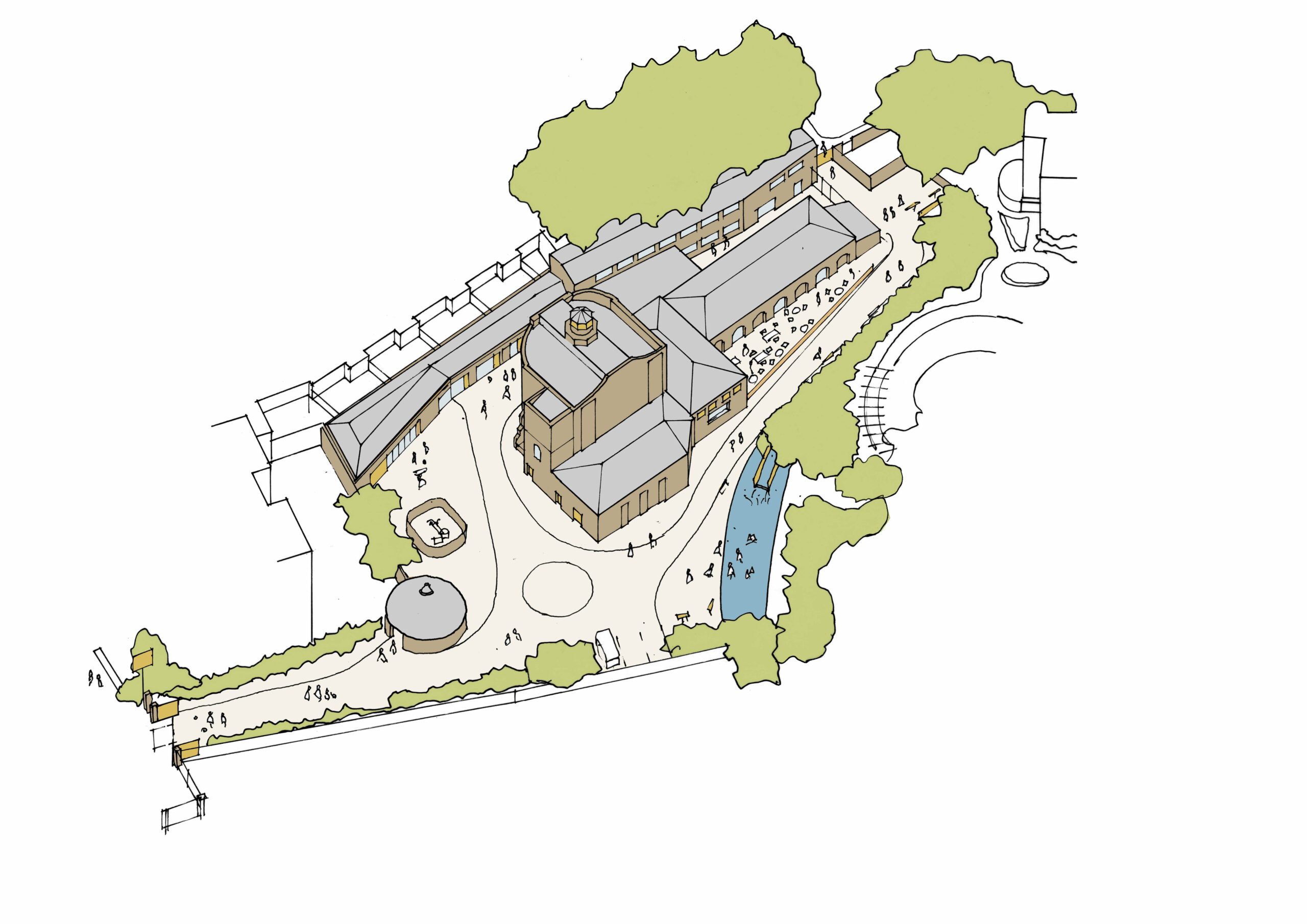
As an introduction to the walk, the following illustration is the proposed plan of the new Quentin Blake Centre for Illustration.
Quentin Blake Centre for Illustration

Credit: Quentin Blake Centre for Illustration, Tim Ronalds Architects

In the above plan, the round building to the lower left is the base of the early windmill. I took the following photo of the building on a recent visit:

Quentin Blake Centre for Illustration

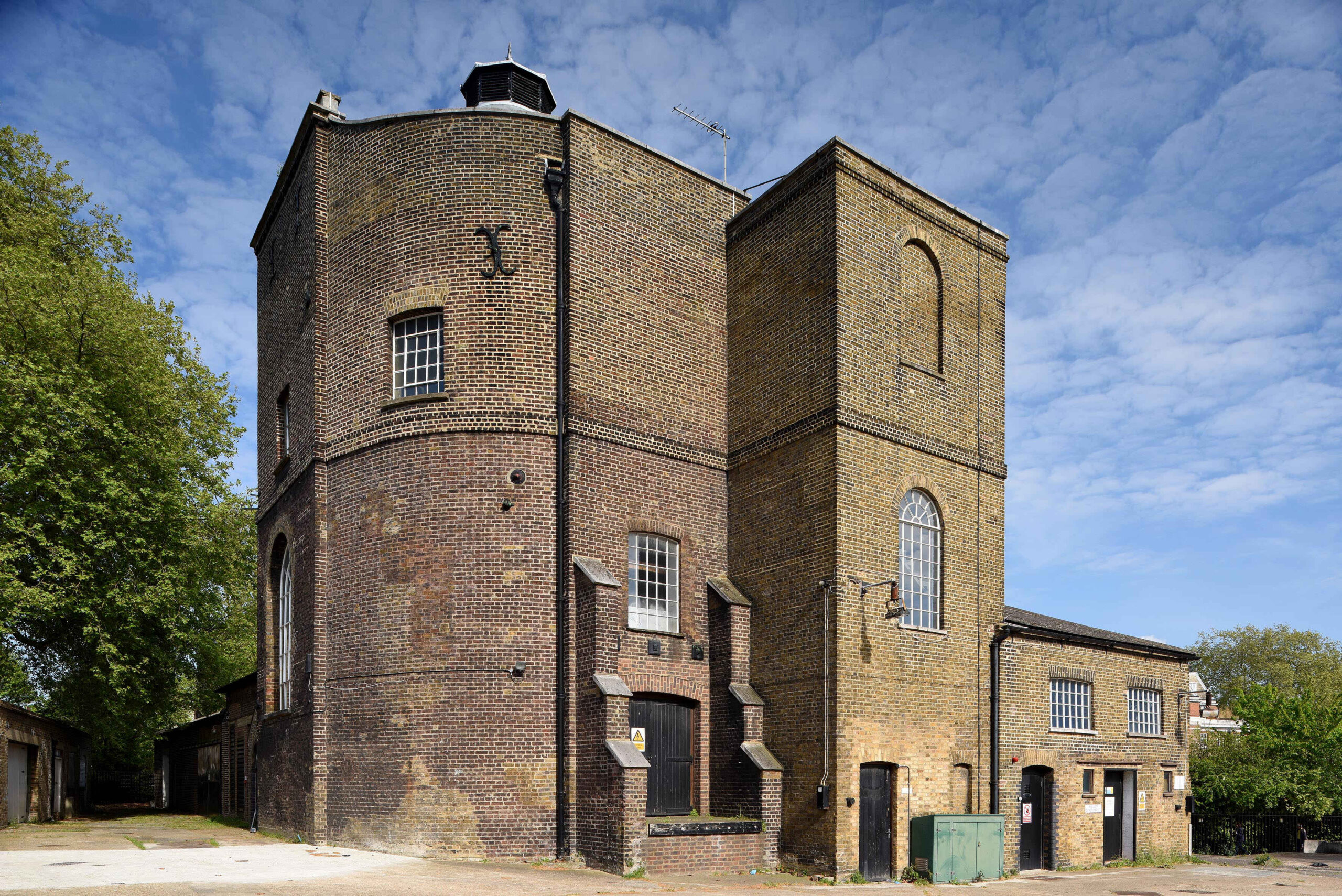
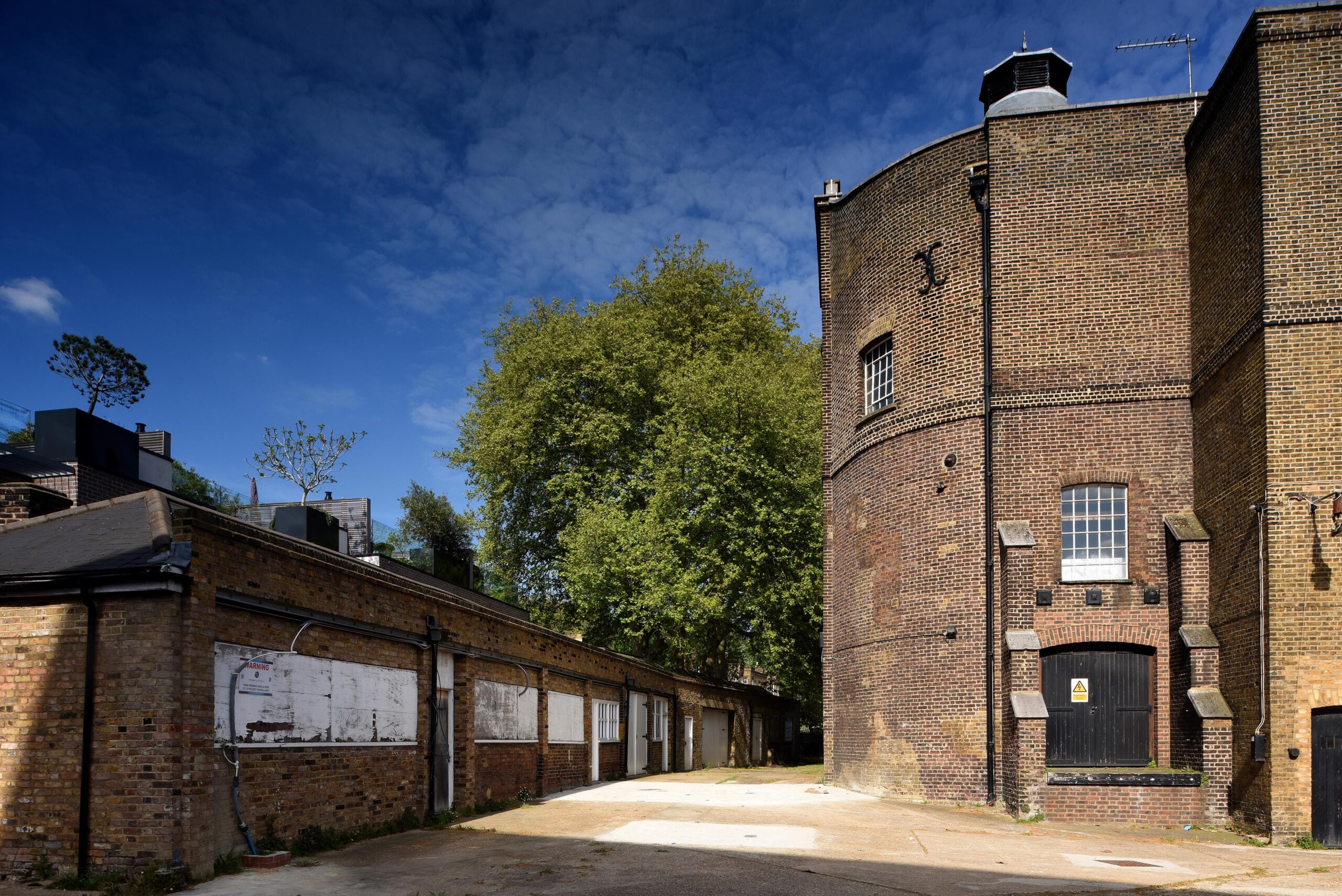
The large building to the right is the old engine house. The interior will not be open for the visit as it is currently difficult to navigate, however we will walk around the outside of the building and talk about the part the engine house played in the development of New River Head and London’s water supply, along with the future of the site.
Quentin Blake Centre for Illustration

Credit: New River Head © Justin Piperger

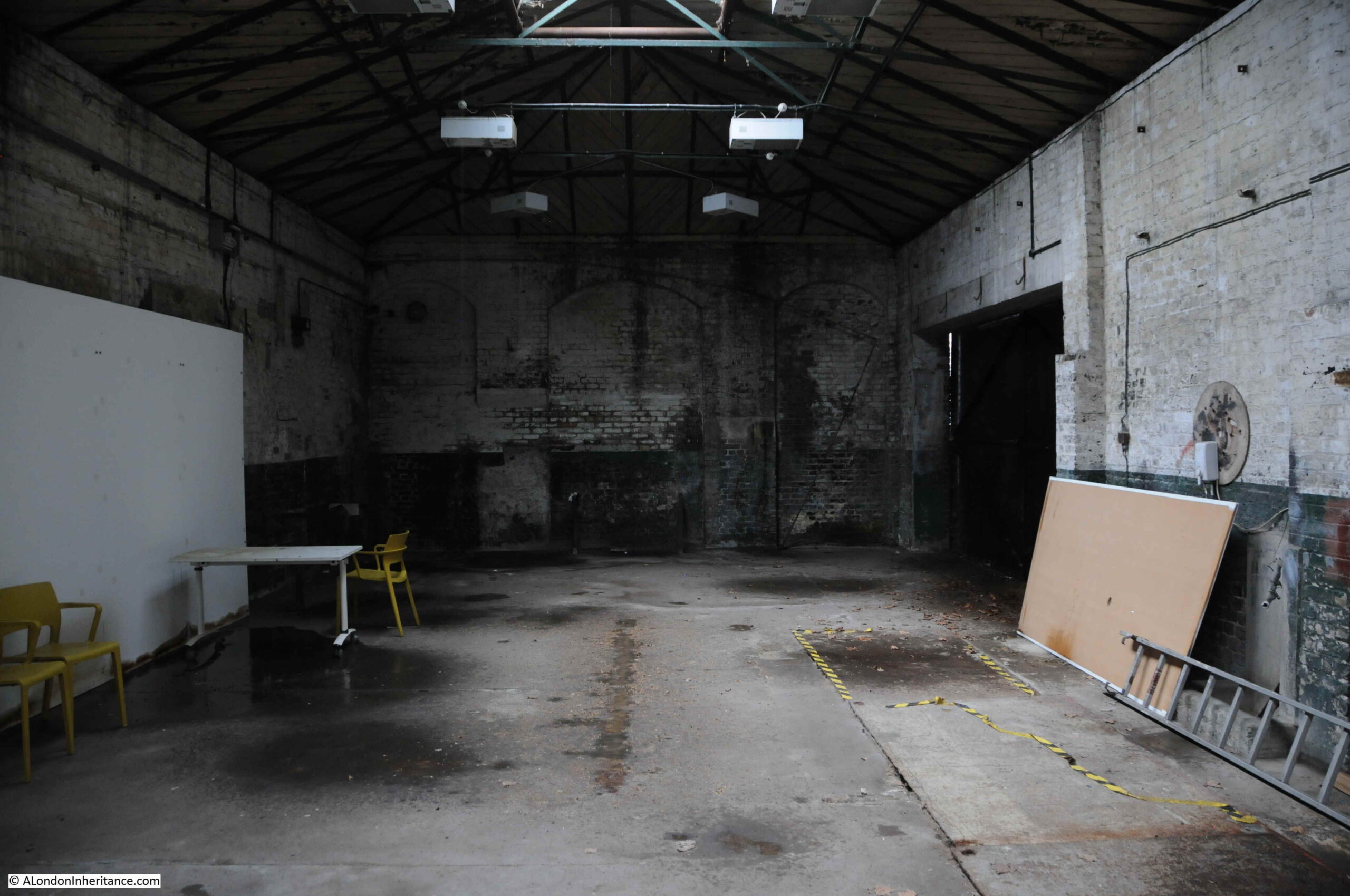
The old coal store forms the longer building to the right, and will be open during the visit:
Quentin Blake Centre for Illustration

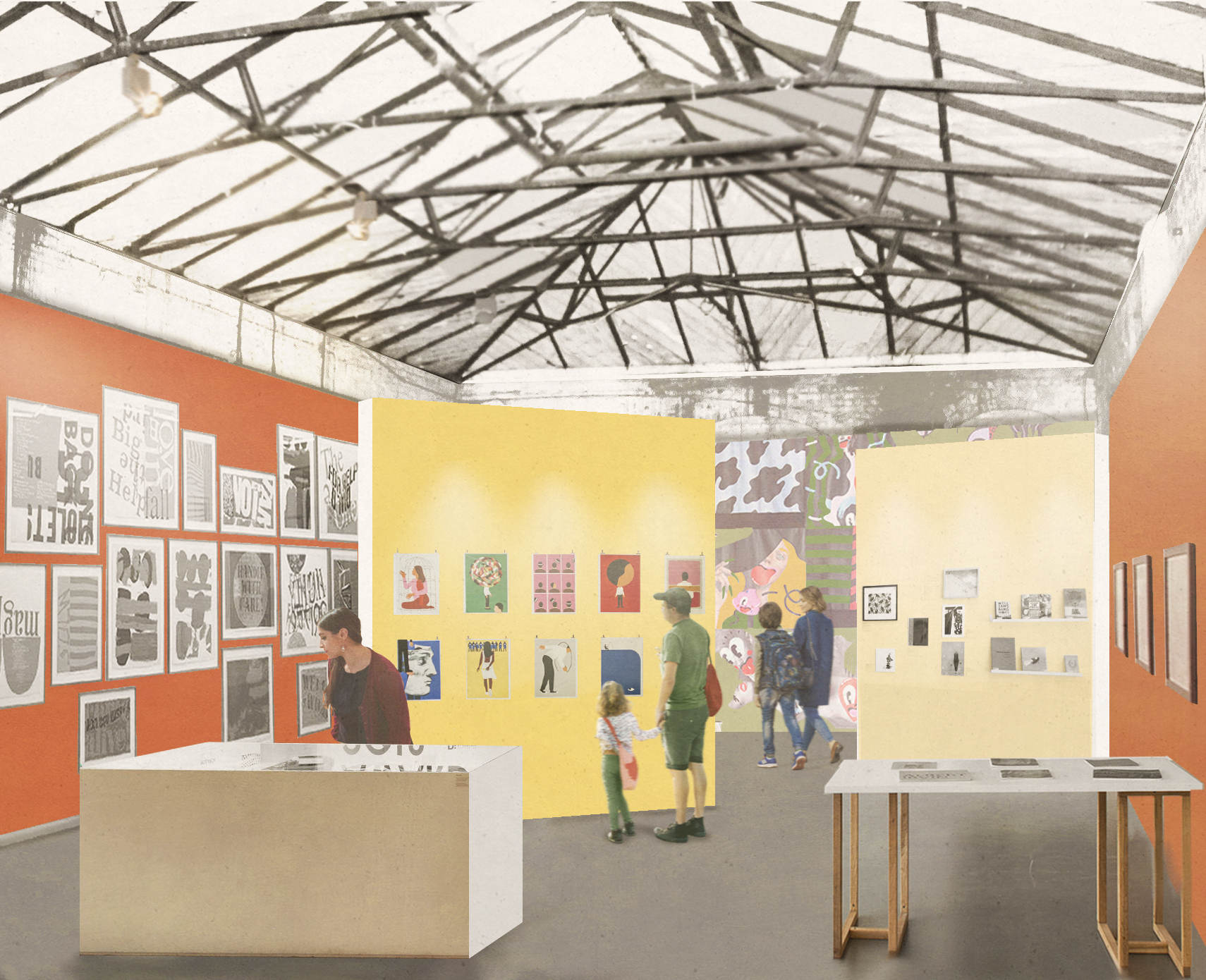
As can be seen from the following illustration, when transformed to a new exhibition area, the fabric of the building will retain its industrial heritage:
Quentin Blake Centre for Illustration

Credit: Quentin Blake Centre for Illustration, Tim Ronalds Architects, Prospective Gallery

The location for the new Quentin Blake Centre for Illustration is at a place that played a key part in the supply of clean water for London’s growing population for a considerable period of time.

The New River and reservoirs at New River Head were the first serious attempt at bringing significant volumes of water into London from a distance, and avoiding the need to draw water from the Thames, which by the end of the 16th century was not exactly a healthy source of drinking water.

The New River dates to the start of the 17th century, a time when there was a desperate need for supplies of clean water to a rapidly expanding city. Numerous schemes were being proposed, and the build of the New River tells the story of how the City of London, Parliament, the Crown and private enterprise all tried to gain an advantage and ownership of significant new infrastructural services, the power they would have over the city, and the expected profits.

The New River proposal was for a man-made channel, bringing water in from springs around Ware in Hertfordshire (Amwell and Chadwell springs) to the city. A location was needed outside the city where water from the New River could be stored, treated and then distributed to consumers across the city.

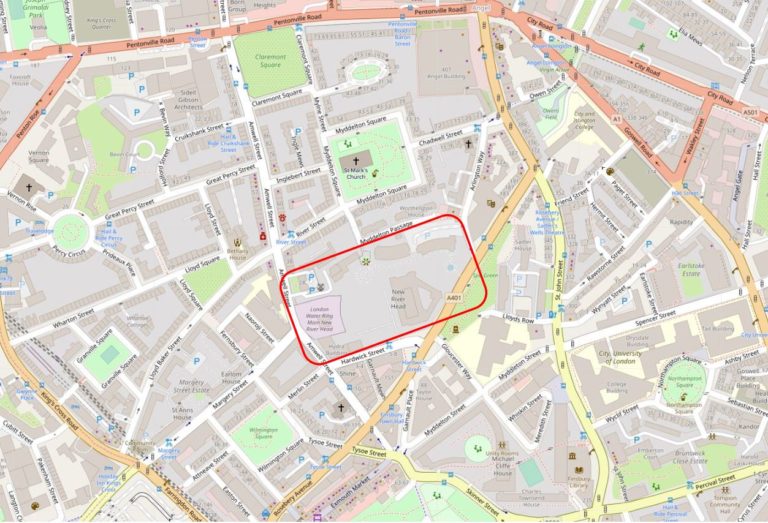
The site chosen, called New River Head, was located between what is now Rosebery Avenue and Amwell Street. The red rectangle on the following map shows the area occupied by New River Head (Map © OpenStreetMap contributors).
Quentin Blake Centre for Illustration

The story of the New River dates back to 1602 when a former army officer from Bath, Edmund Colthurst who had served in Ireland, proposed a scheme to bring in water from Hertfordshire springs to a site to the north of the city.

As a reward for his military service, he was granted letters patent from King James I, to construct a channel, six feet wide, to bring water from Hertfordshire to the city.

Colthurst’s was not the only scheme for supplying water to the city. There were a number of other private companies, and the City of London Corporation was looking at similar schemes to bring in water from the River Lea and Hertfordshire springs.

Whilst Colthurst’s project was underway, the City of London petitioned parliament, requesting that the City be granted the rights to the water sources and for the construction of a channel to bring the water to the city.

In 1606 the City of London was successful when parliament granted the City access rights to the Hertfordshire water, a decision which effectively destroyed Colthurst’s scheme, which collapsed after the construction of 3 miles of the river channel.

It was an interesting situation, as Colthurst had the support of the King, through the letters patent he had been granted, whilst the City of London had the support of parliament.

The City of London took a few years deciding what to do with the water rights granted by parliament, and in 1609 granted these rights to a wealthy City Goldsmith, Hugh Myddelton. He was a member of the Goldsmiths Company, an MP (for Denbigh in Wales), and one of his brothers, Thomas Myddelton was a City alderman and would later become Lord Mayor of the City of London, so Myddelton probably had all the right connections, which Colthurst lacked.

Colthurst obviously could see how he had been outflanked by the City, so agreed to join the new scheme, and was granted shares in the project. Colthurst joining the City of London’s scheme thereby uniting the rights granted by James I and parliament.

Work commenced on the New River in 1609, but swiftly ran into problems with owners of land through which the New River would pass, objecting to the work, and the loss of land. A number of land owners petitioned Parliament to repeal the original acts which had granted the rights to the City, however when James I dissolved Parliament in 1611, the scheme was given three years to complete construction and find a way to overcome land owners objections, as Parliament would not be recalled until 1614.

There were originally 36 shares in the New River Company. Myddleton had decided to enlist the support of James I to address the land owners objections, and created an additional 36 new shares and granted these to James I who would effectively own half the company.

in return, James I granted the New River Company the right to build on his land, he covered half the costs, and Royal support influenced the other land owners along the route, removing their objections, as any further attempts to hinder the work would result in the king’s “high displeasure”.

The New River was completed in 1613. It was a significant engineering achievement. Although the straight line distance between the springs around Ware and New River Head was around 20 miles, the actual route was just over 40 miles, as the route followed the 100 foot height contour to provide a smooth flow of water, resulting in only an 18 foot drop from source to end.

The New River Head location was chosen for a number of reasons. A location north of the city was needed to act as a holding location, from where multiple streams of water could then be distributed through pipes across the wider city.

The location sat on London Clay, rather than the free draining gravel found further south in Clerkenwell, and it was also a high point, with roughly a 31 meter drop down to the River Thames, thereby allowing gravity to transport water down towards consumers in the city.

The site already had a number of ponds, confirming the suitability of the land to hold water.

By the end of the 17th century, London had been expanding to the west and developement was taking place around the area now called Soho, including Soho Square.

The challenge the New Rver Company had with supplying water to London’s expanding population was down to having sufficient volumes of water available, and with maintaining water pressure.

The City of London was much lower than New River Head, and water pressure was generally good, however further to the west of the city, the land was higher, and the difference in height between places such as Soho and New River Head was insufficient to provide a good supply to new developments.

This is when the windmill appeared. The New River Company built a new reservoir at Claremont Square, towards Pentonville Road. This new reservoir provided extra storage capacity, and was also higher than New River Head, thereby able to deliver water at greater pressure.

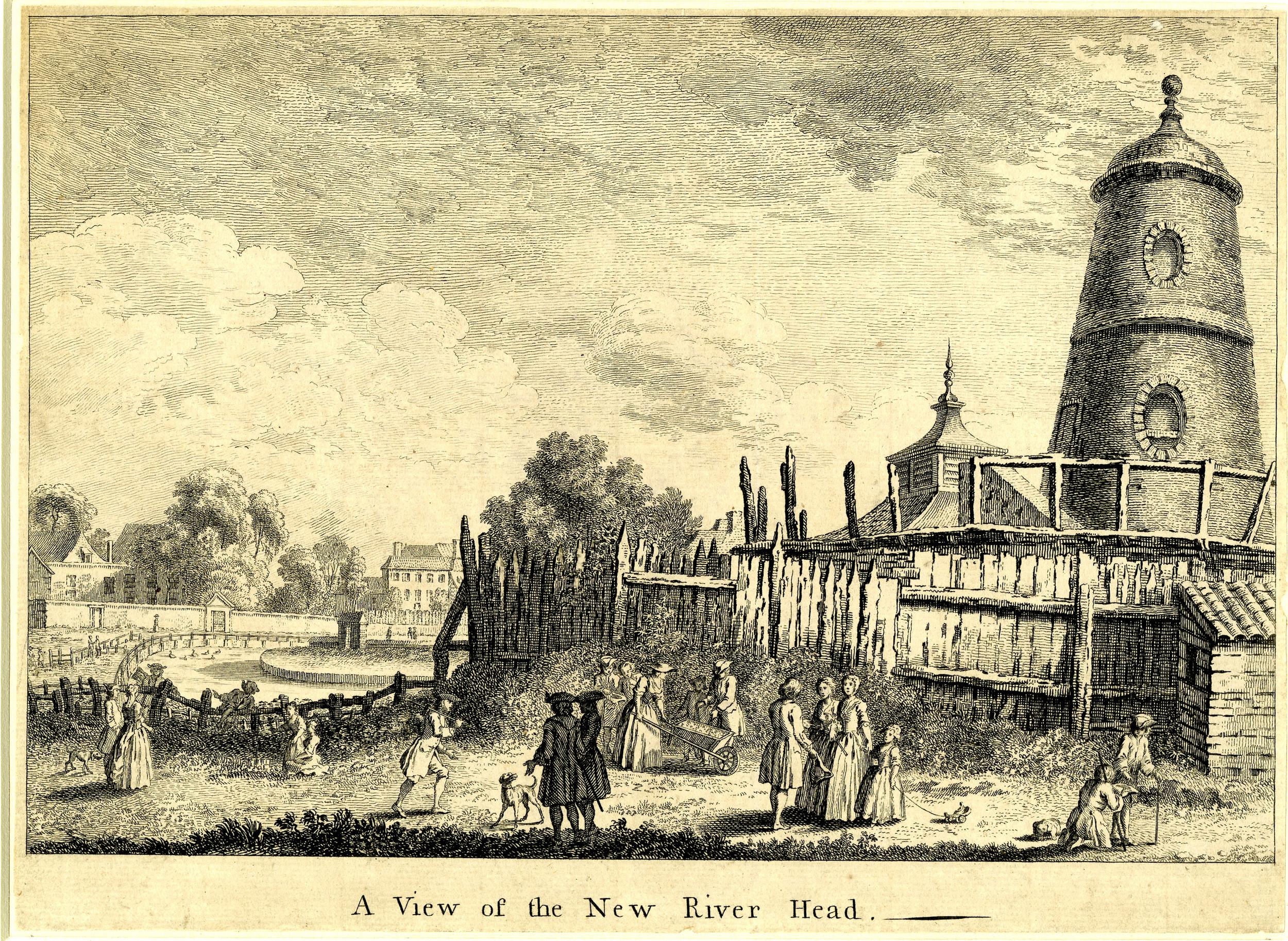
A method was needed to pump water to the new reservoir and the method chosen was a windmill. This was in operation by 1709, but was never very efficient and the top of the windmill was severely damaged by a storm in 1720. Newspaper reports of the storm refer to “the upper part, quite to the brickwork, was blown of the Windmill at New River Head”

The storm also damaged large numbers of ships anchored in the Thames, and: “The Horse-Ferry boat, that passed to and fro from Greenwich to the Isle of Dogs was lost and is not yet found, and the Storm was so violent as to lay the Isle of Dogs under Water by the beating of Water over the Banks”

The following print shows the windmill in the 1740s with the sails and top section missing after the storm  (© The Trustees of the British Museum):
Quentin Blake Centre for Illustration

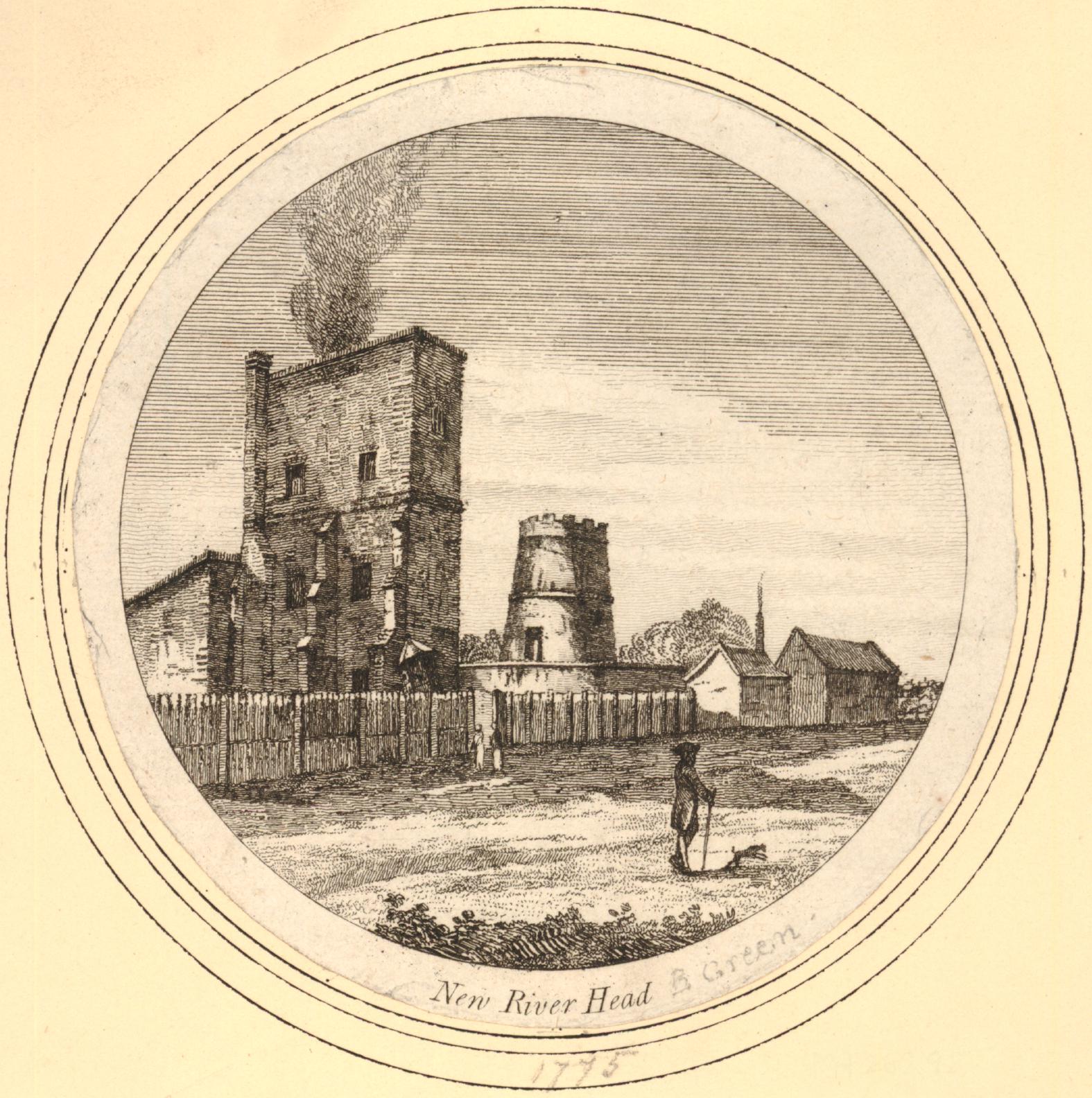
By 1775, the top of the windmill appears to have been castellated. The first engine house is in operation to the left. The engine house replaced the windmill and later horse power by providing the power for the pumps.  (© The Trustees of the British Museum):
Quentin Blake Centre for Illustration

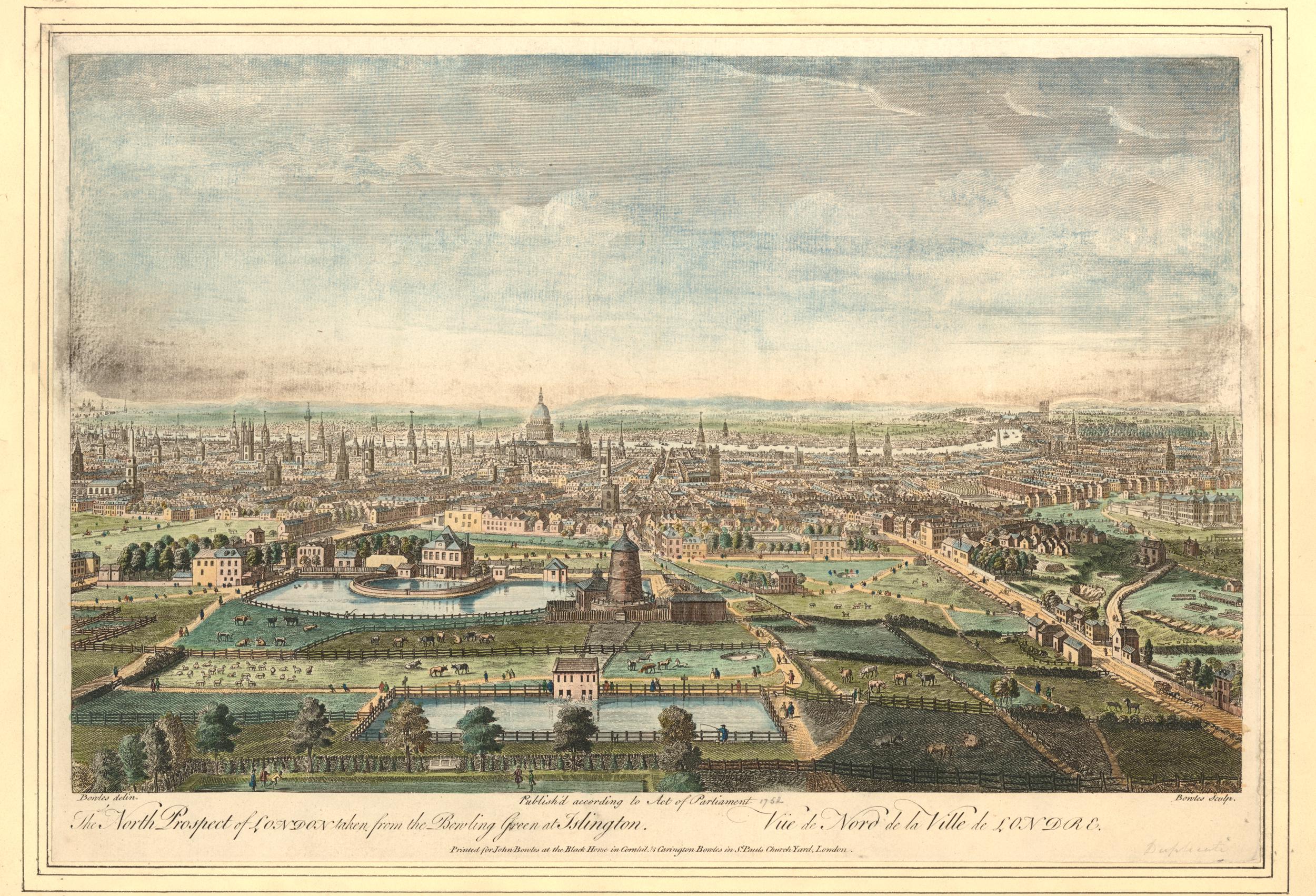
The following print from 1752 shows the New River Head complex with the remains of the windmill after the 1720 storms  (© The Trustees of the British Museum).
New River Head

To the lower left of the windmill is a small building that would have housed the horse-gin, used between the storm and the installation of the steam engine to power the pumps, pumping water to the reservoir which can be seen in the lower part of the view.

If you look closely between the reservoir and the windmill, you can see what appears to be a couple of pipes running between the windmill and a building on the edge of the reservoir from where water is pouring into the reservoir.

Although now reduced to just the base, it is remarkable that part of the windmill has survived over 300 years, and it is the base of the windmill that we will see inside during the walk.

After the storm, a “horse gin” was employed which consisted of a small building adjacent to the windmill that provided room for a horse to walk in a circle whilst harnessed to a wheel. The rotation of the wheel was transferred to the pumps to provide the power to move water from New River Head to the higher reservoir.

Later in the 18th century, this was replaced by a steam engine. Whilst we will not be able to go into the engine house, we will walk alongside to explore the history of the building:
Quentin Blake Centre for Illustration

Credit: New River Head © Justin Piperger

Behind the engine house is a coal store used to store the fuel for the steam engines in the engine house. The following photo shows the coal store buildings on the left, with a storage area marked with dimensions on the right:

New River Head

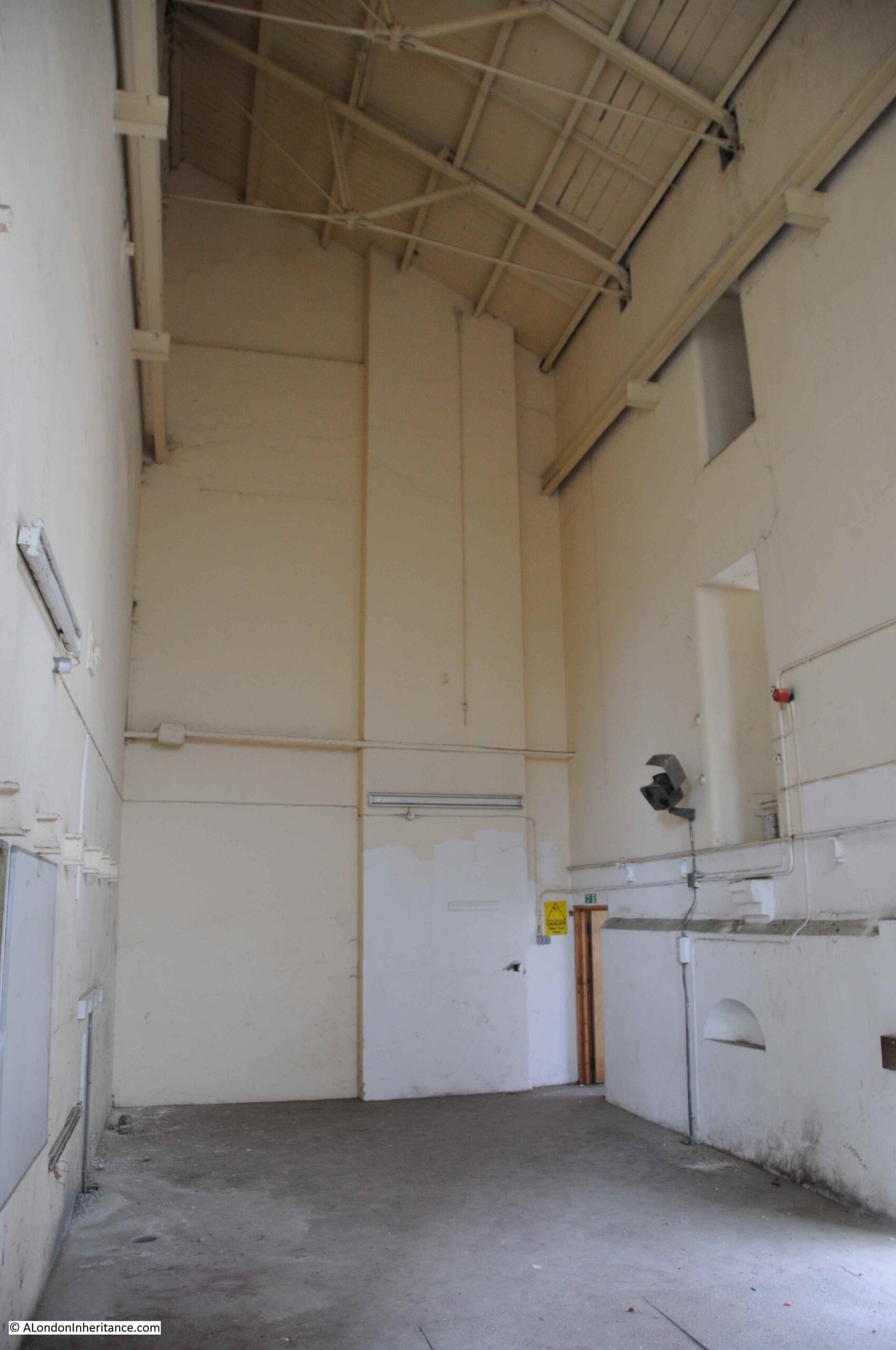
Some photos of the interior of the engine house:
New River Head
New River Head
New River Head
New River Head
New River Head

New River Head would continue to play a part in the supply of water into the 20th century.

Reservoirs eventually built at Stoke Newington were of the size needed for London’s ever growing population, and the New River would come to terminate at these reservoirs rather than continuing on to New River Head.

The central Round Pond was drained in 1913. The remaining filter beds had disappeared by 1946, and New River Head became the head offices of the Metropolitan Water Board, along with supporting functions including a large laboratory building.

New River Head continues to be a key part of London’s water supply with one of the shafts to the London Ring Main on the site. The shaft is one of the 12 main pump out shafts across the ring main where water is taken out and distributed locally.

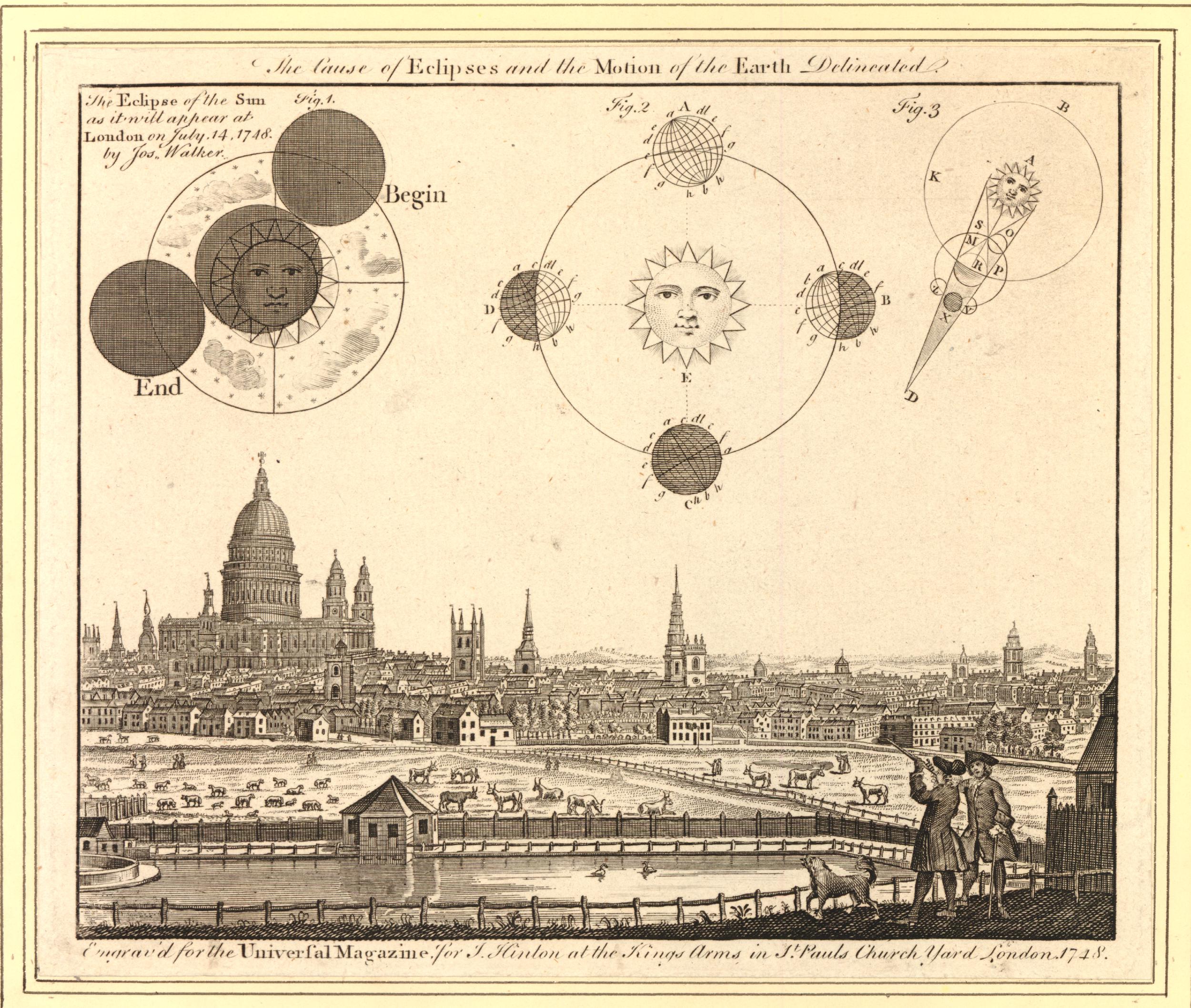
New River Head appeared in a 1748 print with astronomical drawings describing an eclipse of the sun. New River Head is at the bottom of the print, then fields and with the City in the distance  (© The Trustees of the British Museum).
New River Head

One of the two characters at bottom right is using a telescope, presumably to observe the eclipse which took place on the 14th July 1748.

The above print is the type of find that sends me searching for something that is not really related to the subject of the post, however as New River Head is in the view, there is a tenuous link.

The 1748 eclipse was an event well publicised in advance, and numerous papers published recommendations on how to view the eclipse, which sound very similar to what we would do today (apart from the candle).

1. Make a pin-hole in a piece of paper, and look through it at the eclipse. Or,

2. Hold a piece of glass so long over the flame of a candle, till it is equally blackened; and then the eclipse may be viewed through it, either with the naked eye, or through a telescope. Or,

3. Let the sun’s rays through a small hole into a darkened room, and so view the picture of the eclipse, upon a wall, or upon paper. Or,

4. Transmit the image of the sun through a telescope, either inverted, as usual on a circle of paper or pasteboard.

In London the eclipse would start at four minutes past nine in the morning and end at ten minutes past twelve. The eclipse was partly visible, however for much of the time it was obscured due to what were described as “flying clouds”.

I can guarantee that there will not be an eclipse at New River Head during the week of the walks, however the walks will provide a unique opportunity to view some of the buildings that contributed to the development of London’s water supply, learn about their future use, and to hear how water has influenced the development of Islington.
The walks can be booked here.

alondoninheritance.com

Euston Station and HS2 – A 2021 Update

For the past four years, I have written an annual post on the work around Euston to create the extension to the station for HS2, recording the area from before work started to at some point in the future, when the new station will be operational.

My first post was back in 2017 and covered St James Gardens, just before they were closed for excavation.
My second post in 2018 walked around the streets to the west of the station, as buildings began to close, and the extent of the works could be seen.
I then went back in 2019 as demolition started.
In 2020, demolition was well underway and St James Gardens had disappeared, and the associated archaeological excavation had finished

One year on, and in 2021, the majority of the buildings in the surrounding streets have now been demolished, and work has extended to the west of Hampstead Road, along with the grounds between Euston Station and Euston Road. Walking the area now provides an indication of just how large an area is being developed for HS2’s London terminus at Euston station.

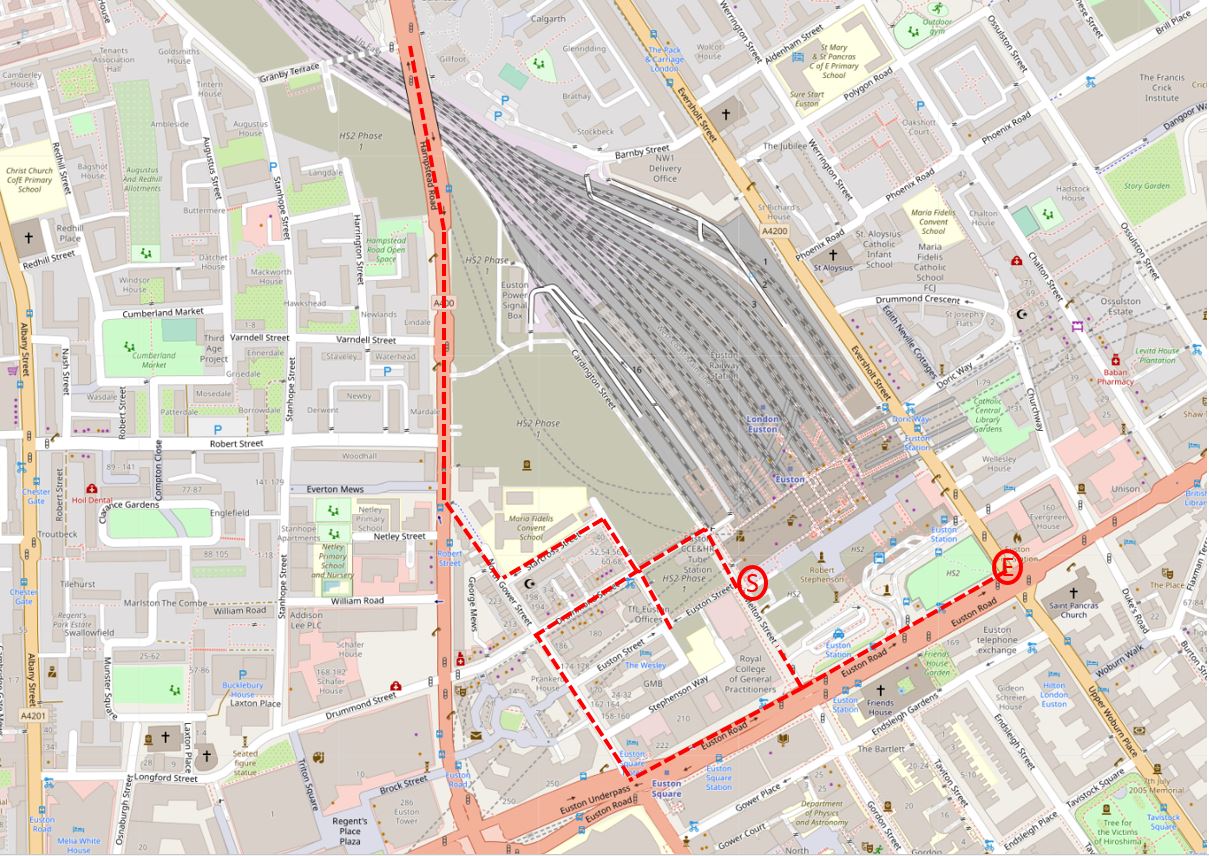
So for 2021’s update, in today’s post are some of the photos from a walk through the area that will become Euston’s new HS2 station, following the route shown in the following map (Map © OpenStreetMap contributors).

Euston Station and HS2

This is the view looking west from point S in the above map, at the south western corner of the station.

Euston Station and HS2

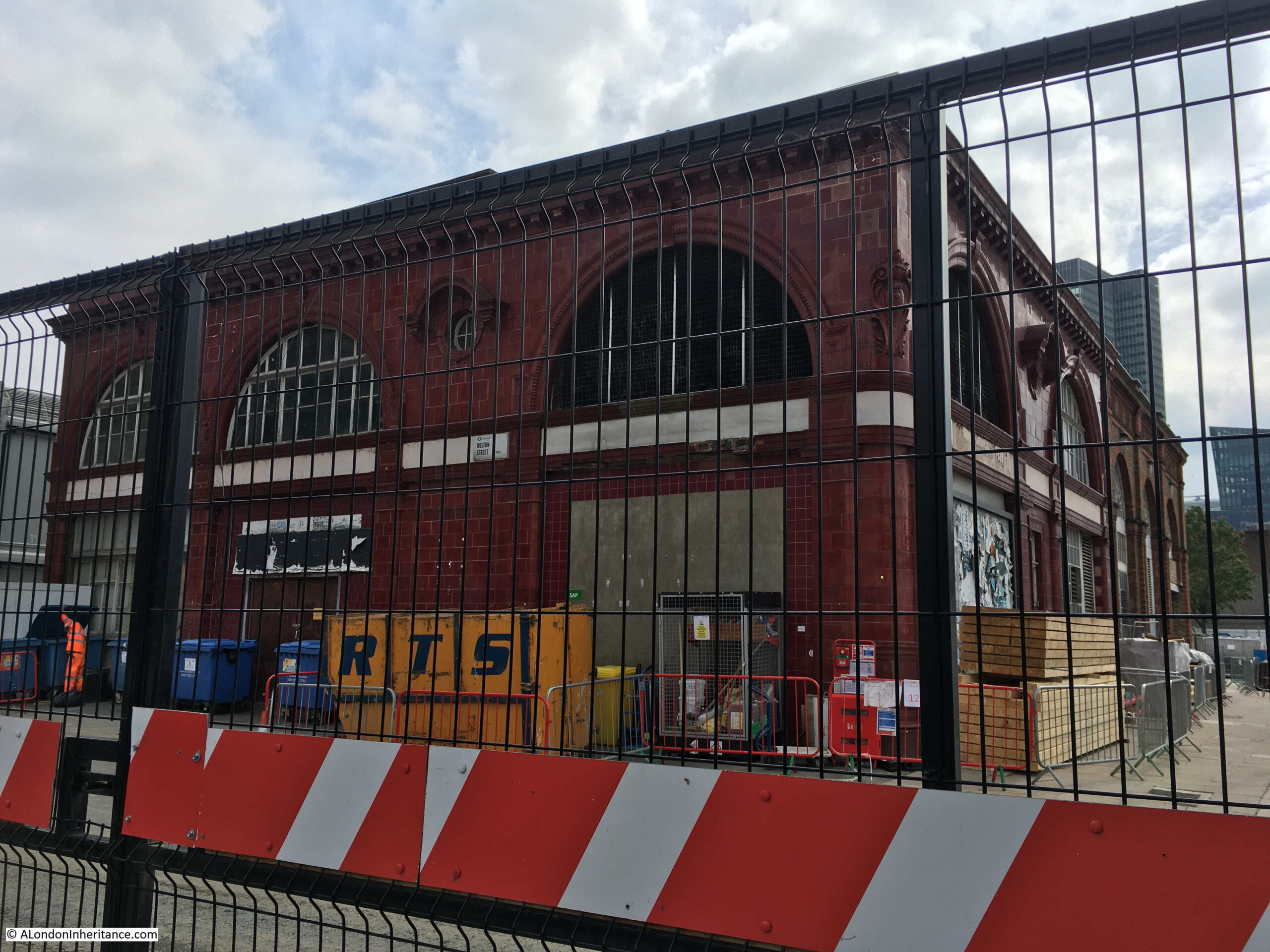
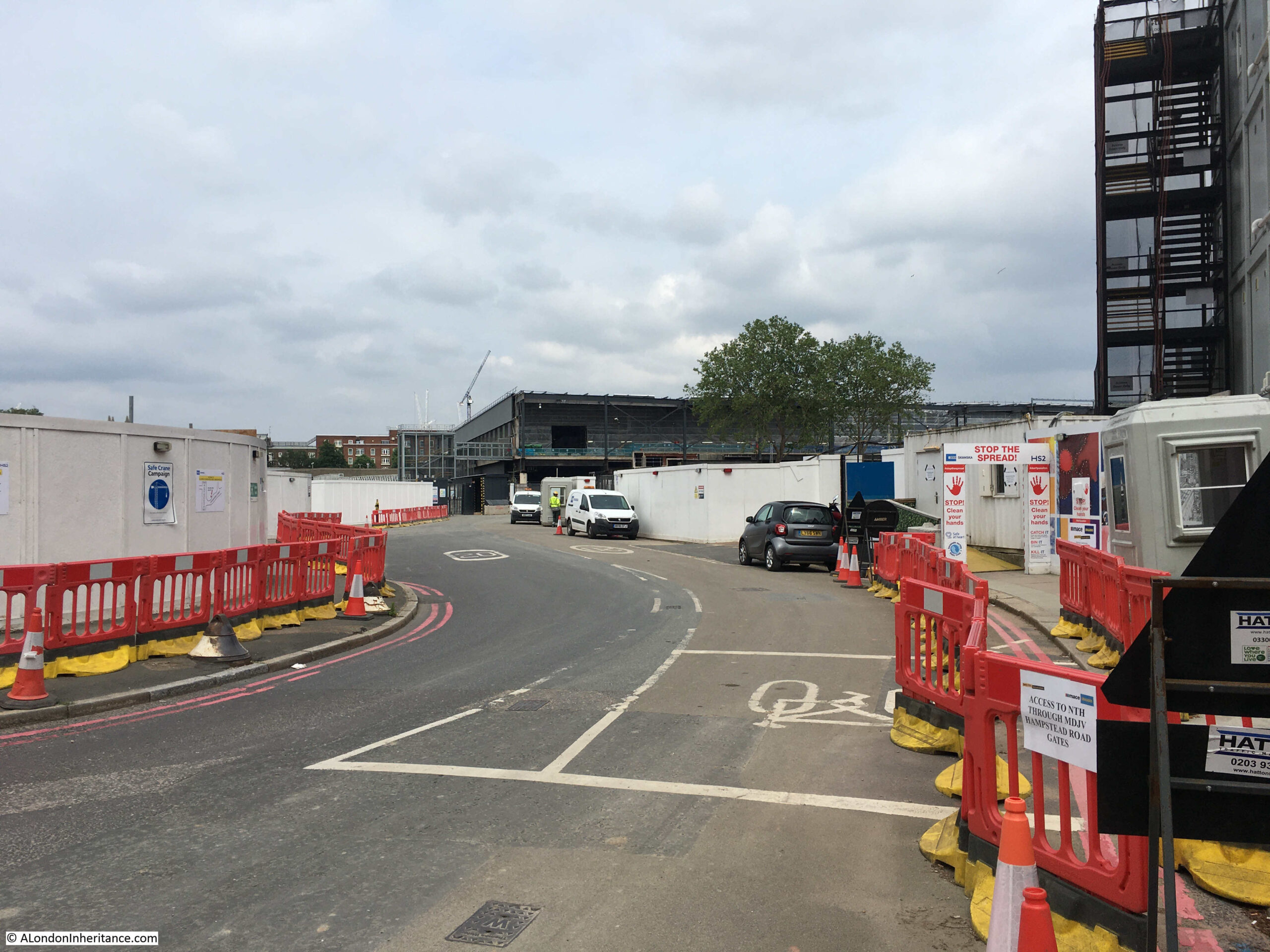
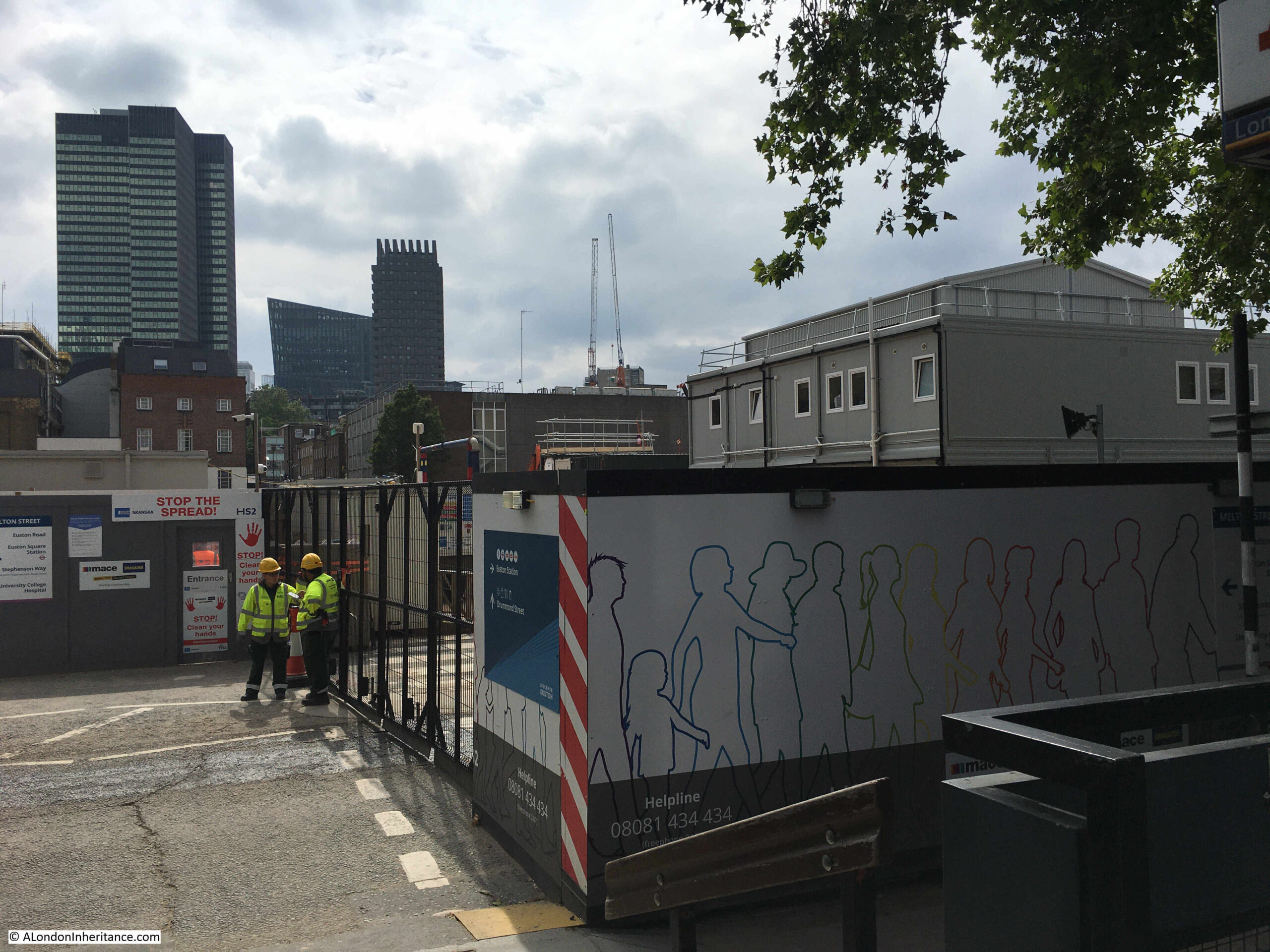
The road in the foreground is what was Melton Street, which now provides one of the access routes into the works.

From this point, there are a couple of pedestrian walkways that have been created through the site:

Euston Station and HS2

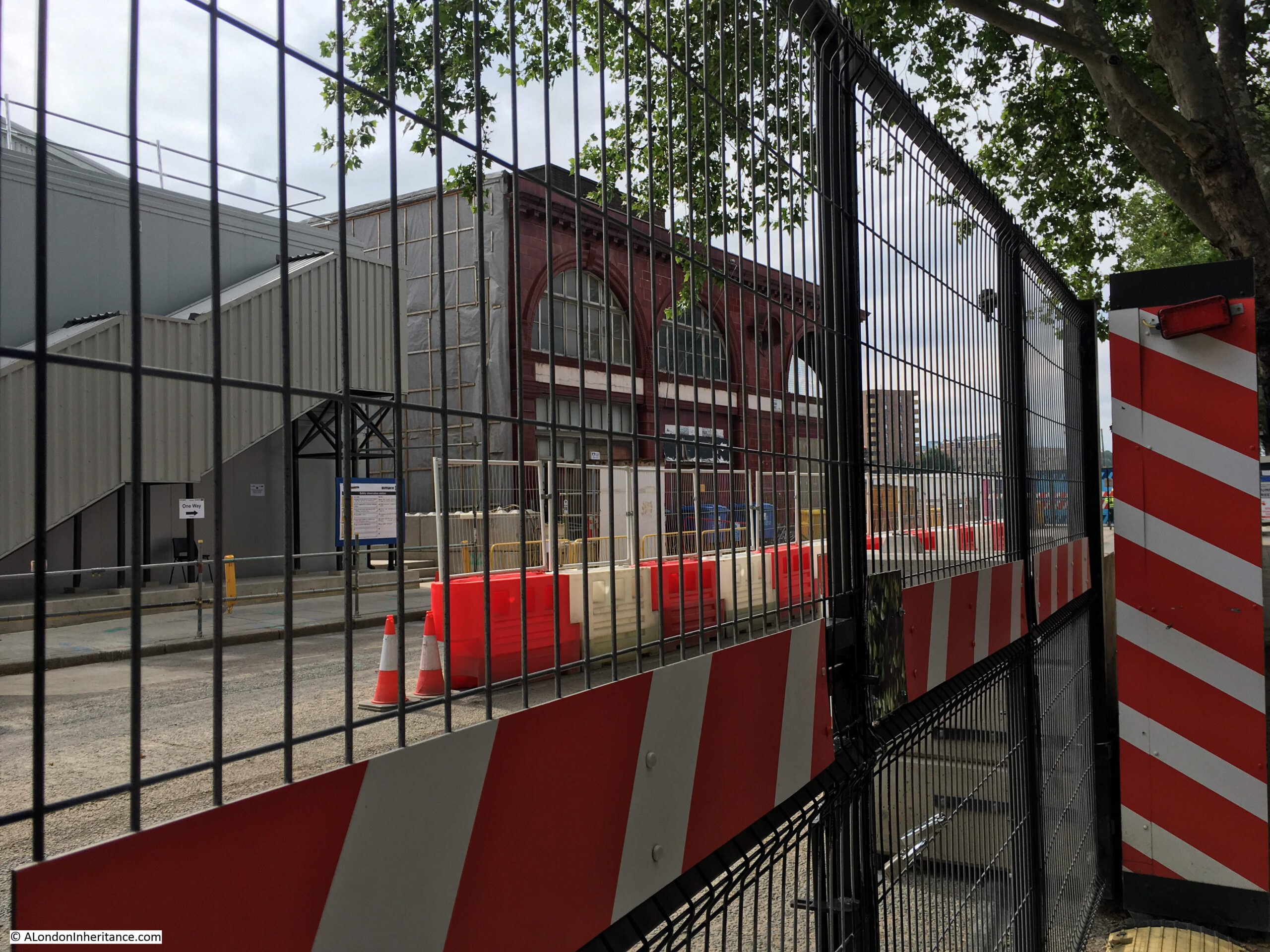
I turned right to head towards Drummond Street. The following photo is looking along the closed Melton Street. The old Euston Underground station of Leslie Green’s distinctive design is the one remaining building on the corner of Melton Street and Drummond Street.

Euston Station and HS2

View across Melton Street to the left of the above photo:

Euston Station and HS2

Here is the turning which takes you across Melton Street to Drummond Street:

Euston Station and HS2

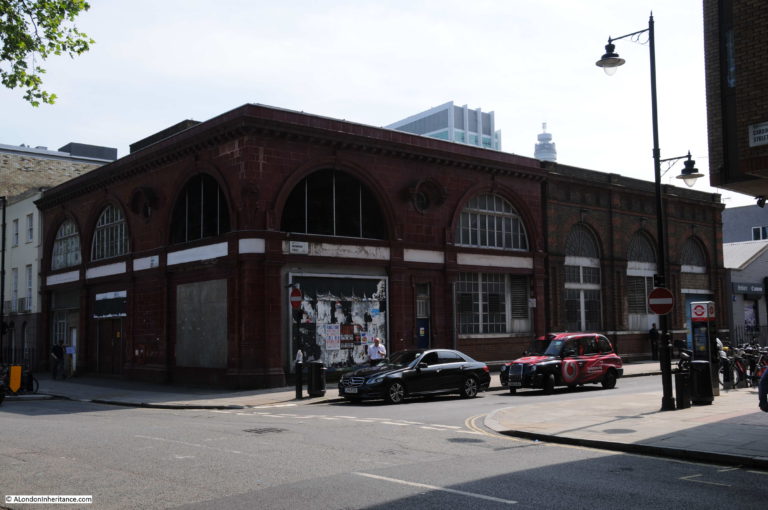
The old underground station:

Euston Station and HS2

This was the station back in 2016, on the day I went on a Hidden London tour to visit the closed tunnels below the station. You can read my post of the visit here.

Euston Underground Station

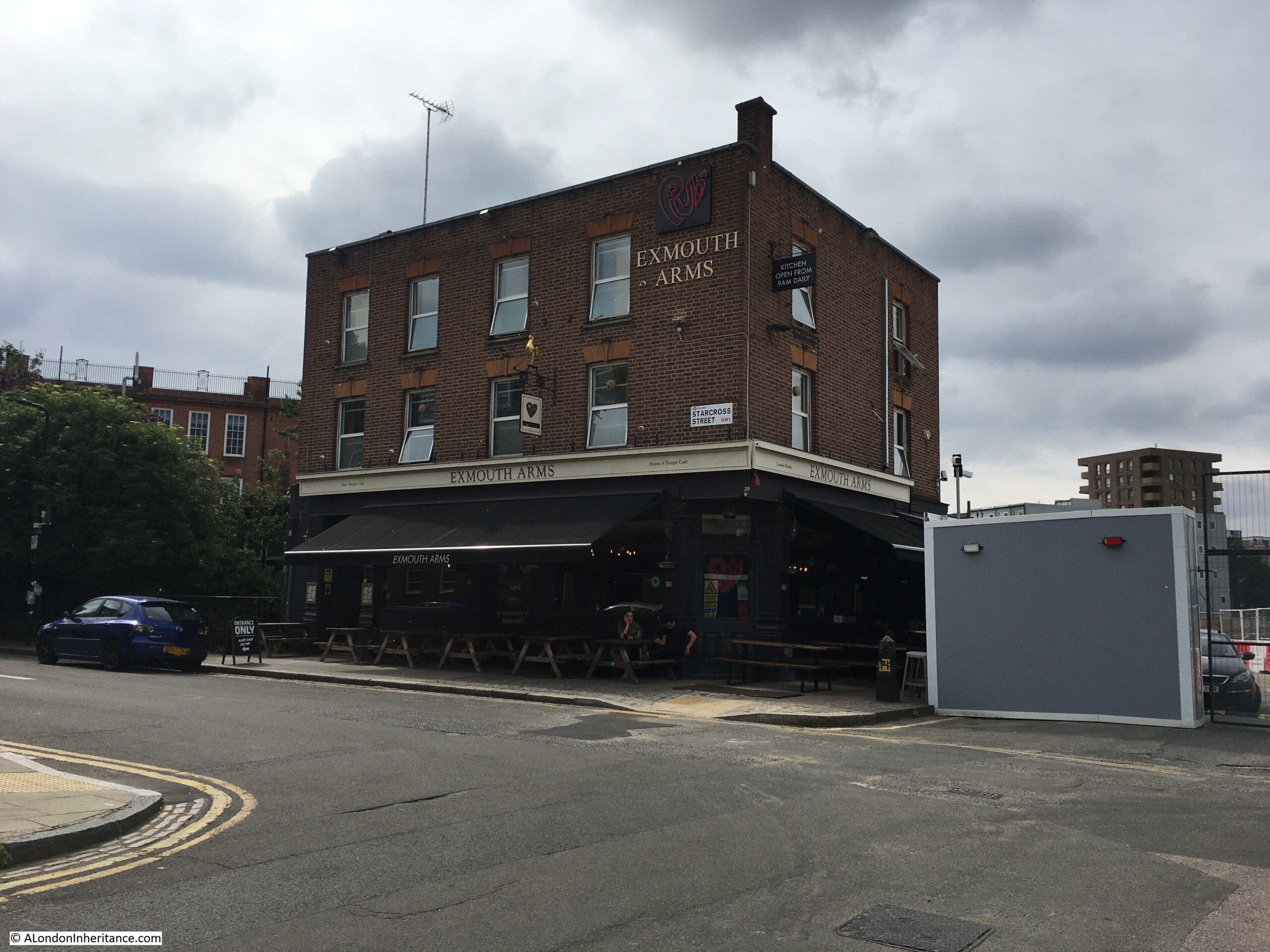
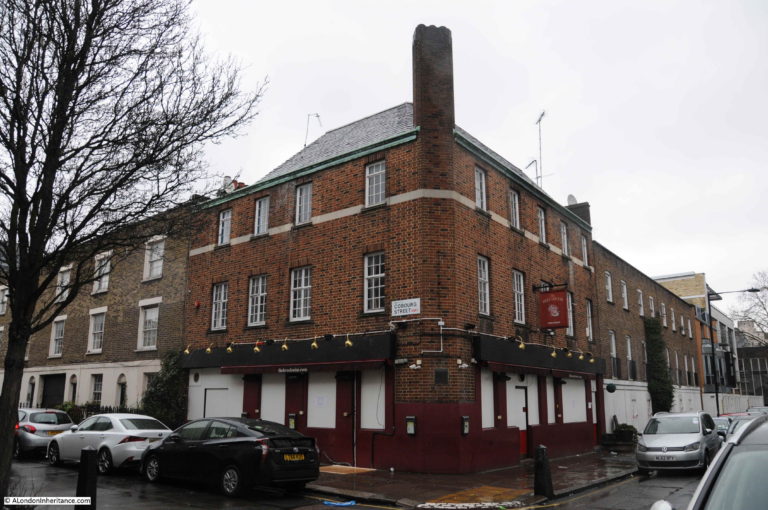
Into Cobourg Street and the Exmouth Arms is still open, on the edge of the construction site.

Exmouth Arms

Another access gate at the end of Cobourg Street:

Euston Station and HS2

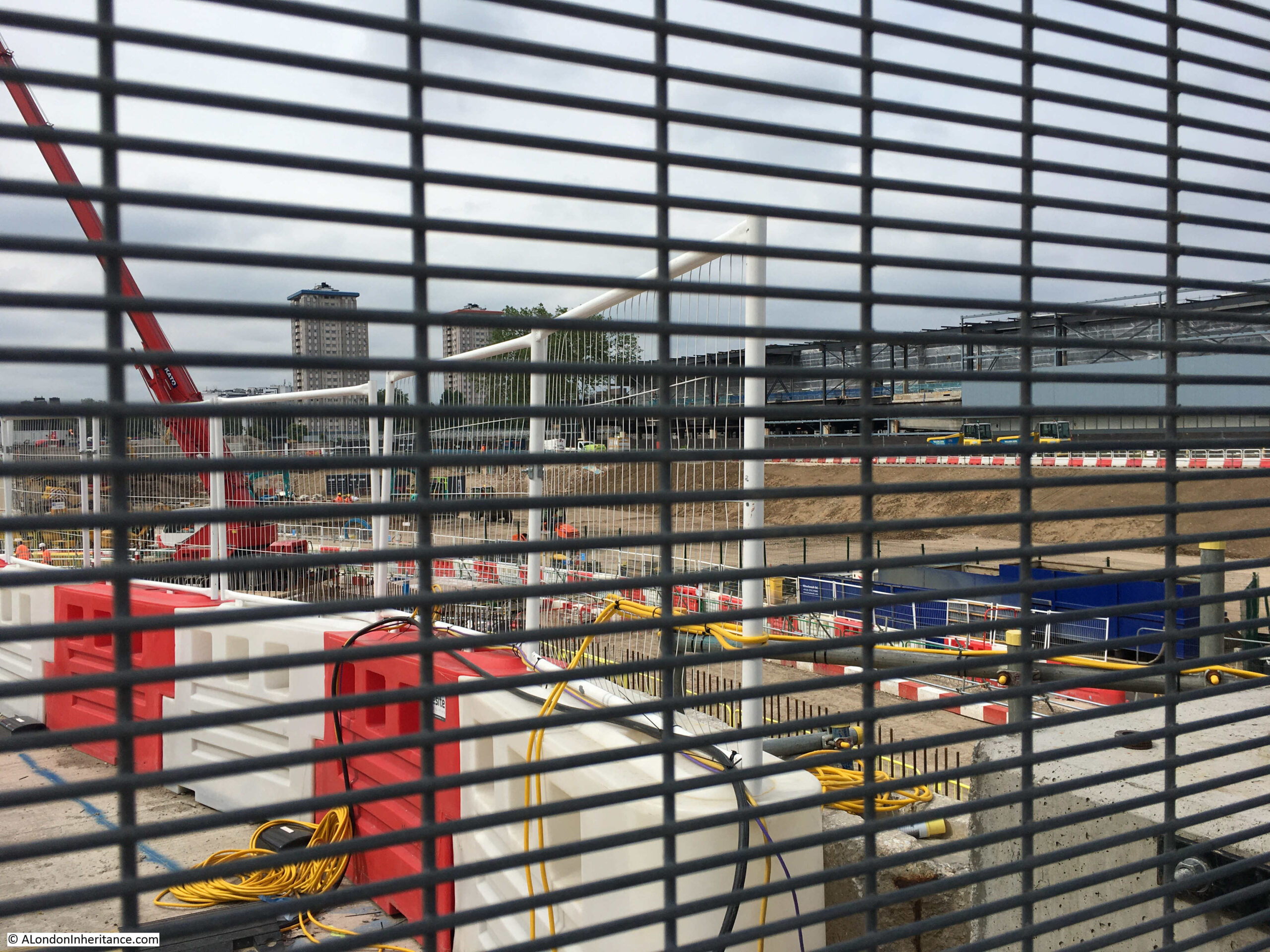
From where we can look out over what was St James Gardens, which is now a large hole:

Euston Station and HS2

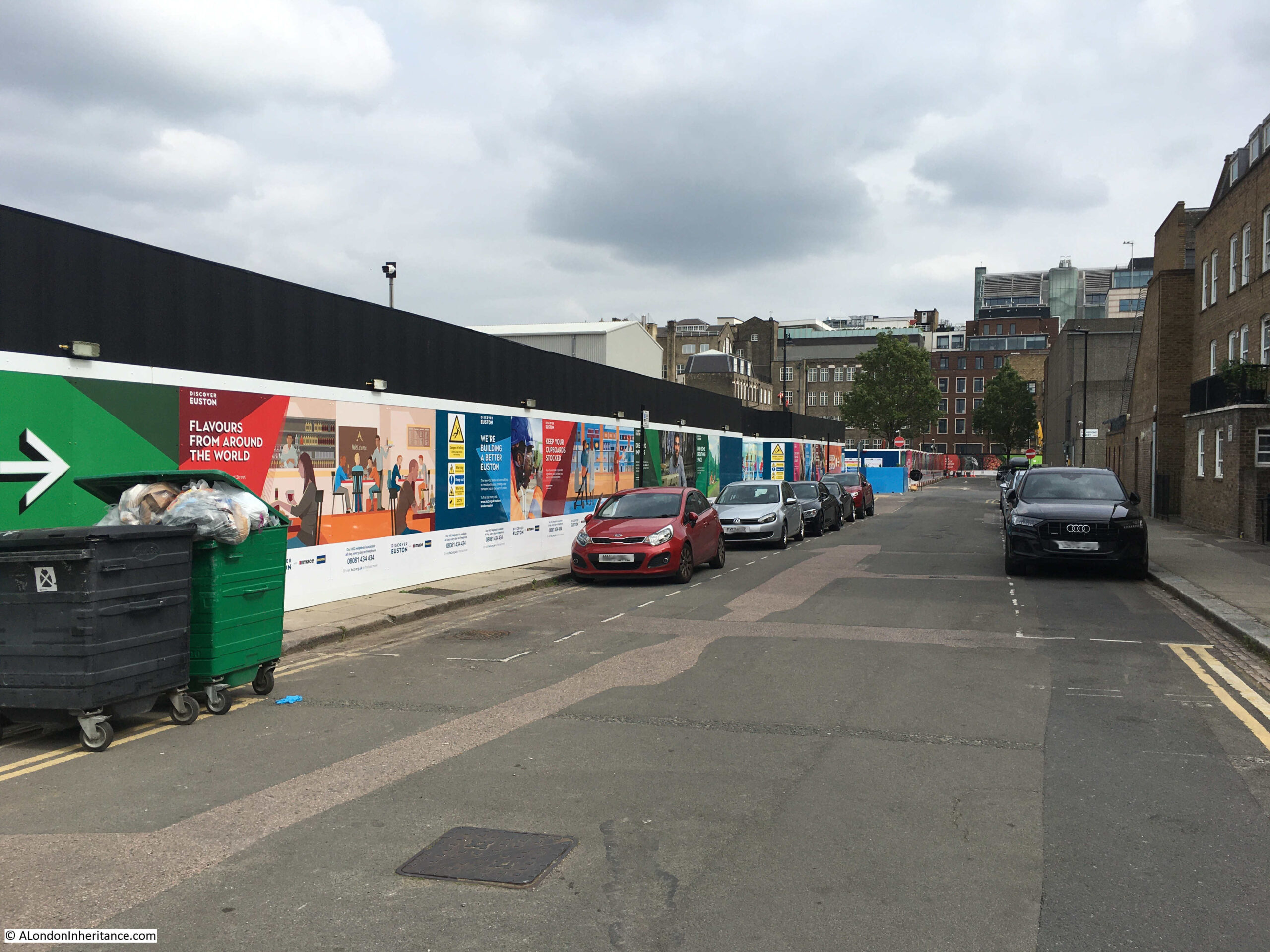
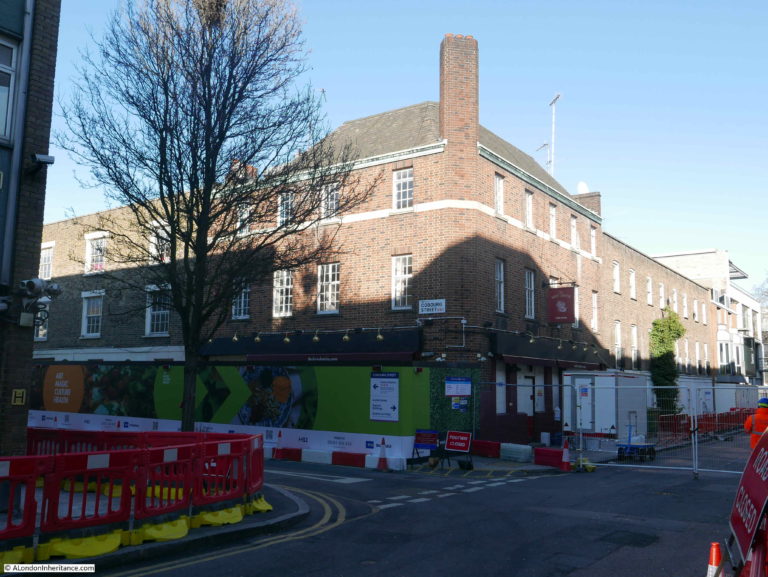
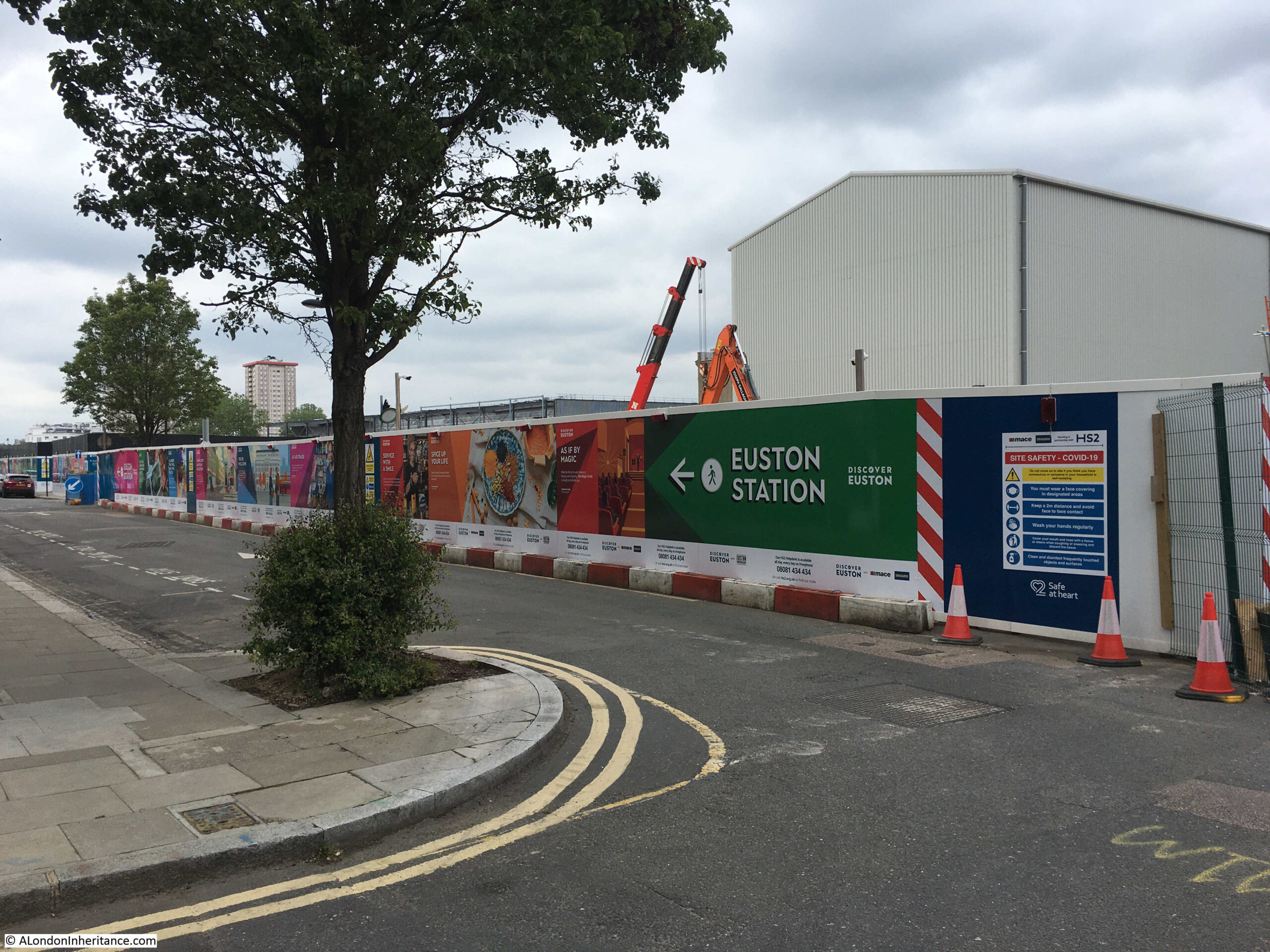
View back along Cobourg Street showing on the left the large and continuous hoardings that have been erected along the edge of the construction site:

Euston Station and HS2

I cut through to the Hampstead Road and started walking north. This is the junction of Cardington Street with Hampstead Road:

Euston Station and HS2

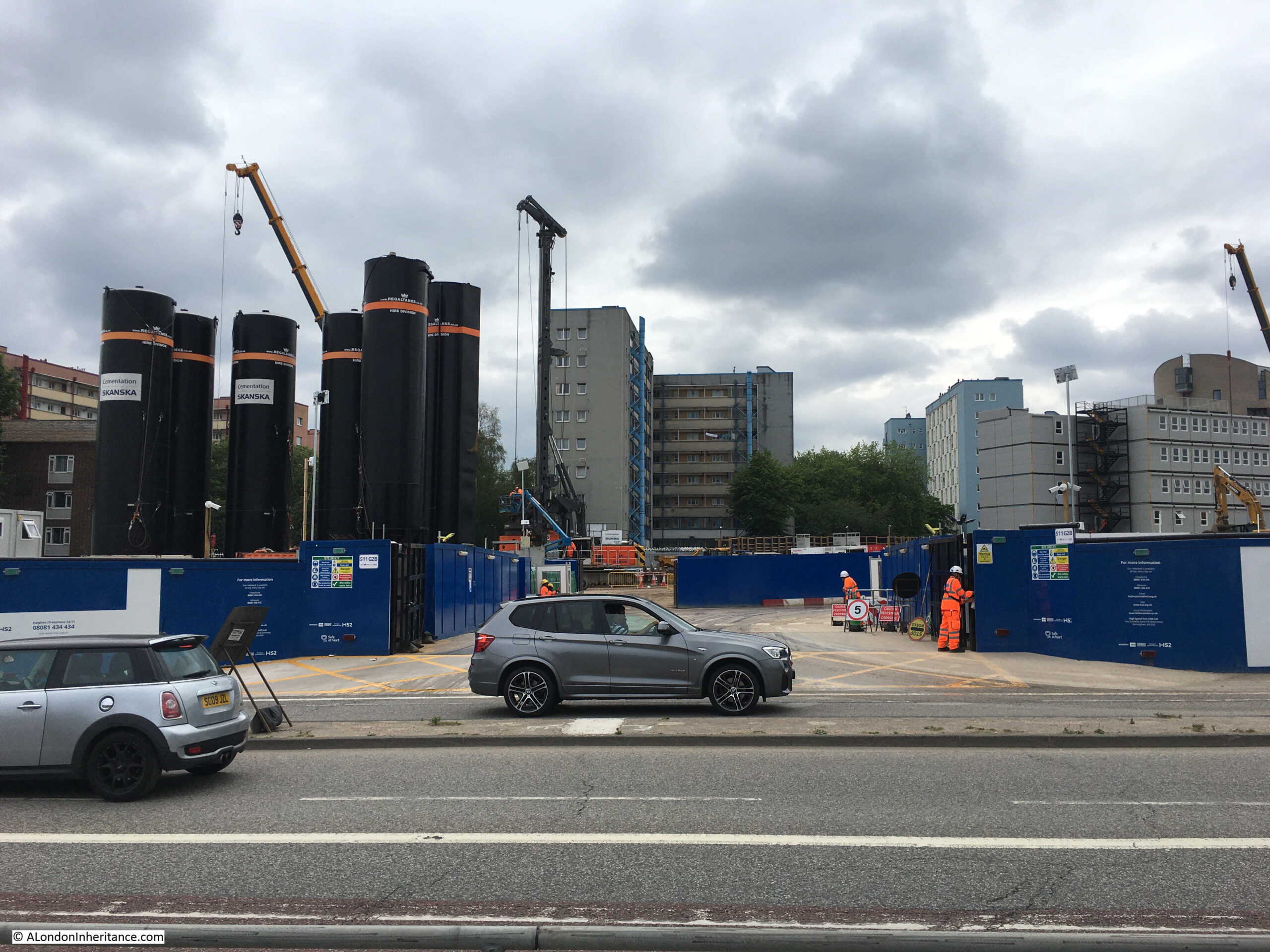
Walking further north along Hampstead Road and the area to the left of the street, south of the rail lines out of Euston are now another major construction site:

Euston Station and HS2

Work had not started here back in February 2020, and now demonstrates how large an area is being covered by the work to create the new Euston Station and HS2. The entrance to the new work area:

Euston Station and HS2

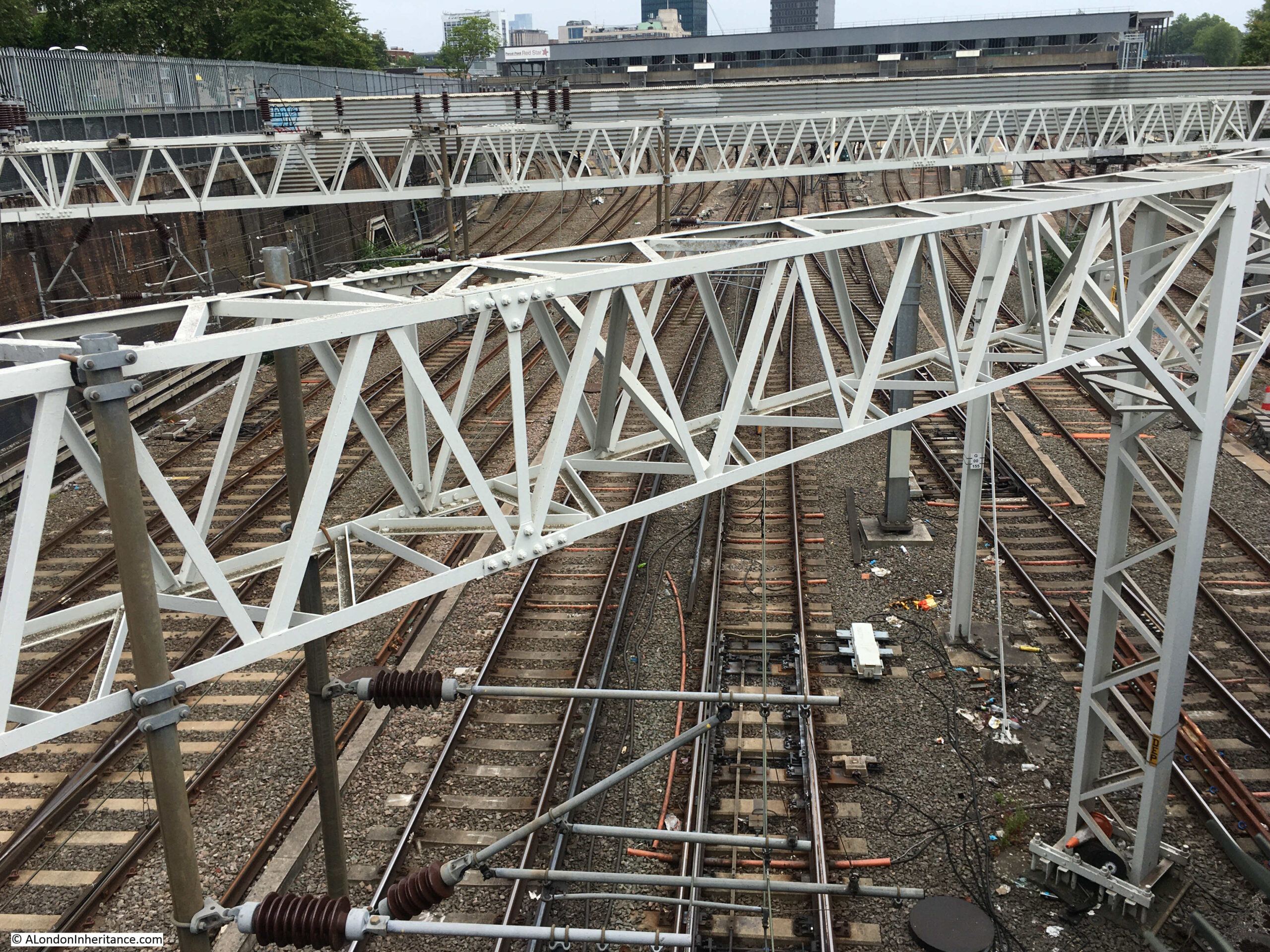
Obligatory camera over the wall shot to see the existing tracks running into Euston:

Euston Station

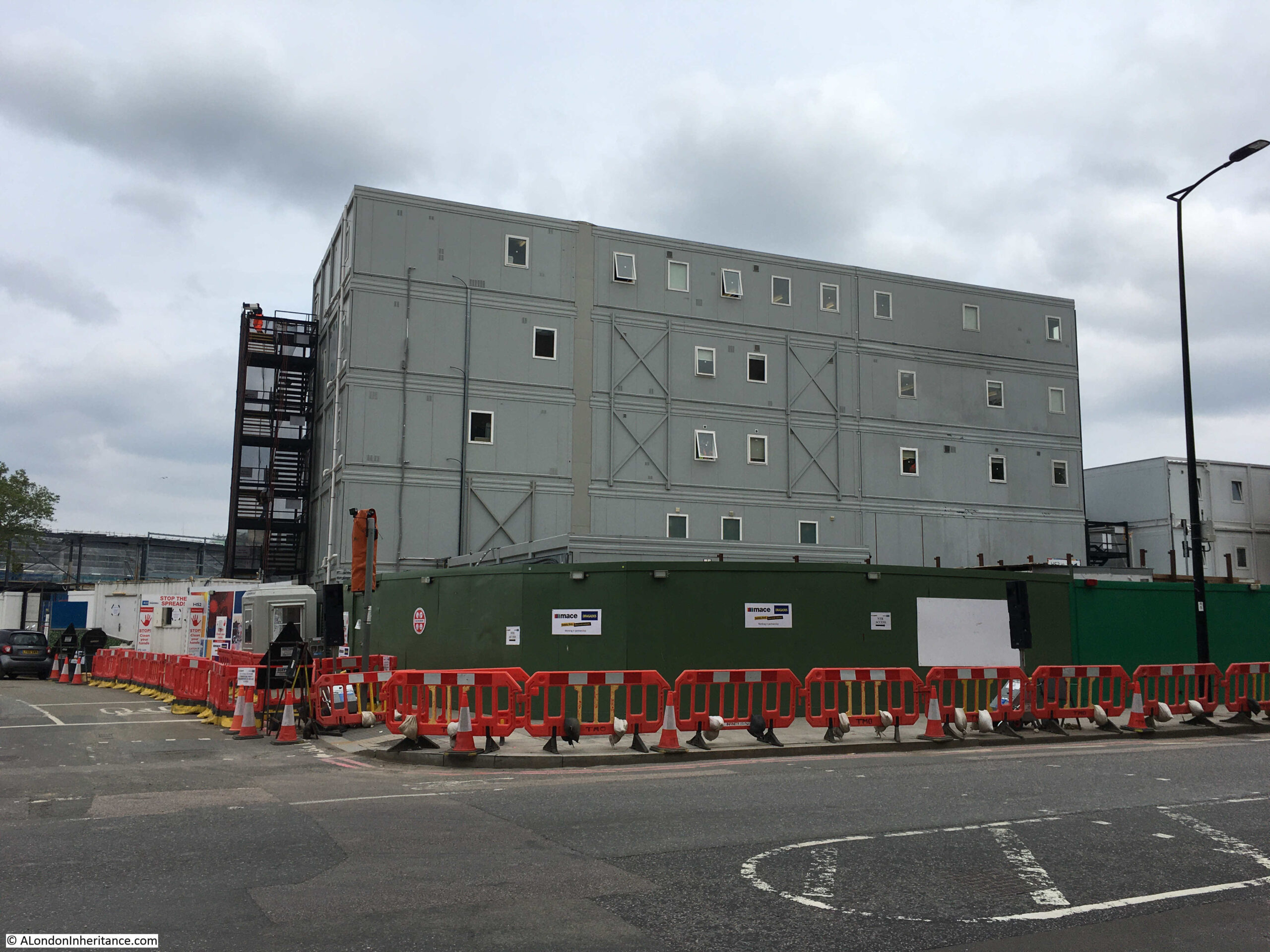
Walking back south along Hampstead Road, and it is not just the geographic size of the construction work, but the related infrastructure, with a number of large, temporary buildings constructed for those working on the site:

Euston Station and HS2

Back into Drummond Street and this is looking from the part of the street that has not been touched, through to the demolished section which now forms the pedestrian walking route to Euston station:

Euston Station and HS2

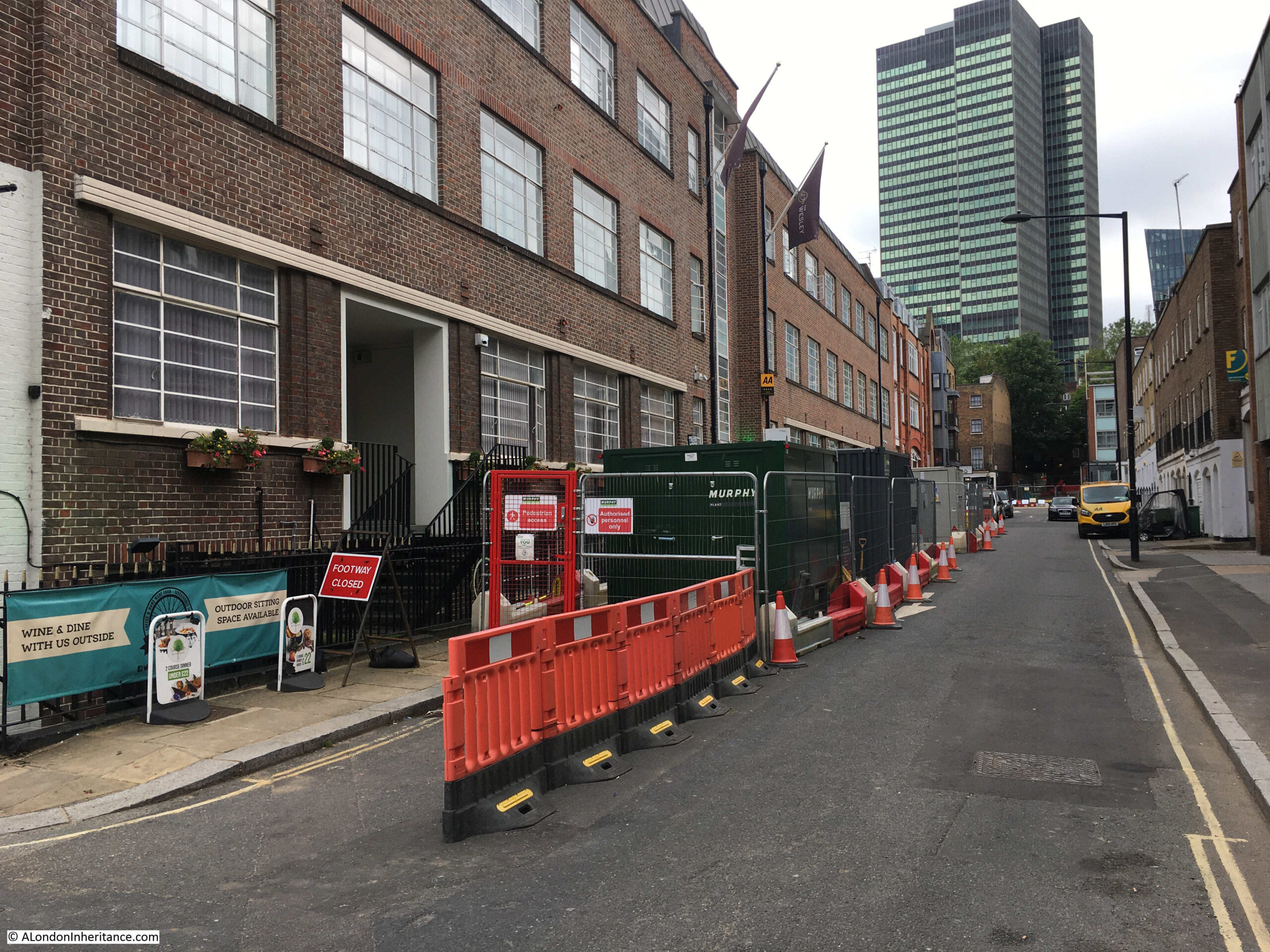
Although the western section of many of the surrounding streets are not being demolished, there are several works taking place along their length:

Euston Station and HS2

The following photo is from the junction of Euiston Street (which once went straght on) and Cobourg Street on the left:

Bree Louise

The above photo was the location of the Bree Louise pub, here photographed just after the pub closed in 2018:

Bree Louise

With hoardings in place in 2019:

Bree Louise

Work blocking off Regnart Buildings:

Euston Station and HS2

View along Cobourg Street from the end of Euston Street:

Euston Station and HS2

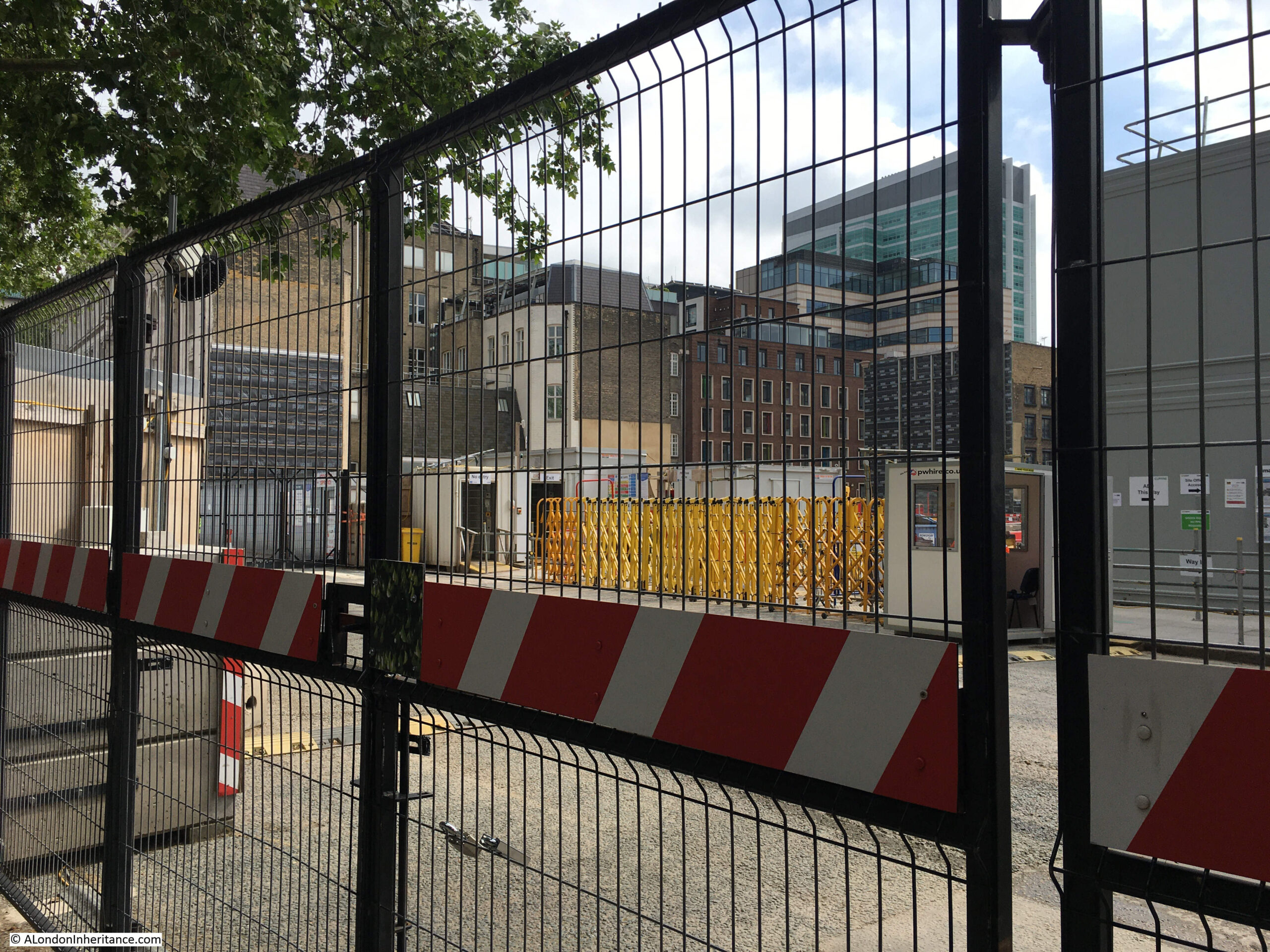
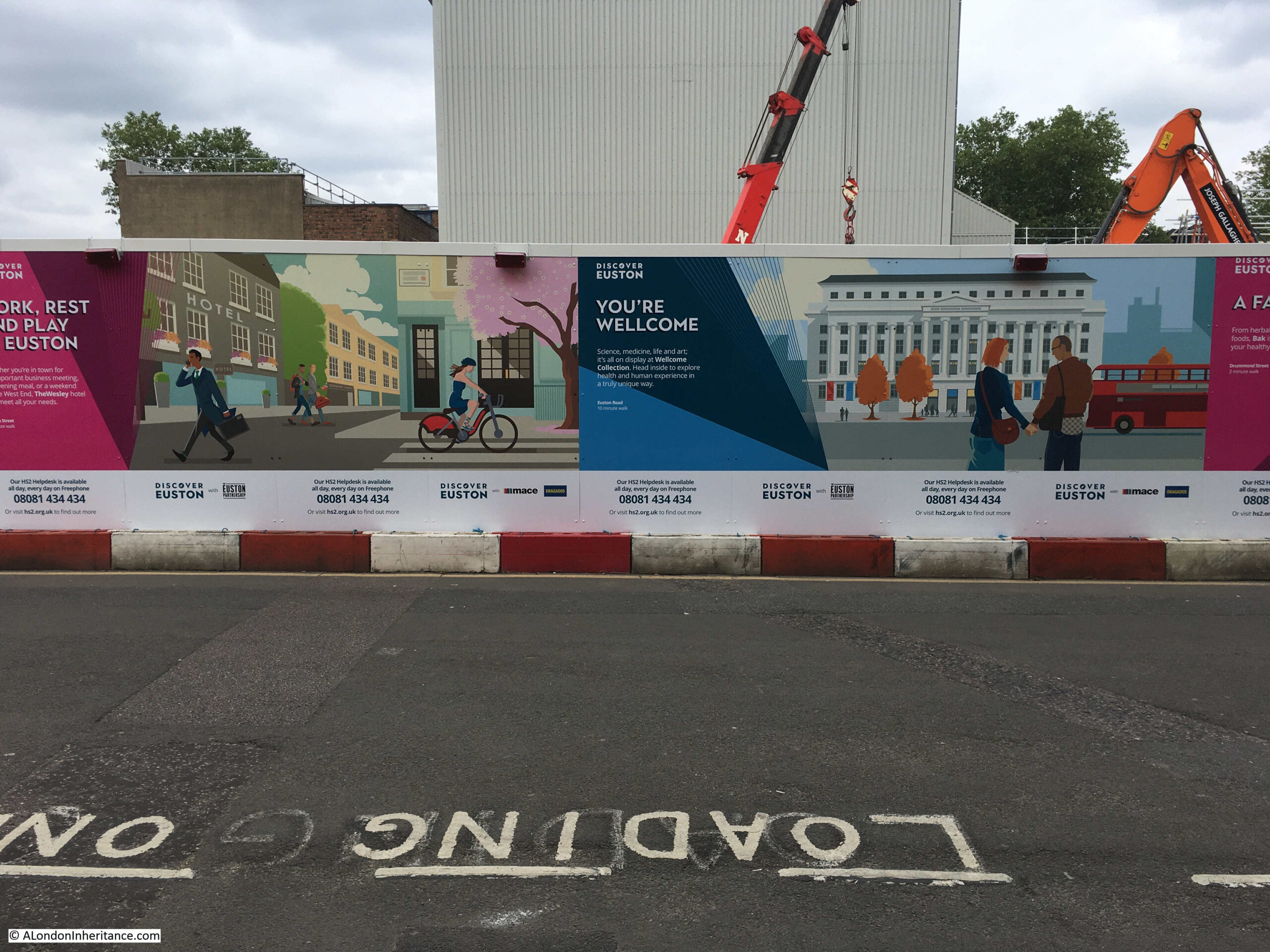
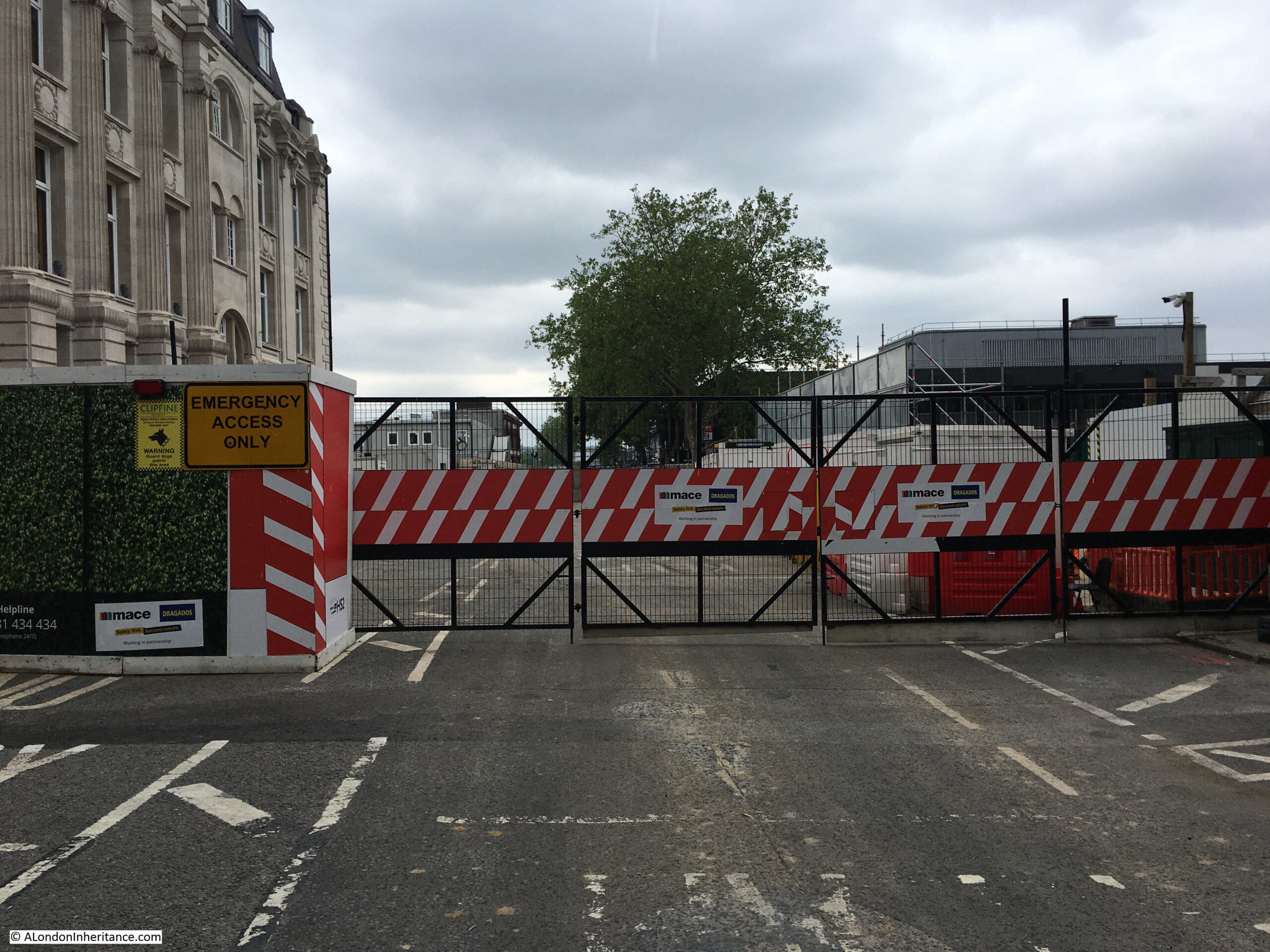
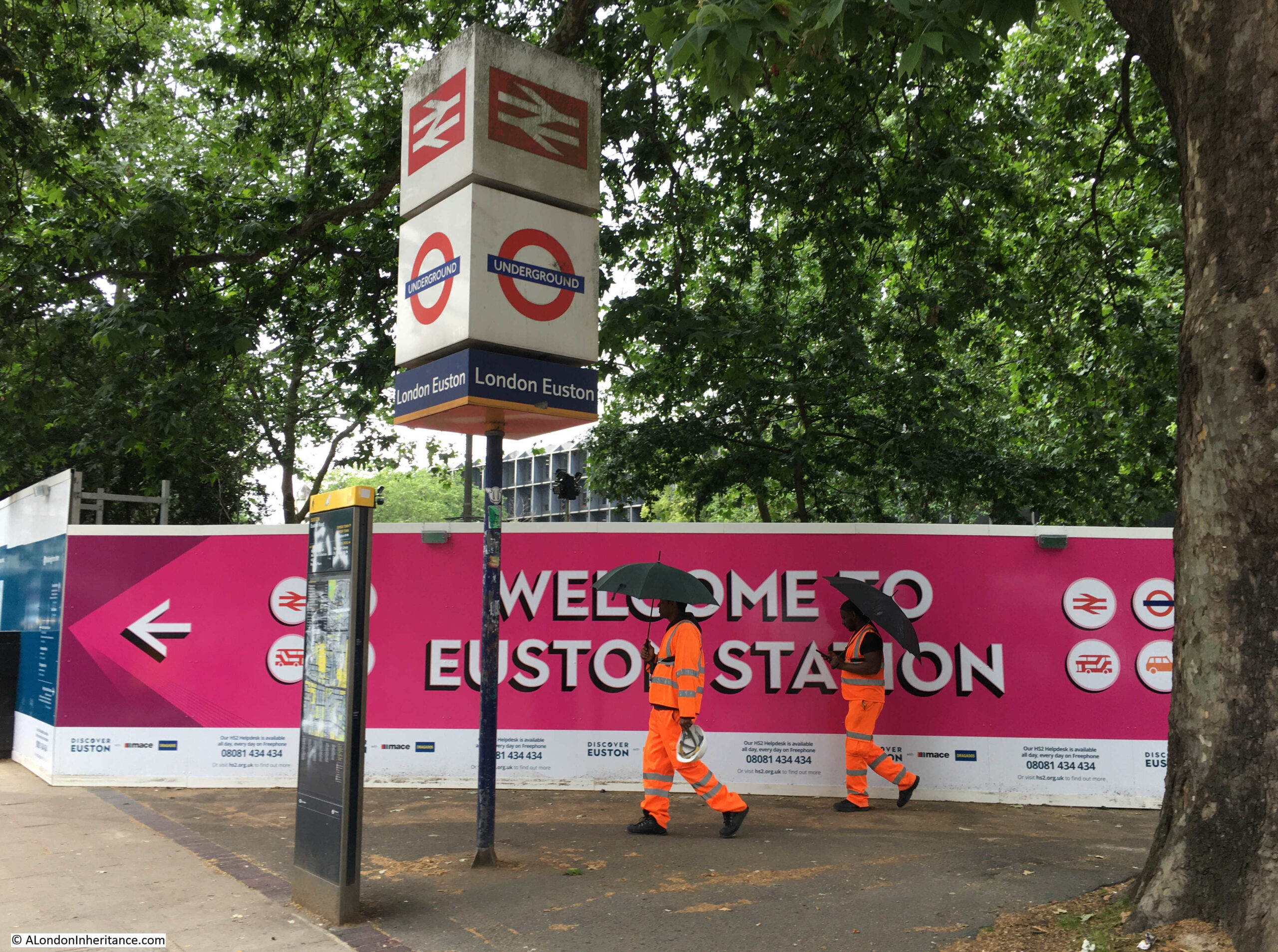
The whole construction site is very secure, with very few points to look in and see the work underway. Tall hoardings with information about local businesses and institutes, what there is to find in the area, the history of Euston station, the future HS2 etc. line the entire site, with well protected work access points the only means of access:

Euston Station and HS2

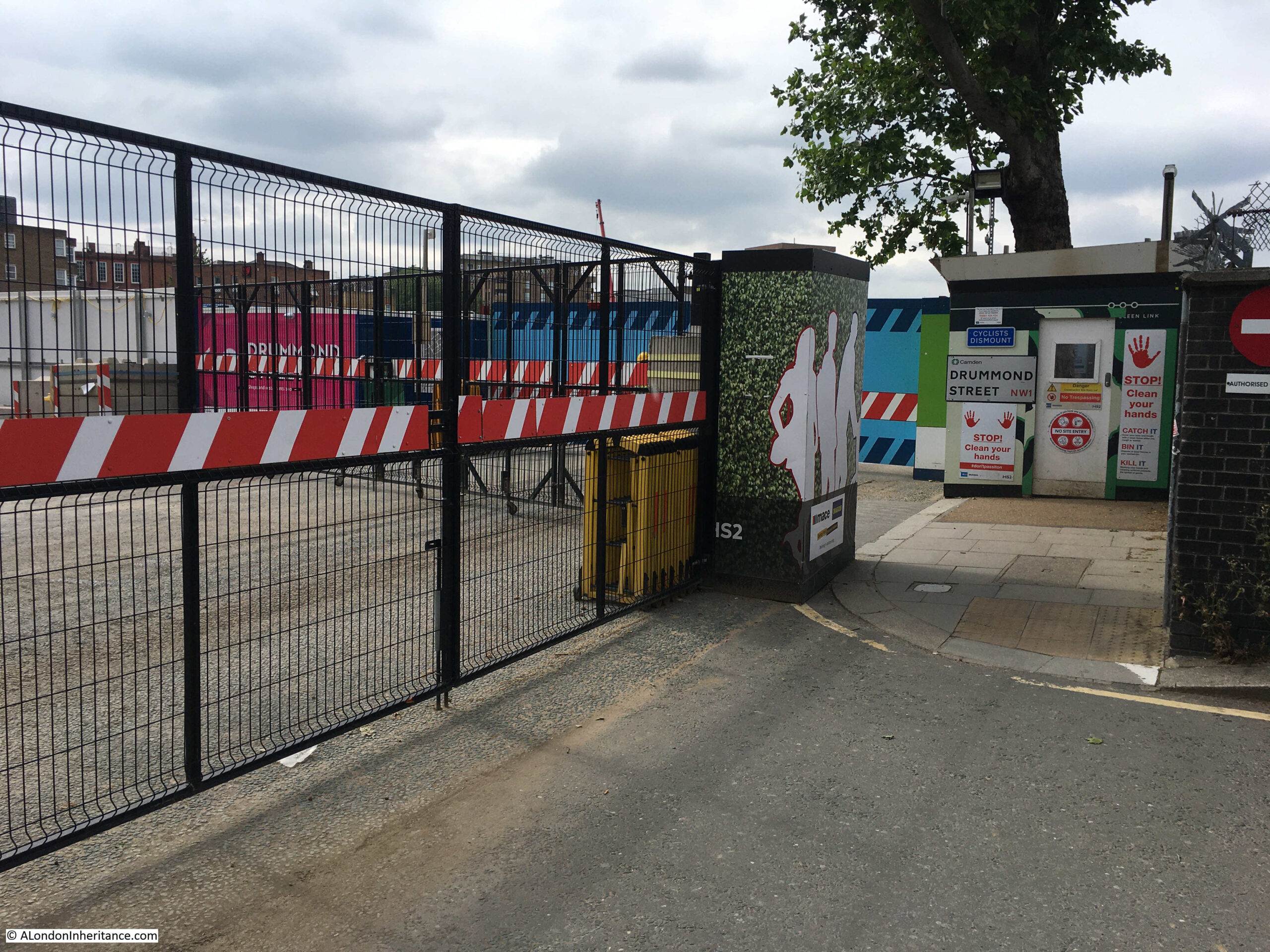
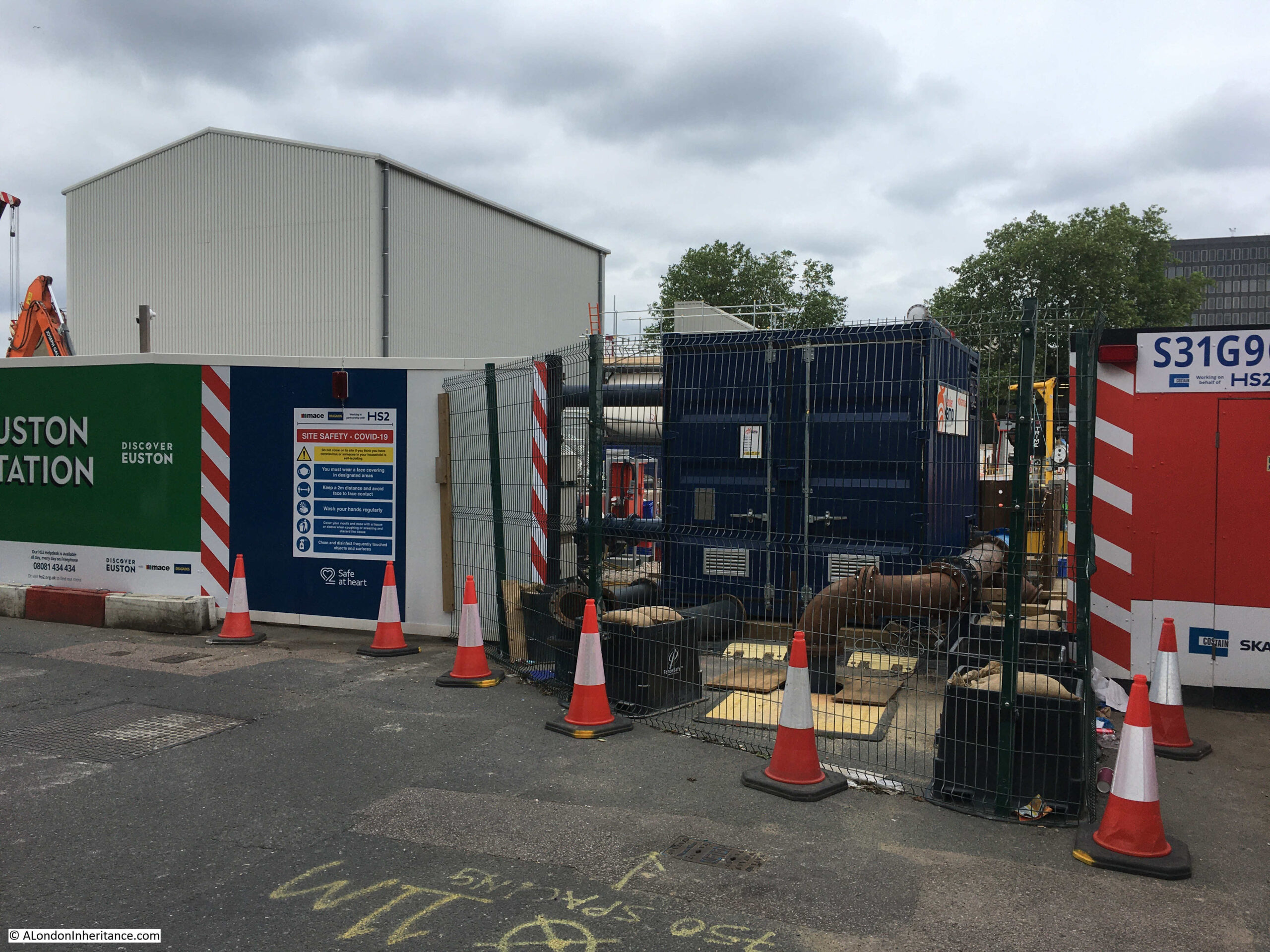
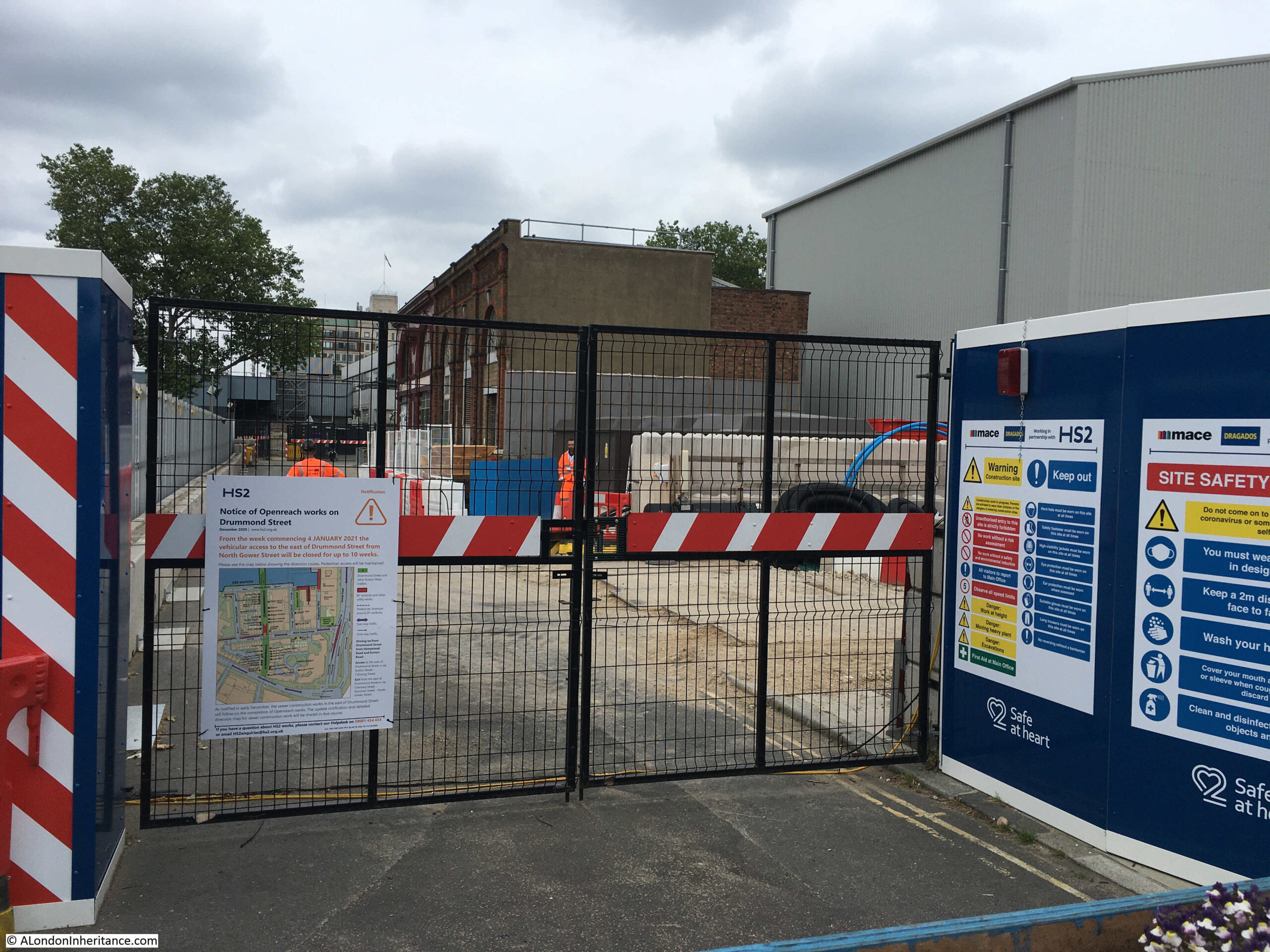
Work access point at the entrance to what was the eastern section of Drummond Street:

Euston Station and HS2

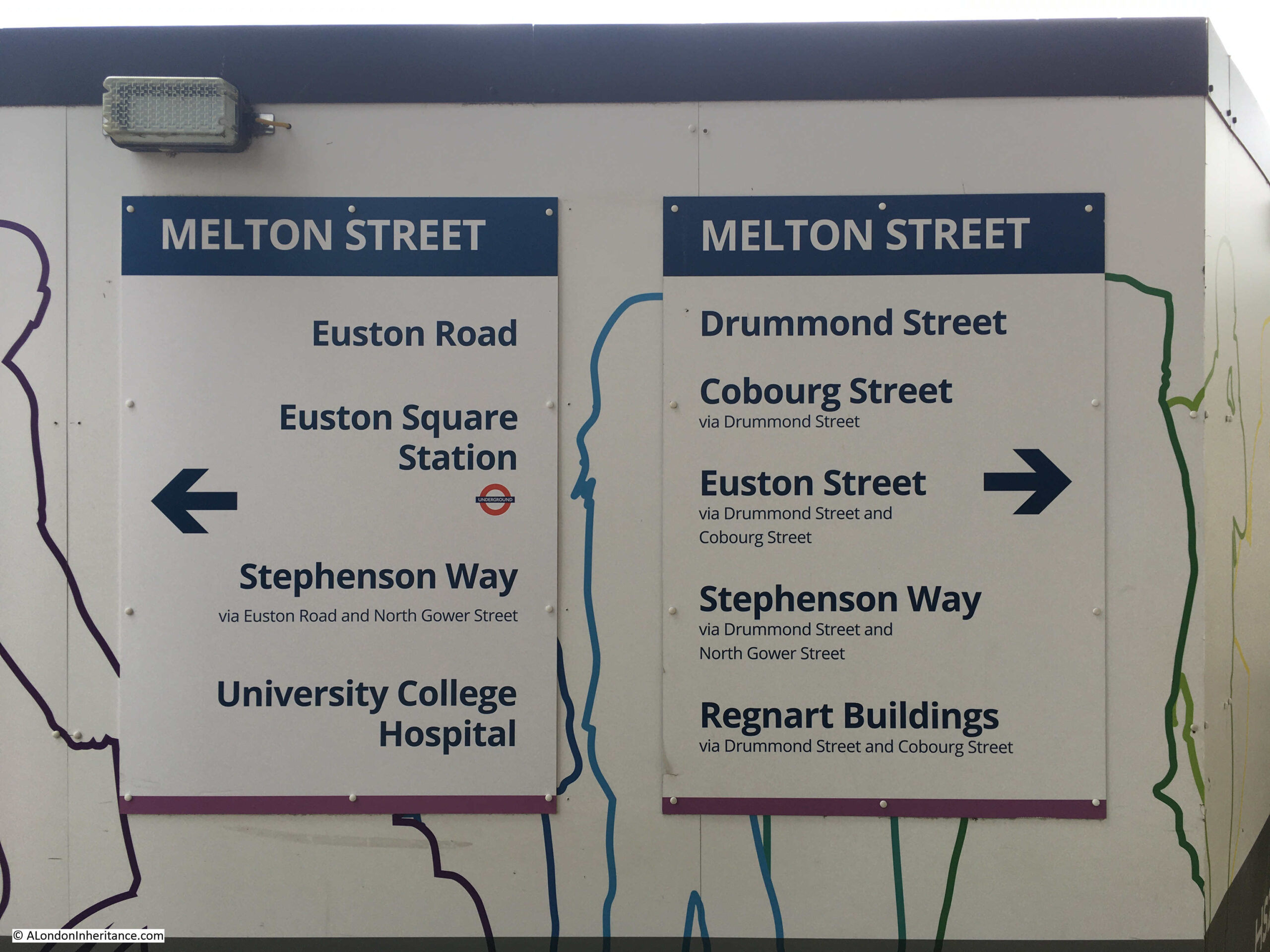
Walking back to Euston Road, and this is the Melton Street access point:

Euston Road

There is now only a short length of Melton Street in use, providing access for taxis and drop offs at the station to the immediate right. The traffic lights providing access to Euston Road only seem to change to green for a couple of vehicles, resulting in a number of rather irate drivers.

Further along Euston Road, and this view is looking across the bus access road to the station, to what was green space in front of the station:

Euston Road

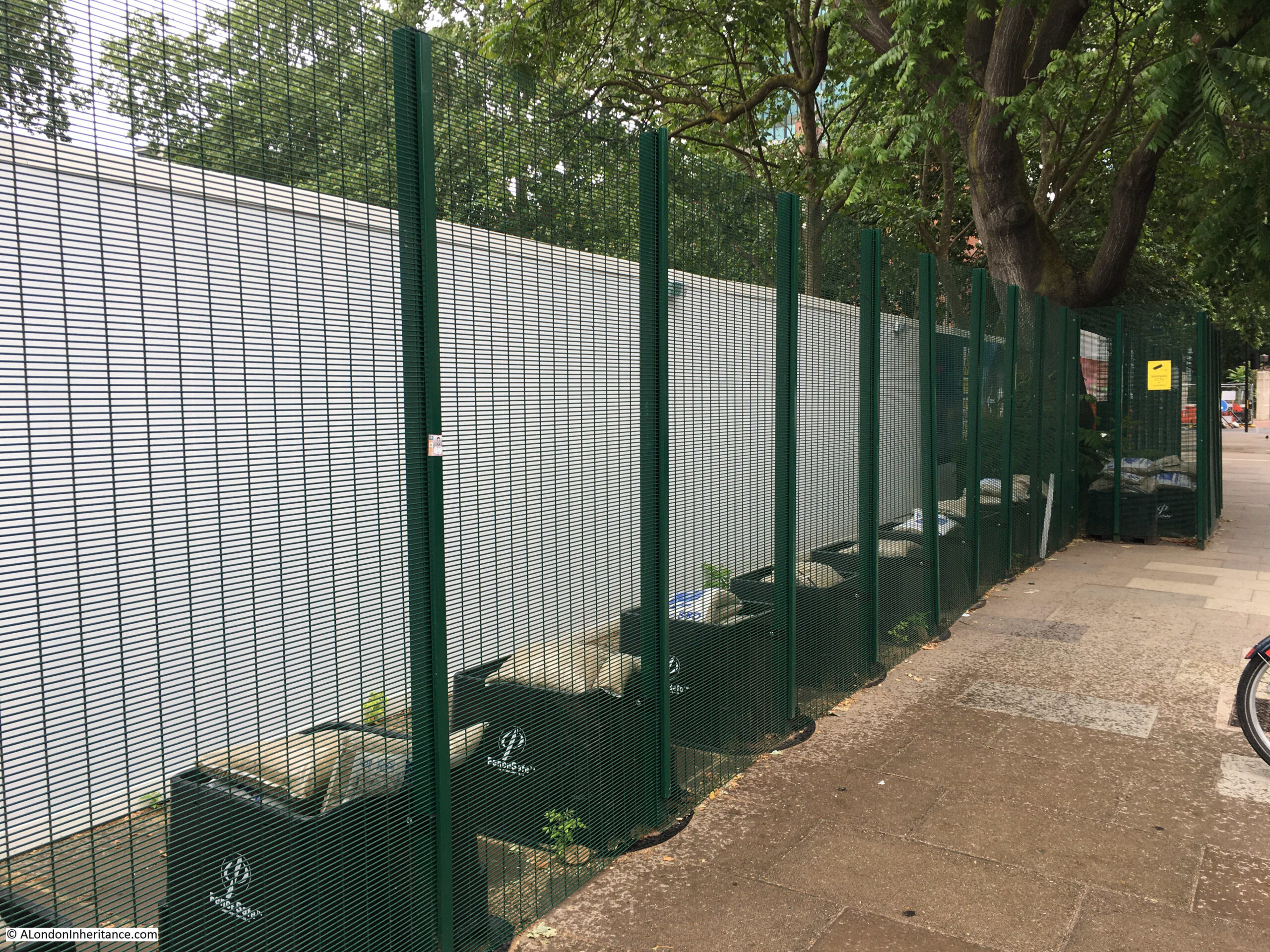
This green space is where demonstrators occupied the trees and dug tunnels a few months ago. Fencing around the site now seems to resemble some form of high secure establishment rather than a constructiion site.

Two layers of fencing, with an outer green mesh metal fence, and inner hoardings:

Euston Road

Indeed the whole Euston Station and HS2 construction site is the most secure of this type of construction site that I have seen. As well as the metal fencing and continuous hoardings through the site, there are plenty of orange high-vis security staff guarding entrances and walking the boundaries.

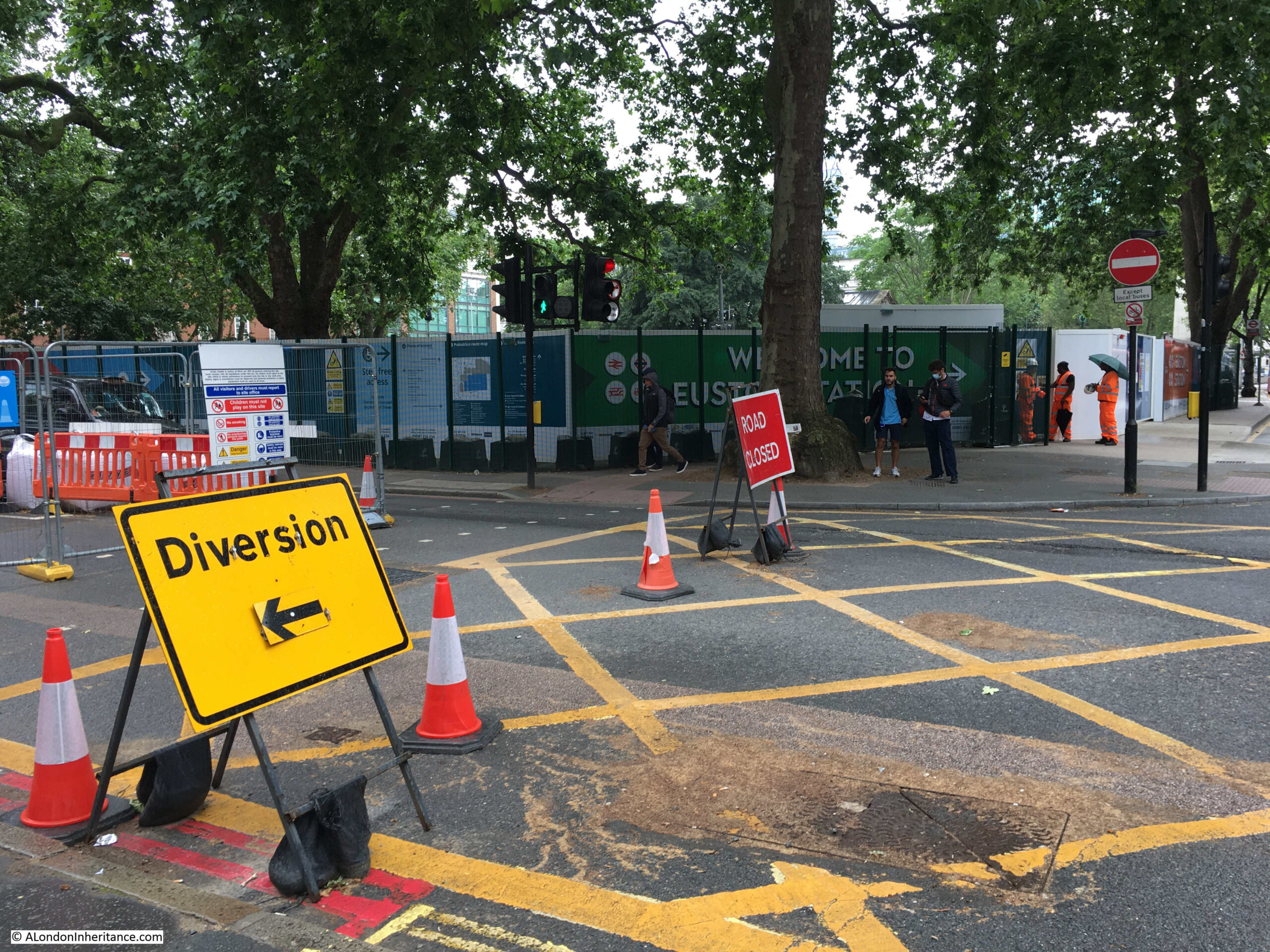
North east corner of the green space in front of the station. Closed Euston Square leading up to Euston Road on the left resulting in buses coming out of the station having to divert around Grafton Place adding to the congestion in the area:

Euston Road

The corner of Euston Square and Euston Road:

Euston Station and HS2

From the walkways and streets available to the public, there is really not much to see. The construction phase has reached what appears to be the end of demolition, there are plenty of big holes in the ground and temporary structures, but nothing yet of the new station.

According to the HS2 web site, “Phase One will open between 2029 and 2033”, so a minimum of eight more annual posts walking around Euston Station and HS2, more probably around twelve. By 2033 this area will look very different.

alondoninheritance.com

Limehouse Cut and Angel Underground Station

Before starting on this week’s post on the Limehouse Cut and Angel Underground Station, can I thank you for all the feedback following last Sunday’s post. It is really appreciated.

I also hope that if you receive my posts as a subscriber, this one does reach you. For the last few days there has been a rather obscure error message in the component that links the blog with the WordPress tool that manages e-mail subscriptions. The hosting company is investigating, so my apologies if it does not reach you automatically.

You may well be wondering what on earth brings the Limehouse Cut and Angel Underground Station together in one post. I can assure you there is a common theme linking these two locations, which I hope will become clear as you read through the post.

Limehouse Cut

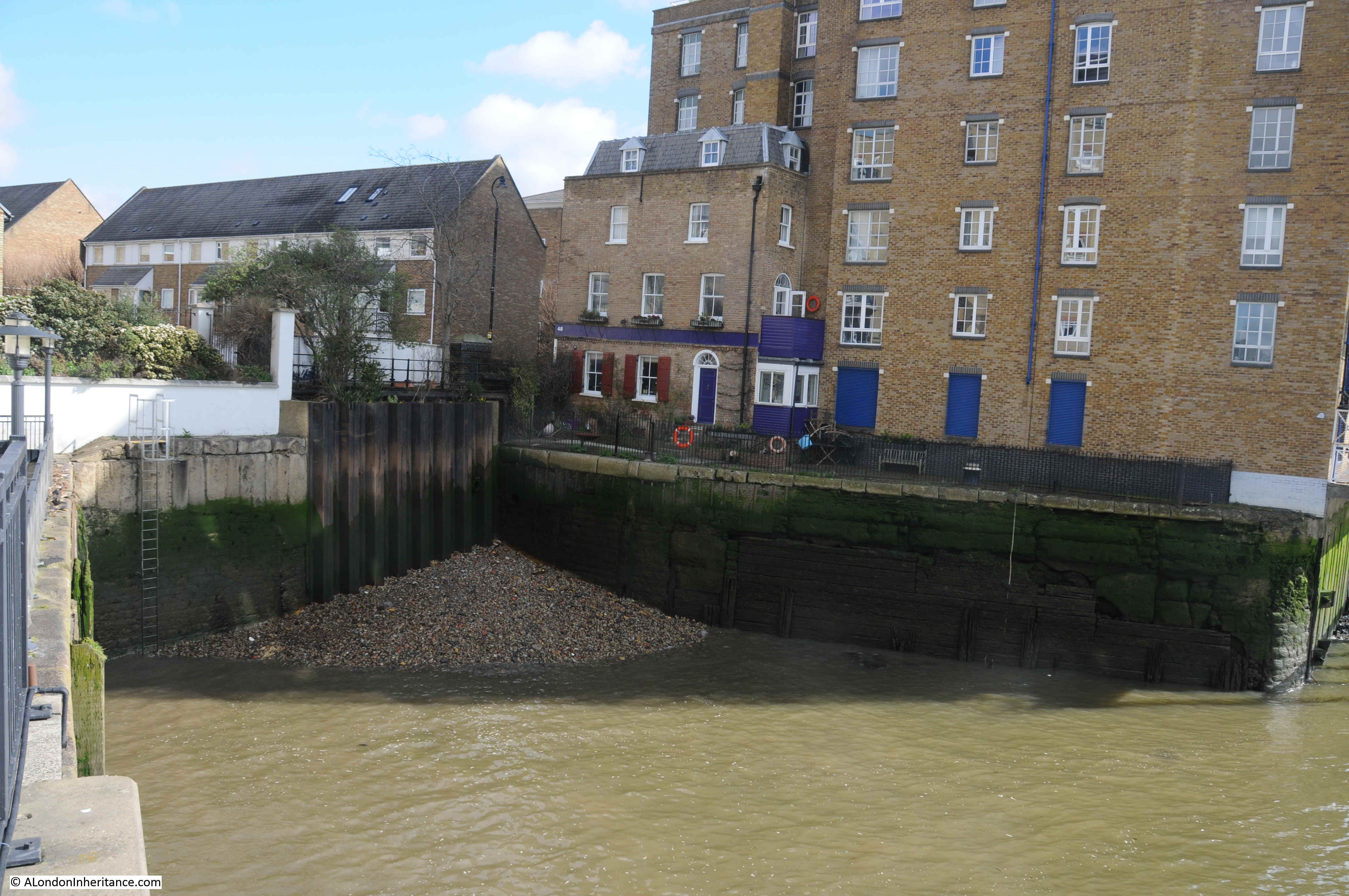
If you walk east along Narrow Street in Limehouse, over the bridge that crosses the channel from Limehouse Basin to the Thames, then turn towards the river along the Thames Path, and at the end of the new apartment buildings that go by the name of Victoria Wharf, you will find a short channel in from the river:

This was the original river entrance where the Limehouse Cut connected to the River Thames.

The Limehouse Cut was opened in 1770 to provide a direct route between the River Thames and the River Lea at Bromley-by-Bow.

The River Lea entered the Thames to the east of the Isle of Dogs, so the Limehouse Cut provided a much shorter route for barges heading to the City and east London by avoiding the need to travel around the full loop of the Isle of Dogs.

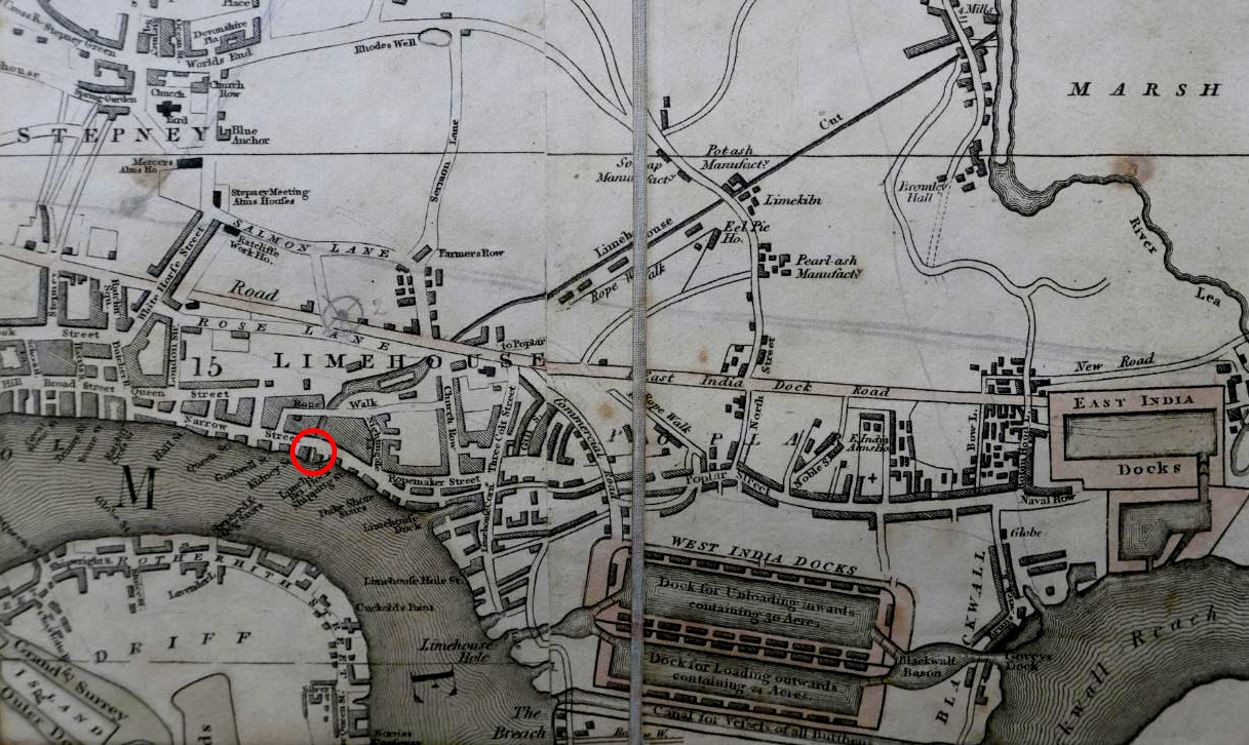
The following extract from the 1816 edition of Smith’s New Plan of London shows the Limehouse Cut running as an almost straight line from the River Lea at top right to the Thames, where I have marked the point where the Limehouse Cut connects to the river with a red circle – this is the short channel in my photo above.

The area to the lower left of the Limehouse Cut was mainly open space, with a limited number of buildings and streets, however this would be changing very soon.

Soon after the 1816 map was published, another canal was built to help with transport across the city. The Regent’s Canal ran from Limehouse and headed north to loop around north London, allowing goods to be transported from the river to the north of the city, thereby avoiding the congested road system.

Part of the Regent’s Canal included a large basin, an expanse of open water just before the point where the Regent’s Canal entered the river. There were warehouses around the basin, and barges would gather, waiting to transit to the river when tides allowed the locks to be open.

The Regent’s Canal Basin, and the entrance to the river was built immediately to the west of the Limehouse Cut.

For eleven years between 1853 and 1864, the Limehouse Cut was diverted into the Regent’s Canal Basin, however after 1864 the original entrance was back in use, with a new bridge carrying Narrow Street over the canal. This would last for another 100 years.

The following extract from the 1955 revision of the Ordnance Survey map shows the Limehouse Cut running from top right down to the River Thames, with the Regent’s Canal Basin immediately to the left, labelled as “Dock” (‘Reproduced with the permission of the National Library of Scotland’).

By 1968 industrial activity in the area had been in long decline as was trade on the Regent’s Canal and Limehouse Cut. The entrance to the river was again closed, and the Limehouse Cut diverted into the Regent’s Canal Basin that was renamed as the Limehouse Basin.

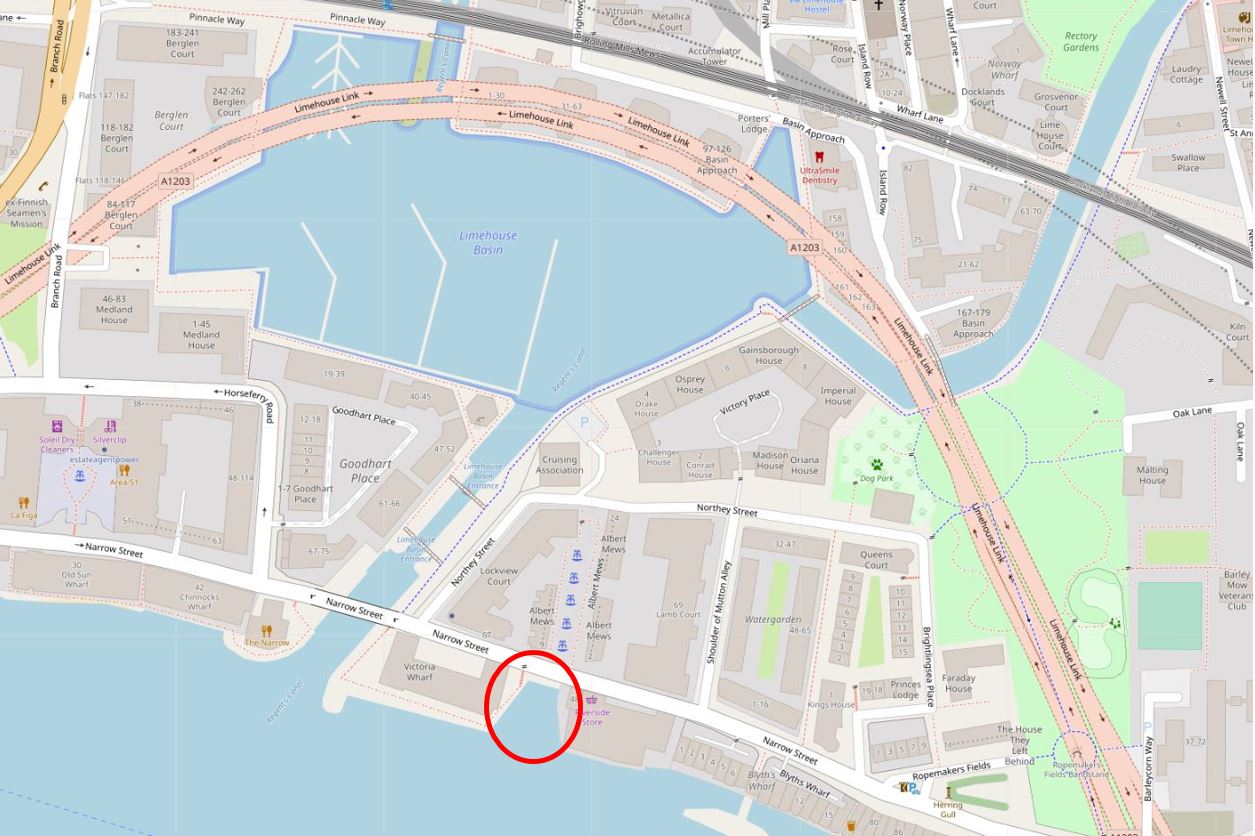
The following extract is from a map of the area today. Limehouse Cut is coming in from top right and diverting straight into Limehouse Basin, I have again circled the original entrance with a red circle (Map © OpenStreetMap contributors).

The pink road that appears to loop across the north of the Limehouse Basin is in reality underground as this is the Limehouse Link Tunnel.

The following view is looking across the old entrance to Limehouse Cut. The wooden boards may well be the original planks that lined the entrance to the canal.

A couple of high explosive bombs landed in the immediate vicinity so the area surrounding the wooden planks may well be repaired bomb damage.

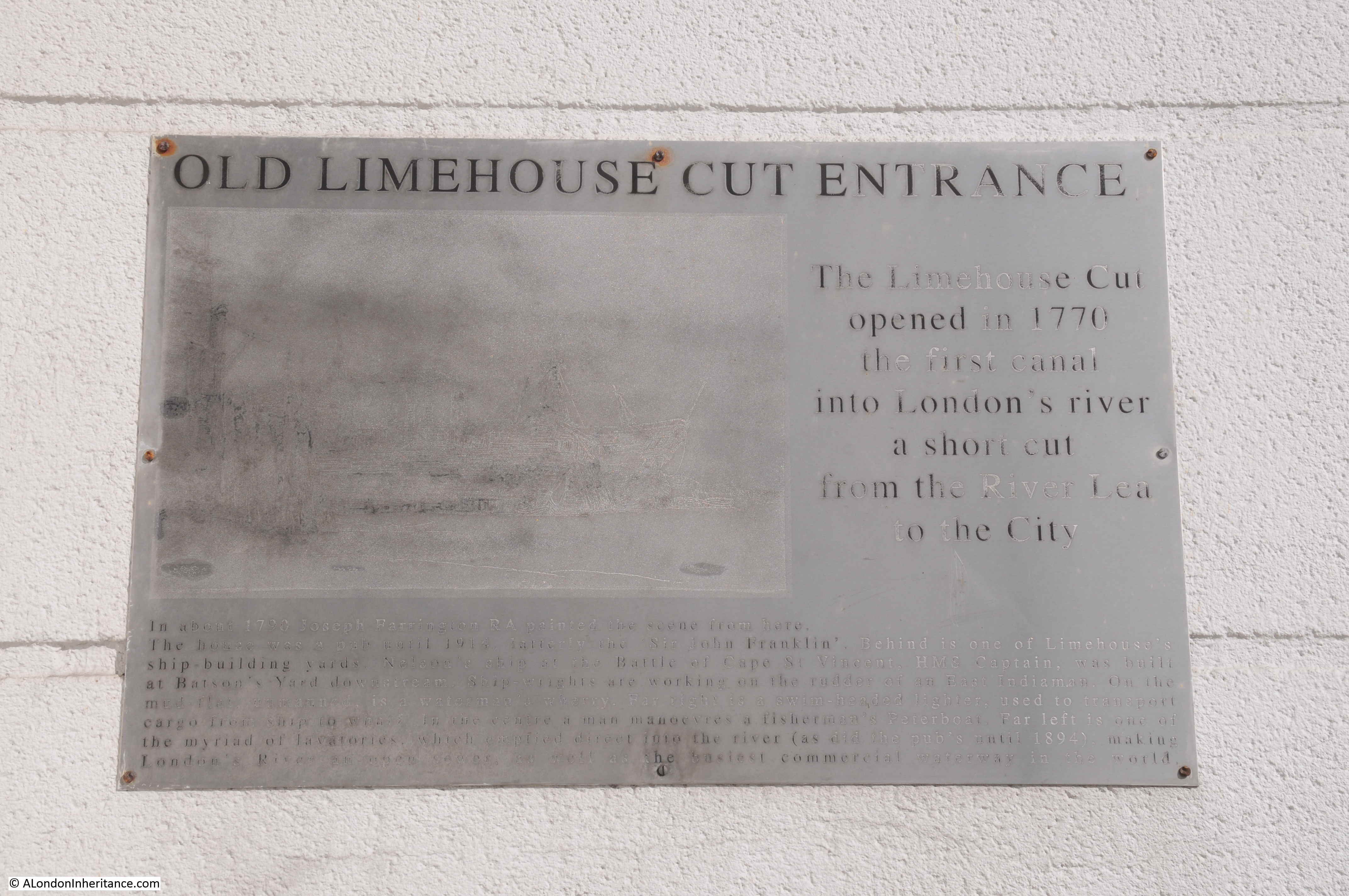
A very faded information board at the old entrance to the Limehouse Cut:

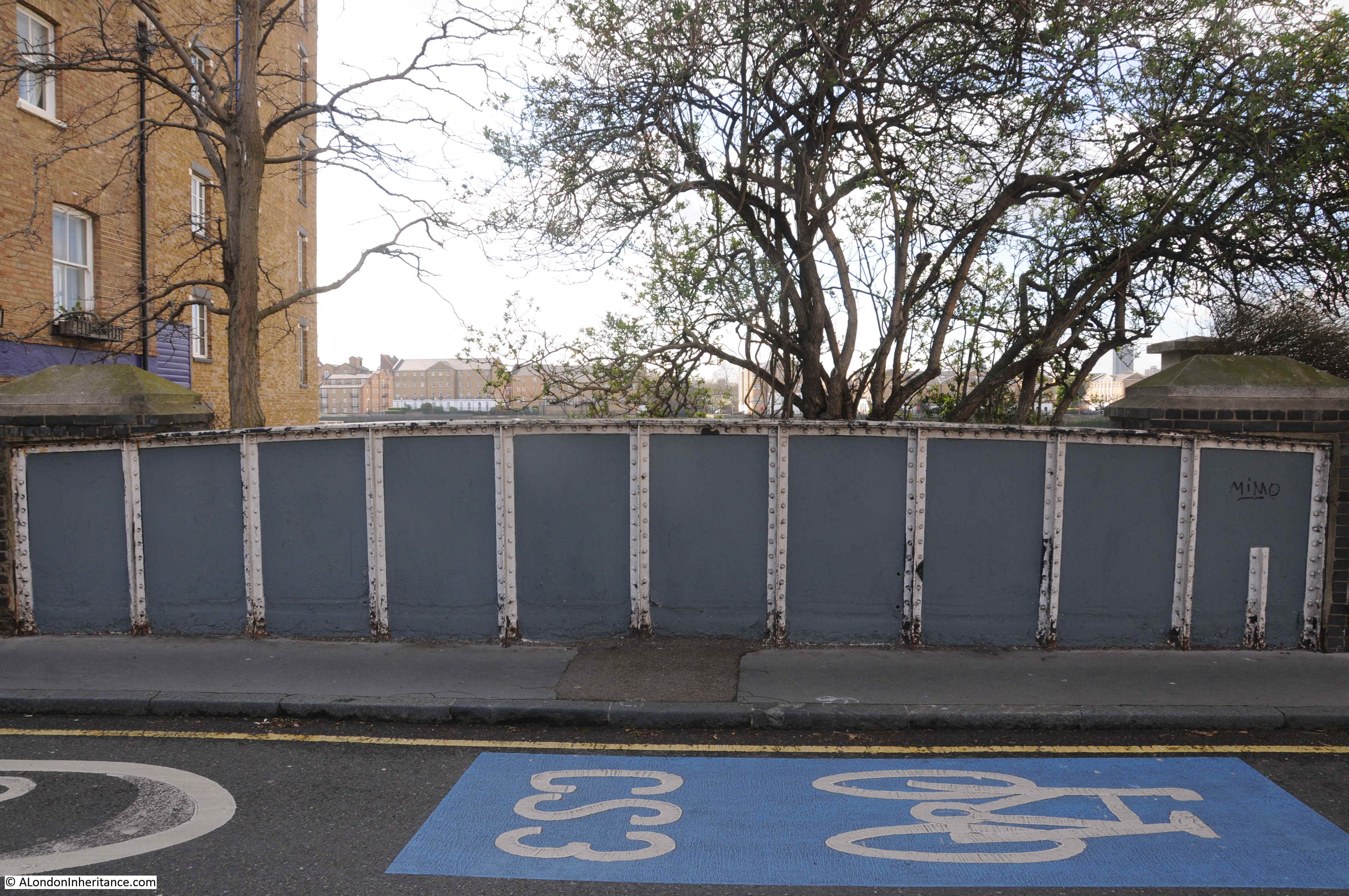
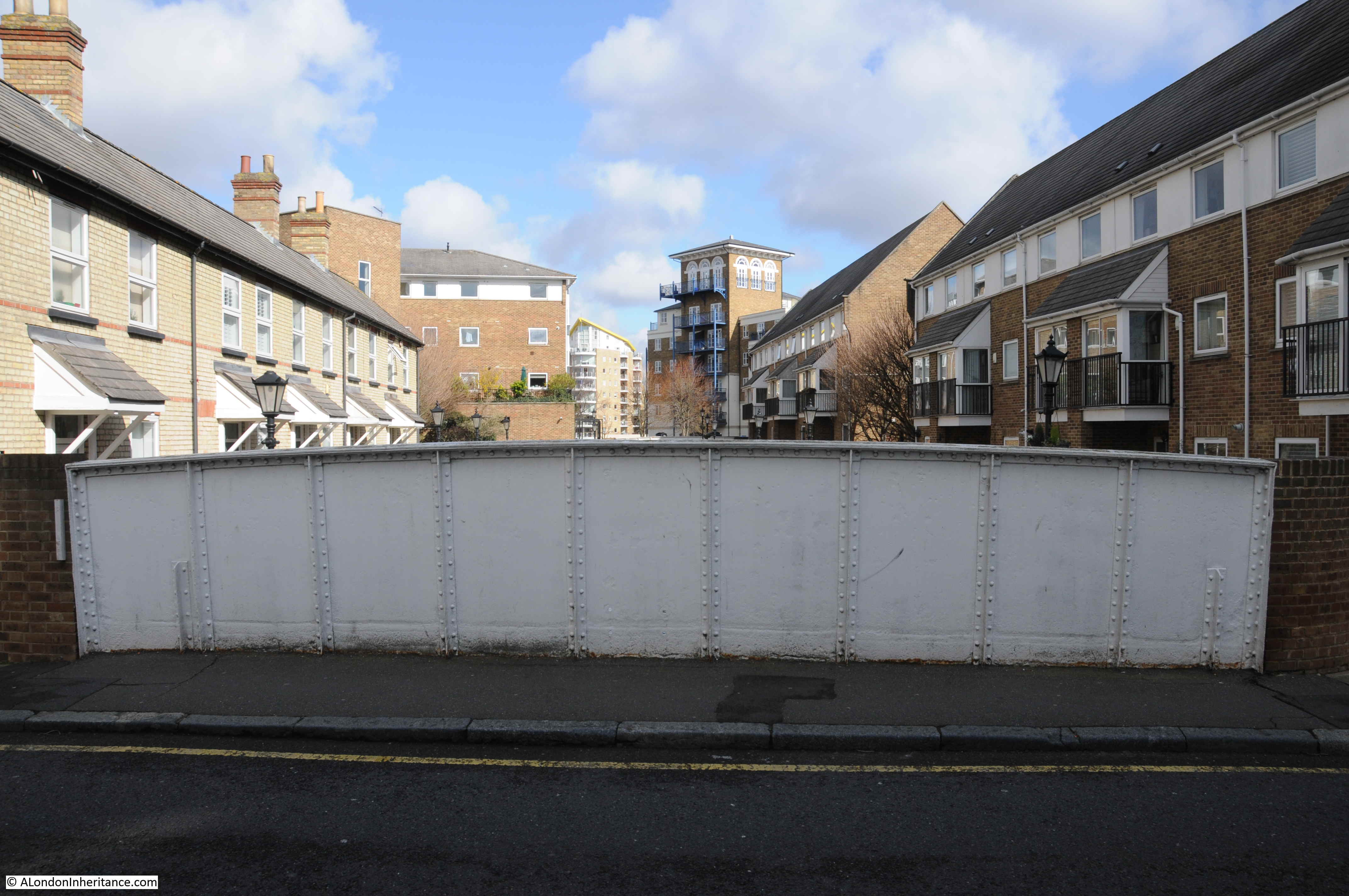
Between 1853 and 1864, the Limehouse Cut had been diverted to the Thames via the Regent’s Canal Basin. In 1864, the original entrance was restored, and a new wrought iron girder bridge was installed to carry Narrow Street over the Limehouse Cut. This 1864 bridge remains in place, although because of the filled in entrance, the bridge is not that obvious apart from the iron side walls as the street is carried over the Limehouse Cut. This is the view from Narrow Street looking south towards the Thames:

The view looking north:

Looking over the northern edge of the bridge, we can see the section of the Limehouse Cut that was originally the lock that controlled access between the non-tidal canal and the tidal river. Much restored late 19th century lock keepers cottages line the western side of the old lock (to the left in the photo below):

The old Regent’s Canal Basin, now the smaller Limehouse Basin, today hosts a marina, and provides links with the River Thames, Regent’s Canal and via the Limehouse Cut, the River Lea, and are all really interesting walks.

The old Limehouse Cut entrance is evidence of the canal’s original 1770 route into the River Thames for one of London’s early transport systems.

Angel Underground Station

Today, the entrance to Angel Underground Station is on the corner of a modern brick office block, facing onto Islington High Street. It has not always been in this position.

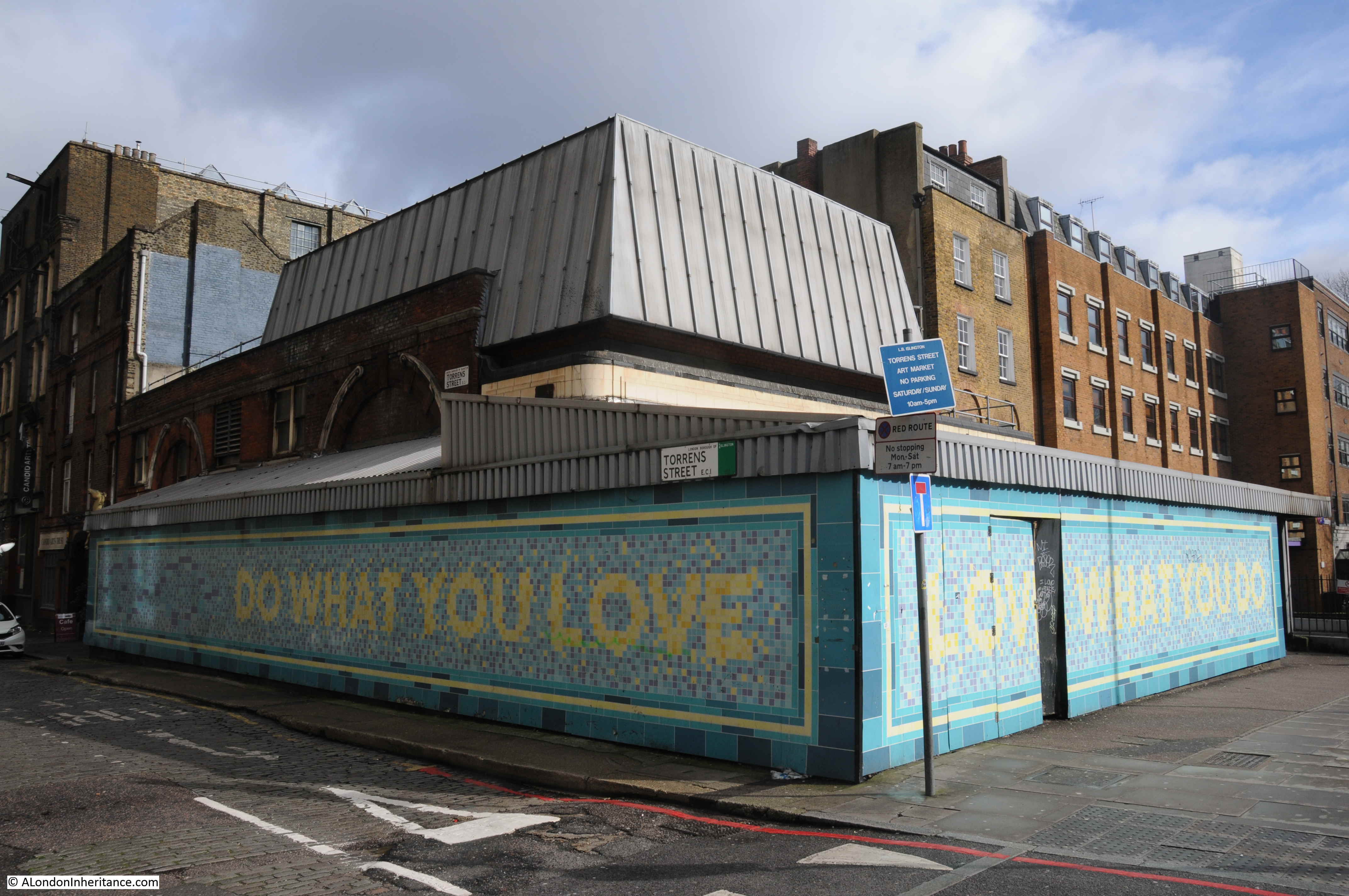
To find the original station, you need to walk south to the junction of Islington High Street with Pentonville Road, and walk a short distance along City Road and on the left is a rather strange looking building:

This is the original Angel Underground Station.

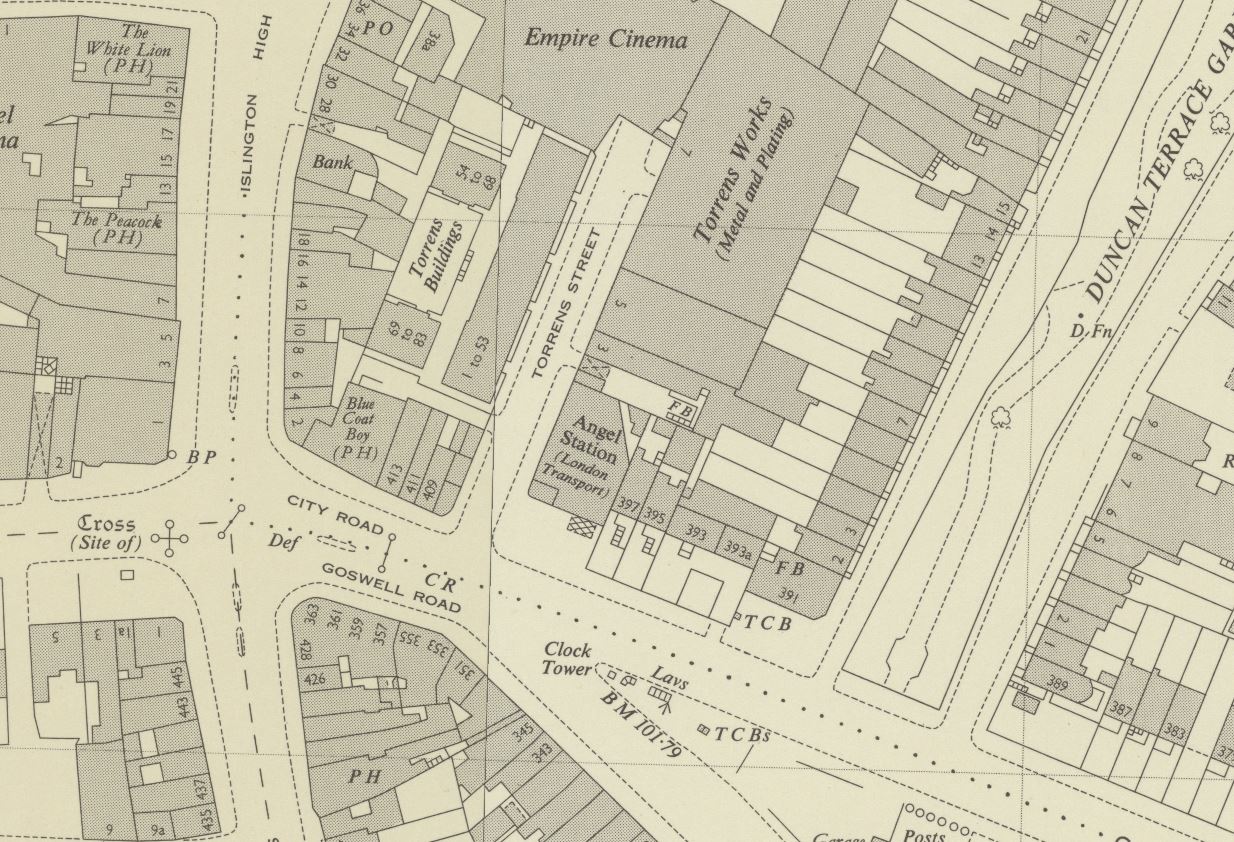
The Angel Station opened in 1901 as part of the City and South London extension from Moorgate. Six years later in 1907, the line was extended on towards Euston station. Today, Angel Station is on the Bank branch of the Northern Line. The following extract from the 1954 Ordnance Survey Map shows the original station in the centre of the map, on the corner of City Road and Torrens Street. This is the station building photographed above (‘Reproduced with the permission of the National Library of Scotland’).

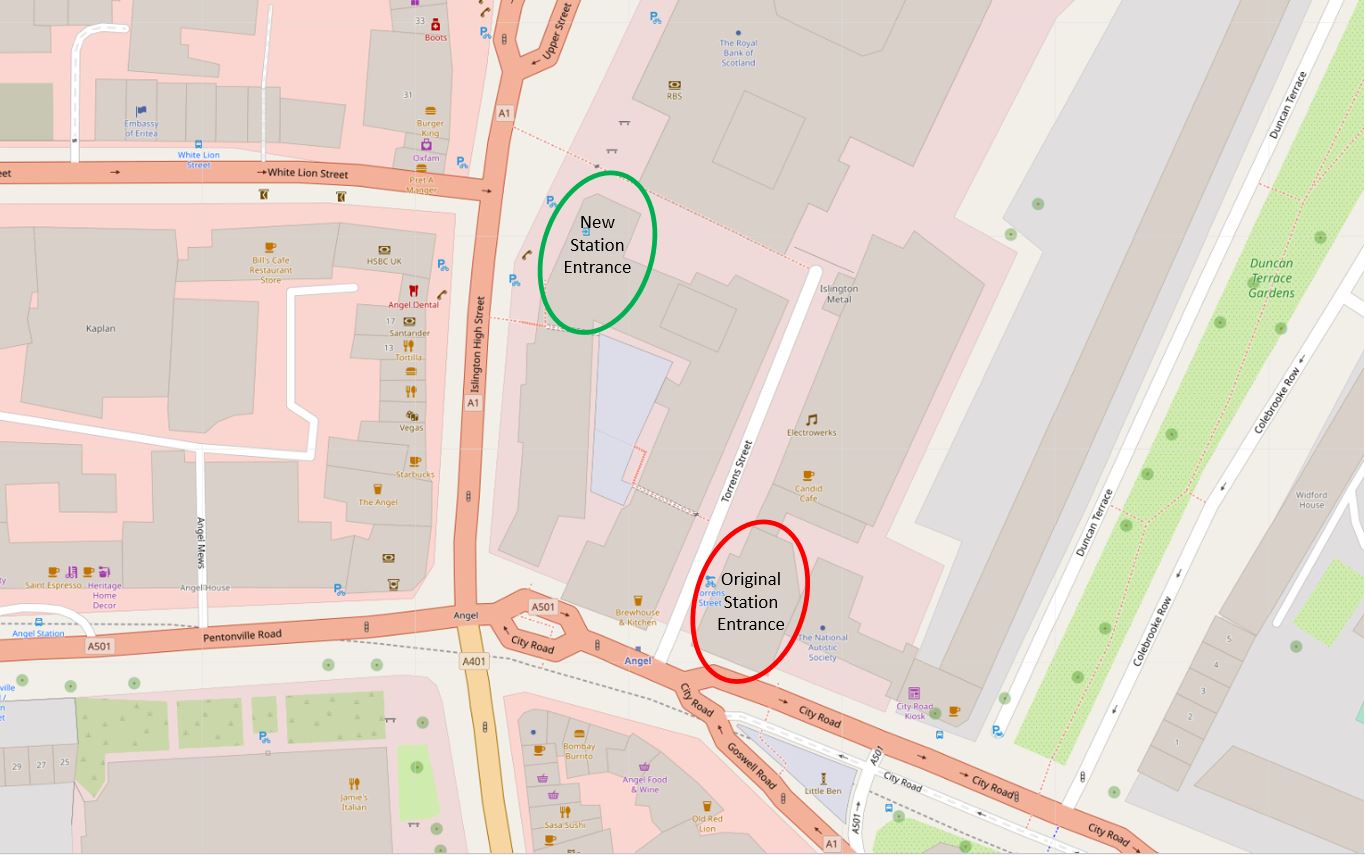
The location of the old and new stations can be seen in the following map (Map © OpenStreetMap contributors):

When Angel Station was built, it had a narrow central platform, with both tracks running either side of the platform. Whilst this was probably fine for the short period of time before the line was extended, it was a rather dangerous place when the platform was crowded, and busy trains ran in both directions.

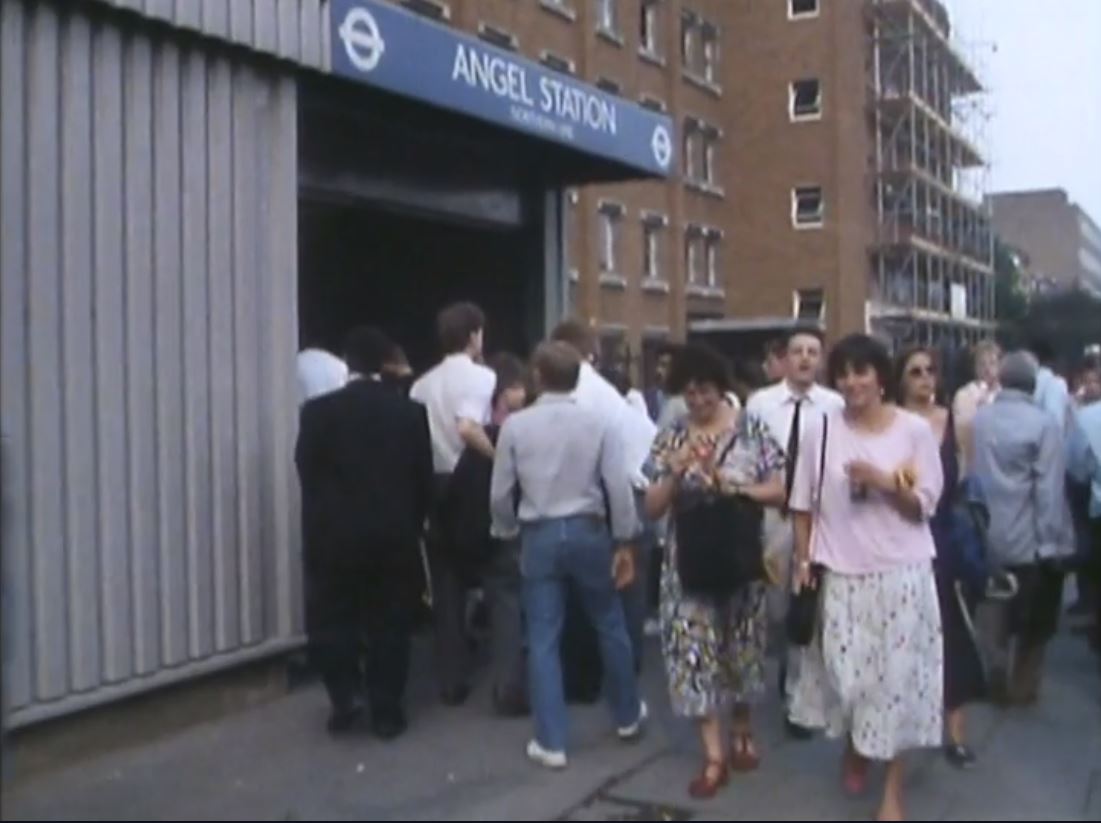
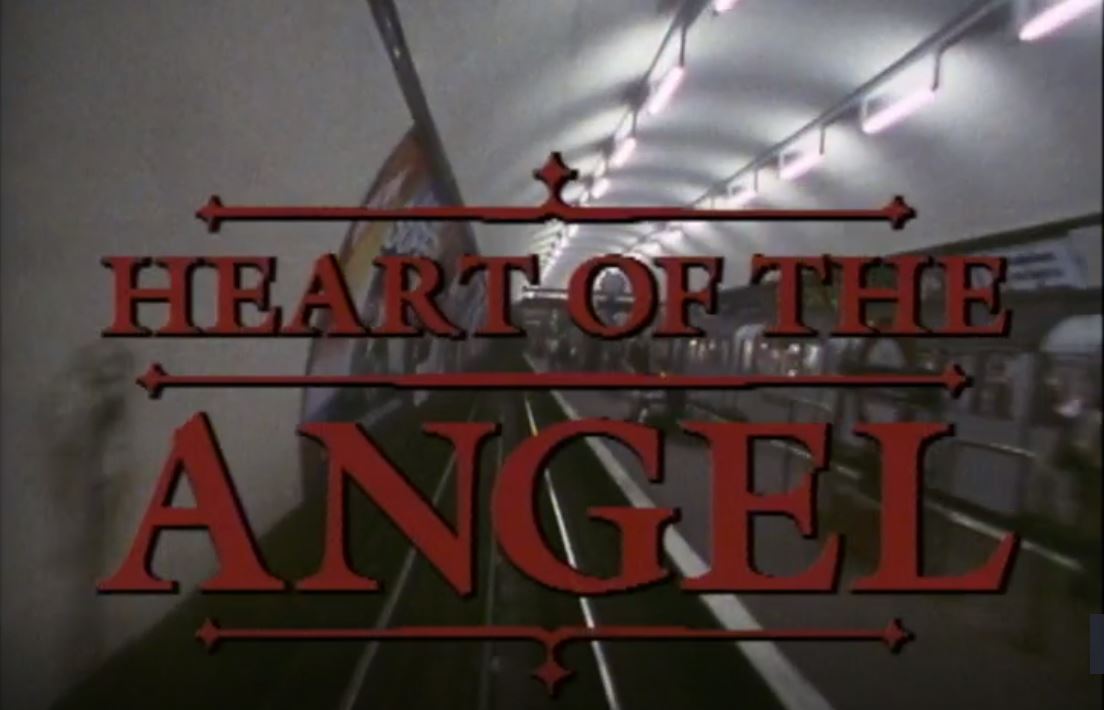
The following clip is from the 1989 BBC film Heart of the Angel (link at the end of the post), showing the crowded platform.

From the same film is a clip of the 1989 entrance to the station, looking down City Road and is on the right of my photo of the station at the top of this section of the post.

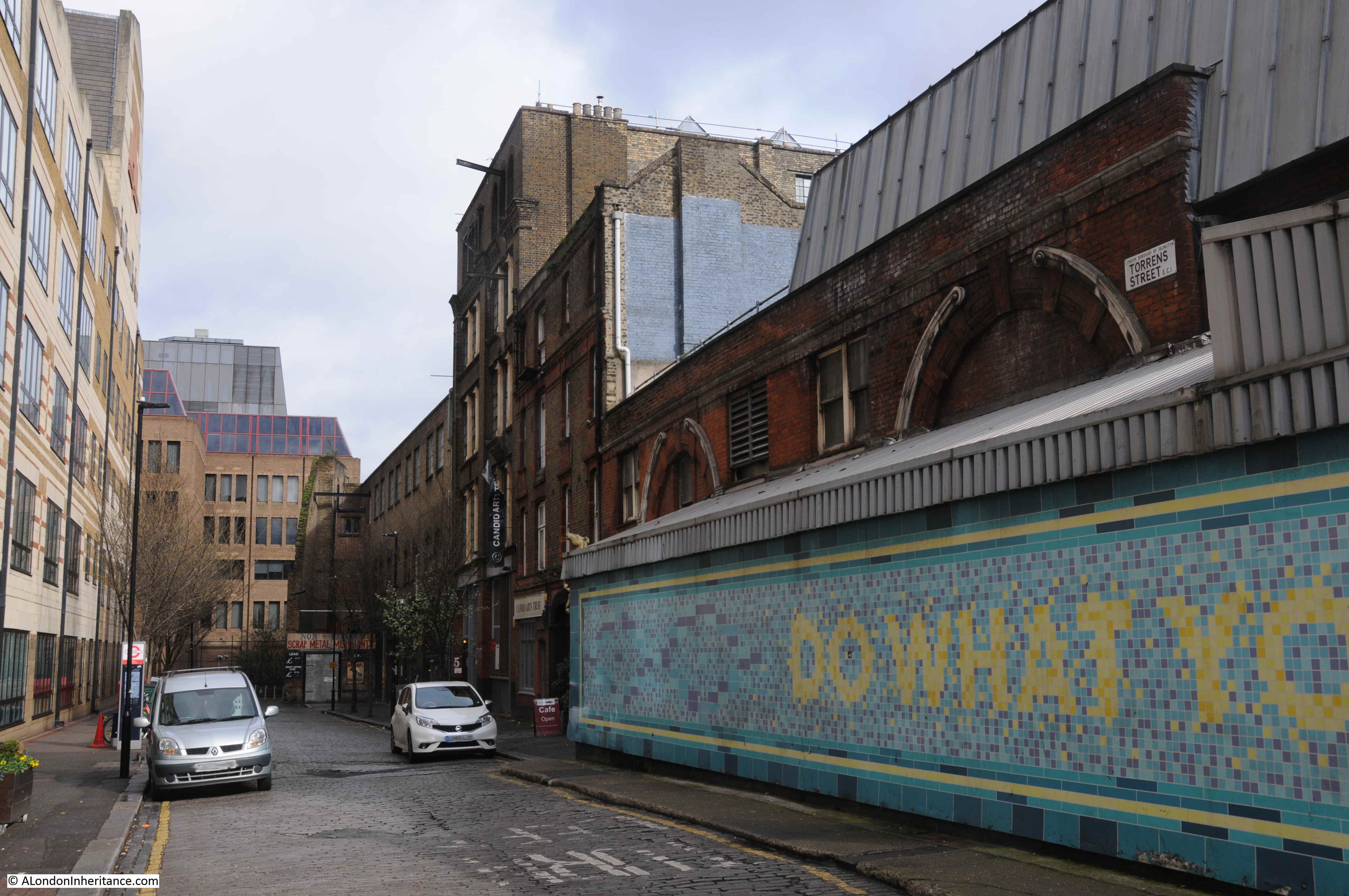
The platforms were also served by lifts from the ground level building. The exterior cladding around the original brick building was a later addition to provide extra space. The view down Torrens Street with the station on the right:

By the late 1980s, the station had a long history of overcrowding along the narrow single platform. It would frequently be rather chaotic when two trains pulled in, with passengers leaving both trains onto a narrow platform full of passengers waiting to get on the trains.

The lifts were also relatively small for the number of passengers at busy times and would also frequently break down. At the end of the 1980s a major rebuild of the station began.

A new tunnel was excavated to take the northern branch, thereby separating the northern and southern tracks so each could have their own platform. The southern branch today occupies the space of the original tunnel so has a rather wide platform compared to a normal station, as the platform occupies the space of the original platform and the northern tracks.

Escalators were installed to avoid the use of lifts, and these took passengers between the platforms and the new station entrance on Islington High Street.

The new station opened in 1992, leaving the original station building to sit on the corner of City Road and Torrens Street.

Crossrail 2 includes a station at Angel, and the complete eastern side of Torrens Street, including the original station building, was designated in the safeguarding map of sites for Crossrail 2 construction and operation.

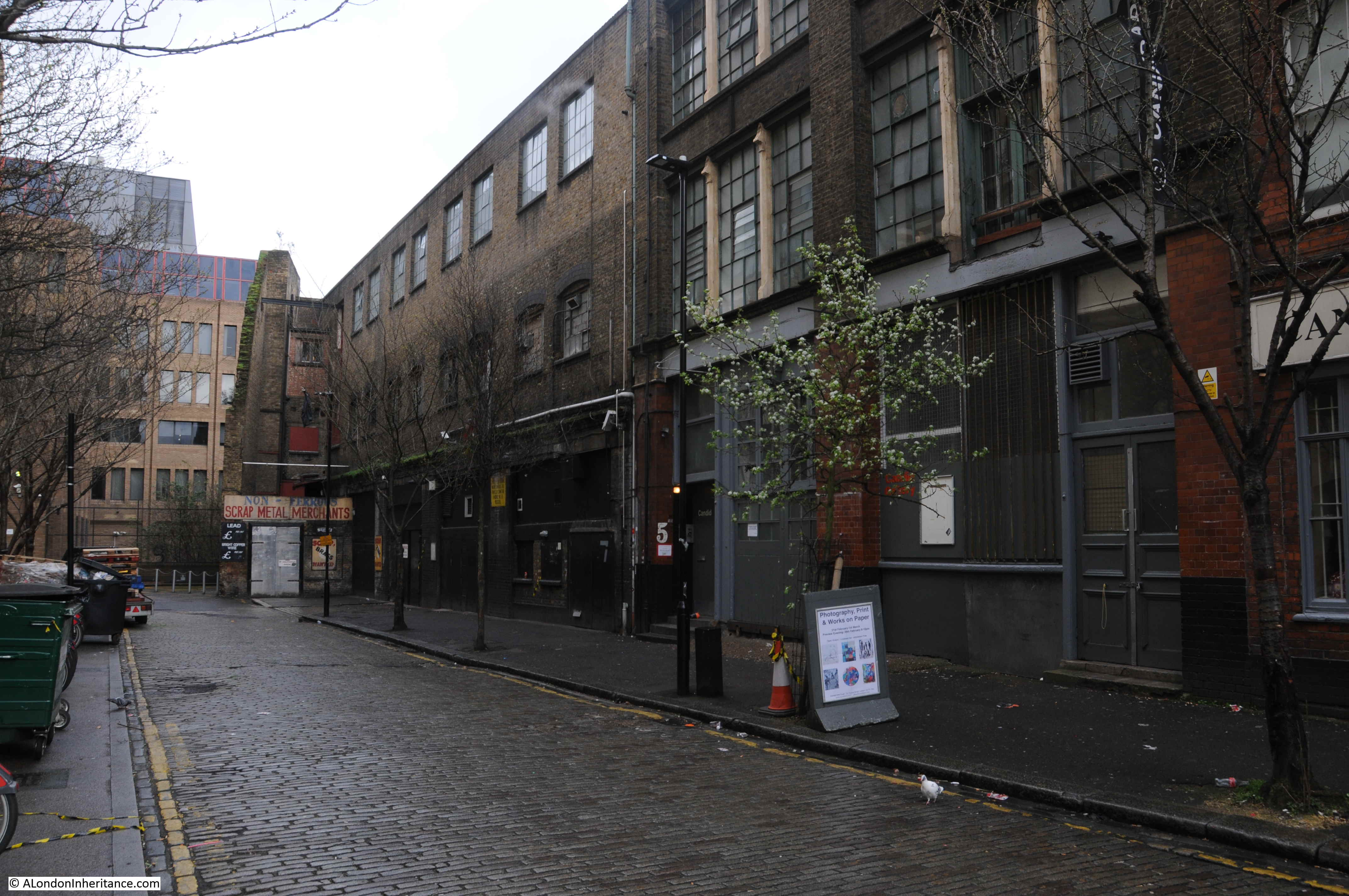
The following view looks along Torrens Street at the buildings included in the safeguarding map.

The buildings along this side of the street are an interesting mix of old warehouses.

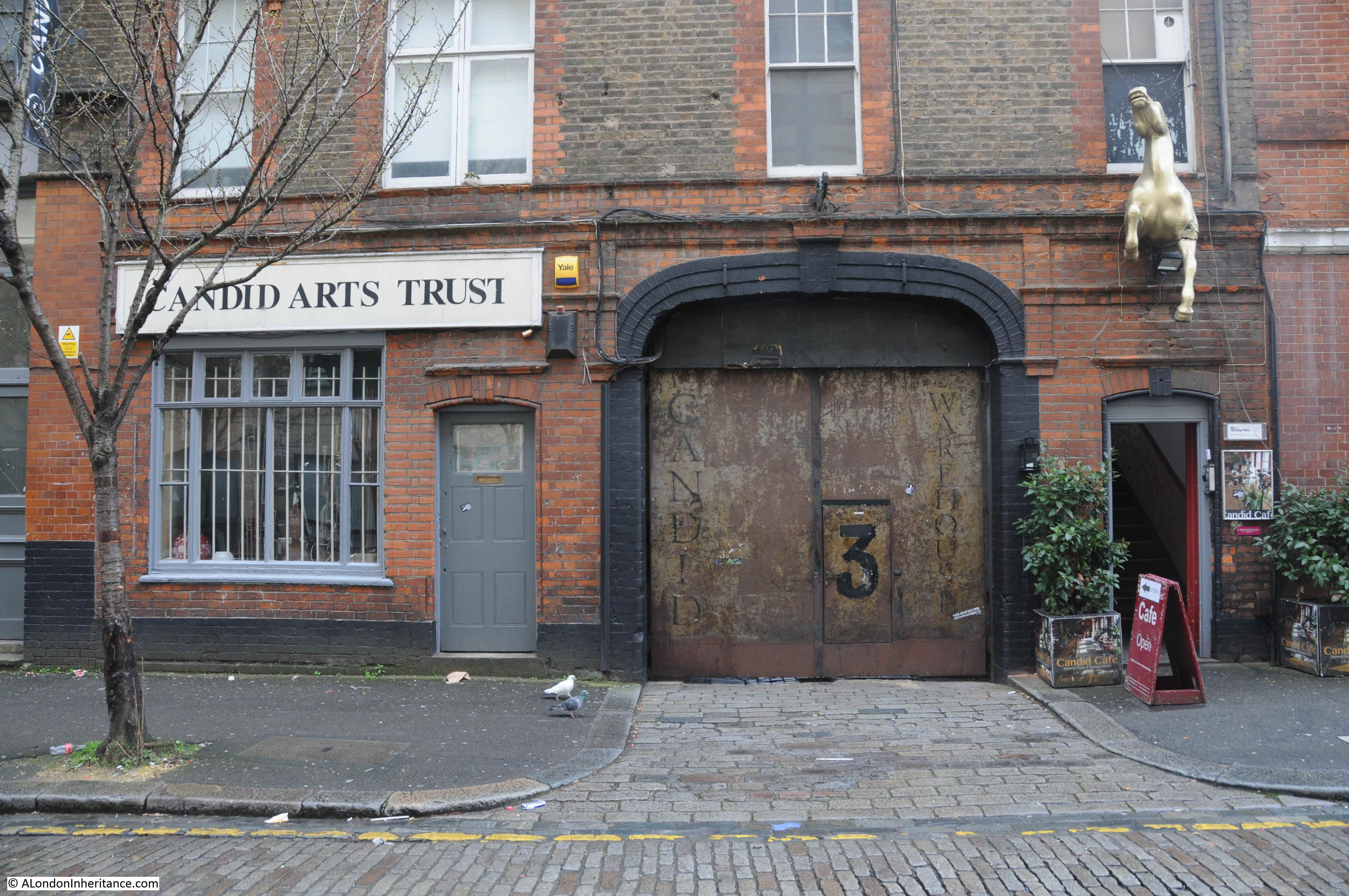
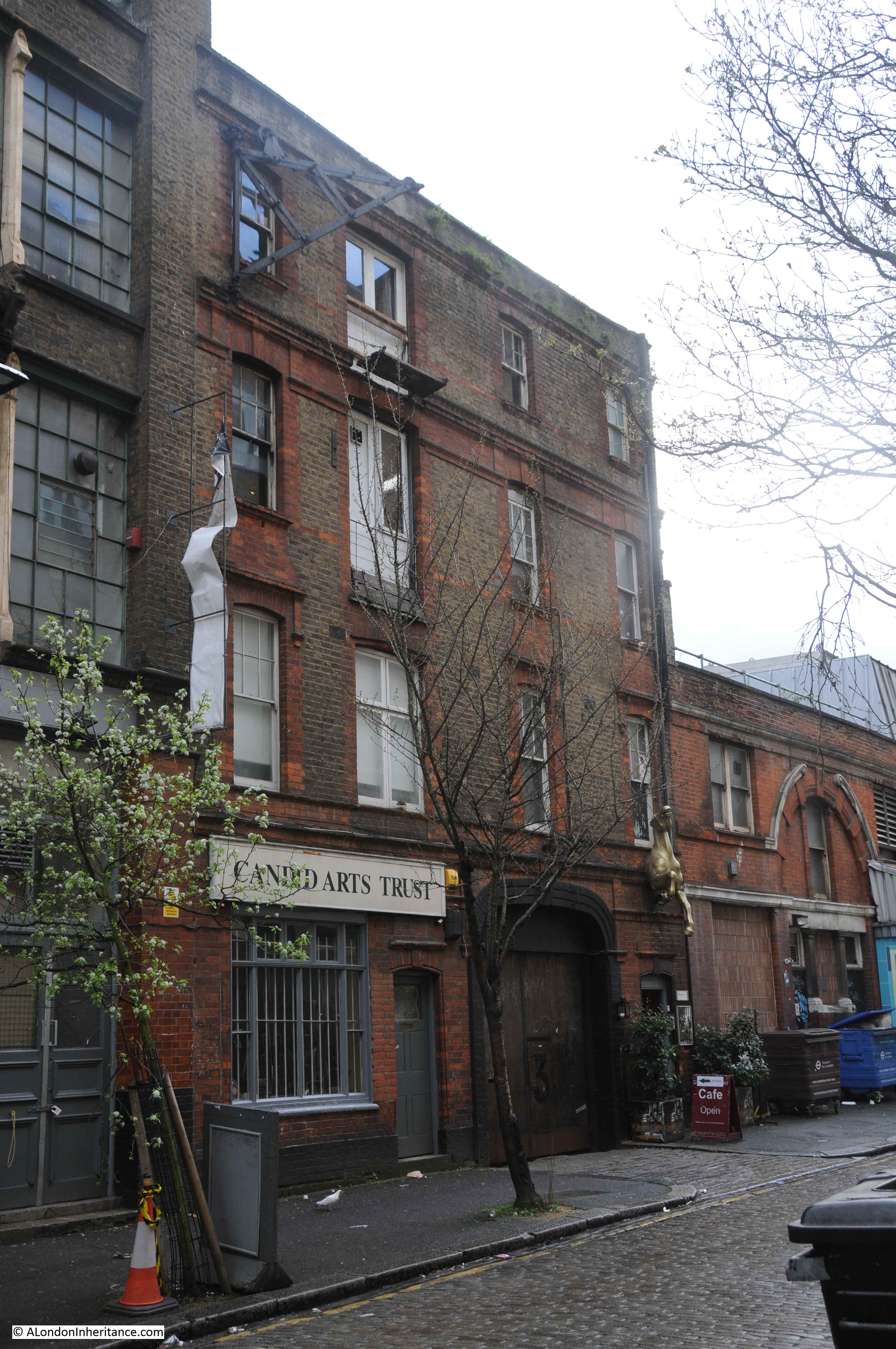
Candid Arts Trust occupies a 19th century warehouse:

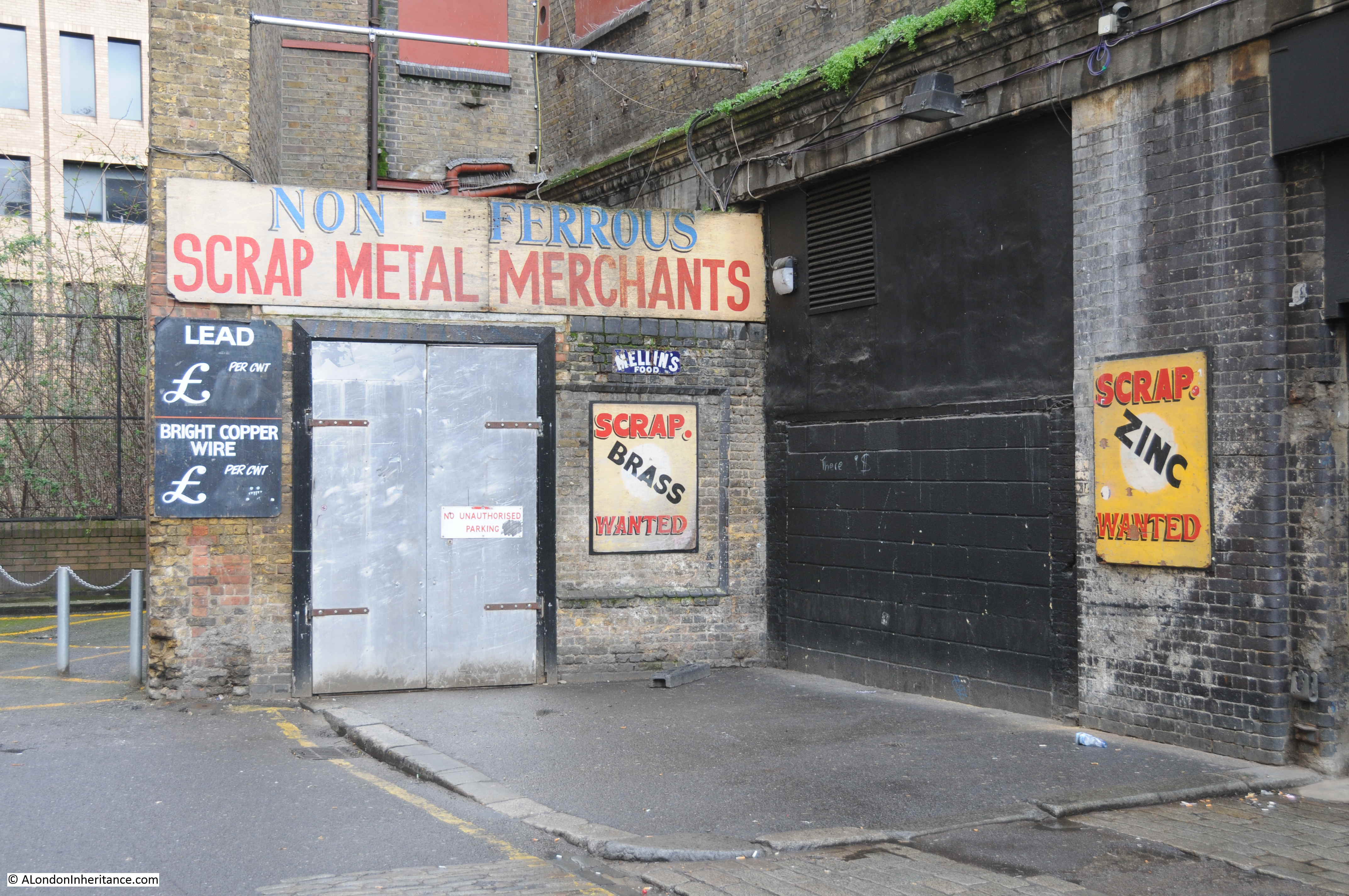
And at the end of the street is an early 20th century building that was constructed on the site of a smithy and may have been used to stable horses, however it would be occupied by a metal working and plating company.

And there is still evidence of this activity:

The building is now occupied by the “Islington Metal Works” – run by a hospitality company and the site is used for Wedding Receptions, Corporate and Christmas events.

The link between these two very different sites, in different parts of London is hopefully now clear; that they are the redundant entrances to once busy transport links that have now been diverted.

The entrance to the Limehouse Cut was once a busy route for barges moving between the Lee River and the River Thames, with the Limehouse Cut now diverted into Limehouse Basin.

The original entrance to the Angel underground station has now been closed for some thirty years, with passengers now diverted along escalators rather than lifts to the new station entrance on Islington High Street, with a considerably improved and safer platform layout at the station.

There are many examples of these across London where the ever changing transport system adapts to changing technology, different patterns of use and improvements.

A film was made for the BBC 40 Minutes series in 1989 documenting 48 hours in the life of the Angel station.

Heart of the Angel was made by the BAFTA award winning director Molly Dineen, and it is a very honest portrayal of a station struggling to cope with the numbers of passengers using the station and the creaking infrastructure supporting the station.

if you have a spare 40 minutes, it is well worth a watch and can be found here.

alondoninheritance.com

Rotherhithe Gas Works and a soon to be lost Gas Holder

If you have a gas boiler or cooker, the chances are that the gas you use could come from the North Sea, Norway, or via ship carried liquefied natural gas from countries such as Qatar, Russia and Trinidad to the terminal on the Isle of Grain in the Thames Estuary. When gas started to be used as an energy source in the 19th century, the production of gas was very local to consumers, and for this week’s post I am exploring one such production facility, the Rotherhithe Gas Works.

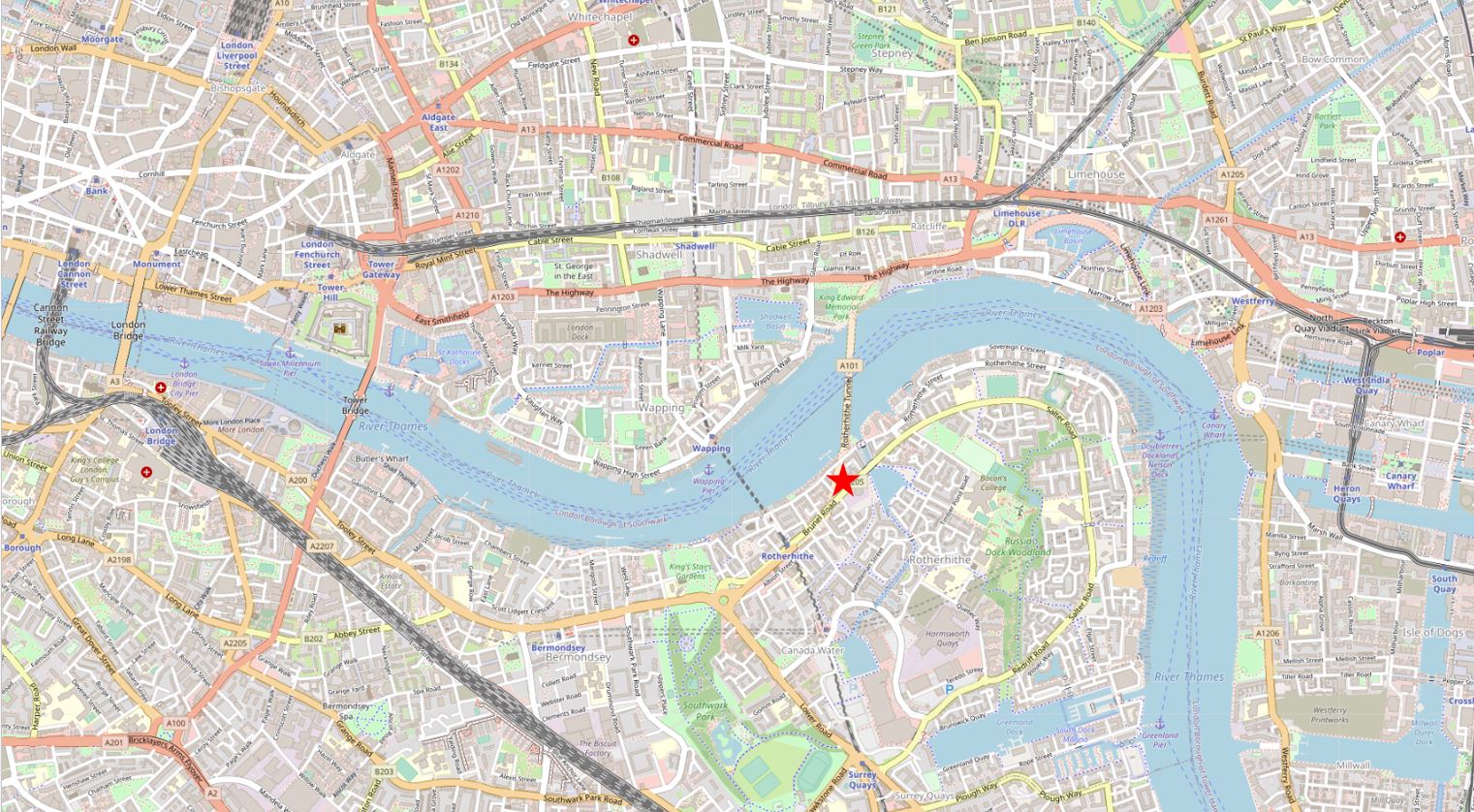
I have marked the location for today’s post by the red star in the following map  (Map © OpenStreetMap contributors):

Rotherhithe Gas Works

That is not a bridge across the Thames at the point of the star, it is the way Openstreetmap shows the Rotherhithe Tunnel.

The reason for the post on the Rotherhithe Gas Works is because of a photo taken by my father in 1948. The following photo shows what is probably open space following the demolition of bomb damaged houses, with in the background, parts of two large gas holders.

Rotherhithe Gas Works

I wanted to find the location of the photograph. I knew from my father’s notes that the location was Rotherhithe, but not from where the photo had been taken. The two gas holders were obvious clues, however the area is very different today, so I started off with the 1950 edition of the Ordnance Survey map of the area.

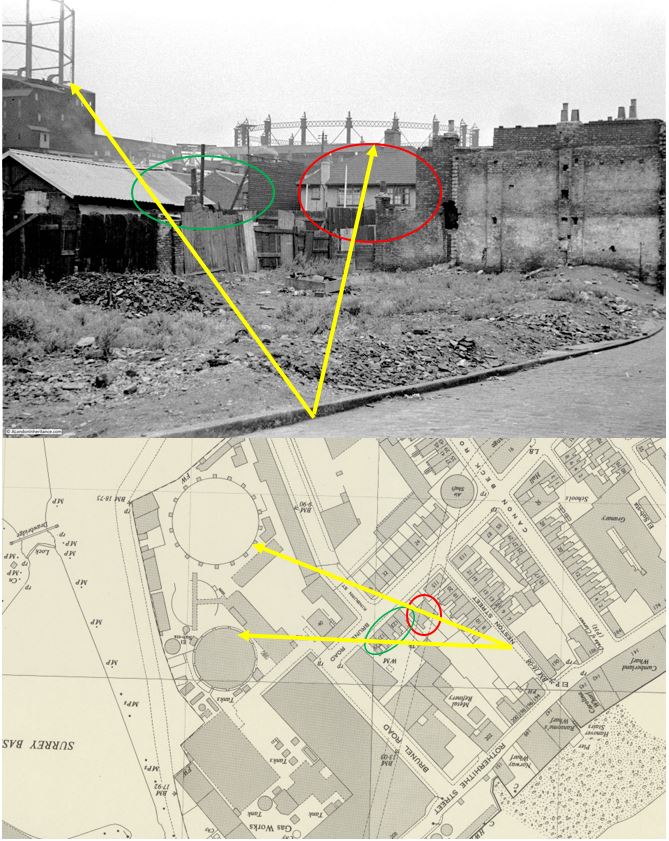
I have copied the photo below, added the map extract and marked up key points shown in both photo and map, and the approximate location where my father was standing to take the photo. I needed to rotate the map to get a similar orientation to the photo, so north is at the bottom and south at the top of the map.

Rotherhithe Gas Works

The red oval marks a semidetached pair of houses. To the left of these houses, there appears to be a tall wooden fence, and next to the fence, a terrace of older houses (you may need to click on the photo and enlarge to see the details of these clearly). These are the terrace houses shown by the green oval on the map.

In the background are the two large gas holders. The one on the right appears to be a larger circumference than the holder on the left, which matches both photo and map. Part of the gas holder on the left is obscured by a large building, again the same in both photo and map.

Extending the alignment of these features back, and they converge at a point on a street which again aligns with the photo as part of a street is in the lower right corner.

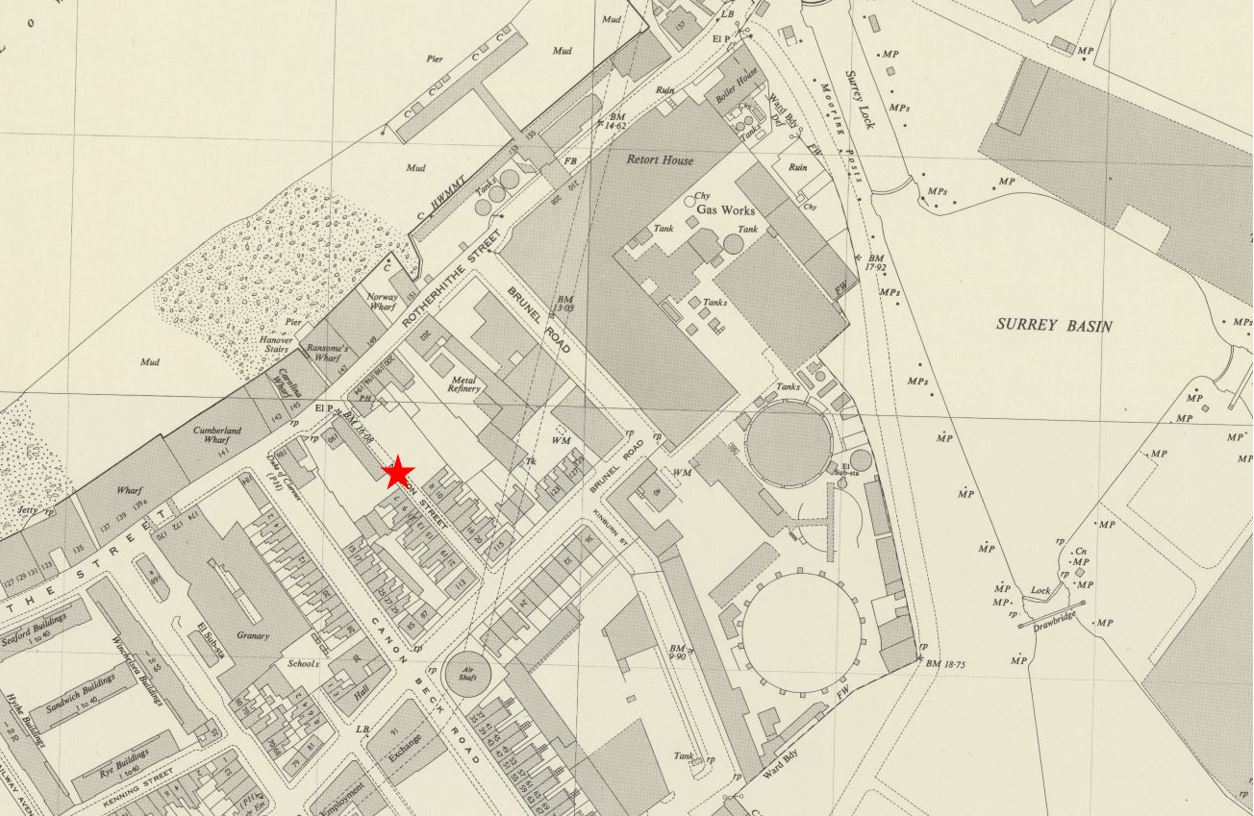
Rotating the map back to the correct orientation, and the street is Neston Street, marked below with the red star. The terrace of houses on the right of the street ends in a blank space on the map which corresponds with the 1948 photo (‘Reproduced with the permission of the National Library of Scotland’).

Rotherhithe Gas Works

So it should be simple to find the location today? Not very, as the area has changed so much. In the 1950 map above, All the large buildings between the round gas holders and the River Thames at top left, were part of the Rotherhithe Gas Works. To the left, there was some housing, along with other industrial buildings, and the area had also suffered bomb damage.

The Rotherhithe Gas Works closed in 1959, and over the last few decades, the area has been considerably redeveloped with new housing now covering all the original site of the gas works (with one exception). Roads have changed, and Neston Street has disappeared.

Marking Neston Street on today’s map of the area (red line) allows the location of the 1948 photo to be identified (red star),

Rotherhithe Gas Works

I needed to visit the site to see the area today, and to find one of the two remaining elements of the Rotherhithe Gas Works infrastructure, one that may not be around for too much longer.

I walked along Rotherhithe Street from the west, and walked up Canon Beck Road (to the left of the red line), a road that appears on both today’s and the 1950 map.

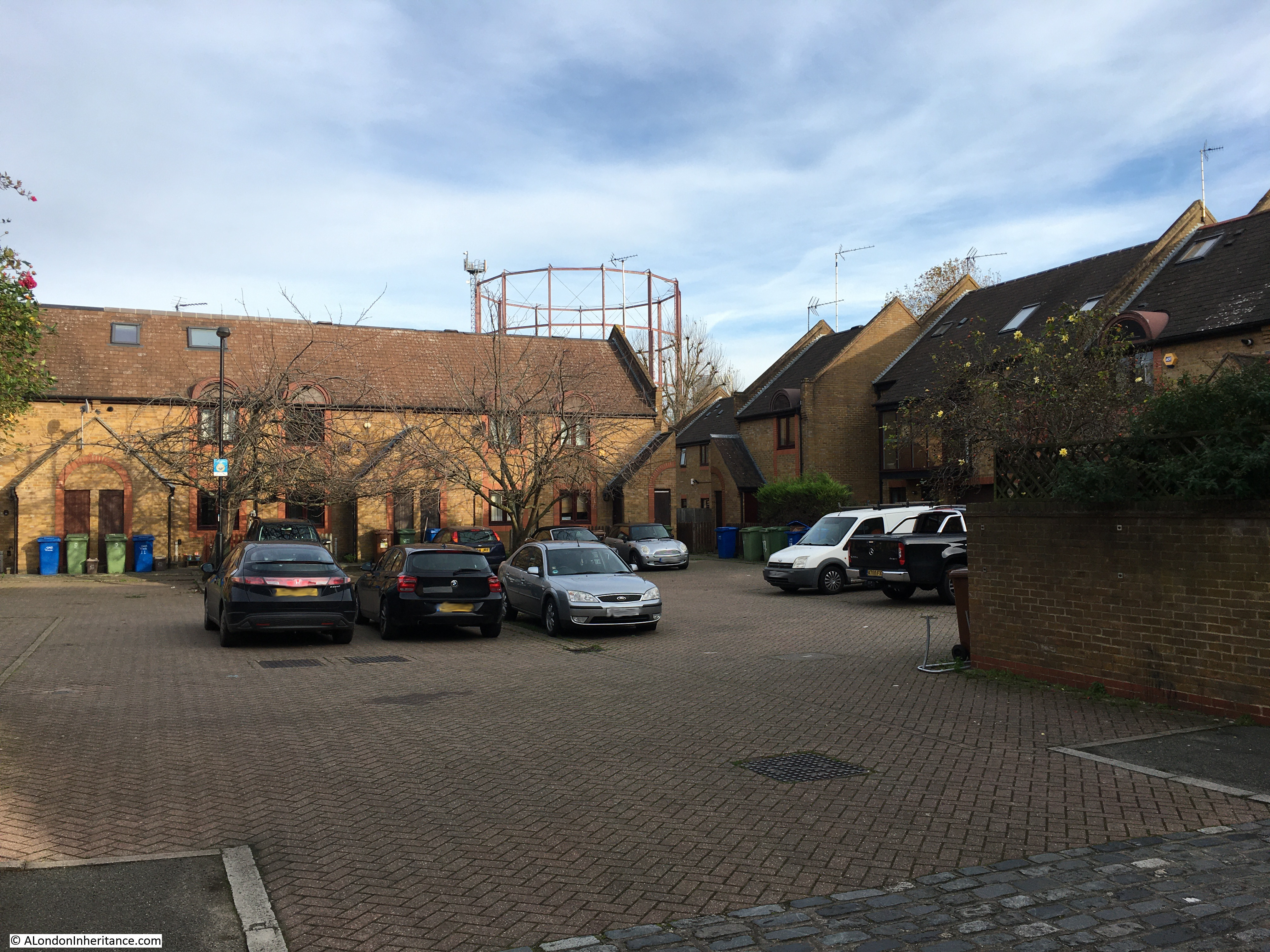
Just over half way along Canon Beck Road is a short entrance road to a residential square, Clifton Place. This is shown in the photo below:

Rotherhithe Gas Works

Neston Street would have run, left to right along the front and over part of the houses at the far end of the photo. To take the 1948 photo, my father was probably standing somewhere around the green and blue bins to the left of the photo.

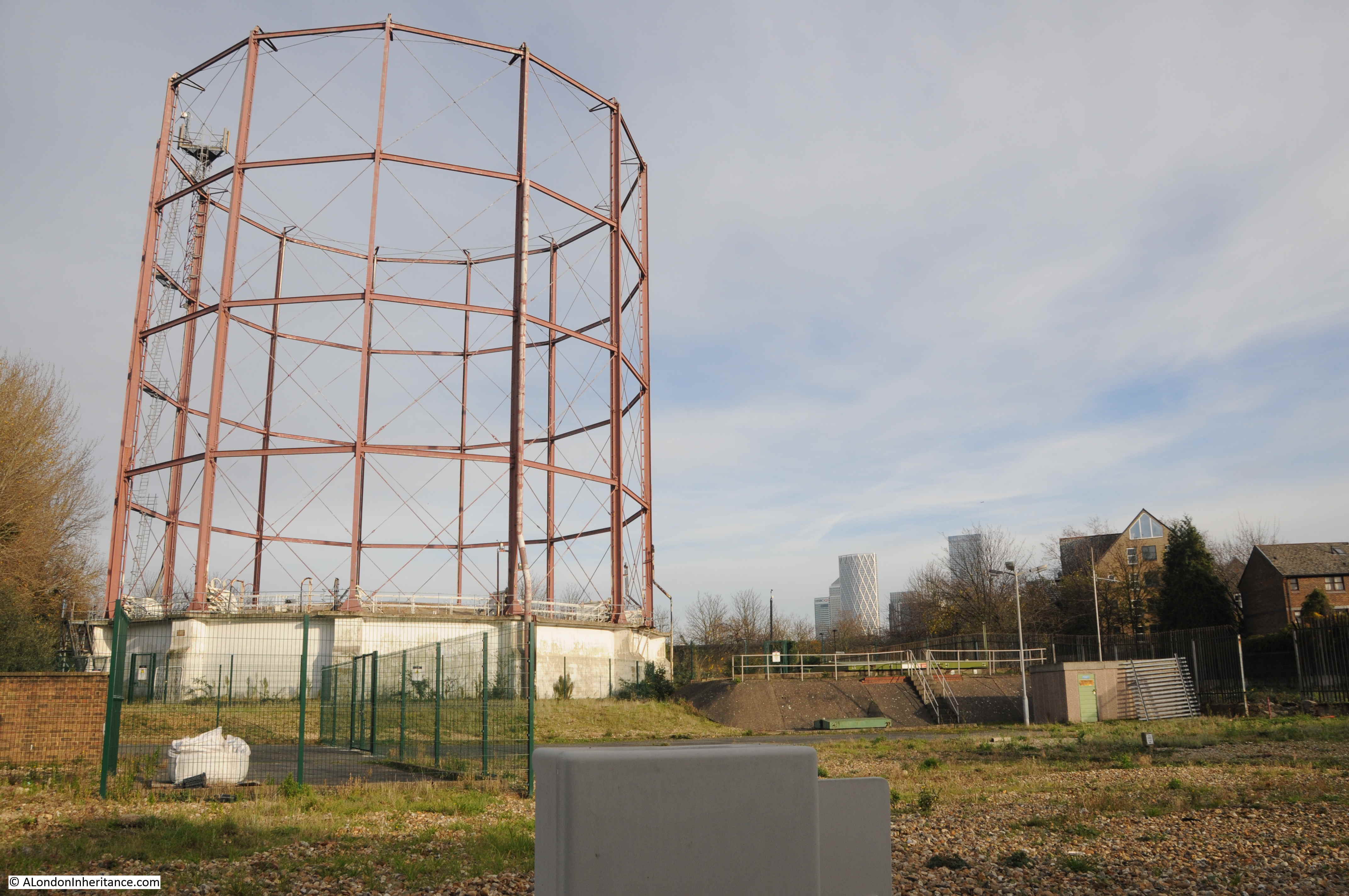
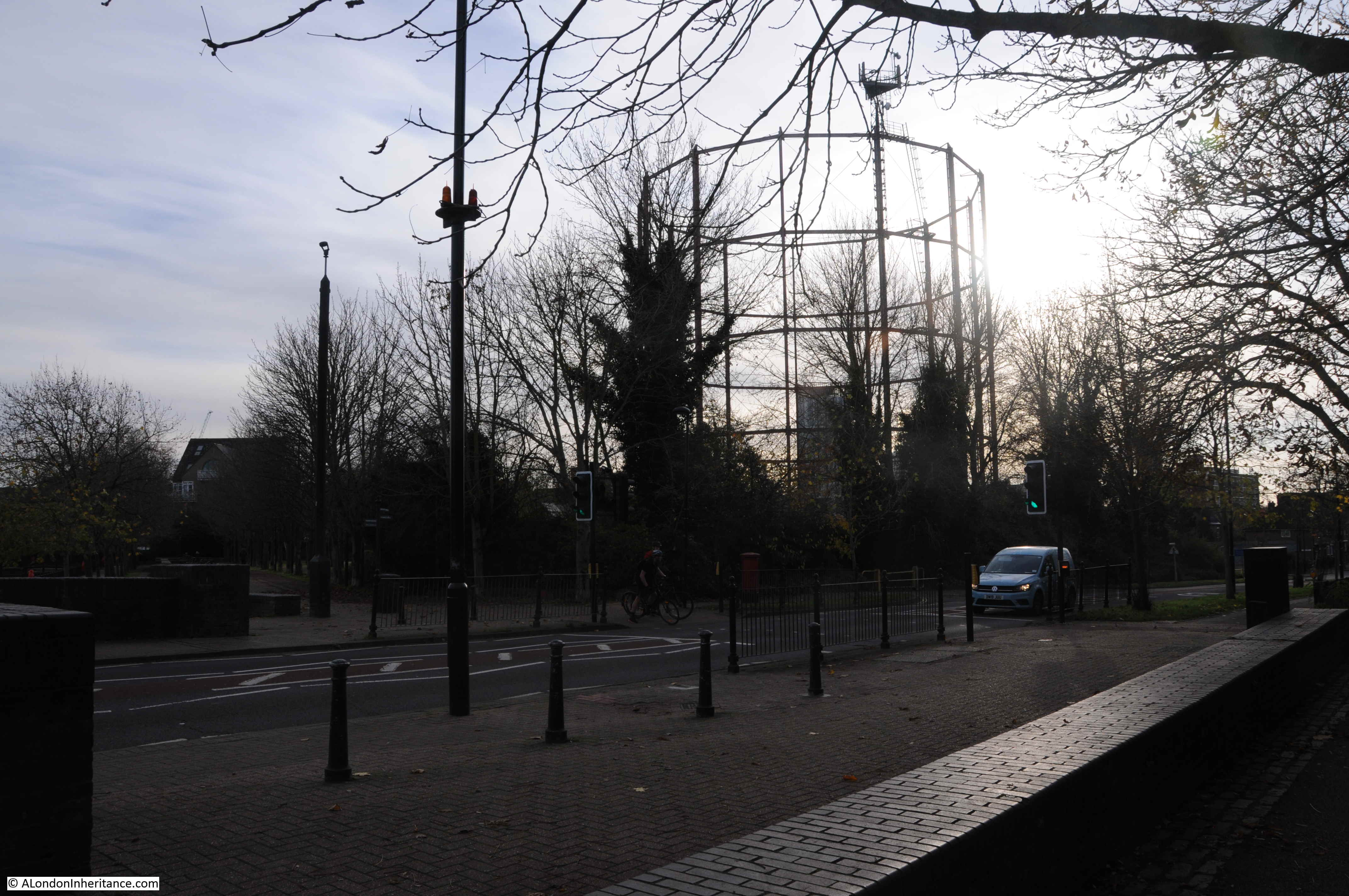
Looming in the back of the above photo is one of the two remaining parts of the Rotherhithe Gas Works – the gas holder also seen to the left of the 1948 photo.

As well as visiting the site of my father’s photo, the gas holder was the second reason for wanting to visit, as it may well be soon disappearing as a local landmark, and a reminder of the industrial history of this part of Rotherhithe.

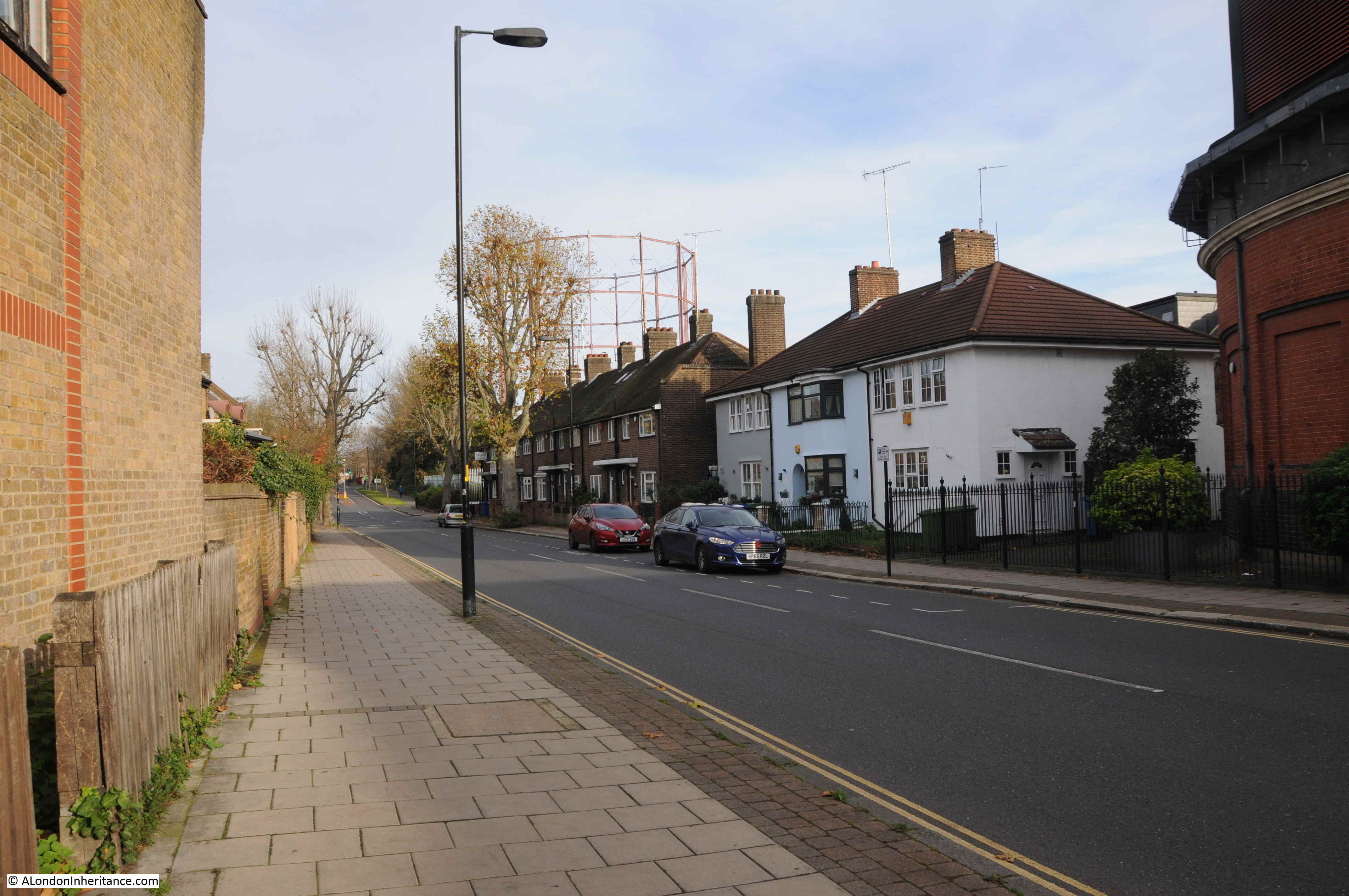
I walked up to Brunel Road. The terrace of houses along Brunel Road are not part of the redevelopment of the last few decades, they are much earlier. The gas holder can be seen in the background.

Rotherhithe Gas Works

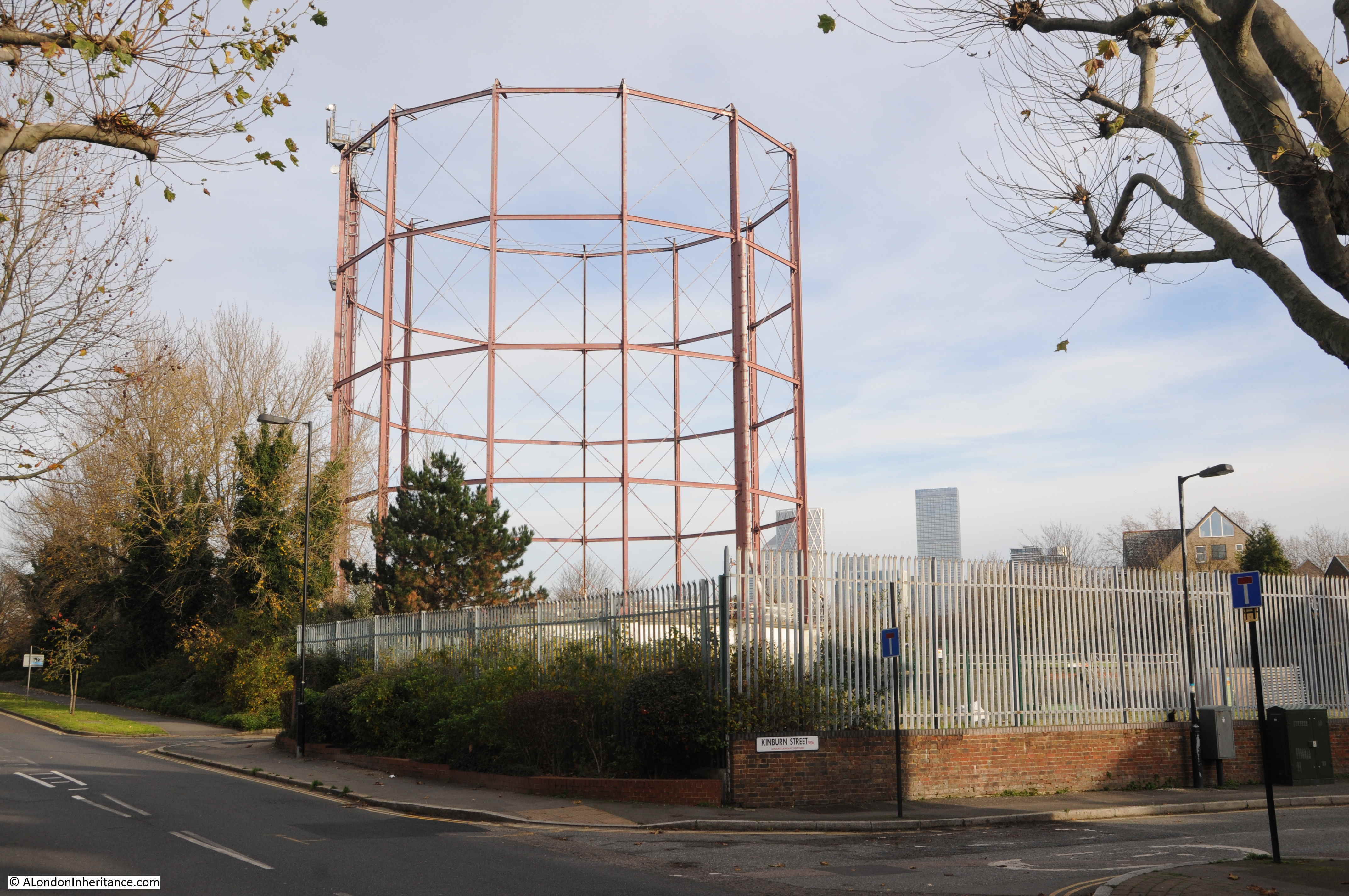
Walking along Brunel Road up to the location of the gas holder, to find the one remaining holder from the gas works, sitting in the space that was also once occupied by the second gas holder in the 1948 photo.

Rotherhithe Gas Works

The remaining gas holder may not be here for long. Plans have been submitted for a complete redevelopment of the site which includes the land occupied by the gas holder, and the surrounding land.

The work will involve the demolition of the gas holder, and the infill of the tank below the gas holder, and the tanks below ground of the gas holders that have already been demolished.

Considerable work will involve removing contamination of the land and the move of operational gas piping and controls that still occupy the site.

The current plans appear to cover the construction of:

  • 40 dwellings for social rent
  • 39 dwellings for discount market rent
  • 198 private dwellings

The plans include the intention “To celebrate the character of the site and its industrial heritage”, which as far as I can see runs to “Balconies and stairways take reference from the industrial metal work” and “Pitched roofs reference the storage sheds associated with the Surrey Water Docks” along with the use of the colour red to accentuate certain features to recall the colour of the existing gas holder.

There is a web site for the proposed development, which includes presentations on the proposed work. It can be found under the name of the development Rotherhithe Holder Station.

A view of the gas holder and the surrounding land which is in-scope of the proposed development:

Rotherhithe Gas Works

The history of the Rotherhithe Gas Works is complex, and tells the story of the consolidation of the local gas companies throughout the 19th century and nationalisation in the 20th century.

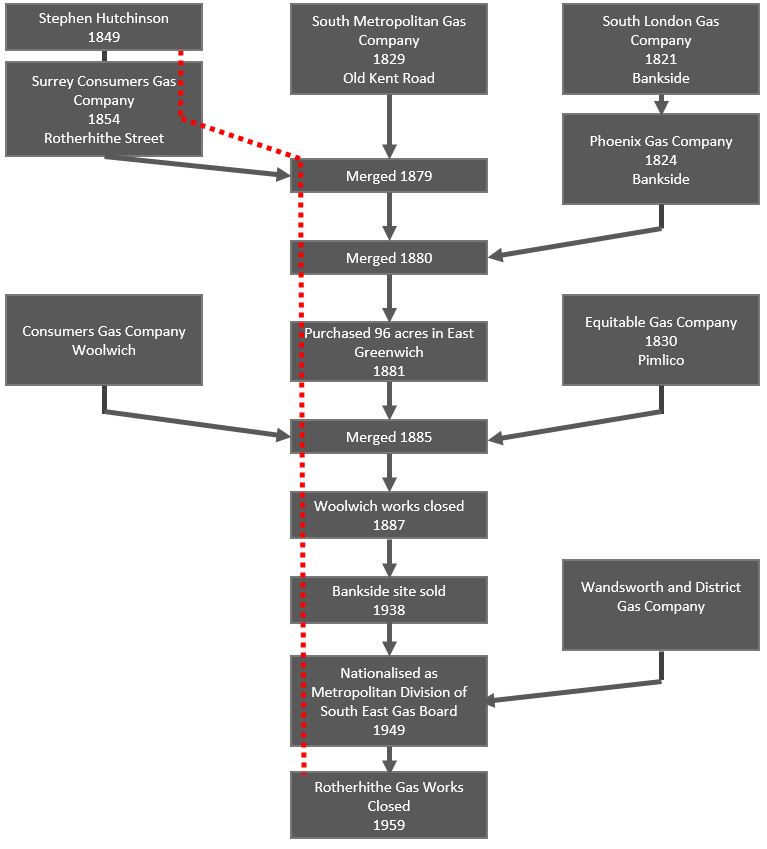
Using a number of resources (which I will list at the end of the post), I have attempted to put together a graphical history of the Rotherhithe Gas Works, their ownership, and mergers with other gas companies. Be aware that there are various conflicting dates for some events, and also definition of a date, for example when a gas works became operational, the incorporation of a company by Act of Parliament etc.

Any corrections would be appreciated.

The following graphic shows how the Rotherhithe Gas Works (starting at left and highlighted by the red dotted line) integrated with London’s gas companies through to closure in 1959.

Rotherhithe Gas Works

The first gas works in Rotherhithe seem to have commenced construction by Stephen Hutching in around 1849, with the works becoming part of the Surrey Consumers Gas Company, a company incorporated by Act of Parliament in 1854.

In the mid 19th century there were many concerns about the quality of the gas provided to consumers and the cost, with companies having a monopoly within their local supply area. An 1849 article in The Era titled “Gas Monopolists In A Fever”  talks about the need for gas companies who can supply gas “free from sulphureted hydrogen, acid and ammonia” and the extortionate price charged with upwards of 15 shillings per 1,000 cubic feet, where independent calculations estimate that gas can be produced using modern methods for 2 shillings per 1,000 cubic feet.

The Surrey Consumers Gas Company merged with the South Metropolitan Gas Company in 1879, which brought together two gas companies serving south and south east London.

In 1881, the South Metropolitan purchased a large area of land on the Greenwich Peninsula and started the construction of the gas works which would go on to be one of London’s major gas producing centres for many years.

The South Metropolitan Gas Company would continue to integrate other, smaller companies, including the Phoenix Gas Company based in Bankside in 1880, the Consumers Gas Company in Woolwich and the Equitable Gas Company in Pimlico, both in 1885.

Probably because of the growth of sites such as the Greenwich Peninsula and Rotherhithe, the South Metropolitan closed and sold off sites at Woolwich and Bankside.

Reading newspaper references to London’s gas companies throughout the 19th and early 20th centuries, there are very many references to the monopoly position of these private companies, the cost of gas and frequently the quality of the gas, and pollution from the gas producing works.

In January 1860 the Surrey Consumers Gas Company were at Southwark Police court being charged by the Bermondsey vestry under the Nuisance Removal Act “for that they, in the manufacture of gas on their premises at Rotherhithe, did, on or about the 16th inst. cause an intolerable nuisance to exist as to be dangerous and injurious to the inhabitants of the parish of Bermondsey”.

The issue in January 1860 seems to have been a considerable amount of ammonia in the gas supply which had not been removed by the purifiers at the Rotherhithe gas works, and was causing a very bad smell, and health problems to those in Bermondsey who consumed the gas.

In 1875 at the half yearly meeting of the Surrey Consumers Gas Company, the news reports stated that the meeting “must have been attended with considerable interest by the fortunate individuals who hold shares therein. They have been too long accustomed to their unfailing profit of 10 per cent per annum. The balance sheet was as good as had ever been issued by the company”.

Consumer groups were frequently formed and south London’s vestries were often complaining about the costs and quality of gas, and there were many arguments that such companies should be publicly rather than privately owned.

London’s gas consumers would have to wait until 1949 for this to happen, when the countries gas companies were nationalised by the post war Labour government and the South Metropolitan Gas Company along with other London gas companies were merged into local gas boards under public ownership.

Ownership of gas provision came full circle when the nationalised gas board was privatised in 1986 as British Gas, and since then many of the arguments about the cost of gas are very similar to those in 19th century newspapers.

The production of gas was a very dirty business. Coal was heated in a furnace, which produced a range of gases including hydrogen and carbon monoxide. These gases were passed through a condenser where solids and liquids such as tar would be removed, before passing through a purifier where impurities such as sulpher and ammonia would be removed.

The gas was then fed to the gas holders ready for distribution at pressure to gas consumers.

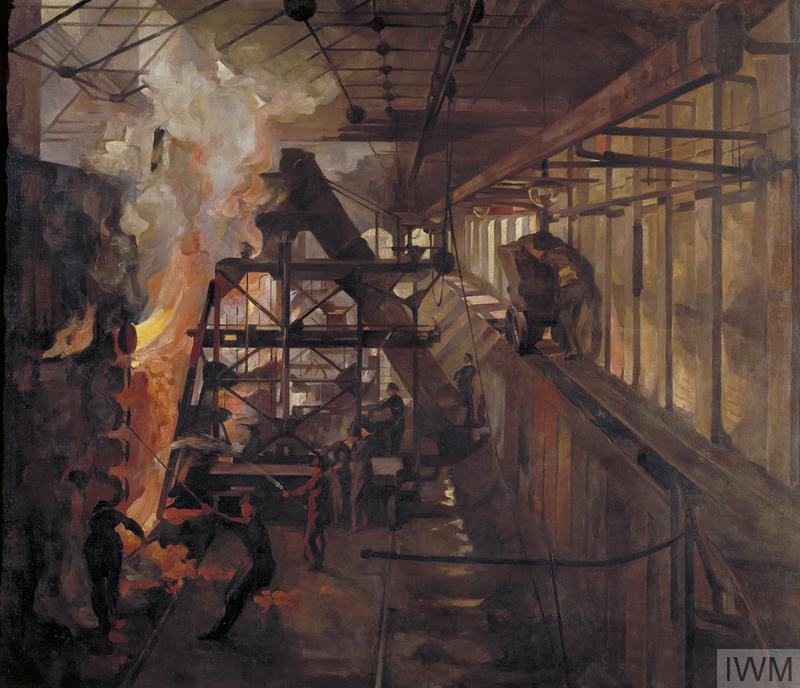
An impression of the interior of the Rotherhithe Gas Works can be had from the following artwork dated 1918, with women working in the “retort” area (retorts are the furnaces where coal was heated to produce gas).

Rotherhithe Gas Works


 Copyright: © IWM. Original Source: http://www.iwm.org.uk/collections/item/object/105

Work at the Rotherhithe gas works was dangerous and there are newspaper accounts of accidents within the works. For example, when one of the gas holders was being built in 1890, a labourer named Barnes, aged 23, working for the contractors Clacton & Son of Leeds, died after falling twenty feet to the base of the holder.

Workers at the gas works had the Rotherhithe Gas Works Institute, and in October 1894, five crews from the institute raced on the Thames from the coal jetty at the gas works to Deptford Creek.

Discovery of North Sea gas in the 1960s resulted in the replacement of so called Town Gas from gas works such as that at Rotherhithe, by gas piped from below the North Sea. Although Rotherhithe has already closed in 1959, the majority of coal based gas works in the country had closed by the 1980s.

The lone gas holder at Rotherhithe now stands as an isolated reminder of this period of south London industrial history.

Rotherhithe Gas Works

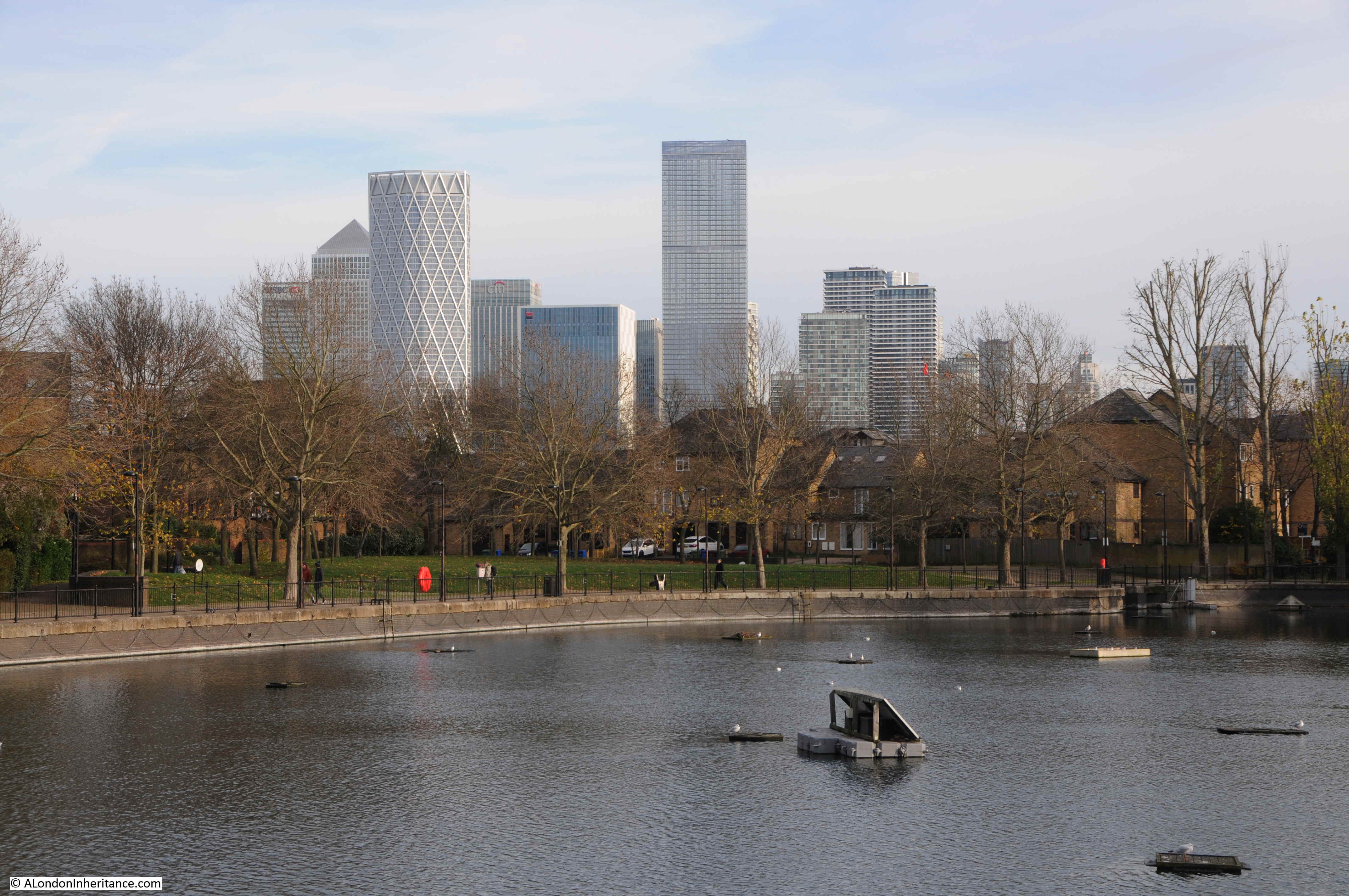
The gas holder stands next to the remains of another of the areas lost industries. This is the Surrey Basin, one of the few reminders of the large area of docks that once occupied this area of Rotherhithe. The towers of the Isle of Dogs are in the background.

Rotherhithe Gas Works

The following photo is from Salter Road, a road that did not exist when the Rotherhithe gas works were in operation. The space in front of the camera, and the space occupied by the houses behind the trees was the space covered by the buildings of the gas works, which fed gas to the gas holders which are to the left of where I was standing to take the photo.

Rotherhithe Gas Works

Crossing Salter Road and looking back at the gas holder, which now supports mobile phone antennae’s at the very top.

Rotherhithe Gas Works

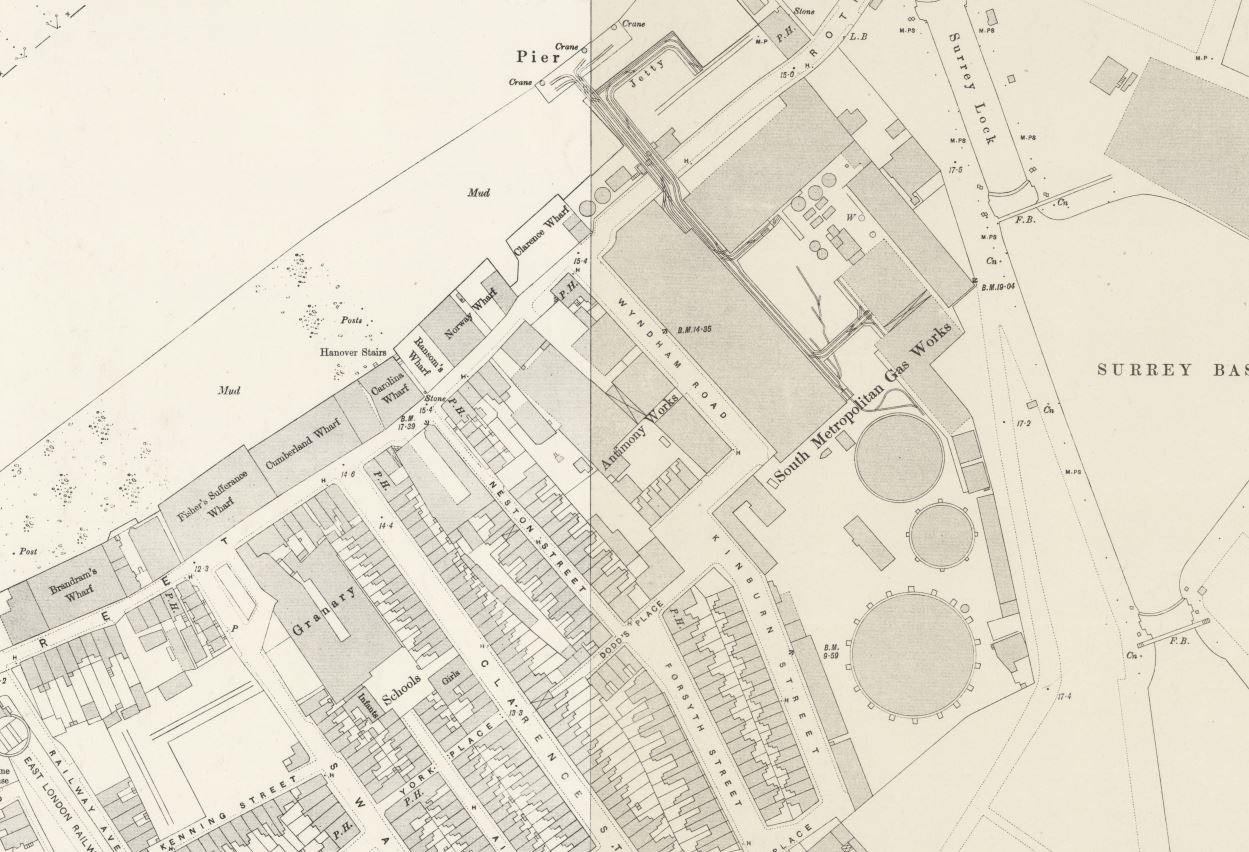
The following map from 1895 shows three gas holders with the main buildings of the Rotherhithe Gas Works to their north. There were a total of four gas holders over the life of the gas works (‘Reproduced with the permission of the National Library of Scotland’).

Rotherhithe Gas Works

Of the three shown in the map above, one was destroyed by war time bombing. I suspect that this was the smaller holder between the two outer holders, as it is not shown in the 1950 map, or in my father’s photo. The larger of the two gasholders was demolished at the same time as the rest of Rotherhithe gas works in the 1960s and 70s, leaving only the holder that remains today.

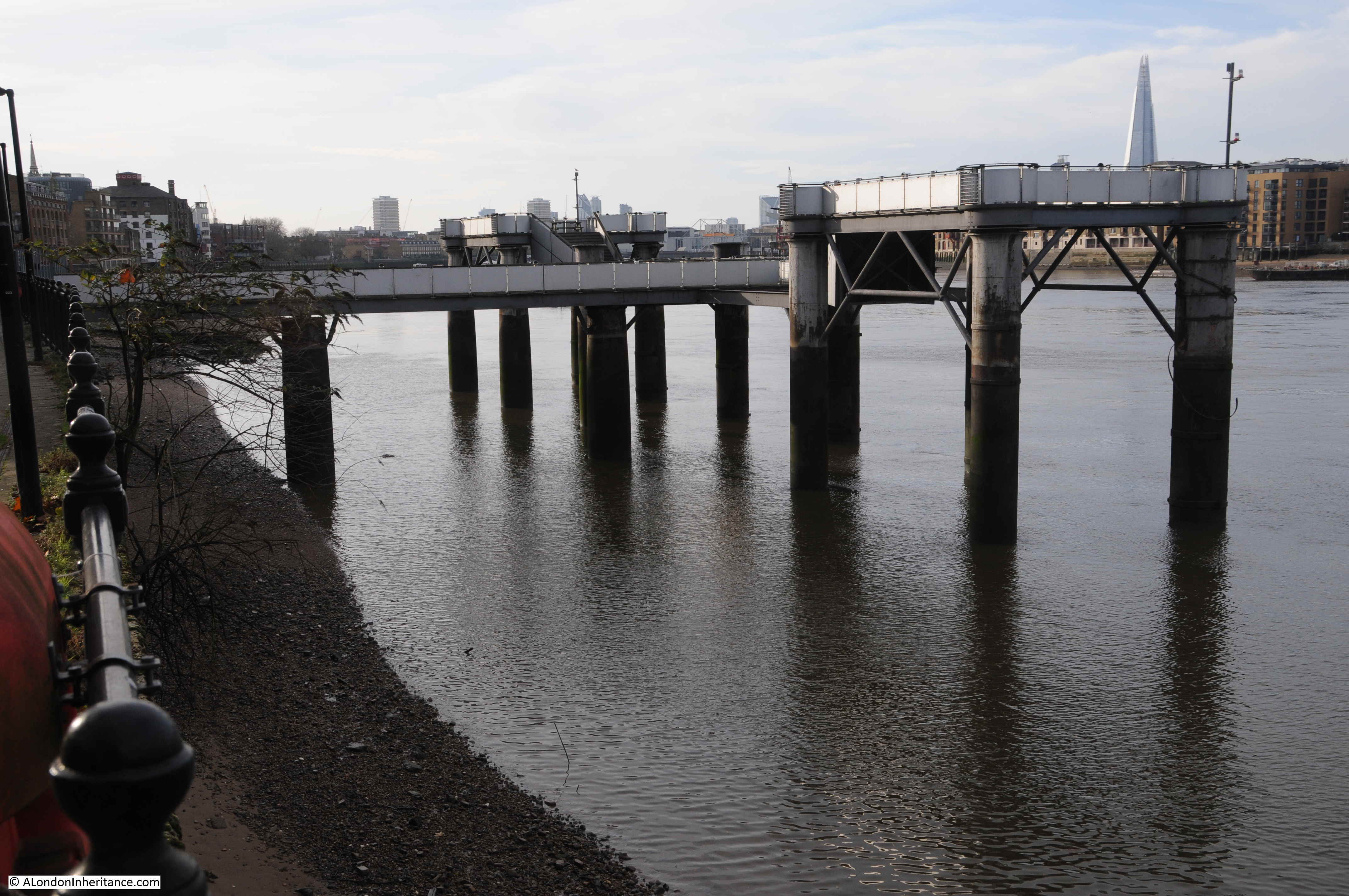
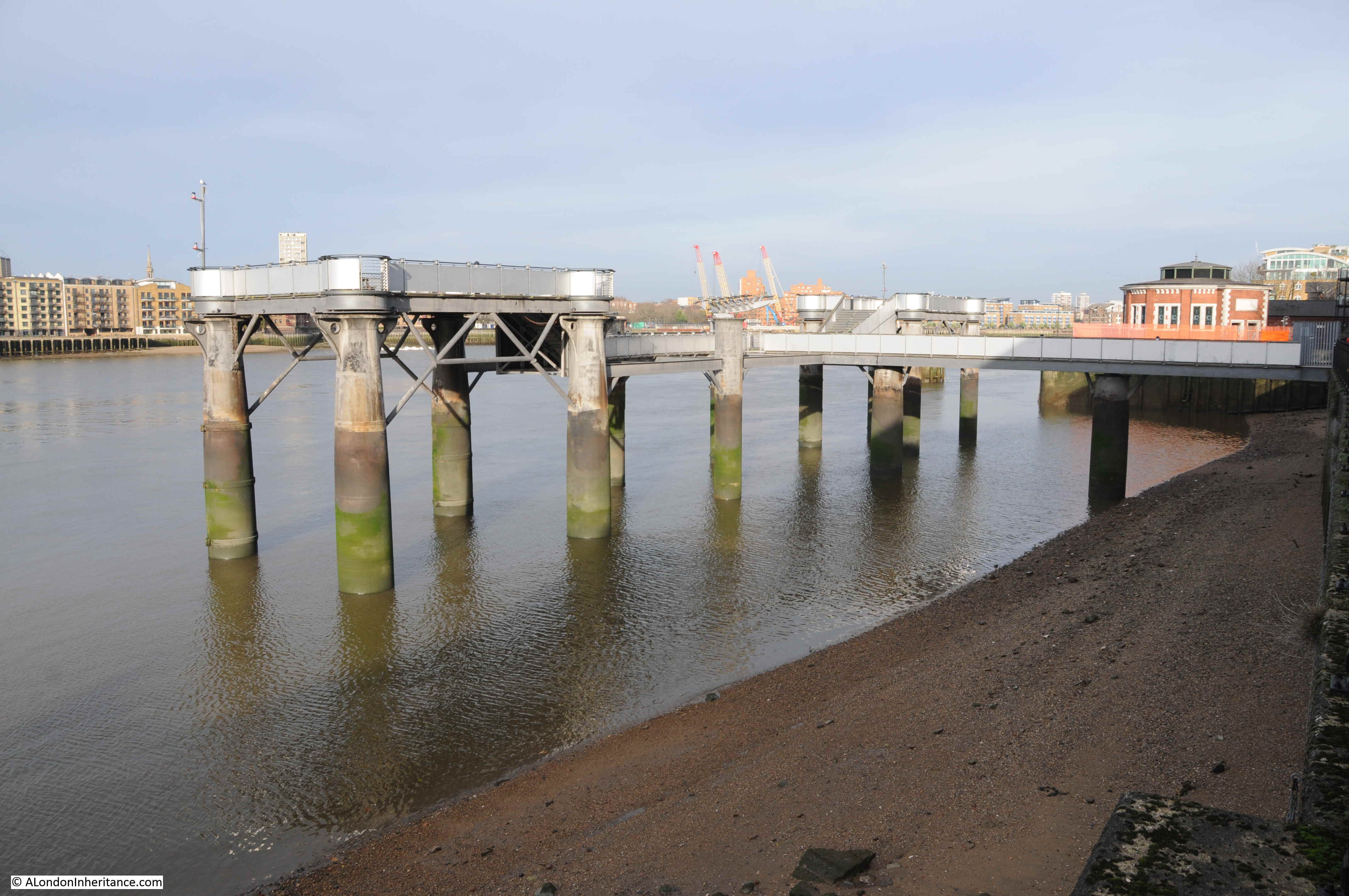
Apart from the gas holder, there is part of the site wall remaining alongside the Surrey Basin. Another part of the gas works infrastructure that we can see today is shown in the above map. If you look at the very top centre of the map there is a pier extending into the River Thames.

This was the pier used by ships bringing coal to the gas works, and looking at the map, you can see the conveyor system that carried coal from the pier, over Rotherhithe Street, to the retorts where the coal would be heated to produce gas.

The Rotherhithe Gas Works pier remains today. The view looking west:

Rotherhithe Gas Works

Looking east along the river with the gas works pier, and the round air shaft building for the Rotherhithe Tunnel behind the pier on the right.

Rotherhithe Gas Works

The Rotherhithe Tunnel was built under part of the site of the gas works, and during Parliamentary inquiries into the tunnel, the South Metropolitan Gas Company objected to the construction of the tunnel. Mr. George Livesey, chairman of the gas company stated in his evidence that “the proposed tunnel would pass under a corner of the works of the gas company where they had important buildings, retort houses, coalhouses, and so forth. These structures were of considerable weight, and the foundations were thoroughly sound. If there was any disturbance to the foundations – which were taken down to the gravel – it would put the retort house out of use, and if that happened in winter time it would be a very serious matter.

Pumping operations such as would have to be carried out by the County Council in constructing their tunnel might be a source of serious damage to the company’s works. The gas tanks were set into deep excavations full of water, and if this water and the sand in the foundations were interfered with the results would be that the tanks would leak”

it appears that the company had suffered damage to their operations on the Greenwich Peninsula when the Blackwall tunnel had been built, and they had not received any compensation for this damage, and they wanted a clause in the bill for the Rotherhithe tunnel to ensure they received compensation for any damage to the Rotherhithe works.

The statement about the gas tanks being set into deep excavations, full of water explains why the site today is a complex site to prepare for new building. The tank below ground of the existing gas holder is still in place, as is the tank of the demolished gas holder which was simply capped at the time. These tanks will need to be drained of polluted water and sludge and the hole refilled ready for building above.

I am not sure what the current state of the proposals for the site development are, I suspect that COVID has delayed the process.

Whilst there is an obvious need for more housing across London, it is a shame that another part of London’s industrial history will be disappearing.

This post has covered the history of the gas companies and the Rotherhithe gas works at a very superficial level, this is the problem with a weekly blog, I can only cover topics to a limited level.

The National Archives have a brief summary of the history of each gas company. Use the search box on their site to search for a company. The Early London Gas Industry site by Mary Mills is a fantastic resource covering the gas industry in London.

Although the area has changed significantly since 1948, I am pleased to have found the location of another of my father’s photos. Rotherhithe and Bermondsey is an area I will be returning to in the future.

alondoninheritance.com