Author Archives: admin

The Garden Bridge – A Personal View

The majority of my posts have been covering the changes in London over the last 70 years, showing where London has changed, and the few locations where there has been very little change.

Change in London is a constant, some good, some not so good and often we do not recognise and appreciate what we have in London until it is lost. For this week’s post I want to offer my personal view of a proposed very significant change to London and to the River Thames that now looks likely to get the go ahead and to be built.

The Garden Bridge is a proposal to construct a pedestrian bridge over the River Thames between the Southbank and Temple Underground Station. As the name suggests, this will be far more than a simple pedestrian bridge, the deck of the bridge will be planted with trees, shrubs etc. to give the impression of a walk through a garden as you cross the River Thames.

The proposal has already been granted planning permission by Lambeth Council and last Tuesday evening was granted permission by Westminster Council.

The bridge will span the Thames, across the sweep of river known as Kings Reach between Waterloo and Blackfriars Bridges, from the Southbank to land on the roof of Temple Underground Station on the north bank.

I am not going to argue against the concept, the design or the economics of the Garden Bridge, there are already a number of articles covering these topics. In this post I will question the location, and show what will be lost as a result of the Garden Bridge.

The bridge will cross the river between Waterloo and Blackfriars Bridges. It needs to be high enough to provide sufficient clearance for river traffic at high tide, and the overall apparent height of the bridge will be increased by the planting of trees.

The website of the Garden Bridge Trust can be found here where there are photos and videos of the bridge.

The sweep of the Thames between these two bridges is one of the longest between Westminster and Tower bridges and provides superb views of the river from both north and south embankments and from Waterloo and Blackfriars Bridges.

Rather than crossed by themed bridges, the River Thames and its relationship to the city and the built environment should be the object of interest. The River Thames is central to the history of London. It is the reason why London was established in this location. It was the artery which carried shipping to and from the rest of the world to the docks of London that were central to the development of London as a major global trading city. The Thames has also divided north and south London, providing two parts of the larger city with very different characters. The Thames also provides a key open space in a very congested city.

The proposed landing point on the north bank of the Thames will be at Temple Underground Station. This is a relatively quiet area and the level of visitor numbers to the bridge (anticipated by the Garden Bridge Trust at 7.1 million per annum – paragraph 8.6.2 of the Environmental Statement Main Report Volume 1) will significantly impact and change this area.

Last Saturday I took a walk round the area where the Garden Bridge is to be constructed to understand the impact and see how the area will change.

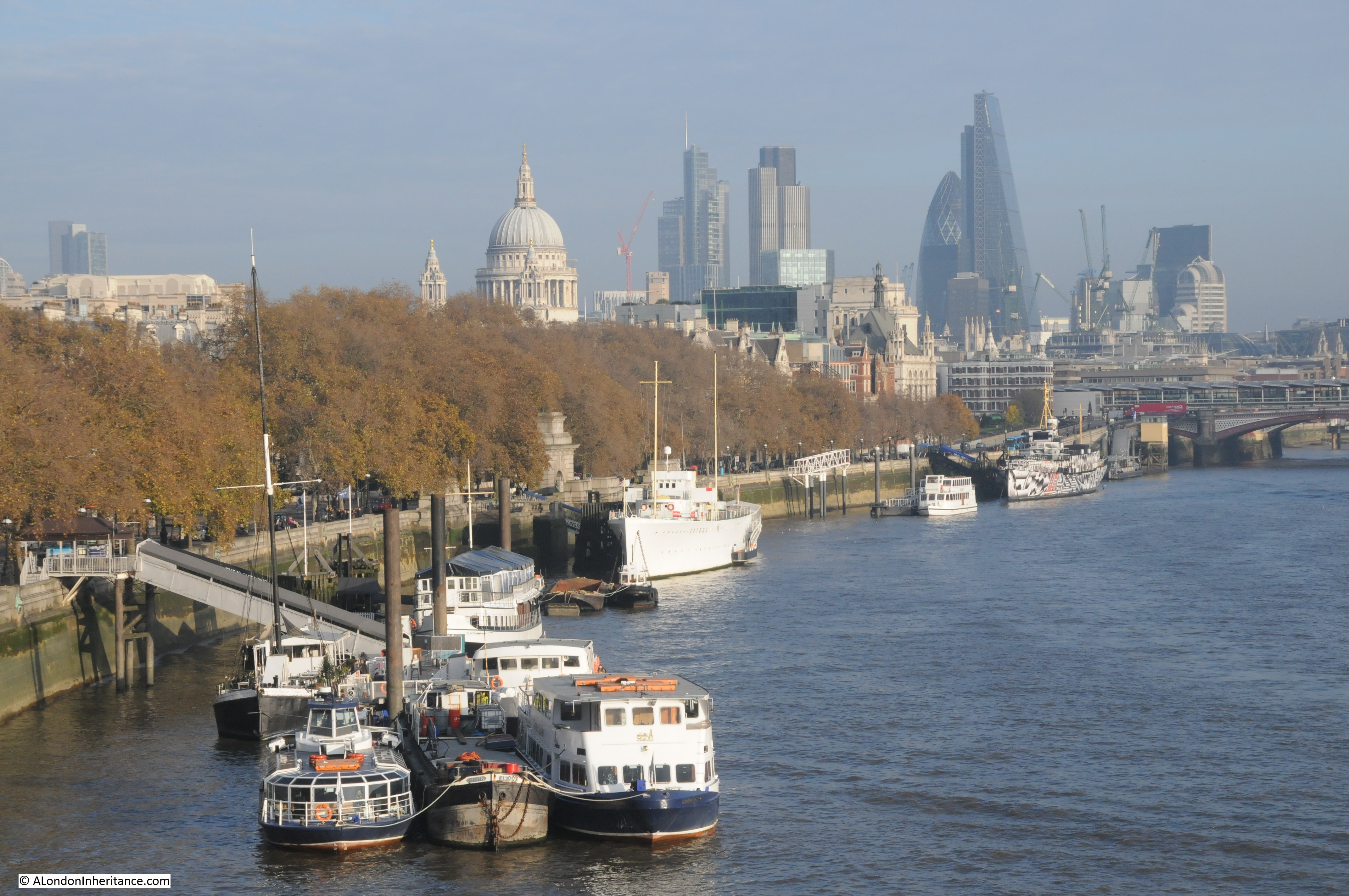
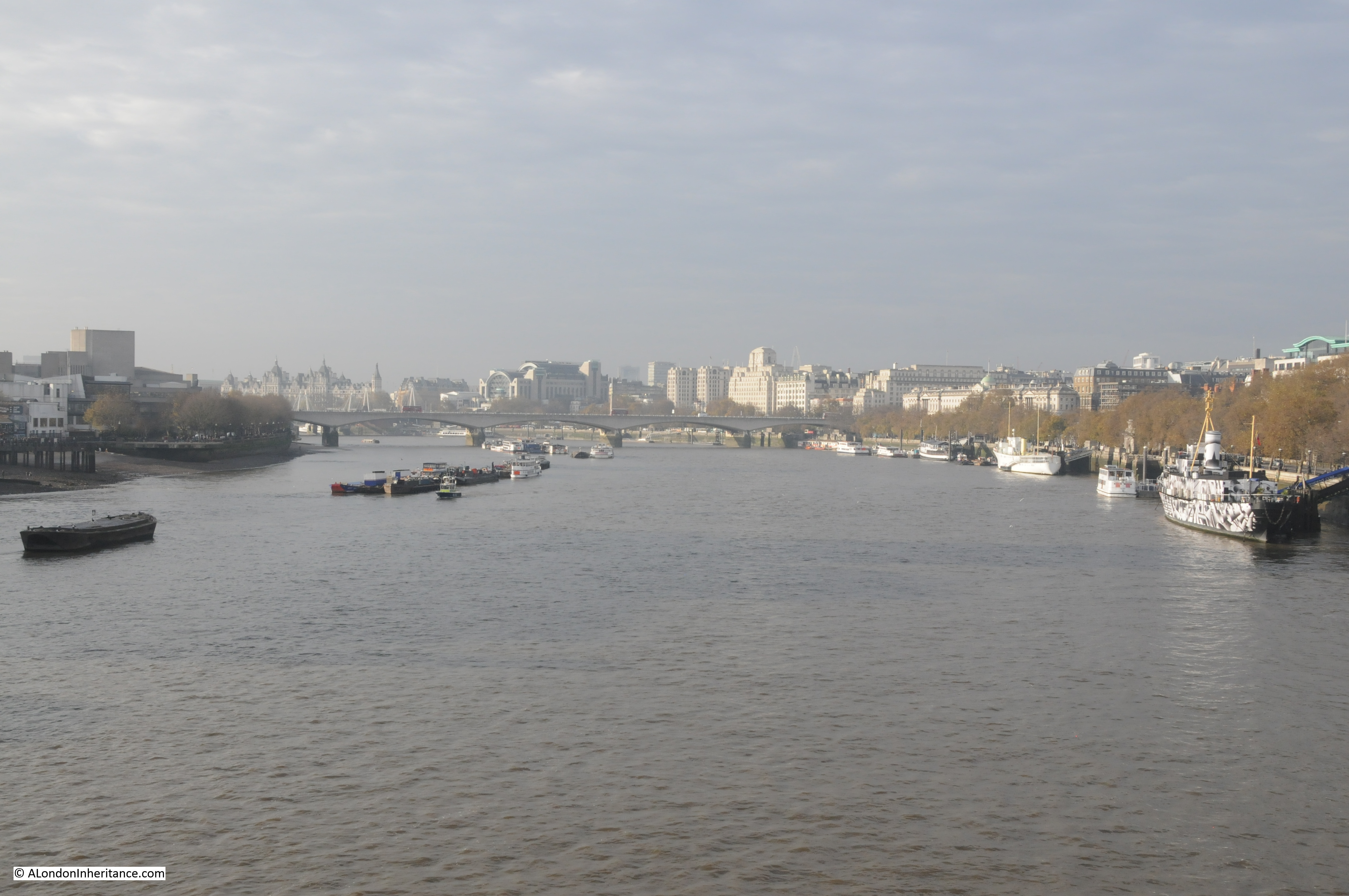
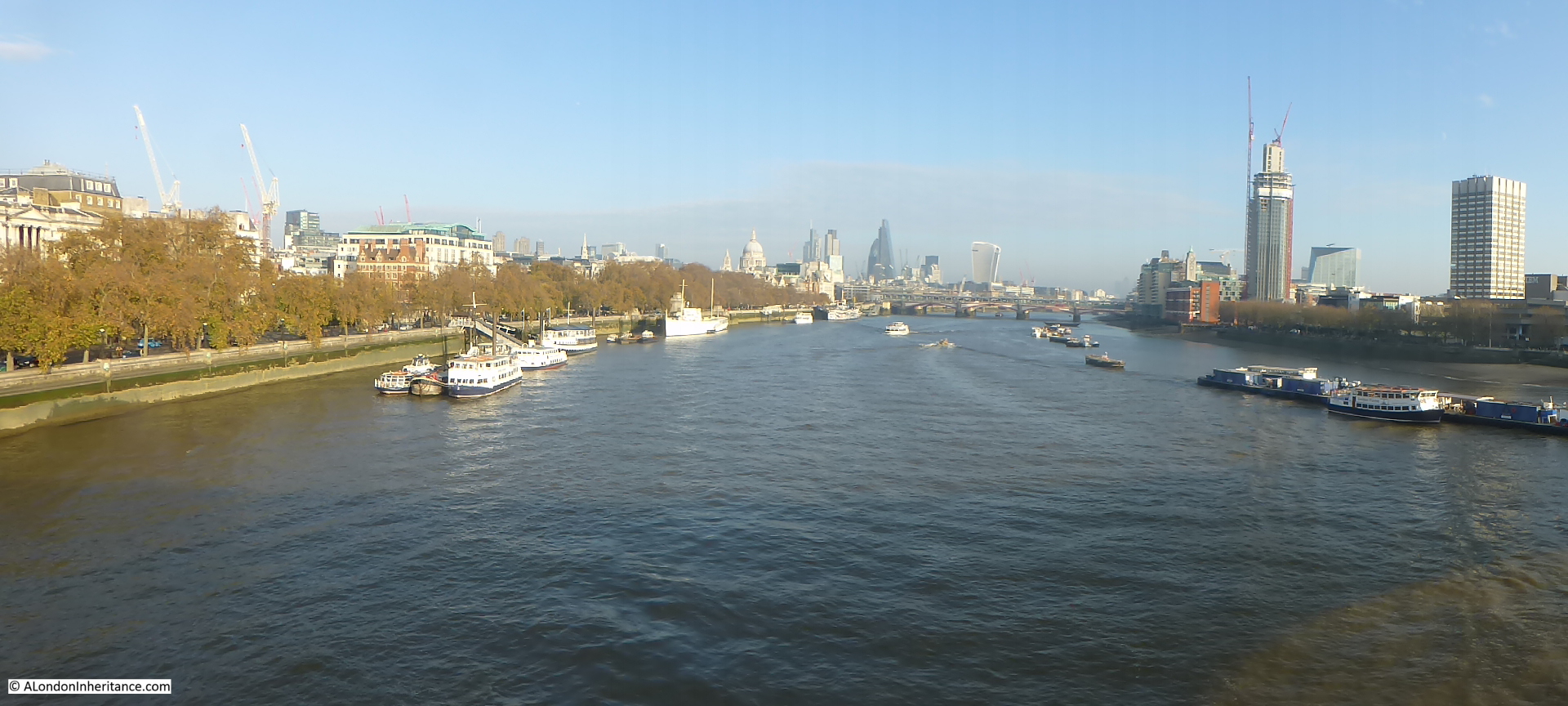
I started on Waterloo Bridge, looking east down the Thames and across to the City. The current view is shown in the following photo, where we look down Kings Reach towards Blackfriars Bridge with St. Paul’s and the City in the background. The spire of St. Brides can seen above the trees on the left. The Garden Bridge will run across the centre of the river from in front of the white ship on the left to the south bank on the right.

garden bridge 12
The long view of the sweep of the Thames will be lost with the bridge now running across the river and dividing Kings Reach in two, obscuring the view down to Blackfriars Bridge and having an impact on the view across to St. Paul’s and the City.

Walking along Waterloo Bridge to the north bank, we pass this view of the north bank of the river. This will change considerably as the bridge will be landing in front of the white ship and cutting across to Temple Station which is behind the trees on the left.

garden bridge 10

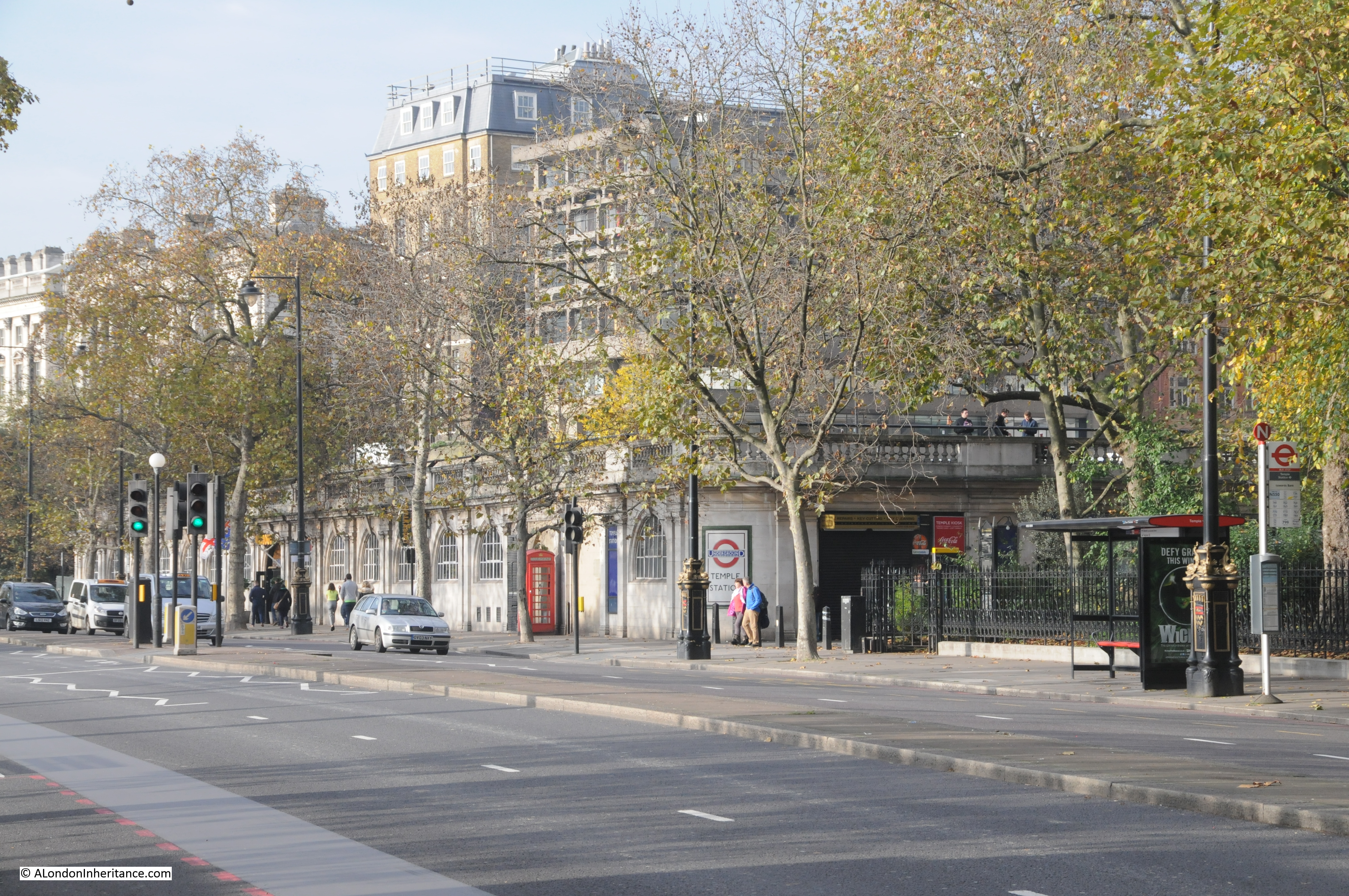
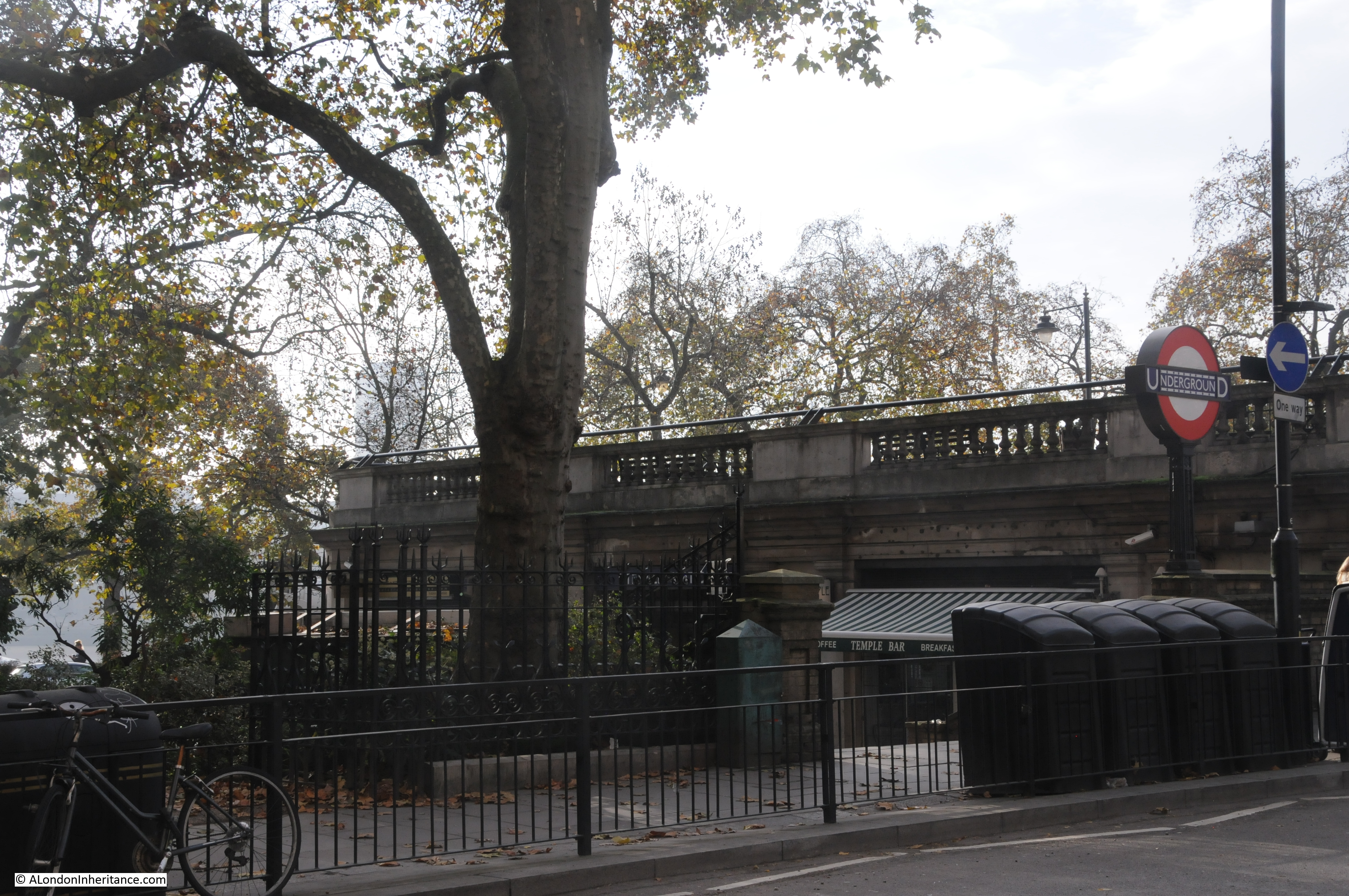
Compared to the south bank of the Thames, the north bank in this area (apart from the traffic) is still very quiet. The bridge will land on top of the building housing the Temple Underground Station, with steps running down to street level. In the following photo, the bridge will come across the gap between the station entrance and the railings to the right, with access ramps and two lifts onto the roof of the station and down to ground level.

garden bridge 19

The rooftop area on top of the station and the adjacent bar is shown in the following photo. This will become the landing point for the northern side of the bridge.

garden bridge 6

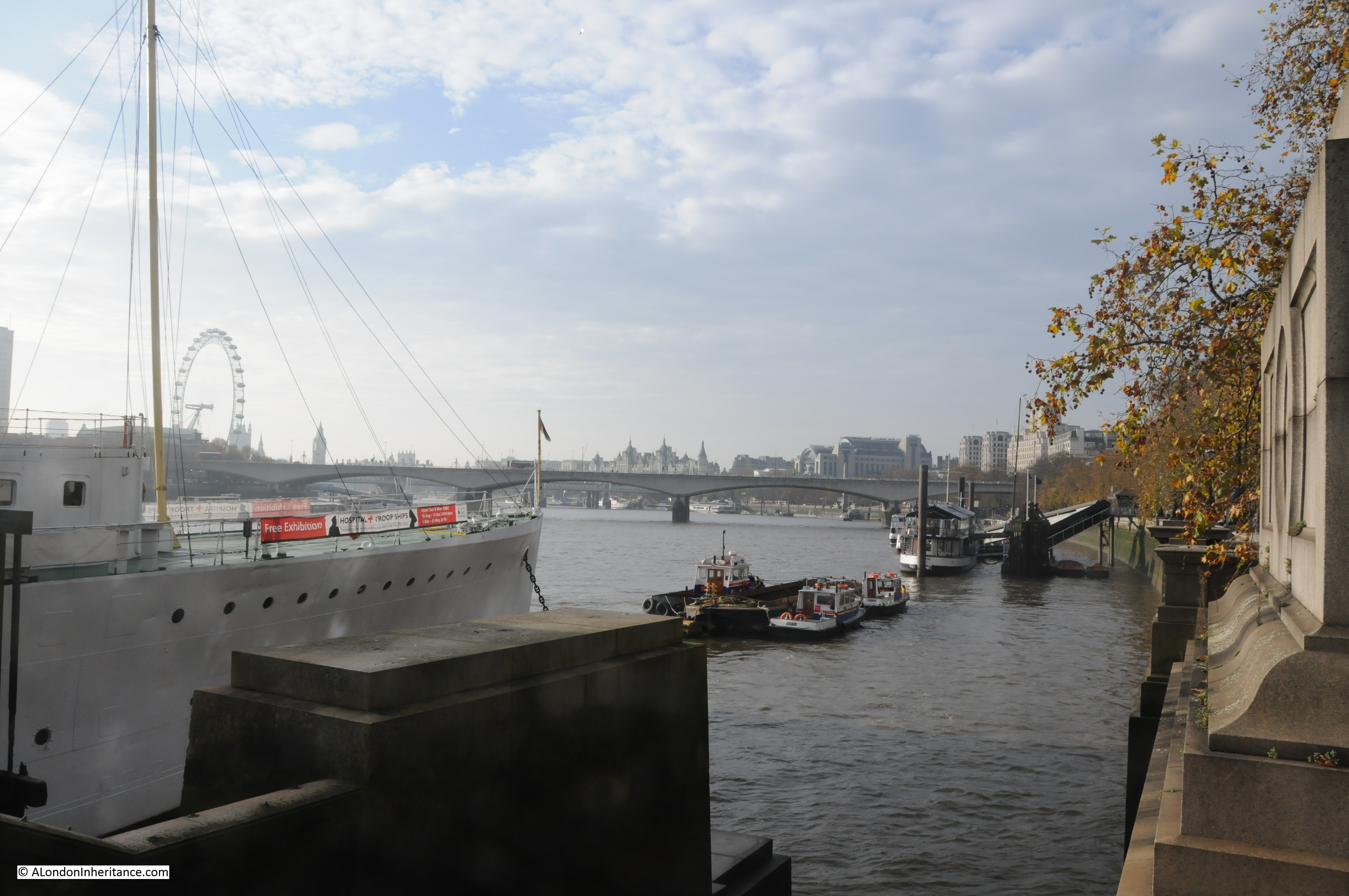
The following view is from the top of Temple Underground Station. The ship is the Head Quarters Ship (HQS) Wellington. Built in 1934 and having seen service across the world, was berthed on the Embankment in 1948 as a floating livery hall of the Honourable Company of Master Mariners. The ship is now owned by a charitable trust, the Wellington Trust. The Garden Bridge will come across the Thames, in front of HQS Wellington and onto the Temple roof to the left.

garden bridge 7

A view of the station entrance and building as it currently stands. Again, the bridge would be coming across the Embankment and landing on the roof of this building, with the associated steps and lifts to support the expected volume of visitors to the bridge.

garden bridge 9

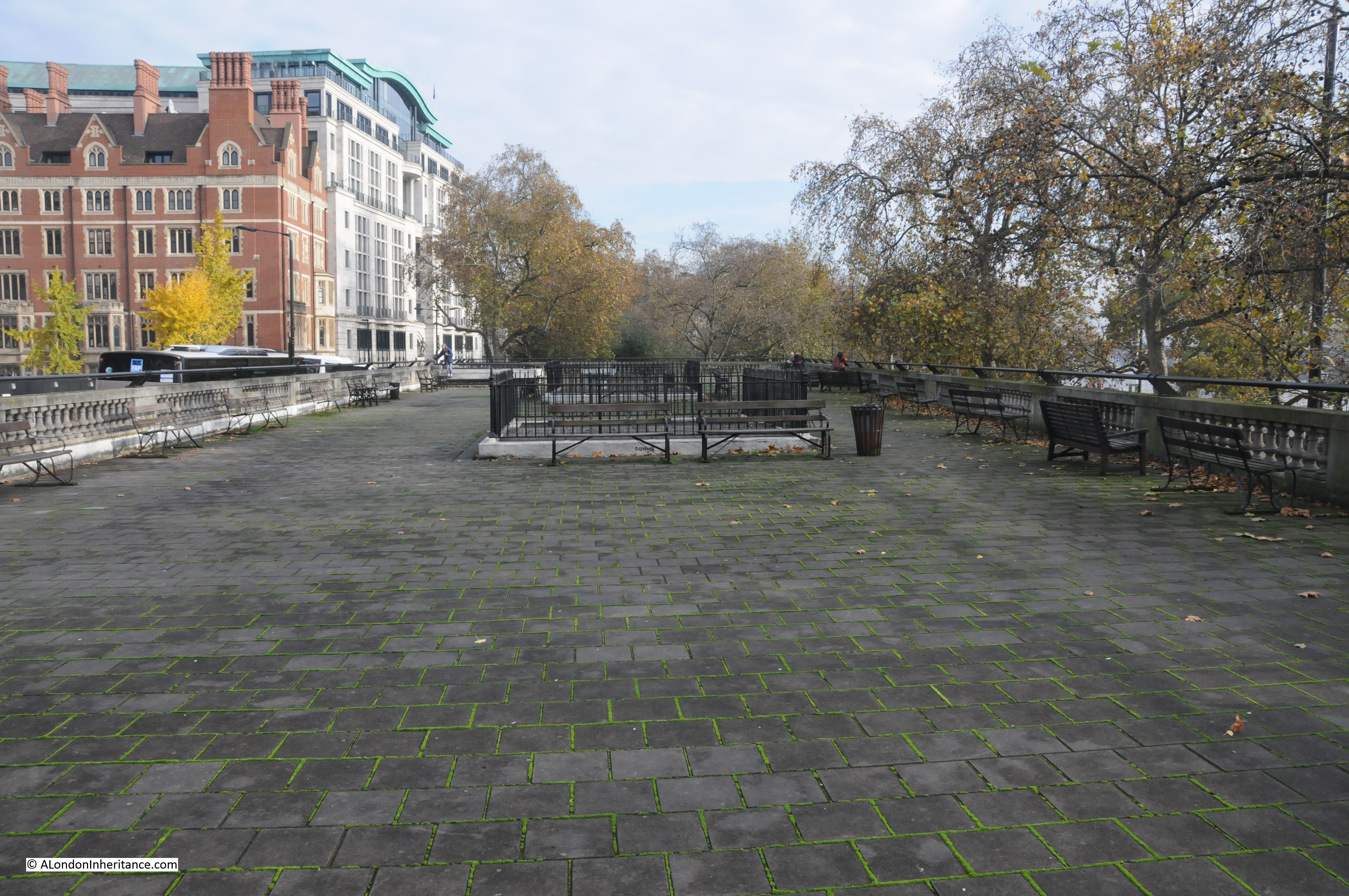
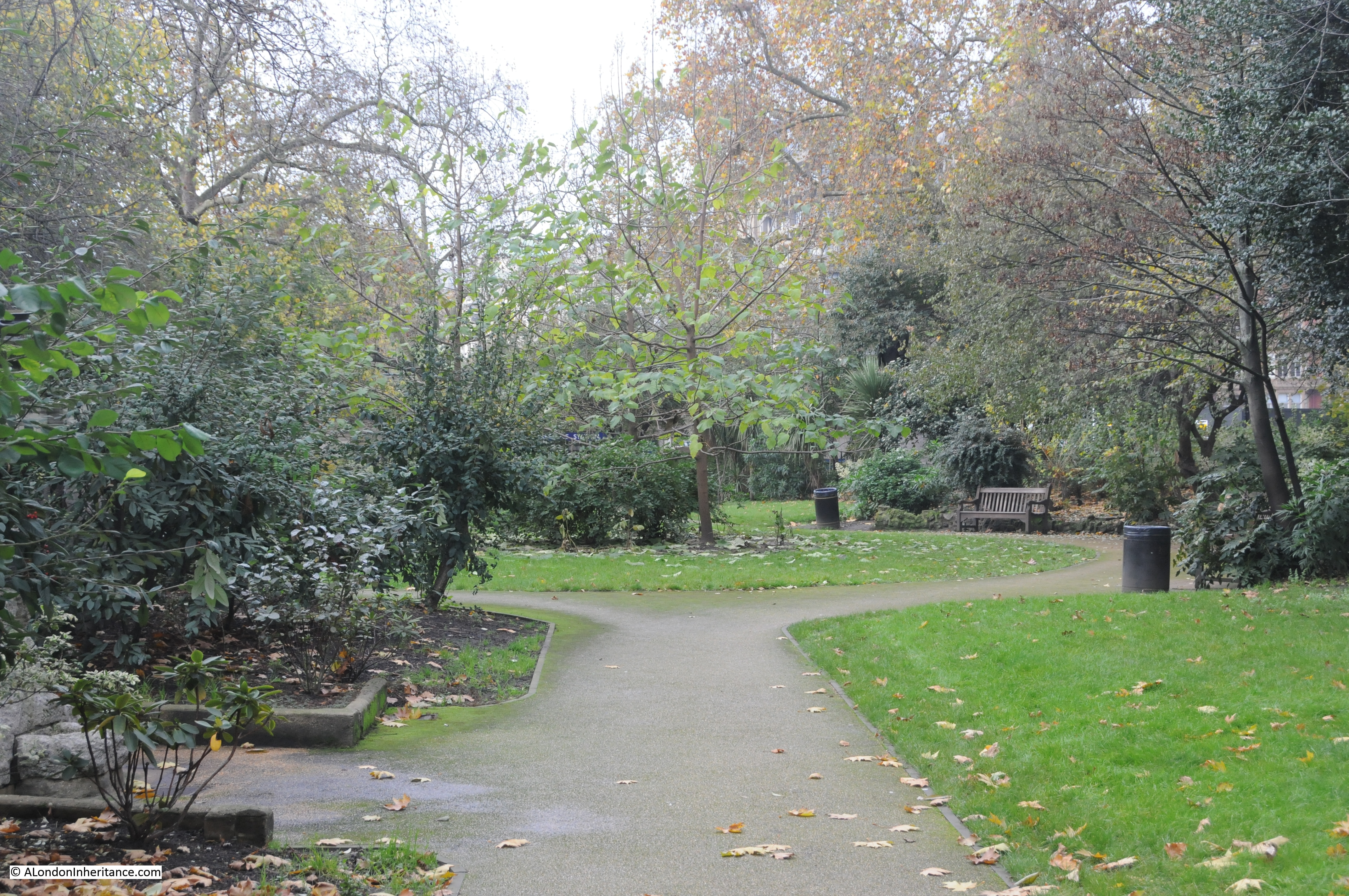
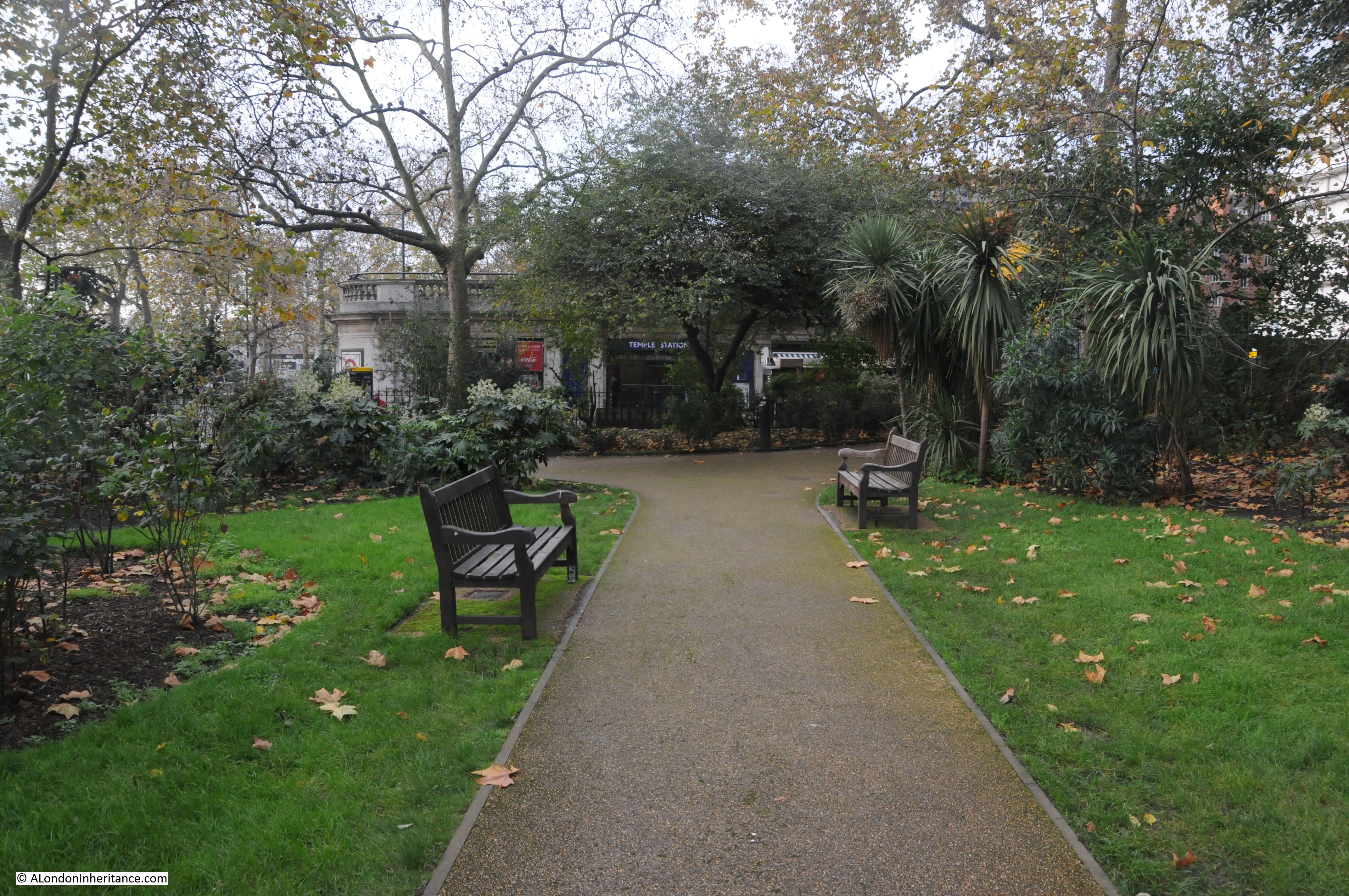
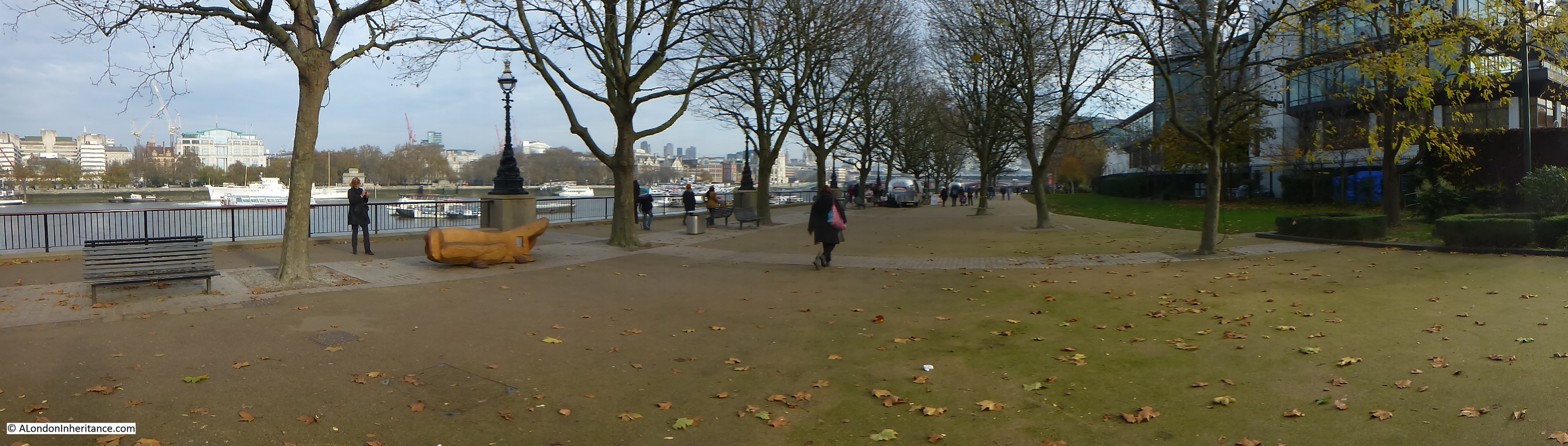
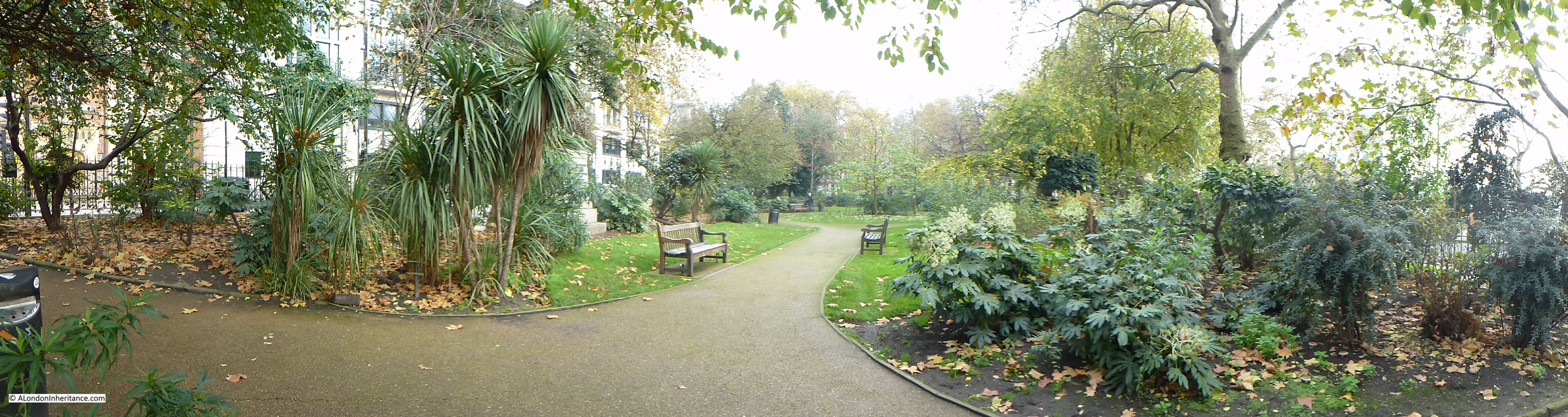
Adjacent to Temple Underground Station are one of the Embankment Gardens. This garden currently provides a quiet area to walk and get away from the traffic on the Embankment.

Remember that the Garden Bridge Trust anticipate 7.1 million annual visitors to the bridge.

During peak periods there will probably need to be some method of crowd control / waiting for access to the bridge. The impact on this garden and the area surrounding Temple Underground Station will be very significant, potentially making this area as busy as the Southbank is today.

One of the arguments for the Garden Bridge appears to be that the Temple area is underused and the bridge will bring visitors, but I do not see why there is a need to make everywhere in London busy? One of the pleasures of living, working or visiting London is finding areas that are not crowded, not too commercialised and still having some unique character. The Garden Bridge will significantly change this area of the north bank and bring significant numbers of people to the area around Temple Underground Station and the adjacent gardens, with the almost certain additional commercialisation that the availability of large numbers of people often attracts.

The Embankment Gardens adjacent to Temple Underground Station:

garden bridge 2

Looking back from the gardens to Temple Underground Station:

garden bridge 3

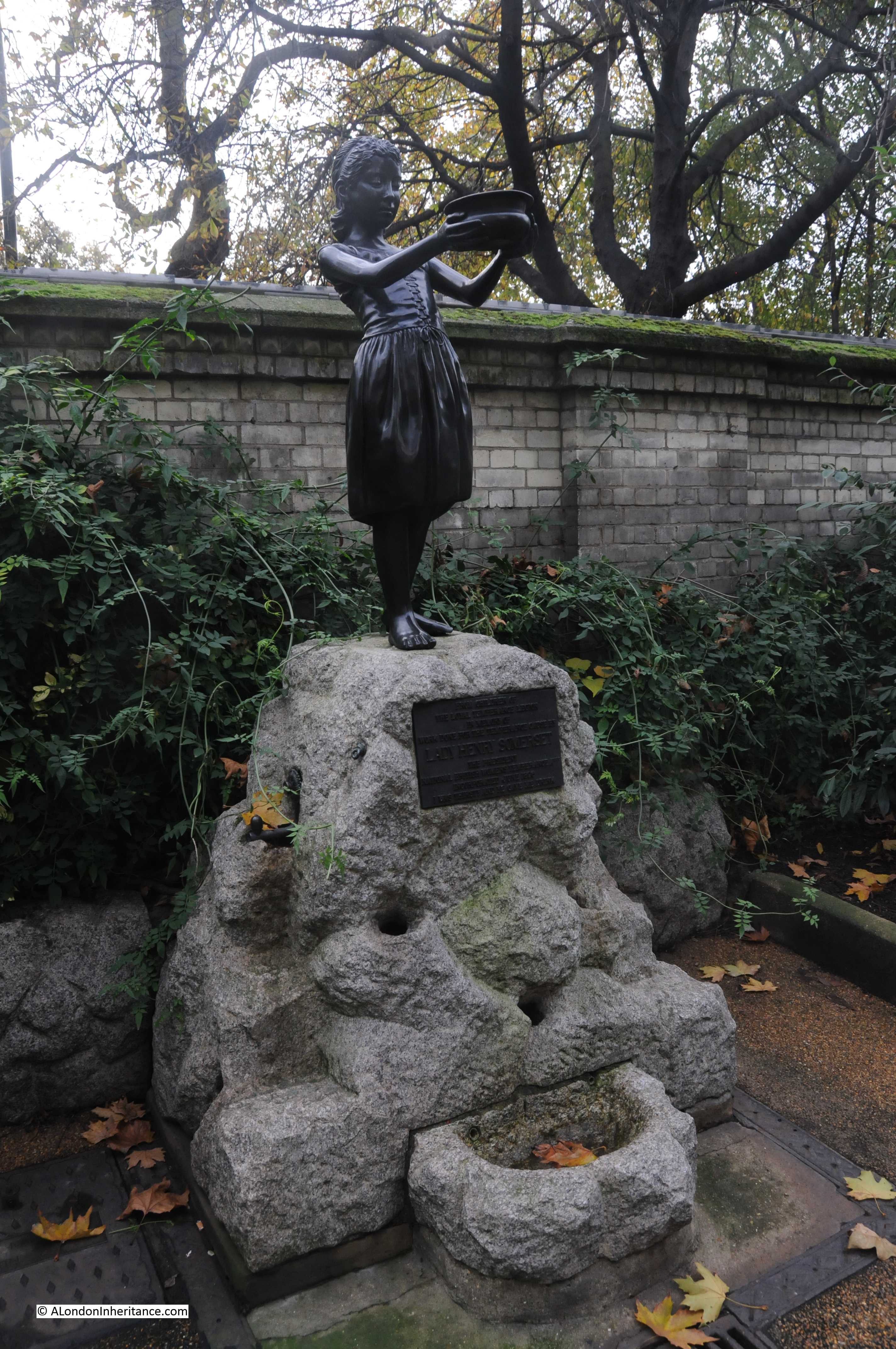
These gardens have some interesting statues. The statue in the gardens to Lady Isabelle Henry Somerset “in memory of work done for the temperance cause”, from the “Children of the Loyal Temperance Legion”. According to the plaque, she was also the founder of the first “industrial farm for inebriate women” whatever that could have been !

garden bridge 1
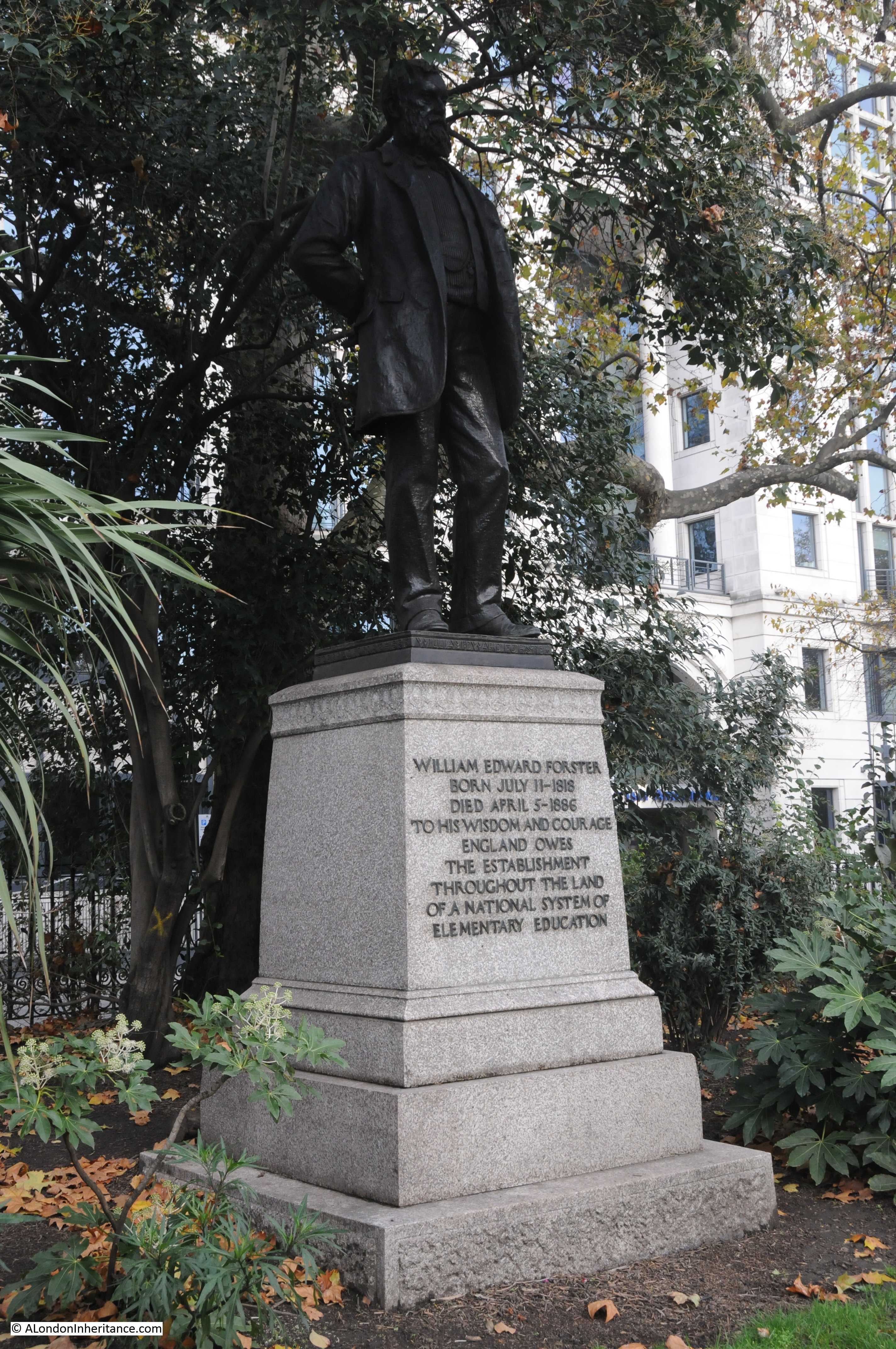
And the statue to William Edward Forster “To his wisdom and courage England owes the establishment throughout the land of a national system of elementary education”. His Education Act of 1870 set the framework for a system of primary school education:

garden bridge 4

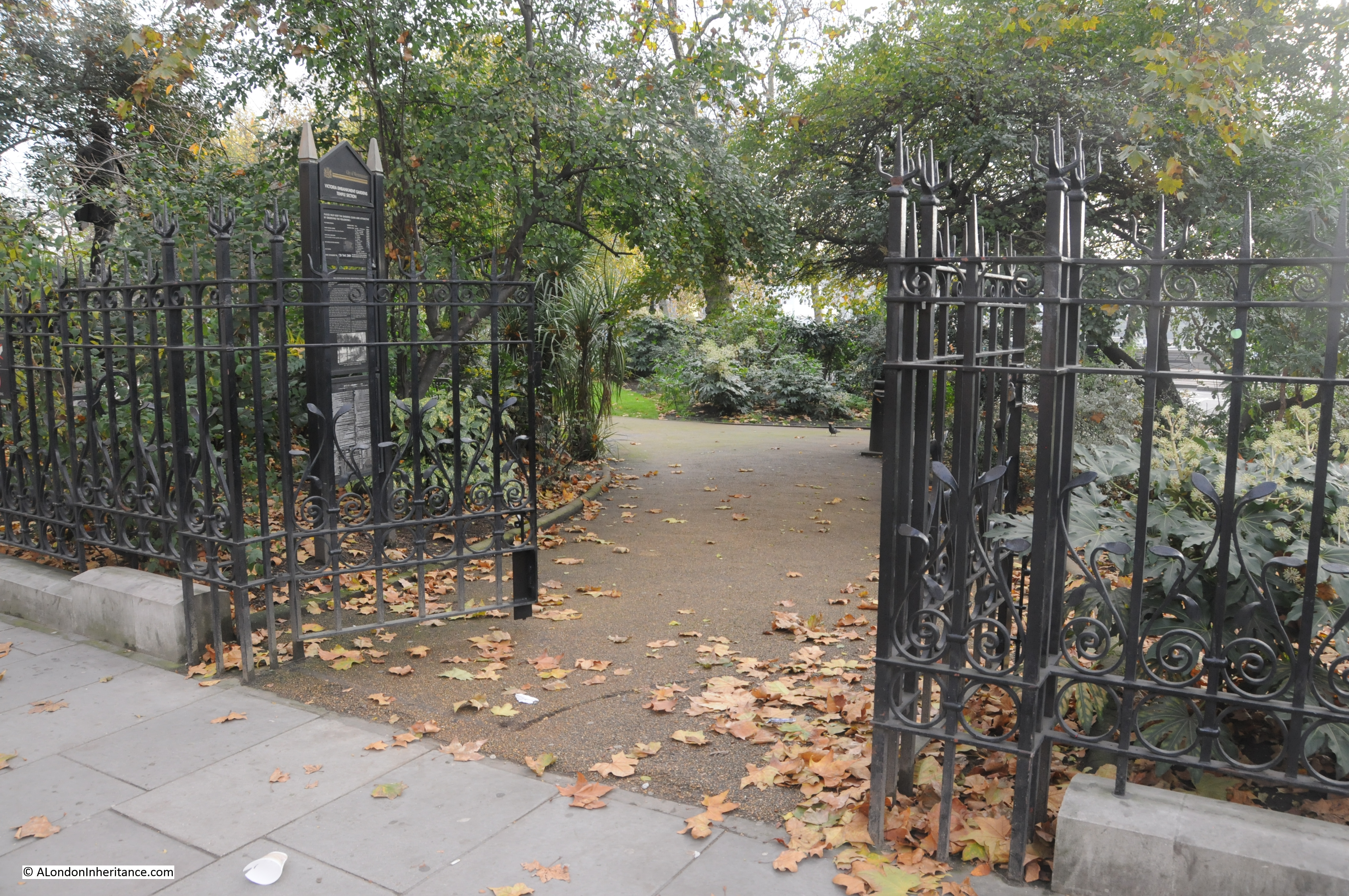
The entrance to the gardens from Temple Place:

garden bridge 5
Hard to believe that the Garden Bridge Trust anticipate 7.1 Million visitors per annum will be crossing the bridge and passing through the northerly landing point at Temple:

garden bridge 17

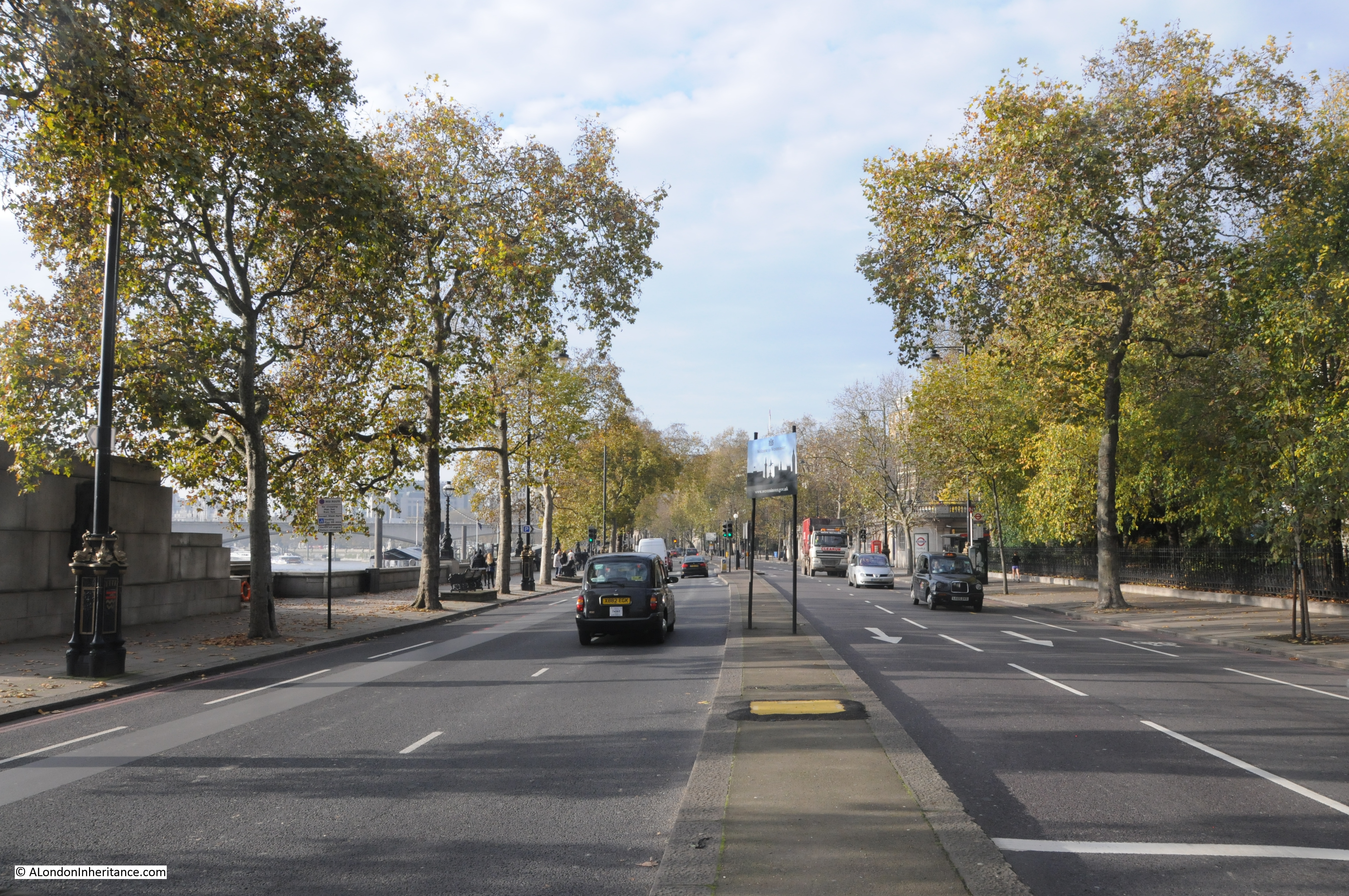
Walking along the Embankment towards Blackfriars Bridge we can look back at Temple Underground Station. The Garden Bridge will cross the Embankment and land on the roof of the Underground Station. (If Westminster Council want to improve the area, it would be good to replace or remove the “Welcome to Westminster” sign in the central reservation, not the most inspiring of signs or integrated with the surroundings).

garden bridge 8

A short distance along the Embankment we can walk onto the pier where HQS Wellington is berthed and look back towards Waterloo Bridge. The Garden Bridge will cross the river just in front of the Wellington;

garden bridge 18

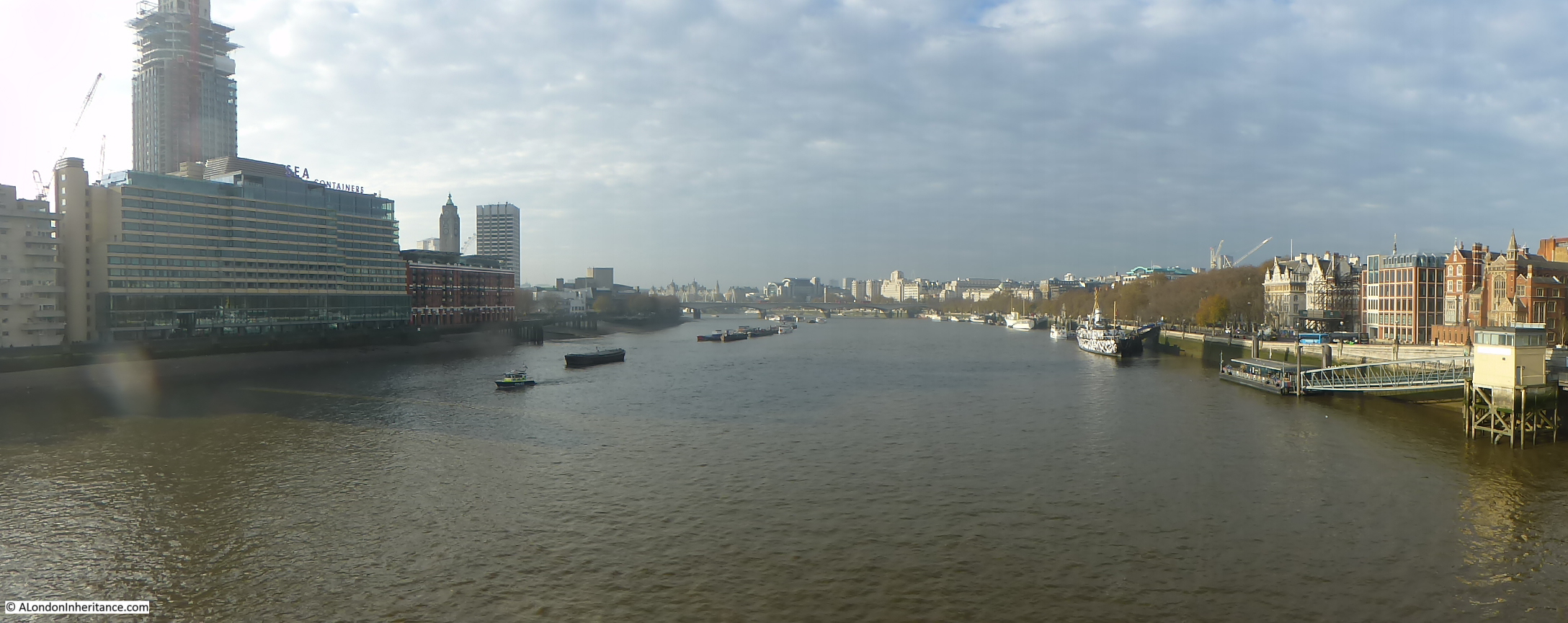
Continuing along the Embankment, we walk up to Blackfriars Bridge and walk to the centre to look back up river to Waterloo Bridge. The first ship on the right is HMS President, painted in a “dazzle” colour scheme. Further along the north bank we can see HQS Wellington marking where the bridge will cross the Thames to the area with trees on the Southbank to the left. I doubt that very much of Waterloo Bridge will be visible and the planting on top of the bridge may well obscure the buildings running along the north bank.

garden bridge 16
As well as the Garden Bridge, additional future development work is planned to take place for the Thames Tideway Tunnel on the Blackfriars Bridge foreshore where there will be reclamation of land in the foreshore and construction of a new permanent area with ” several ventilation columns, a kiosk and public realm furniture will be permanent above ground features”. See the Blackfriars site on the Thames Tideway Tunnel website here for an illustration.

Continue across Blackfriars Bridge and walk along the Southbank towards Waterloo Bridge. Just past the Oxo Tower building, we pass Bernie Spain Gardens and arrive at the southerly landing point of the bridge, photographed early on a Saturday morning.

In this area will be access to and from the bridge, along with a new building to house maintenance, storage and welfare facilities for the bridge staff and a combination of approximately 410 square meters of retail and/or restaurants and/or visitor centre / community / educational use.

garden bridge 15

Walking a bit further along we come to where the bridge will cross the river. Looking directly across, the bridge will pass over the smaller boat in the middle of the photo, with Temple Underground Station being just behind the trees.

garden bridge 14

To me, the Garden Bridge, however good the concept and design, will be in entirely the wrong location.

1. A significant stretch of the Thames will be changed for good. Kings Reach will be broken up into two smaller segments and the bridge will detract from the focus that should be on the river and the relationship between the river and the City.

2. Views from Waterloo Bridge and the Southbank will be changed for good, with significant loss of the view over to the City. The view from Waterloo Bridge will now be of a much shorter stretch of the Thames.

3. The view from Blackfriars Bridge will likewise change. The view of Waterloo Bridge and the arc of buildings along the north bank will be obscured.

4. A relatively quiet area of the north bank will be subjected to significantly raised numbers of visitors. The area will need to accommodate 7.1 million visitors per annum with the associated infrastructure and commercialisation that this number will attract. The current environment of the Temple will be changed for good.

5. The Southbank is already a very successful cultural and visitor location. It can be incredibly busy at weekends and during the peak summer periods. Can it cope with the additional visitor numbers that the Garden Bridge will bring?

6. Why in this location? What needs to be connected between these points on the south and north banks and what is the purpose of building the bridge in this location?

The last bridge to be built in central London, the Millennium Bridge was for a very specific purpose, to connect Bankside and Tate Modern with the area around St. Paul’s. It is a well designed bridge built for the purpose of moving people, it does not pretend to be something else.

Having received approval from both Lambeth and Westminster Councils, the final decision is now with the Mayor of London.

For further information, the site of the Garden Bridge Trust is here.

Newspaper articles covering the recent decisions are from the Guardian, the Independent and the Daily Telegraph.

Final views of the key locations. From the south bank looking along the line of the bridge towards the north bank:
garden bridge 20
The area on the south bank where the bridge will land along with the staff and maintenance buildings, retail etc:

garden bridge 21
The view from Blackfriars Bridge: garden bridge 23

The view from Waterloo Bridge:
garden bridge 22
The Embankment Gardens at Temple: garden bridge 24


alondoninheritance.com


The Lost Wharfs of Upper Thames Street and St. Benet’s Welsh Church

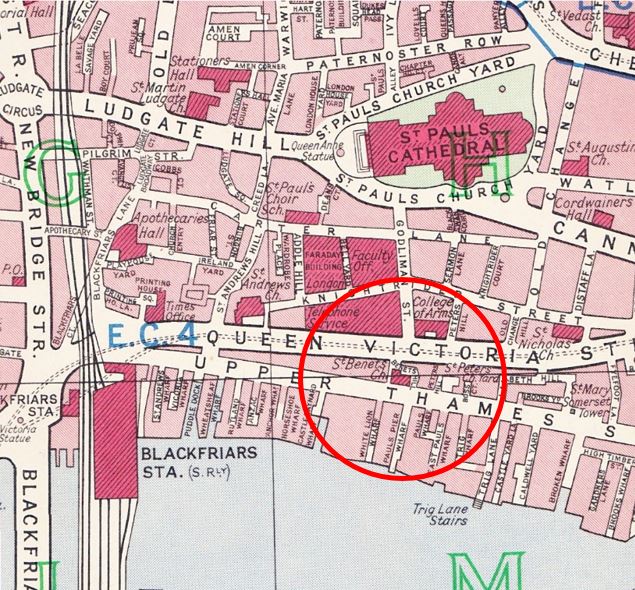
This week’s post is about one small area of London which has changed considerably since the 1940s. The following map is taken from Bartholomew’s Reference Atlas of Great London  published in 1940.

Between Upper Thames Street and the River Thames was a network of streets and wharfs leading down to the river. Small inlets such as Puddle Dock, Wheatsheaf Wharf and Castle Baynard Wharf were part of the central London network of docks where goods were unloaded to the warehouses that stood along this stretch of the river.

1940 map
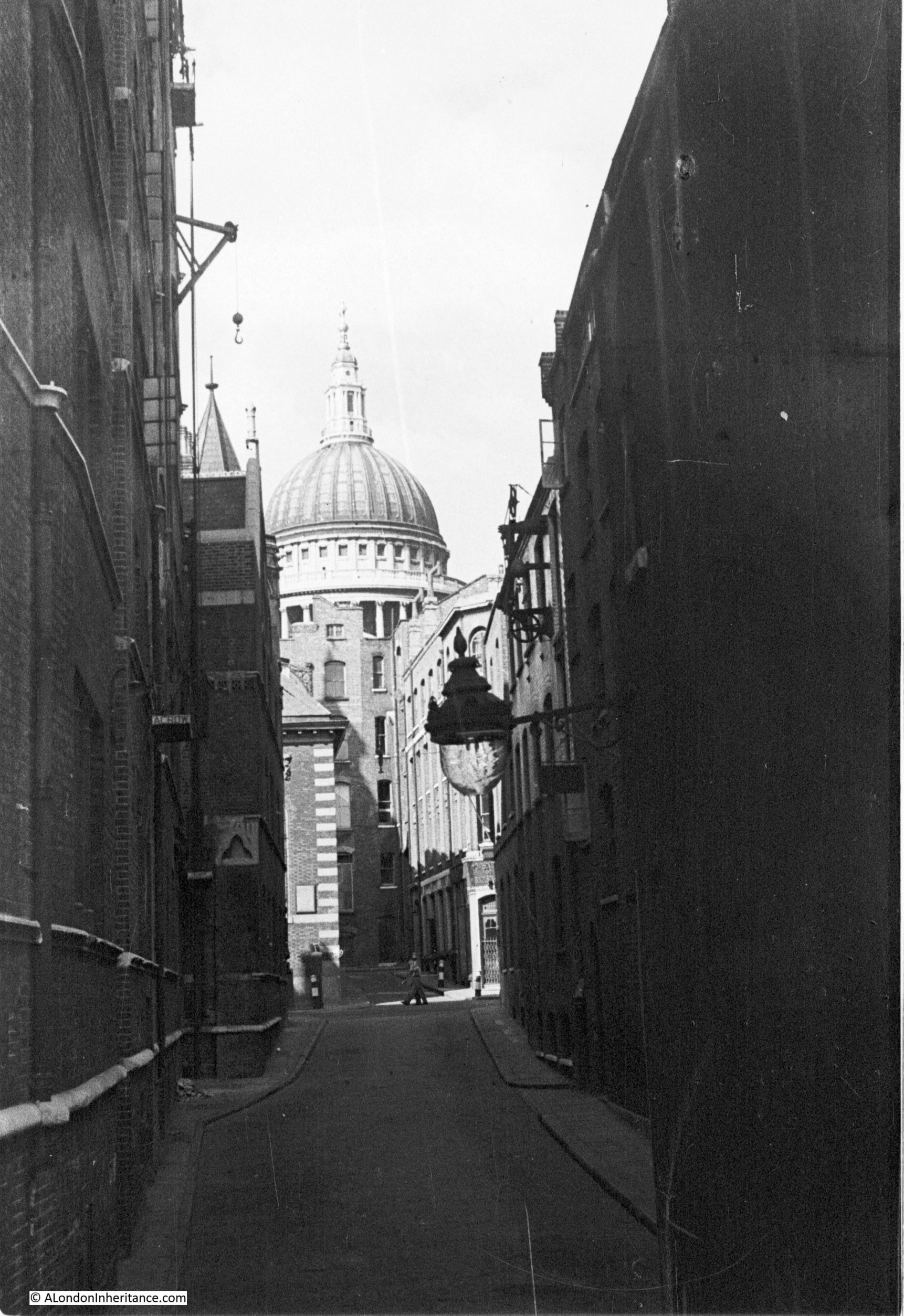
The following photo is one my father took in 1948 and is one that I was having trouble trying to locate despite the very obvious landmark of St. Paul’s Cathedral. The streets are sloping down from St. Paul’s, a clear sign that this photo was taken from the southern side of St. Paul’s, where the land slopes down towards the river. Apart from the cathedral, the only other building with any distinguishing features is the building further up the road with the white brickwork down the corner of the building.

dads st bennets photo 2

On the building on the left is a small crane located towards the top of the building. A further demonstration of activity in these narrow streets. I imagine that goods being taken to or removed from the warehouse by road would be loaded onto lorries in this side street using the crane to lower from the warehouse. Typical activity that could be found in all the streets and wharfs leading down to the Thames.

Following a walk around Upper Thames Street and Queen Victoria Street, I finally found the location of this photo, however the surrounding area has changed so significantly and the street my father took the photo in does not now exist.

The building with the white brickwork on the corner is the church of St. Benet and the road in which the photo was taken and is running up to the church is Pauls Pier Wharf. I have repeated the map below and circled the area. The church is in the centre of the circle and Pauls Pier Wharf can be seen running down to the river.

1940 map 2

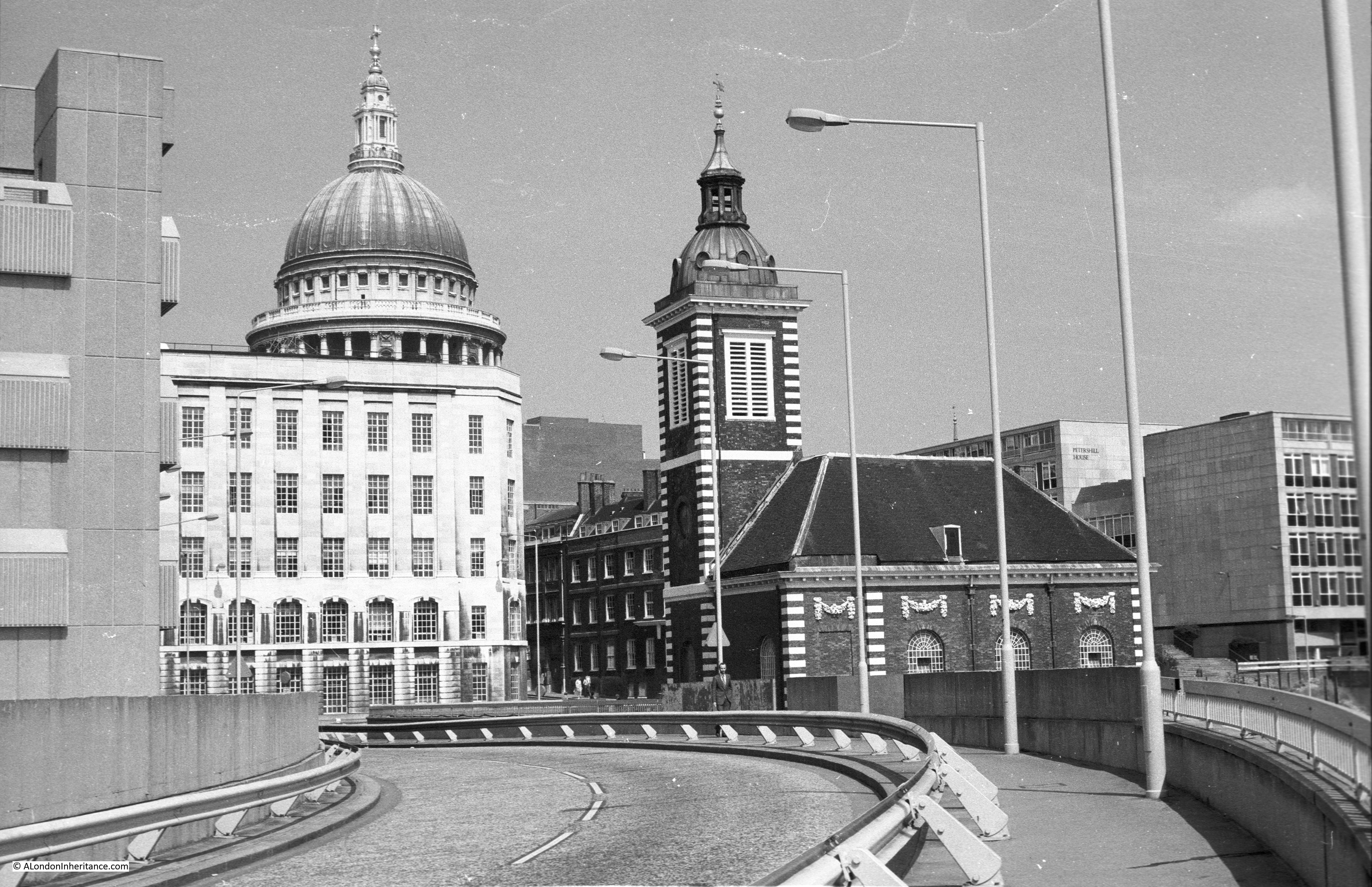
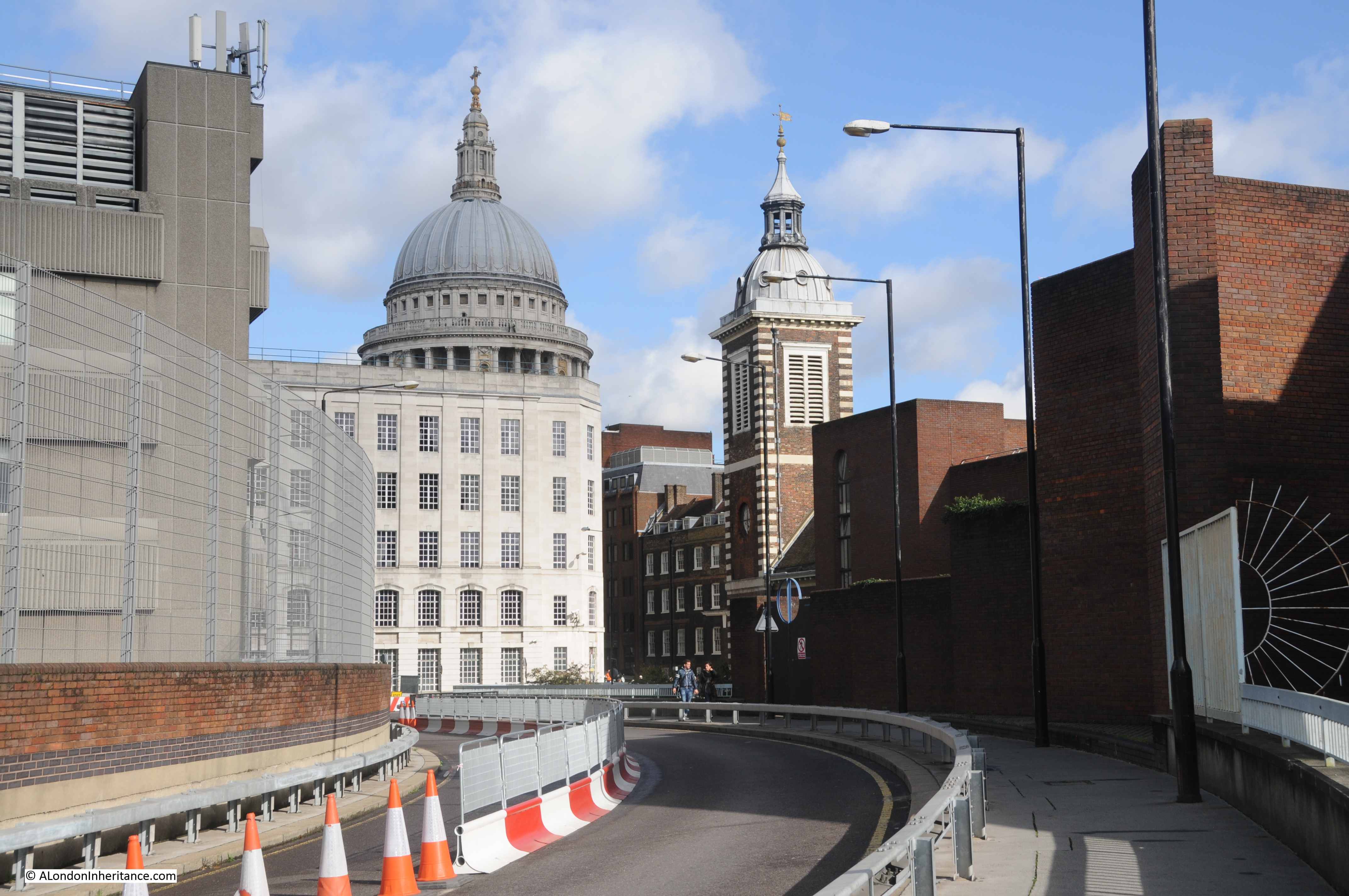
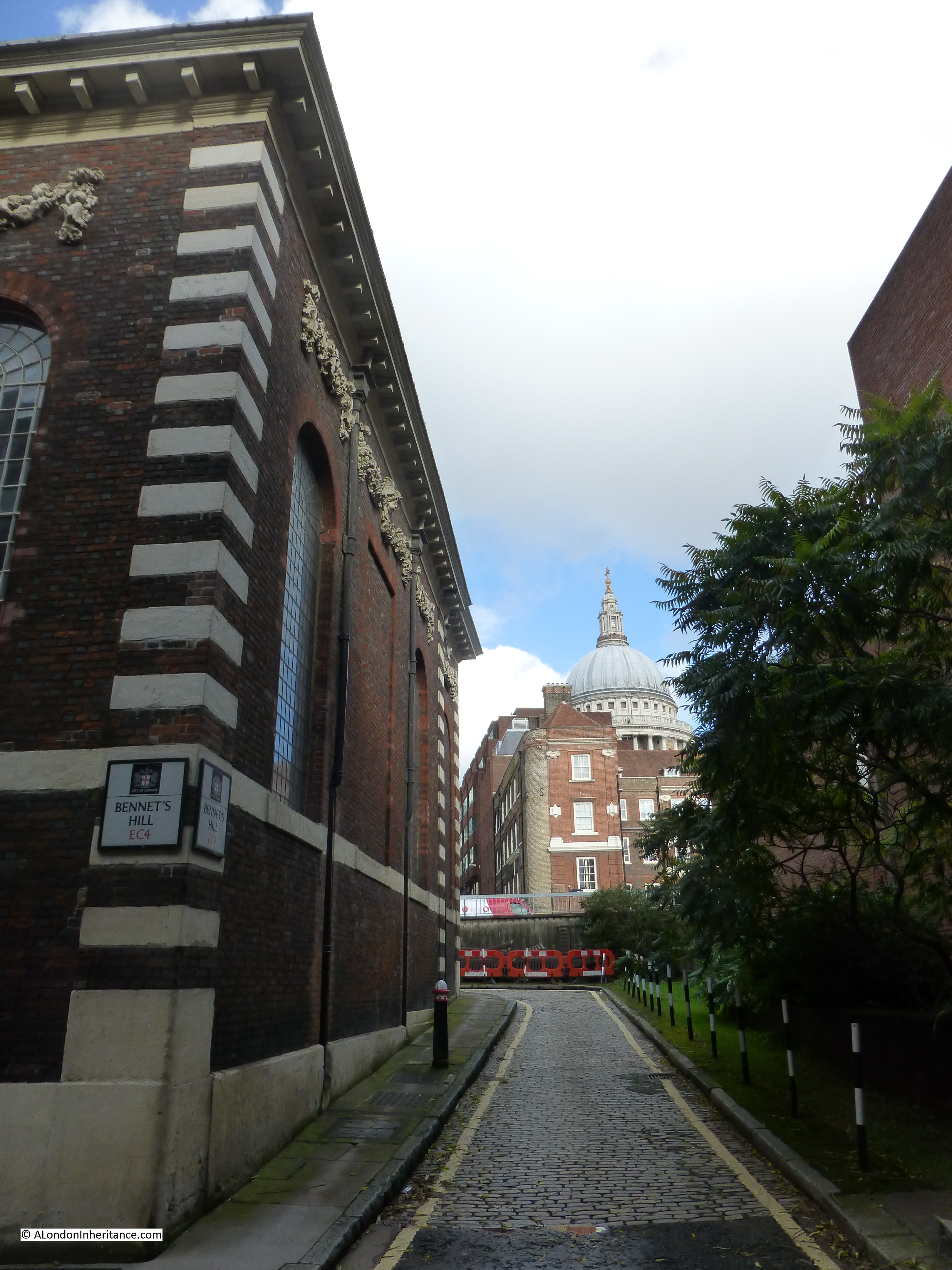
So what is there today? The church remains, but everything else has been lost. When this whole area was redeveloped, Upper Thames Street was widened and rerouted slightly to the south. I could not get to the position where my father took the 1948 photo, however to give some idea of the area now, the following photo is from the elevated Queen Victoria Street. If you go back to the original photo, this is roughly from the same position as from the first floor window of the building at the very top of the street, looking past the church and straight down Pauls Pier Wharf (which is now covered by the building behind the church).

2014 st bennetts 11
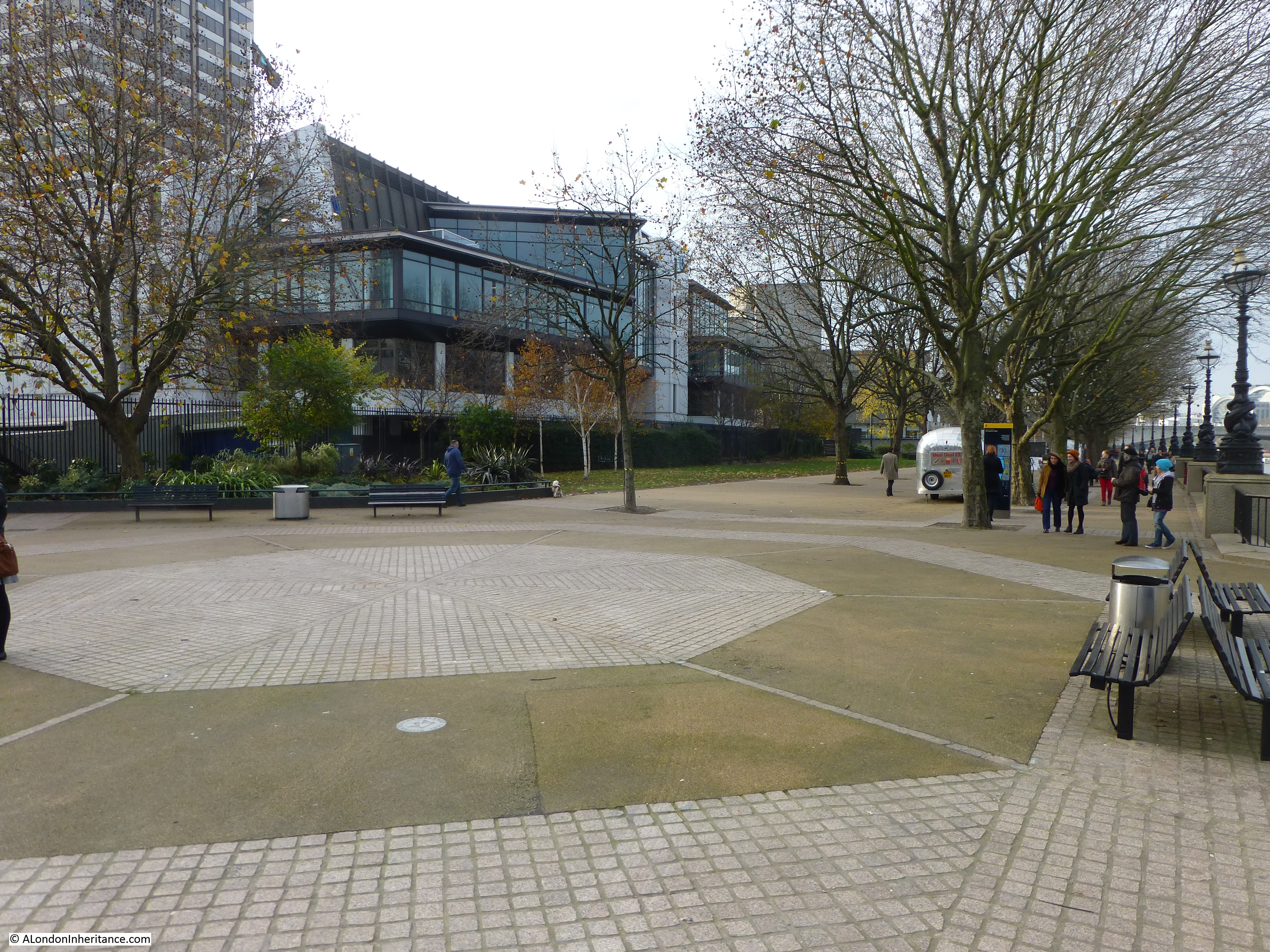
The cobbled road is the remains of Bennets Hill and where it turns right, behind the church, that is the original position of Upper Thames Street. The whole area south of the church, where once Pauls Pier Wharf, Pauls Wharf and East Pauls Wharf used to be is now the 1980’s City of London School which occupies the entire site.

As part of the development of the entire area, Upper Thames Street was moved slightly south and along this stretch it is enclosed within a concrete tunnel with the school being built across the tunnel and down to the frontage on the Thames. The nearest I was able to get to recreate my father’s original photo was up against the wall of the school looking back up Bennet’s Hill. This shows how much of the original street has been lost. To take this photo I was standing roughly where the person crossing the road in the original photo is standing.

2014 st bennetts 8

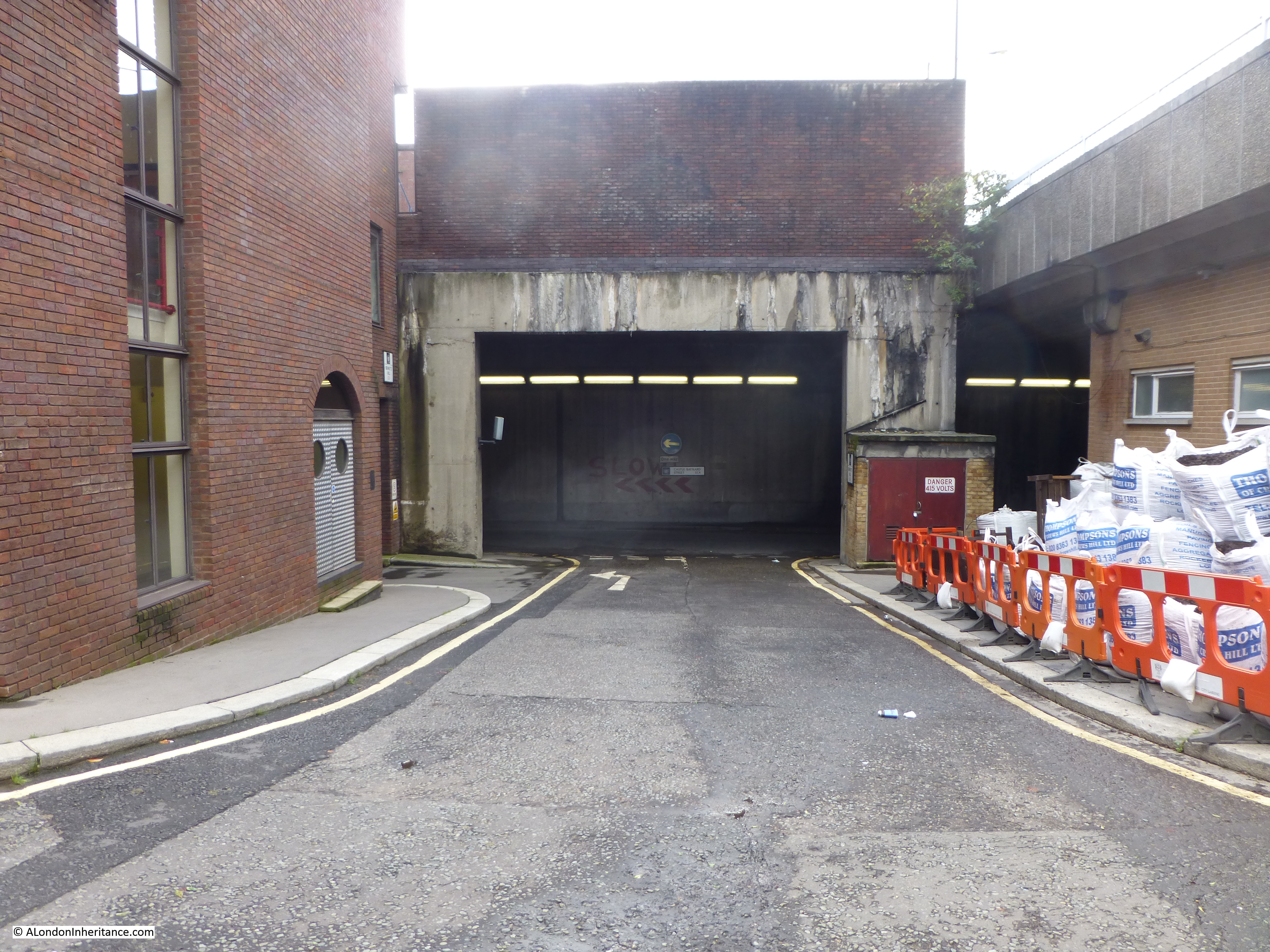
If you walk round to the other side of the church, it is possible to see the original route of White Lion Wharf. Again, this street has been lost and we are looking down into the concrete tunnel that carries Upper Thames Street (the first road in the tunnel is Castle Baynard Street and on the other side of the concrete wall is Upper Thames Street, also in the tunnel). Castle Baynard Street did not exist and is a creation of the redevelopment. It has continued the use of the Castle Baynard name as Castle Baynard Wharf, which was slightly to the west has also been lost. The eastern extremity of Castle Baynard was on this location. More on this in a future post.

On the right is the elevated White Lion Hill which leads from Queen Victoria Street down to the Blackfriars Underpass. Interesting that the White Lion part of the original street name has been retained but is now a Hill rather than a Wharf.

2014 st bennetts 7

If you walk along the Thames Path a short distance in the direction of Blackfriars Station, and look to your right the road coming down from Queen Victoria Street is what was Puddle Dock as shown in the 1940 map. The road still retains the Puddle Dock name.  This is what the old dock looks like now:

2014 st bennetts 17

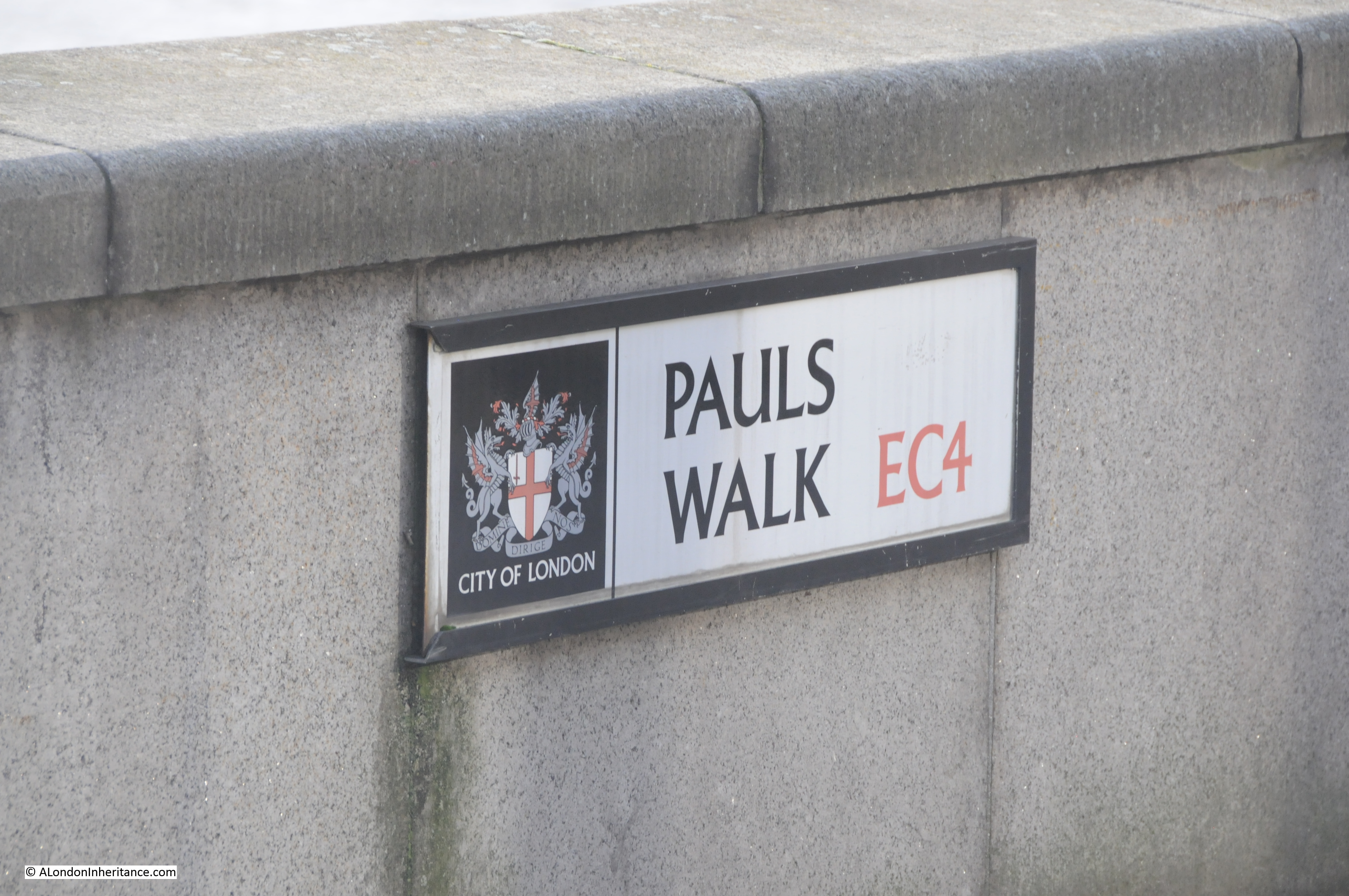
A further example of the re-use of the names of the streets and wharfs along this short stretch of the Thames, the Thames path in this section is named Pauls Walk. There were three wharfs with the name Paul; Pauls Pier Wharf, Pauls Wharf and East Pauls Wharf.

2014 st bennetts 18

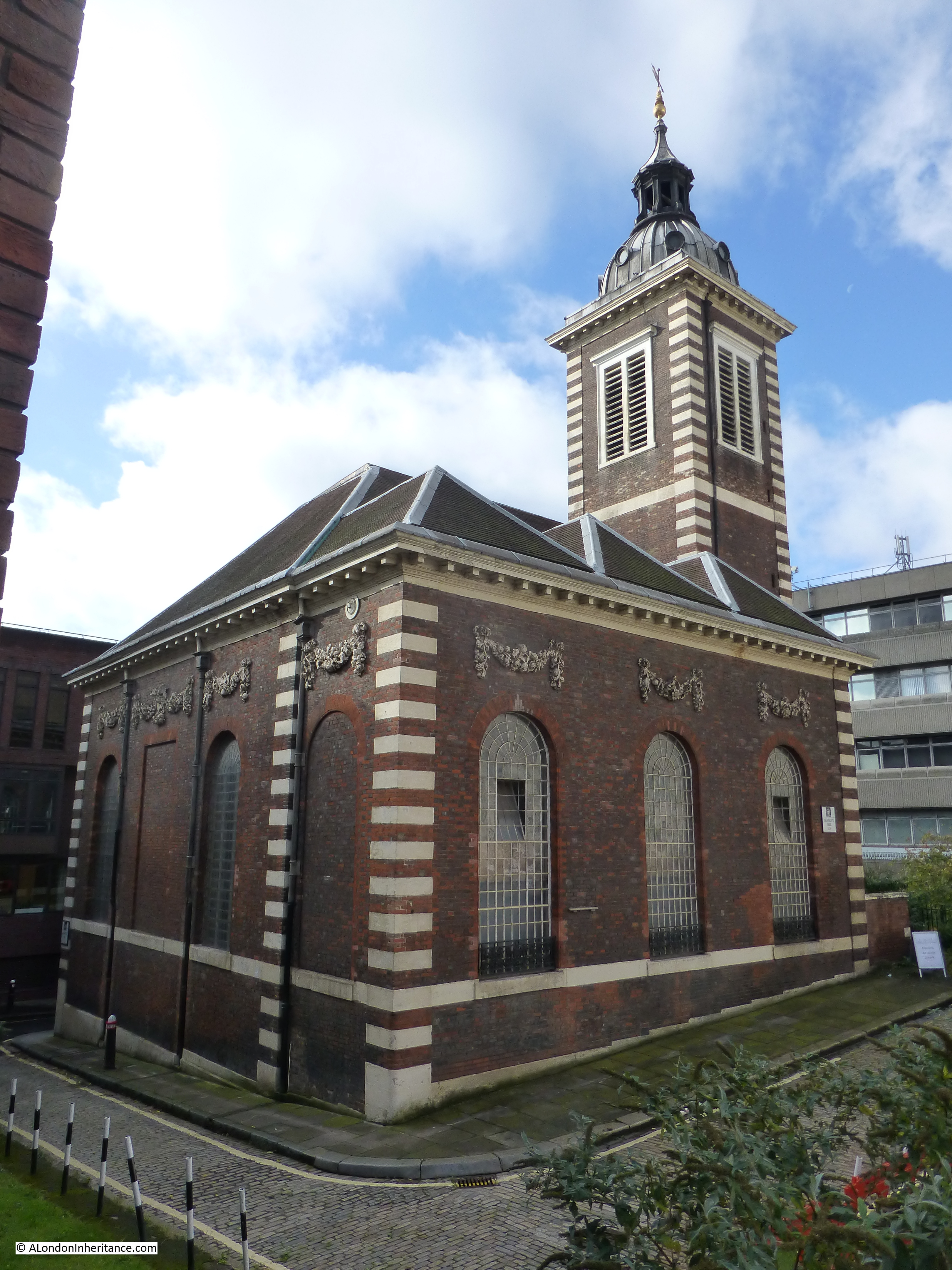
Returning to the church of St. Benet’s, this is an interesting church and well worth a visit. As with many City churches, first records of the church are from the 12th Century. The original church was destroyed in the Great Fire of London and the current church is one of Wren’s rebuilds of the City churches (although probably the design of the church was by Wren’s assistance Robert Hooke). Unlike many of the City churches, it was not damaged in the 2nd World War, indeed unlike so much of Queen Victoria Street and the docks onto the Thames, the small area between St. Benet’s and the river did not receive any significant damage. The church is one of the very few in the City that has not changed that much since construction after the Great Fire.

There was a time though when St. Benet’s was almost lost. In the later half of the 19th century there was a wave of church demolition of those that were perceived to be redundant and St. Benet’s was one of the churches scheduled for demolition, however Welsh Anglicans petitioned Queen Victoria for permission to use the church for services in Welsh. This right was granted and since then services have been conducted in the Welsh language. The Welsh connection is a very strong part of the identity of the church.

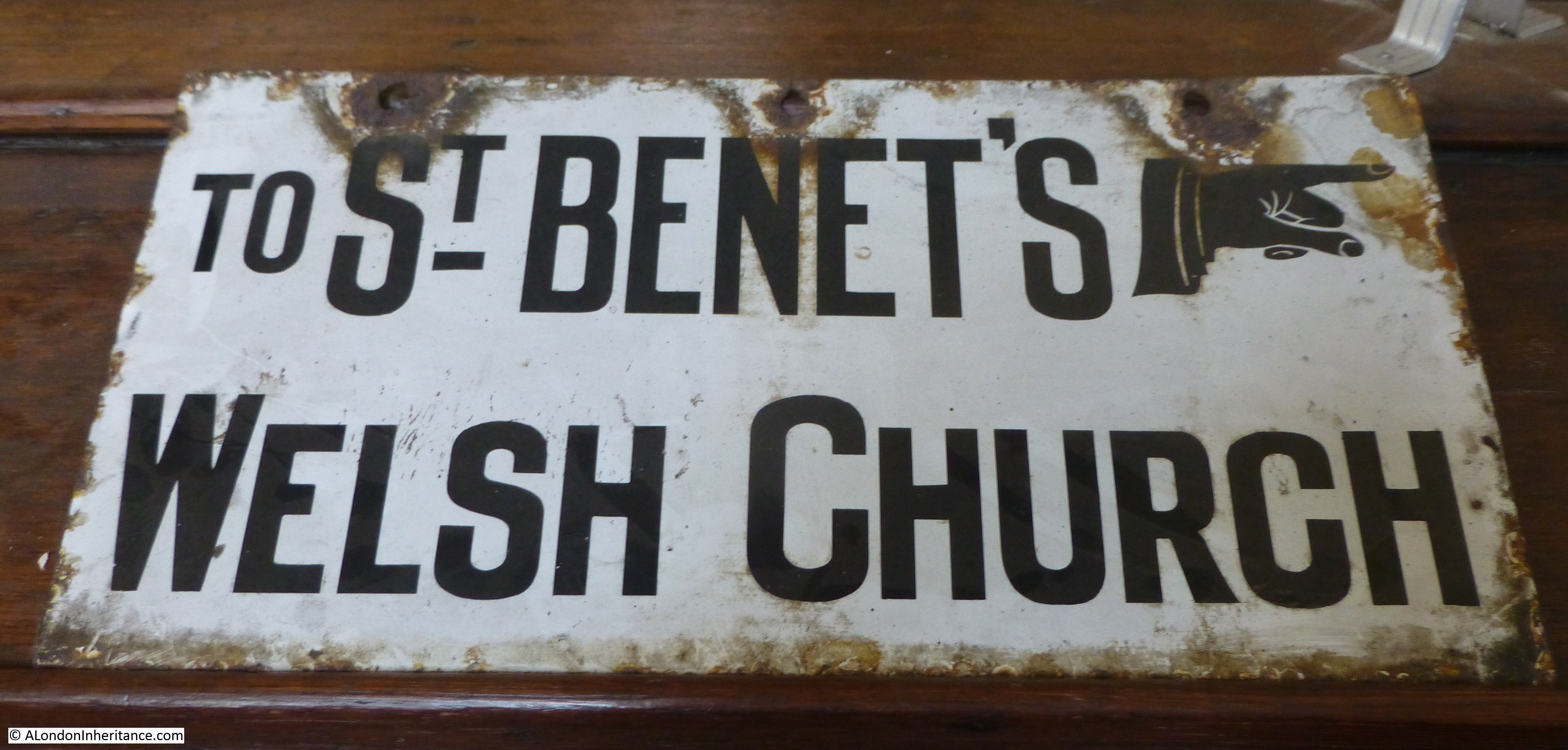
An old street sign, now stored inside the church:

2014 st bennetts 3

The Welsh Dragon as a candle holder:

2014 st bennetts 13

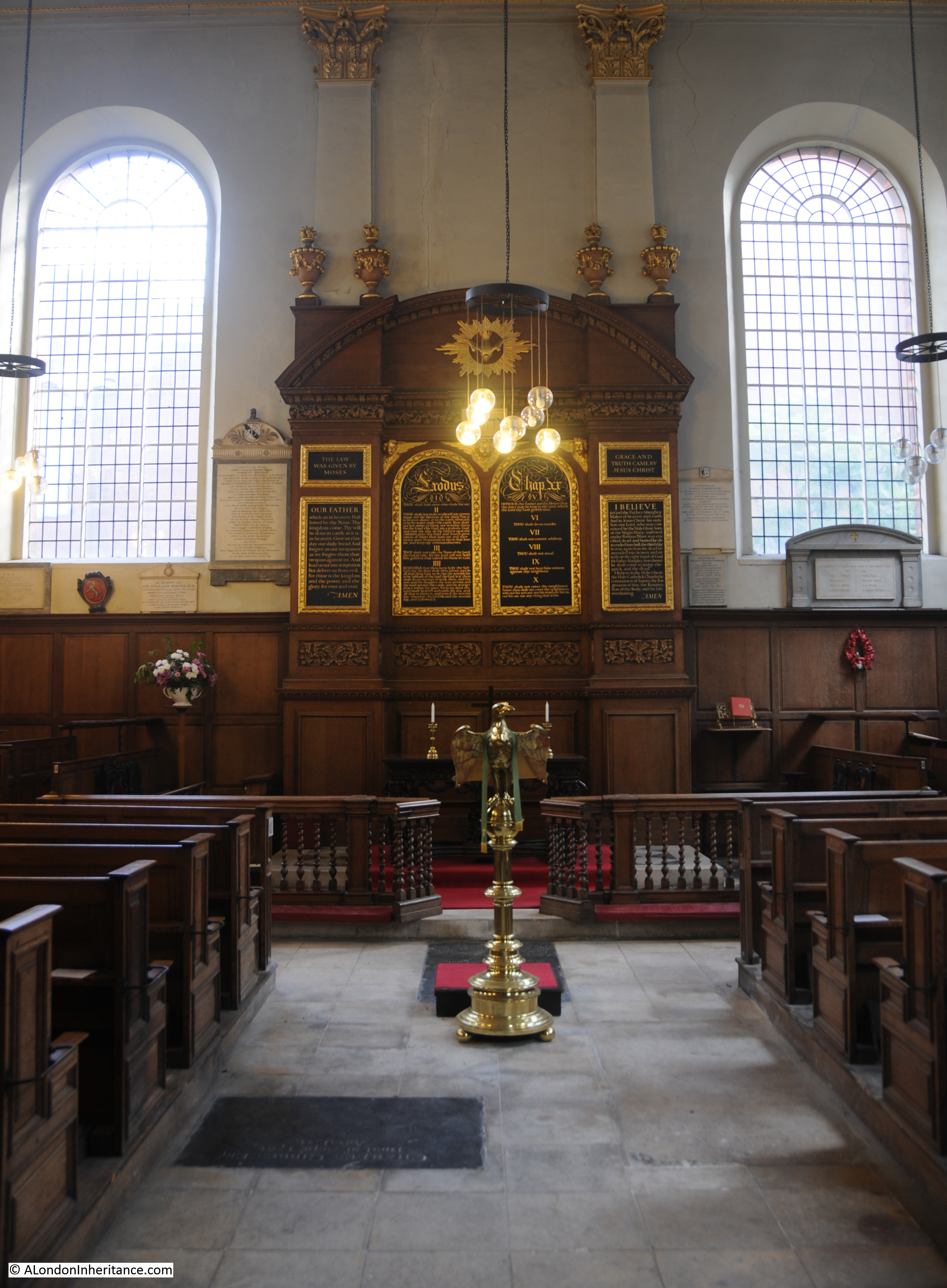
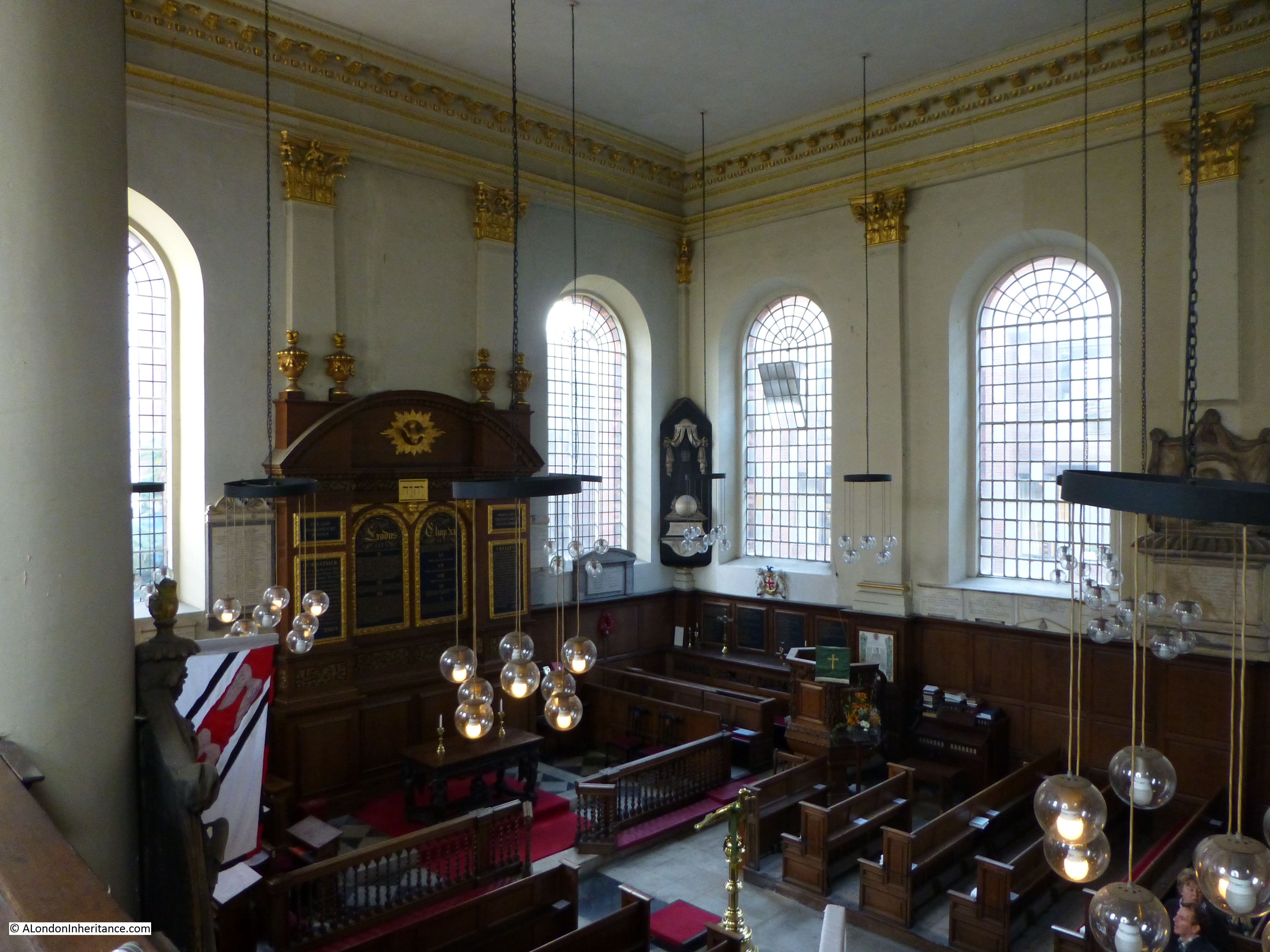
The interior of the church is bright, but with plenty of wood panelling and a large carved, but simple reredos behind the altar.

2014 st bennetts 12

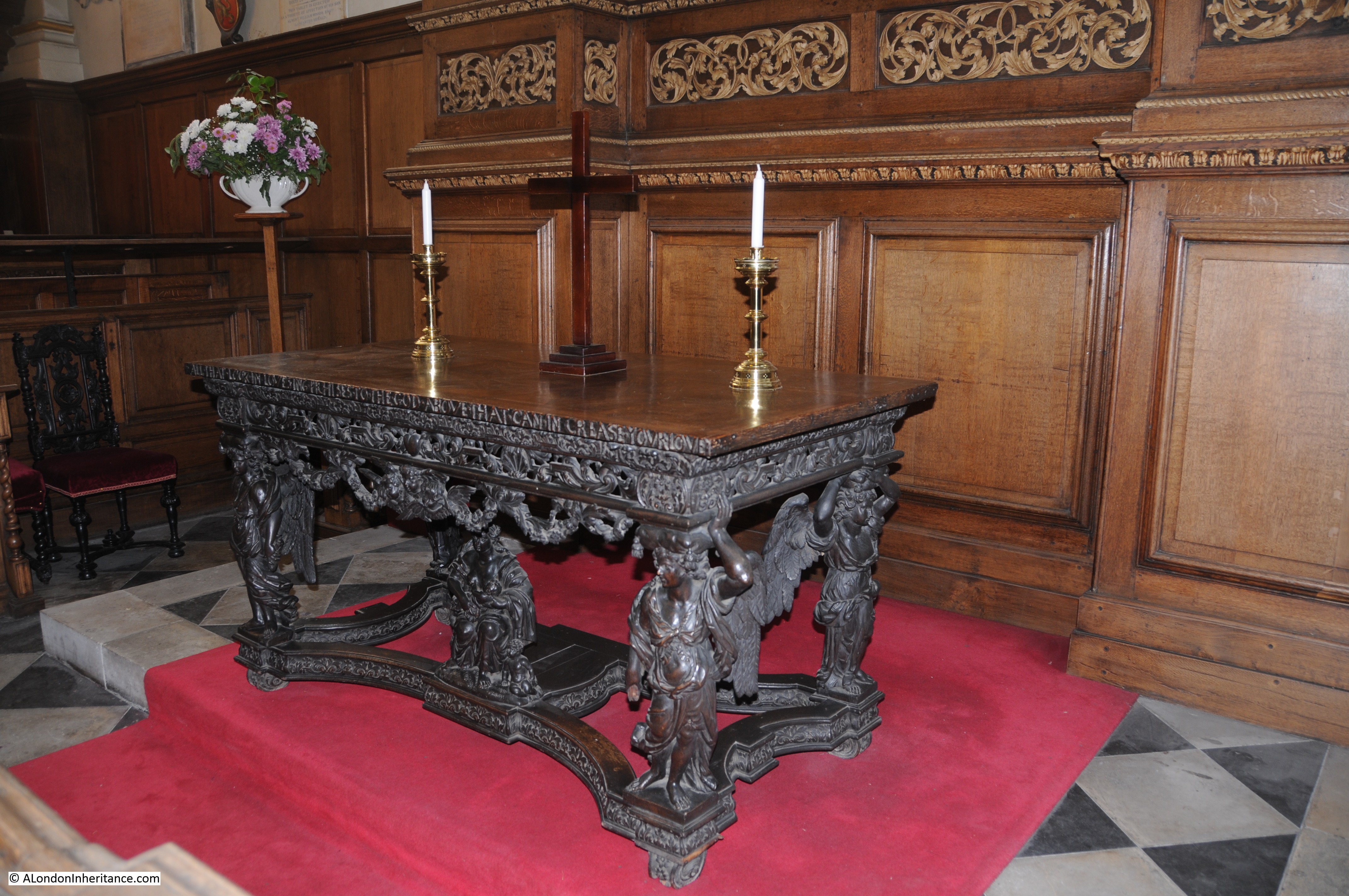
The 17th century altar / communion table with winged angels supporting a rich cornice and under the table is a figure of Charity with her children:

2014 st bennetts 14

The view from the gallery:

2014 st bennetts 4

Back outside the church, and standing on Queen Victoria Street we can look down on the church and Bennet’s Hill. The area north of the church was the original churchyard, however this was lost in the original 19th century widening of Queen Victoria Street.
2014 st bennetts 1

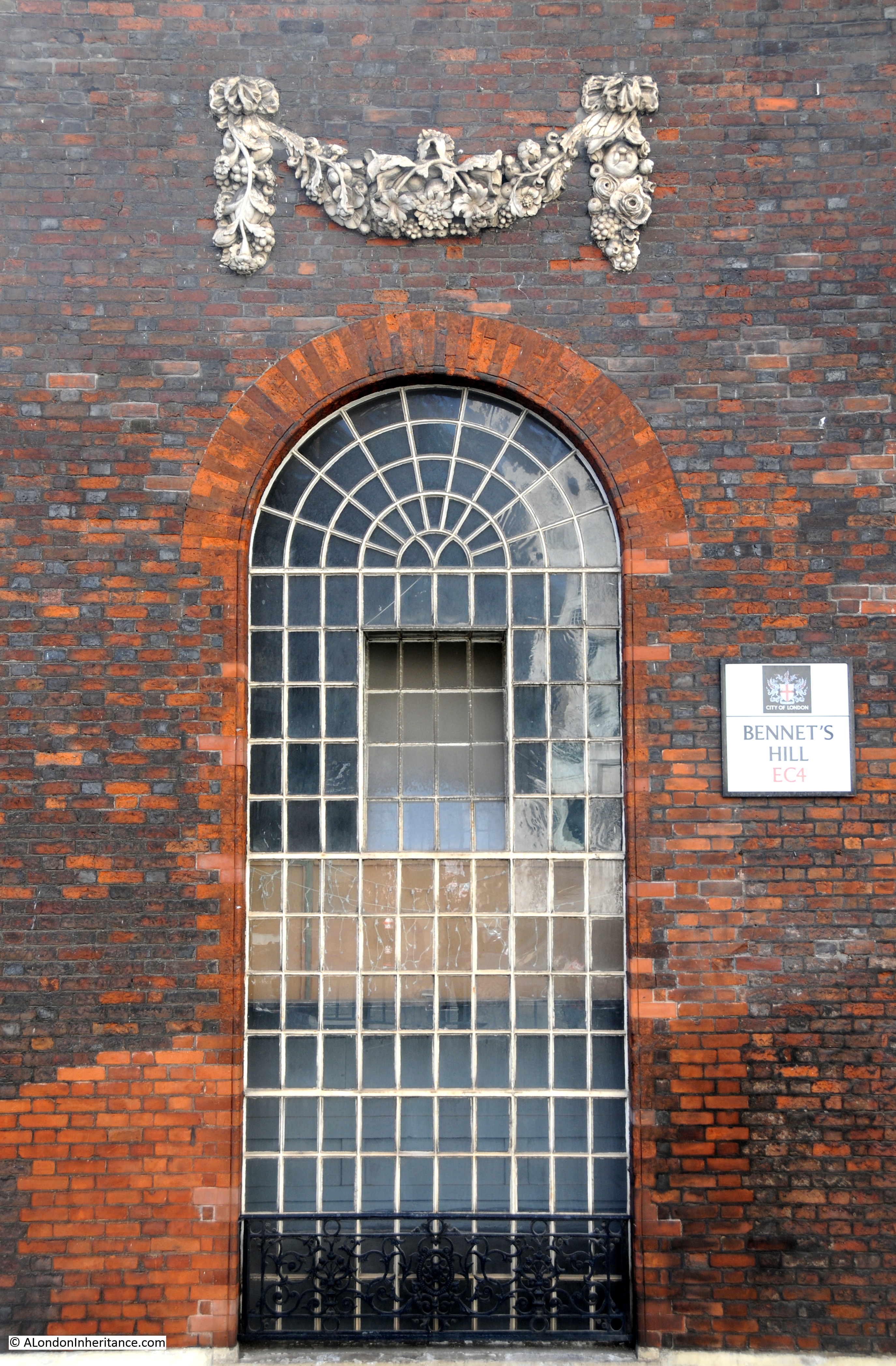
There is some confusion as to the spelling of Benet in the name of Bennet’s Hill. The church has a single “n” in the name as does the hill in the 1940 street map, however as can be seen below, the modern day street name has “nn”. I have been unable to find whether this spelling change was for a reason or an accident with the new street signs.

2014 st bennetts 15

Good to see that the original stone carvings above the windows still survive.

Names though do change over the centuries. Stow in 1603 stated that the church was called St. Benet Hude (or hithe) and was up against Powles Wharffe (presumably the same as Pauls Wharf in the 1940 map). Whilst the names change slightly in their spelling it does demonstrate that they have been in existence for many hundreds of years, and for the wharfs and streets they lasted down to the reconstruction of the area in the decades after the war.

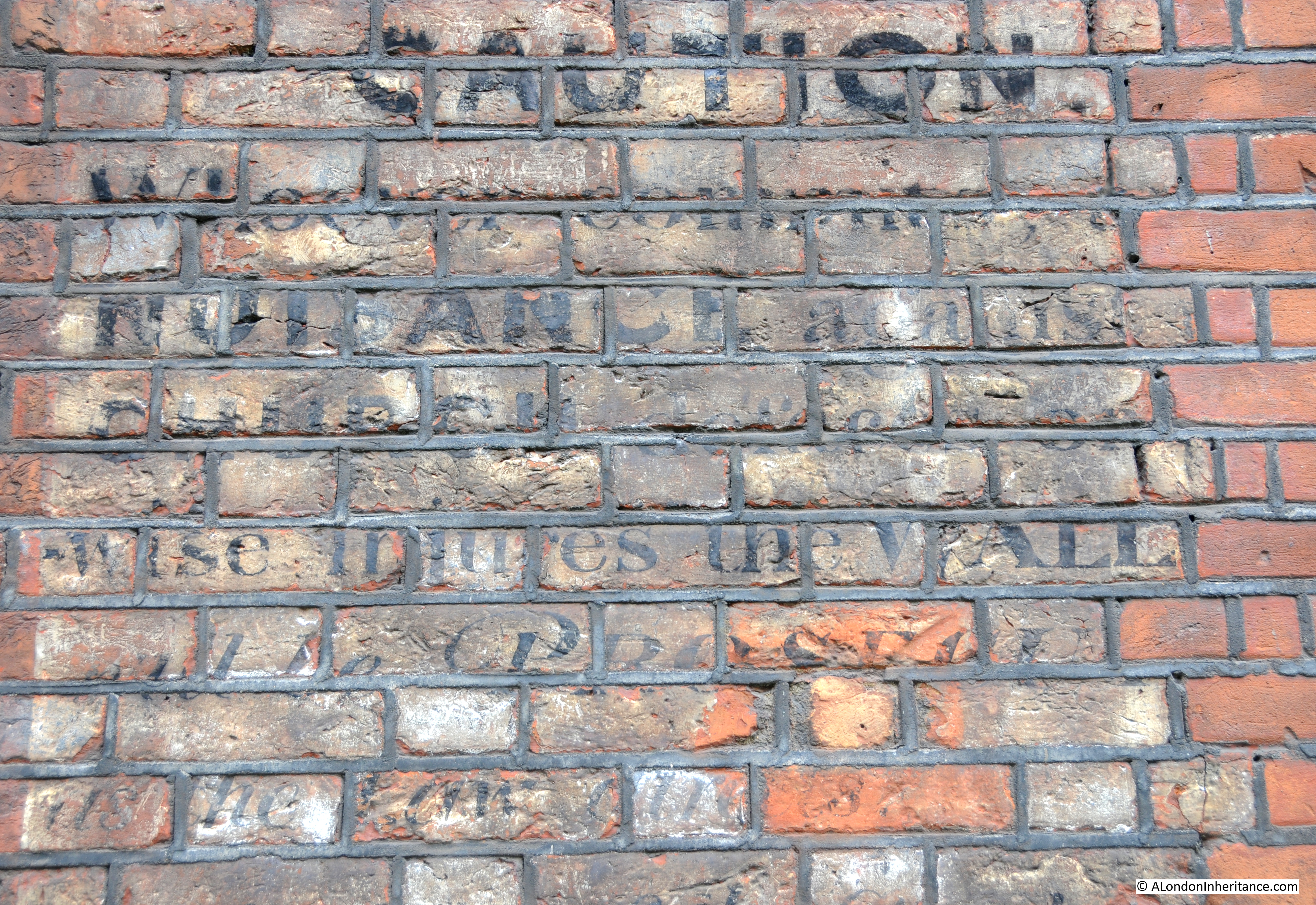
Old ghost sign on the side of the church:

2014 st bennetts 16

Which seems to read:

CAUTION

Whoever commits NUISANCE against …. church … otherwise injures the WALL will be PROSECUTED ….

One wonders whether the church’s current position, squashed between Queen Victoria Street, the Upper Thames Street tunnels and the elevated White Lion Hill would be considered as committing a nuisance against the church?

The sources I used to research this post are:

  • Bartholomew’s Reference Atlas of Greater London published 1940
  • The Old Churches Of London by Gerald Cobb published 1942
  • London by George H. Cunningham published 1927
  • Old & New London by Edward Walford published 1878
  • Stow’s Survey of London. Oxford 1908 reprint

alondoninheritance.com


Tower Hill And The Growth In London Tourism

Much of what I have written so far has been about the physical change across London. How the buildings and streets have changed so considerably over the last 70 years, however there are many other ways in which London has changed and for this week’s post I want to use a series of photos to show that whilst a specific area has not changed that much physically, it is now playing a very significant role in London’s position as one of the major world tourism destinations.

Tower Hill is the area to the north-west and western side of the Tower of London. Tower Hill, in the words of Stow was:

“sometime a large plot of ground, now greatly straitened by encroachments (unlawfully made and suffered) for gardens and houses. Upon the hill is always readily prepared, at the charges of the City, a large scaffold and gallows of timber, for the execution of such traitors or transgressors as are delivered out of the Tower or otherwise, to the Sheriffs of London by writ, there to be executed.”

There is a long list of those executed on Tower Hill, with the last being the execution of Lord Lovat on April 9th 1747. At this execution, a scaffolding built to support those wishing to view the execution collapsed with nearly 1,000 people  of which 12 were killed. Apparently, Lovat “in spite of his awful situation, seemed to enjoy the downfall of so many Whigs”.

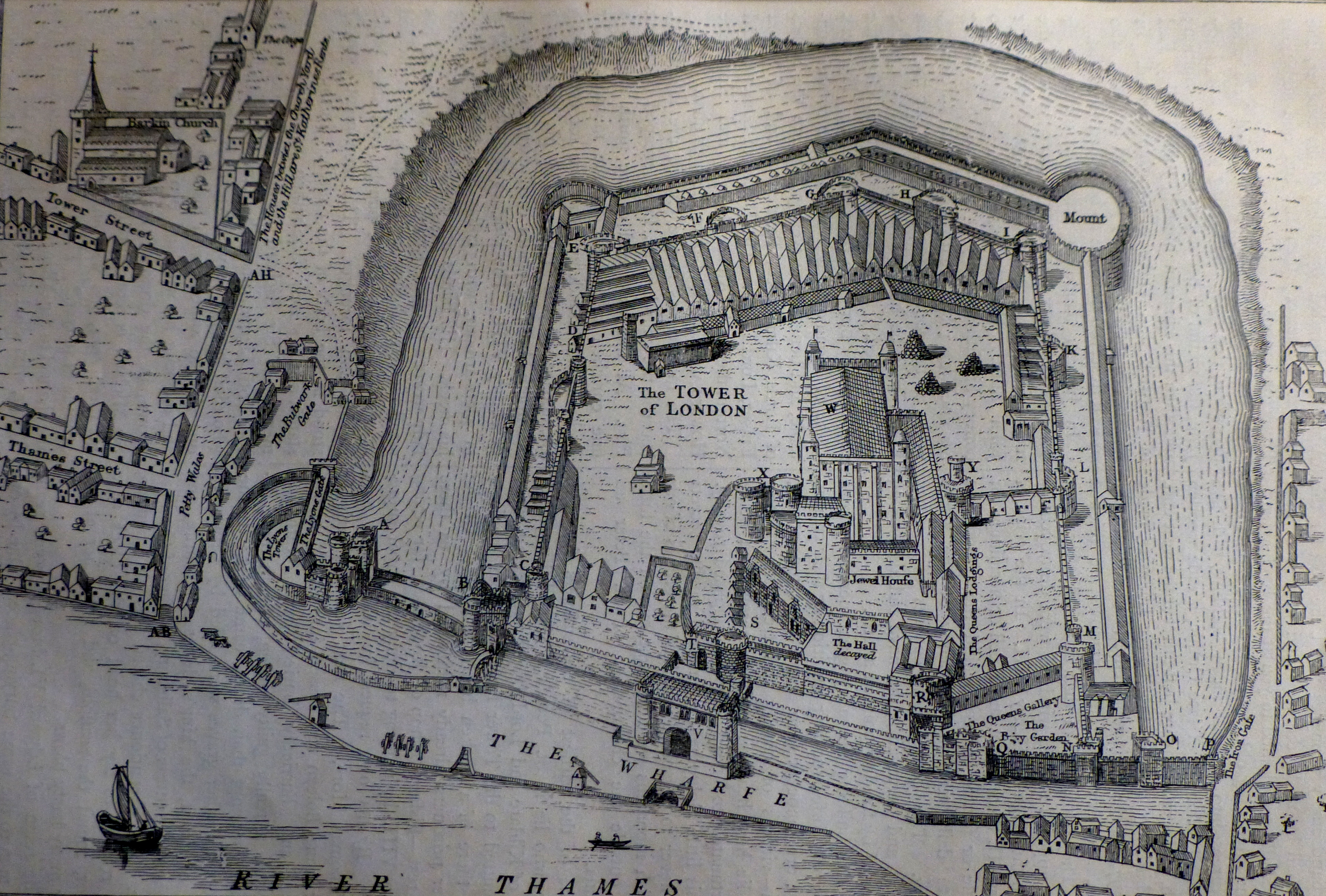
The following shows the Tower of London from a survey in 1597 showing the moat and the area to the north-west and west that formed Tower Hill.

tower of London 1597

The western end of Tower Hill. as can seen in the above picture, has long been the main land based gateway to the Tower of London, countless numbers of people must have walked down Tower Hill on their way to the Tower of London, for many, not in the best of circumstances.

The moat was drained in 1843 having long been described as an “offensive and useless nuisance”. After being drained workmen found several stone shot which were identified at the time as being missiles directed at the Tower during a siege in 1460 when Lord Scales held the Tower for Henry VI and the Yorkists cannonaded the fortress from a battery in Southwark.

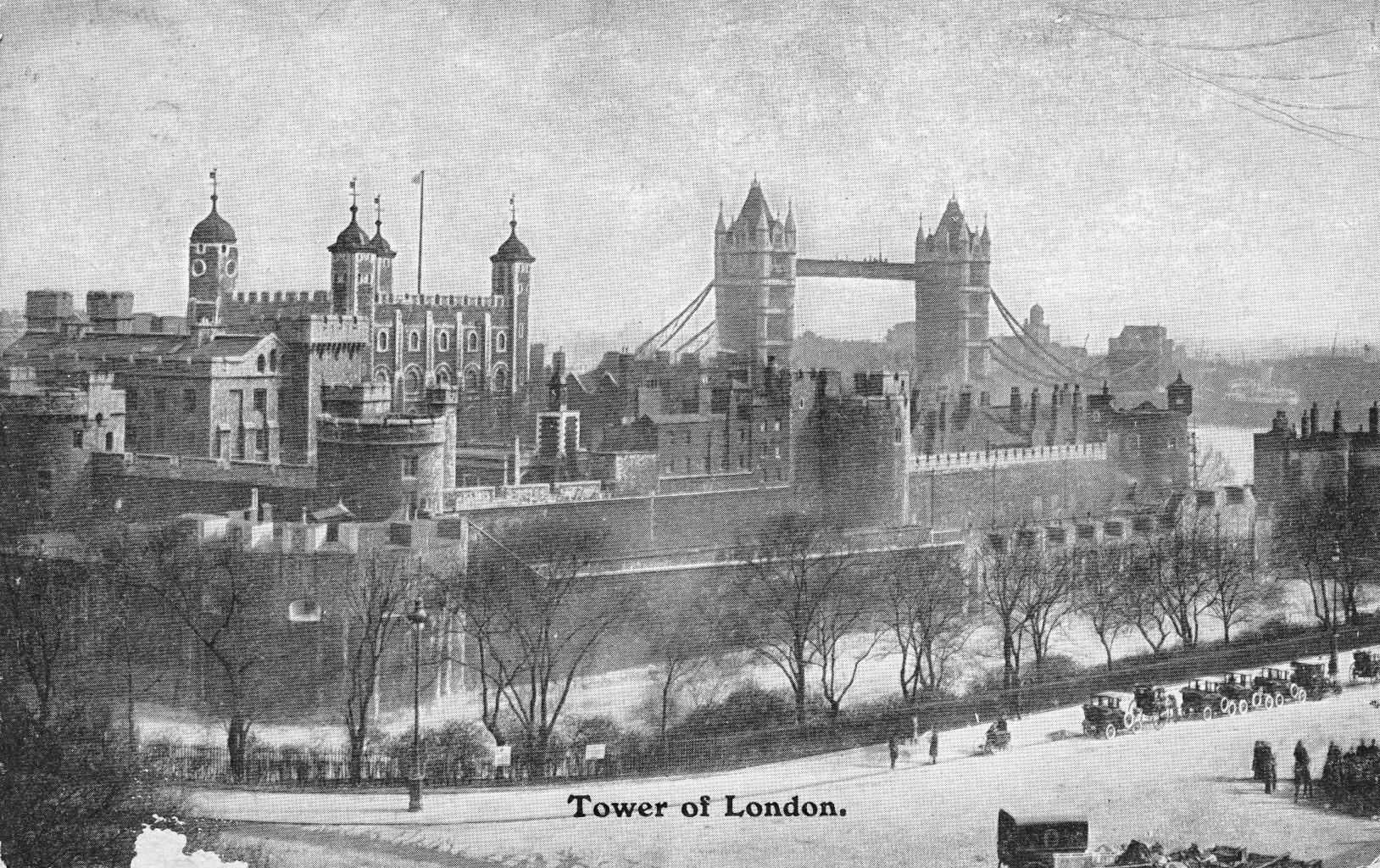
The following postcard is from the first decade of the twentieth century. I suspect it was taken from the top of the tower of All Hallows by the Tower looking over the Tower of London with part of Tower Hill in the foreground with the approach running down towards the main entrance on the right. Transport is lined up along the approach, taking visitors to and from the Tower.

tower hill postcard 2

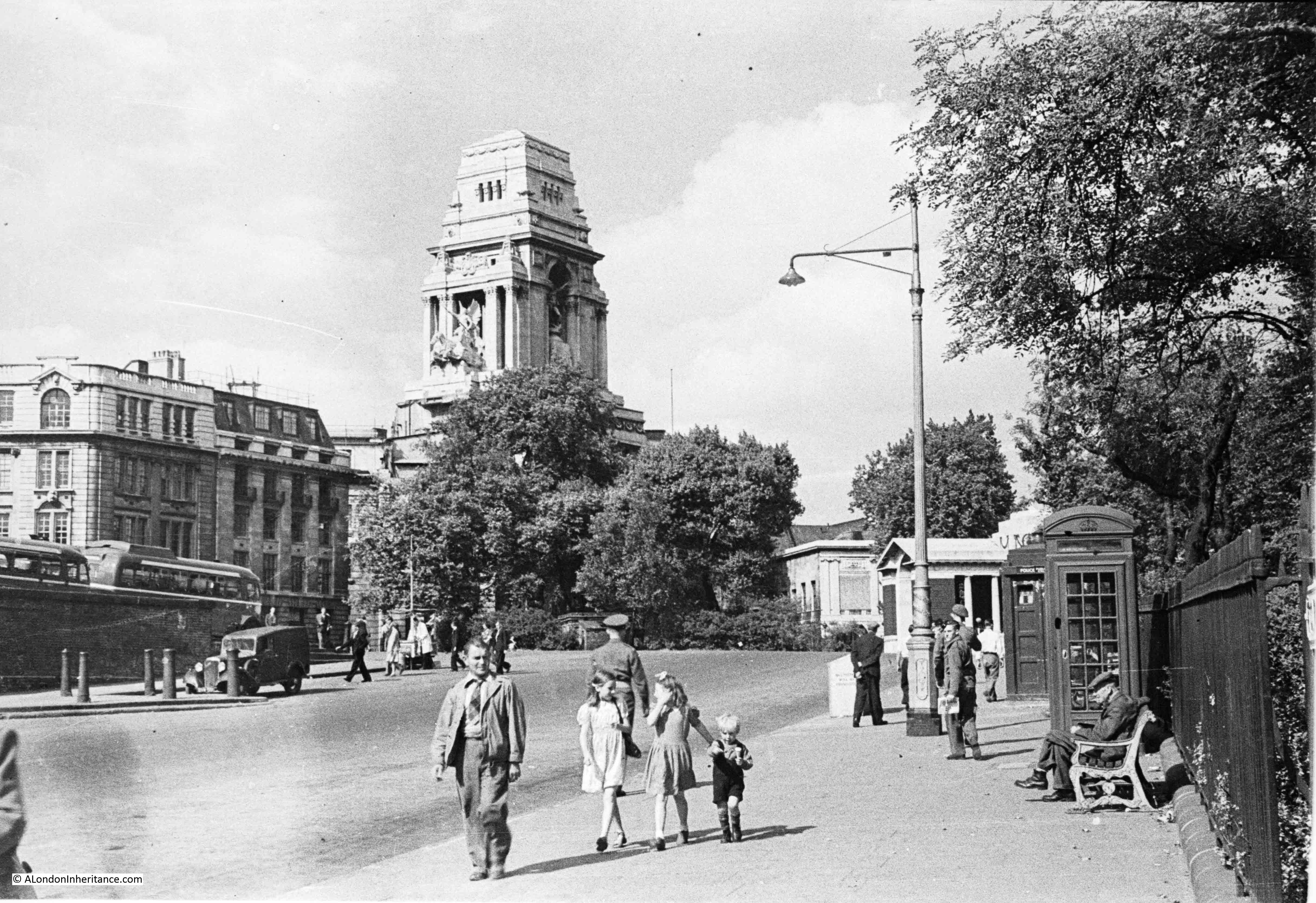
My father took the following photo looking up Tower Hill from a position to the extreme right of the above photo in 1948 (all of the following three photos from 1948, 1977 and 2014 were taken in the summer at roughly the same time, early afternoon as can be seen by the direction of the shadows).

The moat is just over the railings to the right. The large building behind the trees is the Port of London Authority headquarters. From the Face of London by Harold Clunn:

“Many courts and alleys were swept away between 1910 and 1912 to make room for the new headquarters of the Port of London Authority. This magnificent building, designed by Sir Edwin Cooper, stands on an island site enclosed by Trinity Square, Seething Lane and the two newly constructed thoroughfares called Pepys Street and Muscovey Street. Constructed between 1912 and 1922, it has a massive tower rising above a portico of Corinthian columns overlooking Trinity Square, and the offices are grouped around a lofty central apartment which has a domed roof of 110 feet in diameter”. 

The “massive tower” is a very striking local landmark both from the surrounding streets and from the Thames.

dads tower hill

The colonnaded building which can partly be seen at the top right of Tower Hill is the memorial to the men of the Merchant Navy and the fishing fleets who died in the two world wars. Some 36,000 names are listed of men who “have no grave but the sea”.

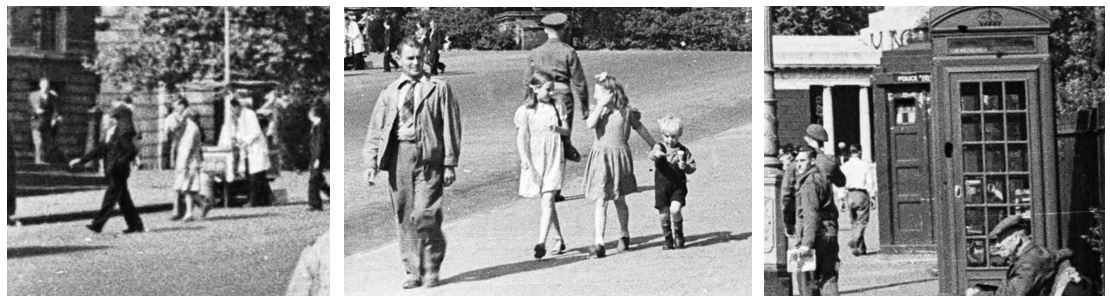
I find the detail of these photos fascinating, from left to right below. An Ice Cream seller in a white coat with his ice cream cart, one of which was bought for the boy in the middle photo and on the right behind the phone box is a Police Box, probably better known these days as a Tardis. Note also how common military uniforms were on the streets of London, even three years after the war had ended.

detail - 1
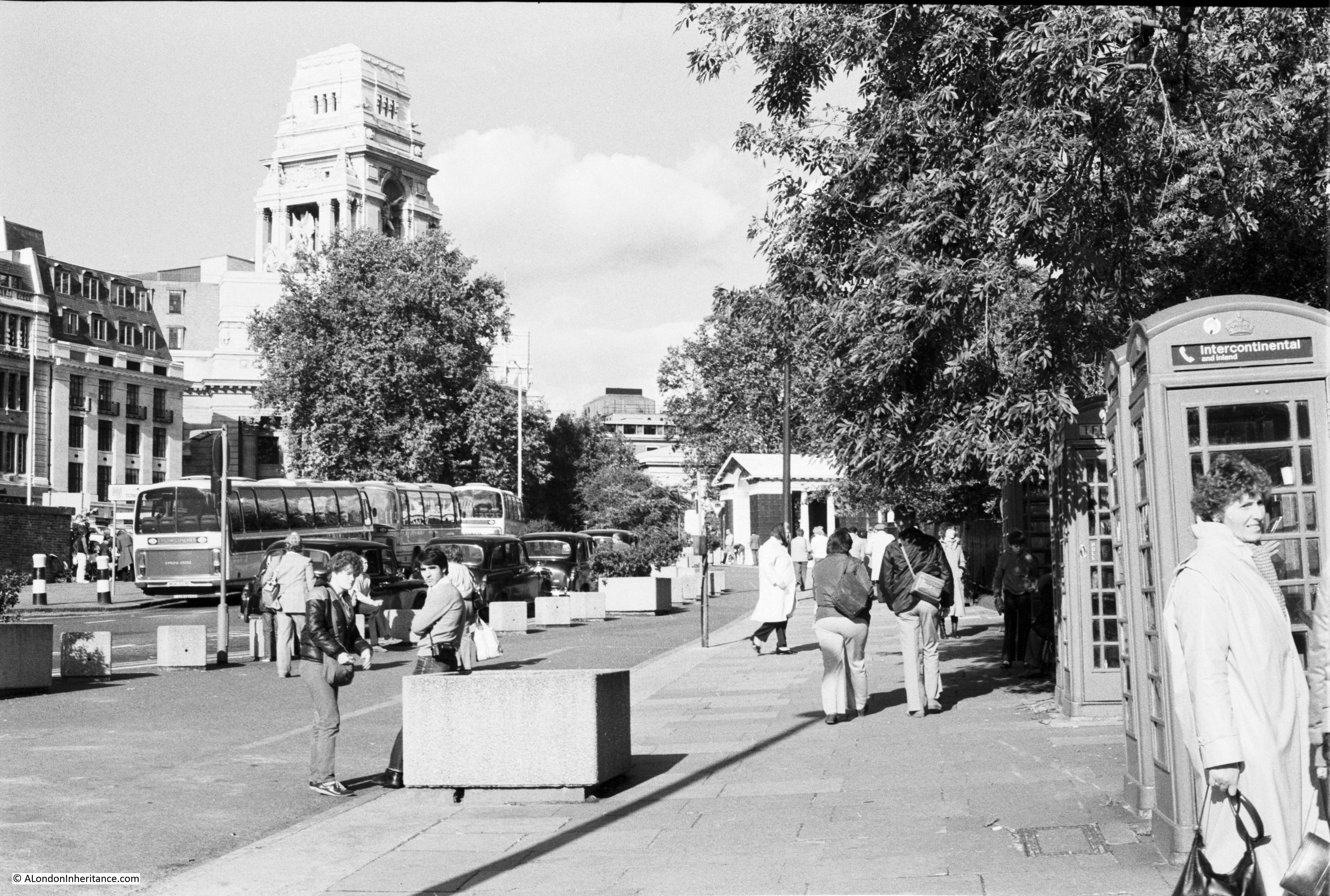
Now fast forward 29 years and I took the following photo in 1977 when I first stated taking photos of London with a Russian Zenit camera (all that pocket-money could stretch to at the time). The camera had a tendency for the shutter to stick and unlike digital cameras, you did not know this until after the film had been developed. This is one of the photos where it actually worked.

my 1970s tower hill

The scene is very similar. the coaches show the start of mass tourism to London and there are additional telephone boxes including one for Intercontinental Calls  (this was still at a time when intercontinental calls were the exception and expensive to make).

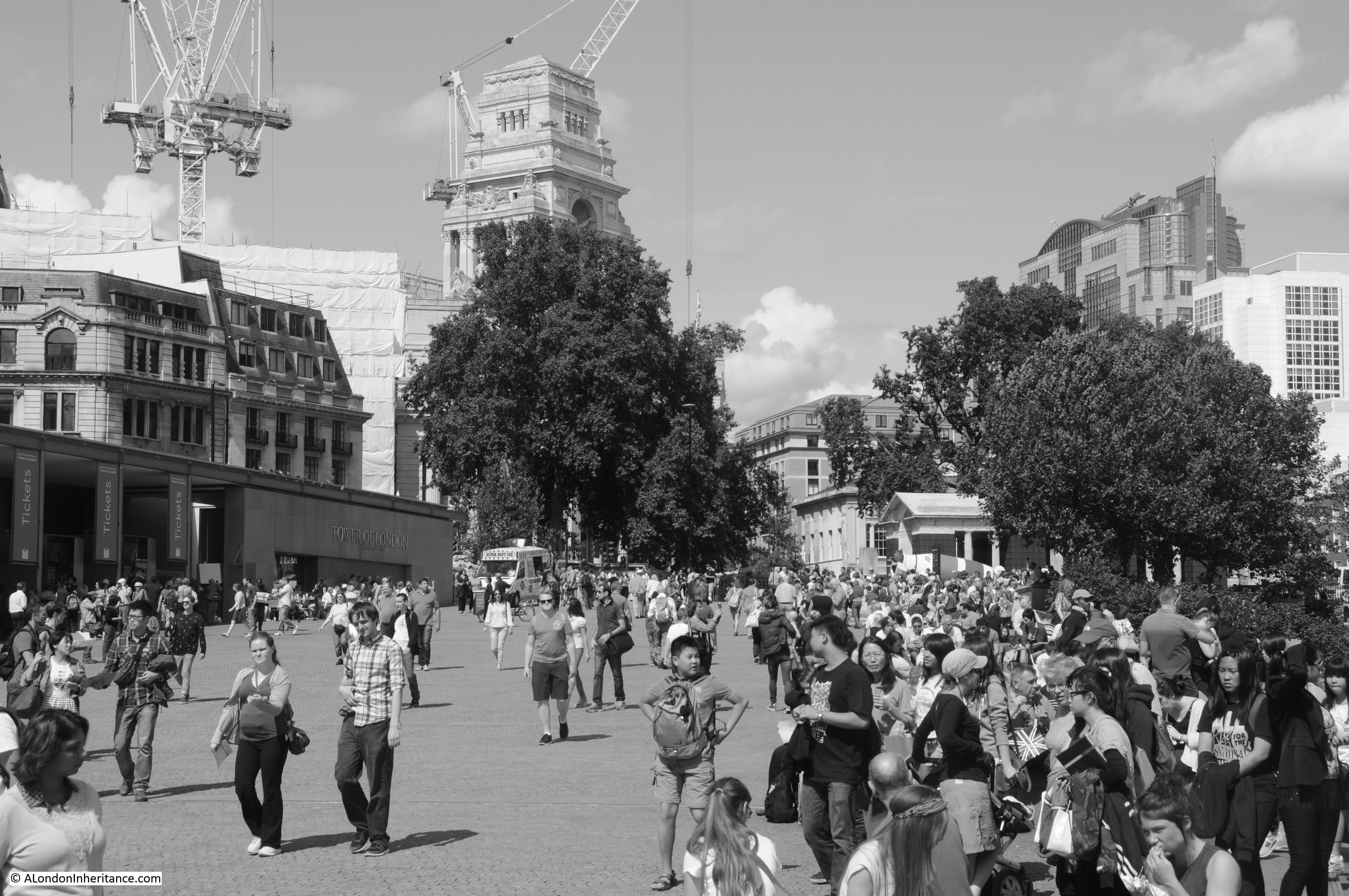
Now fast forward again another 36 years and I took the following photo in early August 2014. Fortunately I now have a much better camera and I thought converting to Black and White would allow a better comparison with the previous photos.

When I took this, planting of the poppies for the “Blood Swept Lands and Seas of Red” installation had only just begun and it had not generated the level of visitors seen in October and the start of November. This was a typical summer’s day on Tower Hill.

This photo also has cranes in the background which now appears to be mandatory for any photo within the City.

my 2014 tower hill

The Tower of London is now one of the major tourist attractions in London as can be seen on almost any day in Tower Hill. New ticket offices, food outlets and visitor displays have been built down the left hand side, the telephone boxes have disappeared and the ice cream seller with his ice cream cart from 1948 would be hard pressed to manage the industrial scale of ice cream vending now seen on Tower Hill on a summer’s day.

Visitor numbers to London have risen dramatically over the last few decades. In the last ten years they have risen from 11.696 million in 2003 to 16.784 million in 2013 and the first half of this year’s numbers show a 7% increase over the first half of last year.

Of these visitors in 2013, 2.894 million visited the Tower of London in 2013. I doubt that these numbers could have been imagined on that summer’s day in 1948.

Tourism is one of the many factors that are changing the face of London, and with numbers continuing to increase this influence will continue.

I recommend a visit to Tower Hill late on a cold winter’s evening, when it is possible to look over the moat, across to the Tower without the noise and hustle of the crowds and with a little imagination, see the Tower as it has been for centuries as a functioning garrison, fortress and prison. There is also an opportunity to briefly experience the Tower at night. The Ceremony of the Keys takes place every night with admittance starting at 9:30 pm. Whilst with modern-day security systems this ceremony is now probably more ceremonial than functional it does provide a glimpse of the Tower at night and of a ceremony which has been in existence for at least 700 years. Again, a cold winter’s evening is the best time to experience this event. Tickets are free from Historic Royal Palaces and can be found here.

You may also be interested in my post on the Tower Hill Escapologist which can be found here

The sources I used to research this post are:

  • London by George H. Cunningham published 1927
  • Old & New London by Edward Walford published 1878
  • The Face of London by Harold Clunn published 1932
  • The London Tourism numbers are from the Greater London Authority Data Store which can be found here
  • Figures for visitors to the Tower of London are from the Association of Leading Visitor Attractions and can be found here (which also has a fascinating list of visitor numbers to the majority of UK attractions)

alondoninheritance.com


St James Garlickhythe And A Monument To The Nesham Family’s Struggle

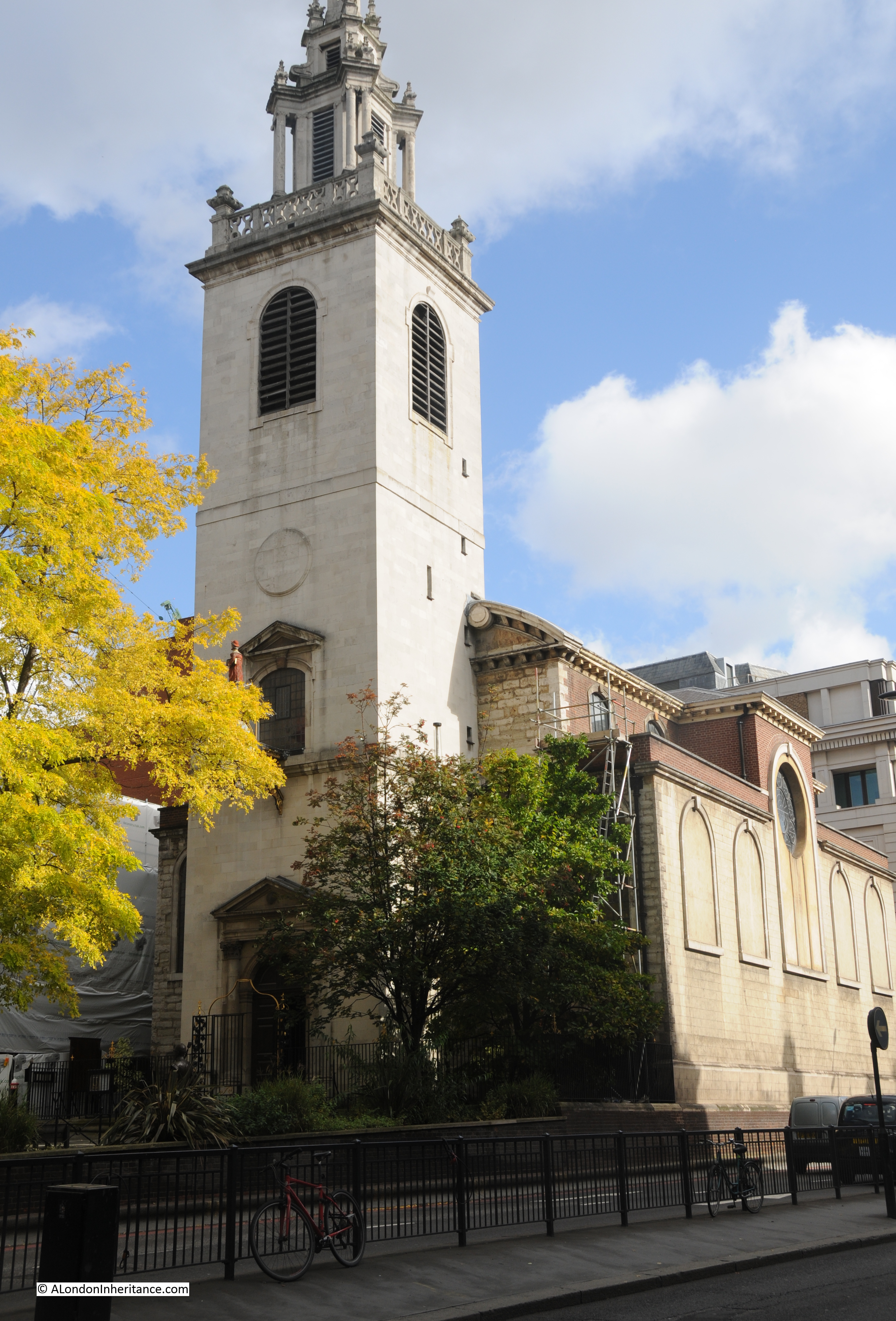
This week, I am visiting the Wren church of St. James Garlickhythe on Upper Thames Street. The following photo was taken just after the war when repairs were taking place to the tower.

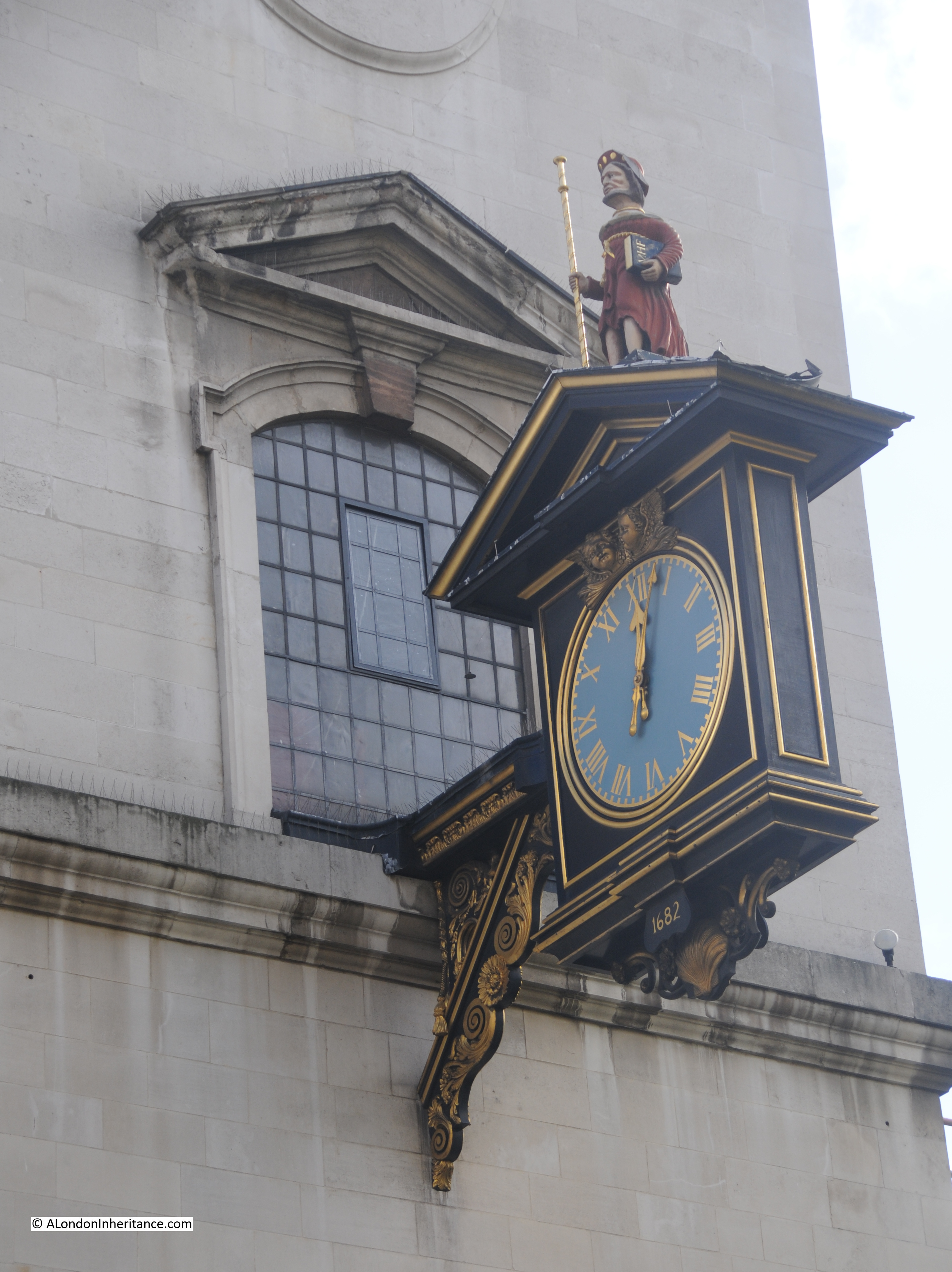
St. James did not suffer major damage during the bombing of London unlike so many other of Wren’s City churches. There was some damage to the tower, including the loss of the original 1682 clock that stood out from the tower,  and a very lucky escape when a 500lb bomb fell into the church but failed to explode.

st james - dads

The church today is much the same, however the surroundings have changed considerably with the church now right up against the considerably widened Upper Thames Street. The buildings to the right of the church in the above photo were destroyed to make way for the extra lanes as Upper Thames Street was widened from a single road to dual, two lanes of road to carry traffic  between the east and west ends of the City.

st james exterior 1

Although now up against Upper Thames Street, the church is on Garlick Hill. The church is dedicated to the apostle St James, and the Garlickhythe part of the name is from “hythe” being the Saxon word for a landing place or jetty, with Garlick coming from, as explained in Stow’s Survey of London for both church and hill, “for that of old time, on the banks of the river of Thames, near to this church, garlick was usually sold”. 

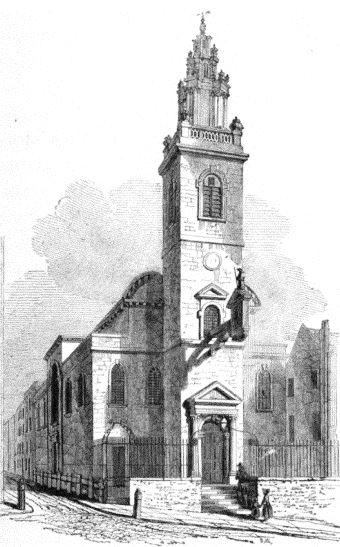
A pre-war view of the tower and steeple of St. james Garlickhythe with St. Paul’s in the background is shown below. As was typical of the pre-war city, the steeples of the City churches stand well above the surrounding buildings which cluster close around the church.

old st james 2

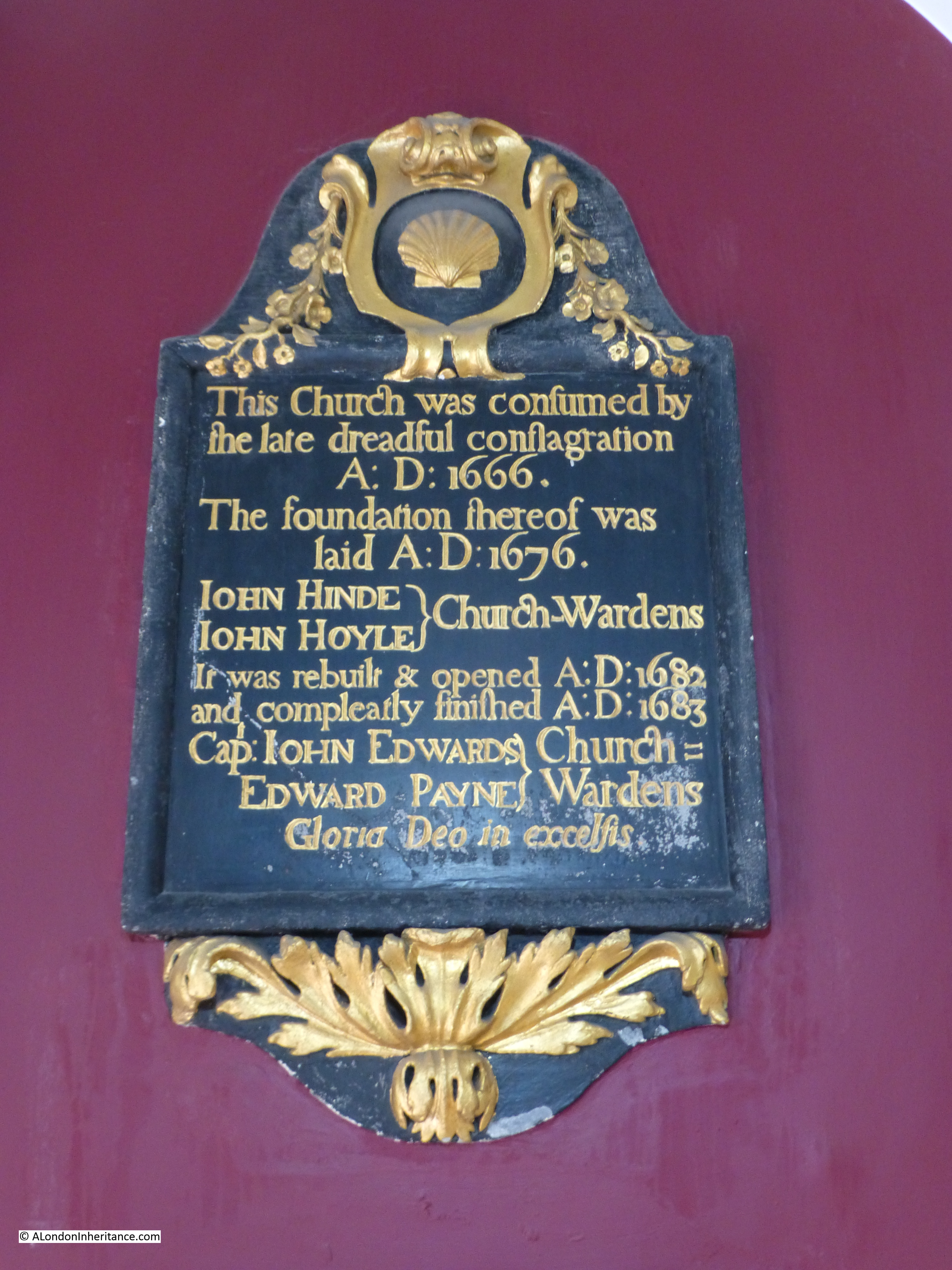
A church was first mentioned on the site in 1170, although it had probably stood on the site for some considerable time before this. It was rebuilt in around 1326 by Richard Rothing, Sheriff, who also left money for the maintenance of the fabric.  As with the majority of other City churches, it was then destroyed in the 1666 Great Fire with the current church being built by Wren,  and completed in 1683. A monument in the church records the rebuilding:

plaque 1 There is also one to record the restoration work carried out after the war:

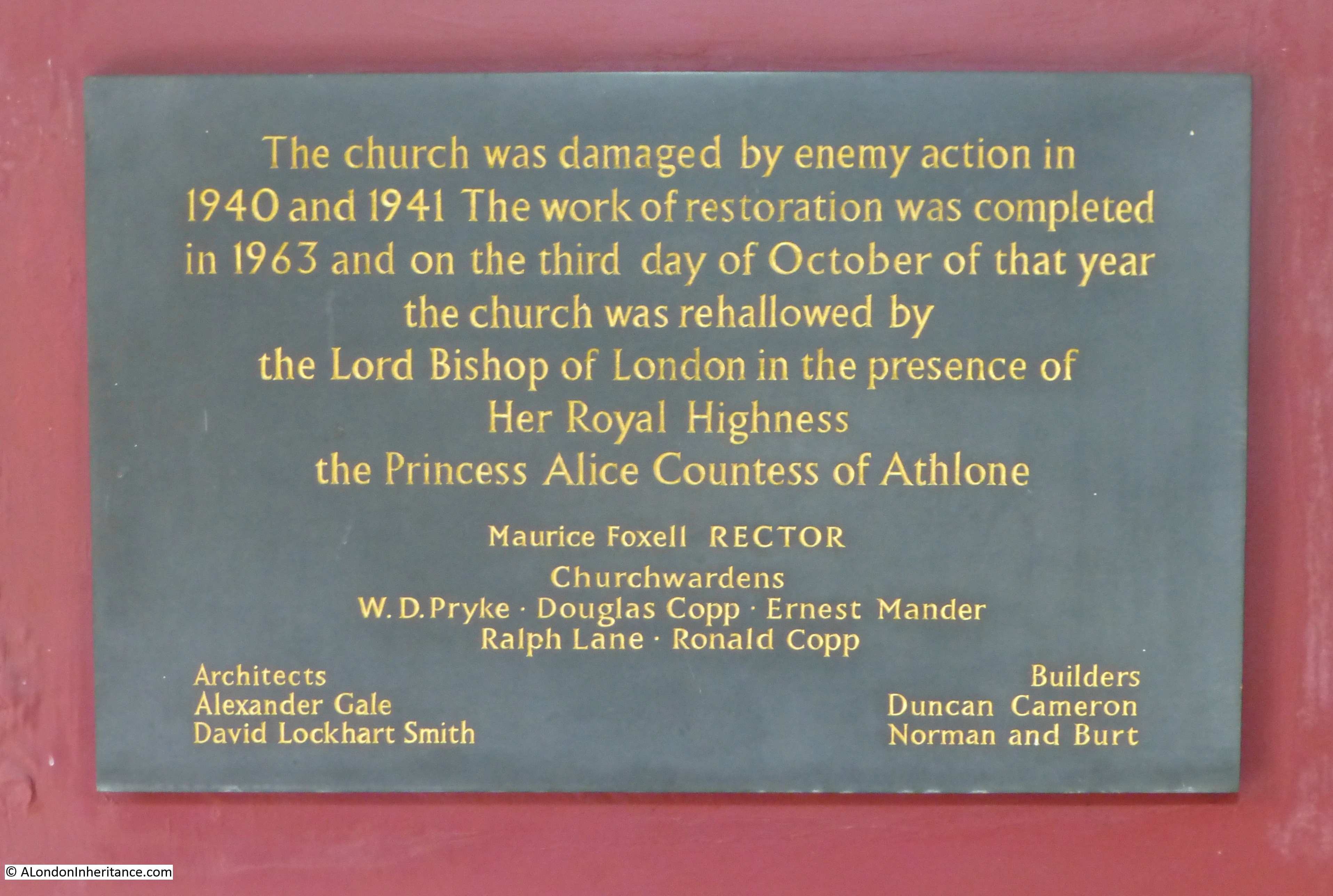
plaque 2

Among the monuments Inside the church, there is one of the saddest I have found in a City church. Whilst we may romanticise  about the London of centuries past, the lost buildings, streets and ways of life, London was a hard place to survive and raise a family. The following monument records the Nesham family who lived in the parish for more than 30 years.

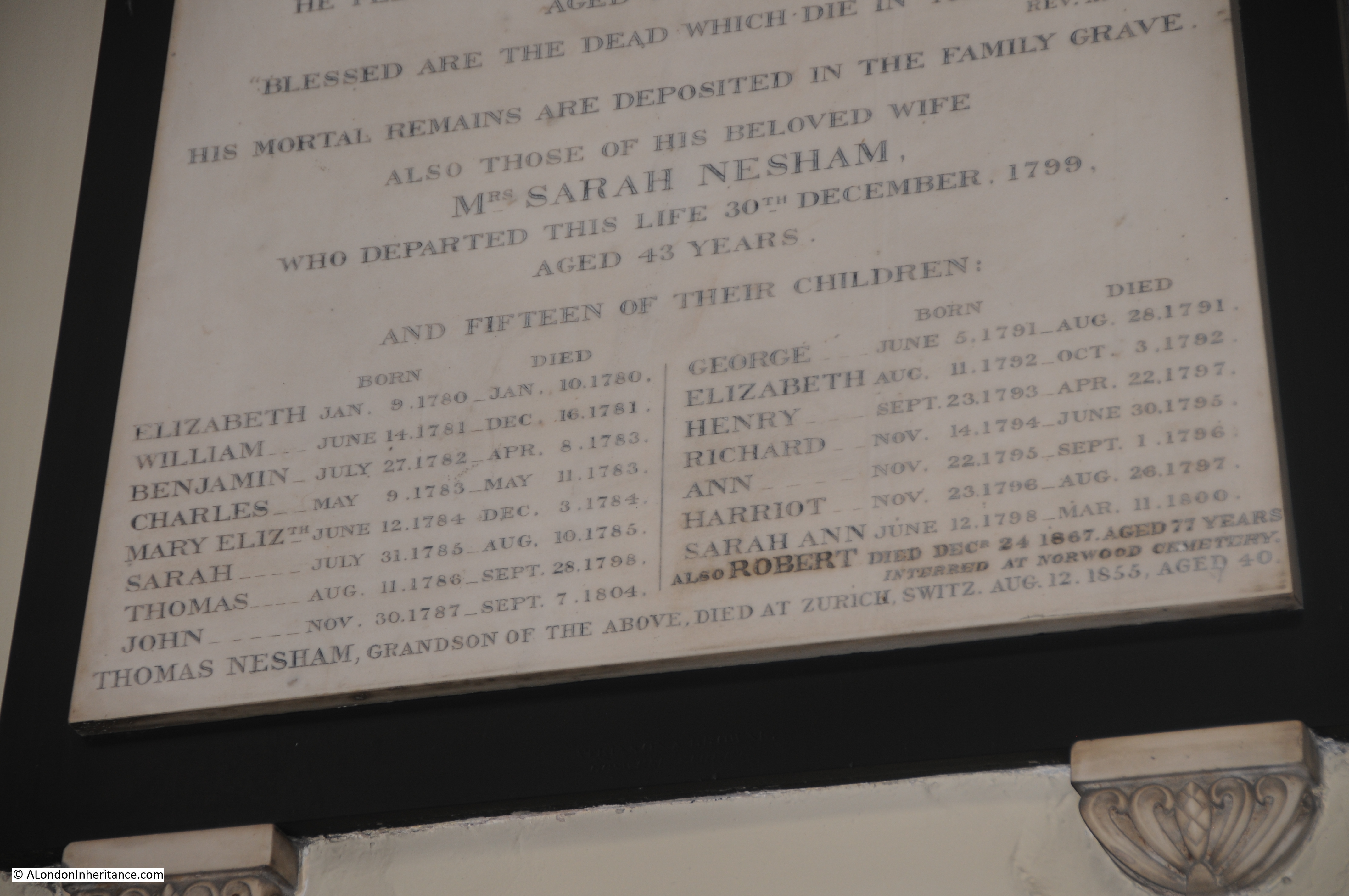
Sarah Nesham lived to the age of 43, “departing this life 30th December 1799”. The monument also records the death of fifteen of their children, the majority of whom did not reach the age of one, with the oldest of the fifteen making it to thirteen.

A sixteenth child was added later, Robert had reached the age of 77 when he died in 1867, one child out of sixteen living past their thirteenth birthday.

plaque 3

The detail of the children are shown in the following photo. One can hardly imagine what Sarah must have gone through in her 43 years, and I am sure that whilst fifteen children may have been the exception, this high level of child mortality was not unusual in London in the 18th Century.

plaque 4

It would also be interesting to know what their Grandson (presumably by their one child Robert surviving to adulthood) was doing in Zurich when he died in 1855 at the age of 40.

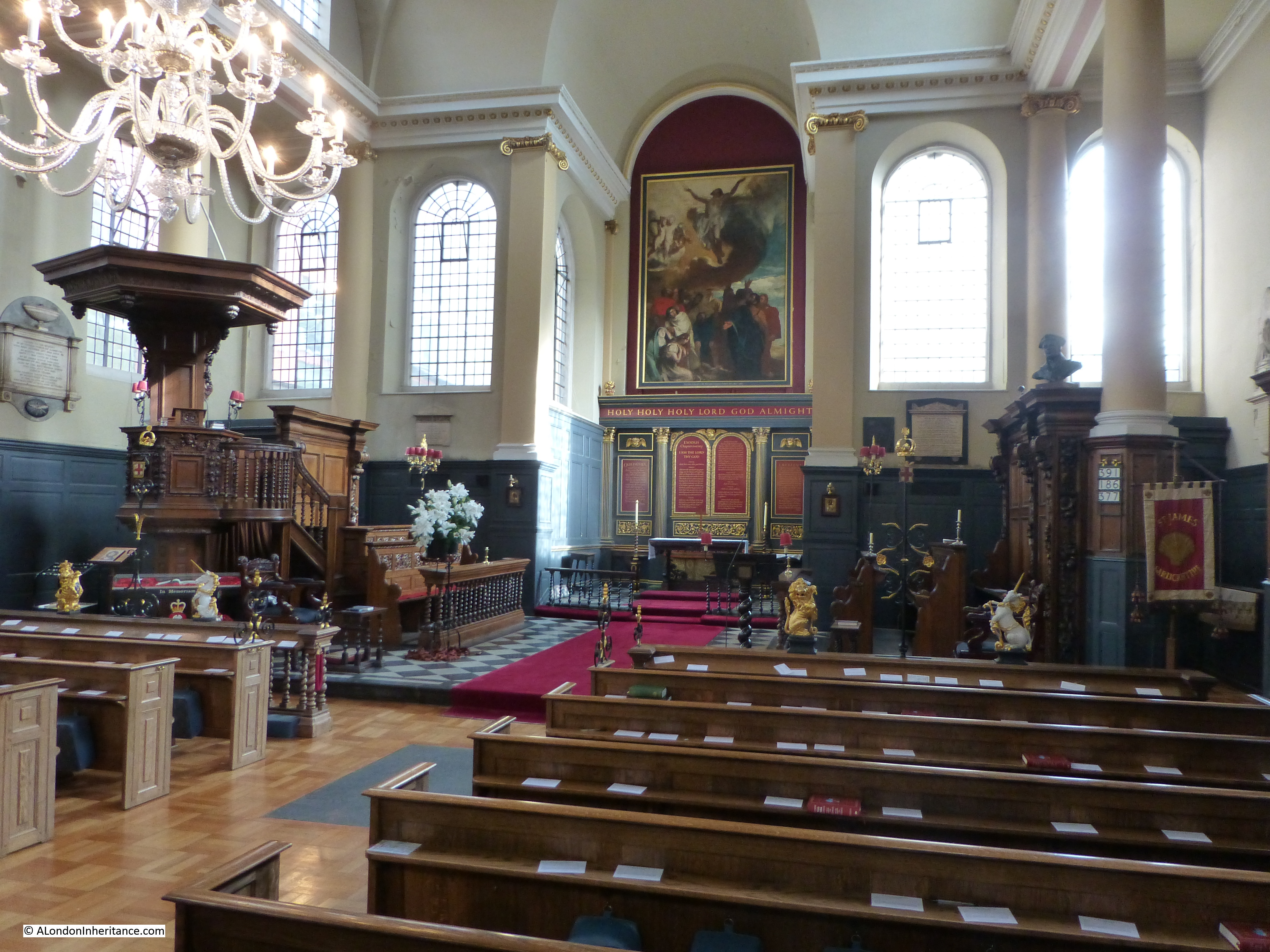
The nave of the church is one of the highest in London, large windows provide a very light interior. Up until the war the church had stained glass windows which must have resulted in quite a dark interior. The use of plain glass in the restoration of the church allows light to stream into the interior. Behind the altar is the 1815 painting of the Ascension by Andrew Geddes.

st james interior 1

The accounts for the church record many of the expenses associated with the building and opening of the church, for example in the Vestry Book for July 19th, 1682 an entry records that Mr Thomas Osborn, Churchwarden was to pay Sir Christopher Wren’s two clerks 40s each for “their care and kindness in hastening the building of the church and to do the like for the more speedy finishing of the steeple.”

When the church was nearly finished, of the many items recorded as being paid for are the following:

For Church Bible and Common Prayer Book….£3 3s 0d

Two bottles of sherry and pipes at the opening of the Church ….. 3s 4d

Hire of 3 dozen cushions and porterage….. 13s 4d

Wine when the Lord Mayor and Aldermen were at our Church….. £1 11s 0d

Wax Links to enlighten my Lord Mayor home….. 4s 6d

old st james 1Up until around 1808 there was an open churchyard in front of the church, after this time it was enclosed by iron railings.

The picture to the left shows the church as it appeared in the 1830’s, looking much the same as now, with the railings at the front and the clock on the tower.

The clock was one of the victims of damage sustained by the church during the war. A restored clock was installed  in the same position which is shown in the photo below.


st james clock 1

The church is associated with many of the City Livery Companies, including the Vintners’ Livery Company who contributed considerably to the restoration of the clock.

In front of the church is a small statue of the Barge Master and Swan Marker of the Vintners. The Vintners have held the right to own swans for many centuries and continue to hold the annual Swan Upping to count the swans on the Thames.

swan 1

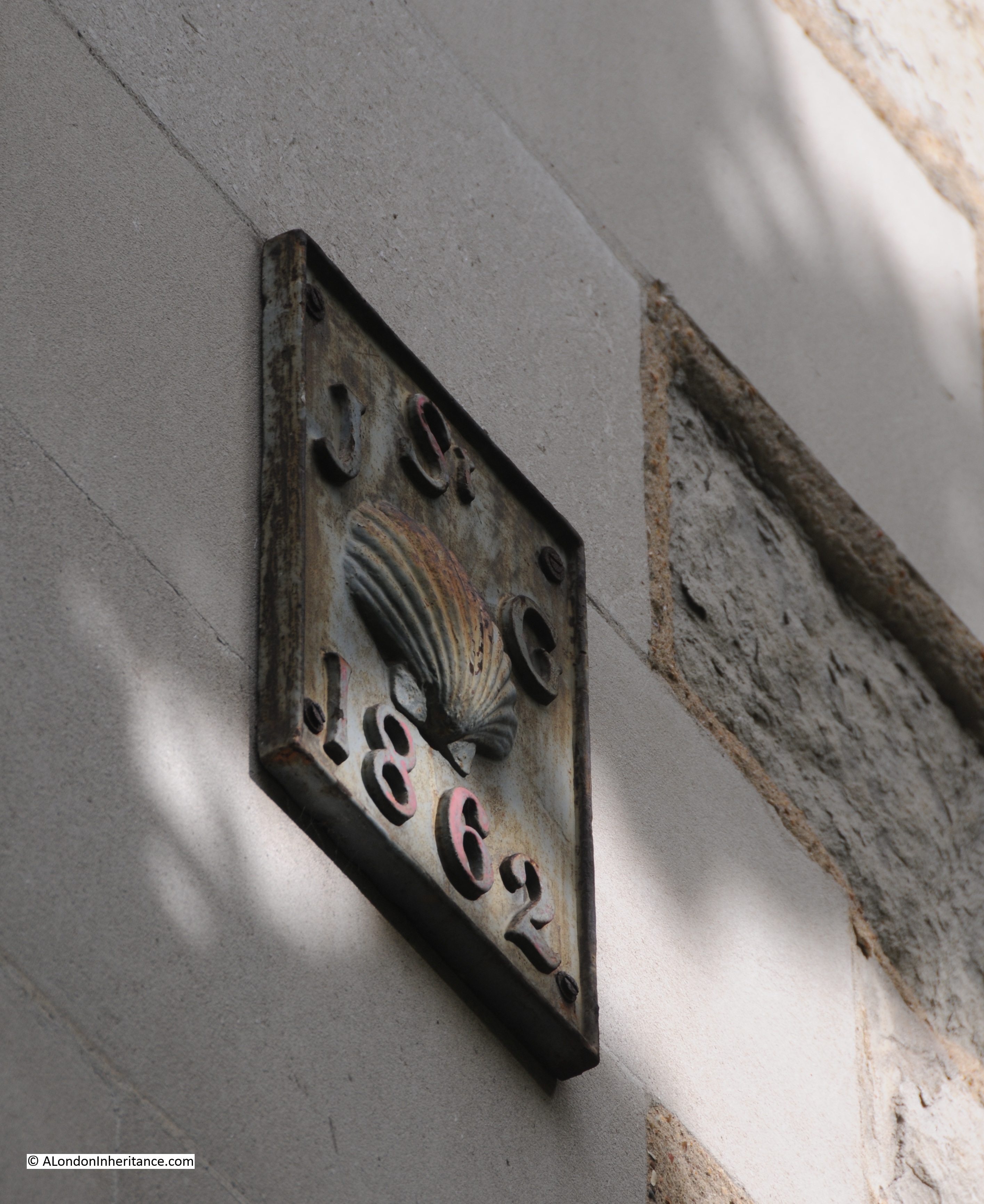
The Scallop Shell is the symbol of St. James and there are many shell symbols around the church including the one shown in the photo below on the exterior of the church.

st james shell 1

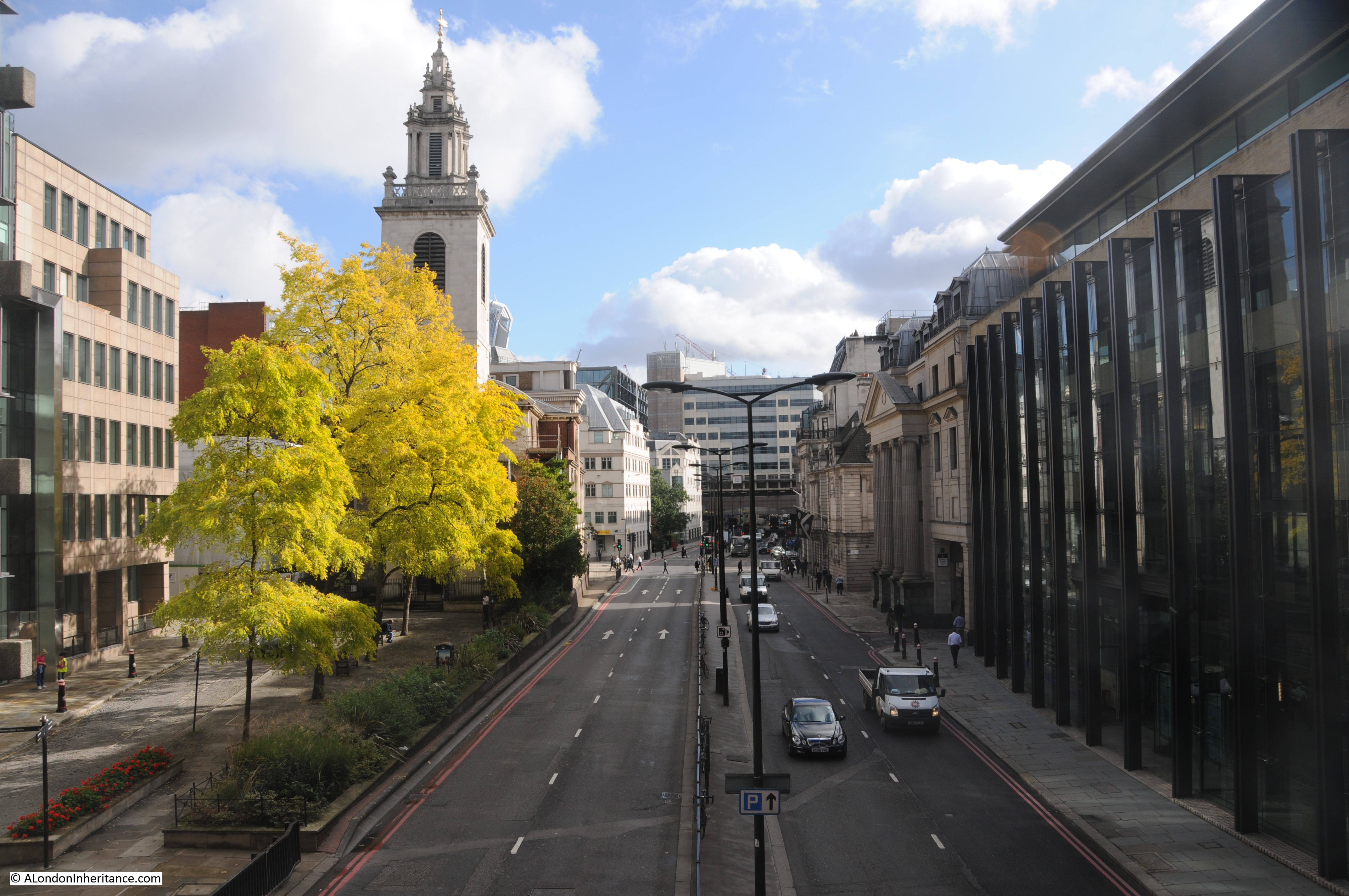
We can see how the area around the church has changed by walking across the footbridge over Upper Thames Street. Originally Upper Thames Street was just the two lanes on the right of the photo. The lanes on the left were buildings that faced onto Upper Thames Street. reconstruction after the war and the need to provide routes through the City between east and west resulted in the considerable widening of this road, which took the boundary of the road right up against St. James Garlickhythe.

st james by upper thames 1As with all the City churches, St. James Garlickhythe is well worth a visit and when there spare a thought for Sarah Nesham and her fifteen children. Life was extremely tough and challenging for so many during London’s long history.

St. James Garlickhthe is opened regularly by the Friends of the City Churches.

The sources I used to research this post are:

  • The Old Churches Of London by Gerald Cobb published 1942
  • London by George H. Cunningham published 1927
  • Old & New London by Edward Walford published 1878

 alondoninheritance.com

The London to Brighton Veteran Car Run – 1948 and 2014

In 1948 my father took a number of photos of the start of the London to Brighton Veteran Car Run. Last Sunday was the date for this year’s event, so following an early start I arrived at Hyde Park at 6 am to watch the cars assemble and prepare for the first cars to depart on the 60 mile run to Brighton at 6:57 am (sunrise).

Even at 6 in the morning, the first cars have already started to assemble along Serpentine Road in a very dark Hyde Park.

my car run 1

The very first run was held in 1896 to celebrate the passing into law of the “Light Locomotives on the Highway Act” which defined a new category of vehicle, a Light Locomotive which had to be under 3 tons of unladen weight. It was this act which raised the speed limit from 4mph to 14mph, and although the requirement for a man to walk in front carrying a red flag had been abolished in 1878, a red flag was symbolically destroyed at the start of the 1896 run.

H J Lawson was a London-based motor industry promoter who had floated the British Motor Syndicate Limited  and in 1896 formed the Daimler Motor Company Ltd. It was H J Lawson who organised the 1896 London to Brighton Run, at the time called the Emancipation Run, in order to celebrate the freedoms that the new Act gave to motoring enthusiasts and the fledgling British motor industry.

This is also the reason why the Run is held in November, not the ideal month for open top motoring. The Act came into force just after midnight on the 14th November and the first Run was held on that day with November being the traditional month for the run ever since.

The following is from the history of the run on the website of the Veteran Car Club of Great Britain, which can be found here:

The Run on Saturday 14th 1896 was a demonstration that the automobile had come to stay. The organisers’ instructions stated: “Owners and drivers should remember that motor cars are on trial in England and that any rashness or carelessness might injure the industry in this country.

The Run from the Metropole Hotel in London to the Metropole Hotel in Brighton had 58 vehicles listed to start but 25 dropped out before the day. (The numbers do vary from one publication to another as no true report seems to be made.)
Only 13 or 14 reached Brighton, although it was hinted that one car or possible more had been taken down to Brighton by train and covered with mud before crossing the finishing line!

In 1897 (29 November) the Motor Car Club drove 44 cars to Sheen House, West London. In 1898 on a November day the Motor Car Club took 135 entrants for a run to Brighton. The following day, the Automobile Club organised a run with over 50 cars on a revisit to Sheen House. The Automobile Club had a Run in 1900 to Southsea. A rerun was made in 1901 with 174 cars that started in Whitehall Place, London. 1902 saw a Run to Oxford with 193 cars. 
In 1903 the speed limit was raised to “the lightning velocity of 20mph” and with no further need to celebrate a 12mph limit the Runs stopped.

The runs then stopped until 1927 when the first re-enactment of the Emancipation Day run was held. Apart from the war years and 1947 due to petrol rationing, the run has been held every year since, again from the Veteran Car Club of Great Britain:

In 1927 the Run, keeping as close to the original 1896 day as possible, was reintroduced by the DAILY SKETCH and the SUNDAY GRAPHIC. The Run has been run annually ever since with the exception of the war years (1939~45) and petrol rationing (1947). It has been reported that one car did the Run in 1947 using his precious petrol ration.
In some publications it has been reported that not all of the Runs started in Central London or finished in Brighton, it seems that they were correct if you take in the years before 1927. All Runs from 1927 to the present day, according to the official programmes, started in London and finished in Brighton and kept almost to the A23 the main London to Brighton road.

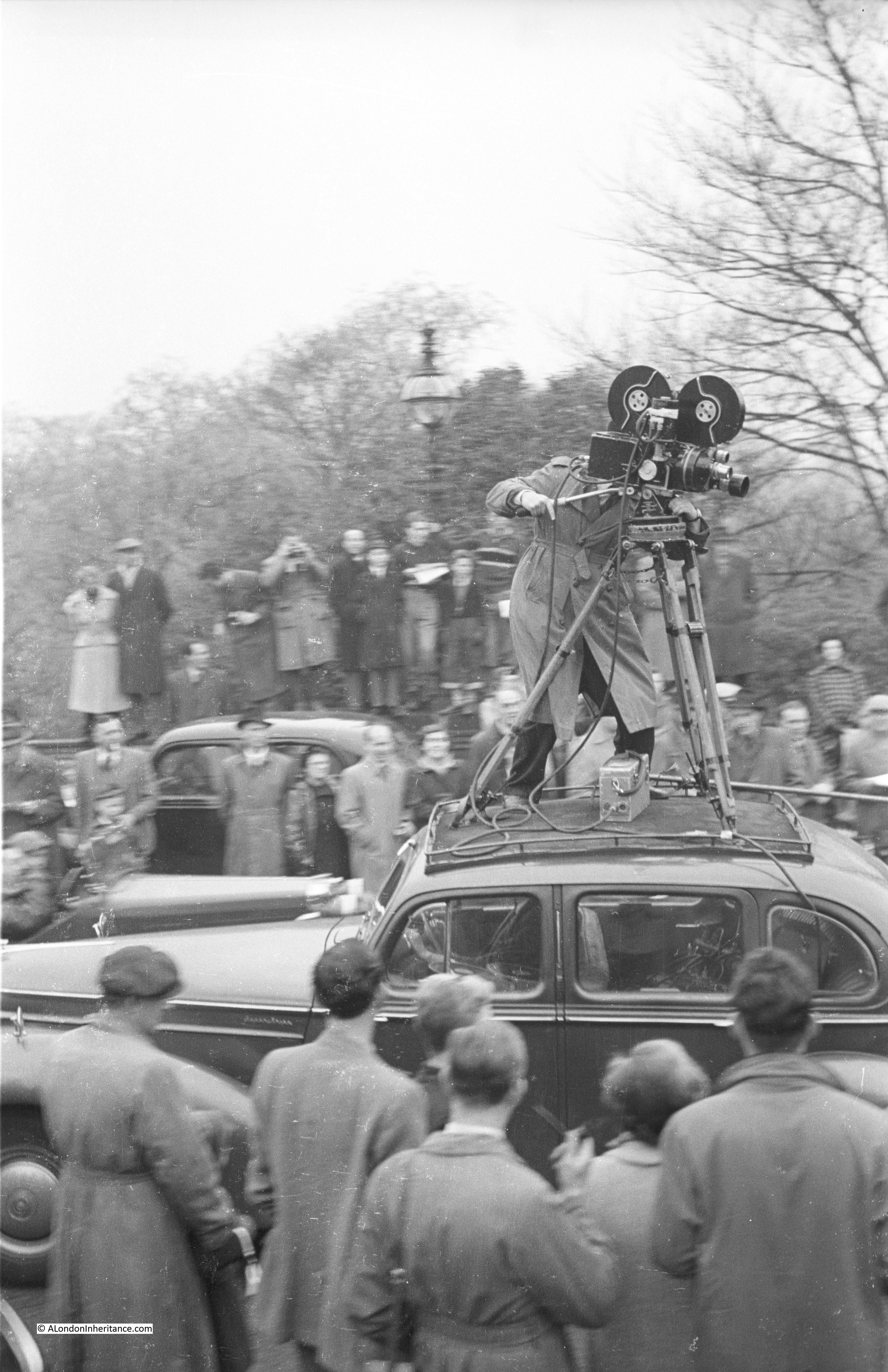
This was an event to record and the first of my father’s photos shows the somewhat precarious method used for filming the event. Not sure what today’s Health and Safety assessments would make of this:

car run dads 6

In 2014, cars continue to arrive as weak autumn light creeps across the park:

my car run 8

To take part in the run, cars have to be of pre-1905 vintage and there is a very good chance that many of the cars taking part in 1948 were also in the 2014 run.

The start of the run was moved to Hyde Park in 1936.

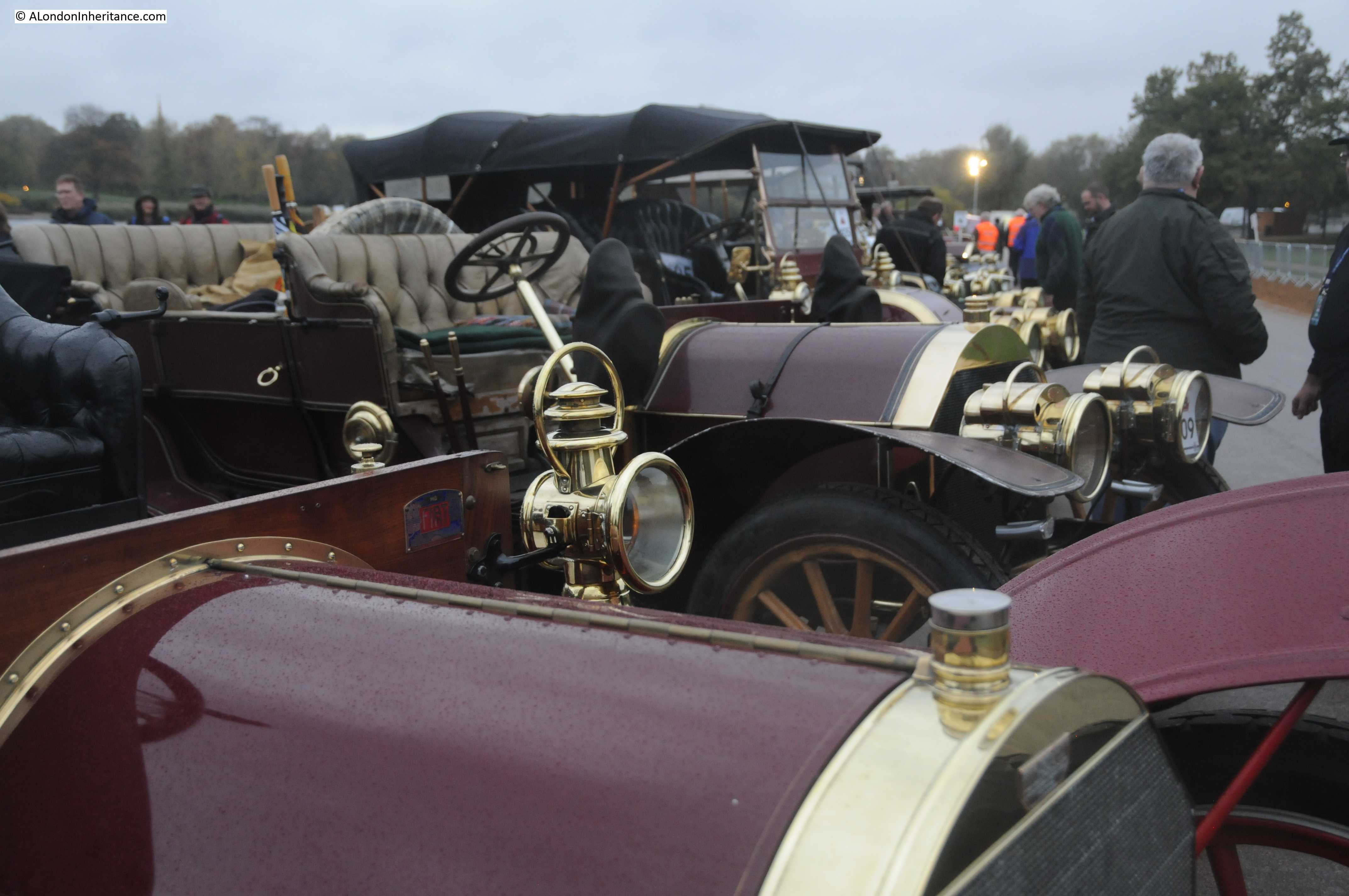
Cars start arriving and lining up along Serpentine Road well before dawn ready for the start. This is a time for final checks of the cars, last-minute adjustments and repairs and admiring the other cars that have assembled for the run.

The car in the following of my father’s photos, BW 178 is a 1903 Curved Dash Oldsmobile. I checked with the Veteran car Club of Great Britain and this car is still running but was not entered in the run this year. Note the two boathouses in the following photo from 1948:

car run dads 4

The following photo is from the same position with the boathouses in the background (although I did not realise the original photo on my iPad was in portrait rather than landscape so I took in the wrong orientation). I find it fascinating that I can stand in the same position, 66 years later, and see the same event in the same surroundings. The only real change in those 66 years are the clothes that people are wearing, and todays event is more controlled with barriers to keep spectators away from the road.

my car run 14

From a photography perspective, there have been considerable changes. My father took nine photos, the black and white ones in this post. I took about three hundred. After the war, film for amateur photographers was expensive and in short supply so the opportunities during a large event to take many photos were very limited. Digital photography and the use of large memory cards has almost made irrelevant any restrictions on photo numbers.

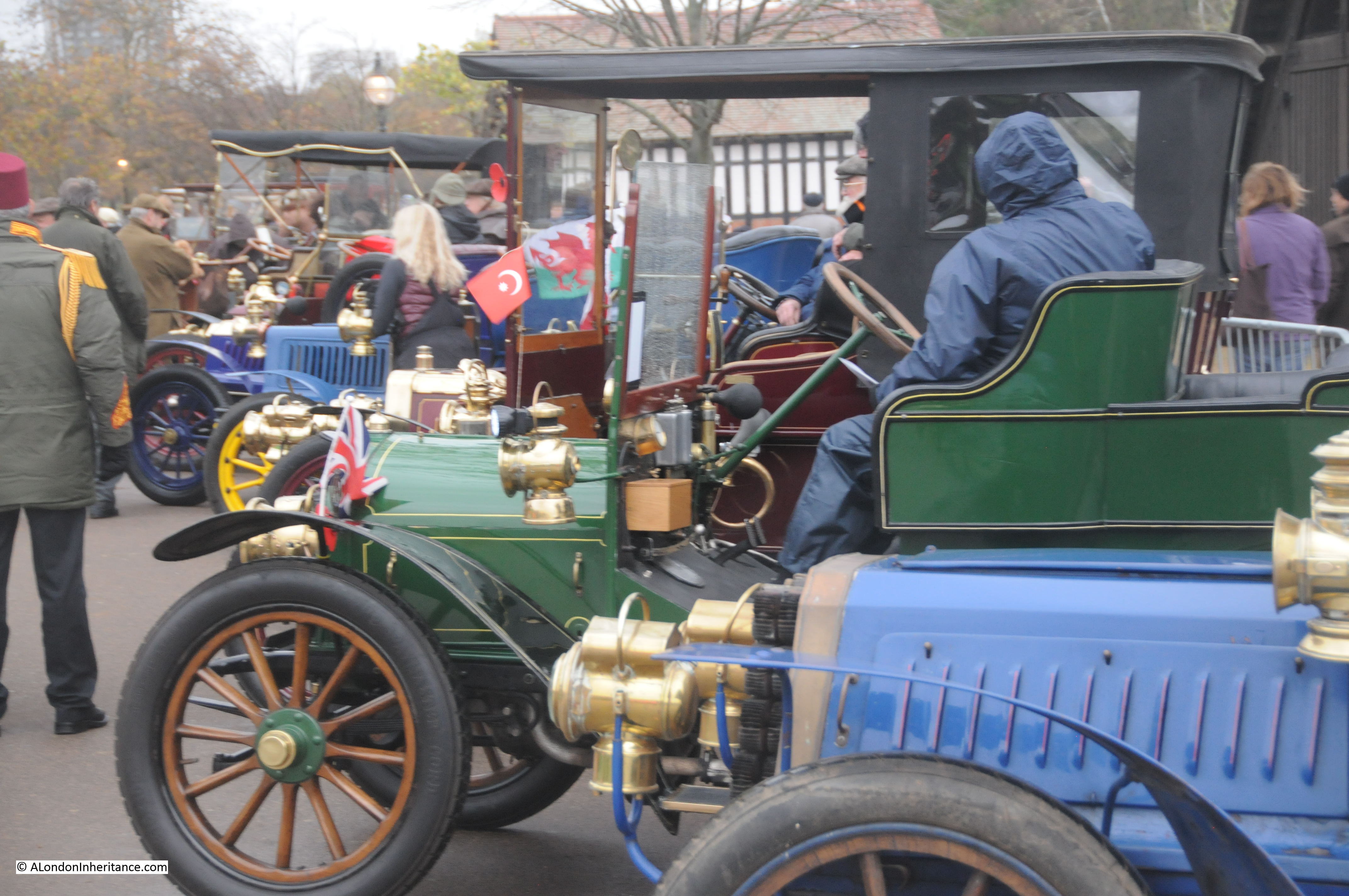
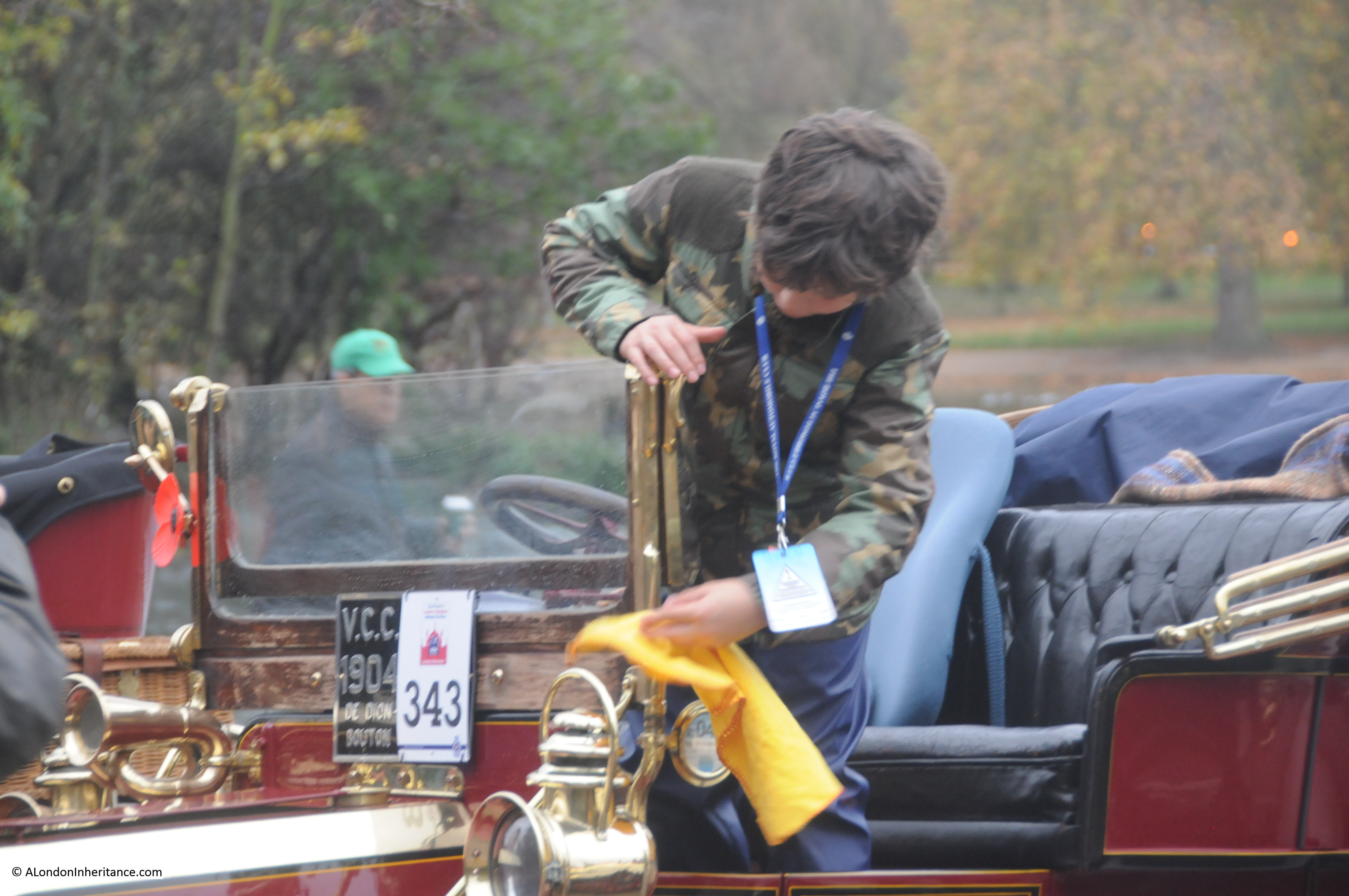
Final polishing takes place so the cars look their best on the 60 miles to Brighton. Really good to see such a range of ages involved in the event:

my car run 5

And cars are admired from all angles.

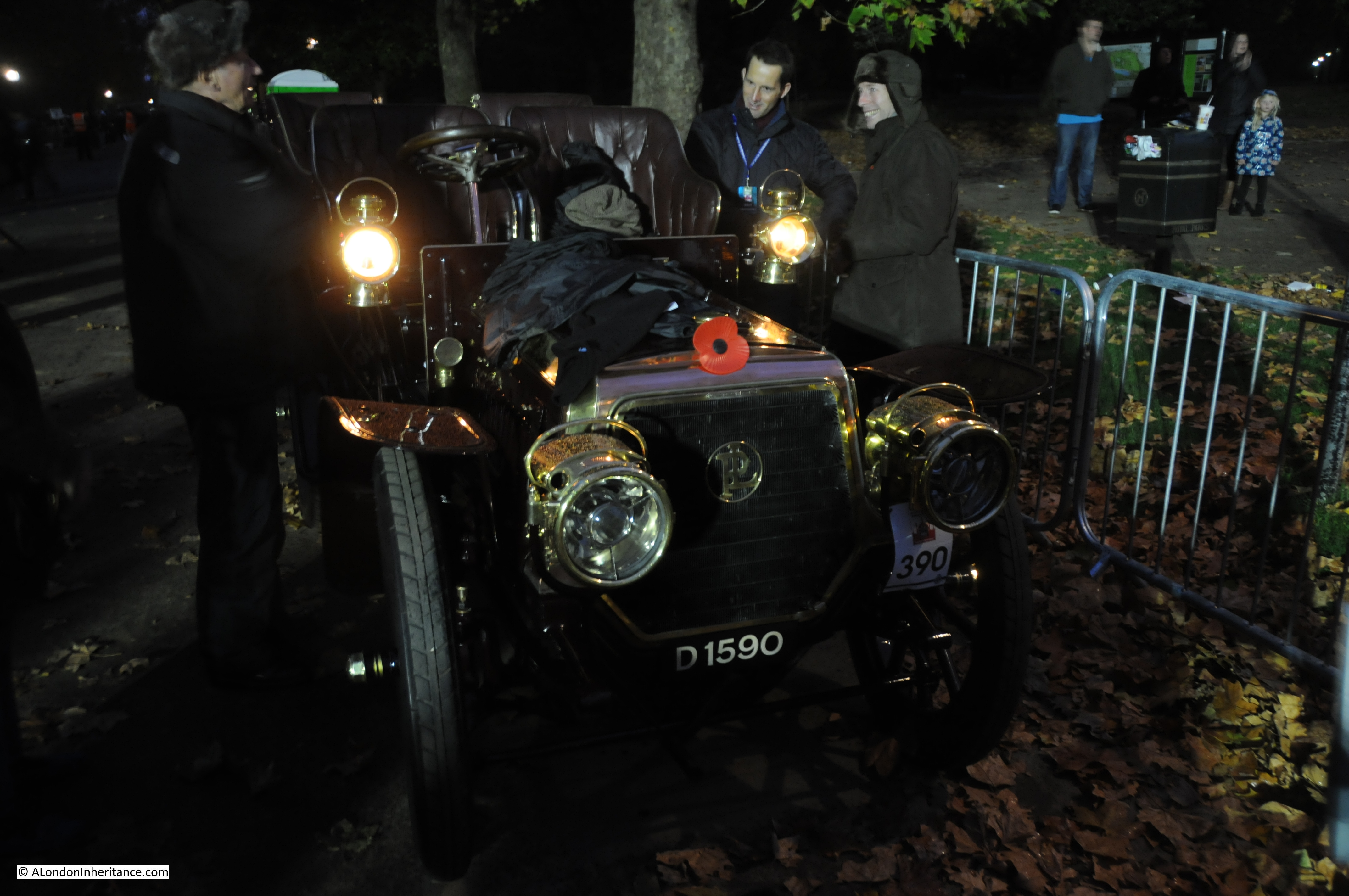
car run dads 5Note the hand-held oil lamp hanging on the rear of the above car. As we walked up Serpentine Road before the sunrise, oil lamps were still very much in evidence and their warm, flickering glow lit up a damp morning:

my car run 2

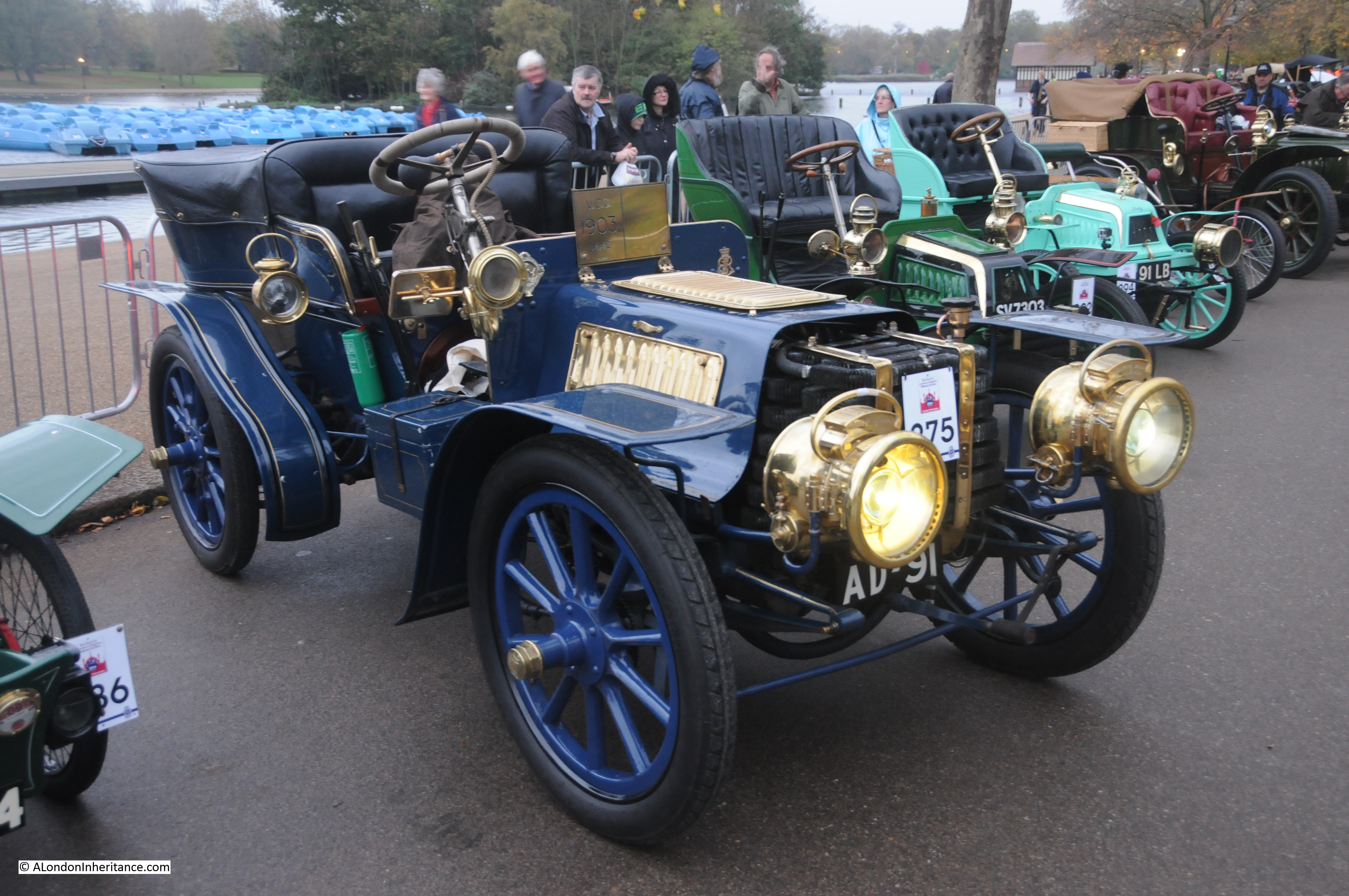
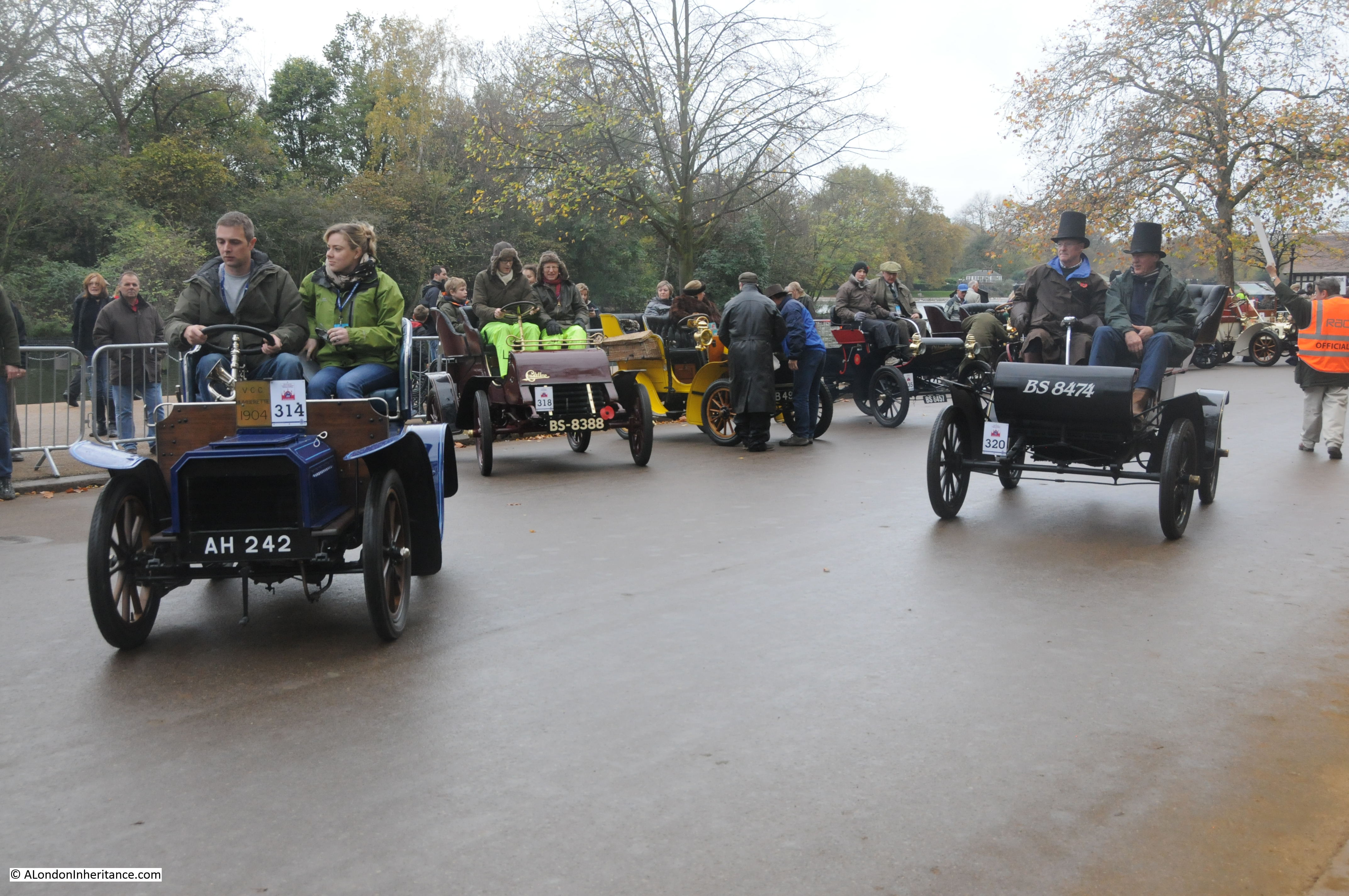
Cars line up in 2014 waiting for the start:

my car run 10

With plenty of gleaming brass on a dull, overcast autumn morning:

my car run 4The run starts at sunrise, 6:57 am and cars (about 440 this year) gradually depart over the next hour and a half. The participants include examples of the different types of powered transportation pre-1905:

car run dads 1

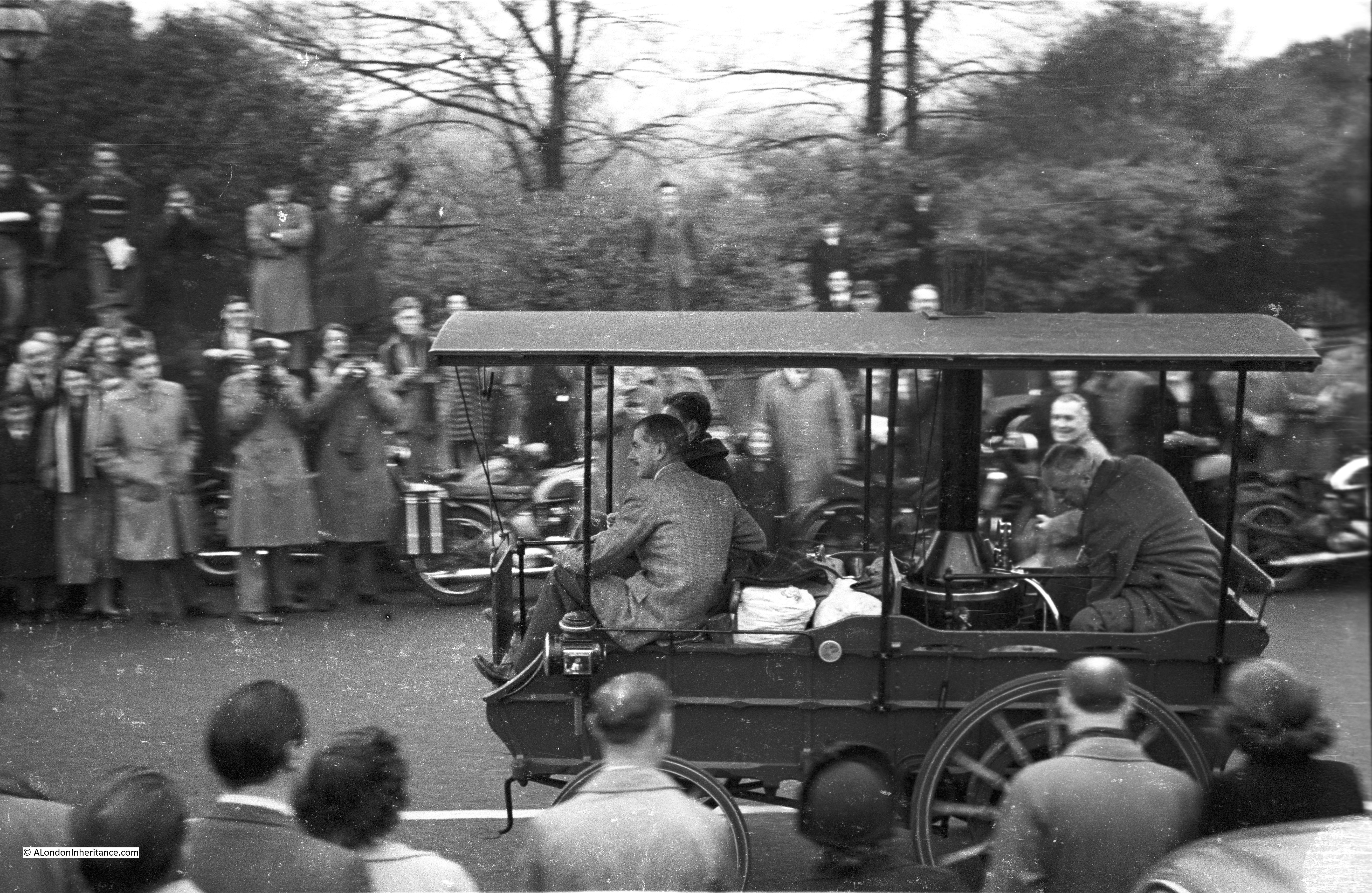
I also tried to find the following car AF-3870 but it was not in this year’s run. Again the Veteran Car Club of Great Britain confirm that this car is still running. It is a 1904 Star. In 1948 there was plenty of steam as cars arrived and left on the run:

car run dads 3Which is still the same today as cars make their way down Serpentine Road, steam billowing in all directions:

my car run 12Cars continue to arrive in the early morning light:my car run 3

The 1948 run gets underway:

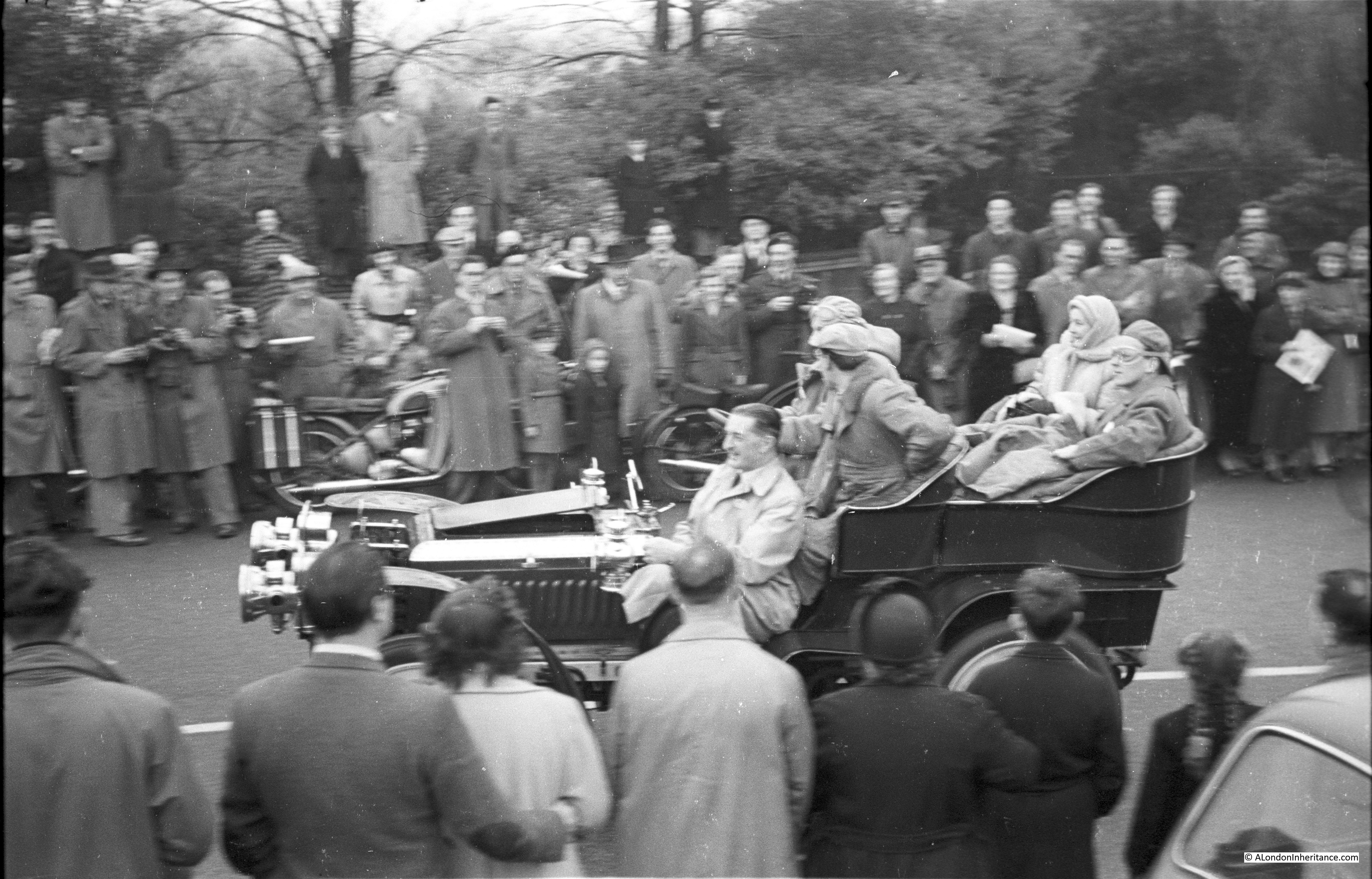
car run dads 9As today, the driver and passengers were well wrapped up against the elements. Driving 60 miles to Brighton on a November morning in an open vehicle requires some protection:

car run dads 8

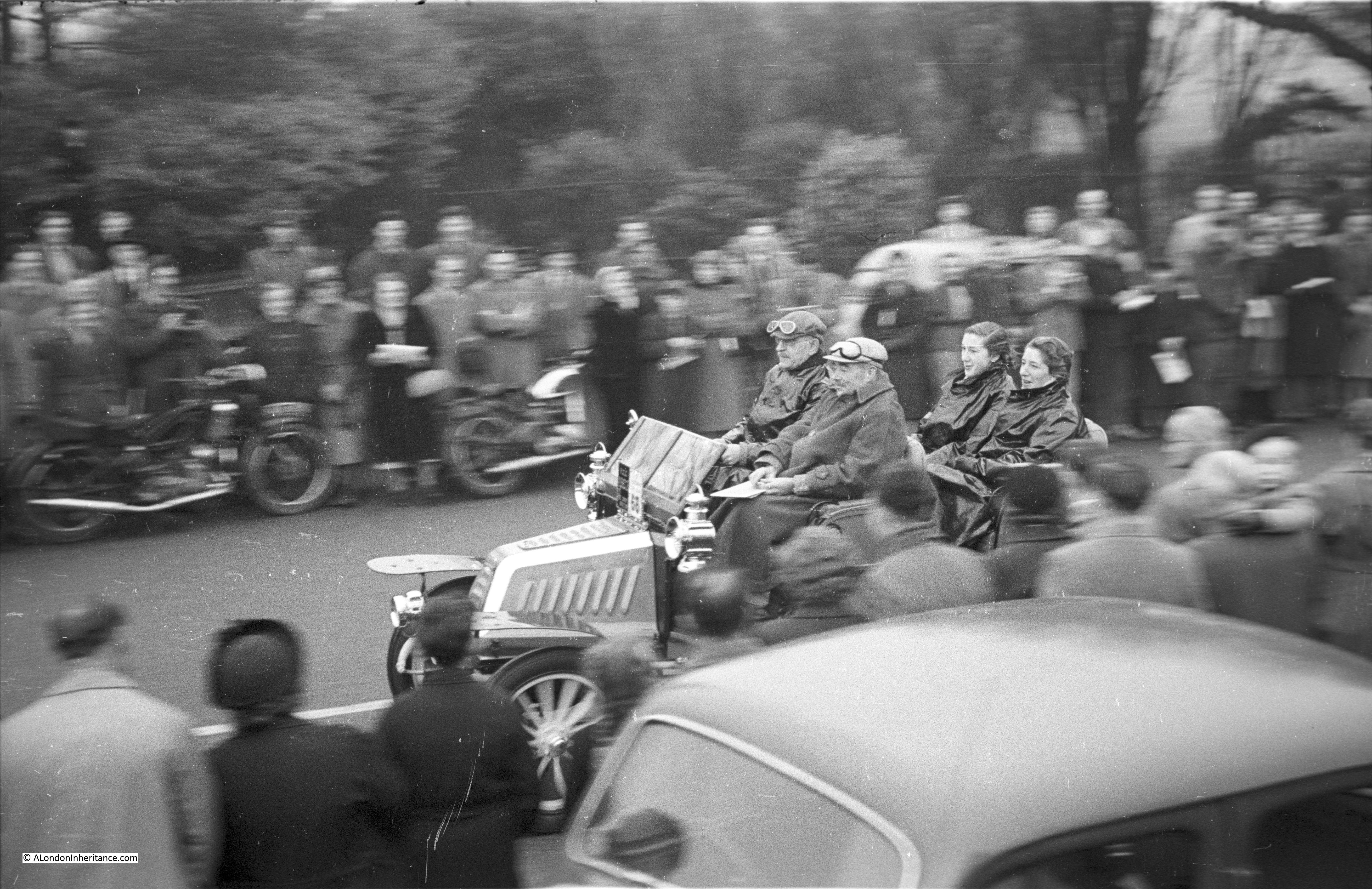
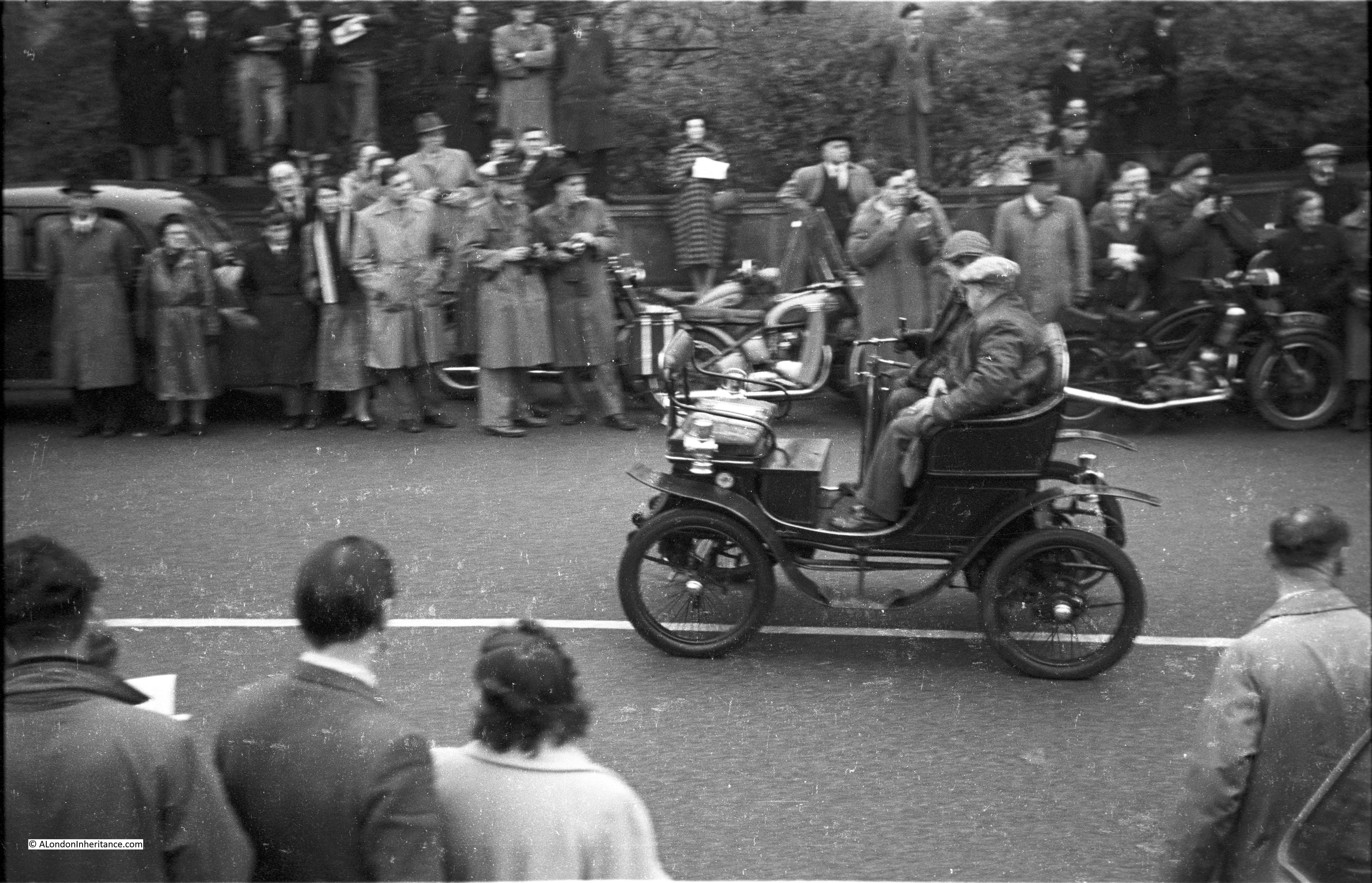
To my untrained eye in the matters of veteran cars, the following car:

car run dads 7

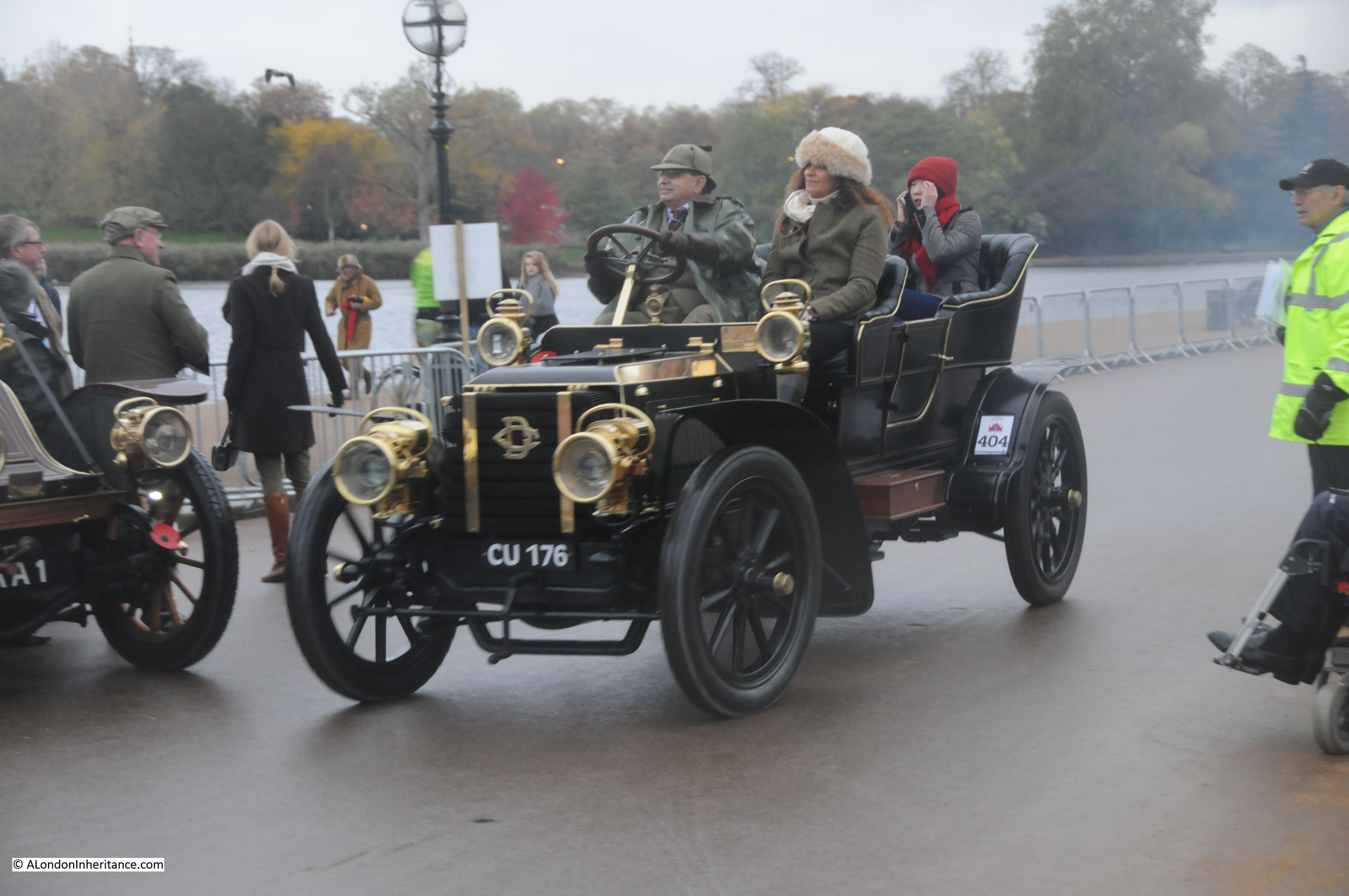
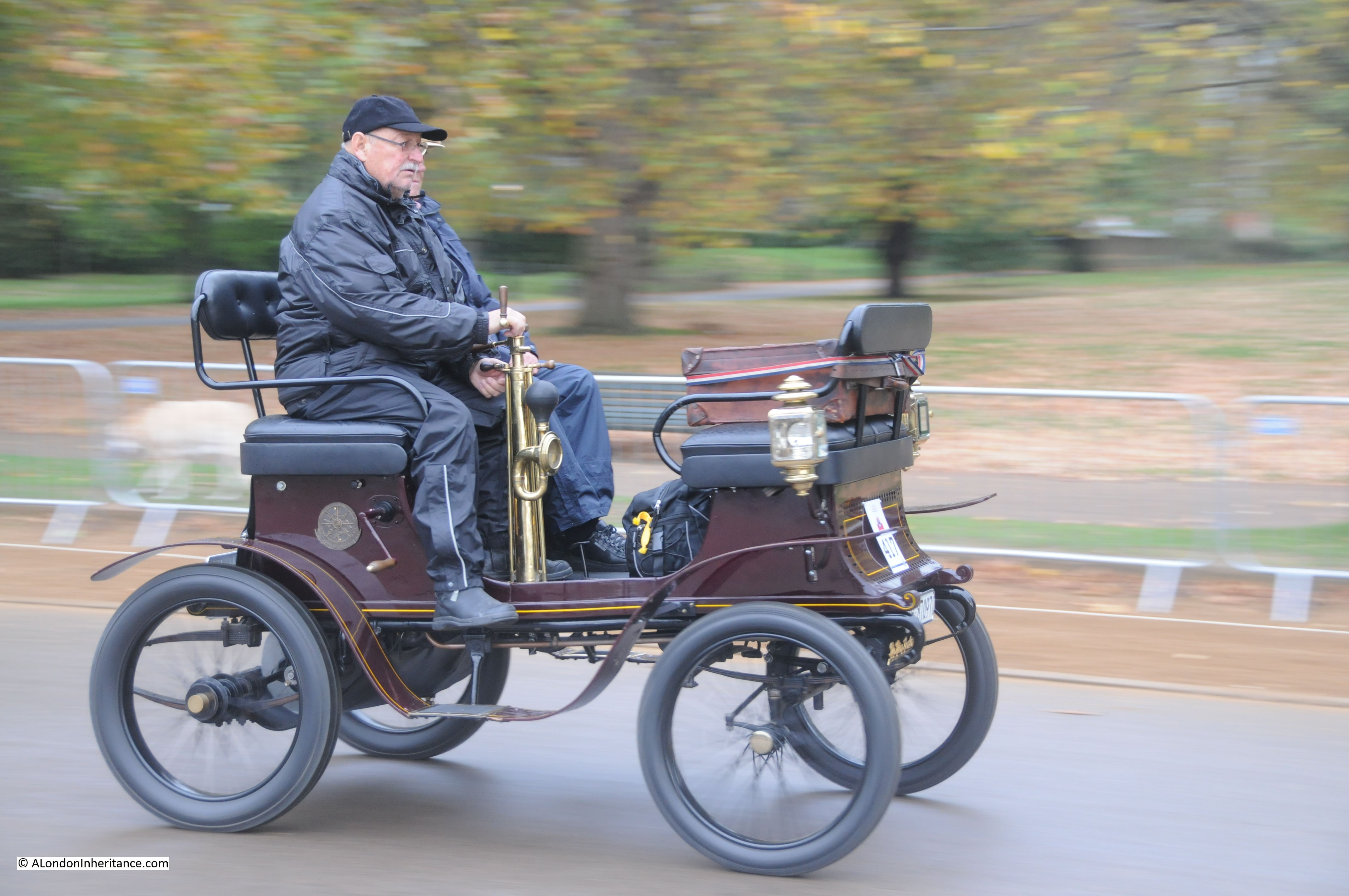
Looks to be the same (or at least the same model) as the following car from 2014. Entrant 404, a 1904 Delaugere et Clayette, 4 cylinders and 24 horse power:

my car run 16

The nearest I could get with finding the following car from 1948:

car run dads 2Was this one, entrant 417, an 1899 De Dion Bouton. Whilst the top of the bodywork is different, the basic chassis of the car looks the same. It may be the same car with some bodywork being done in the intervening 66 years, or a different variant of the same model.

my car run 17

In 2014 the run is underway:

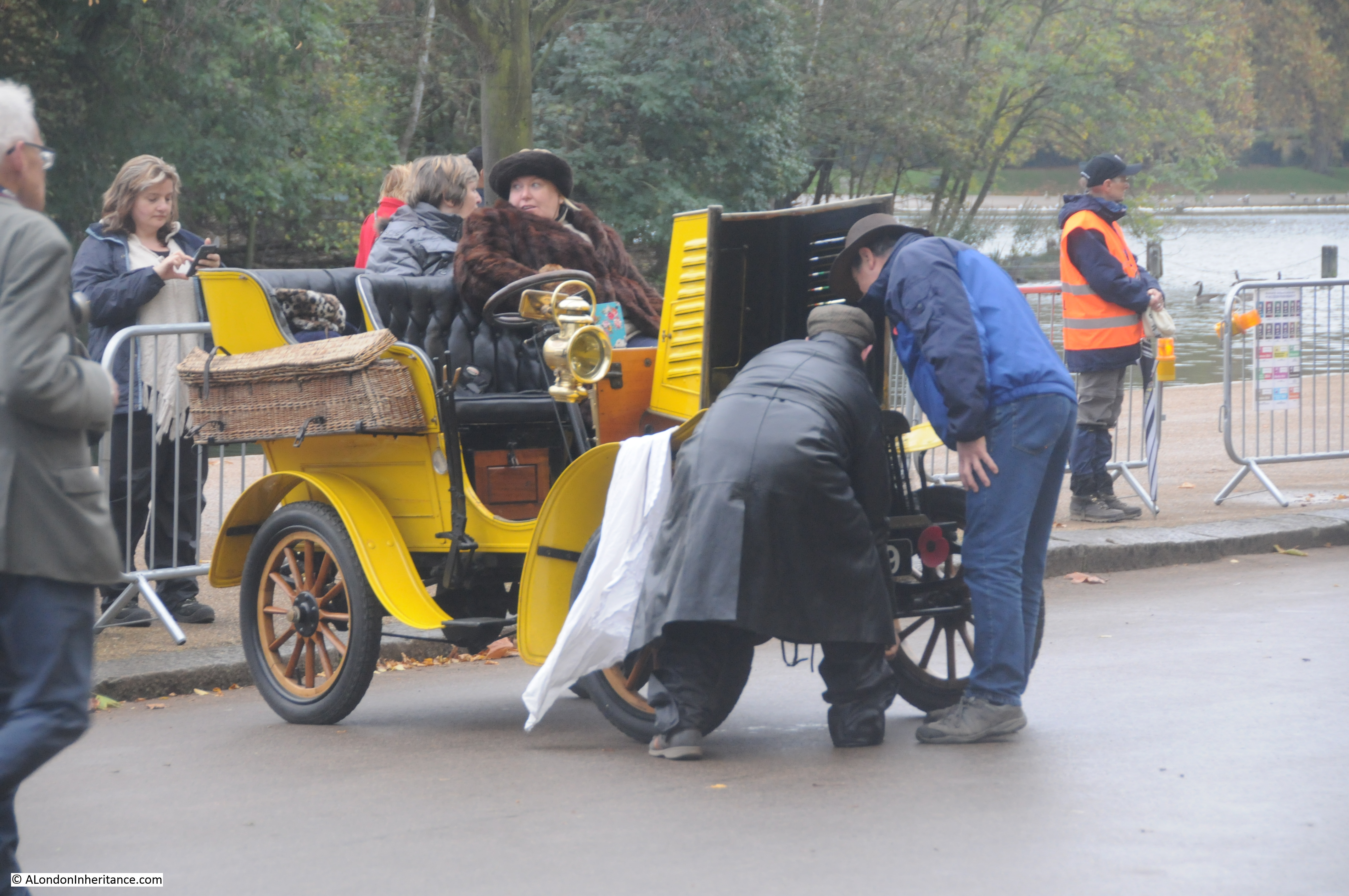
my car run 15Although some still need some final work in order to get started:

my car run 6But these fantastic old cars manage to get underway ready for the challenge of the next 60 miles:

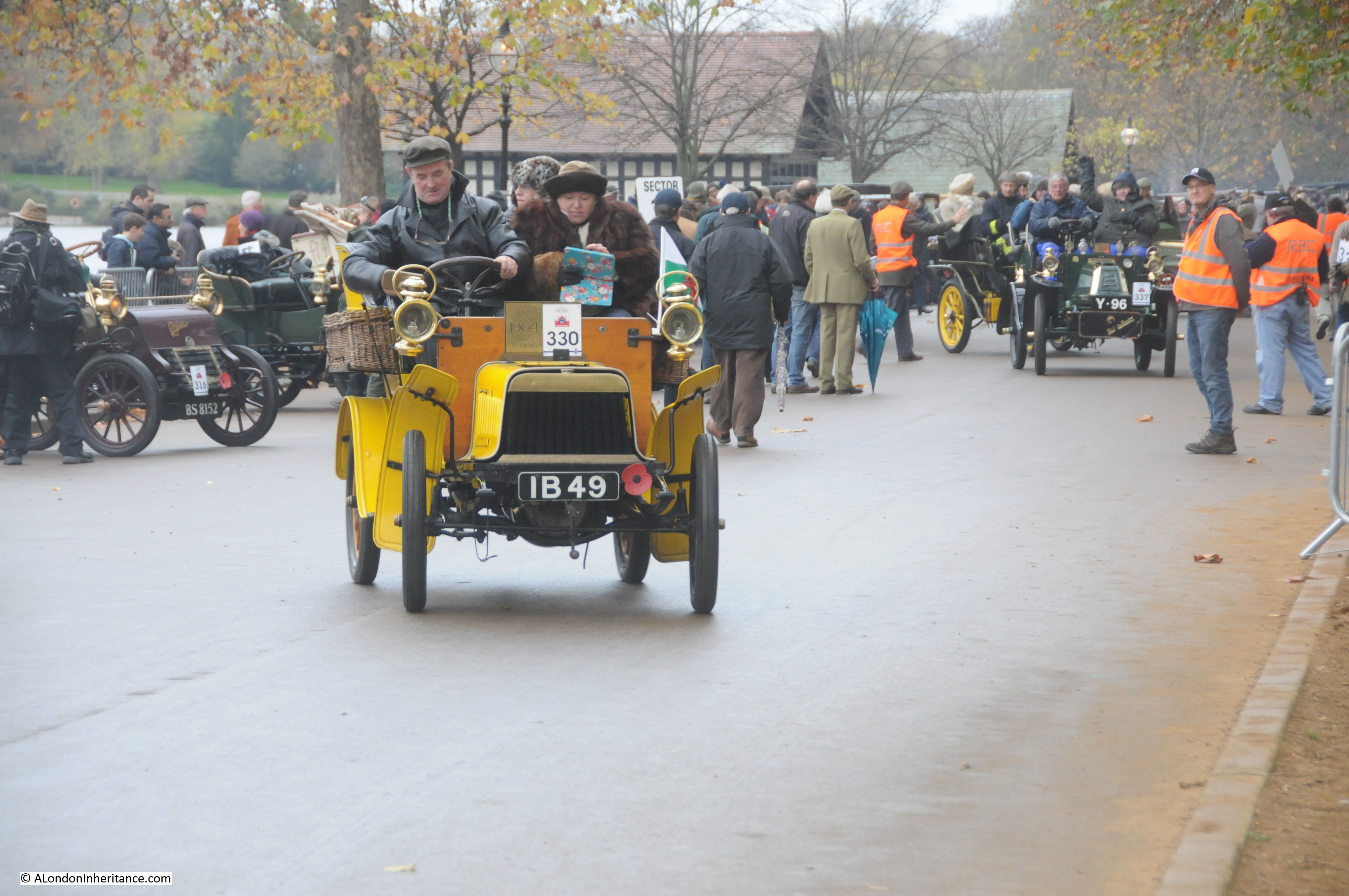
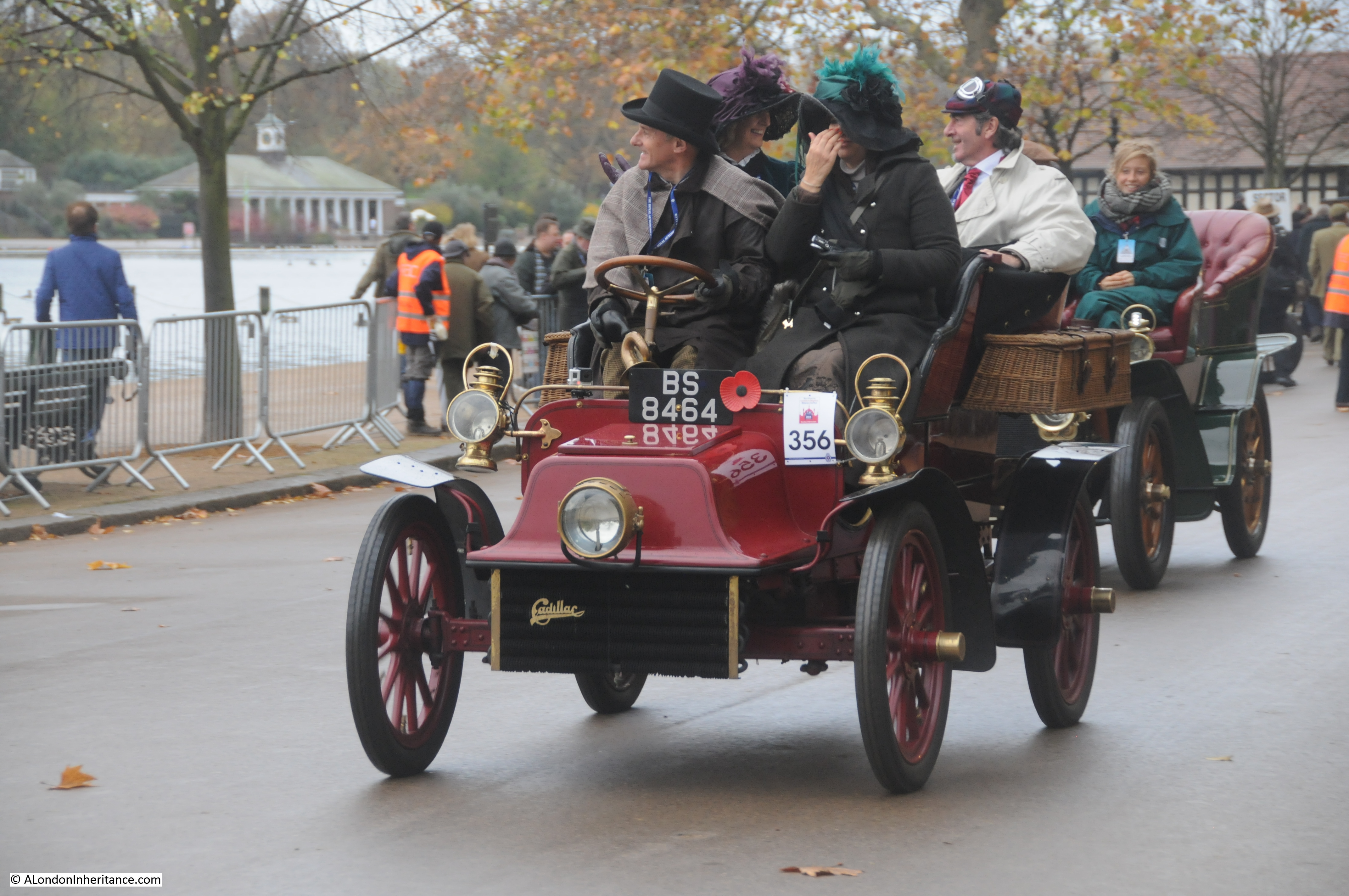
my car run 7Some dressing up adds to the occasion. Entrant number 356, a 1904 Cadillac with 1 cylinder and 8.25 horse power:

my car run 13And gradually they all make their way down Serpentine Road, entrant 362, a 1904 Peugeot with 2 cylinders and 9 horse power:

my car run 9

After leaving Hyde Park, the route passes down Constitution Hill, The Mall, over Westminster Bridge through Lambeth and onto the A23 which, apart from minor detours for roadworks or for safety reasons, takes the cars all the way to Madeira Drive on the seafront in Brighton, where they start to arrive from 10am through to the final arrivals up to 4:30 pm.

The 2015 run is on Sunday 1st November. If you can get to Hyde Park at 6am, I thoroughly recommend the experience of watching these old cars start to arrive in the dark, a unique event in London which has been running since 1896.

For further reading the official website of the run is here and website of the Veteran Car Club of Great Britain which has a detailed history of the run is here.

A full set of my photos taken at Hyde Park are at my Flickr site here.

alondoninheritance.com


St. Mary Abchurch and Grinling Gibbons

If you walk down Cannon Street towards Eastcheap, it is easy to miss Abchurch Lane, however it is well worth a quick detour as a short distance along Abchurch Lane is the church of St. Mary Abchurch, one of Wren’s churches rebuilt after the Great Fire of London and one that has altered least since it was built.

Abchurch square 1

St. Mary Abchurch is not one of the City’s most well know churches and it does not sit directly on one of the main thoroughfares through the City. From the outside, there is nothing to suggest what may be found within, but it is well worth a visit.

In front of the church is a small paved churchyard, now mainly used for City lunch breaks, whilst the church with its relatively short tower and steeple just manage to hold off the surrounding offices.

Looking around the churchyard and Abchurch Lane are restaurants catering to today’s city workers. This has long been a service provided by establishments in Abchurch Lane, as described in George Cunningham’s London:

Pontack’s Tavern was located in this street. It was a French House, very fashionable and famous for its wines and good dinners. The dinners of the Royal Society were held at Pontack’s until 1746. Evelyn mentions the place in 1683, 1693 and 1694 when he dined with the Royal Society. In 1699 Dr. Bentley asked Evelyn to dinner there to meet Sir Christopher Wren.”

I am sure that many of the City workers entering and leaving the restaurants here today would equally enjoy the “wines and good dinners” of the 17th Century.

A church has stood on the site since the 12th century. As with the majority of other City churches, the Great Fire destroyed the church that stood on the site in 1666. Work on the new church commenced in 1681 with completion in 1686.

According to Stow, the parish church is named after “Saint Marie Abchurch, Apechurch or Upchurch” and in medieval documents the church is referred to as St. Mary Upchurch.

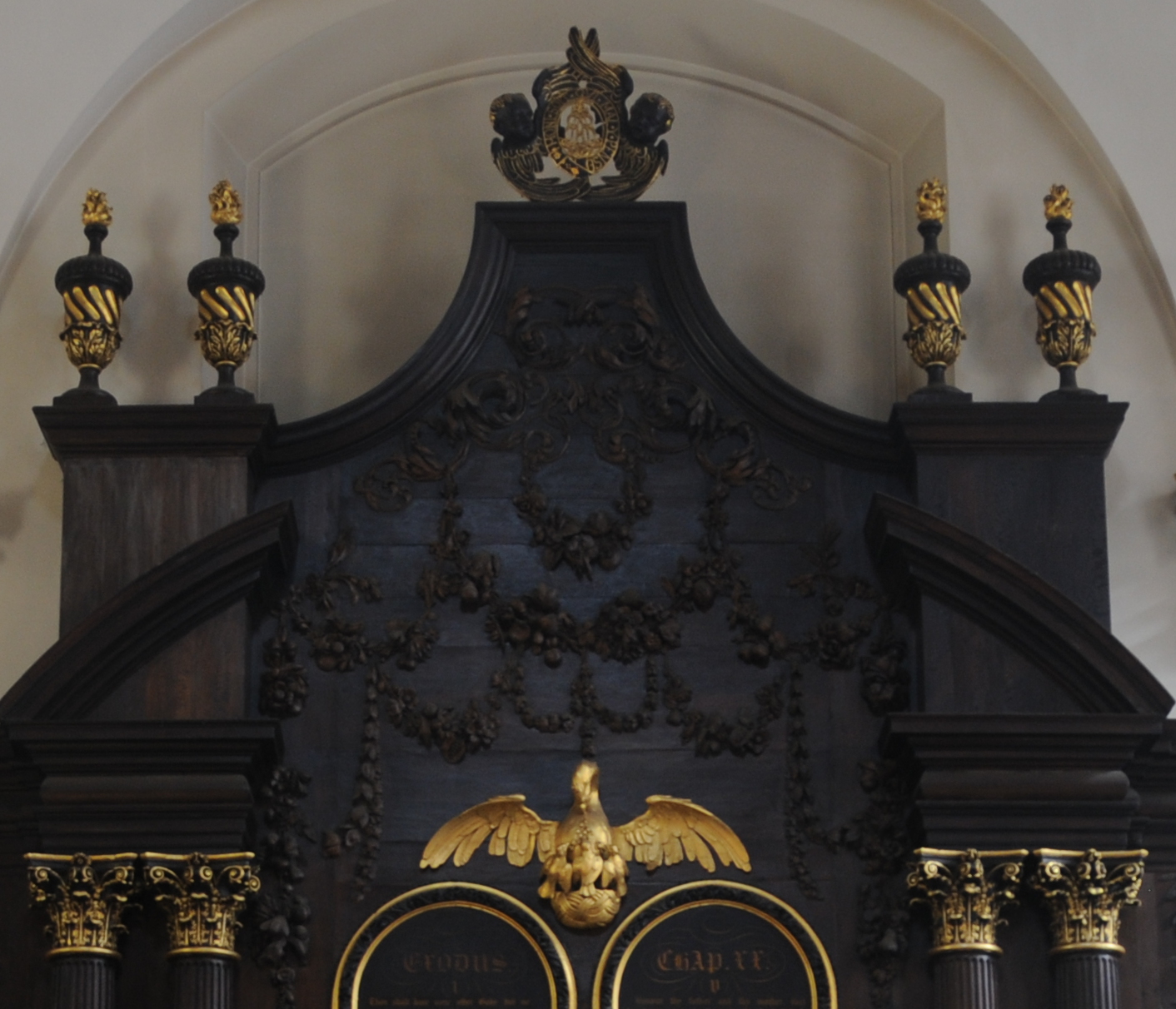
Once inside the church we can see one of the unique features of St. Mary Abchurch, the superb carved reredos (the large wooden screen covering the wall at the back of the altar). The carving on the reredos is the work of Grinling Gibbons, the greatest of decorative wood-carvers and the only known work of his in any London City church apart from St. Paul’s Cathedral.

Abchurch interior 2. rotate

Grinling Gibbons was born in Rotterdam on the 4th April 1648 to English parents. Gibbons moved to England in 1667 firstly to York, then to London. John Evelyn was instrumental in introducing Gibbons to Christopher Wren and Samuel Pepys. His work was extensive, the King’s Chapel in Windsor Castle, Badminton House, Burghley House, Trinity College Library, Cambridge, Blenheim Palace and St. Paul’s Cathedral to name a few, however St. Mary Abchurch was the only City church to include his work during the rebuilding after the Great Fire.

Carving DetailThe dark varnishing of the wood is from the Victorian era. Gibbons carvings were originally in their natural Limewood finish and must have looked fantastic.

The close-up photo to the left shows the carving (although the same dark varnishing as the backing does not make this easy to see) but the gilded Pelican stands out well. Gibbons original 1686 receipt for this work is held in the Guildhall Library.

St. Mary Abchurch as it was pre-war is shown in the following photo.

St Mary Abchurch pre 1940

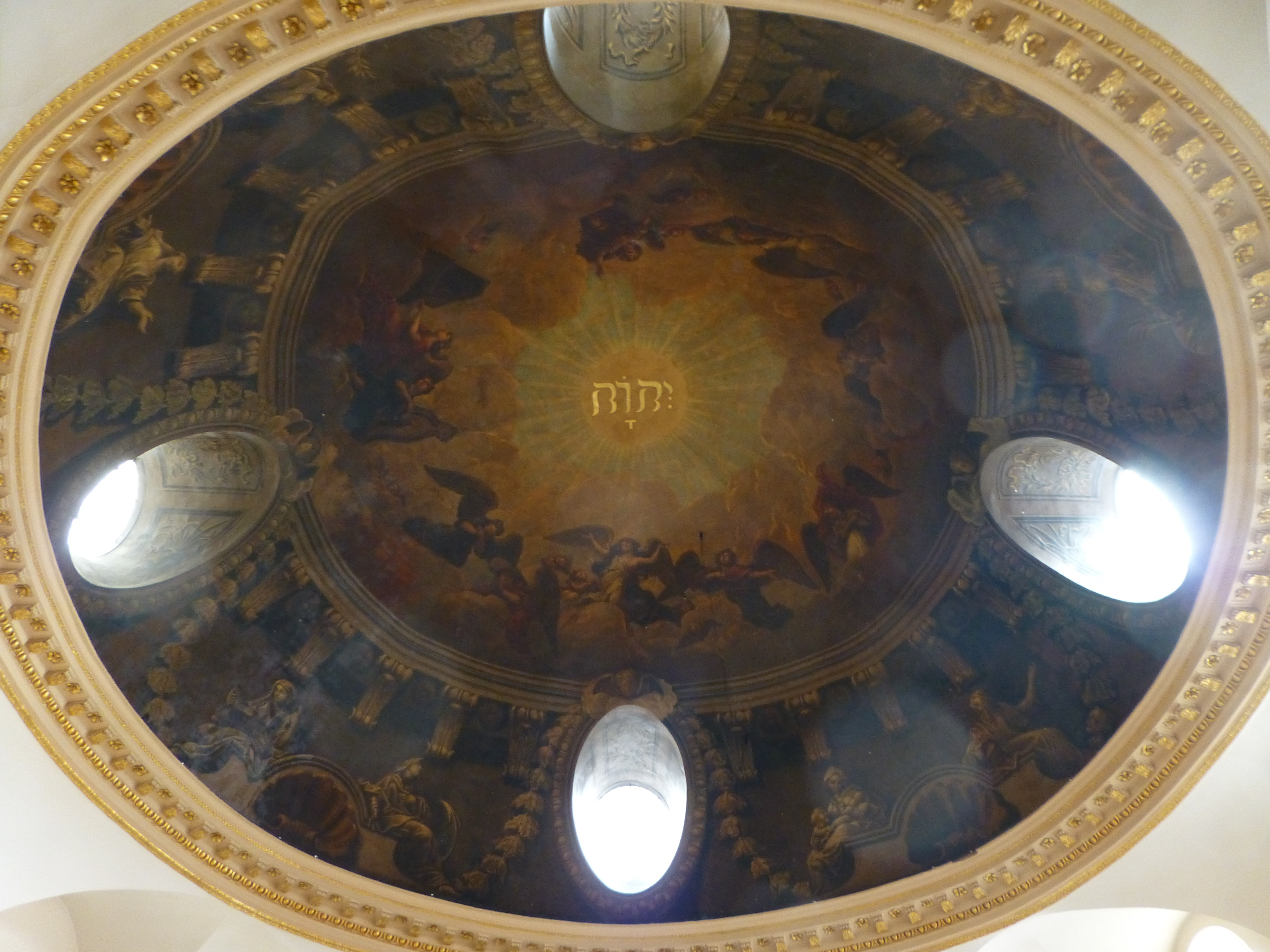
Look up, and you will see the superb painted dome of the church. It is the dome that gives the large open area of the church, uncluttered by pillars. The dome, which is over 40 feet across rests on the four brick walls which is an architectural achievement as there are no buttresses to support the walls. The whole weight of the dome is supported by and distributed down through the walls. Wren’s use of the dome enabled what is a relatively small space to appear very spacious.

Abchurch ceiling 1

The original painting of the dome was by a parishioner of St. Mary’s, William Snow.

The dome was badly damaged by bombing during 1940, but has been very skilfully repaired.

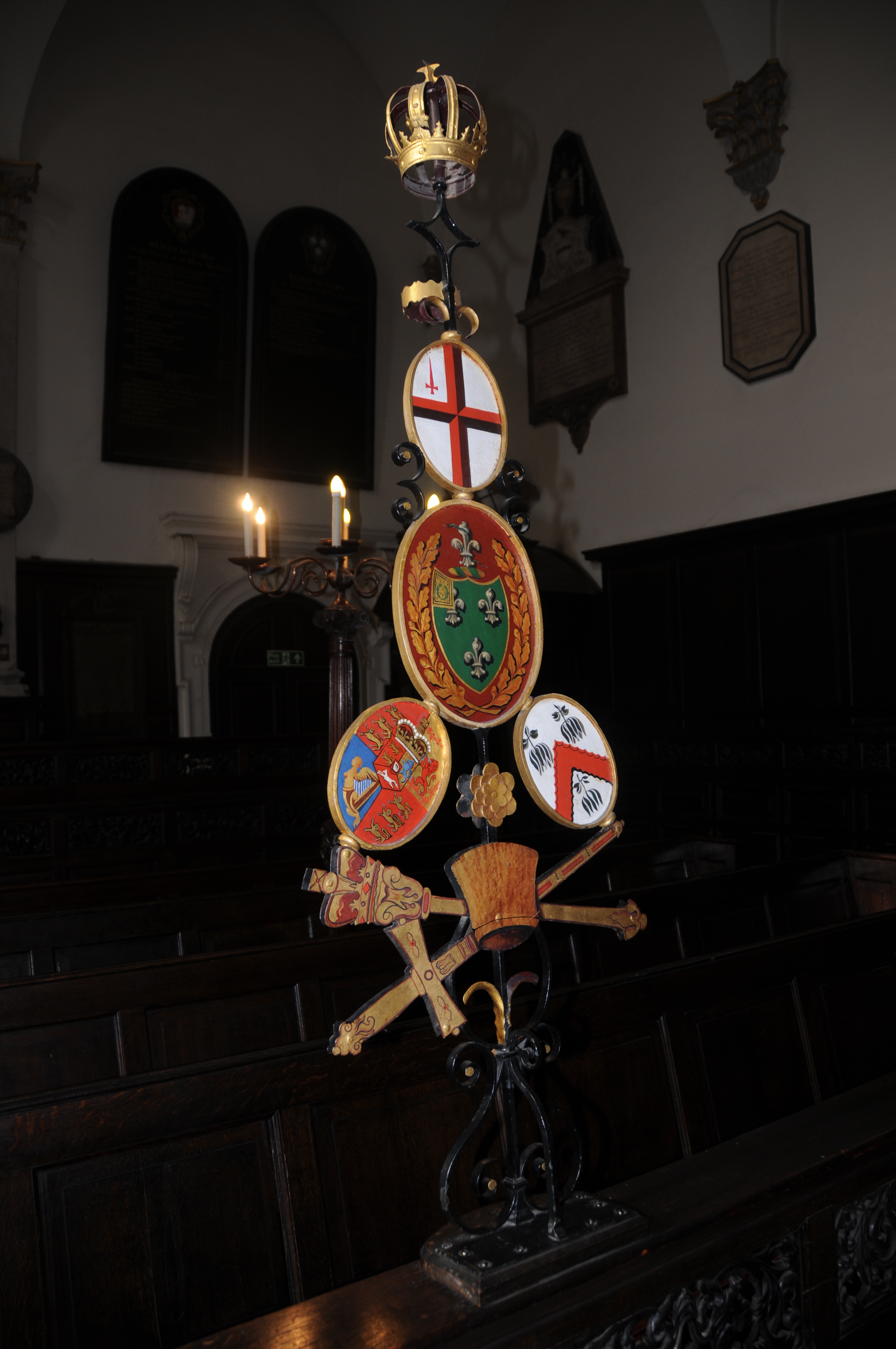
On the front pews are two ceremonial wrought iron sword-rests used to support the civic sword when the Lord Mayor of London attends a service at the church. The arms on the sword-rests are those of two former parishioners who were also Lord Mayors of London, George Scholey (1812) and Samuel Birch (1814). The first:

Abchurch sword holders 2

and the second:

Abchuch sword holders 1

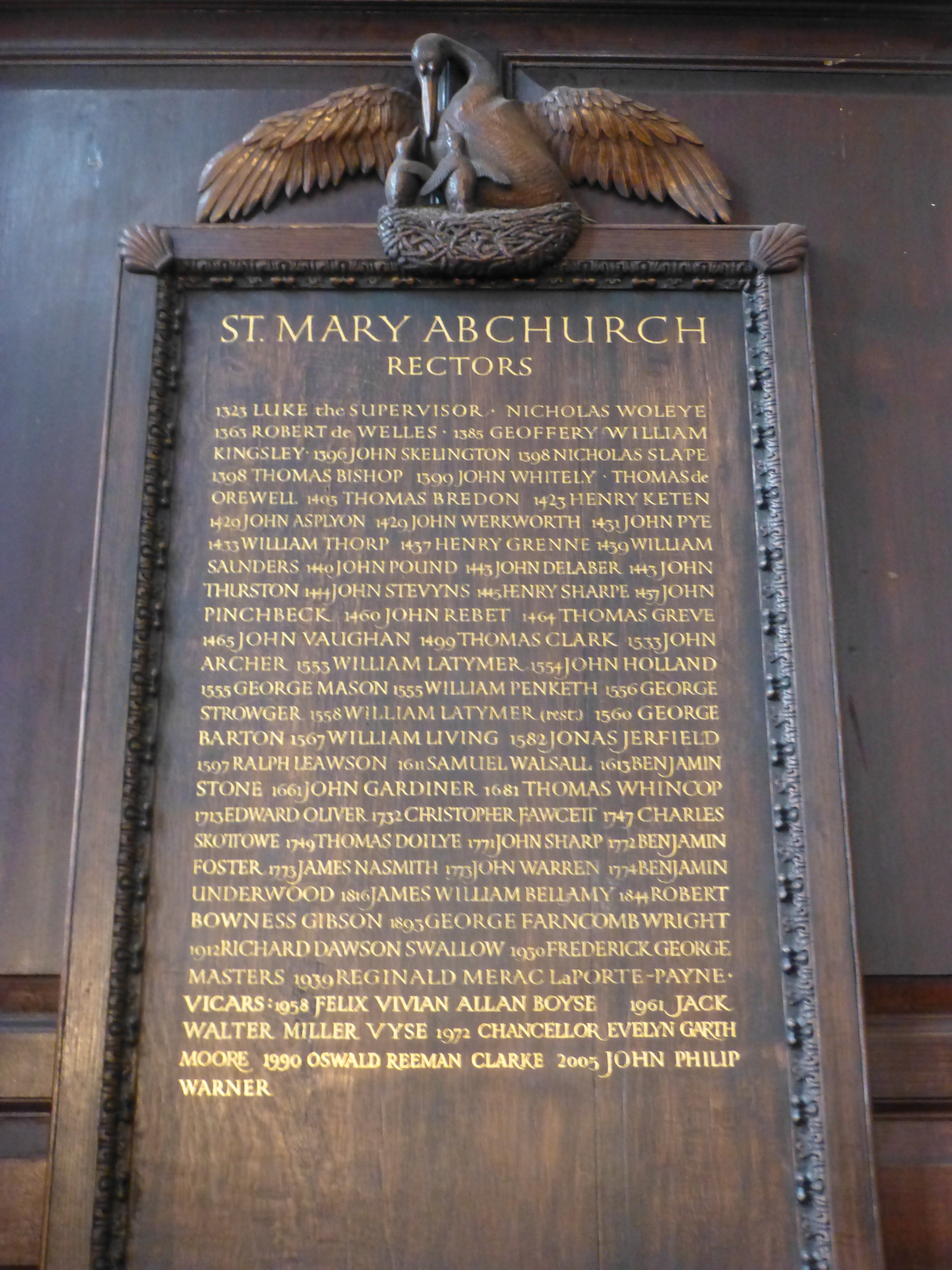
Sometimes looking at City churches, particularly those rebuilt after the Great Fire, it is difficult to fully appreciate the age and continuity of use of these building. St. Mary’s has a very clear demonstration of both age and continuity. Look at the carved board listing the names of rectors of St. Mary Abchurch.  This details the names of rectors from 1323 through to the present day. Fascinating to stand and look at these names and pick out events that must have been such key events in the rector and parishioners. John Vaughan was rector when Richard III was killed on Bosworth Field in 1485 which resulted in Henry Tudor taking the throne as Henry VII and which ushered in the Tudor dynasty. Benjamin Stone was rector in 1649 when Charles I was beheaded after the English Civil War, and John Gardiner was rector in 1666 when the Great Fire destroyed the predecessor of the current St. Mary’s.

Abchurch rectors 1

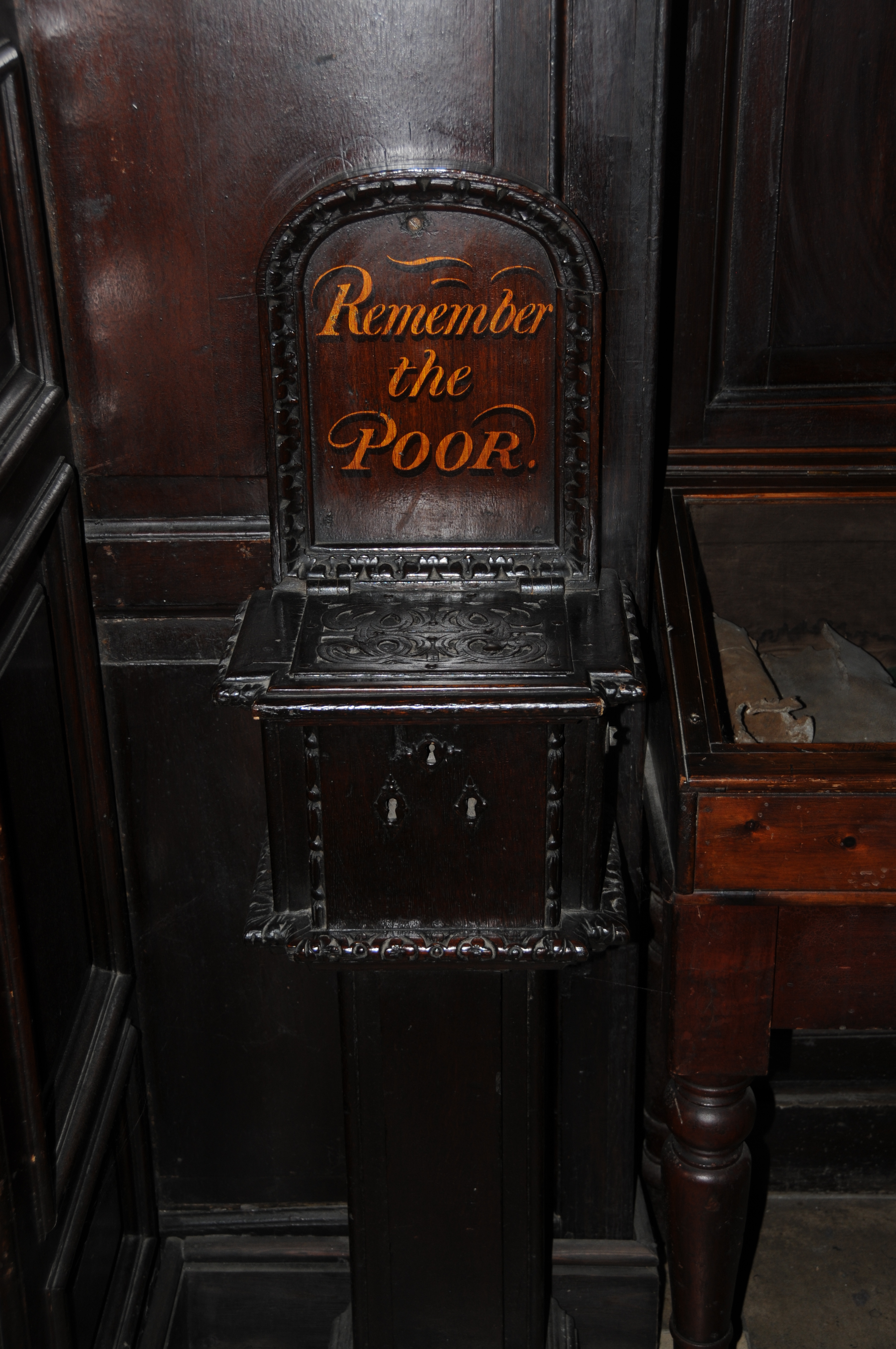
Just inside the church, by the entrance is an original Alms Box dating from 1694.

Abchurch poor box

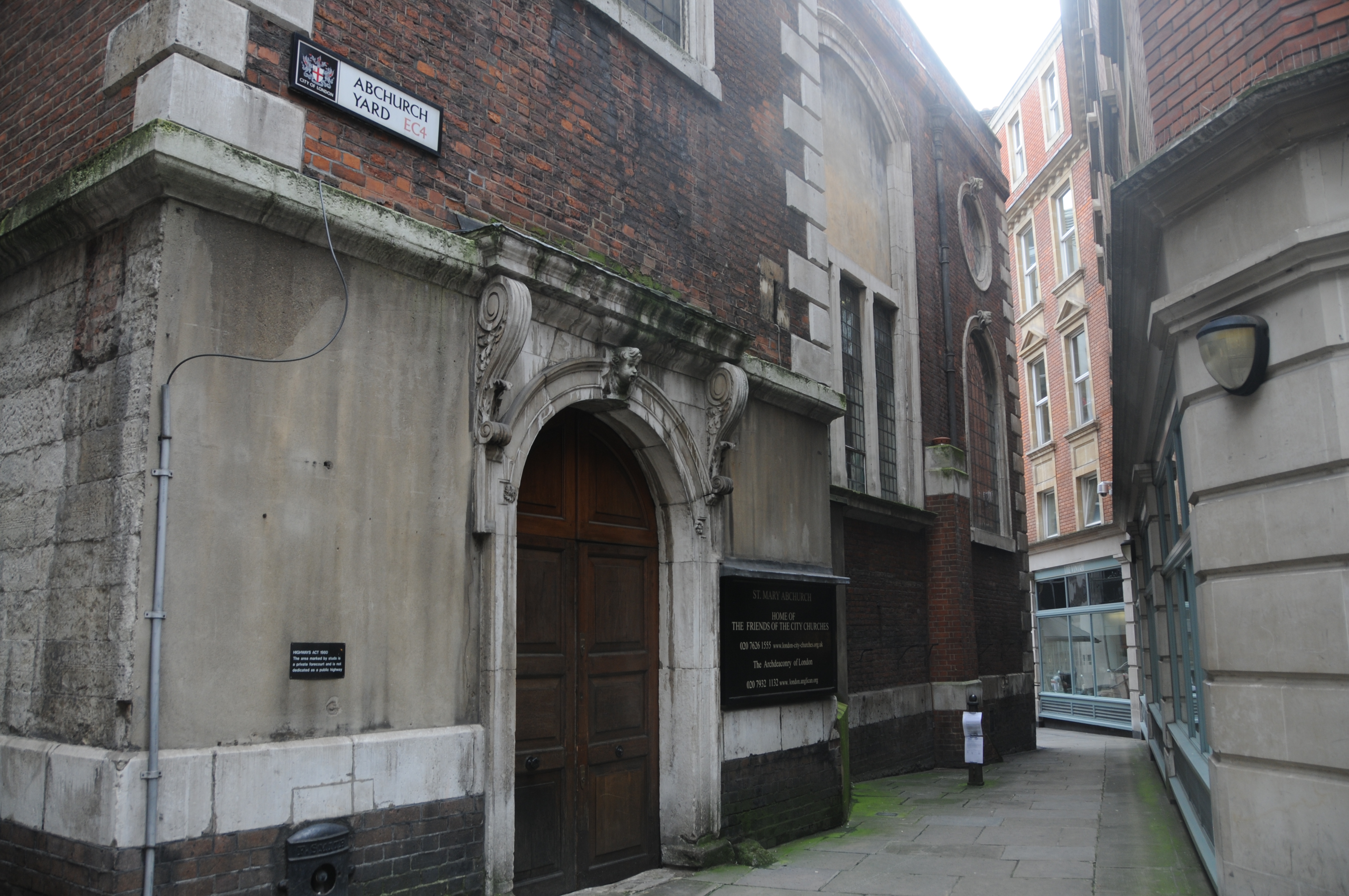
Come back outside the church, turn right and up through Abchurch Yard. This small alley was quiet even during a weekday lunchtime and gives a feel of what much of the City was like when buildings pressed closely together and small lanes ran between the major streets.

Abchurch Alley 1

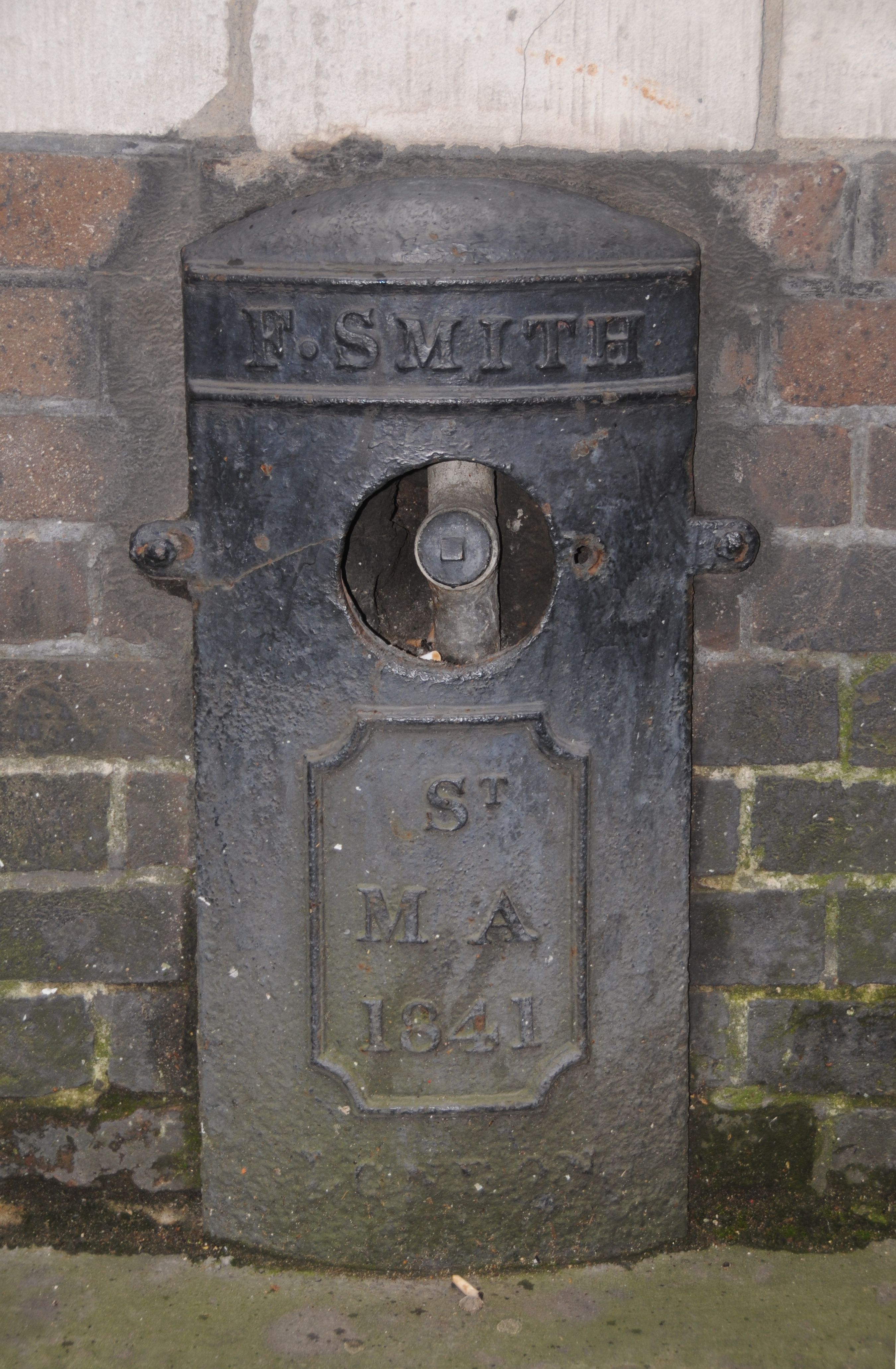
Just to the bottom left of the above photo is an old hydrant cover from 1841. This is one of the best preserved I have found so far of these. The pipe and outlet are clearly seen in the hole in the centre. Only the cover that was originally across this hole is missing.

Abchurch water and plague 1

I recommend a visit to St. Mary Abchurch, a beautiful Wren church much unchanged since completion.

The sources I used to research this post are:

  • The Old Churches Of London by Gerald Cobb published 1942
  • London by George H. Cunningham published 1927
  • Stow’s Survey of London – Oxford 1908 reprint
  • London: The City Churches by Simon Bradley and Nikolaus Pevsner published 1998

alondoninheritance.com

The Faraday Building of Queen Victoria Street

One of the things that makes walking the streets of London so enjoyable is a discovery that not only informs about a building or location, but also tells a whole new story about a period in time and what was changing and important in the life of Londoners at that time.

Walk down Queen Victoria Street towards Blackfriars. After passing the church of St. Benet, Paul’s Wharf on your left you will walk past what, at first glance, appears to be a very bland and utilitarian building.

Faraday Building 1

This is the Faraday Building, named after Michael Faraday, an English scientist who experimented with electromagnetism, demonstrated how rotating a coil in a magnetic field could generate electricity and developed the “laws which governs the evolution of electricity by magneto-electric induction”.

The General Post Office (GPO) opened the first London telephone exchange on this site in 1902 with the existing building being completed and officially opened in 1933 to accommodate the very significant growth in telephone services across London. It was designed by A.R. Myers, an architect of the Office of Works who was responsible for the design of a considerable number of Telephone Exchange buildings and Post Offices across the country.

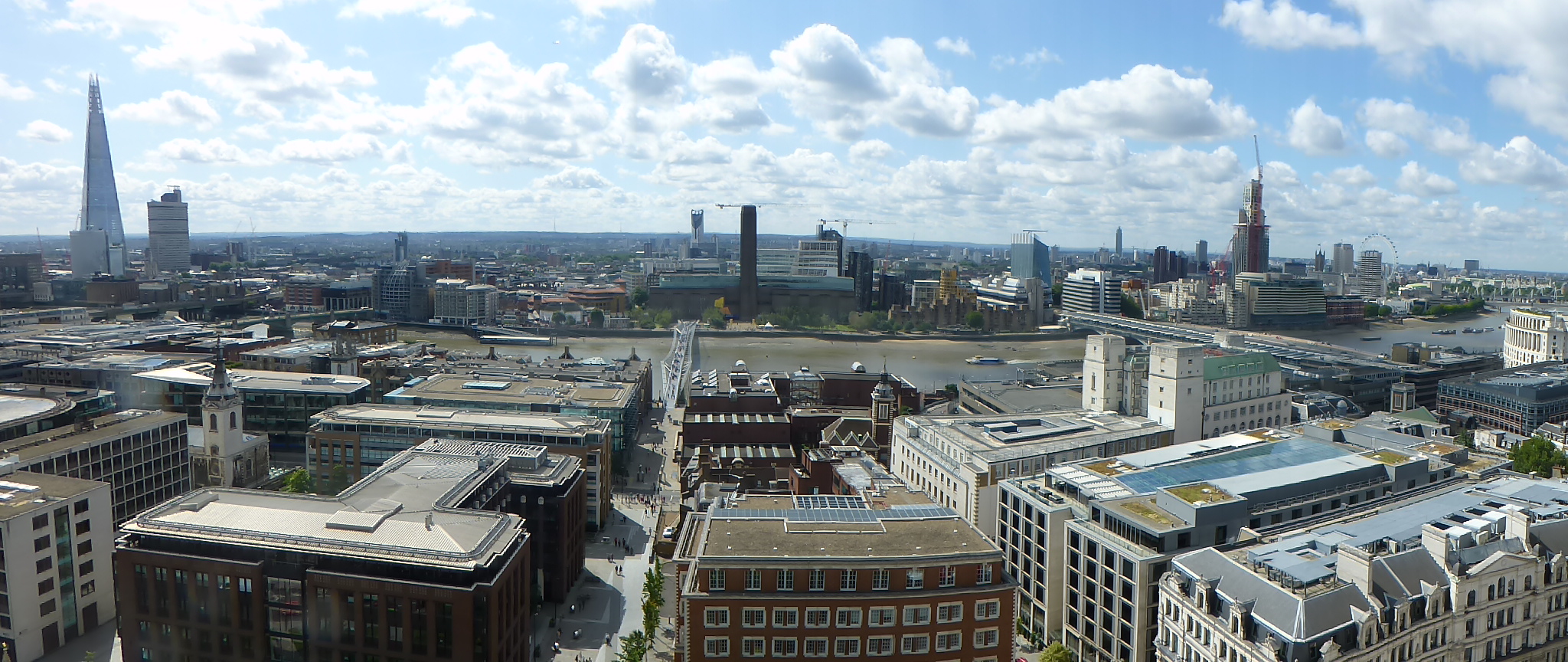
Following completion, the height of the building was very controversial as it blocked the view of St. Paul’s Cathedral from the river. It led to the planning regulations and by-laws that protected sight-lines to the cathedral and restricted the height of buildings. To this day along Queen Victoria Street, the Faraday Building is still the tallest between cathedral and river, as can be clearly seen in the following photo where the Faraday Building is on the right, well above the surrounding buildings.

panaroma with faraday

The Faraday Building was the main telephone exchange for London and also the hub for international circuits with the majority of international calls being routed via the manual switchboards in the building.

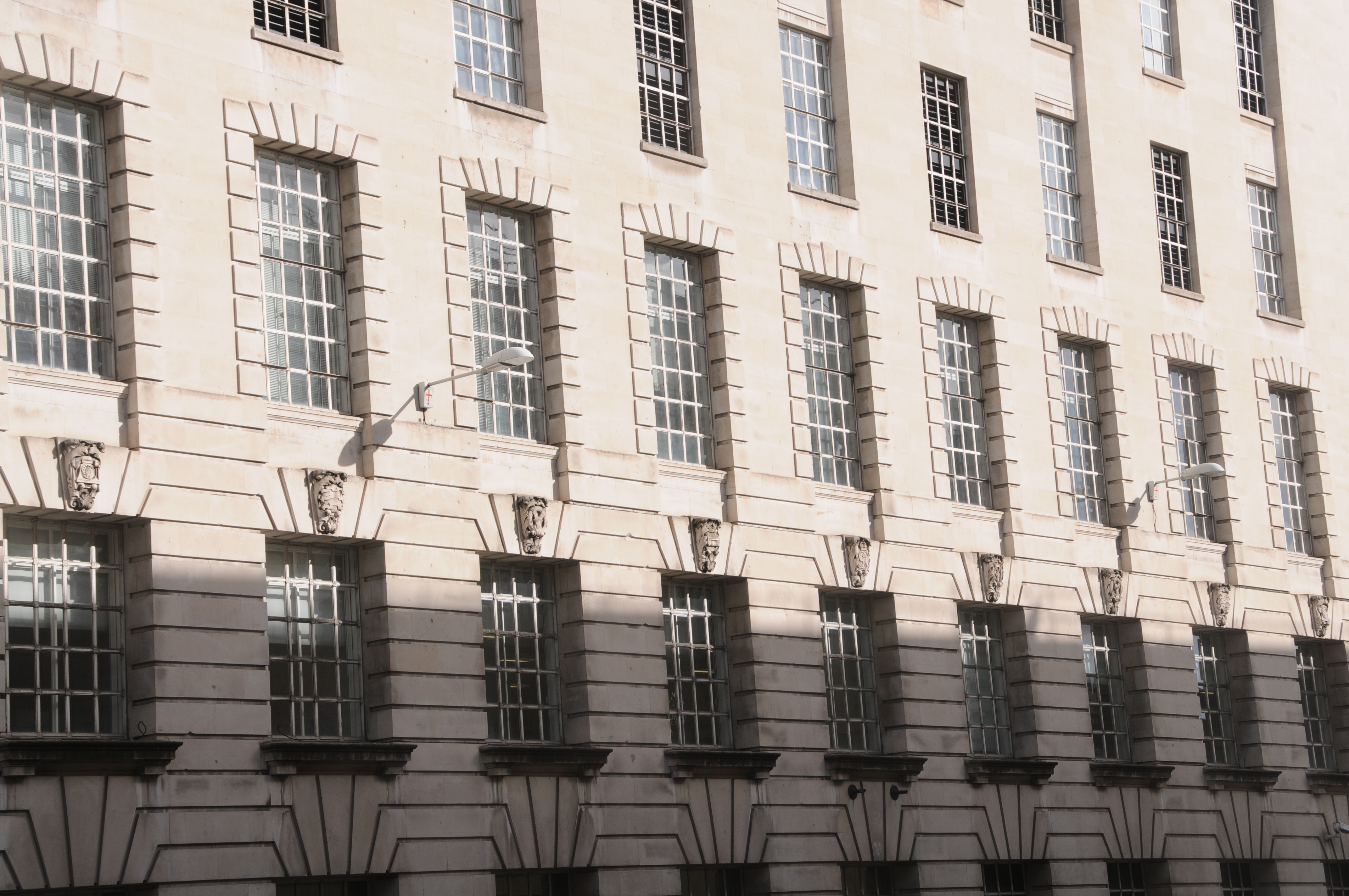
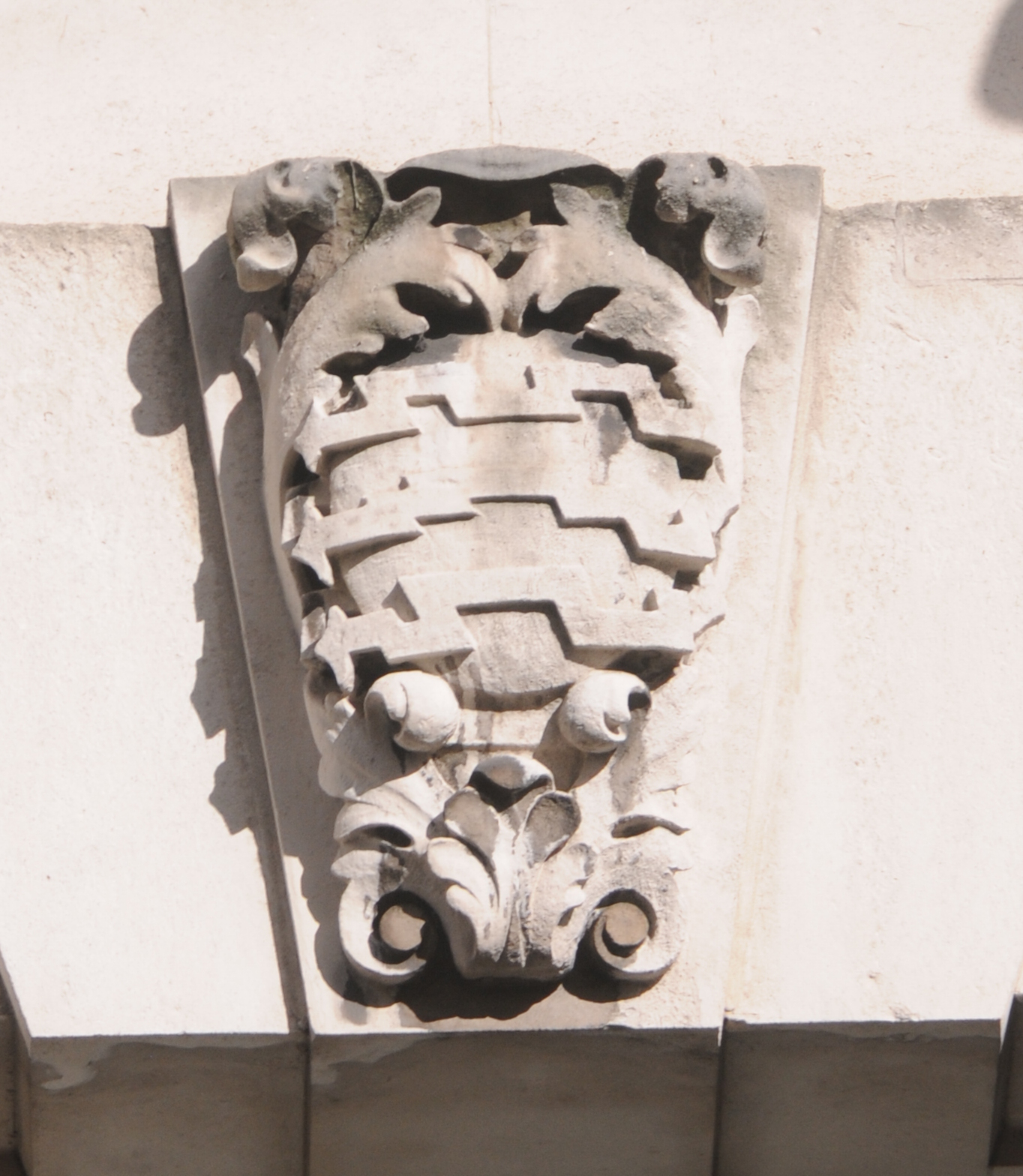
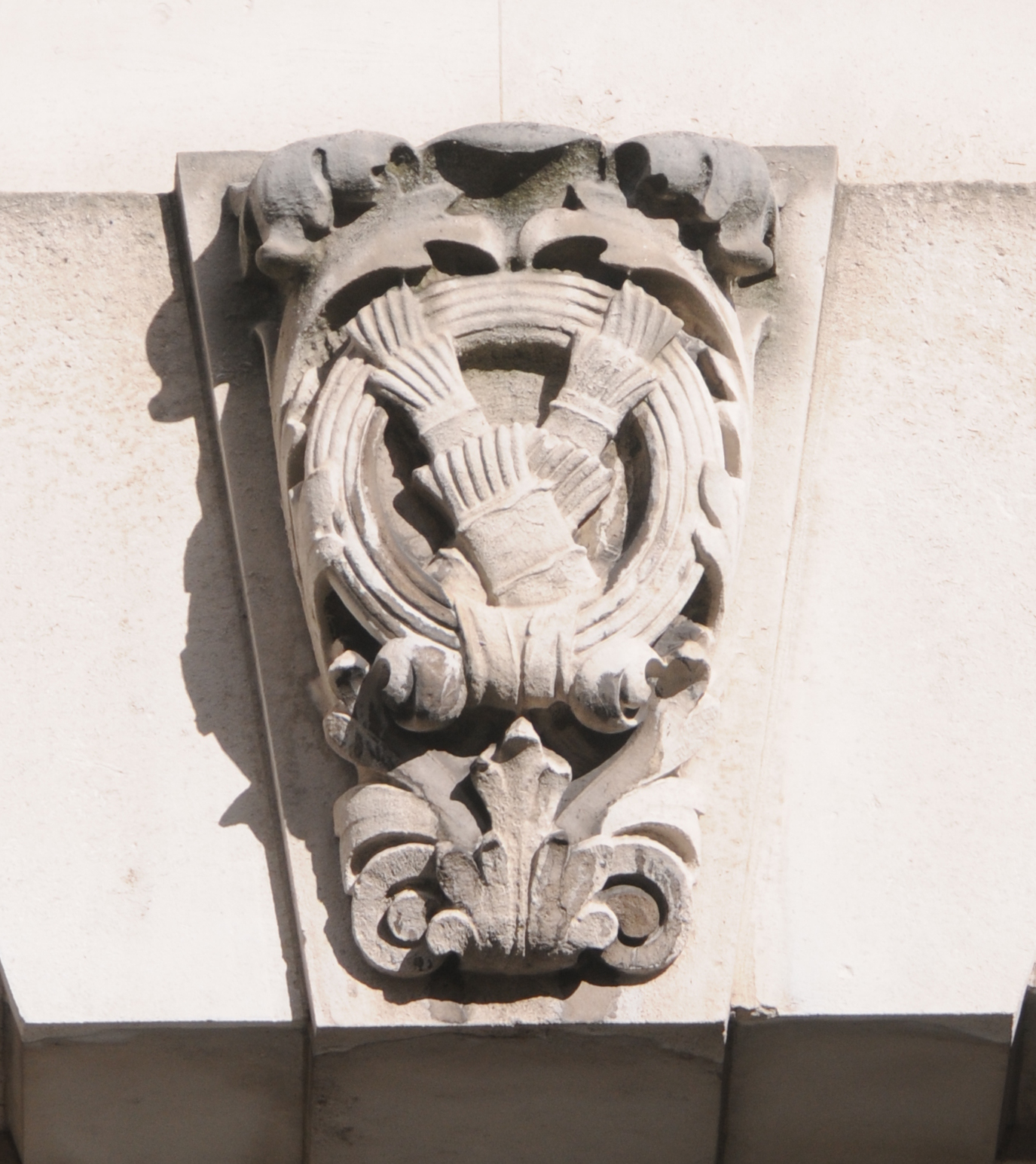
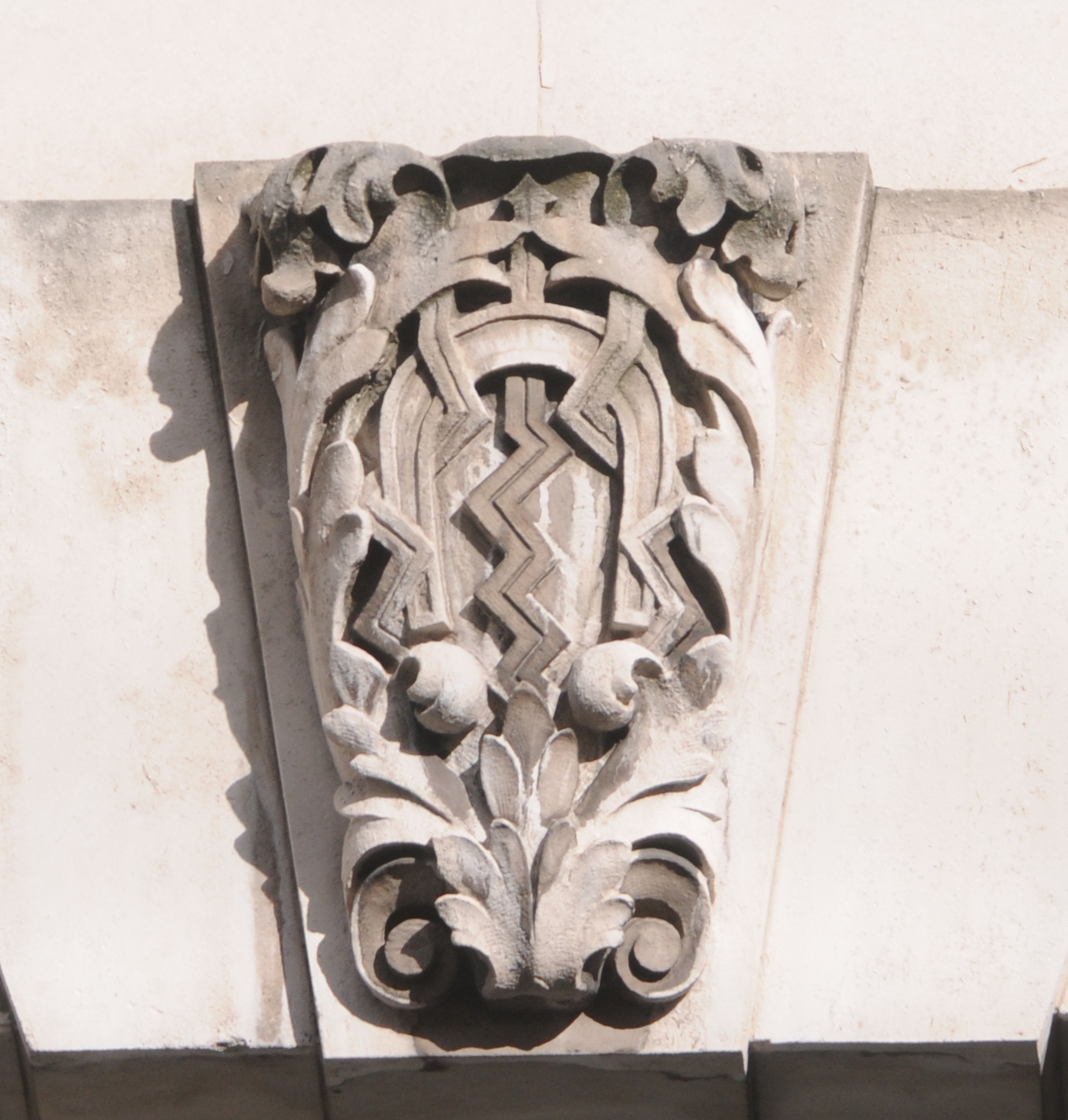
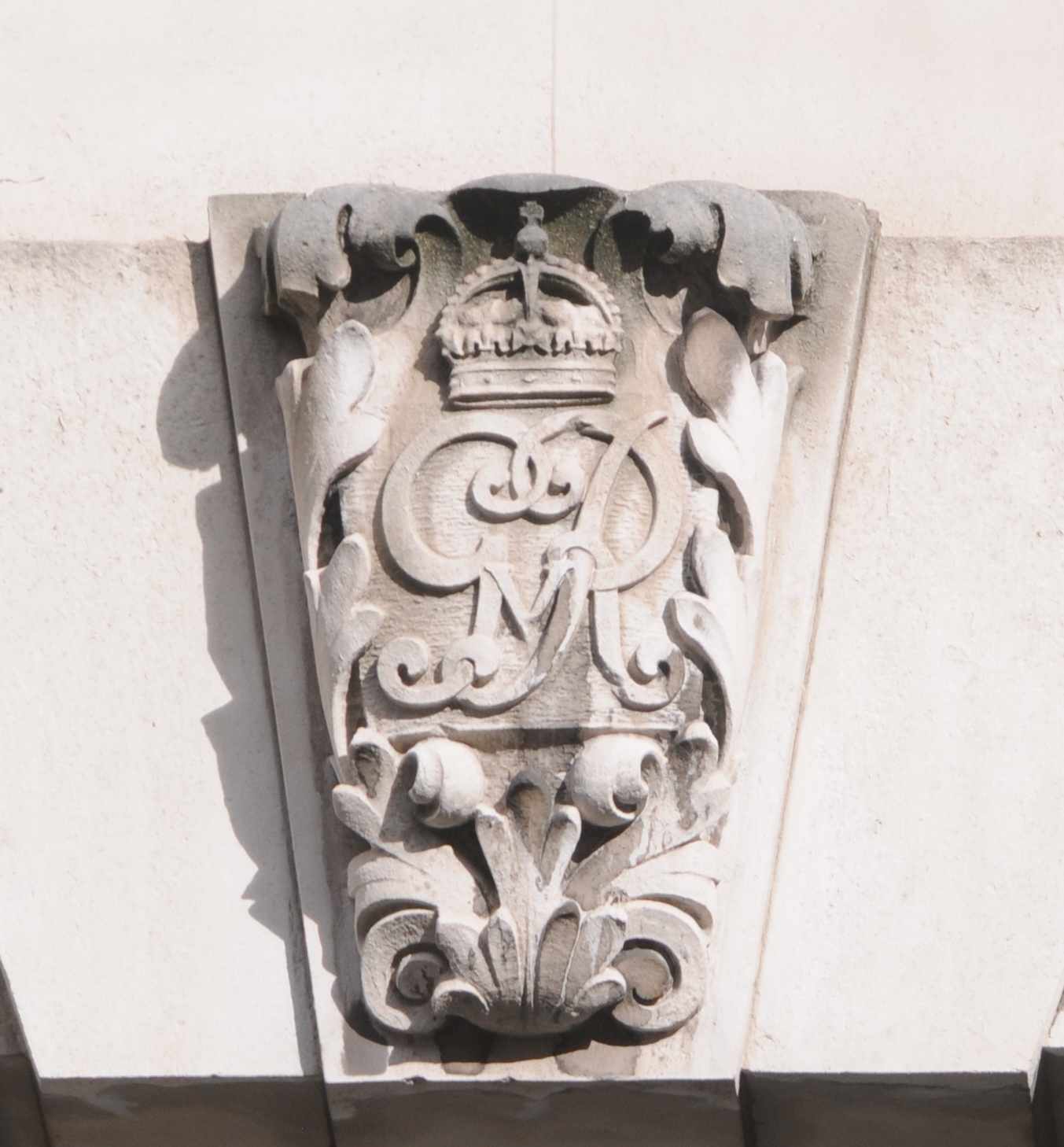
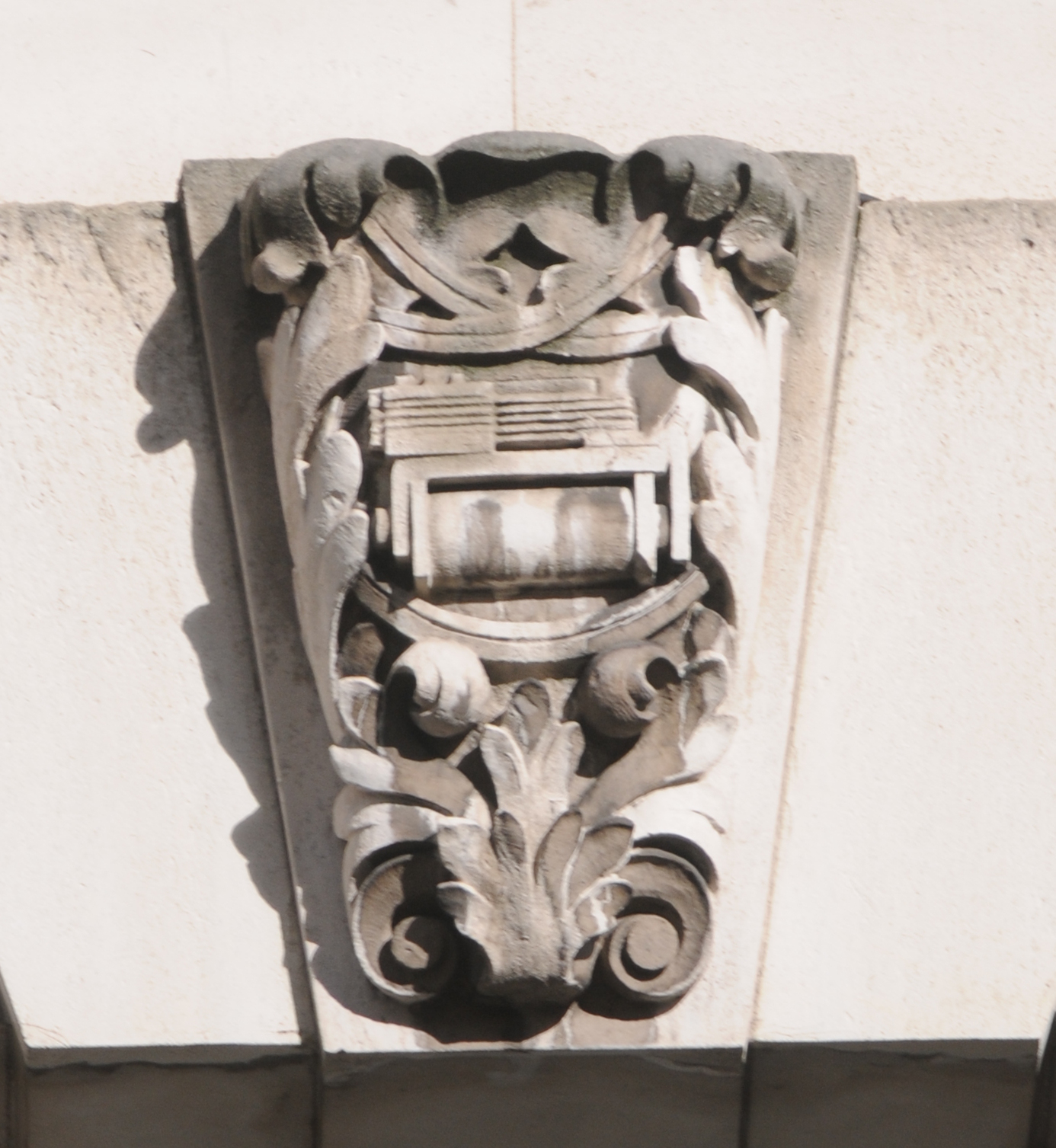
Look just above the line of the second set of windows and in the position associated with a key stone, there are a series of carvings, one above each window, that tell the story of what was state of the art telecommunications at the time the building was constructed.

Row of windows

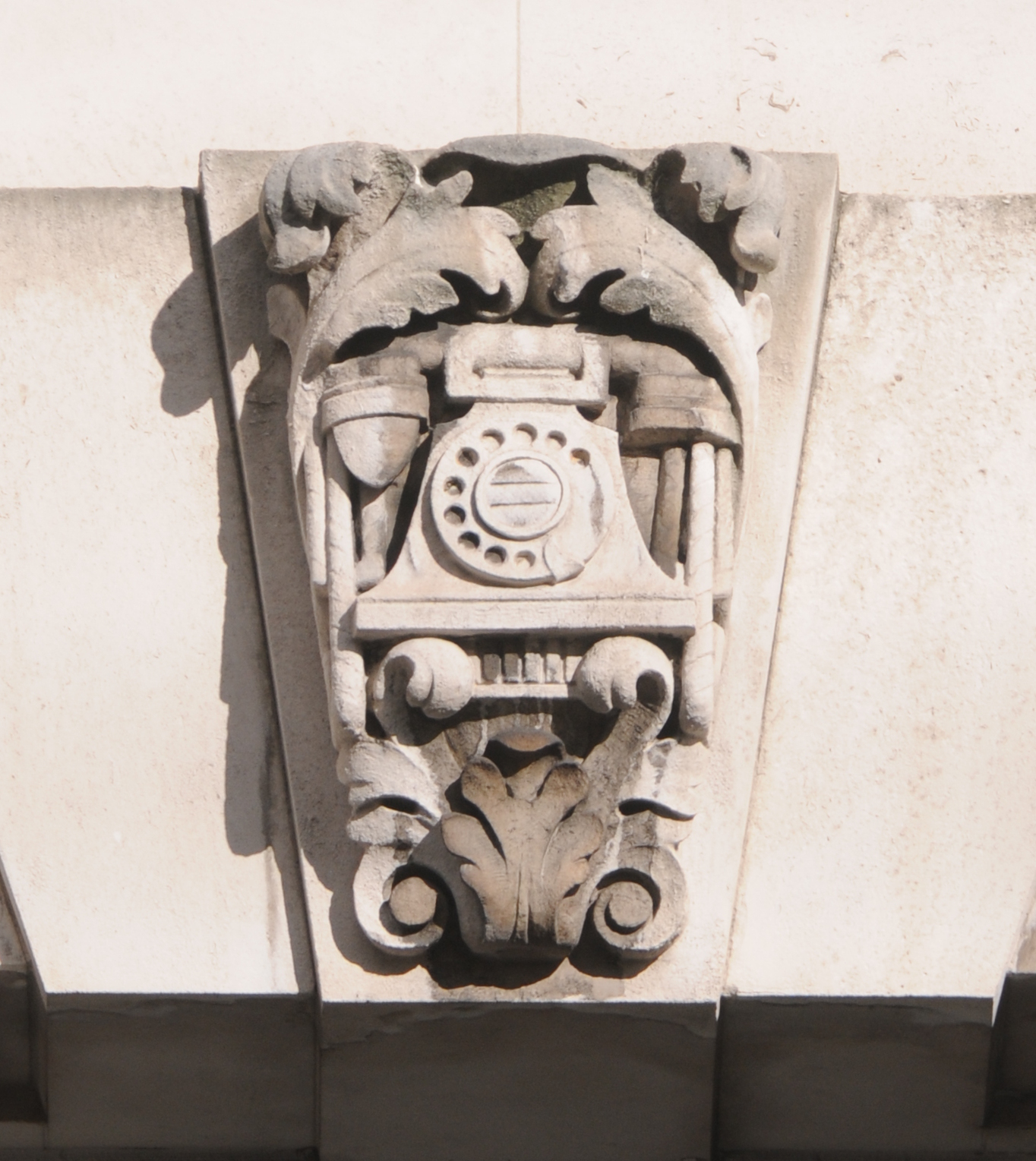
Walking down towards Blackfriars, the first carving is the Telephone.

TelephoneThis type of telephone at the time, was cutting edge technology. It utilised a dial that sent pulses to the telephone exchange when the dial was released from the chosen number position, to tell equipment at the exchange what number was being dialled. Prior to the use of a dial, all calls were put through manually, requiring an initial conversation with an operator which would then start a series of manual patching to put you through to your destination. A technique that worked when few people had telephones, but a model that could not cope with the growth of telephones as the 20th Century progressed.

The next carving shows a series of coded pulses crossing a disk, possibly a representation of the world.

Arrows

Coded pulses were the means by which information was transmitted about the call to be made. When a dial was turned on a telephone, the release of the dial would cause it to return to its original position and as it returned it would open and close an electrical contact thereby sending pulses to the telephone exchange.

I have seen a number of interpretations for the next carving, but to me these are very clearly the cables that carry telephone signals. There is an outer loop of cable and within the centre, the ends of the cables which have their protective sheath cut back leaving the individual conductors within exposed.

CablesCables were the key part of the telephone system that carried the pulses and speech from telephones, to the exchanges and then across to their destination, whether in the same street or across the world. (I can see the architects were trying to tell a story in stone of the technology of how a telephone call was made)

The next carving shows a Horse Shoe Magnet. Magnetism was key to the telephone system from the very beginning through to the late 1990s when telephone exchanges driven by magnetic devices were replaced by computer based systems.

Magnet

Michael Faraday’s work with electricity and electromagnetic induction was critical in the understanding of electricity and magnetism, their relationship and laid the foundations for their future practical application. This work was crucial to enable the technology that would go on to provide the telephone systems that spanned the world to be developed and these carvings clearly seem to be celebrating this fact, and the position of the Faraday Building as a hub in this global network.

One of Faraday’s experiments involved rotating a coil of wire between the poles of a horseshoe magnet which resulted in the generation of a continuous electric current in the wires of the coil. This was the first electrical generator and the fundamentals are the same in the generators of modern-day power stations.

We then come to a carving for King George V, the monarch at the time of the construction and opening of the Faraday Building.

GR

Moving on we come to the carving of an electromagnetic relay which to me is one of the most unique relatively modern-day carvings you will find across London. It is of a core bit of technology, hidden away in the depths of a telephone exchange, but without which automatic telephone exchanges would not have functioned. This type of relay was cutting edge at the time the building was planned, equivalent to the technology that connects the Internet today and switches information from your computer or smart phone through to web-based services across the world.

Relay

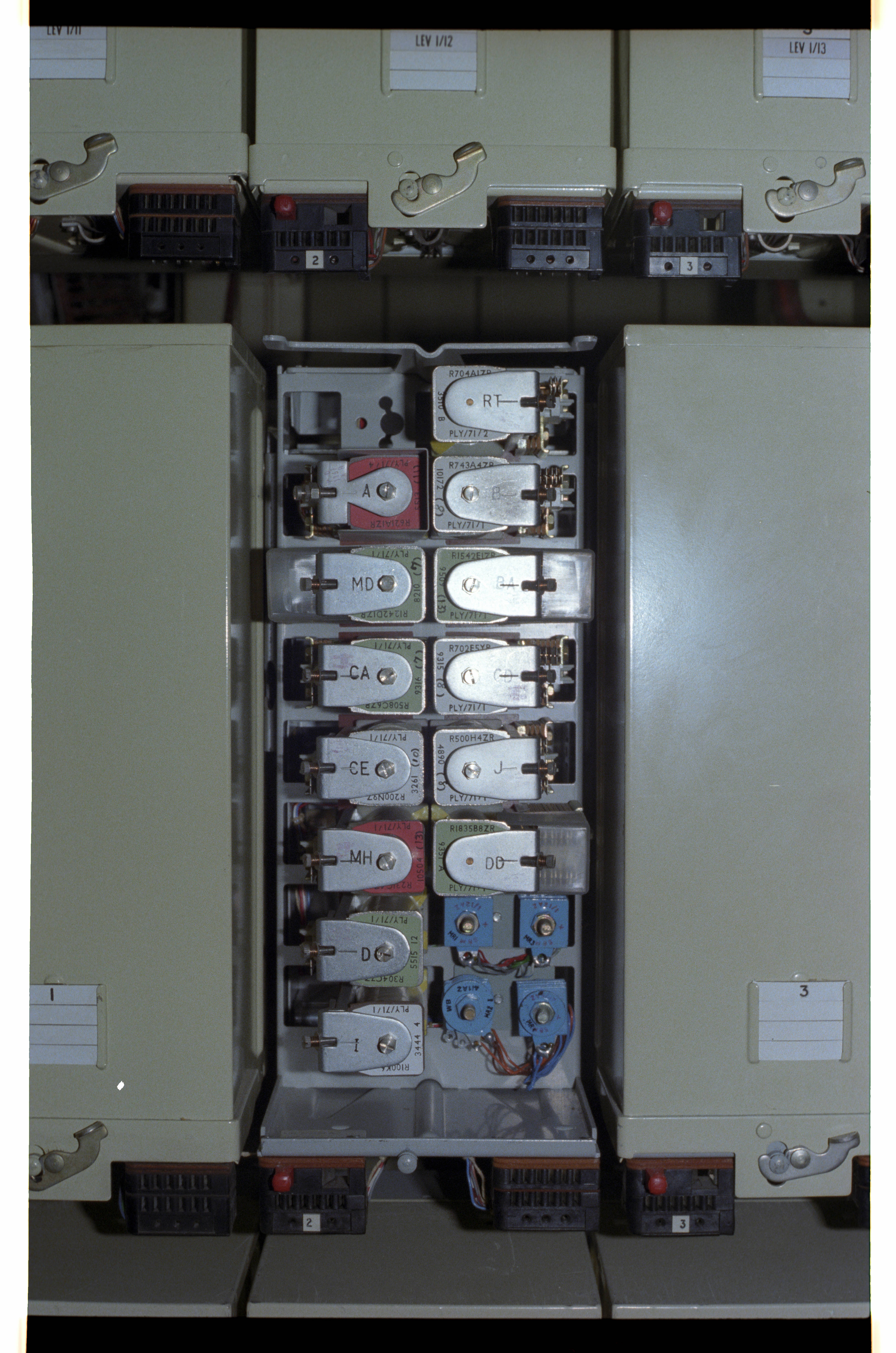
As an apprentice in the late 1970s with Post Office Telephones (as it was prior to changing to British Telecom and being privatised) I have spent many hours cleaning and adjusting these relays to keep them working and driving the equipment that switched telephone calls. The following photo shows a typical item of equipment from a telephone exchange in the late 1970s full of the relays found carved on the Faraday Building. This is looking end on, as if we were looking at the carving in from the right.

new relay set 2Large telephone exchanges such as that within the Faraday Building would have had many thousands of these relays.

I find these carvings fascinating. They show a pride and celebration in the technology of the time and the function of the building. The majority of buildings constructed during the last few decades, apart from transient corporate logos, tend to have no indication of their function or purpose.

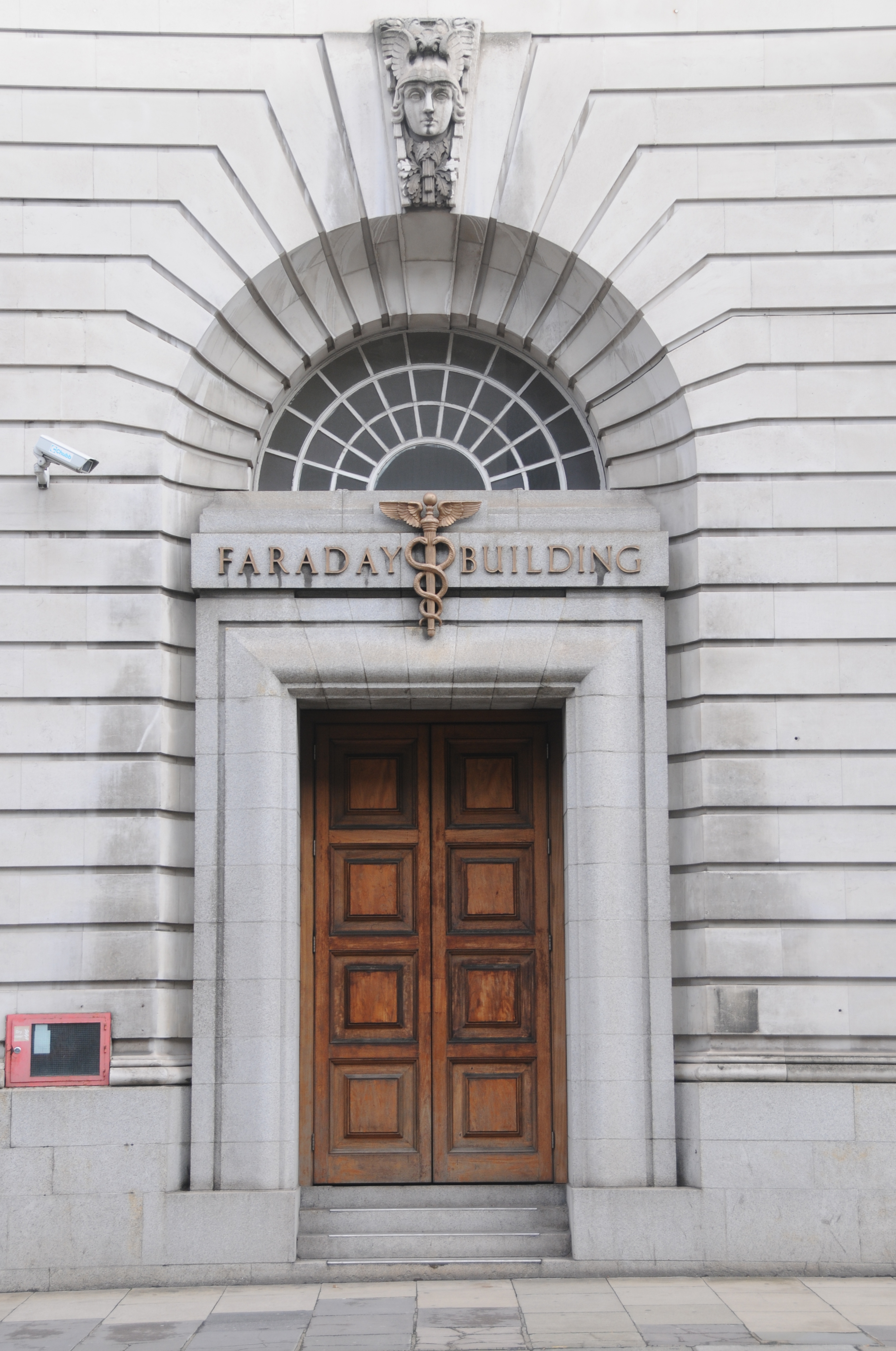
One final set of details can be found just above the main entrances to the building. Just above the door, between the words Faraday and Building is the caduceus (staff with wings above two coiled snakes) of Mercury, the messenger of the Gods, and just above the window there is a carving of  Mercury.
Faraday door

Technology has moved on considerably since the Faraday Building and these carvings were completed and I doubt the architect and builders of the time could have dreamt of the Smart Phone and Internet.

I hope these carvings remain for many decades to come to show future generations the pride that they had in the service that the Faraday Building would provide to London.

alondoninheritance.com


Post War London from the Stone Gallery, St. Paul’s – The North and West

For this week’s post, we continue on our walk around the Stone Gallery of St. Paul’s Cathedral, 376 steps and 53 meters from the cathedral floor. We have covered the south and east views and this week it is the turn of the north and south and the first photo is looking roughly due north:

2014 North 1 old

The street on the left is King Edward Street and the street on the right is St. Martin’s Le-Grand. The large buildings that occupy the space between these were General Post Office buildings  with the larger building in the centre of the photo being the headquarters of the General Post Office.

Whilst the roads are still in the same position, the view again is very different. In the following photo, apart from the streets my only reference points are the building on the extreme left of the photo and the church tower of St. Giles, Cripplegate on the right. These appear to be the only buildings that remains from the immediate post war period.

2014 North 1

Now walk a few feet to the left and look out over to Christchurch Greyfriars.

Newgate Street is running left to right with King Edward Street heading north from Newgate Street.

2014 North 2 old

And the same view today. The body of the church has been left to this day as it was after being destroyed in 1940. Flower beds now occupy the space where the pews once stood. Apart from the church, the building just behind the body of the church also remains.

2014 North 2

The above photos and the ones below are looking down on the area of Paternoster Square and Paternoster Row.

Paternoster Row was mentioned in the thirteenth century when Stow states that it was built around 1282 and that rents from the houses were used for the maintenance of London bridge. Before the war, this area was well-known for book publishing, distribution and warehousing, a fact that contributed to the intensity of the fires that raged in this area. This trade started well before the 20th century. It was in Paternoster Row in 1720 that William Taylor published Robinson Crusoe after Defoe had tried all over London to sell the manuscript. In 1724 Taylor’s publishing business was purchased by Thomas Longman who had founded the publishing firm of Longman, Green and Company also in Paternoster Row. Longman is still an imprint today, owned by the Pearson publishing company.

The following paragraphs are from the book “The Lost Treasures of London” by William Kent and give some idea of the dreadful loss to the long-established businesses that use to thrive in the City.

“On the night of the 29th December 1940 the bombs rained down here and Paternoster Row was more completely destroyed than any other City thoroughfare of importance. All that remained were a few buildings at the east end. The devastation in respect of books has been indicated by Evan Pughe, the Deputy Chairman of Simpkin Marshall and Co. Ltd:

On the night of the 29th December 1940, Simpkin Marshall, Ltd, the greatest distributor of English books in the world, carrying the largest comprehensive stock, lost approximately four million books when their premises in Ave Maria Lane, Stationers’ Hall Court, Stationers’ Hall, Amen Corner, Paternoster Row and Ludgate Hill, were entirely destroyed by the incendiary bombs of the enemy.

This disastrous fire eliminated everything. All the old records of the business going back a hundred and thirty years were destroyed; and most important of all, the great cataloguing system, the only one of its kind in the world, dating back for a hundred and fifty years. These catalogues were handwritten records of books, cross-referenced, so that books on all subjects could easily be traced. These records could immediately give books that had been published on any subject during the hundred and fifty years covered by them, the publisher, date of publication, the price, the size of the books, etc. They were invaluable and their loss will be felt by the reading public for many years to come.”

As a result of the blitz, Simpkin Marshall went out of business. It is hard to imagine the loss that must have been felt when Londoners returned to their place of work after an air raid and realised not just the loss of the buildings, but also what was held within and long established businesses.

Turning a bit more to the left and peering down we can get a glimpse of the Chapter House and the road that was St. Paul’s Church Yard that closely circled the cathedral.

The five circular shapes just behind the Chapter House are the impressions left by water storage tanks. Access to water was always a problem during the blitz. Damage to water distribution pipes, blocked roads and low tides in the Thames all contributed to the lack of the plentiful supplies of water needed to fight the sheer number of fires that would take hold after a raid. After the Paternoster area was destroyed on the 29th December 1940, the area was quickly cleared and these water tanks were built and kept full ready for the next raid.

Further back can be seen the rectangular shape and surrounding streets of Paternoster Square.

2014 North 3 old

I was able to frame the following 2014 photo reasonably well using the statue at the bottom right, to take a photo in exactly the same position as my father 67 years ago. The current incarnation of the Chapter House is currently undergoing re-building / restoration work hence the protective covering.

2014 North 3

Now look up again and walk further to the left and out across to the west. In 1947 the Old Bailey with the “Lady of Justice” holding the sword and scales of justice stand well above the surrounding buildings, with the Senate House of the University of London the next tallest building in the distance.

2014 West 4 old

In 2014, the Old Bailey still stands clear but the rest of the view towards the west is very different. The view of the Senate House is now obscured, and the next tallest building on the horizon is the BT Tower.

2014 West 4

Turning to look further to the left, we can see one of the western towers at the front of St. Paul’s.

2014 West 5 old

And the same view today in 2014:

2014 West 5

Looking at these towers at the front of St. Paul’s, at the Dome, across the different levels of roof across the cathedral, the many small walkways, along with the many stairways leading up to the heights of the cathedral really bring home the complexity of protecting the cathedral during the air raids of the blitz.

The Very Reverend W.R. Matthews, Dean of St. Paul’s wrote an account of St. Paul’s Cathedral in Wartime published in 1946. The following extract covering the 29th December 1940 brings to life the challenges that the Fire Watchers faced whilst protecting the cathedral. We join the account after the external water supplies have dried up:

“The Watch was now forced back on their reserves and had to rely entirely on stirrup pumps and sandbags. How we blessed the prescience of our commander, who had insisted on having our supplies of reserve water augmented in case of an emergency like that which we now confronted. Tanks, baths and pails full of water with their compliment of crowbars, shovels and other fire-fighting equipment were now liberally installed in all the vulnerable parts of the building and were so arranged that men approaching the scene of the fire from any direction would be certain of finding the necessary appliances to hand. But for these precautions there might well have been a different story to tell of the fate of St. Paul’s that night.

The action in the cathedral became for a while a number of separate battles in which small squads fought incipient fires at different places on and beneath the roofs. Some of the bombs were easily dealt with, as for example that one which fell on to the floor of the Library aisle and was extinguished by Mr Allen and myself. I have a special affection for the scar left by that bomb on the floor – it represents, I feel, my one little positive contribution to the defeat of Hitler ! But some of these battles were arduous and protracted. Bombs which lodged in the roof timber were very dangerous and hard to tackle. More than one of these took three-quarters of an hour before they were put out and had to be attacked by two squads, one from below and the other from above. The lower squad had the additional discomfort of being drenched by the pumps of their more elevated colleagues”.

The account also makes clear the need for a “head for heights” when working in the roof spaces and above the cathedral floor. It is the bravery of the Fire Watchers that we have to thank for the survival of the cathedral.

Now for the final view from the Stone Gallery in 1947 and we are looking out over the southerly of the western towers across the River Thames to Westminster. We can see Waterloo Bridge along with the Shot Tower on the south bank of the Thames.

2014 West 6 old

And in 2014, the view of the river and Waterloo Bridge remain but there has been considerable change on both banks of the river. In the 1947 photo, the south bank would soon be cleared for the Festival of Britain, after which the site was part occupied by the Shell Centre building then continuous development leading up to the London Eye.

In the foreground in the extreme lower left of the photos is St. Benets, Paul’s Wharf.

2014 West 6

The following map from Bartholomew’s 1940 Reference Atlas of Greater London covers the area to the north of St. Paul’s and shows the streets between St. Paul’s Church Yard and Newgate Street. This was the area shown in the photos covering Paternoster Row and Square and shows the many small streets that were occupied by numerous businesses including that of Simpkin Marshall Ltd. These were soon to be lost with the rebuilding of the area over the coming decades.

map part 2

Compare this 1940 map with the Google map of today:

View Larger Map
That completes our walk around the Stone Gallery. The air raid of the 29th December 1940 destroyed a significant part of the surroundings of St. Paul’s and the area has since changed dramatically.

The air raids destroyed not only buildings but also business that had been operating for many years, not to mention the thousands of lives that were lost. That St. Paul’s remains is thanks to the bravery of those who protected the building as the area was covered by a deluge of bombs.

For Londoners, it must have seemed that their City was changing forever almost on a nightly basis.

The following photo is from the Imperial War Museum collection © IWM (D 6412) and was taken in January 1942 and perhaps typifies the atmosphere that must have pervaded many parts of the city.

bombed london in the snow

The Stone Gallery (and the higher Golden gallery) provide a perfect location to view the wide sweep of London, from Shooters Hill, to Alexandra Palace, the City, Westminster, North and South Bank. The last stone of the cathedral’s structure was laid in 1708 and since that time it has looked down on a City that has changed beyond all recognition and hopefully will continue to do so for many centuries to come.

The sources I used to research this post are:

  • The Lost Treasures of London by William Kent published 1947
  • St. Paul’s Cathedral In Wartime by the Very Reverend W.R. Matthews, Dean of St. Paul’s published 1946
  • The Blitz by Constantine Fitz Gibbon published 1957
  • The City That Wouldn’t Die by Richard Collier published 1959
  • London by George H. Cunningham published 1927
  • Bartholomew’s Reference Atlas of Greater London published 1940
  • The Streets of London by Gertrude Burford Rawlings published 1926
  • And for a detailed minute by minute account I recommend reading The City Ablaze – The Second Great Fire of London 29th December 1940 by David Johnson published 1980

 alondoninheritance.com

Post War London from the Stone Gallery, St. Paul’s – The South and East

Soon after the end of the war, my father climbed the 376 steps from the cathedral floor up to the Stone Gallery at St. Paul’s Cathedral to get the view that only the Stone Gallery can provide of the sweep of London from the City to Westminster. From here he was able to take in what had become of the city that he had grown up in during the long years of the war.

67 years later I climbed the same 376 steps to take in how London had changed over those intervening years.

In this week’s post, the first of two, I will compare the photos he took then with my photos of 2014, however firstly to get our bearings the following Aerofilms photo from before the war shows how St. Paul’s was surrounded by the dense city streets with buildings much closer to the cathedral than they are now. These were not only offices, but also plenty of warehouses with one of the major publishers / book distributors having their office and warehouse just north of St. Paul’s in Paternoster Square. The spires of the city churches still stood clear of their surroundings, but St. Paul’s dominated the area. In view of what was to come it still amazes me that St. Paul’s survived.

EPW055297


Much of the devastation around St. Paul’s was caused on the 29th December 1940.

Christmas 1940 had been relatively quiet, however on the evening of the 29th December a large bomber force appeared over the City just after 6pm and for just over the next three hours incendiary bombs rained down on the City along with high explosive bombs. This combination caused maximum damage. High explosive bombs would rip buildings apart, exposing their contents to the impact of the incendiaries. During the peak of the raid over 300 incendiary bombs a minute were falling across the City and St. Paul’s quickly became surrounded by a sea of flame, fire crossing over the small streets and debris falling all around.

St. Paul’s was protected by a team of Fire Watchers who had the dangerous job of watching as the bombs fell and getting to an incendiary as quickly as possible to put it out before a fire became established. At one point an incendiary got stuck in the lead dome of the cathedral, where it could not be reached. A moment of danger as a single incendiary could cause a fire that would have engulfed the dome but miraculously it became free as it burned and melted the surrounding lead, and fell away from the dome landing in the Stone Gallery where the Fire Watchers could easily get to it and safely extinguish the danger.

It was not just incendiary bombs that put St. Paul’s at risk. The Fire Watchers also had to deal with a steady stream of flying embers from the surrounding buildings flying across and onto the cathedral. The heat from the concentration of fires stirred up winds that would spread embers quickly to create new fires where bombs had not landed.

The first waves of bombing finished just after 9pm and most of the area around St. Paul’s was ablaze along with many other areas of the City. The Fire Watchers and Fire Fighters worked hard in the dangerous conditions, a low tide not helping with extracting water from the Thames and the constant worry that the next wave of bombers would soon be over. However towards midnight the tide was rising and fog in the channel prevented the next wave of bombers from launching their next series of raids.

Next morning, Londoners awoke to a very different City.

Now join me as we walk around the Stone Gallery. We start looking over towards the south-east of London:

IMG02590-upload

The remains of the church in the centre of the photo is St. Nicholas, Cole Abbey and just behind is St Mary Somerset. The road between the two churches is Queen Victoria Street. The bridge spanning the Thames is Southwark Bridge and in the distance we can just see the tower of Southwark Cathedral.

The view today is shown in the following photo:

DSC_1404-upload

As with much of the City of London, the church towers provide us with reference points to confirm the location. St. Nicholas, Cole Abbey in the centre of the photo still stands along Queen Victoria Street with the steeple restored on the top of the tower.

Interesting that the River Thames is much more visible in 2014. Most noticeable is that we can now see the rail bridge into Cannon Street Station. The height of the buildings between St. Paul’s and the Thames appear lower than the buildings constructed in the pre-war period. A success of the regulations governing the views of St. Paul’s and surprising that in one area of London at least the buildings are not in a race for height.

Turning slightly to the left, we can now see the full length of Cannon Street Station with the original roof running the whole length from the Thames facing towers through to the station buildings facing onto Cannon Street. The Monument stands clear of surrounding buildings and the tops of the cranes running along the Thames between Billingsgate and Cannon Street can be seen.

IMG02591- upload

The same view today is shown below:

DSC_1392-upload

Cannon Street has lost the roof and the dominant position it held on the City skyline. The Monument now bravely maintains its position just above the surrounding buildings, but again is not such a prominent landmark on the skyline and all the cranes have been lost along the Thames.

A slightly different view just further to the left.

IMG02595-upload

And the same view today. the church in the centre of the above photo and just behind the red crane in the following photo is St. Mary Aldermary

DSC_1427-upload

The spire just edging into the bottom of the above photo is the rebuilt spire of St. Augustine, Watling Street and the tower as it was after the war is seen in the following photo from the Stone Gallery.

The building in front of the church in the following photo is the premises of Andersons Rubber Company. One of the buildings that was on the plot to the right of St. Augustine was Cordwainers Hall. In total a succession of 6 livery halls had been on this site from 1440. The one destroyed by bombing was built-in 1909 and was the last on the site as the Worshipful Company of Cordwainers moved to the Law Society in Chancery Lane, then in 2005 moved to the Clothworker’s Hall in the City.

IMG02592-upload

The view today could hardly be more different. the spire has been restored to the church, the Andersons building has been demolished and not rebuilt and the plot of land immediately to the right of the church are now gardens and pedestrian areas.

DSC_1385-upload

The small road that runs past the church and Andersons in the original photo which is now a pedestrian walkway was the end of Watling Street where is ran straight to the St. Paul’s Church Yard road that ran close around the cathedral. Pre-war, although St. Paul’s was the tallest building in London and so dominated the skyline, it was ringed on all sides by a tight network of roads and buildings. Re-building since the war has opened up the immediate cathedral surroundings.

We continue on our walk around the Stone Gallery, this time we have moved a bit further to the left and are now looking across to the centre of the City.

The tower of St. Mary-le-Bow still stands along Cheapside next to the burnt out shell of the church.

The road running across the photo at the back of the car park is Friday Street. So called due to the fishmongers who had their homes here and serving Friday’s market. A survival from the days when fish was eaten on a Friday. This street has now been lost under the One New Change development.

IMG02593-upload

The city skyline in the above photo is as it has been for hundreds of years with only the church towers and steeples rising above the surrounding streets. How different this now looks in 2014:

DSC_1414-upload

As well as One New Change in the foreground, the road in front, New Change is a new routing of the original road Old Change that ran directly behind St. Paul’s, so close that it is obscured in the original photo.

In the City, the march of the new towers continues with Tower 42 on the left followed by the Gherkin, the Cheesegrater and the WalkieTalkie just appearing on the right.

Now for the final photo of this week’s walk around the southerly and easterly aspects of the Stone Gallery and we are looking roughly north-east at St. Verdast alias Foster on Foster Lane.

Note in the top right corner is the shell of the Guildhall. The Guildhall suffered badly on the night of the 29th December when the fire spread from the neighbouring church of St. Lawrence Jewry. The roof was destroyed and the wooden figures of Gog and Magog from 1708 were reduced to ashes, along with about 25,000 volumes from the library.

IMG02594-upload

And today’s photo of the same area, which I admit I did not realise I took a bit too low and cut of the top of the spire on the church. That is what comes with trying to balance an iPad with the original photos and a camera at the same time and not checking afterwards!

DSC_1422-upload

To get a view of the streets around St. Paul’s and how they have changed, the following map is from Bartholomew’s 1940 Reference Atlas of Greater London. The original Old Change was between St. Augustine and St. Paul’s. This has been re-routed to the right and renamed New Change from which the development that is now on top of Friday Street takes its name. Watling Street and Cannon Street ran straight up to St. Paul’s Church Yard. This junction and the building plot where Cordwainer’s Hall was located are now gardens and pedestrian areas.

old map st pauls

Compare this 1940 map with the Google map of today:

View Larger Map

The following photo by the Daily Mail photographer Herbert Mason taken on the 29th December 1940 looking across Ludgate Hill towards St. Paul’s and now in the Imperial War Museum collection gives an impression of the scene with fires raging around the cathedral (photo © IWM (HU 36220A))

IWM St Pauls

Join me next week as I continue the walk around the Stone Gallery to view the North and Westerly views.

The sources I used to research this post are:

  • The Lost Treasures of London by William Kent published 1947
  • The Blitz by Constantine Fitz Gibbon published 1957
  • The City That Wouldn’t Die by Richard Collier published 1959
  • London by George H. Cunningham published 1927
  • Bartholomew’s Reference Atlas of Greater London published 1940
  • The Streets of London by Gertrude Burford Rawlings published 1926
  • And for a detailed minute by minute account I recommend reading The City Ablaze – The Second Great Fire of London 29th December 1940 by David Johnson published 1980

 alondoninheritance.com


A Walk In And Around St Mary-le-Bow

St Mary-le-Bow in Cheapside is one of the more well-known of the City churches being home to Bow Bells. The church also has one of the finest Wren steeples which, unlike the church adjacent to the steeple, survived wartime bombing.

My father took the following photo just after the war from Friday Street looking across the ruins of the city towards St Mary-le-Bow

St Mary-le-Bow

Friday Street is now lost under the One New Change development. Friday Street was on the south side of Cheapside, roughly halfway between Gutter Lane and Wood Street on the northern side, and ran down to Watling Street. The tower and steeple appear relatively unscathed from the outside unlike the church to the lower right which, although external walls remain, has been gutted and is now an empty shell. Within the tower fire did cause much damage and as a result the bells crashed to the ground.

As with many of these photos taken just after the war, it is impossible to take a comparison photo today. The space in between is now full of office blocks with no chance to get any view of the church.

St Mary-le-Bow is now best viewed from Cheapside and the small square adjacent to the church from where the beauty of the spire can be admired.

A Church has stood on the site of St Mary-le-Bow for many centuries. The church to the right rather than the tower is the original site of the church. Apparently when the church was rebuilt after the great fire Wren brought the tower forward onto Cheapside and connected the tower to the church with the vestibule which can be seen in the above photo as the brick wall between tower and church.

As evidence of the age of the church, below is an 11th century crypt constructed when the church was rebuilt by Lanfranc of Canterbury as his London headquarters.

The crypt, although with some changes resulting from reconstruction of the church above following the great fire and wartime bombing is in fine condition and can still be visited with two entrances, either through the vestibule or through a small set of steps at a corner of the church in the square outside.

Part of the crypt of St Mary-le-Bow which also extends to the left of the photo.

St Mary-le-Bow

Following the great fire, Wren planned the reconstruction of the church. The original tower was not badly damaged and much money was spent on attempted restoration, however re-building was eventually found to be inevitable. This is when the decision was taken to emphasise the importance of the church by rebuilding with a magnificent tower and bringing the tower forward to Cheapside. The former church stood about forty feet southwards of Cheapside and in order to bring the new tower forward to the line of the street the site of a house not yet rebuilt after the fire was purchased.

The accounts for the rebuilding of the tower show the expense that was put into the construction:

To Thomas Cartwright and John Thompson, Masons, for building ye whole Stone wall inside and outside of ye New Tower of Bow from ye pavement to ye top of ye first great cornice with ye winding Staires ye Great Neech Portalls Pillasters windows and carvings according to contract by the great bearing date March  3 1676 – £1600

ffor building from ye top of ye first great Cornice to ye top of ye round Cornice according to Contract signed Septr. 22, 1676 – £2550

from ye Top of ye Cornice over ye Ionick Pillars to the top of ye Cornice under ye Pedestall, ffeb. 27, 1679 – £467, 1, 6

from ye Top of ye Cornice under ye first pedestal to ye under side of ye Spire, June 27, 1679 – £295, 16, 6

about finishing ye Piramids Pinicles and other works of ye Tower, June 8, 1680 – £551, 16, 0

The accounts continue to list in detail the various items and costs for the construction of the Tower which finally amounted to £7,388 8s 7d which must have been a considerable sum in 1680, with a further £8,033, 0s, 5d spent on the church resulting in a combined total of £15,421, 9s, 0d which is by far the most spent on the reconstruction of any of the City churches. For comparison, St. Lawrence Jewry was the next most expensive at £11,870 which really highlights the importance of St Mary-le-Bow.

The tower and steeple are best viewed from Cheapside.

St Mary-le-Bow

And from the small square adjacent to the church, we can admire the detail of the steeple. The steeple is 224ft in height and is second only in height to St. Brides.

St Mary-le-Bow

My father also took another photo from roughly the same spot as the first showing the full height of the spire:

St Mary-le-Bow

Rebuilding after the war was carried out between 1956 and 1964. The light inside the church along with the white walls, blue panels, gold decoration and stained glass is magnificent:

St Mary-le-BowUnlike the tower and steeple, the main church building is very difficult to view from a distance. The main church is surrounded by buildings and the best viewing point is from the small square outside the church. The following photo shows the church with the tower to the left. It was possible to get a bit further back, however the tree then obscured much of the church. Even so, you can see from my father’s original photo that although the core of the church was gutted, the walls remain to this day.

St Mary-le-Bow

The statue to the left of the photo is Captain John Smith, a former parishioner of the church. It was Captain John Smith who was leader of the Virginia Colony and was the first English explorer to map the Chesapeake Bay area and New England during the British settlement along the east cost of the United States.

As always, I find it fascinating to walk around a building to see what can be discovered on the external walls. Hiding at the top of the walls are these headers to rain water down pipes continuing a long tradition of dating and decorating these architectural features. A visible reminder of the rebuilding of the church after the war.

St Mary-le-Bow

There is also a plaque removed from the church of All Hallows, Bread Street commemorating that John Milton was baptised in All Hallows.

All Hallows, Bread Street was a victim of the gradual consolidation of parishes over the centuries. It was not just the Great Fire of London and the Blitz that destroyed the City Churches, there was an ongoing process of consolidation. As well as All Hallows, St. Pancras, Soper Lane was also united with St. Mary-le-Bow.

St Mary-le-Bow

On the corner of the tower you will also find the following carving:

St Mary-le-Bow

This is nothing to do with the function of the church, they are found carved on buildings, bridges and walls across the United Kingdom.

They are Ordnance Survey Bench Marks carved into structures that are likely to be long-lasting and stable to provide a height reference. The horizontal line is the height reference above the Ordnance Survey datum.  This was used in the re-levelling of Greater London between 1931 and 1934 and established a height of 56.269ft above mean sea level at Newlyn in Cornwall (the Ordnance Survey datum for measuring heights above sea level). So if you now walk along Cheapside, past St. Mary-le-Bow, at least you know the height above sea level !

St Mary-le-Bow has always been a prominent landmark in Cheapside, a very busy route between Bank and St. Paul’s.  The following view taken from an early postcard shows how the steeple stood well above the surrounding buildings and then as now a clock on the front of the tower kept the busy people of Cheapside well-informed of the time of day.

St Mary-le-Bow

A fascinating church and I have not even covered the story of the Bow Bells, the nursery rhyme , Dick Whittington etc. as these are all well documented elsewhere.

The sources I used to research this post are:

  • The Old Churches Of London by Gerald Cobb published 1942
  • London by George H. Cunningham published 1927
  • Old & New London by Edward Walford published 1878

alondoninheritance.com