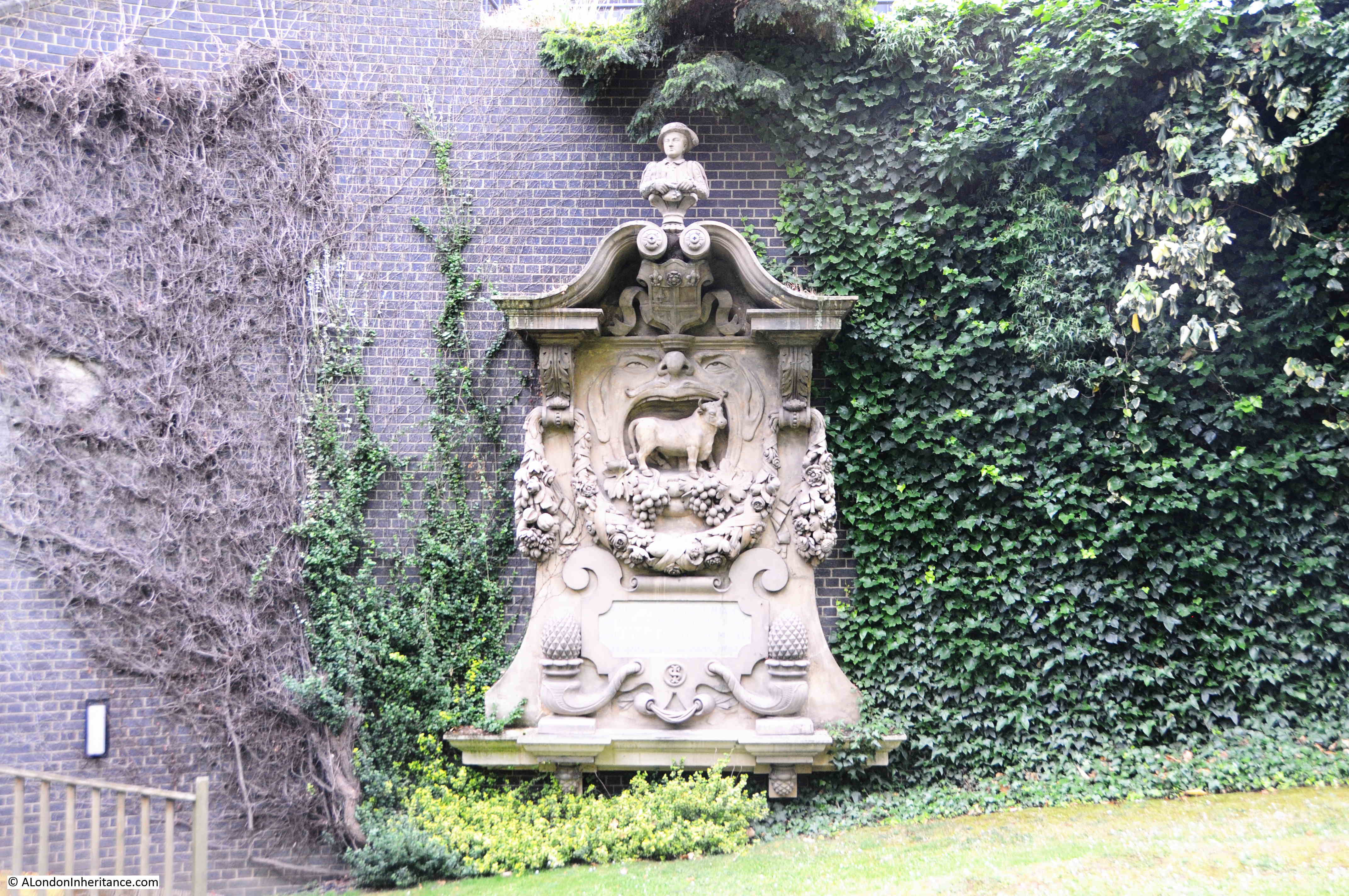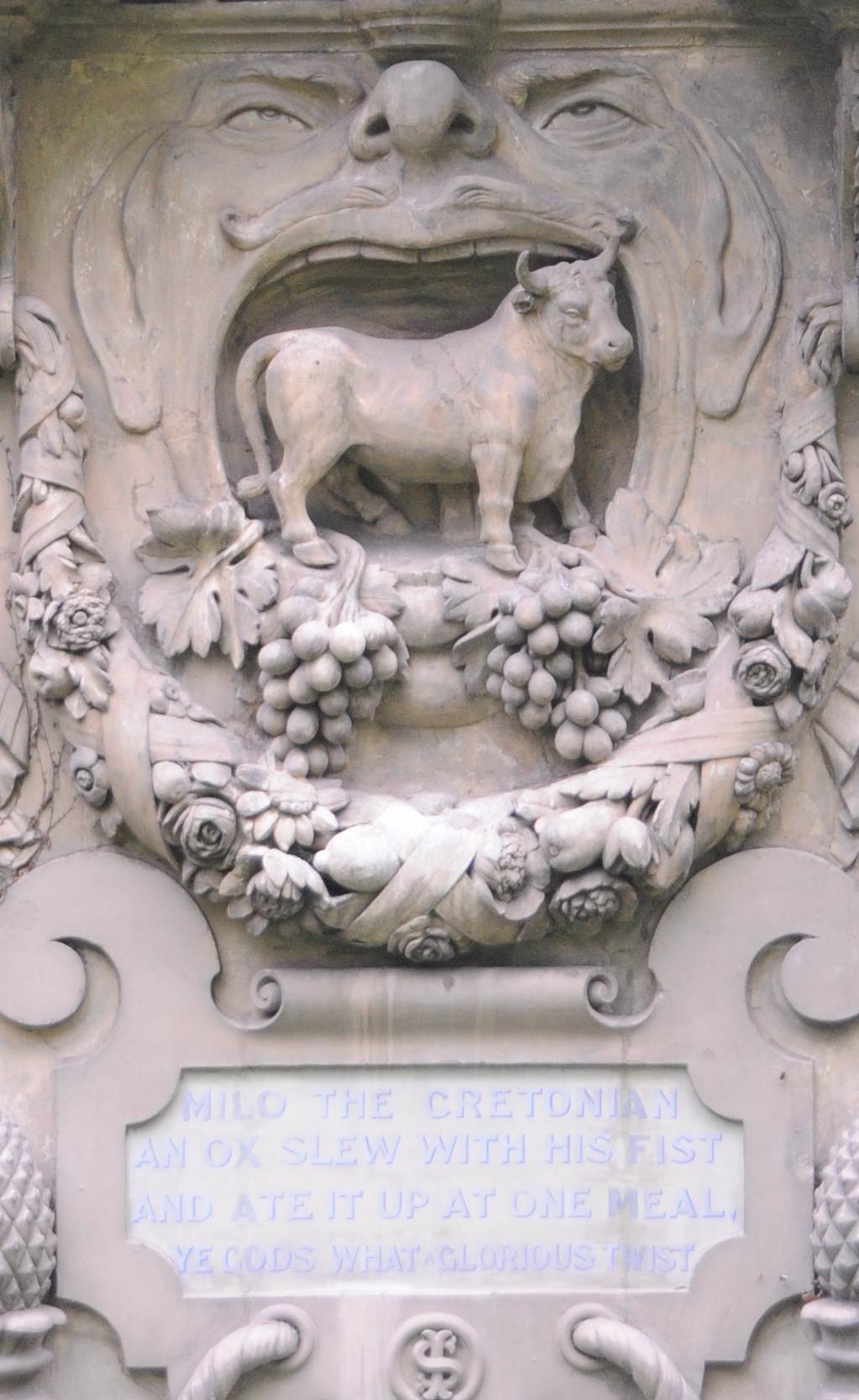
Category Archives: London History

Bills of Mortality – Death in early 18th Century London

Bills of Mortality – Death in early 18th Century London. A cheerful subject for a Sunday morning’s post, but a really interesting subject, and one that sheds light on living in London 300 years ago, in the early years of the 18th century.

What were Bills of Mortality? They were lists of deaths in the city, detailing the number that had died by individual cause of death. The majority of deaths were from some form of disease or illness, however the Bills of Mortality also included lists of Casualties – those who had died through some form of accident.

I took a random year in the early 18th century which had a good sample of weekly Bills of Mortality, the year 1721.

So what was happening in 1721?

George I was the monarch, with the country having survived the Jacobite rebellion of 1719 which aimed to restore James Stuart to the throne. Edmond Halley (after whom the comet would be named) was Astronomer Royal. Grinling Gibbons died – his remarkable wood carving can still be seen at a number of sites across London.

The collapse of the South Sea Company, known as the “South Sea Bubble” was in the previous year. One person who made a considerable amount of money from shares in the South Sea Company, and who sold before the collapse of the company was Thomas Guy. In 1721 he founded Guy’s Hospital

In 1721, Robert Walpole became the first Prime Minister.

London was expanding rapidly to the north and west, and by 1746, John Rocque’s map would show the new estates north of Oxford Street, and between Oxford Street and Piccadilly.

Executions were still taking place on the Thames foreshore in Wapping for any crimes that carried the death penalty and came under the authority of the Admiralty.

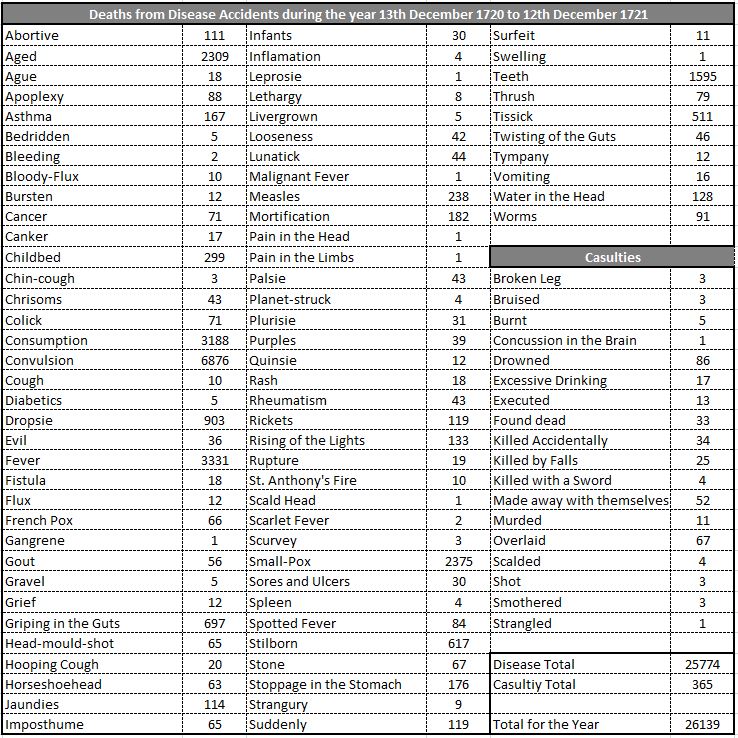
So, with that background, lets have a look at what might have killed you if you were living in London in 1721, starting with a compilation of all the weekly Bills of Mortality for the year:

Bills of Mortality

There is so much to follow-up in these records. Firstly, some of the strange causes of death.

Many of the causes are recognisable today, however some need an explanation, and a sample are listed below:

  • Bloody Flux – A horribly descriptive term for Dysentery, which I am surprised was as low as 10 for the year given the polluted state of drinking water in early 18th century London
  • Evil – This appears to have been a form of tuberculosis
  • French Pox – Syphilis
  • Head-mould-shot – An injury or disease of the bones of the skull
  • Mortification – Referred to death caused by Gangrene or similar diseases
  • Planet Struck – A really strange name. It seems to have been used for a sudden death that some believed had an astrological connection with the planets
  • Rising of the Lights – Lights seems to have been a Middle English word for the lungs and rising of the lights refers to some form of lung disease
  • St. Anthony’s Fire – This appears to have been horrible. It was caused by eating grains such as rye, that had been infected by a fungus with the name of Claviceps purpurea. Symptoms included a burning feeling in the extremities of the body (hence the use of the word Fire in the name), along with sores, hallucinations and convulsions. St. Anthony comes from monks dedicated to the saint who offered help to suffers.
  • Strangury – The symptom of this was painful urination, and the cause was some form of bladder disease
  • Teeth – Nothing to do with something being wrong with your teeth, this appears to have been how the death of a child was recorded when they were teething
  • Tissick – Death following a cough which must have been due to some form of lung disease

Many of the causes of death had names that described the symptoms or cause of death, and a number of names could all refer to the same cause of death. Some of the names make you wonder how much thought there was into the cause before recording the death.

For example, with some of the deaths with very low numbers, you can imagine the following conversation:

What did he die off?

Don’t know, but he had a pain in the head

That will do, record that as the cause

The total for the table shows that in 1721 there was a total of 26,139 deaths. It is difficult to get an accurate population count for London in 1721, however a number of sources and years either side (1700 and 1750) seem to converge around 650,000 as a good estimate for 1721. Based on this total population, then 4% of the population died in the year.

Comparing this with today, and the data.london.gov.uk site provides a mid year estimate of the population of London in 2020 as 9,002,500 and the annual number of deaths in that year was 58,800. Based on these figures, 0.65% of the population of London died during 2020.

Even with some errors in the above figures, they do show that the ratio of deaths to total population has decreased significantly in the intervening 300 years.

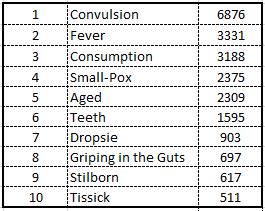
I sorted the table of deaths to show the causes that resulted in the greatest number of deaths, and the following table shows the top ten causes in 1721:

Bills of Mortality

Convulsion caused by far the highest number of deaths with 6871, double the second highest of 3331 Fever deaths.

Convulsion in the early 18th century was not what we would expect today. It was used to describe any general cause of death in infants. It had been replacing “chrisomes” as an archaic term for death in infants. Chrisomes had, and continued for a while, been used to describe the death of an infant under one month of age. The term came from the name of a white linen cloth that was used to cover a baby’s head when baptised, and was also used as a shroud for a dead baby.

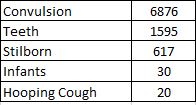
There is a chance that some of the deaths recorded as a Convulsion could have been an adult, however if we assume they were all deaths of infants, then sorting the table on child deaths, we get a total of 9,138, or 35% of all deaths attributed to diseases, which just shows that even with a degree of incorrectly recorded deaths, surviving childhood was the greatest challenge of being born in early 18th century London.

The following table shows the causes of death for children:

Bills of Mortality

The risk to life during birth was also to the mother, and in 1721, 299 deaths were recorded as “Childbed”, the cause of which was an infection following birth also known as puerperal fever.

The record for 1761 listed the numbers christened and buried during the year:

  • Christened – 18,370
  • Buried – 26,142
  • Increase in burials this year – 688

These figures show that numbers buried were higher than numbers christened. This could be for a number of reasons:

  • Not all children were christened, however I suspect that given the religious and superstitious views of the time, a high percentage of births led to a christening
  • Presumably non Christian children were not recorded as being baptised, however the numbers of these was probably low
  • The population of London was not dependent on births within the city. There was a high level of immigration to the city from the rest of the country, and from abroad, so many of the deaths were of people who had moved to London
  • The fact that the number of burials increased over the previous year of 1720, and buried outnumbered christenings shows the rate at which London’s population was expanding

The high number of burials was also due to the very basic level of medical care during the early 18th century. Poor sanitation, sterile conditions to treat wounds and illnesses, poor diets and quality of food, lack of clean drinking water, cramped living conditions, etc. all contributed to the high rate of death.

People also still believed in many of the superstitions around illness and death, and also in many of the supposed cures that were available. One example of the type of cure widely reported in newspapers is the following from 1722:

“We hear that a few weeks ago, a Spring hath been discovered near a Town called Goring, within 12 Miles of Reading in Berkshire, which hath such virtues in it, that lame people who have made use of it by Bathing, have soon dropped their Crutches. Tis said the Clay there cures old sores and green wounds to admiration, and every one who hath made use of it hath found such relief, that they are constantly setting forth its virtues.”

The weekly Bills of Mortality also listed what were called “Casualties”, and included the cause of death. These casualty lists show the many bizarre causes of death across early 18th century London, and many still recognisable names are listed as the place of death. A sample covering four weeks in 1716:

15th to the 22nd January 1716

  • Burnt accidentally at St. Mary Aldermanbury – 1
  • Choked with a Horse Bean at St. James Dukeplace – 1
  • Hanged himself (being Lunatick) at St. Olaves Southwark – 1
  • Killed by the Wheel of a Cart at St. Andrews Holbourn – 1
  • Overlaid – 3

Overlaid appears to have been the death of an infant by smothering when a larger individual sleeps on top of them. There are Overlaid deaths almost every week in the Bills of Mortality and were probably caused by parents, or older children, sleeping with infants.

5th to the 12th March 1716

  • Bruised at St. Mary Rotherhithe – 1
  • Found dead in the Fields at St. Dunstan at Stepney – 1
  • Killed by a Blow with a Catstick at St. James Clerkenwell
  • Killed by a Sword at St. Martin’s in the Fields – 1
  • Overlaid – 1

12th to the 17th June 1716

  • Hanged himself (being Lunatick) at St. Peters in Cornhill – 1
  • Killed with a Musket Ball at Christ Church in London – 1
  • Killed by a Blow with a Stick at St. Mary in the Savoy – 1
  • Overlaid – 3

The use of the term “Lunatick” is very problematic. The term was often used for deaths of someone with a mental illness, and for those who had committed suicide when it was assumed that they must have been a “Lunatick” for going through with a self inflicted death.

Also in the above two weeks, there are deaths by a blow, by a sword and by a musket ball, presumably these were all some form of murder / manslaughter.

17th to the 24th July 1716

  • Cut his throat (being Lunatick) at St Matthew in Friday Street – 1
  • Drowned in a Tub of Water at St. Clement Danes – 1
  • Executed – 1
  • Hanged themselves (being Lunatick) at St. Stephen Coleman Street
  • Hanged themselves (being Lunatick) ay St. Katherine Creed Church

Some of these records cry out for more information. How did someone drown in a tub of water at St Clement Danes? How big was the tub, why could they not get out, were they drunk?

The above week’s record also lists one person as being Executed. Strange that this was recorded as a Casualty, however I suspect there was no other way of recording such a death as the weekly Bills of Mortality tried to capture all the deaths in the city.

London’s population and deaths were the subject of a fascinating little book published in 1676 and today a copy is held in the Wellcome Collection. “Natural and Political Observations Mentioned in a following Index and made upon the Bills of Mortality” by Capt. John Gaunt, Fellow of the Royal Society.

John Gaunt writes that he was born and bred in the City of London, and complains that the Bills of Mortality were only used to see how burials had increased or decreased, and for the rare and extraordinary causes of death within the Casualties.

In the book he makes 106 observations on births, deaths, sickness, disease, how information in the Bills of Mortality was used, London’s population, comparison between the City and Countryside etc. The book is a fascinating window on the late 17th century, and explains much of what we see in the 1721 Bills of Mortality.

His observations are really interesting, and I have listed a few of them below:

  • The Occasion of keeping the account of Burials arose first from the Plaque, Anno 1592
  • That about one third of all that were ever quick die under five years old, and about thirty six per Centum under six (this aligns with the figures for the deaths of children in the 1721 statistics)
  • That not above one in four thousand are Starved (so food is generally available and affordable to the vast majority of London’s population, although very many probably only just had enough)
  • That not one in two thousand are Murdered in London (the statement appears to be written as a positive, however compared with today, and the figure for 2020 / 21 was 13.3 per million in London, which is considerably better than 1676)
  • That few of those, who die of the French-Pox are set down, but coloured under the Consumption (this implies that deaths from Syphilis were considerably under-reported. Perhaps the family of the person did not want it known that they had died of a sexually transmitted disease)
  • That since the differences in Religion, the Christenings have been neglected half in half (so there were religious differences resulting in the number of Christenings not being representative of the total number of births)
  • That (be the Plague great or small) the City is fully re-peopled within two years (so even after the worse years of the plaque there were enough people moving into the City to restore the population)
  • The Autumn is the most unhealthful season (something’s do not change)
  • That the people in the Country double by Procreation but in two hundred and eighty years, and in London in about seventy. Many of the Breeders leave the Country, and that the Breeders of London come from all parts of the Country, such persons breeding in the Country almost only were born there, but in London multitudes of others (Women of child bearing ages, and their partners moved in numbers from the Country to the City)
  • That in London are more impediments of Breeding than in the Country (interesting comparison with today with possibly wages, need to work, availability and cost of housing all playing a part)
  • Physicians have two Women Patients to one Man; and yet more Men die than Women (again, something’s do not change – men do not like going to the Doctor)
  • In the Country but about one of fifty dies yearly, but at London one of thirty (so London was not as healthy as the Country, and was getting worse as confirmed by:)
  • London not so healthful now as heretofore

John Gaunt published his findings 346 years ago, but it is interesting how many can still apply to London today.

Gaunt was a fascinating individual. He was a Haberdasher by trade, but had a considerable interest in how the collection of data, the use of mathematics and the statistical modelling of data could reveal what was happening to the health of those living in the city, and to population numbers.

He was one of the first demographers – the statistical study of populations.

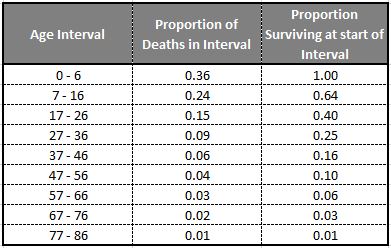
As well as the investigations that led to the observations listed above, he also collected data to help understand life expectancy. The Bills of Mortality did not report age, just the numbers dying of specific causes, so Gaunt had to collect this data through further investigations. This work resulted in the following table:

Bills of Mortality

The middle column shows the proportion of London’s population that could be expected to die within the age interval in the first column, so out of 100 people between the ages of 0 and 6 years, 36 could be expected to die.

The column on the right is the proportion surving at the start of the interval, which is why the first entry is 1, as this represents the full popoulation at birth. It then shows the numbers surviving at the start of the interval, so at age 7, 64 out of the original 100 would be alive. At age 16, 40 out of the original 100 would still be alive, and so on through the age intervals.

The table really shows the young age of London in the years around 1676, as by the age of 27, only 25 out of an initial 100 people would still be alive, and at age 57, this would be down to 6 out of the original 100.

A morbid subject, but it does show that in the 17th century and early 18th, the data was available to start understanding disease and death in the City, and people like John Gaunt were beginning the process of understanding how to use and apply this data.

This would be a very long process, as even by 1854, Dr. John Snow was still facing challenges when he used data to demonstrate that a Cholera outbreak in Soho could be traced to a specific water pump.

What is also clear is that if you had made it into your 20s, you were very lucky as only 25% would make it to the age of 27. There were a large number of terrible diseases just waiting to pick you off, and just living in London would also put you at risk of becoming a casualty of any number of possible accidents.

However despite all these challenges, the population of London kept growing.

alondoninheritance.com

Bull and Mouth Inn, Northumberland House, French Church and Aldersgate – City of London Blue Plaques

Today, I am starting in St Martin’s le Grand for the third post in my search for all the City of London Blue Plaques.

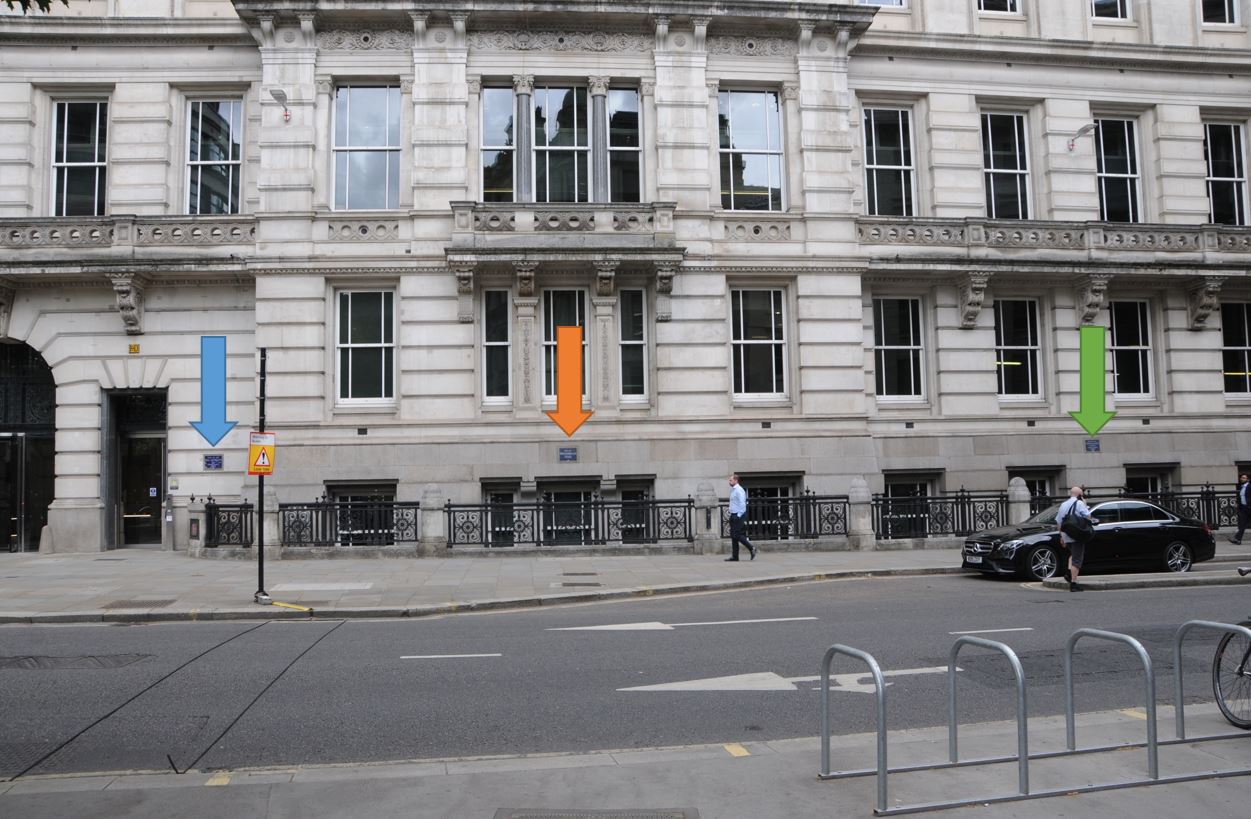
Three plaques can be seen on a building on the western side of the street, each arrowed in the following photo:

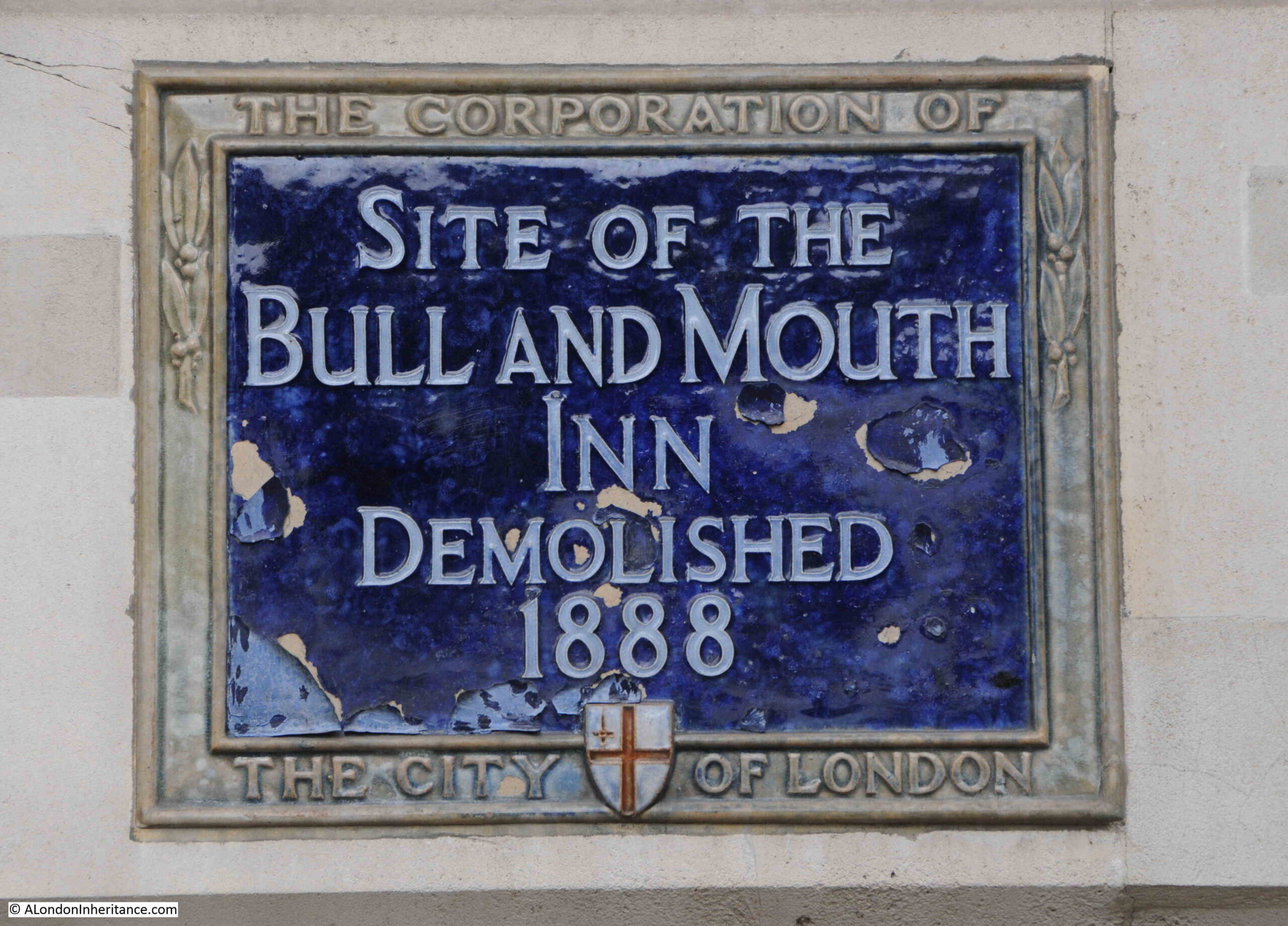
Bull and Mouth Inn

Starting from the left, and the blue arrow is pointing to:

Bull and Mouth Inn

Bull and Mouth Inn

The Bull and Mouth Inn was an old coaching inn located in a side road off St Martin’s-le-Grand / Aldersgate Street. This side road had the same name as the inn – Bull and Mouth Street.

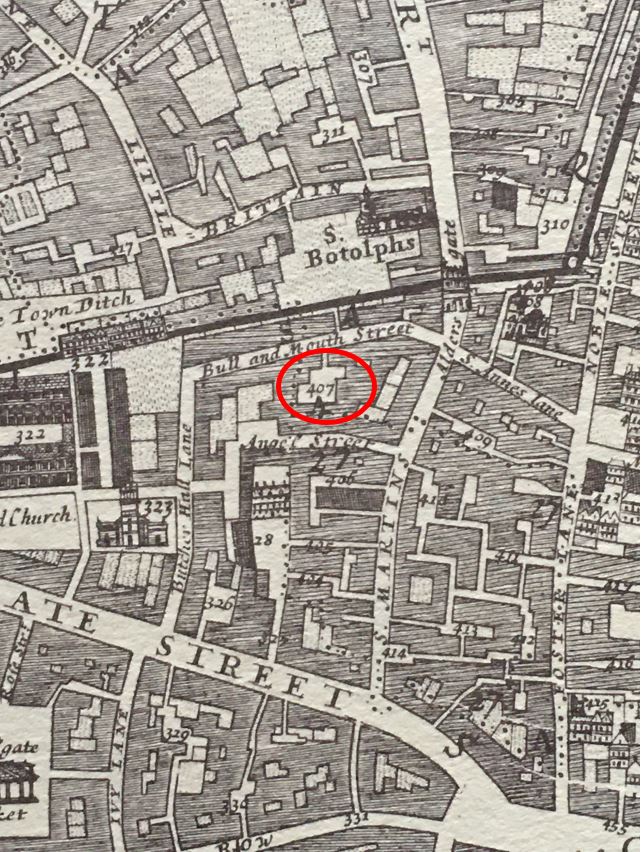
The Bull and Mouth was an old inn, and can be found in William Morgan’s 1682 map of London. In the following extract from the map, the inn is numbered 407 (circled red), and the large courtyard can be seen, surrounded by the buildings of the inn, and with a narrow entrance on to Bull and Mouth Street.

Bull and Mouth Inn

The name is unusual, and appears not to have been the original name. An article about the inn in the London Mercury on the 15th April 1848 records that the 16th century historian and antiquarian John Stowe referred to the inn as of “great antiquity”, and that the current name was a corruption of the original name of Boulogne Mouth or harbour)

The Bull and Mouth was a very busy coaching inn, with regular coach services to the north of the country. The inn was mentioned in the 1909 book “Inns, Ales and Drinking Customs of Old England” by Frederick Hackwood:

“Where could have been found a finer or more typical specimen of the old coaching-house than the Bull and Mouth in Aldersgate Street?

The scene presented by a coach-yard in full activity was always an animated and interesting one. The coach, a handsome, well-built vehicle, in all the brilliancy of a highly varnished claret ground, or it may be of a bright yellow, when ready, would stand well in the middle of the drive. the four beautiful, spirited animals attached to it, with their glossy, velvety skins, covered with cloths till the moment of ‘putting to’, would be under the charge of two stablemen in corduroy breeches and heavy boots.

Then the coachman, mounted on the box, getting his whip and his ribbons adjusted exactly to his mind. He is well buttoned up to the throat in an enormous box-coat of whitish drab colour, fastened with immense mother of pearl buttons. There is a rakish brim to his hat, which goes well with the air of nonchalance he affects – for is he not the skipper as it were, not only in command of the gallant equipage, but controlling, for the time at least, the destiny of all his passengers.”

Probably a bit of a romantic description of a lost method of travel, however it must have been an impressive sight, a coach being readied for departure, and the travelers heading across the country from the yard of the Bull and Mouth.

And coaches from the Bull and Mouth really did travel some distance.

The first mention I could find of the Bull and Mouth, was from the Derby Mercury on the 27th December 1733 where George Paschall was advertising that his wagon made a regular journey between Derby and London, leaving the Red Lyon in Derby every Saturday, reaching the Bull and Mouth on the following Saturday, from where it would depart on the Monday, arriving on either the following Friday or Saturday.

The wagon was probably for carrying goods rather than people, and the journey time between Derby and London was around five / six days.

The Bull and Mouth must have been incredibly busy. The Bull and Mouth listed the coaches and wagons departing from the inn in the Public Ledger and Advertiser on the 27th April, 1824.

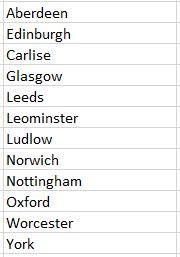
The following table shows the destinations of Royal Mail coaches departing every evening from the Bull and Mouth (these were the ultimate destinations, each of these was an individual route that had plenty of intermediate stops):

Bull and Mouth Inn

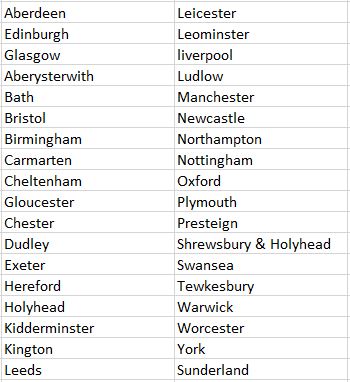
The same listing also included the destinations of coaches that were not part of the Royal Mail network, along with passenger carrying wagons, again, plenty of intermediate stops before these destinations were reached:

Bull and Mouth Inn

It must have been remarkable to watch the immense amount of activity at the Bull and Mouth with the number of coaches, wagons, passengers and goods for transport, arriving or departing from the inn.

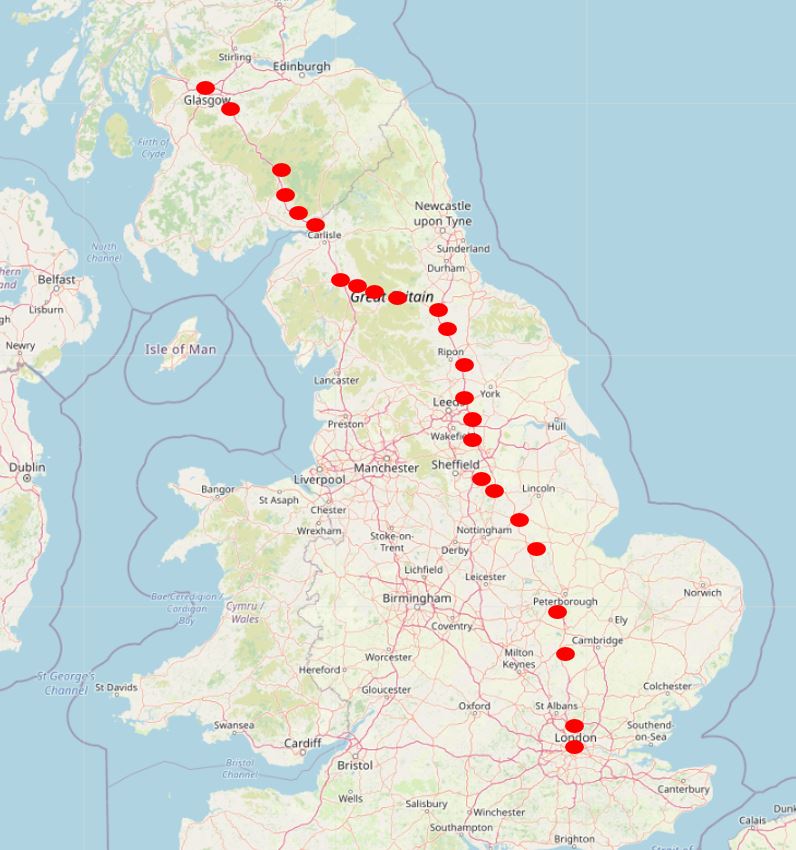
Some of these journey’s must have been incredibly arduous if you were heading to the end point of the coach’s route. I mapped out the stops of the Bull and Mouth to Glasgow coach in the following map  (© OpenStreetMap contributors):

Bull and Mouth Inn

Starting at the Bull and Mouth Inn, the stops to Glasgow were then: Barnet, St. Neots, Buckden, Stilton, Grantham, Newark, Ollerton, Worksop, Doncaster, Ferrybridge, Wetherby, Boroughbridge, Leeming Lane, Catterick Bridge, Bowes, Brough, Appleby, Penrith, Carlisle, Longtown, Lockerby, Moffat, Hamilton, and finally arriving at the Pontine Inn, Glasgow.

The coach to Glasgow departed London in the evening, and arrived in Glasgow on the second morning after departure, so a total of around 36 hours, plus or minus, depending on the exact time of departure and arrival.

A long running project has been to list and map out the routes from London’s many coaching inns as they provided the city with a very comprehensive network of routes connecting London with the rest of the country. In many ways, the network of destinations and stops seems more comprehensive than the current rail network, although coach services were not as frequent, had far less capacity, and took far longer to complete than a journey by train.

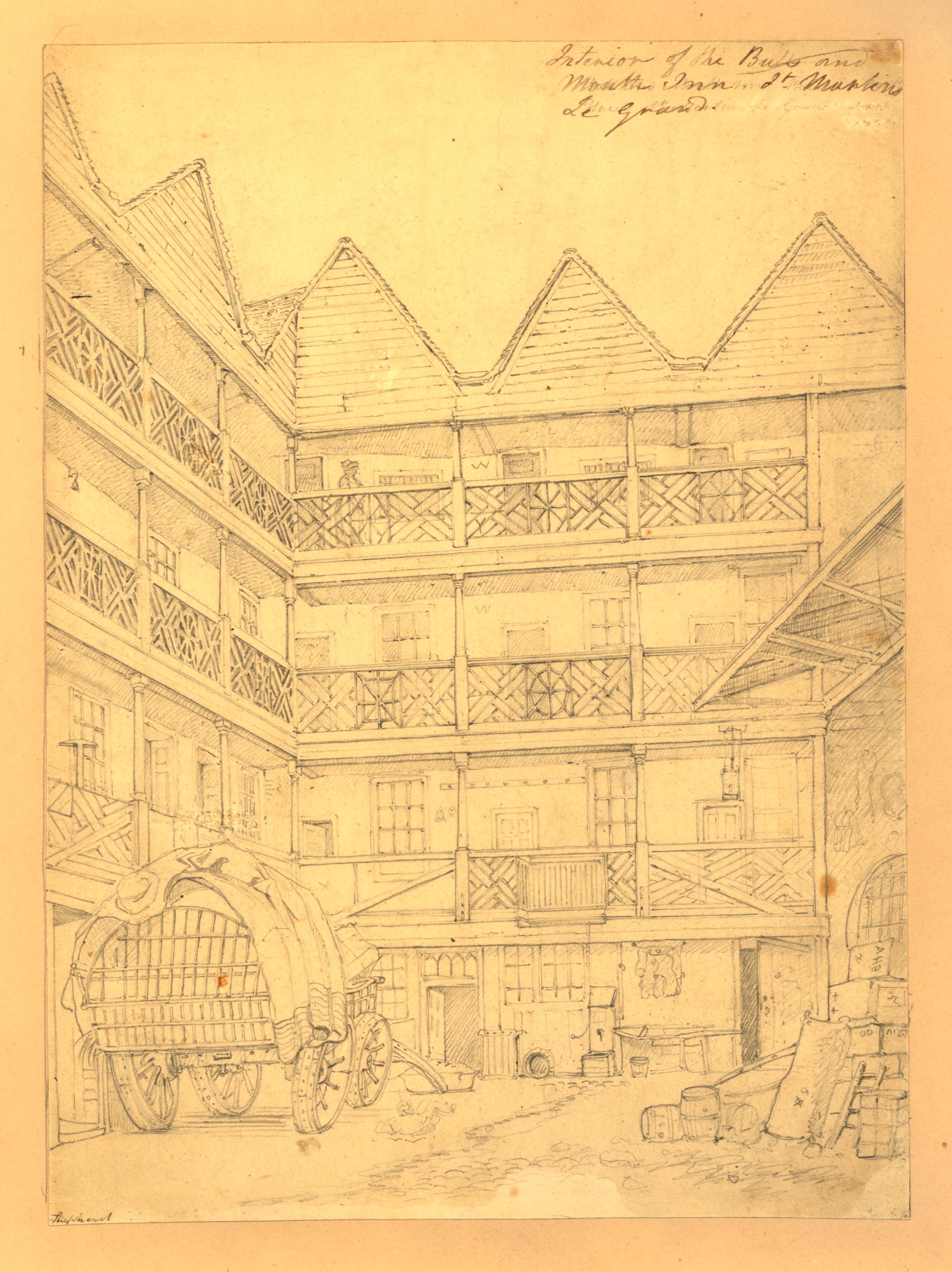
A view of the inner yard of the Bull and Mouth inn dated 1810, showing the galleried interior of the inn with the rooms available for a stay, running around the galleries. A loaded wagon on the left, and barrels and boxes on the right, possibly ready for collection, or for their transport across the country (© The Trustees of the British Museum).

Bull and Mouth Inn

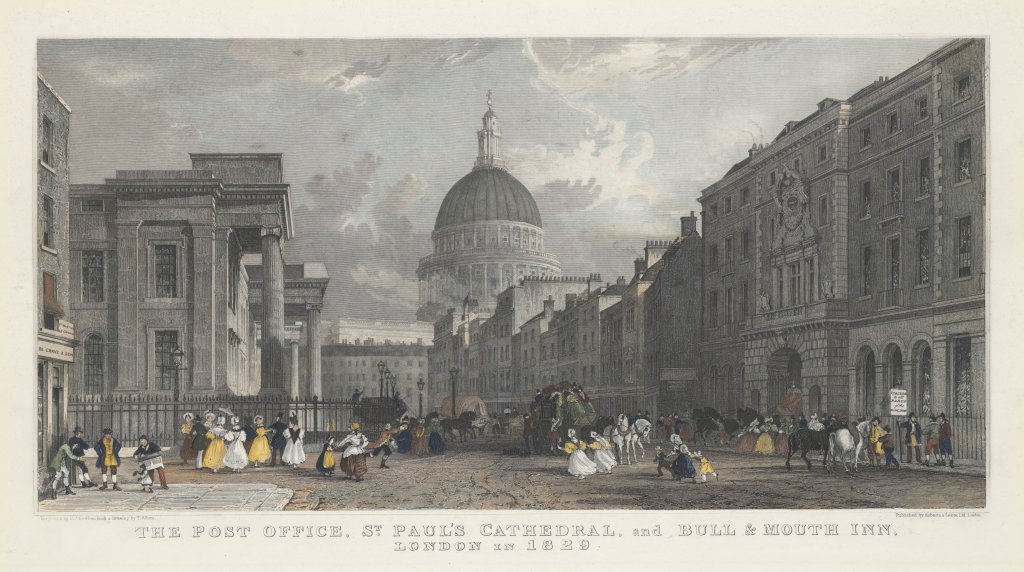
The following print, dated 1829, is titled “The Post Office, St Paul’s Cathedral and Bull and Mouth Inn”. The view must be along St Martin’s le Grand, so I assume there must have been an entrance to the inn from this street, as well as the street named after the inn. This entrance can be seen on the right where there is an archway entrance through the buildings, with some sculpture on the upper floors of the building (© The Trustees of the British Museum):

Bull and Mouth Inn

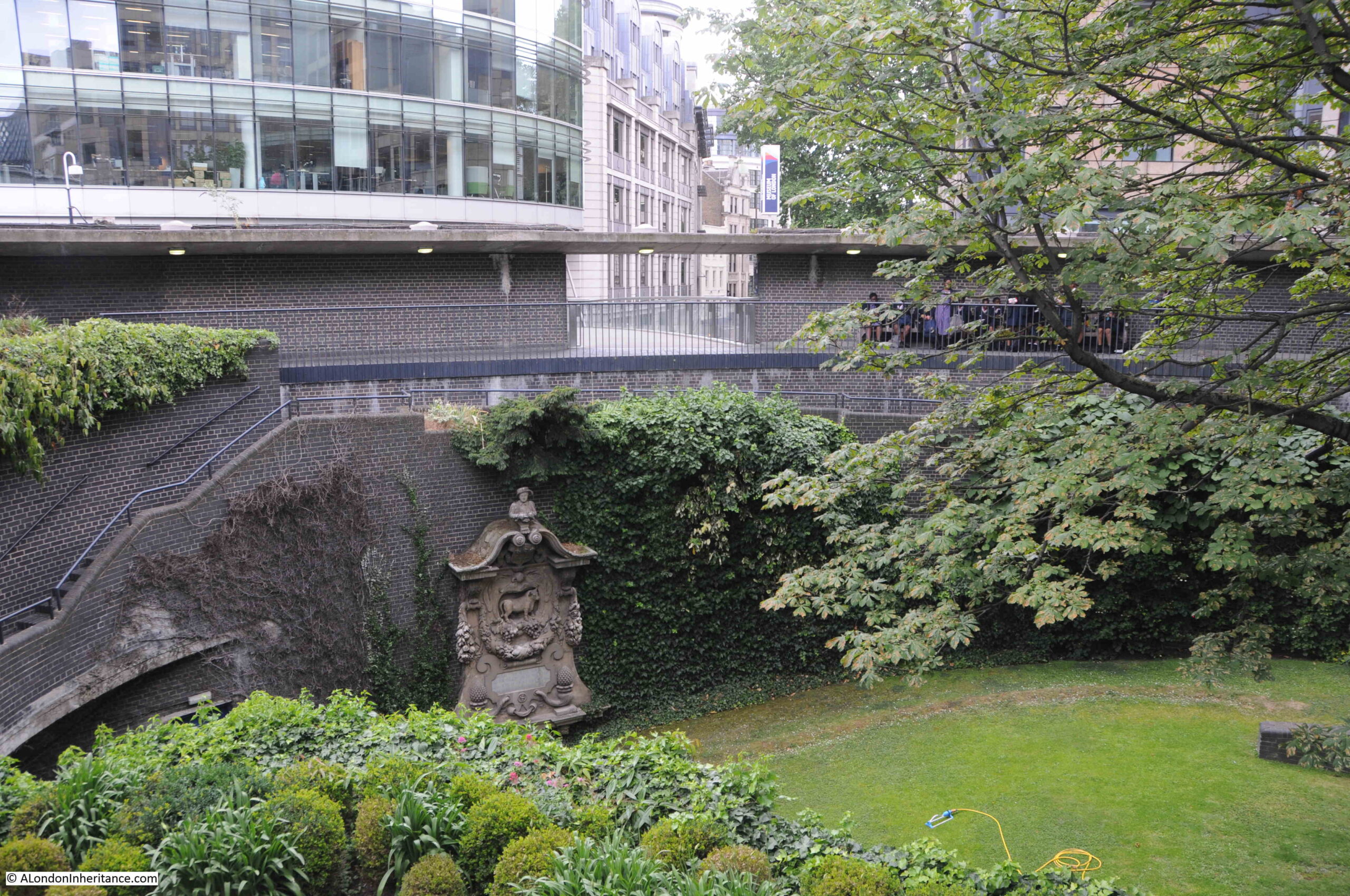
A sign from the Bull and Mouth inn can be found in the garden of the Museum of London:

Bull and Mouth Inn

According to Henry Harben’s Dictionary of London, the Bull and Mouth Inn was destroyed in the 1666 Great Fire, was rebuilt, and then rebuilt again in 1830 as the Queen’s Hotel.

The London Mercury confirms this change and in an issue dated the 15th of April, 1848 comments that: “The Bull and Mouth had been a coaching inn ever since coaches had an existence”, and that it was the “largest and most generally recognised inn in London”. The article also alludes to the demise of the Bull and Mouth, in that when the inn was rebuilt around 1830 the railways were not yet in existence, but beginning to be talked about, and if the railways had not spread quickly across the country “the magnificent Queen’s Hotel would not have arisen on the site of the old coach-house”.

It is difficult to know the date of the Bull and Mouth sign in the Museum of London garden. The very good condition of the sign probably indicates that it was from the 1830 rebuilding of the inn.

Bull and Mouth Inn

The core of the sign is a perfect visual representation of the name of the inn:

Bull and Mouth Inn

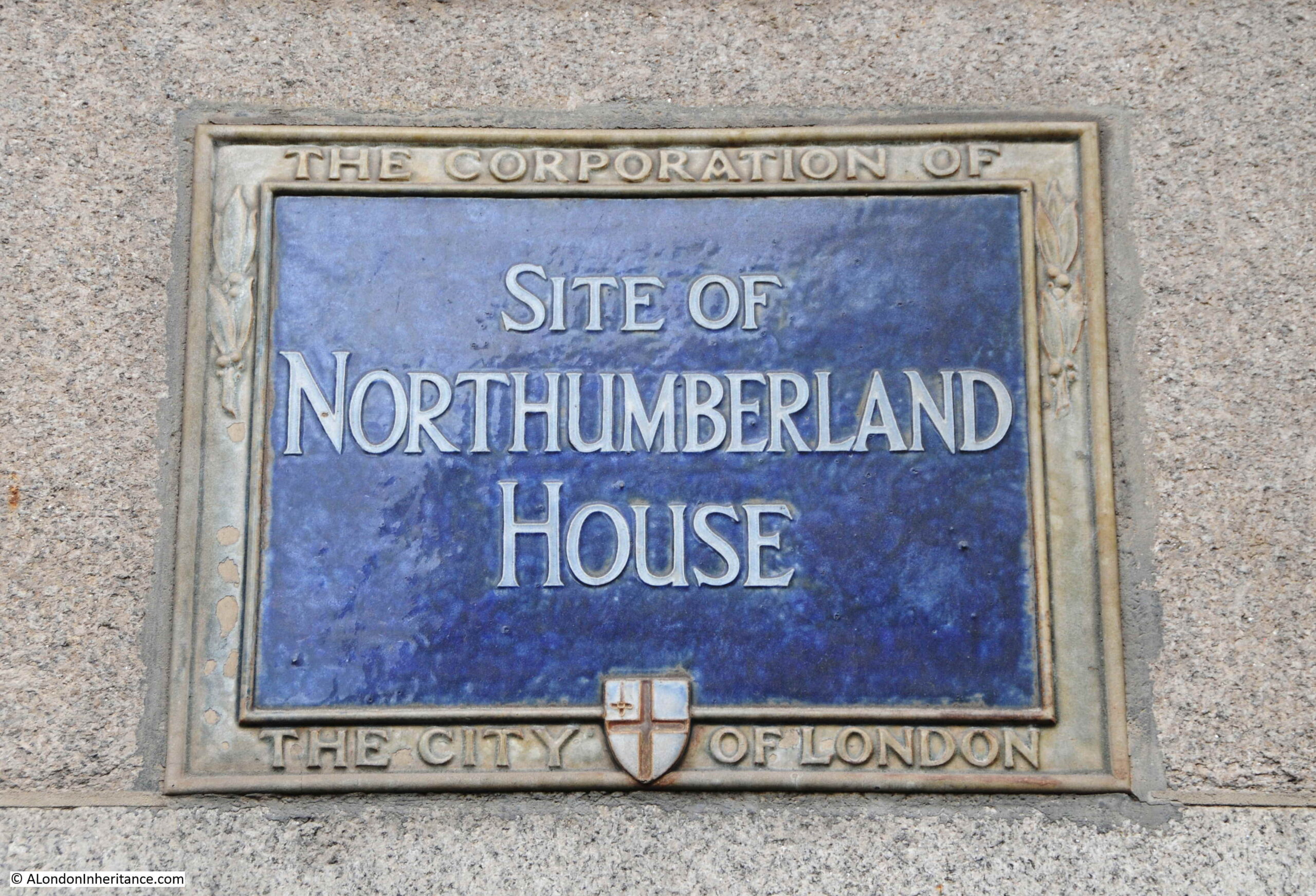
Leaving the Bull and Mouth, we now come to the middle of the three plaques, highlighted by the orange arrow, for:

Northumberland House

Northumberland House

There seems very little to be found about Northumberland House. The only reference I could find was in Henry Harben’s A Dictionary of London, which states:

“Northumberland House, on the west side of St Martin’s Lane, now St Martin le Grand, in the parish of St Anne and St Agnes, in Aldersgate Ward.

It is described as a messuage, shop and garden belonging to the Earl of Northumberland, granted to Queen Joanna by Henry IV, by name of the Hostel of the Earl of Northumberland.

Stow says it was called the Queen’s Wardrobe, but now a printing house.”

A messuage was the term used to describe the collection of a residential house, outbuildings and garden.

Queen Joanna was Joan of Navarre, whose second marriage was to Henry IV in February 1403.

The Northumberland House plaque typifies one of the problems with these plaques. As a plaque it is almost meaningless. There is no context, no dates or anything to suggest why Northumberland House should have a plaque.

Information on Northumberland House is hard to find, and for the casual walker of London’s streets the plaque would get a quick glance before being forgotten. A reference to Queen Joanna, and the fact that the house must have been 15th century would at least add some background as to why the plaque is there.

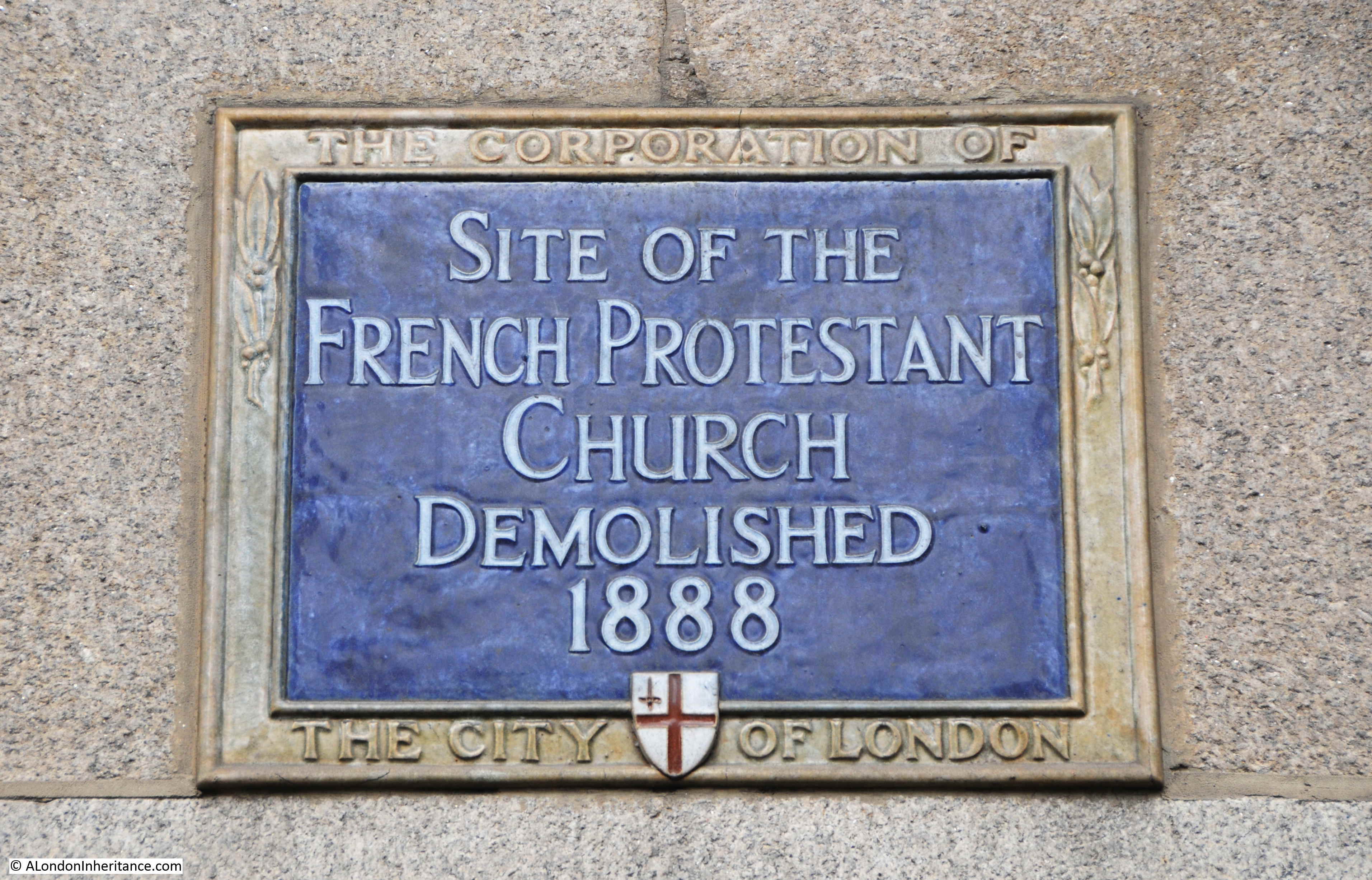
The final plaque on the wall of three is the one on the right with the green arrow, and is for the:

French Protestant Church

French Protestant Church

An article in the Illustrated London News in 1848 provides background information on the French Protestant Church, and a good description of St Martin’s le Grand at the time:

“Another new church for London! – just now finished, and about to be opened. The site chosen is one which has felt the full benefit of modern improvements. Not many years ago St Martin’s le Grand had little to recommend it to the eye – now it is surrounded by fine buildings, and forms one of the choicest openings in the tortuous monotony of London bricks and mortar.

We have here one of our best Grecian buildings, the Post-Office, next to the Hall of the rich Goldsmiths; then that most magnificent of caranserais with the most un-euphonious of titles – the Bull and Mouth; and last and least, the small, but picturesque chapel of the French protestants.

The French Protestants original church was in Threadneedle Street; their church being an old structure, with few architectural pretensions. This having been demolished, they have removed their place of worship to St Martin-le-Grand.

The architect, Mr. Owen, has succeeded in completing a very perfect, though small, pointed Gothic chapel. The interior, with its lancet windows, tall roof, and appropriate pulpit, is well managed, considering the confined space the artist had to work in. The cost has been £5,000 and the public will soon have the opportunity of judging how wisely it has been expended, as the church will shortly be opened for divine service.”

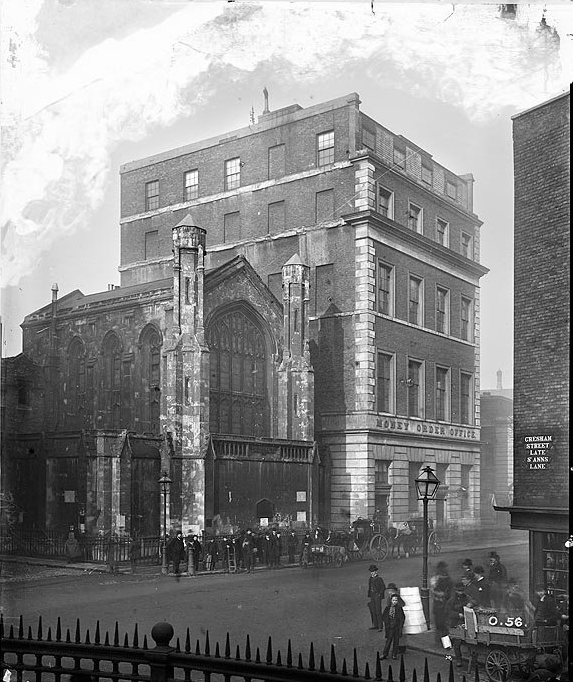
Although the church was demolished, we can still have the “opportunity of judging how wisely it has been expended“, by looking at the following photo of the French Protestant Church:

French Protestant Church

Source: Unknown author, Public domain, via Wikimedia Commons

I cannot confirm the date of the above photo, however given the church was only about 40 years old when it was demolished, it does give the impression of being much older. Probably the Gothic design, along with the level of dirt on the building from the smoky atmosphere of London.

The church was demolished by 1888, and newspaper articles in June 1887 reported on the closure of the church “The last service has been held in the French Protestant Church in St Martin’s-le-Grand and the singularly beautiful and interesting little church is doomed to prompt destruction in order to make way for an extension of the General Post-office.”

The origins of the French Protestant Church date back to 1550, when Edward VI signed the charter granting freedom of worship to Protestants from France, Wallonia, and the Netherlands.

The majority of Protestant immigrants from continental Europe came after 1661, when the Edict of Nantes (which had protected the Protestant faith in France) was dismantled by Louis XIV. In the following years around 50,000 Huguenots fled to England, and a number of churches were set-up specifically for the new arrivals.

After the St Martin’s-le-Grand church was demolished, the church received £26,000 of compensation which enabled a site in Soho to be purchased (an area which had at the time the greatest concentration of French protestants), and the current French Protestant Church of London on Soho Square was built.

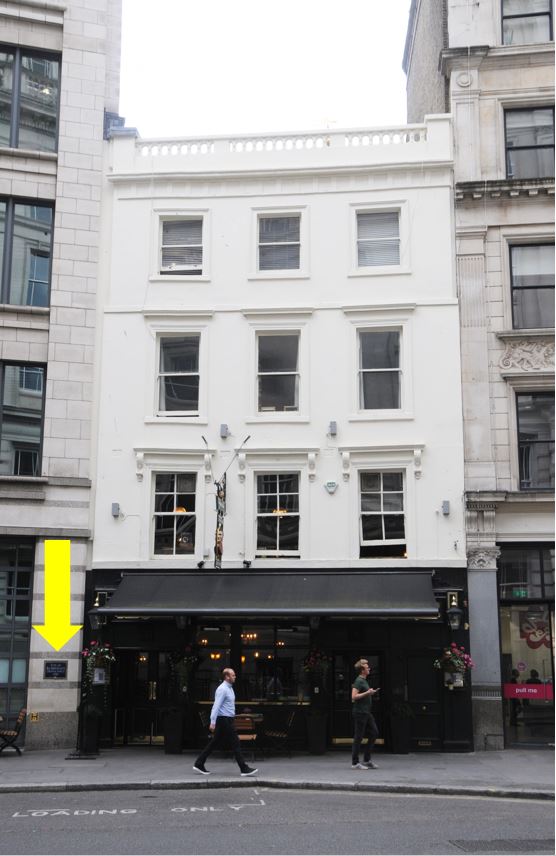
That’s a brief overview of the three plaques on the western side of the street. Directly opposite is another plaque, which can be seen on the side of the Lord Raglan pub:

Aldersgate

Aldersgate

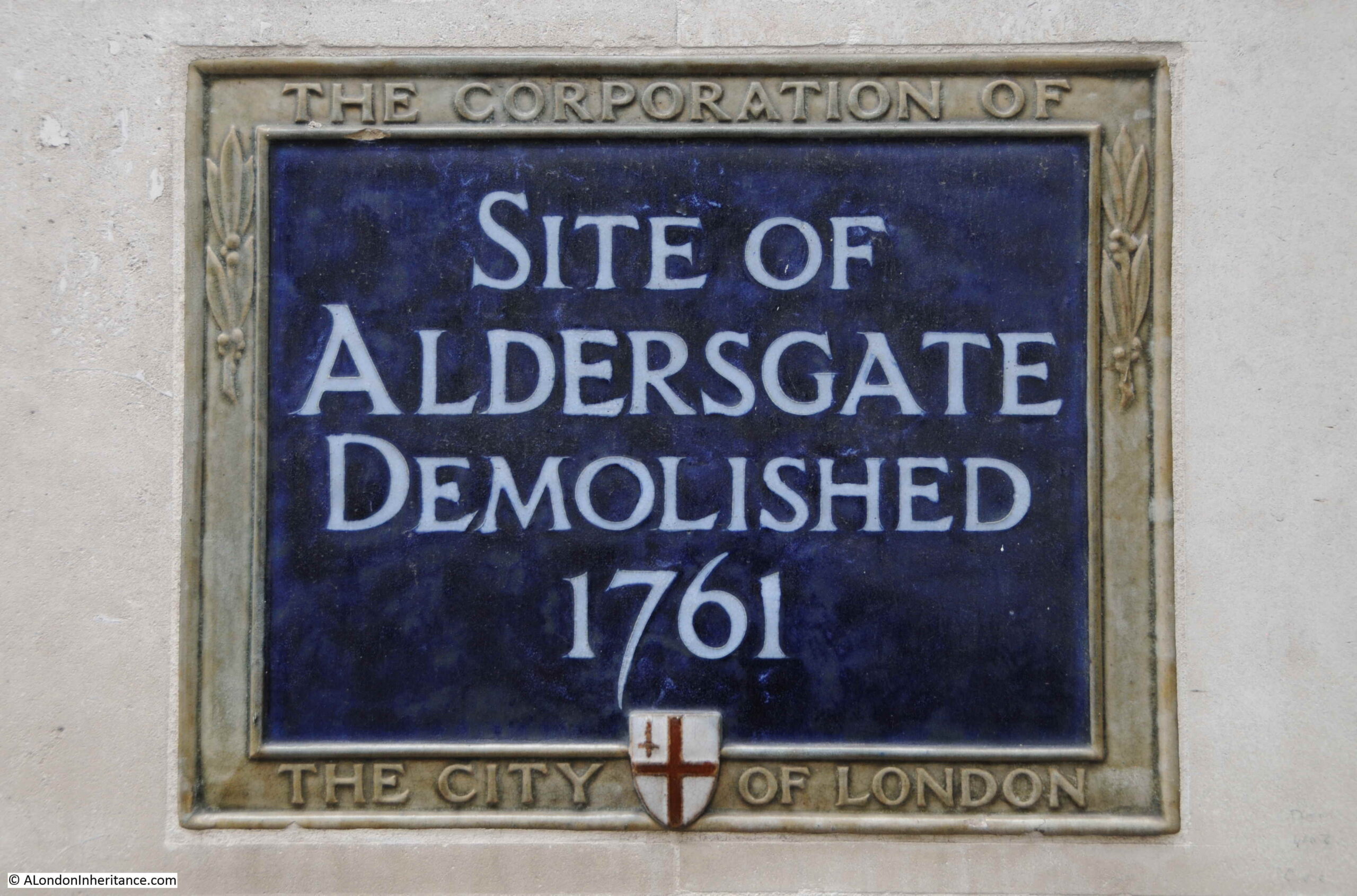
The plaque records that one of the original gates in the City wall was on the site and was demolished in 1761:

Aldersgate

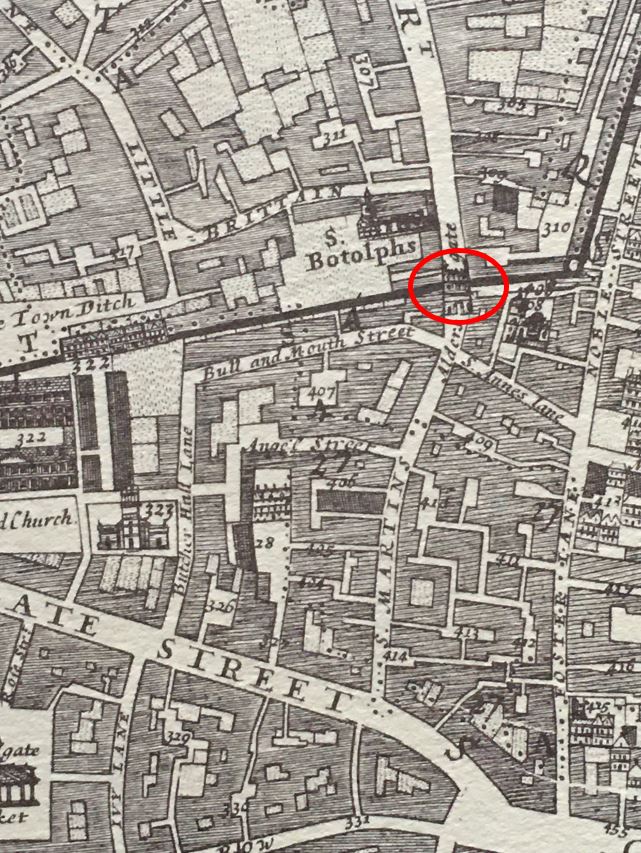
Aldersgate was one of the principal gates through the City wall, and can be seen in the same extract from Morgan’s map that I used for the Bull and Mouth inn (circled in red):

Aldersgate

The name appears to derive from the name of an individual, either Ealdred or Aldred, however the problem with being sure of the source of a name for something as old as the gate is that there have been many different variations, and no written records that confirm the original source.

Harben’s Dictionary of London lists a number of variants to the name, and states there were sixty-two variations of the name to be found in documents between 1274 and 1597.

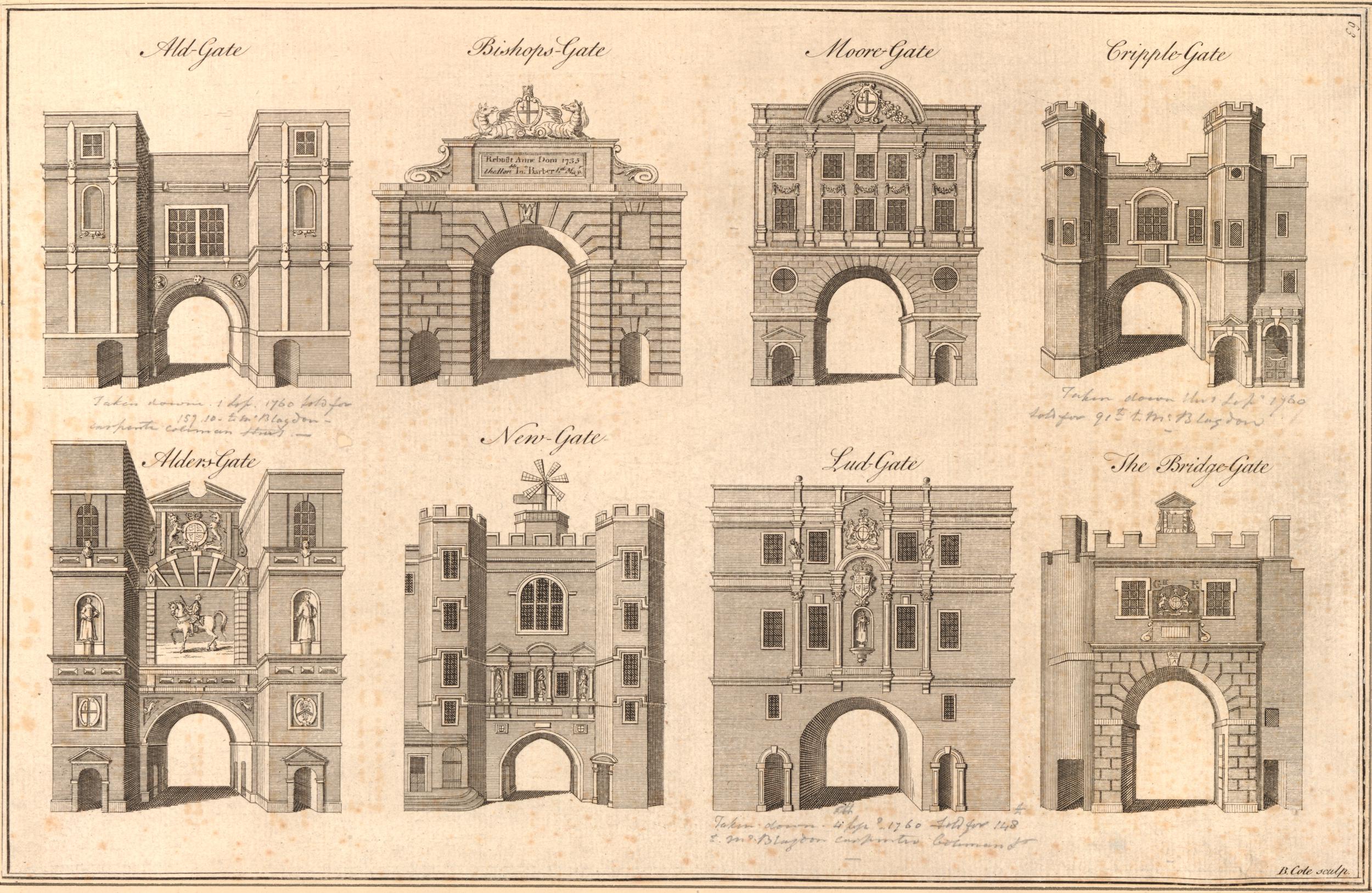
A view of Aldersgate can be seen at bottom left in the follow print showing the gates of the City from William Maitland’s 1756 History of London (© The Trustees of the British Museum):

Aldersgate

Harben lists some dates when there were changes to the gate:

  • 1335 – it was ordained that the gate should be covered with lead and a small house made under it for the gate-keeper
  • 1617 – The gate was taken down and rebuilt
  • 1670 – Repaired and beautified after the 1666 Great Fire
  • 1739 – Repaired again by the Lord Mayor
  • 1750 – The apartments over the gate were occupied by the Common Crier

The gate was finally demolished in 1761, with the materials sold for £91.

By the later years of the 18th century, the City gates were an obstruction for the traffic that moved through the gate. With the northwards expansion of the City, the gate had long lost its role as a protective gateway into the City, so it made sense to demolish and open up the road for the growing numbers of people and horse drawn traffic travelling along the City streets.

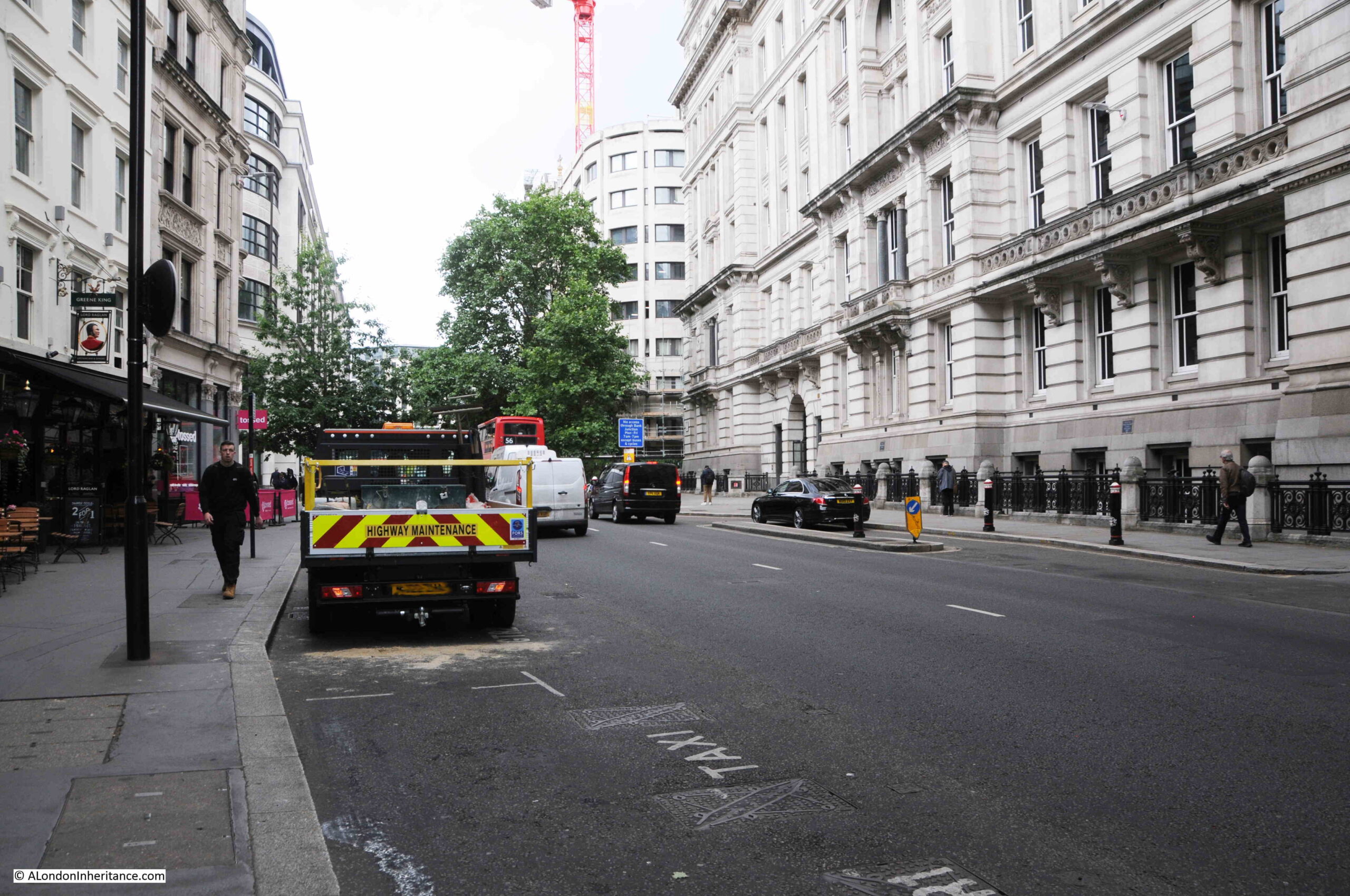
A final look down St Martin’s-le-Grand. Aldersgate would have been just in front of me. The Lord Raglan pub with the Aldersgate plaque is on the left, and the other three plaques are along the building on the right.

Aldersgate Street

The photo was taken from the point where St Martin’s-le-Grand (in the photo) changes into Aldersgate Street (behind me).

That is four more City of London plaques recording the diverse range of buildings and structures that have been lost from the City’s streets.

There will at some point, be an interactive map of the plaques, along with a spreadsheet to download listing all sites and details of each plaque.

alondoninheritance.com

Lovells Wharf and Enderby House, Greenwich Peninsula

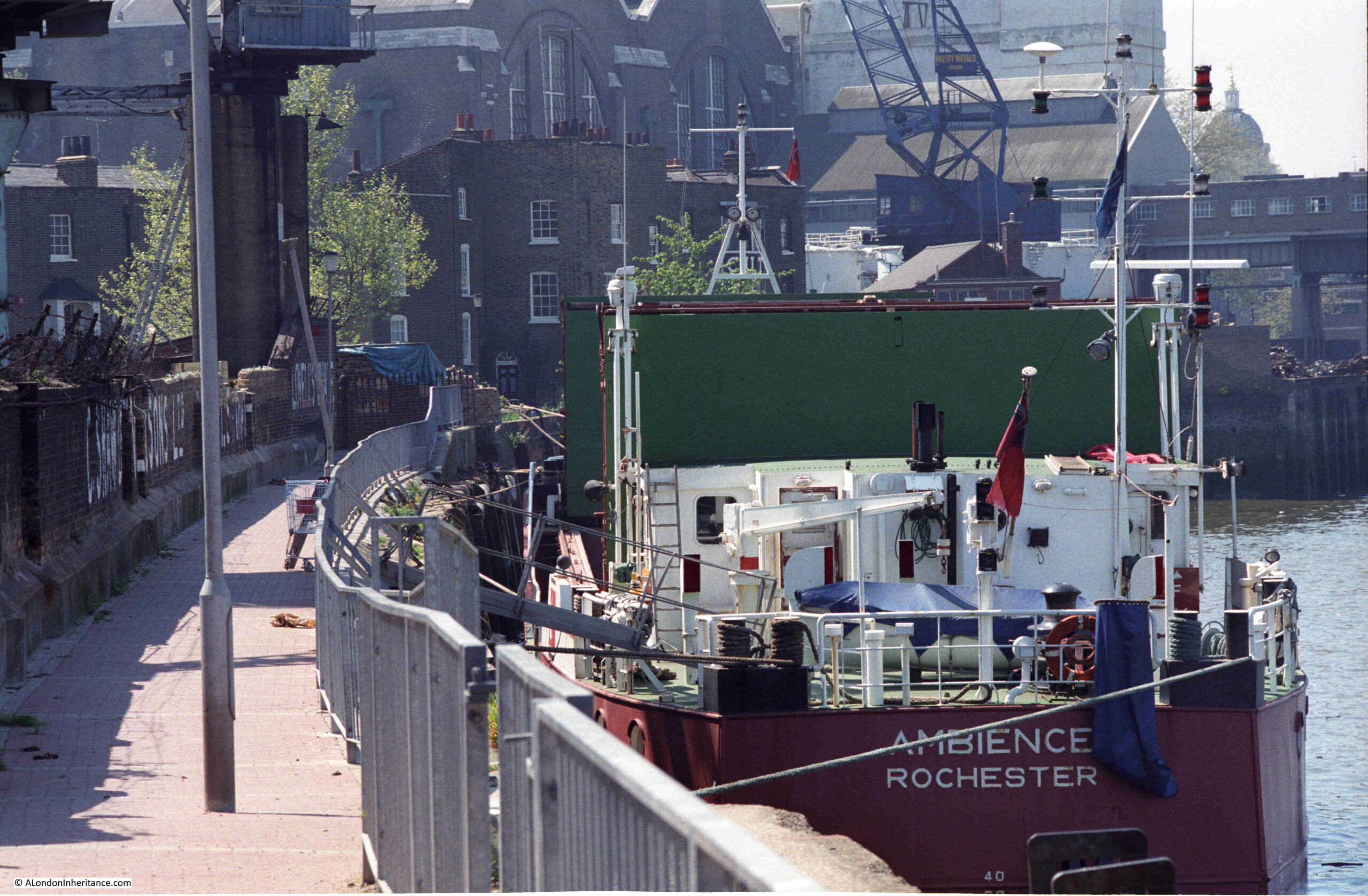
I recently scanned some negatives from 1986, and came across three photos taken in Greenwich, where the walk along the river heads past the power station and the Cutty Sark pub, and joins the Greenwich Peninsula. This is the first of the three:

Lovells Wharf

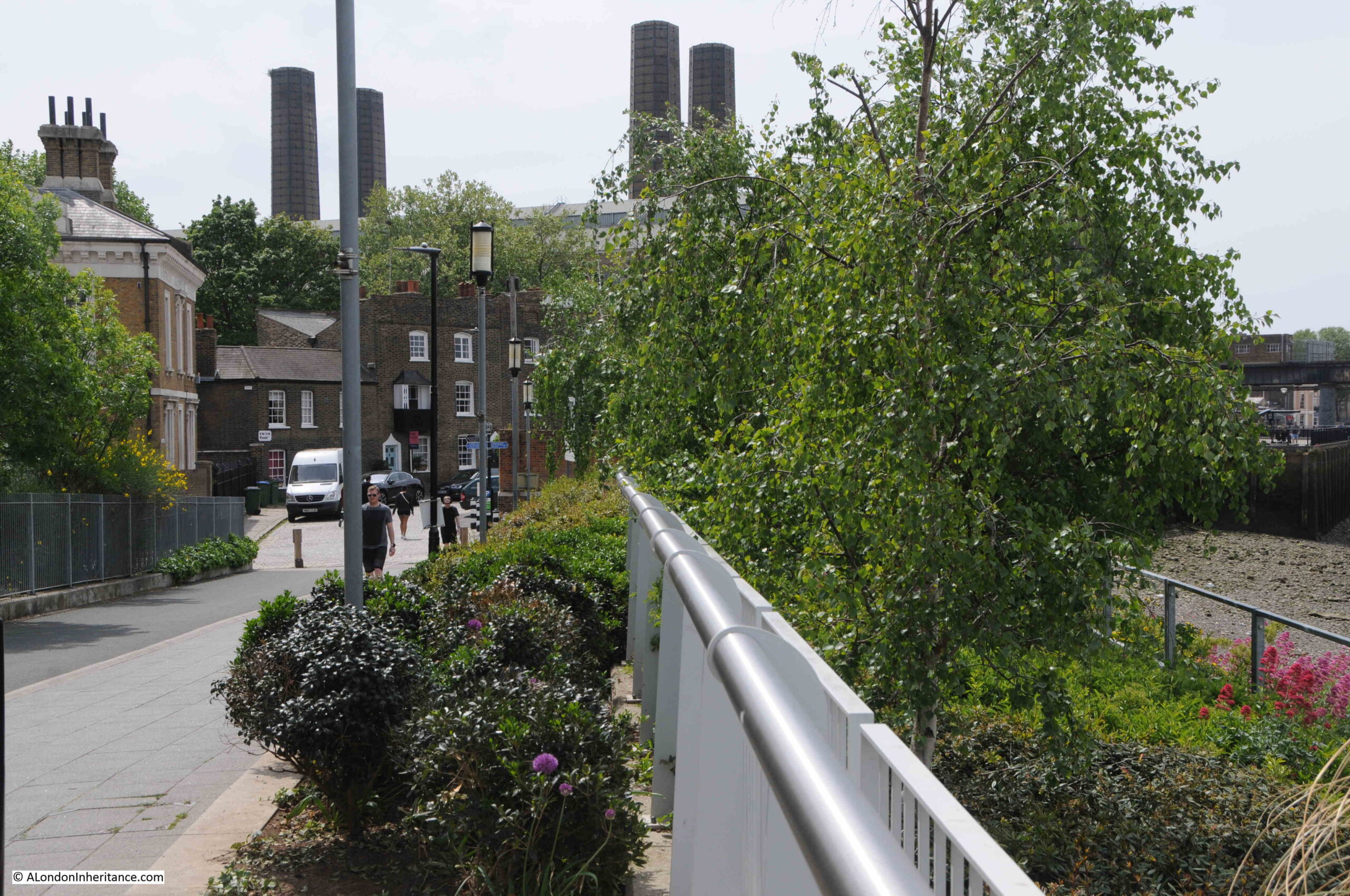
Very roughly the same view today – despite lots of walking around I could not get exactly the same view, as the area has been remodeled considerably since the mid-1980s.

Lovells Wharf

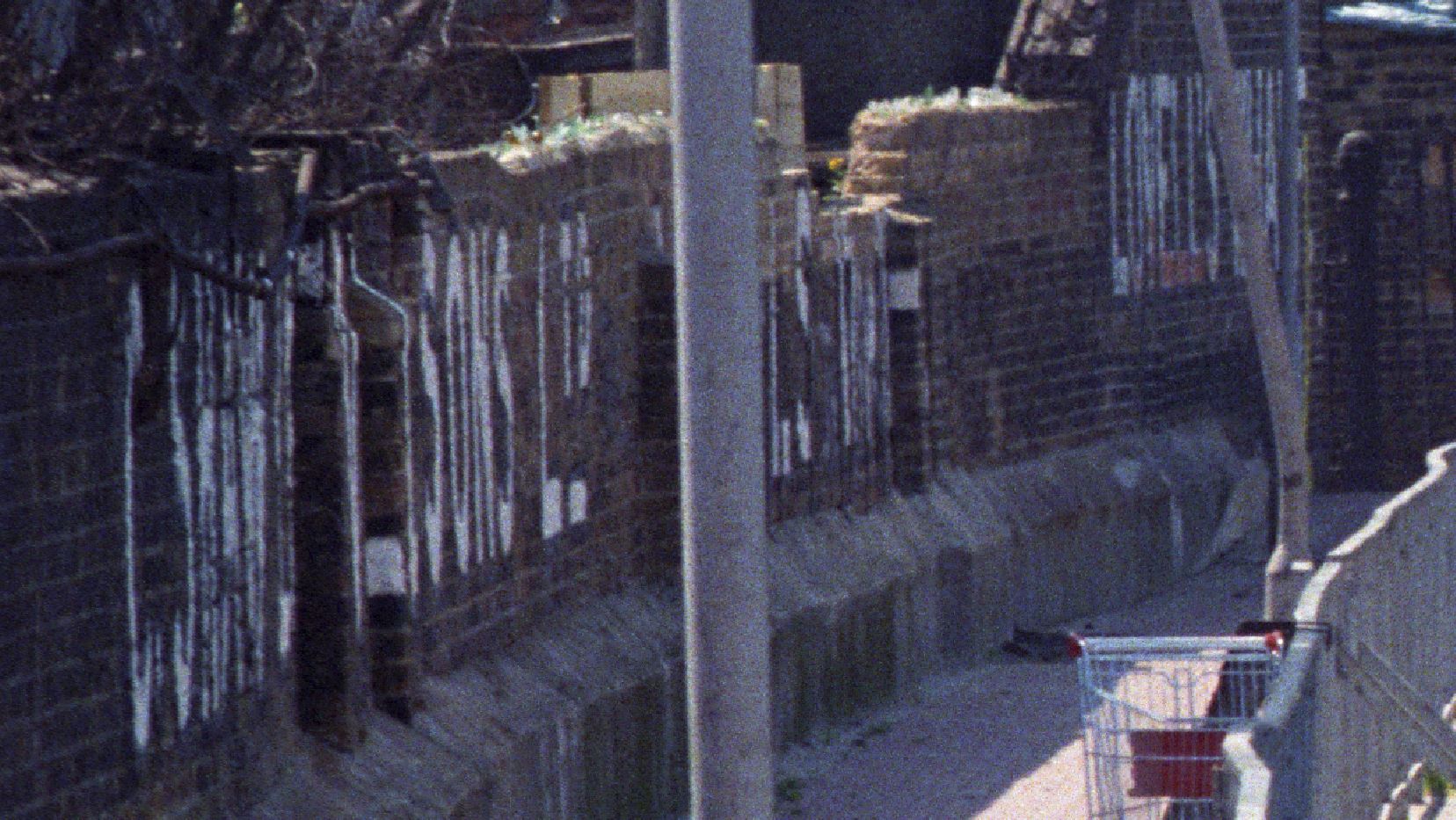
Along the wall in the 1986 photo there were painted white letters for C. Shaw & Sons Ltd and Lovell’s Wharf:

Lovells Wharf

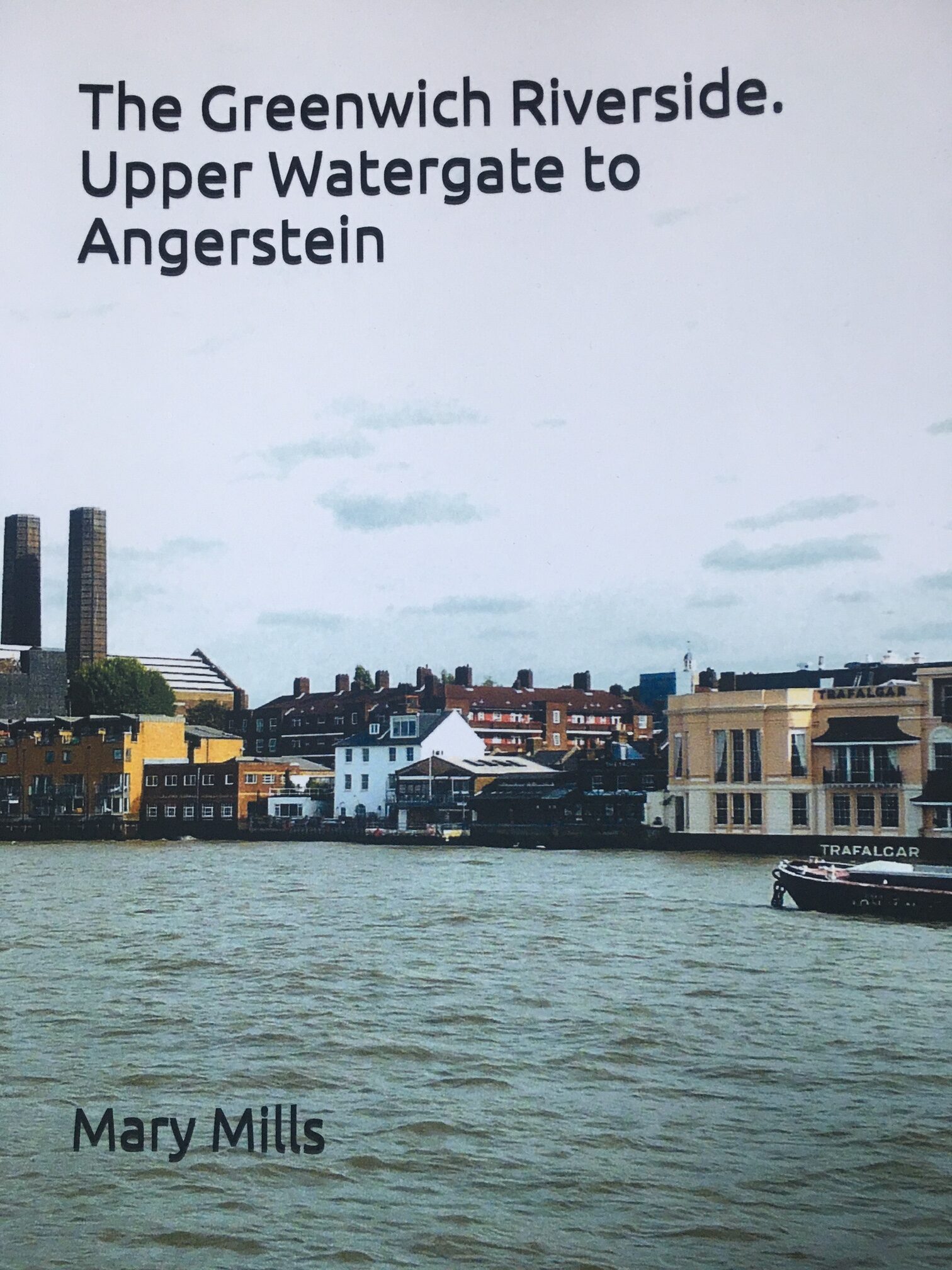
The books by Mary Mills are my go to source for anything about the Greenwich Peninsula, and Mary has recently published “The Greenwich Riverside. Upper Watergate to Angerstein”:

Greenwich Peninsula

For a detailed history of the peninsula and the considerable industrial heritage of the area, the book is invaluable.

The book states that the company Shaw Lovell leased the site in the 1920s. A company with a Bristol heritage, their business was as a “Shipping and Forwarding Agent”.

The company handled non-ferrous metals, including in the 1920s, scrap from the Great War battlefields.

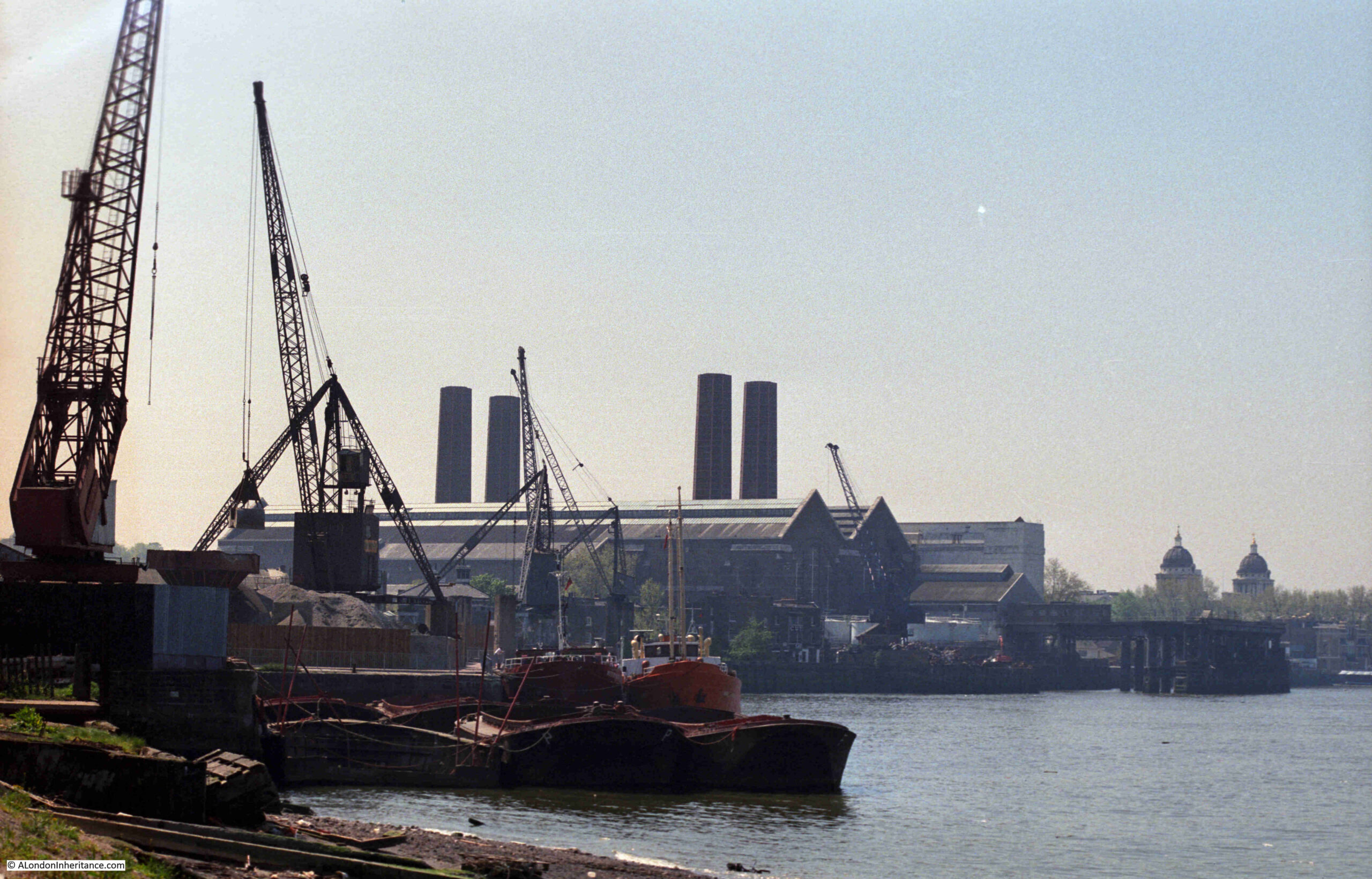
A view of the methods that the company used to transport material between shipping on the river and the land is shown in the following photo from a bit further along the Greenwich Peninsula:

Greenwich Peninsula

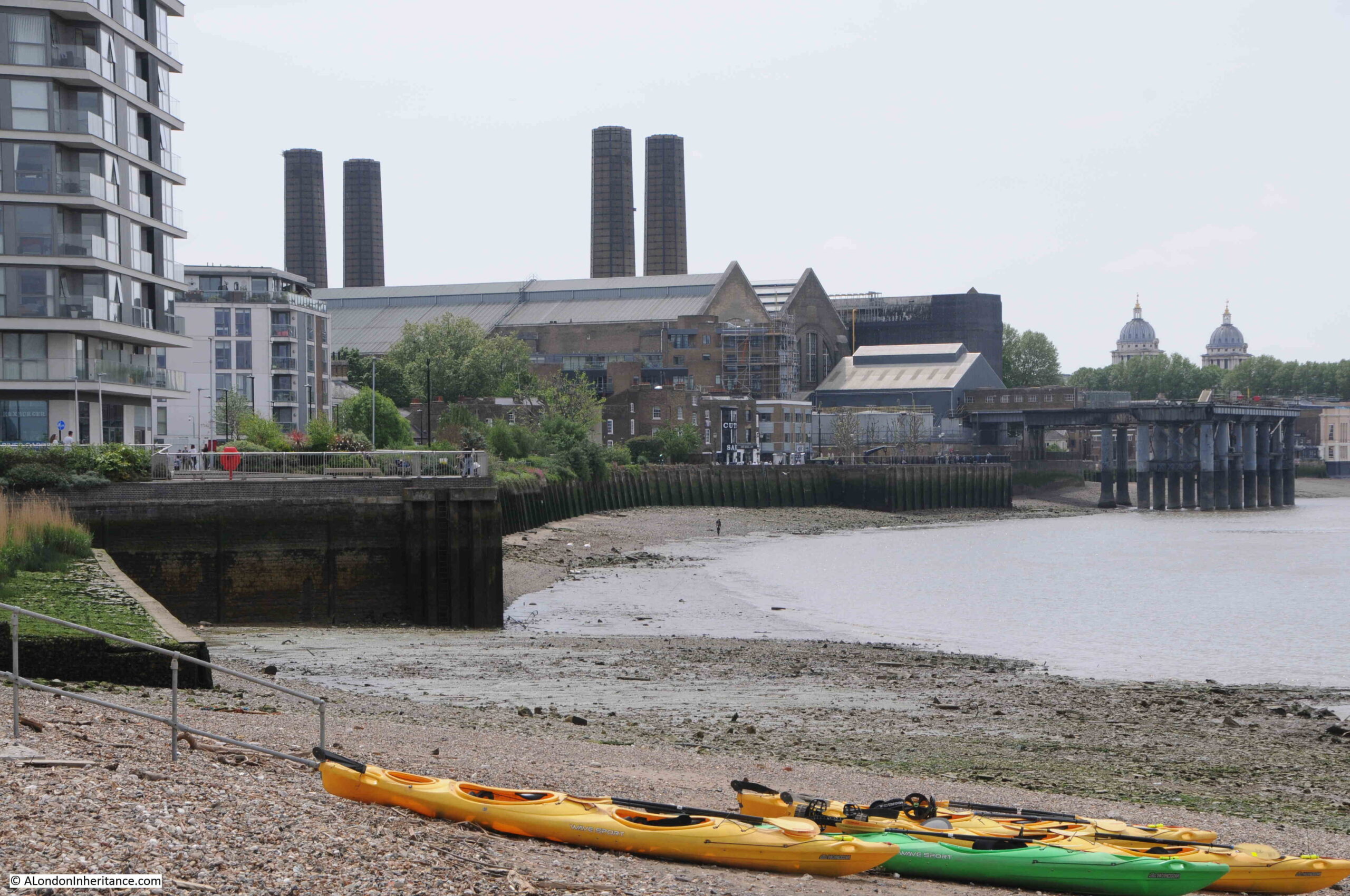
The same view today:

Greenwich Peninsula

I found the exact position for the above photo. The chimneys of the power station, and domes to the right help, but in the foreground there is the low concrete wall on the left, and behind the barges in the 1986 photo is where the shore wall extends out into the river. If I had timed my visit better, I could have got the tide in the same position.

The main differences between the two photos is the lack of shipping moored alongside the wharf, and the cranes being used to transport materials.

The cranes were significant local landmarks. They may have dated from around 1950 and were originally in use in Dublin. The cranes moved to Greenwich in the 1970s, and remained on site until 2000, when the owner of the land had them removed.

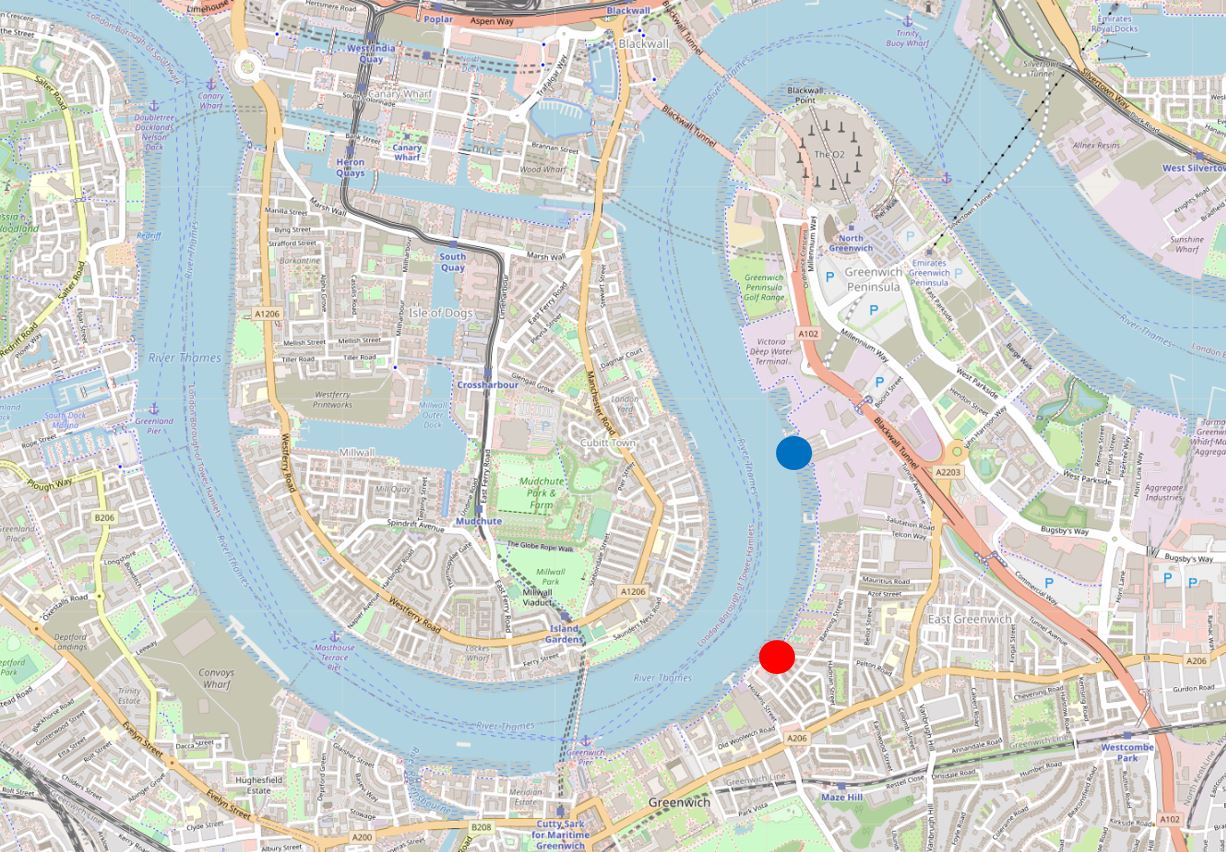
To put the locations of this week’s post in context, the following map shows where I will be covering. Starting at the red circle, with the above photos just north of this circle, and finishing at the end of the post at the blue circle  (© OpenStreetMap contributors).

Greenwich Peninsula

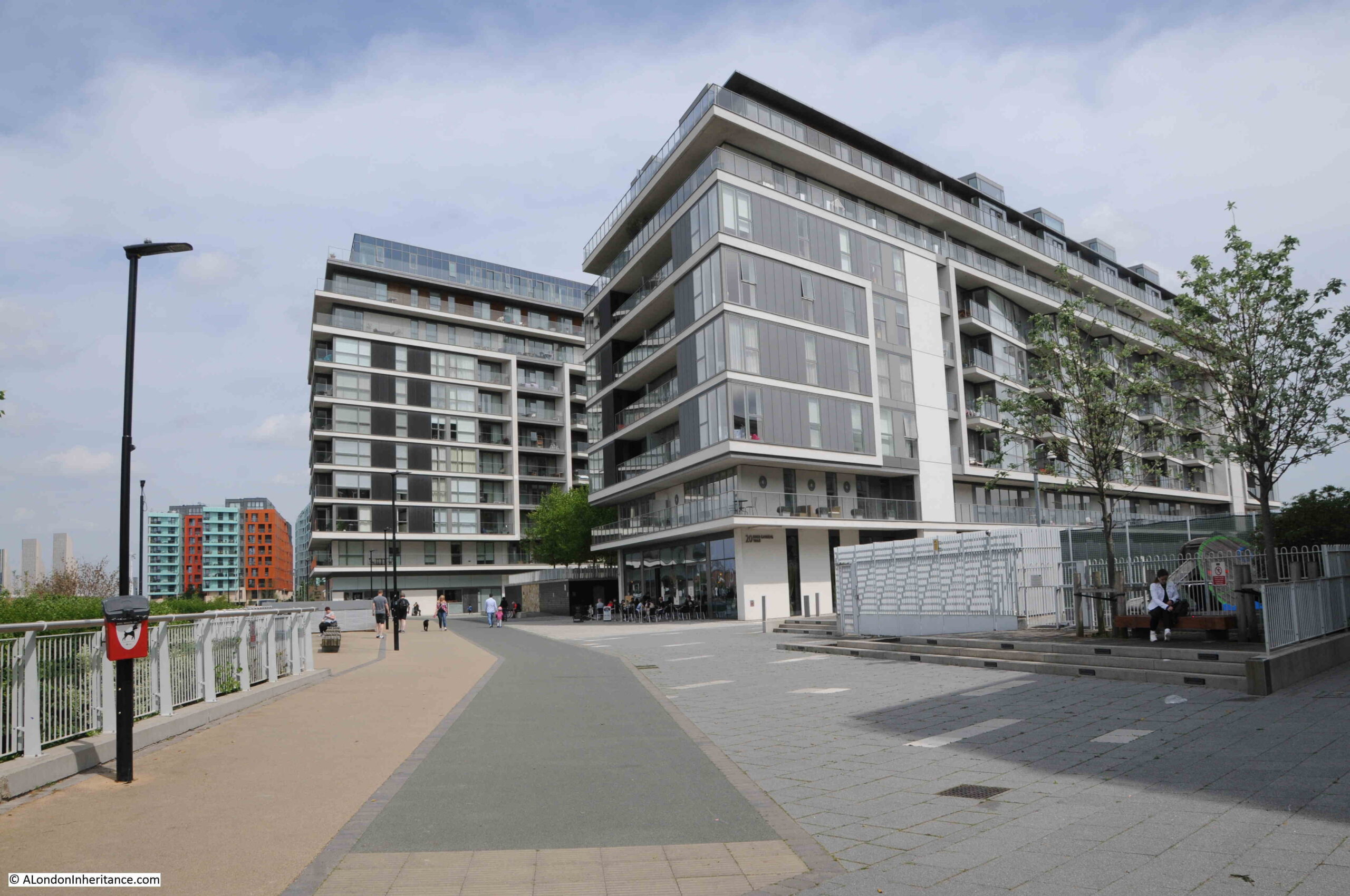
As can be seen by comparing the above then and now photos, the area has changed considerably. What was an area of considerable industry has been derelict for some years, and over recent years the northward expansion of apartment buildings has started along the western side of the peninsula, and will no doubt meet the southward run of buildings close to the O2 dome.

Greenwich Peninsula

Looking along the foreshore towards the dome at the northern tip, with new apartment buildings replacing the industries that once occupied the area:

Greenwich Peninsula

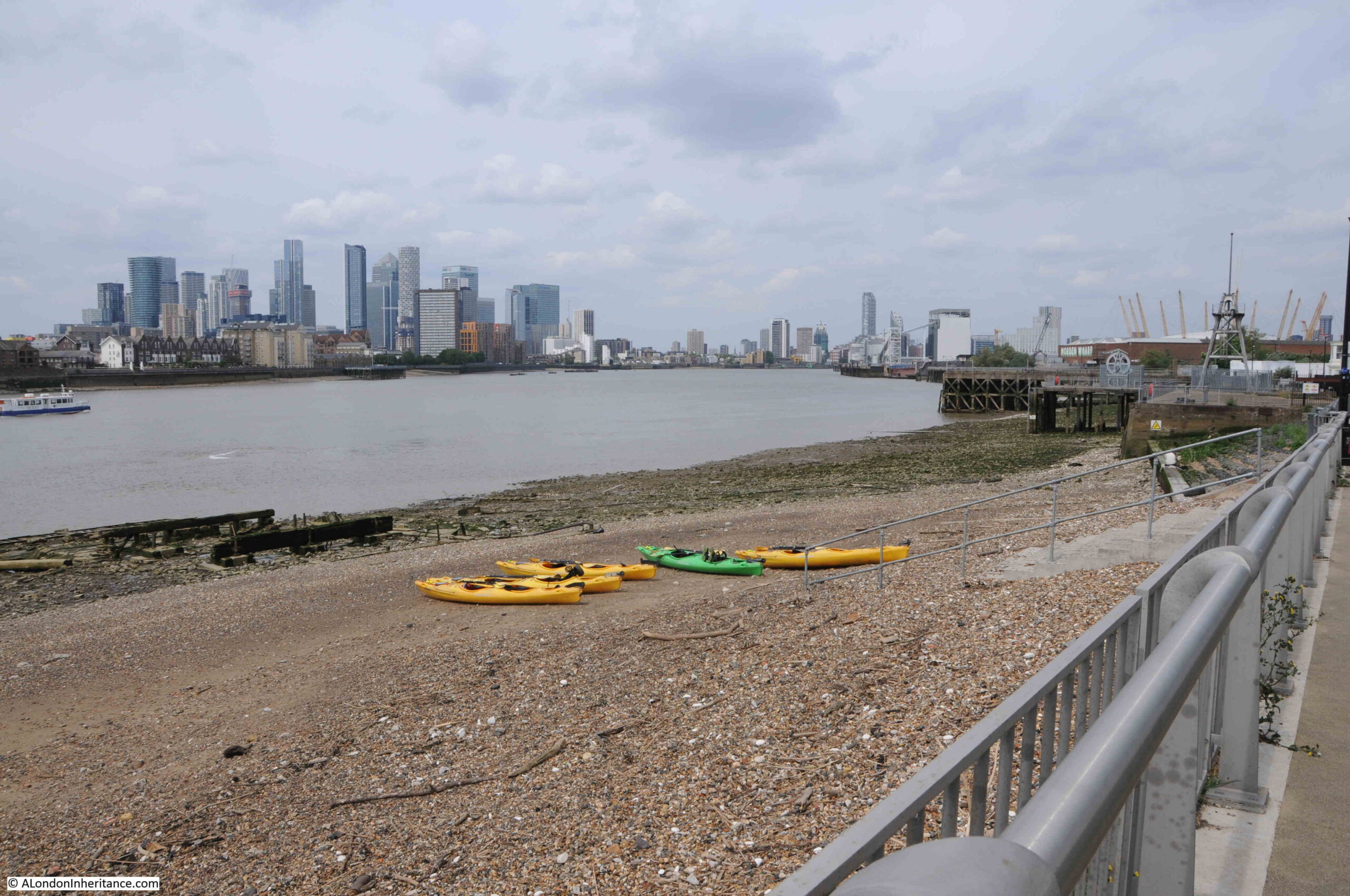
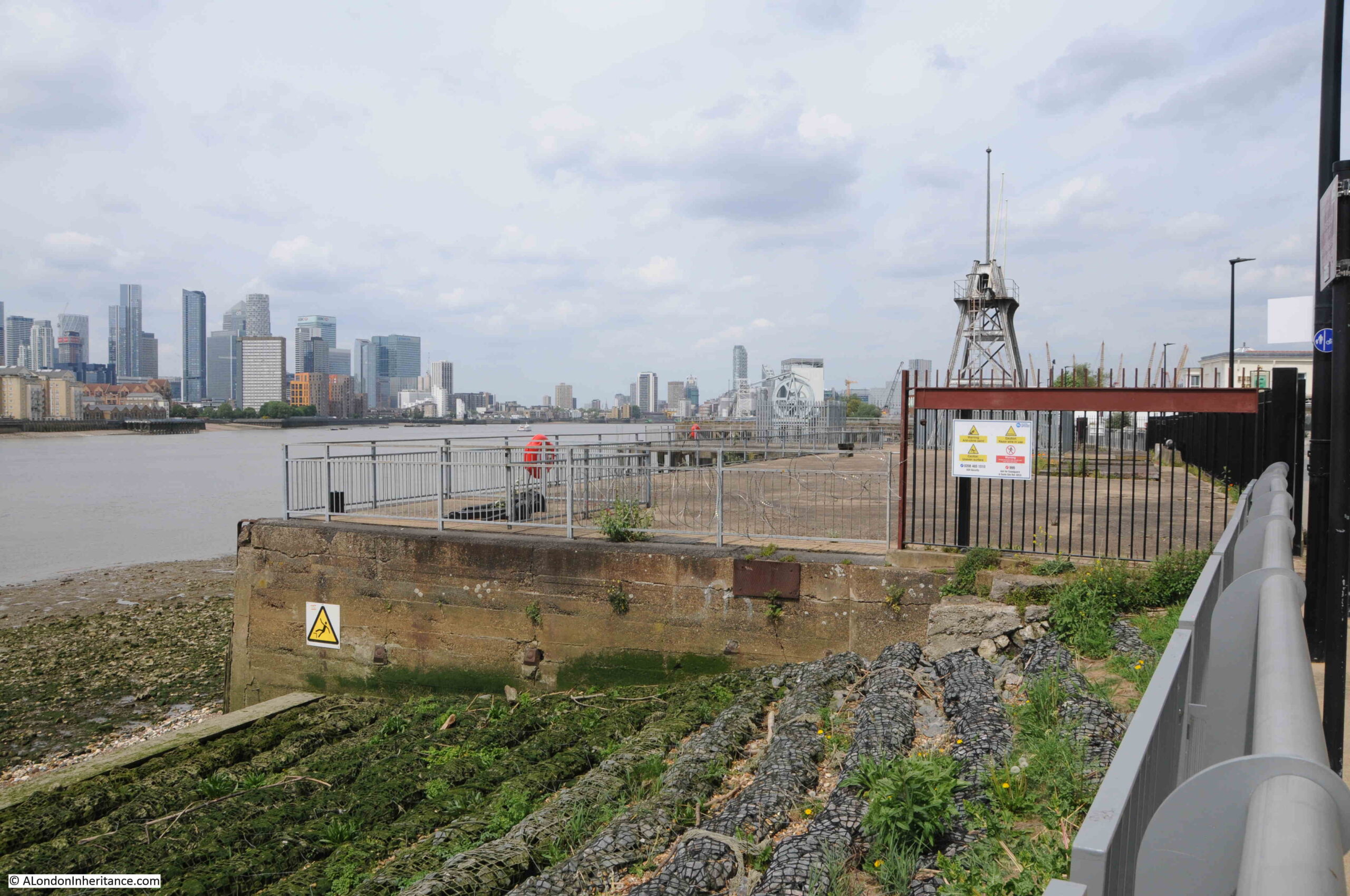
View across the river to the towers of the Isle of Dogs:

Greenwich Peninsula

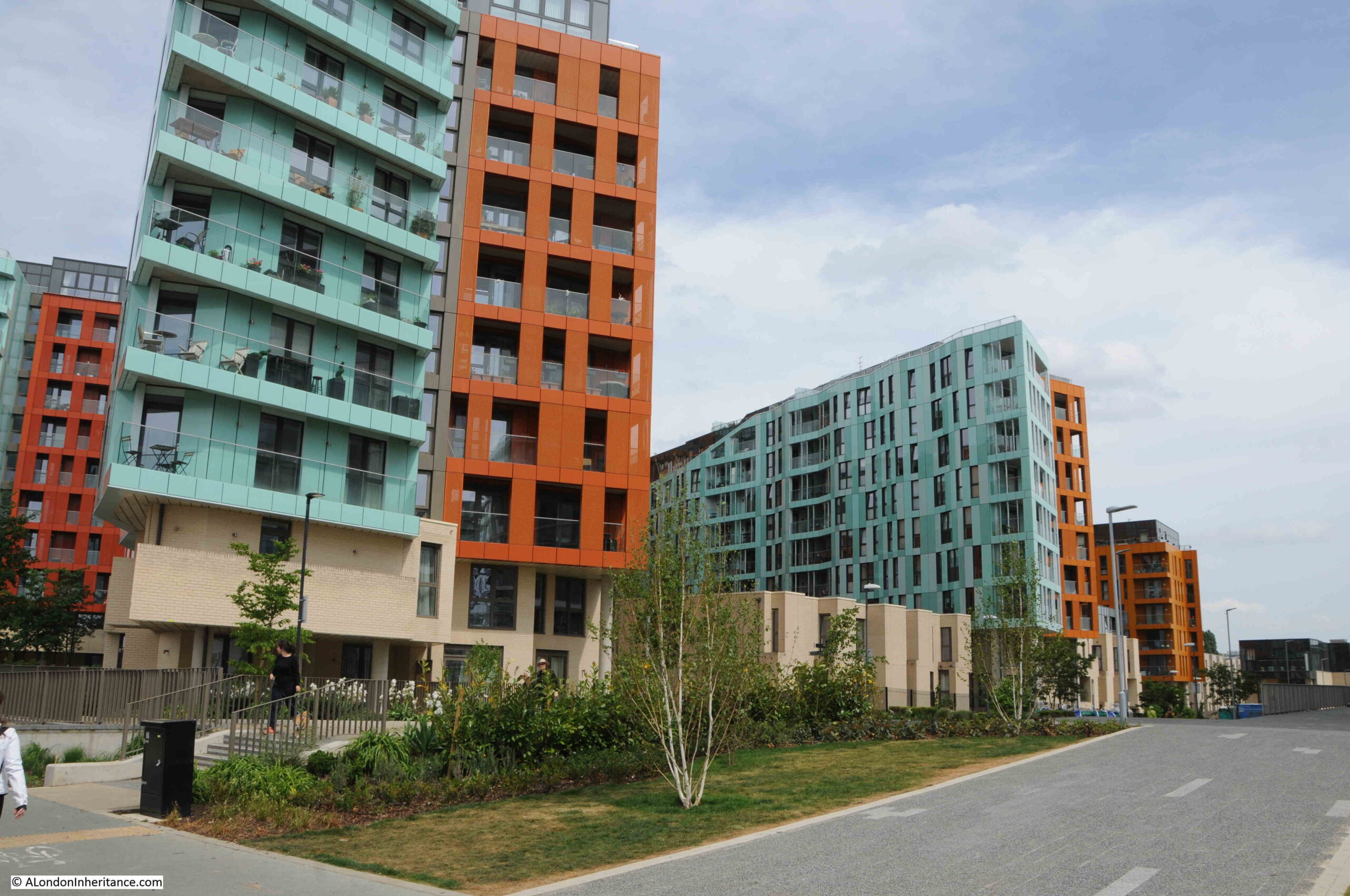
Two colour apartment blocks:

Greenwich Peninsula

Of the many industries along this stretch of the river, one was a company that was key in the provision of a technology that enabled communications across the world. This was the manufacture of submarine communication cables which took place at Enderby Wharf and it is here that we can see the remains of some of this activity.

Here was manufactured the first cable to cross the Atlantic and up until the mid 1970s much of the world’s subsea communication cables had been manufactured here. The web site covering the history of the Atlantic Cable and Undersea Communications has a detailed history of Enderby Wharf.

The tower structure that can still be seen is part of the mechanism, along with the smaller wheel on the left, used for transferring cable from the factory on the right to cable ships moored in the Thames on the left. Cable would be run across the walkway to the top of the tower then to the round hold-back mechanism on the left then onto the ship:

Enderby House

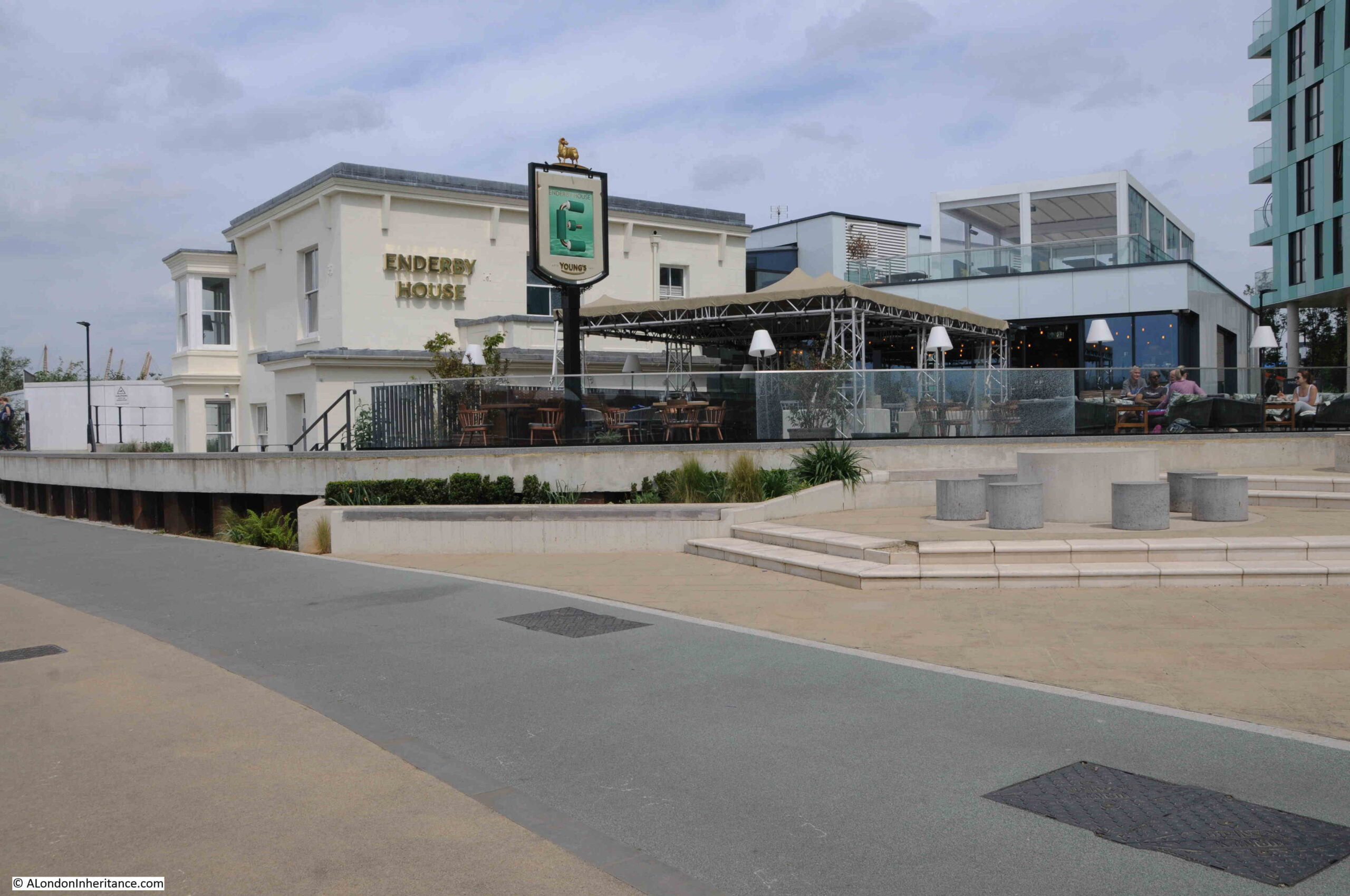
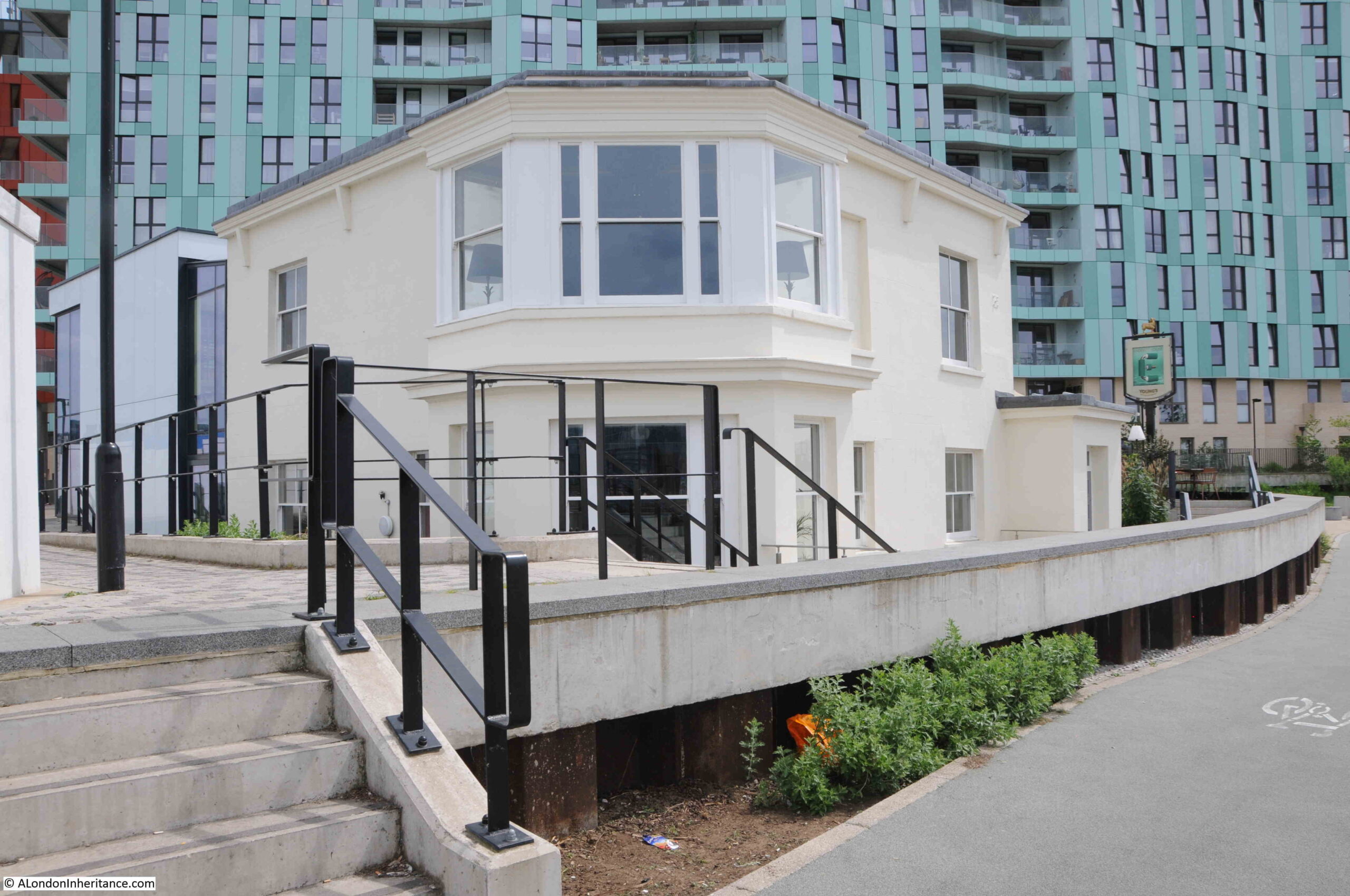
It was here that I was really surprised to see a new pub – Enderby House:

Enderby House

Enderby House is a historically important building. Grade II listed, the Historic England listing provides more details about the building:

Enderby House belonged to the firm of Samuel Enderby, the largest whalers and sealers in Britain, and pioneers of Antarctic exploration. Hermann Melville describes their flagship and crew in “Moby Dick”. The decline of British whaling led to the Enderbys ceasing to have an interest in Enderby’s Wharf in 1854.  It was then taken on by Glass, Elliott and Company, a contractor for the first transatlantic telegraph cable (lost while being laid in 1857) then the second in 1858 which operated for a few weeks.  The business was reconstituted in 1864 as the Telegraph Construction and Maintenance Company, who manufactured cable at Enderby’s Wharf to an improved design for another attempt in 1865, and a fourth in 1866, both times with the Great Eastern as the cable-laying ship, and by the end of 1866 had achieved the first successfully working transatlantic telecommunications cable connection. “

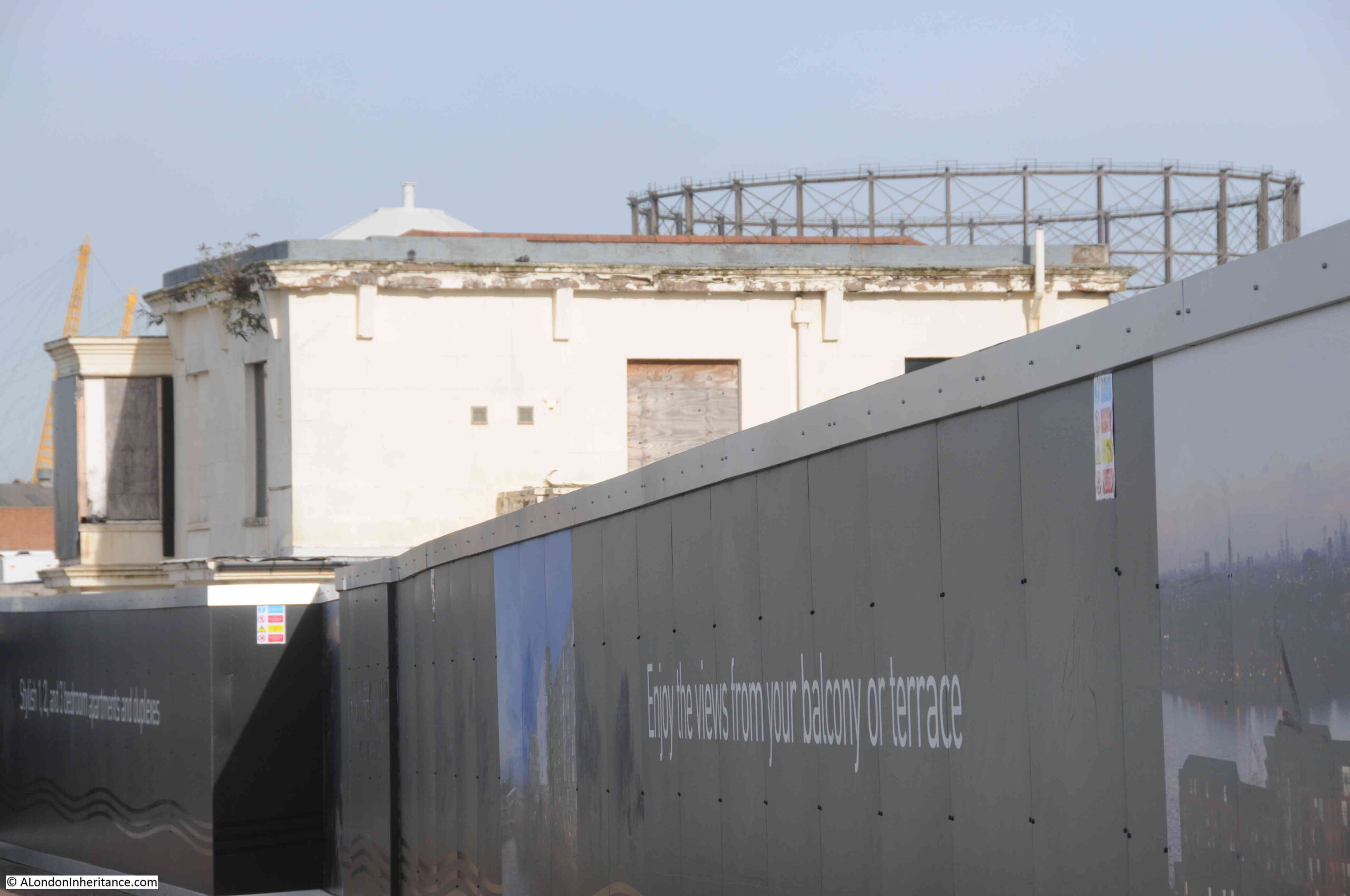
The last time I walked along this stretch of the peninsular in 2015, from Cutty Sark pub to O2 dome, Enderby House was looking in a very poor condition:

Enderby House

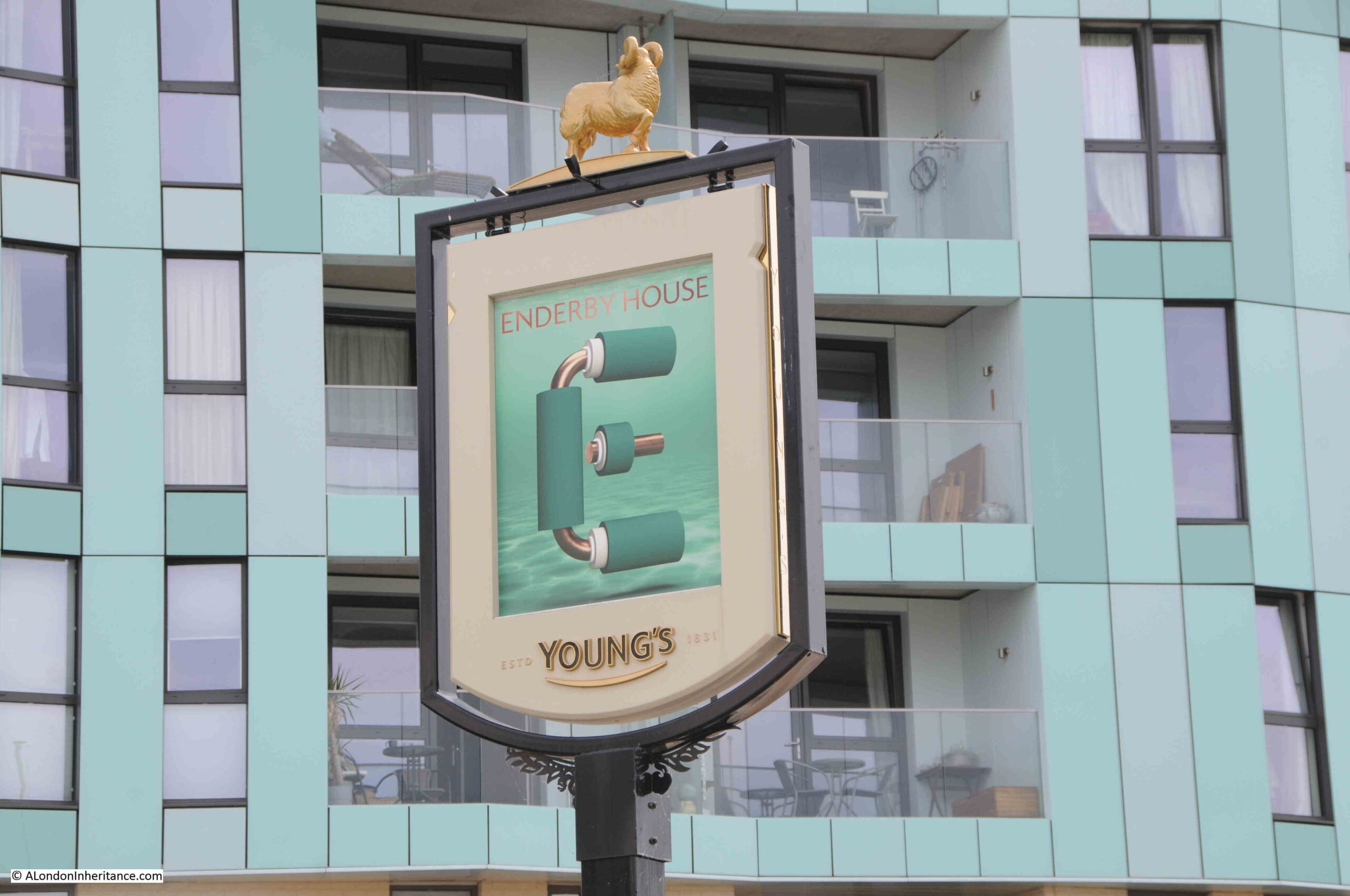
I walked around the outside of the pub, but could not see any references to the history of the site, or to the impact on communication technologies that the products manufactured here would bring, however the pub sign did appear to illustrate what I assume to be a representation of a telecommunications cable:

Enderby House

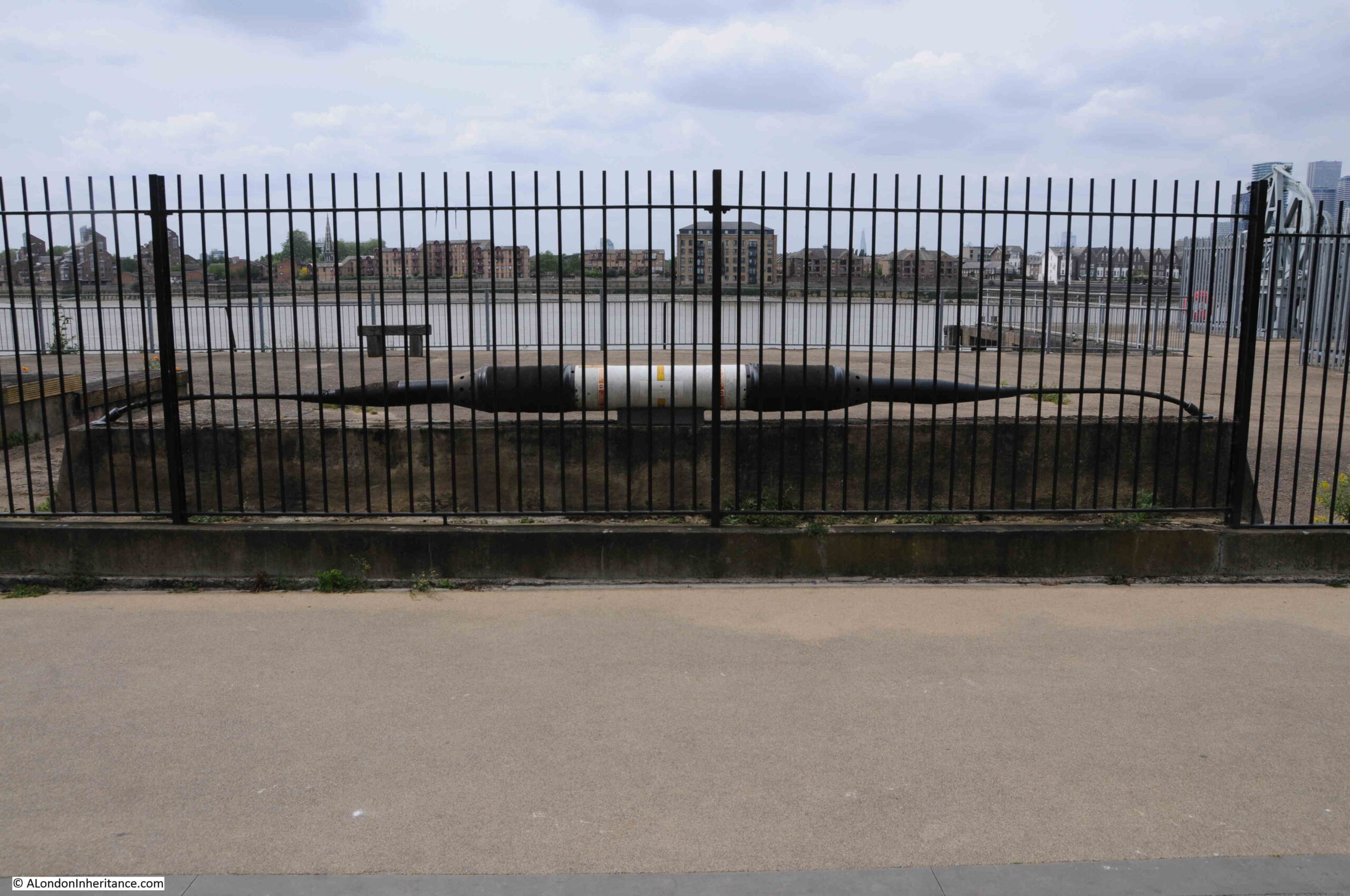
Opposite, within the fenced off wharf, was an example of a length of cable and the housing for the repeater equipment that would amplify the signal as it travelled for thousands of miles under the sea:

Enderby House

I get really conflicted when I see a building such as Enderby House. I am pleased that it is still there, and that it is a new pub (too many of these are closing), however it appears to be heavily altered, and does not appear to offer any information as to the importance of the site, apart from retaining the name and the pub sign.

Perhaps there is information inside and I am being unfair. I did not have time for a visit, having a meet arranged at the Cutty Sark pub on the walk back.

View of the northern side of Enderby House – if I was responsible for decorating the building I would have an artwork representing a trans-Atlantic cable running along the side of the building to break up the rather bland cream paintwork.

Enderby House

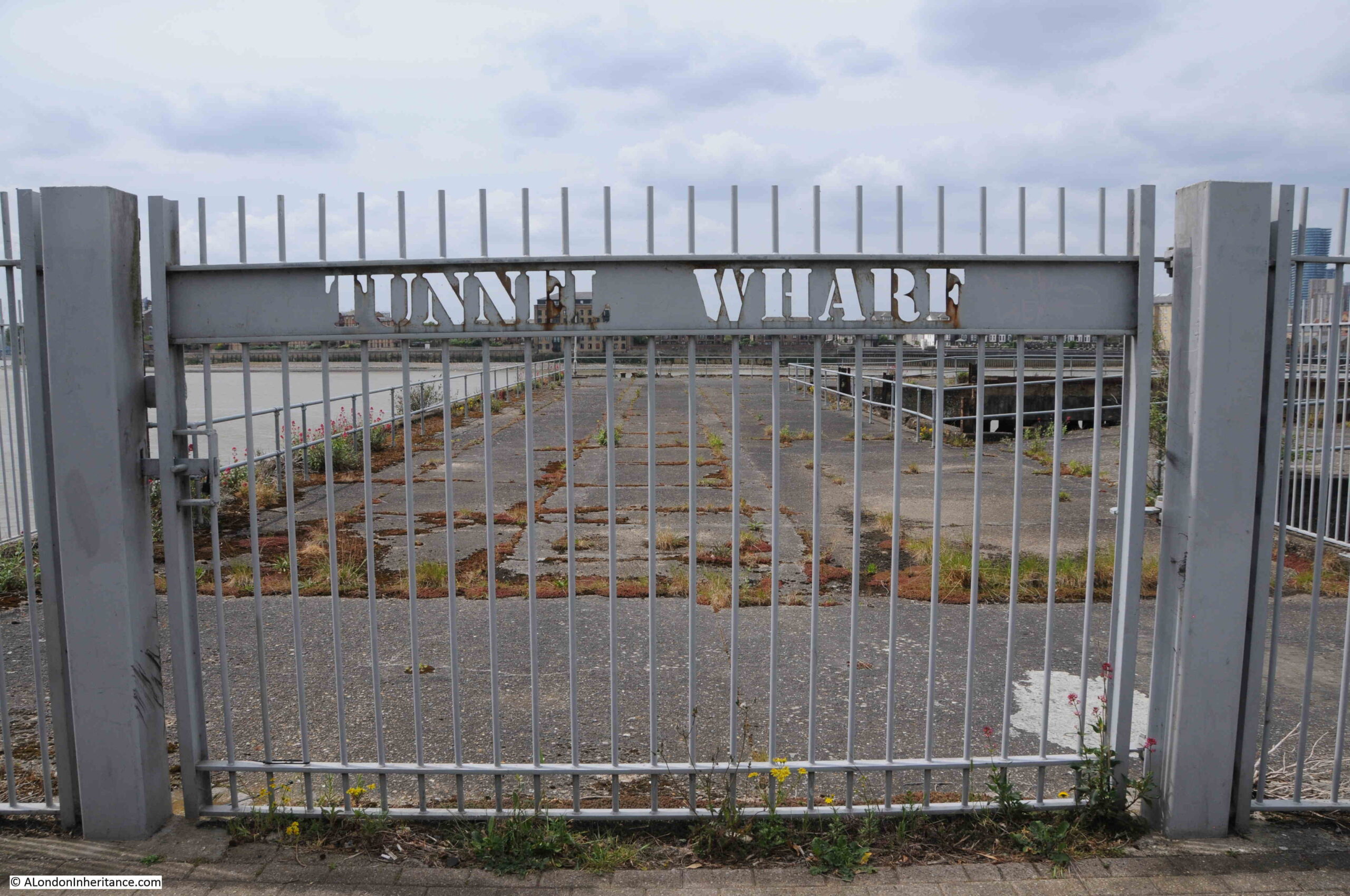
Fenced off access to the wharfs near Enderby House:

Tunnel Wharf

There is a flat wall of stone to be found among the apartment buildings and facing on to the walkway along the river:

Greenwich Peninsula

Rather than repeat what the information panel to the right of the wall states, I will summarise Mary Mills comments from her book.

There was a road that ran underneath the new apartment buildings between Lovell’s and Granite Wharf (which was to the north of Lovell’s).

Much of the boundary wall of Granite Wharf along this roadway was made up of an extraordinary range of what appeared to be random stone, and was thought to have been quarried in Dorset, shipped to Greenwich where it was stored until it was sold for use in a construction project. Some of this stone had been used to construct the wall.

This stone wall was important as it was a visual demonstration of the stone trade from along the English Channel.

When the wall, along with the rest of the site was being demolished, Mary Mills was instrumental in getting the importance of the stone recognised, however the wall created by the developer using the stone is very far from how it was originally used, and what had been rough stone had been tided up considerably and placed in what is now a smooth wall of stone. Again, good that it has been retained, but it could have been so much better.

Soon after walking past Enderby House, development has stopped and the river path changes from a new, wide path in front of apartment buildings, to a narrow path alongside the derelict sites that are probably scheduled for development:

Greenwich Peninsula

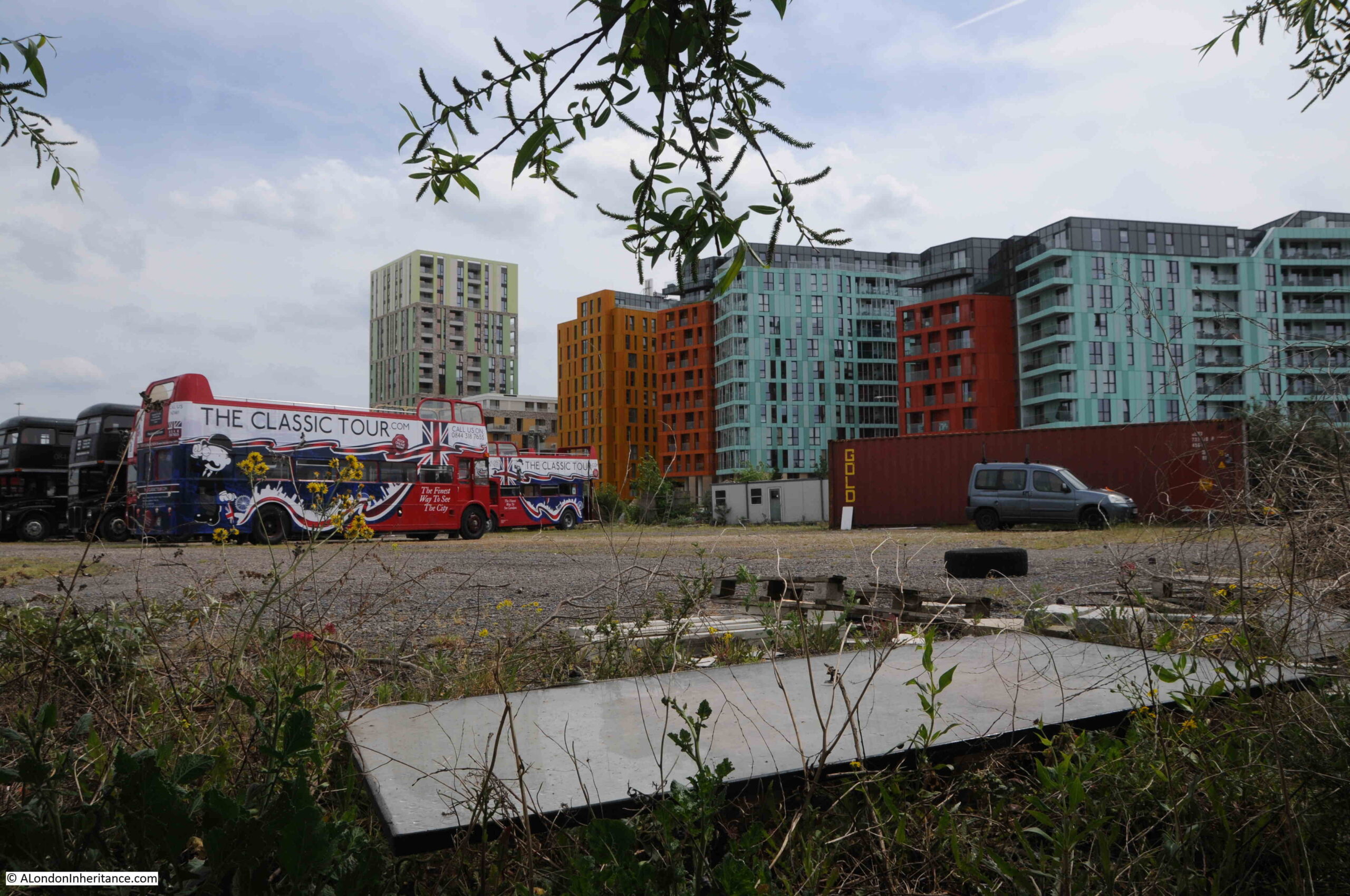
Where tour buses go to park:

Greenwich Peninsula

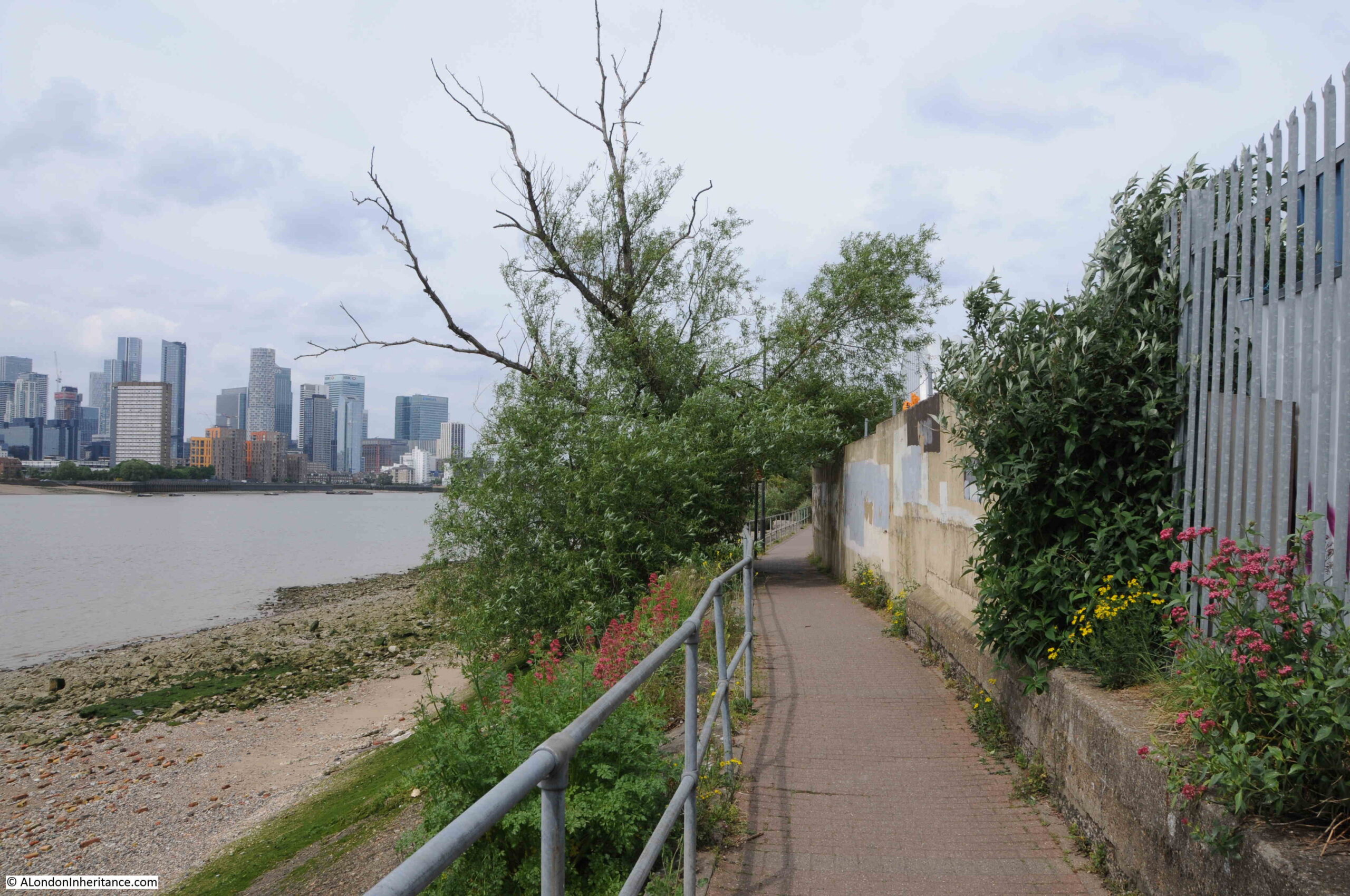
I really love this part of the walk along the peninsula. A narrow path along the river’s edge, quiet, and a chance to think about what was here:

Greenwich Peninsula

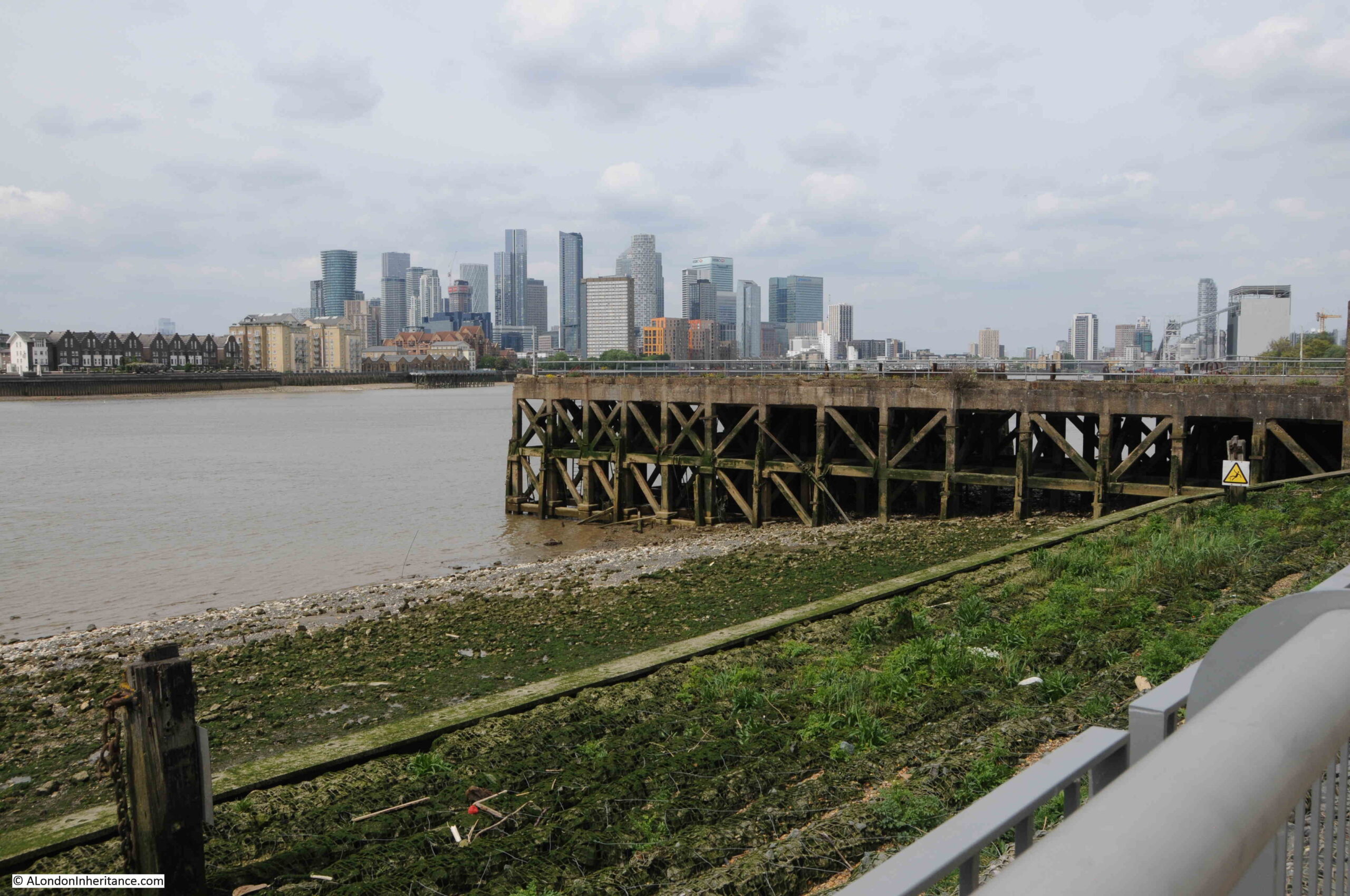
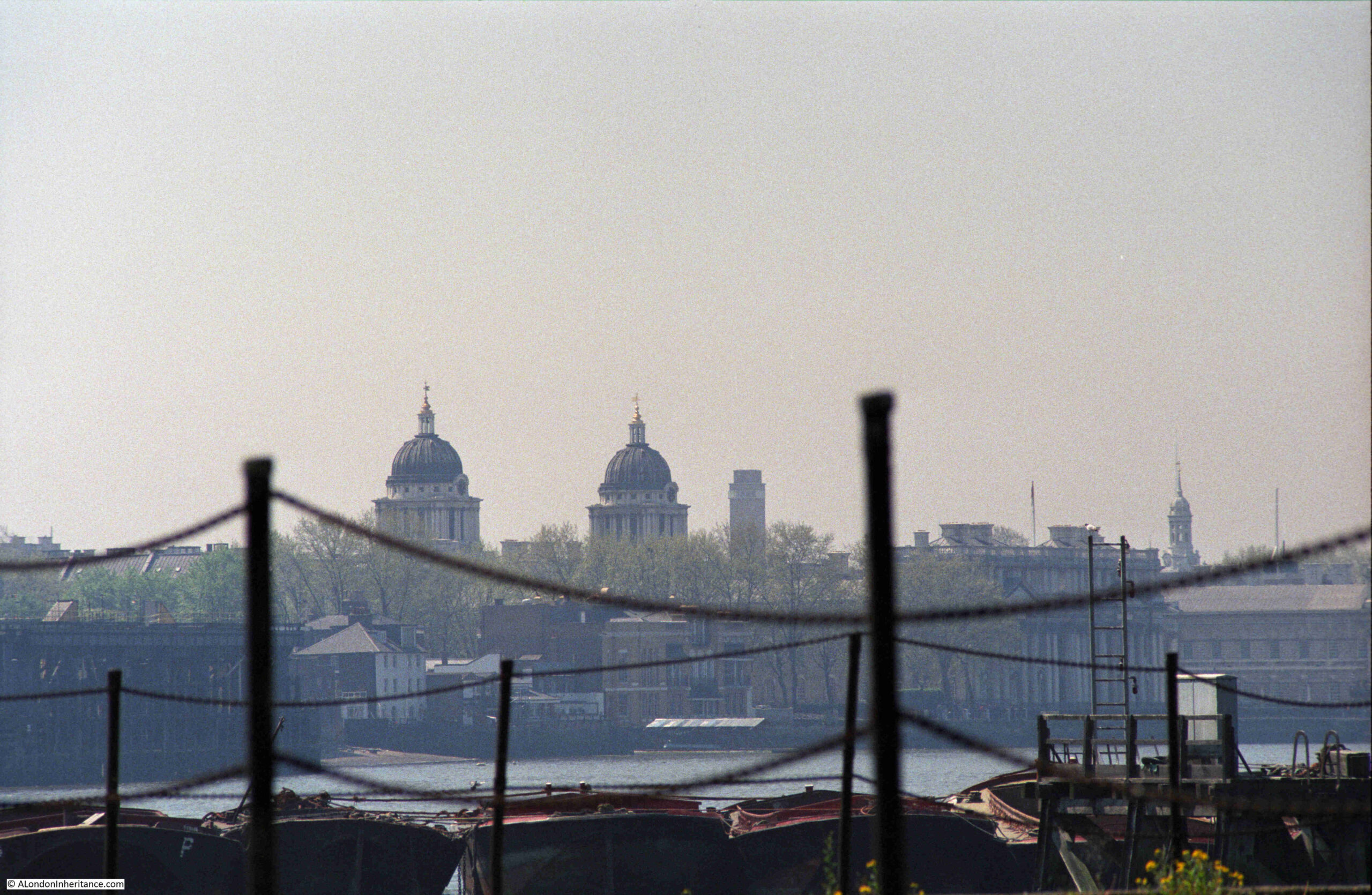
I still had my third 1986 photo to track down, and I suspect it was taken from the following pier:

Greenwich Peninsula

This was the view looking back towards central Greenwich in 1986:

Greenwich Peninsula

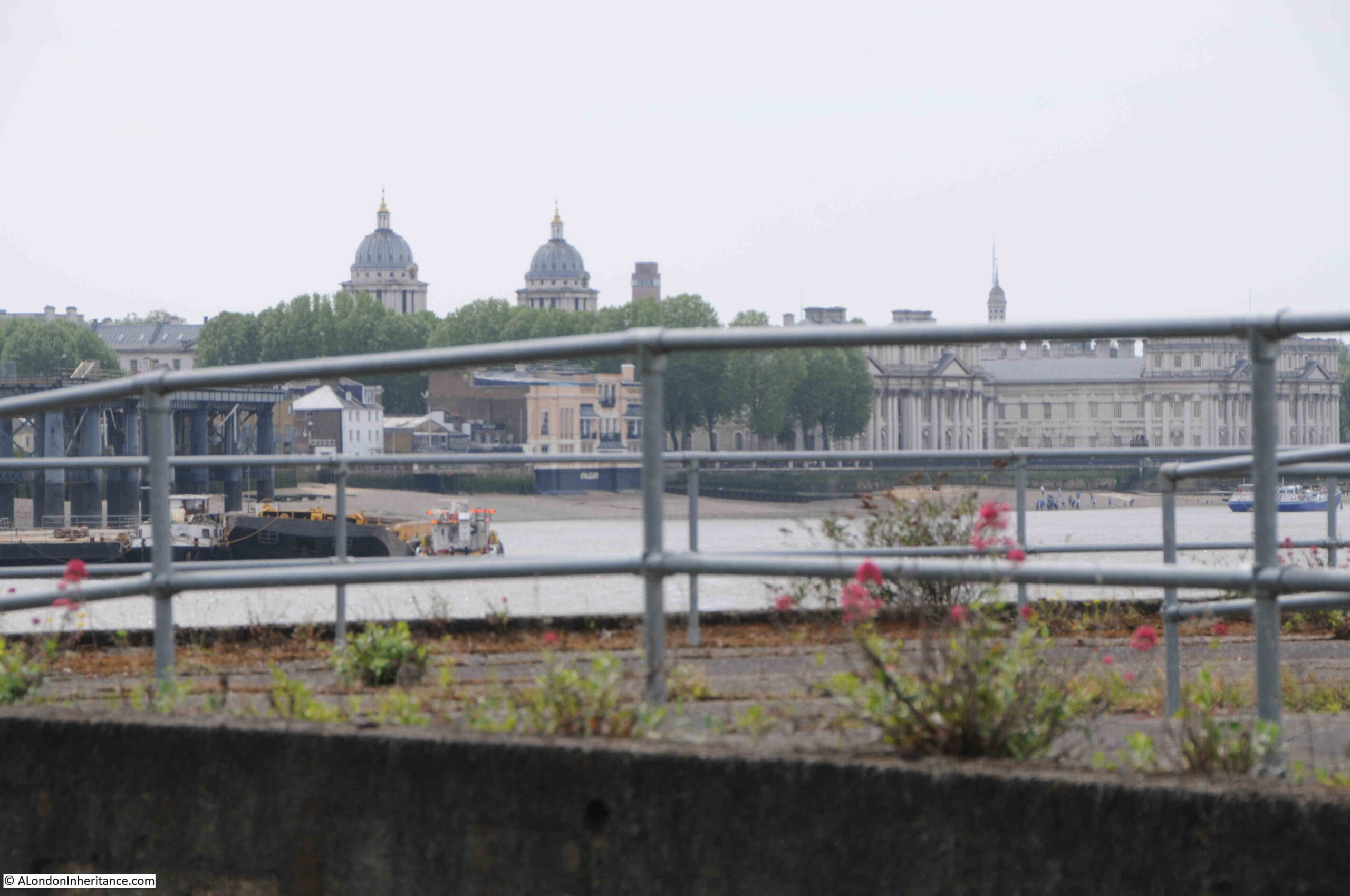
The following photo was the closest I could get to recreating the above. The landmarks of Greenwich all line up reasonably well. The barges moored alongside the pier in 1986 have all disappeared.

Greenwich Peninsula

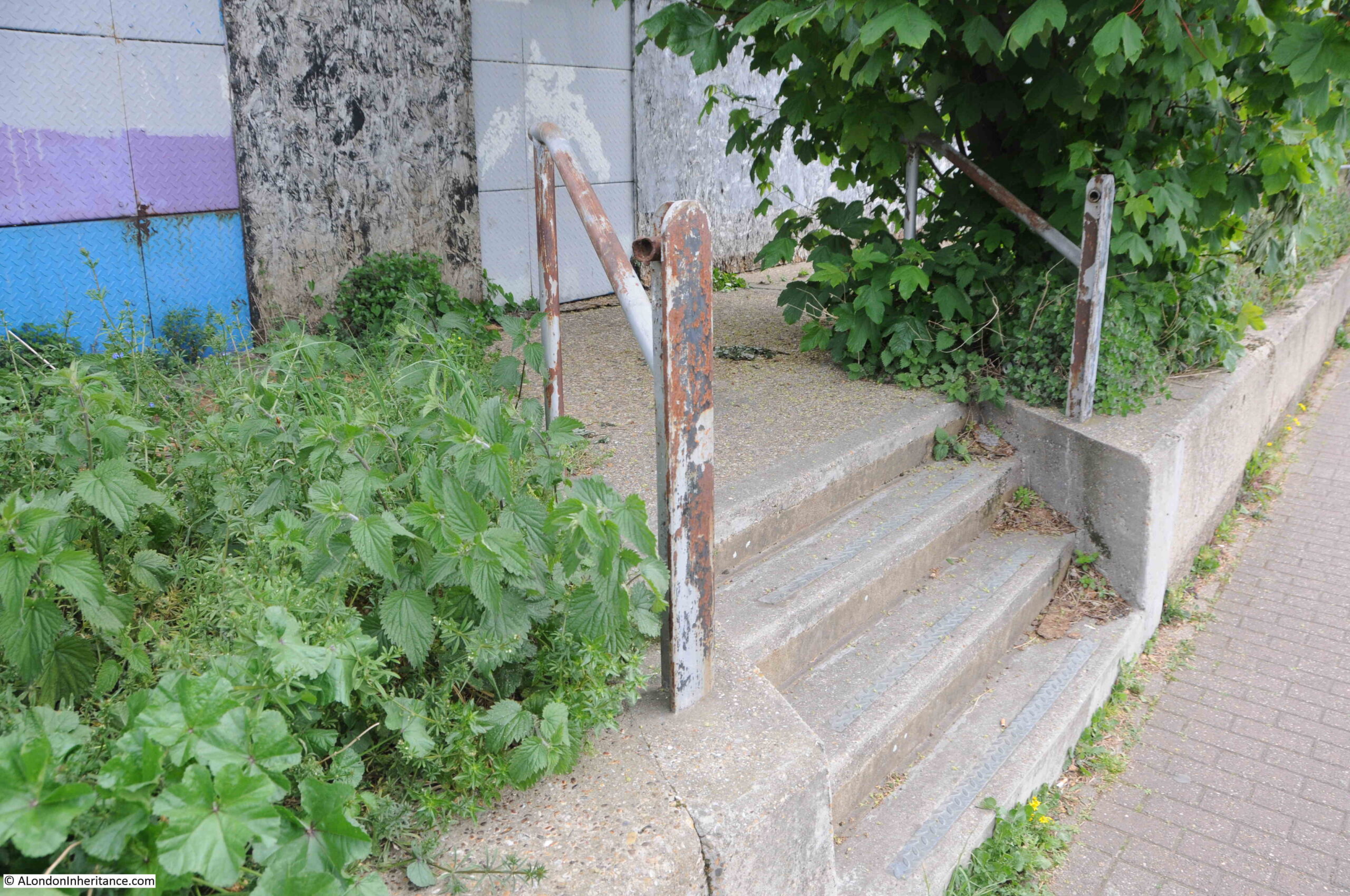
To the side of the footpath, there are the remains of structures that once provided access to the long gone industrial premises that lined the river:

Greenwich Peninsula

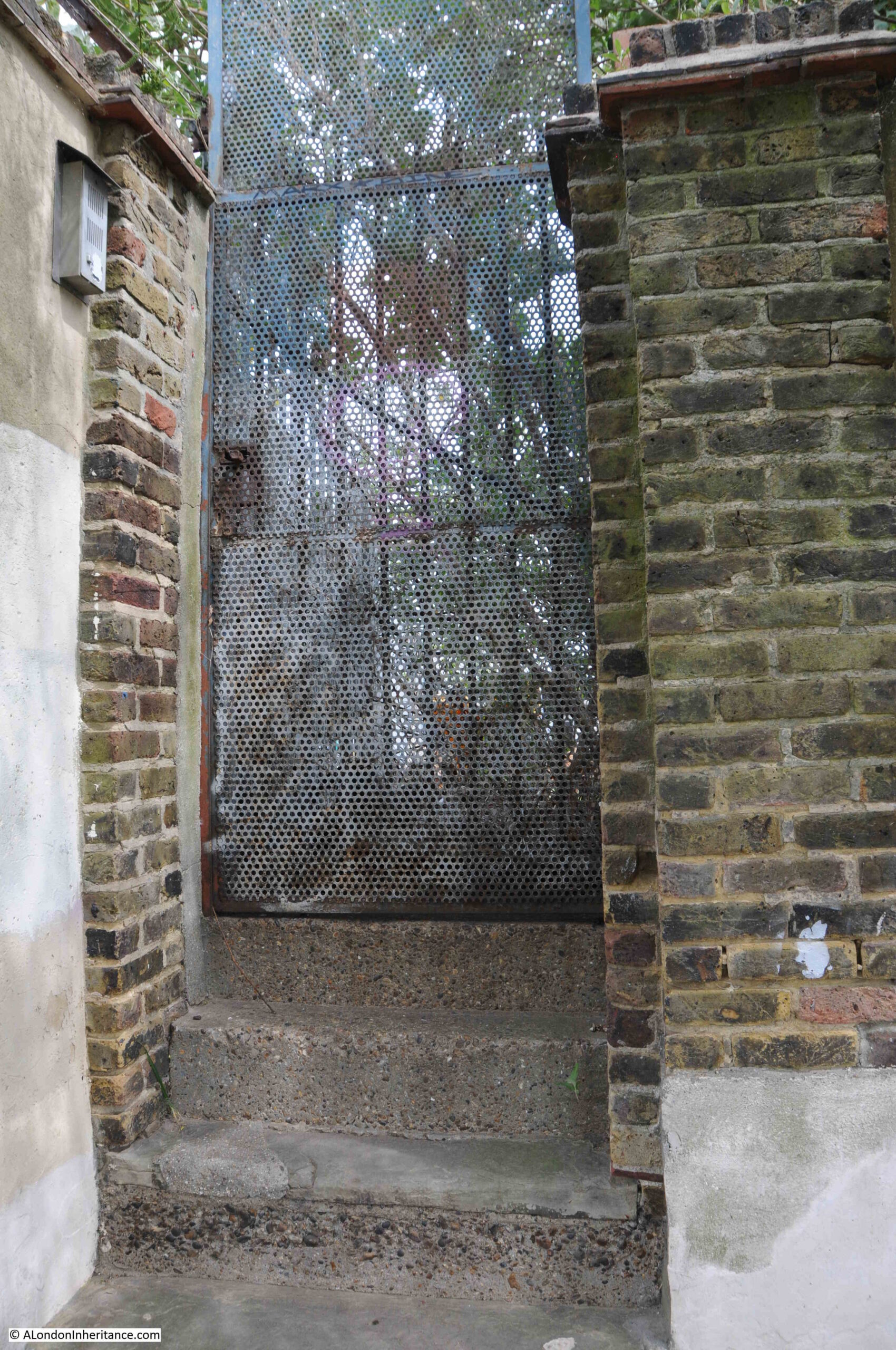
A long closed gateway:

Greenwich Peninsula

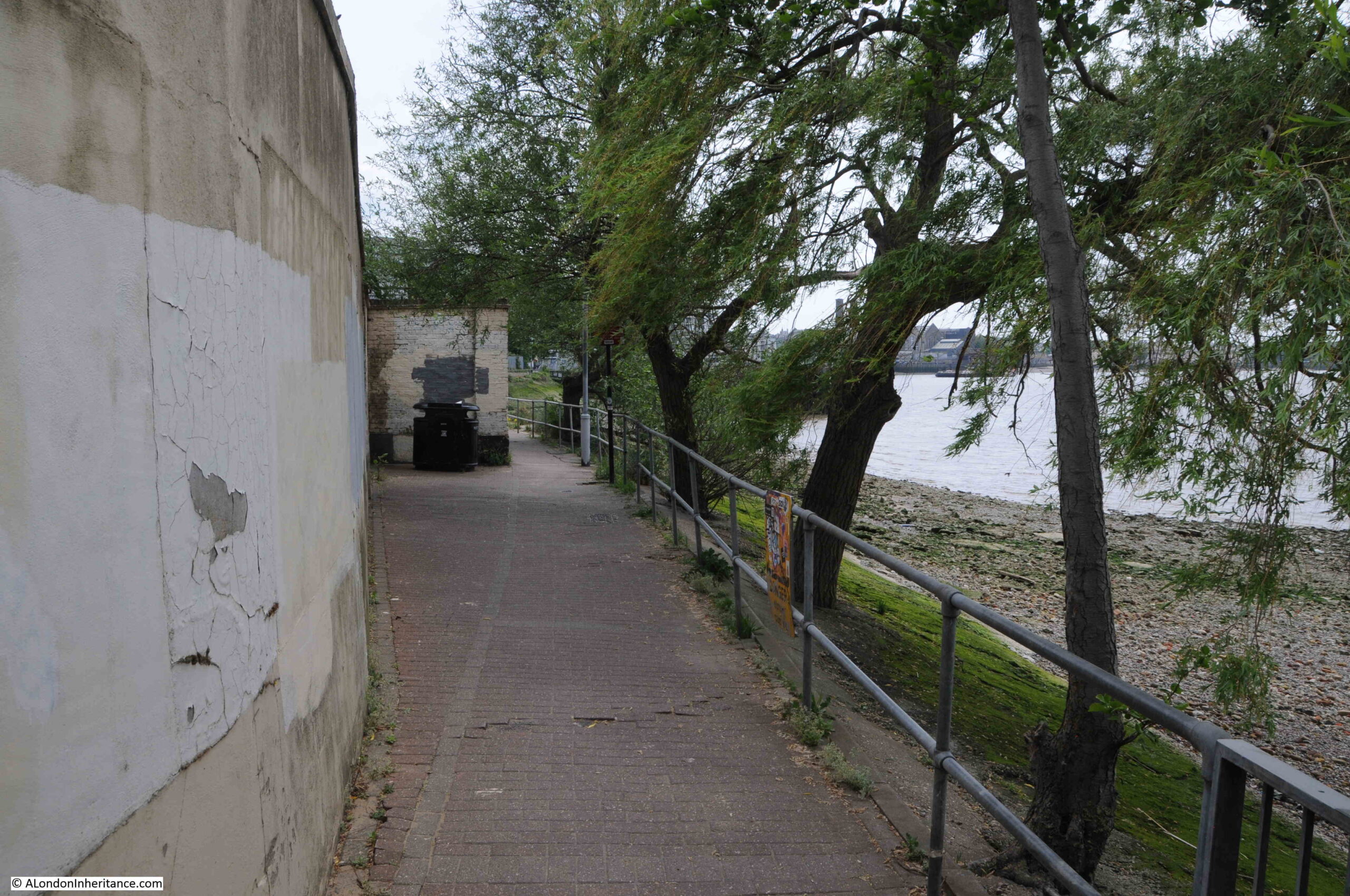
Looking back along the footpath – this stretch of the river is so very different to that which has already been developed, and I assume that at some point in the future, this footpath will become the same wide pedestrianised area next to new apartment buildings, as found at the start of the post:

Greenwich Peninsula

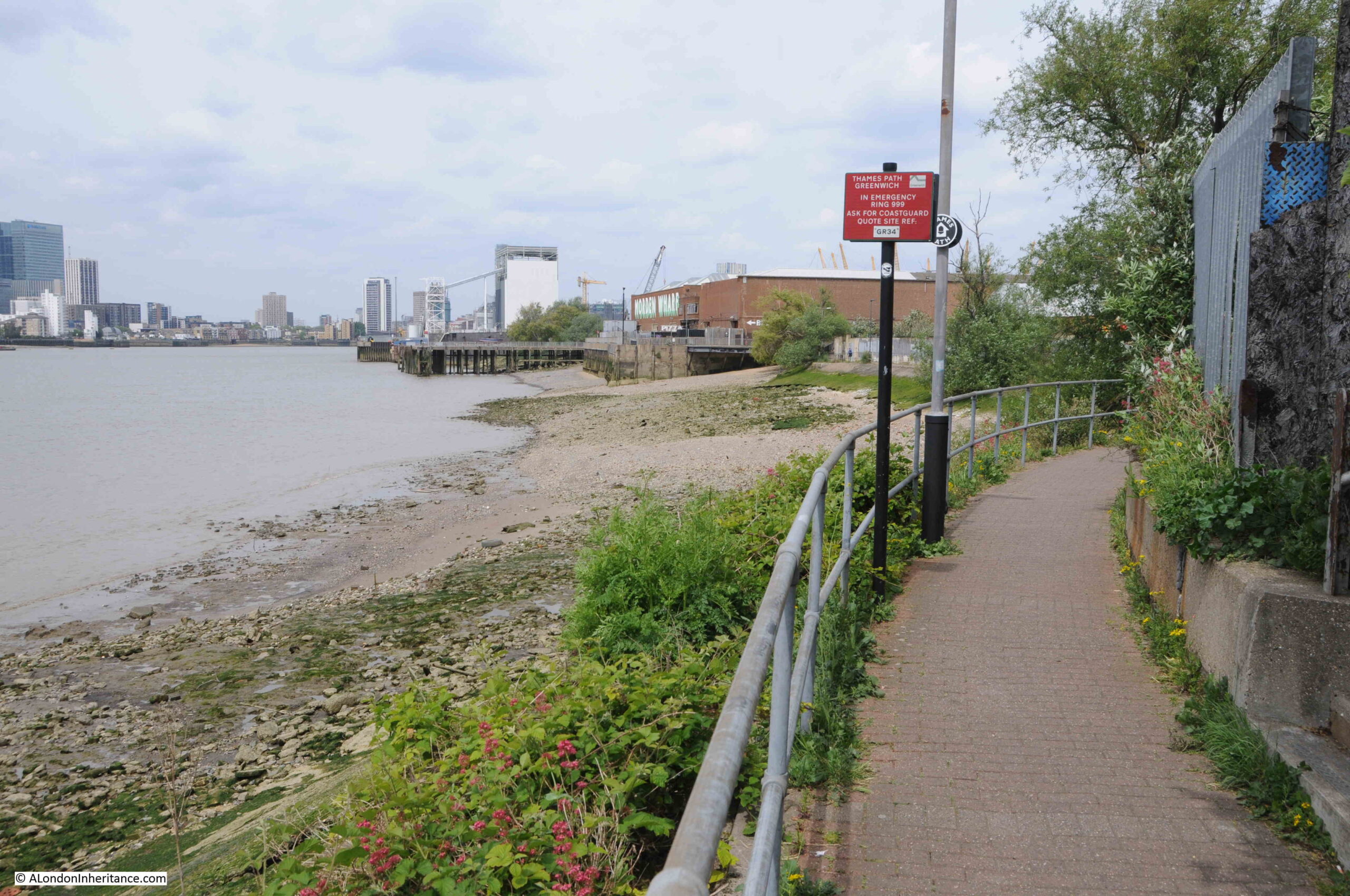
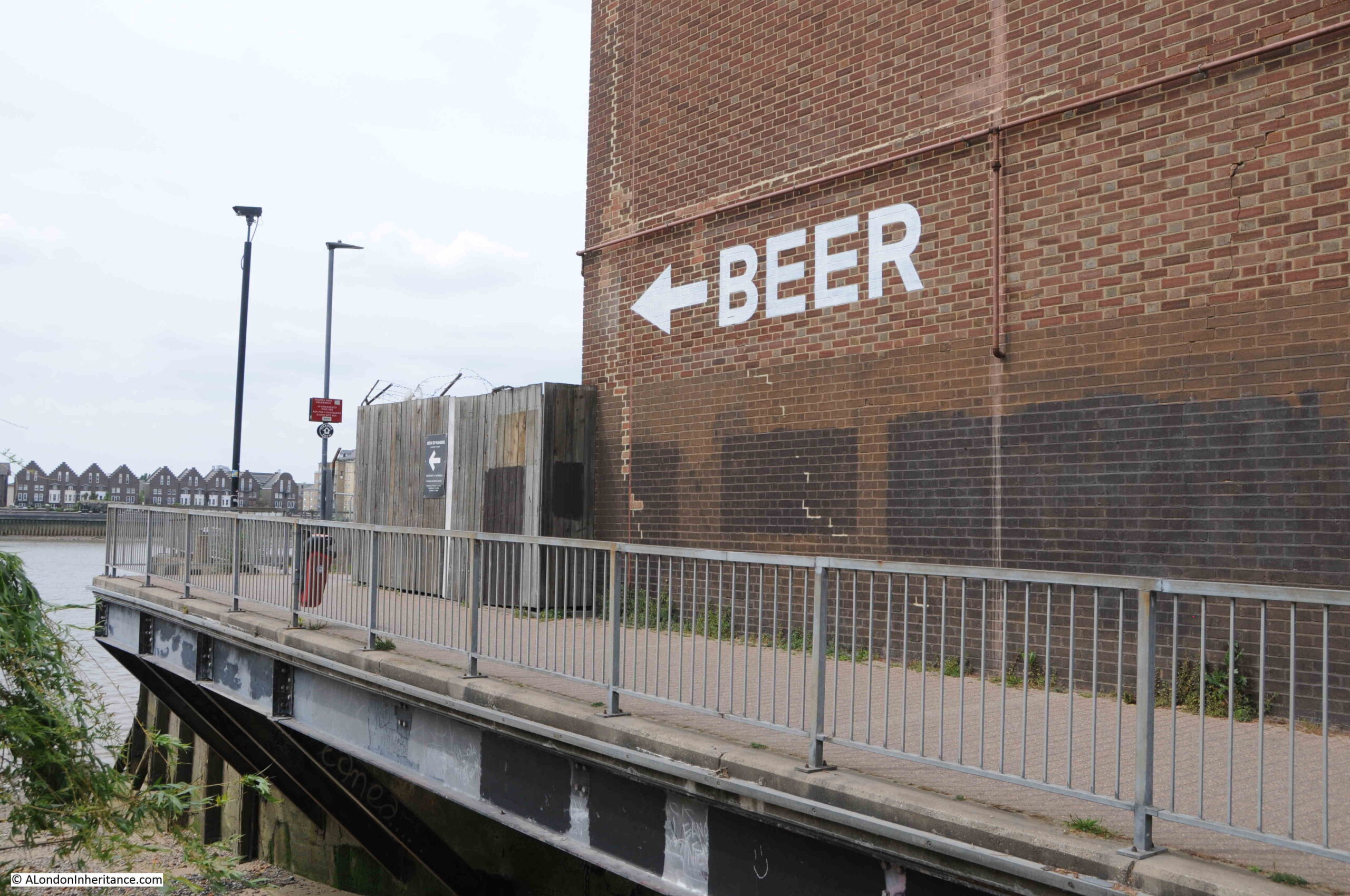
A welcome sign:

Morden Wharf

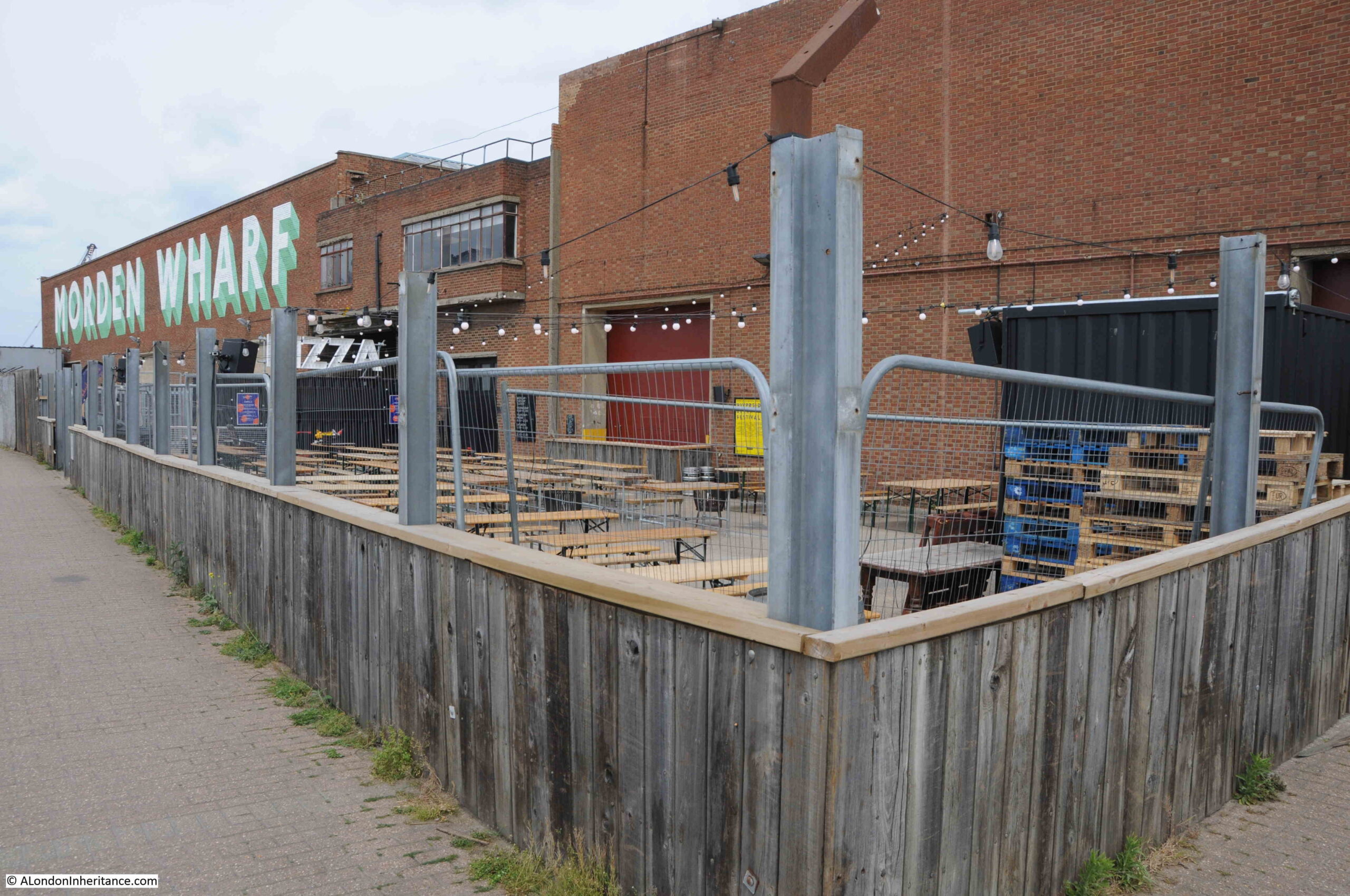
The sign points to what looks like a temporary bar / pizza area built in front of Morden Wharf:

Morden Wharf

Morden Wharf was named after Morden College, the freeholder of much of the land in the vicinity of the wharf.

The last time I walked along the peninsular, Morden Wharf was fenced off from the footpath with high, wooden panels, these have now been removed with only their vertical metal supports remaining.

Having reached Morden Wharf, I turned back towards Greenwich.

The area that I have walked which has not yet been developed, is planned to undergo a significant transformation. The footpath winding its way between the river and the derelict industrial sites will disappear and large new towers will be built.

The developed is called Morden Wharf, and the website describing the development can be found here.

Scroll to the bottom of the page, on the Morden Wharf website, and the area I have walked can be seen to the right of the old brick Morden Wharf building, and the bar and pizza area will apparently become “The reinstated Sea Witch pub”, a very different recreation of a pub that was once close to the river, and that was badly damaged by a V1 flying bomb on the 12th of July 1944.

The 1986 photos captured some of the last years of some of the industry along this side of the Greenwich Peninsula. It would then remain derelict for some years, and is now undergoing a significant transformation. It is a good time to walk the western side of the peninsula before this happens.

My 2015 walk along the peninsular to the O2 dome can be found here and shows how the area is changing, and the final part of the walk.

alondoninheritance.com

Westminster School Gateway

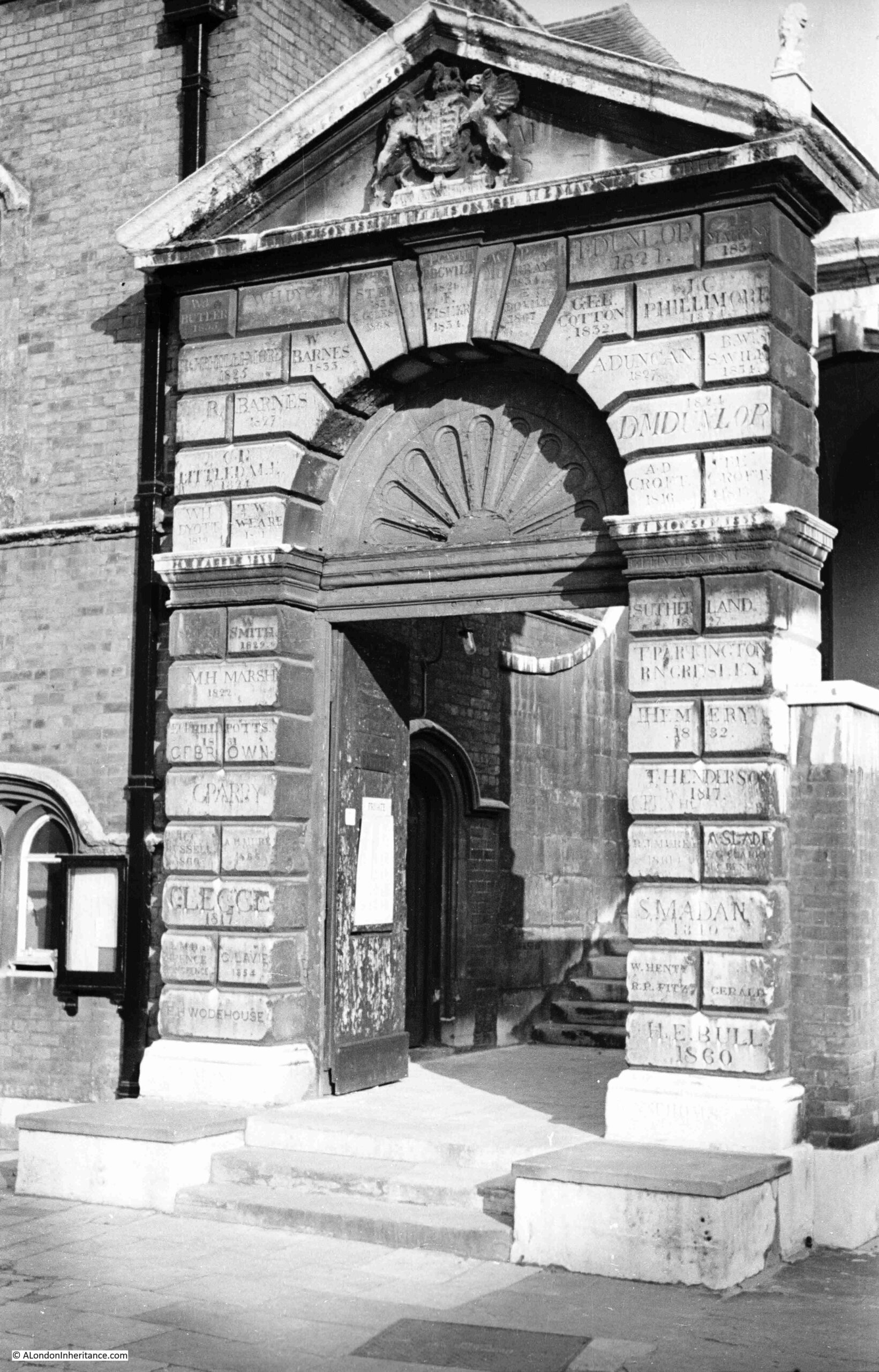
In 1949, my father photographed the Westminster School Gateway:

Westminster School Gateway

I am really grateful to the Archivist at Westminster School who provided access during the Spring half term, and told me about the history of the gateway and the surrounding area (although any errors are down to my memory).

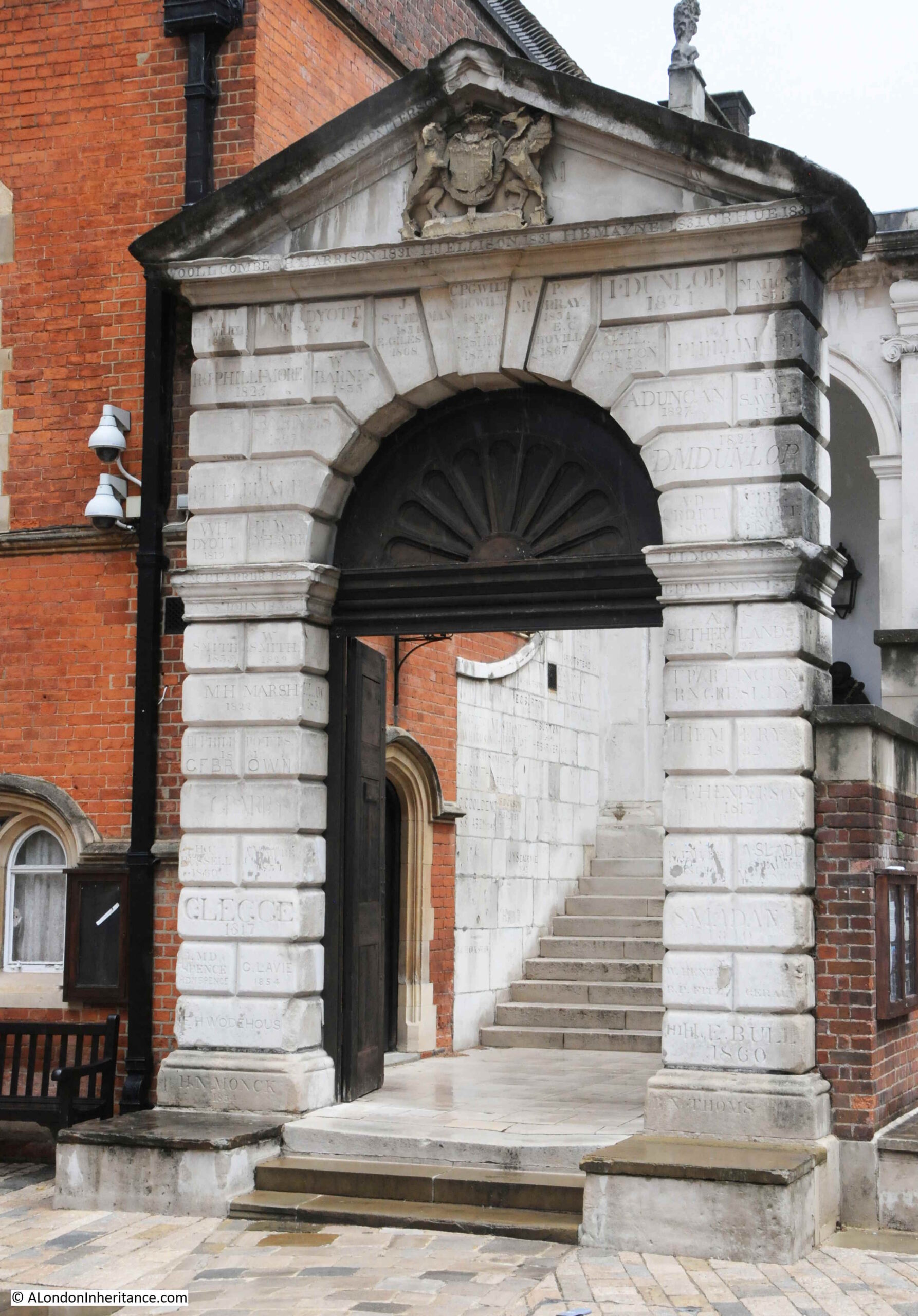
The same photo of the Westminster School Gateway at the end of May 2022:

Westminster School Gateway

There has been very little change in the 73 years between the two photos. The main change being a couple of CCTV cameras to the left of the gateway.

The Westminster School Gateway is a historic feature of the school for two main reasons. The age and purpose of the gateway, and the inscriptions that cover almost all the stones of which the gateway has been built.

The day of my visit was one of those days where London weather changes from sunshine to pouring rain in a matter of minutes, and that is exactly what happened when I arrived. The sky clouded and the rain fell, resulting in an overcast view of the gateway in my photo, compared to my father’s photo taken in bright sunshine.

Due to the different lighting conditions, the inscriptions are far more visible in my father’s photo than mine. In the 1949 photo, the stones are generally dirtier due to the amount of pollution from coal fires and other industrial sources across London. This blackened the inscriptions in the 1949 photo which helps them to stand out.

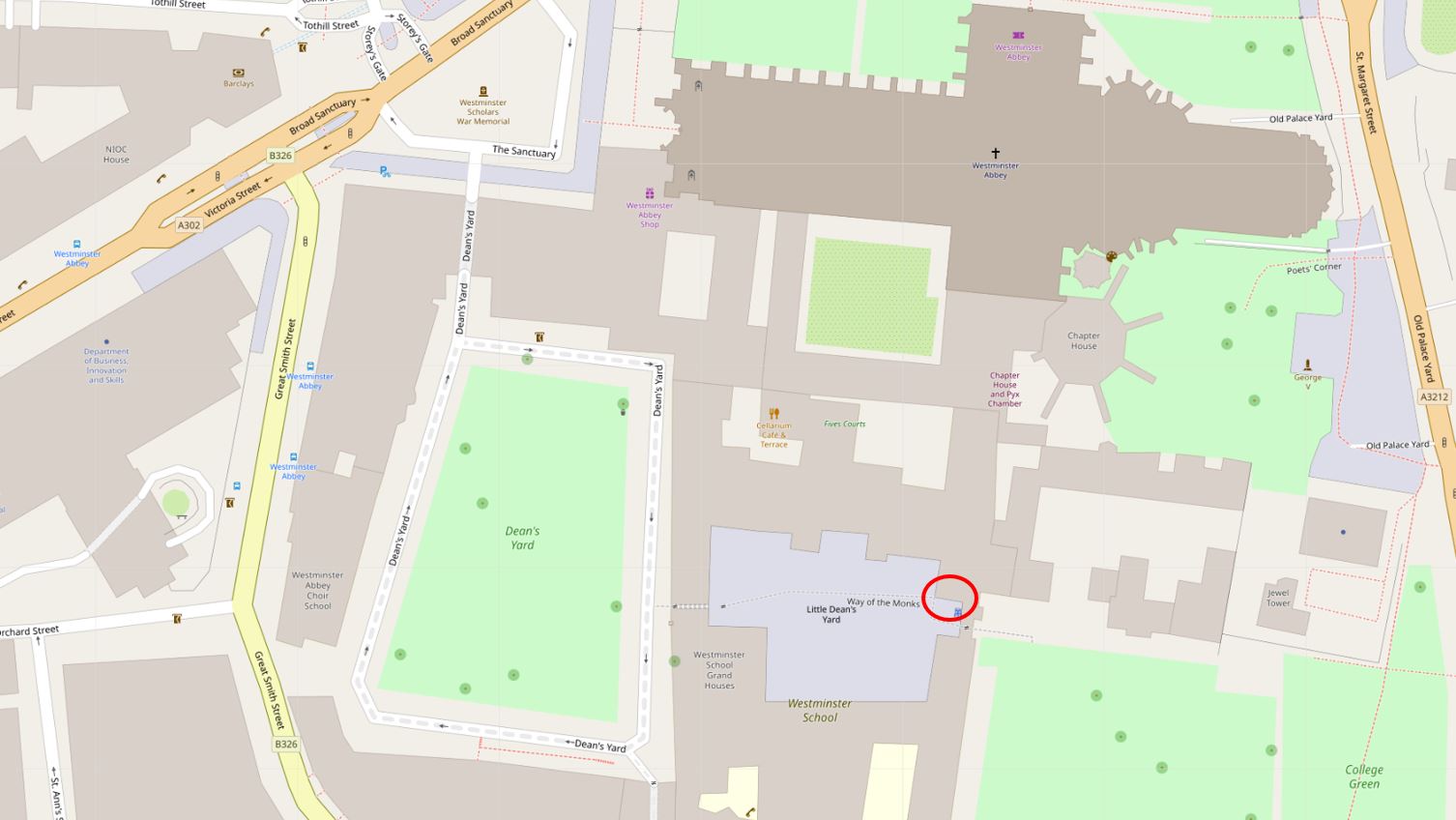
The Westminster School Gateway is in Little Dean’s Yard, which is accessed from Dean’s Yard. I have circled the location of the gateway in the following map  (© OpenStreetMap contributors):

Westminster School Gateway

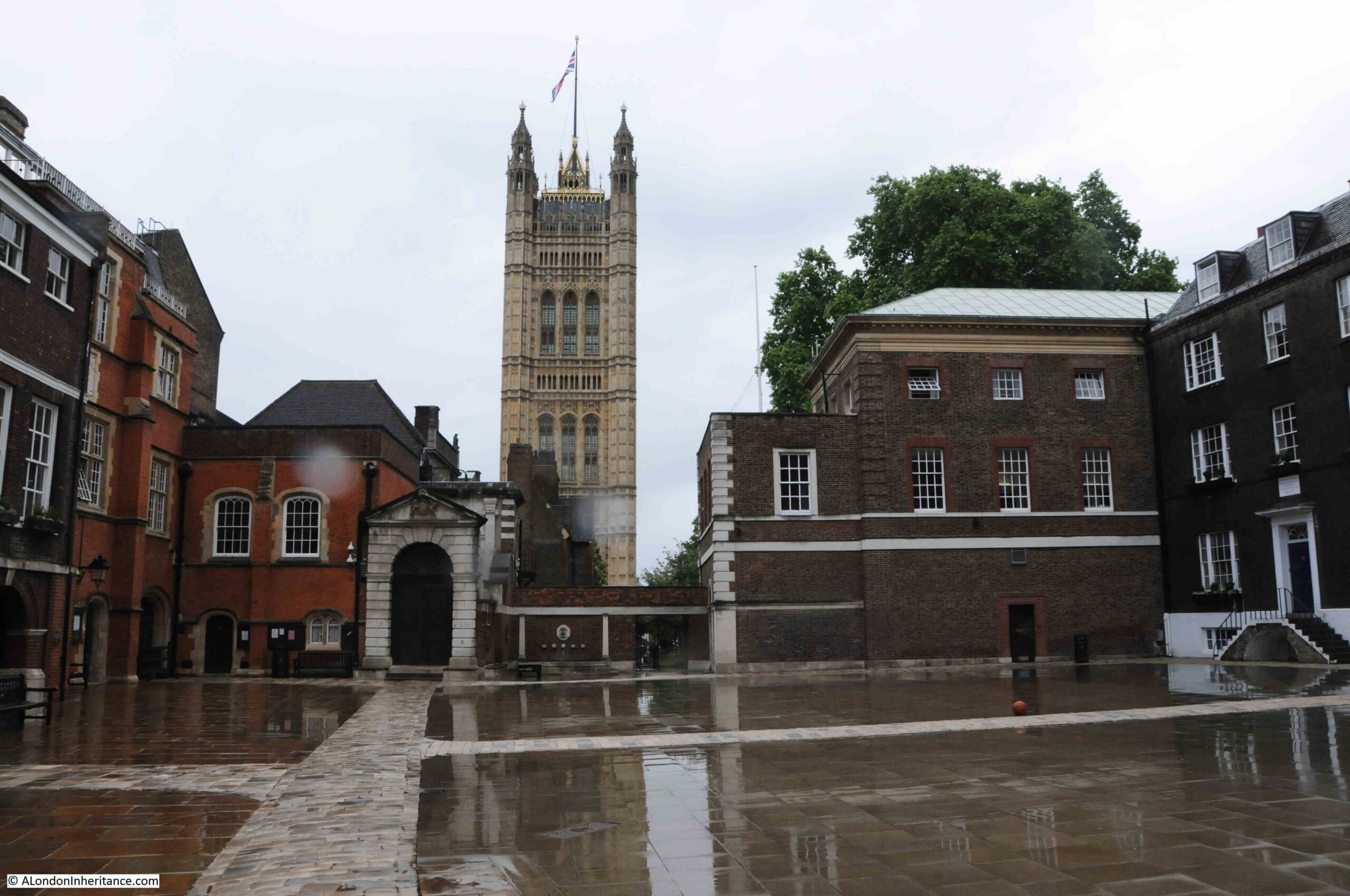
The view looking across Little Dean’s Yard towards the gateway, with the Victoria Tower of the Palace of Westminster in the background:

Westminster School Gateway

The School Gateway was built in 1734 and was the main entrance to the school. Little Dean’s Yard was originally occupied by buildings, and a passageway led from Dean’s Yard (via Liddell’s Arch) through these buildings to reach the school gateway.

The gateway is believed to have been built by Lord Burlington. This was Richard Boyle, the 3rd Earl of Burlington, who as well as the gateway, was responsible for the construction of a dormitory at the school between 1722 and 1730.

The school gateway is therefore also known as Burlington’s Arch.

The following print from 1880 shows the school gateway with the route of the passageway, although by the time of the print, the buildings surrounding the passageway had been demolished (© The Trustees of the British Museum).

Westminster School Gateway

The view looking back towards Liddell’s Arch from near the school gateway:

Liddell’s Arch

On the right of the above photo is a sculpture of Queen Elizabeth I, who became the royal patron of the school in 1560 and is celebrated as the founder of the school, although the foundations of the school are much earlier, the school having its origins in a charity school run by the Benedictine monks of Westminster Abbey.

The following map is an extract from the 1950 edition of the Ordnance Survey (a year after my father’s photo). The school gateway is circled, and the map shows the area in detail as it was, and within the area of the school, as it is today (‘Reproduced with the permission of the National Library of Scotland“).

Little Dean's Yard

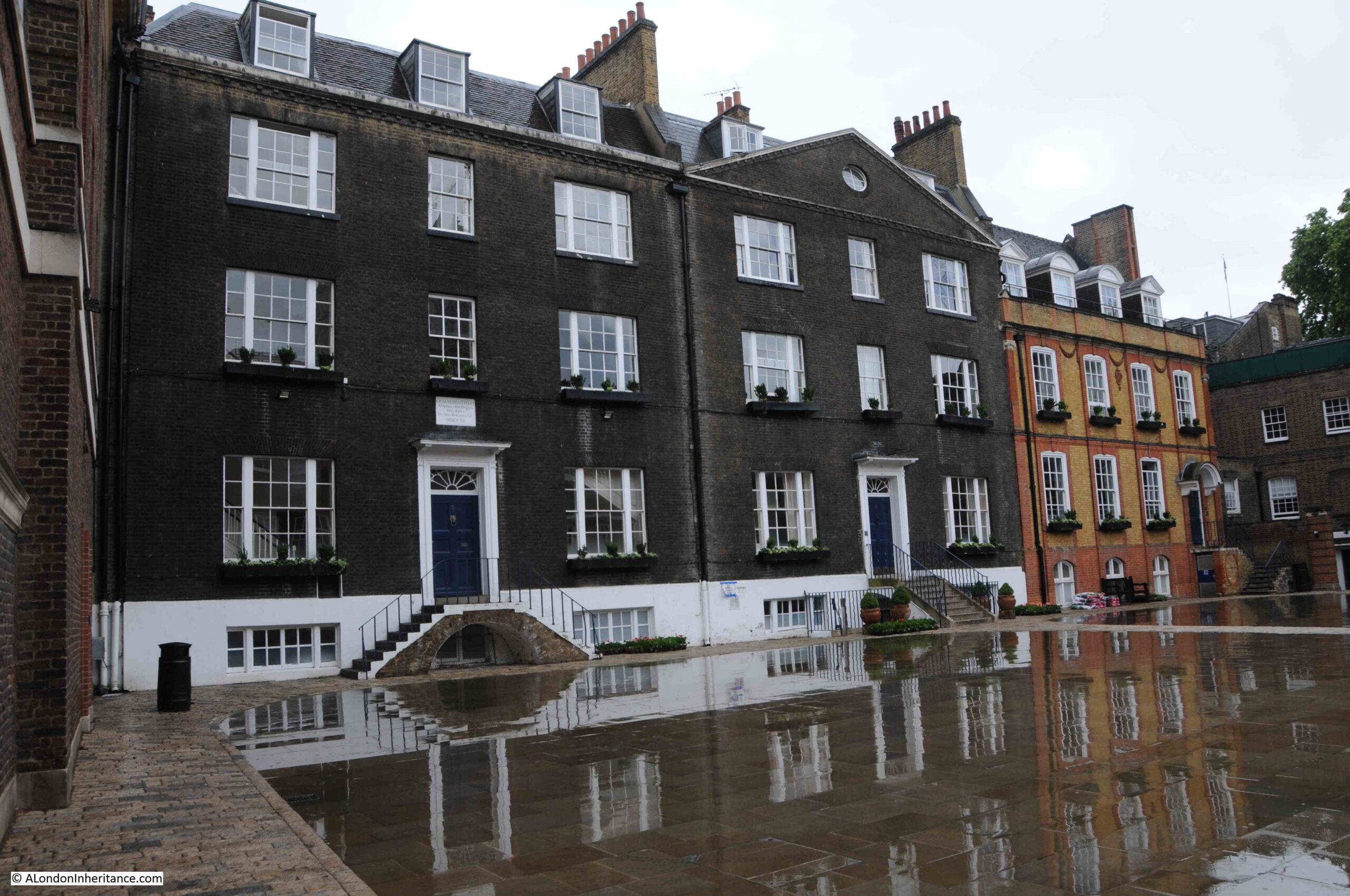
To the south of Little Dean’s Yard are the two remaining buildings of an 18th century terrace of three. This is the Grade I listed numbers 2 and 3 Little Dean’s Yard:

Little Dean's Yard

The building on the right of the above terrace, which has broken up the symmetry of the original terrace is a rebuild of 1896, and is Grade II listed number 1 Little Dean’s Yard.

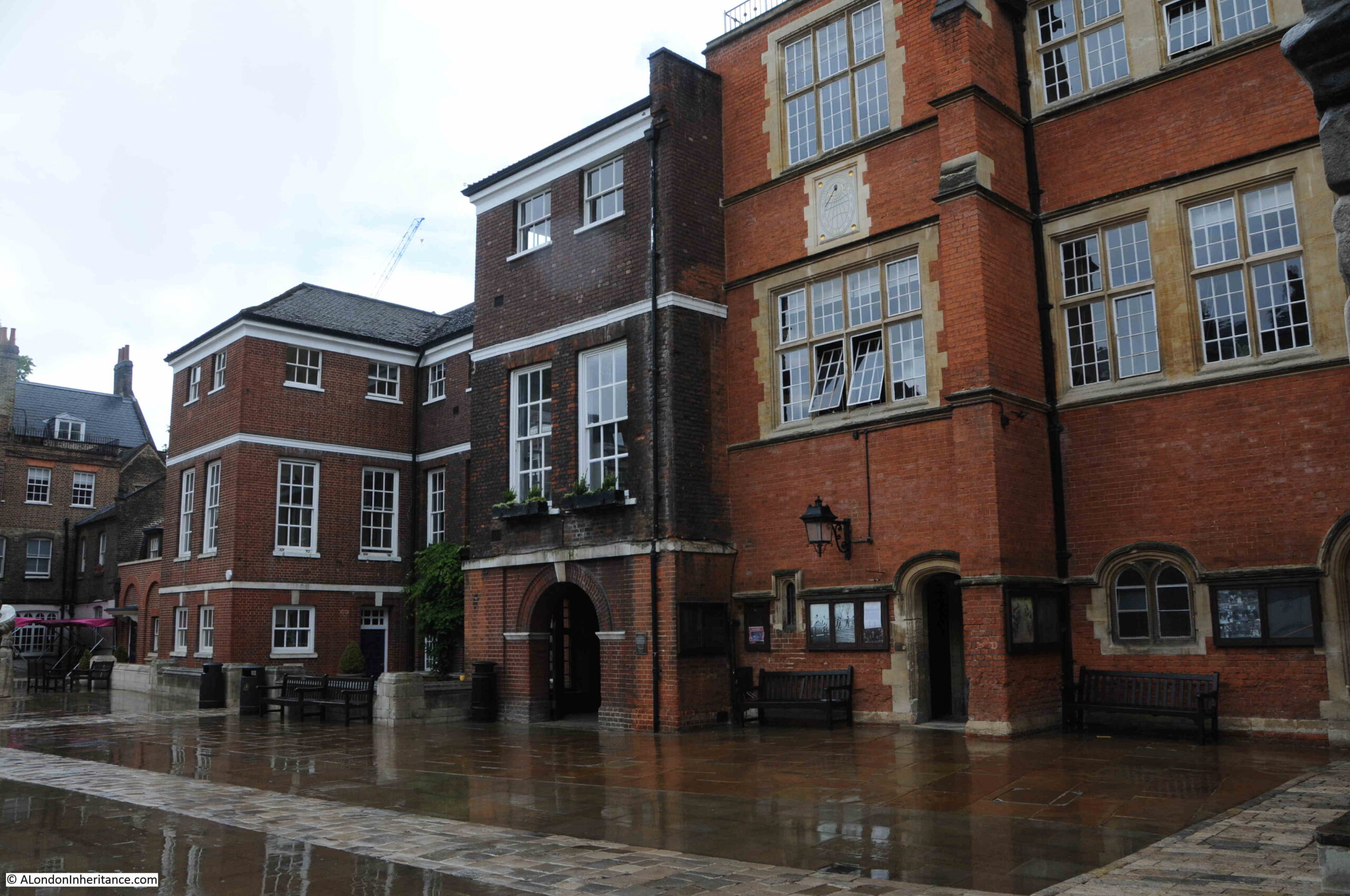
Listed buildings continue on the northern side of the yard, with the Grade II listed Turle’s House, dating from 1884 on the right. This building was built over fragments of an 11th century reredorter (a communal latrine), and part of the original monastery’s cloisters.

Little Dean's Yard

On the left of the above photo is the Grade I listed Ashburnham House, which includes parts of various structures that have occupied the site over the centuries.

The building includes the masonry structure and kitchen and hall walls from the 14th century Prior’s Lodging. The building became a substantial town house in the mid 17th century, when red brick was added to the 14th century rubble walls.

A west wing (furthest from the camera) was added in 1910, and this later wing can be seen in a slightly different colour brick, and the arched entrance on the ground floor of the earlier wing.

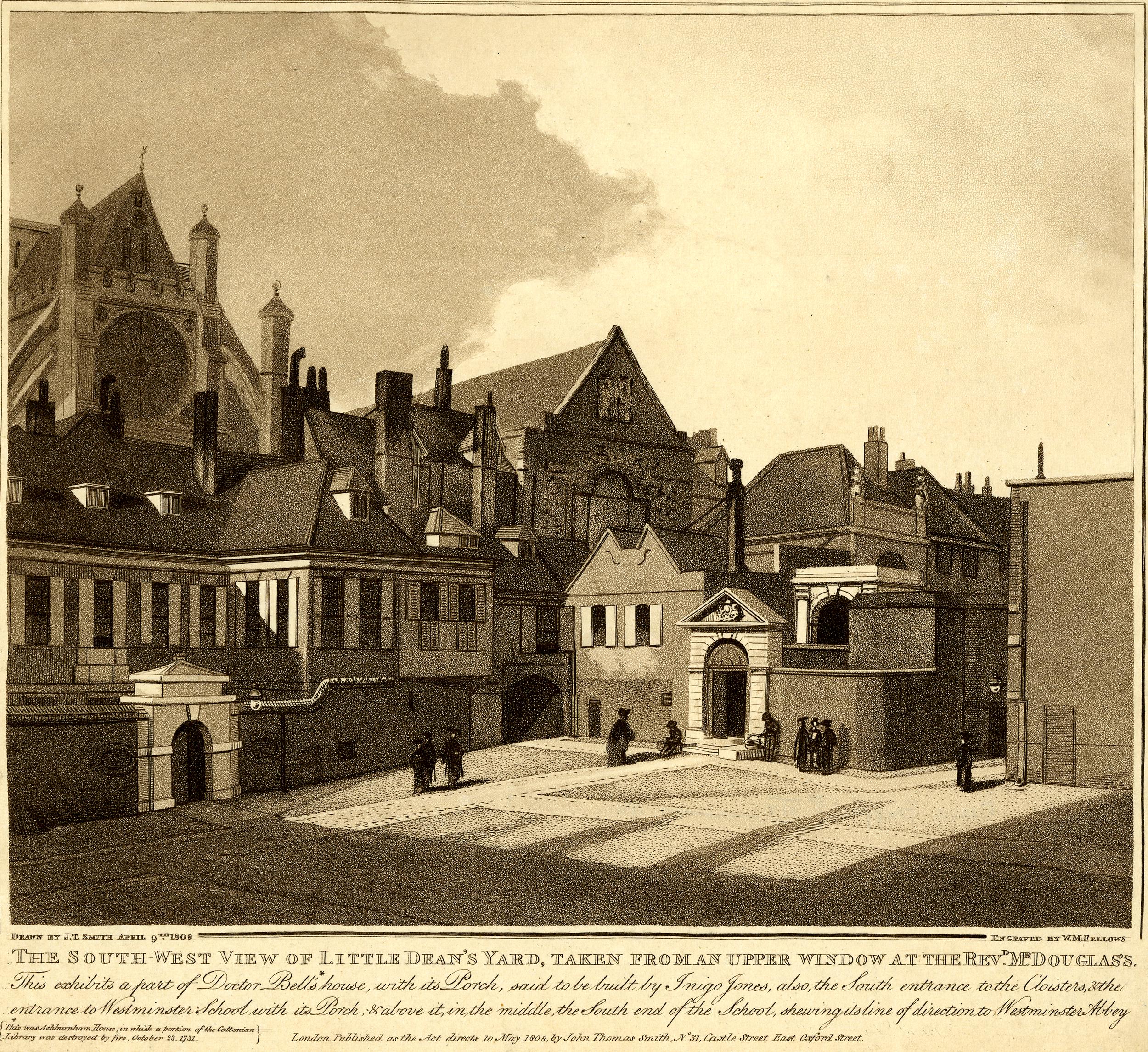
The following print shows the north east corner of Little Dean’s Yard in 1808, showing the school gateway, and to the left is what was described as Dr Bell’s House, along with an entrance to the cloisters. These buildings were replaced by Turle’s House in 1884 (© The Trustees of the British Museum).

Little Dean's Yard

The school gateway in 1808 (© The Trustees of the British Museum):

The entrance to Westminster School

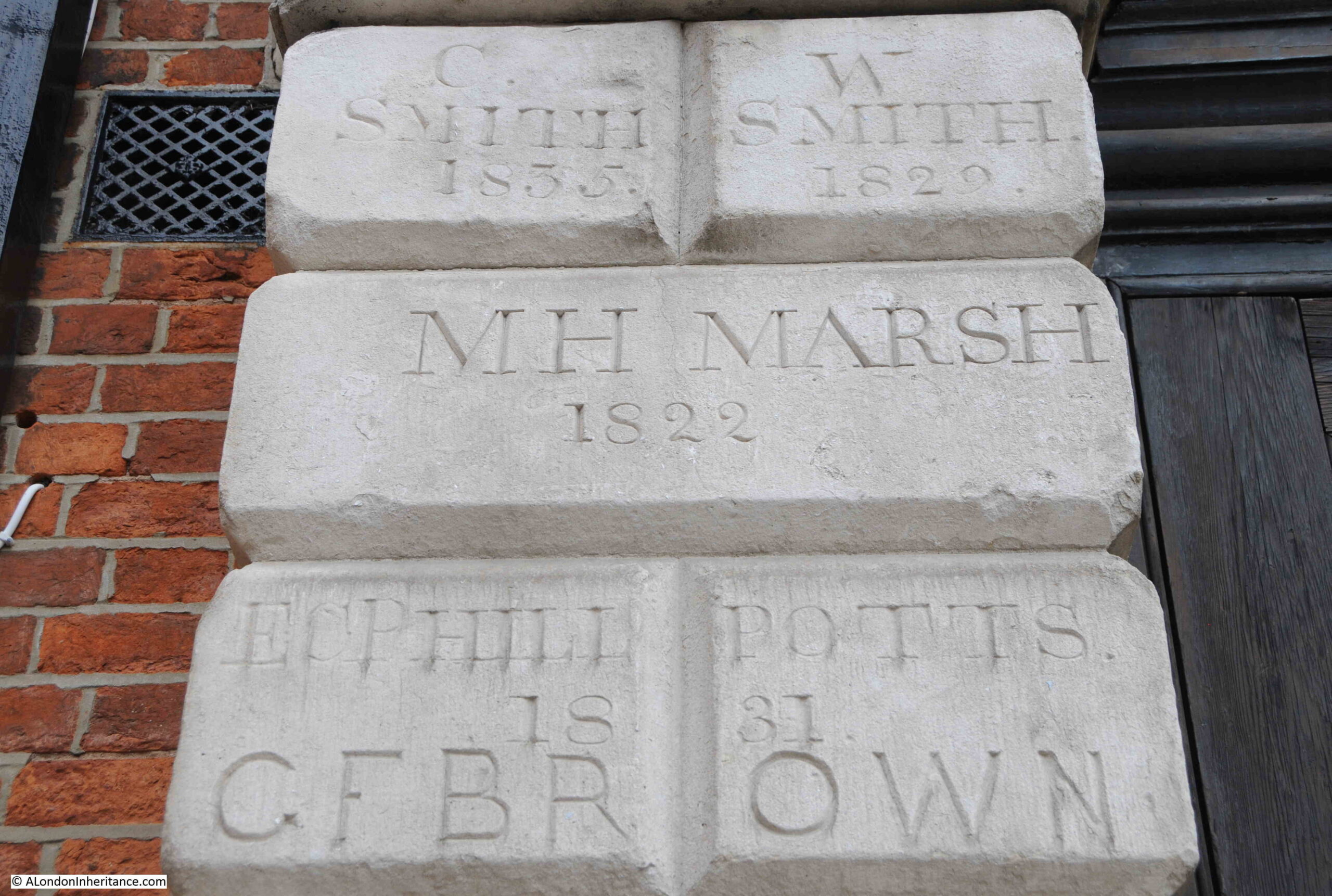
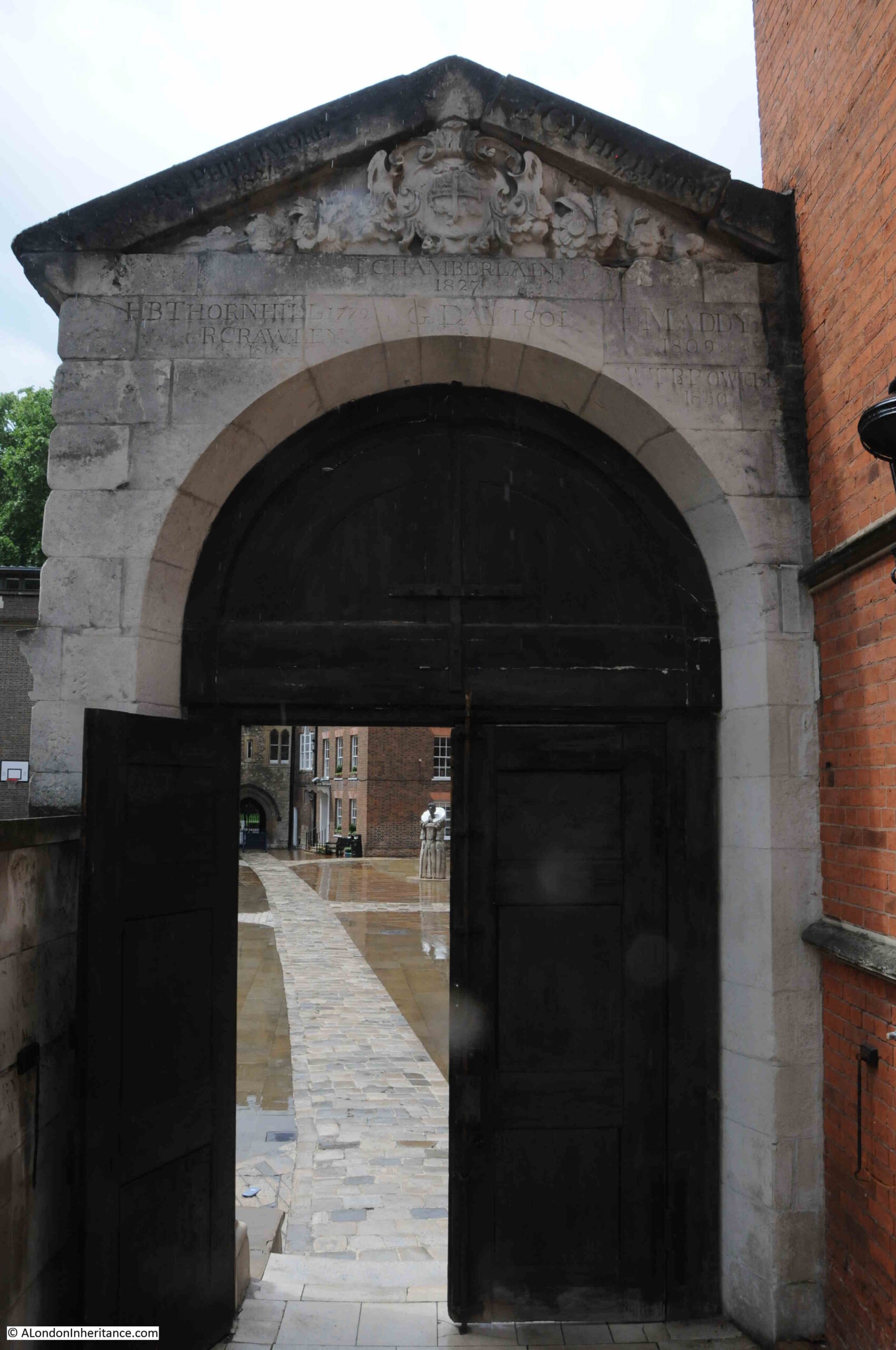
Westminster School Gateway is a fascinating historical structure simply as a gateway, but what adds further interest are the names and dates carved onto the gateway on almost every available space:

Westminster School Gateway

Westminster School has created a dedicated website to the gateway, which includes a remarkable degree of research to provide an inventory of the names carved on and around the gateway, with background details to the names.

The website can be found here.

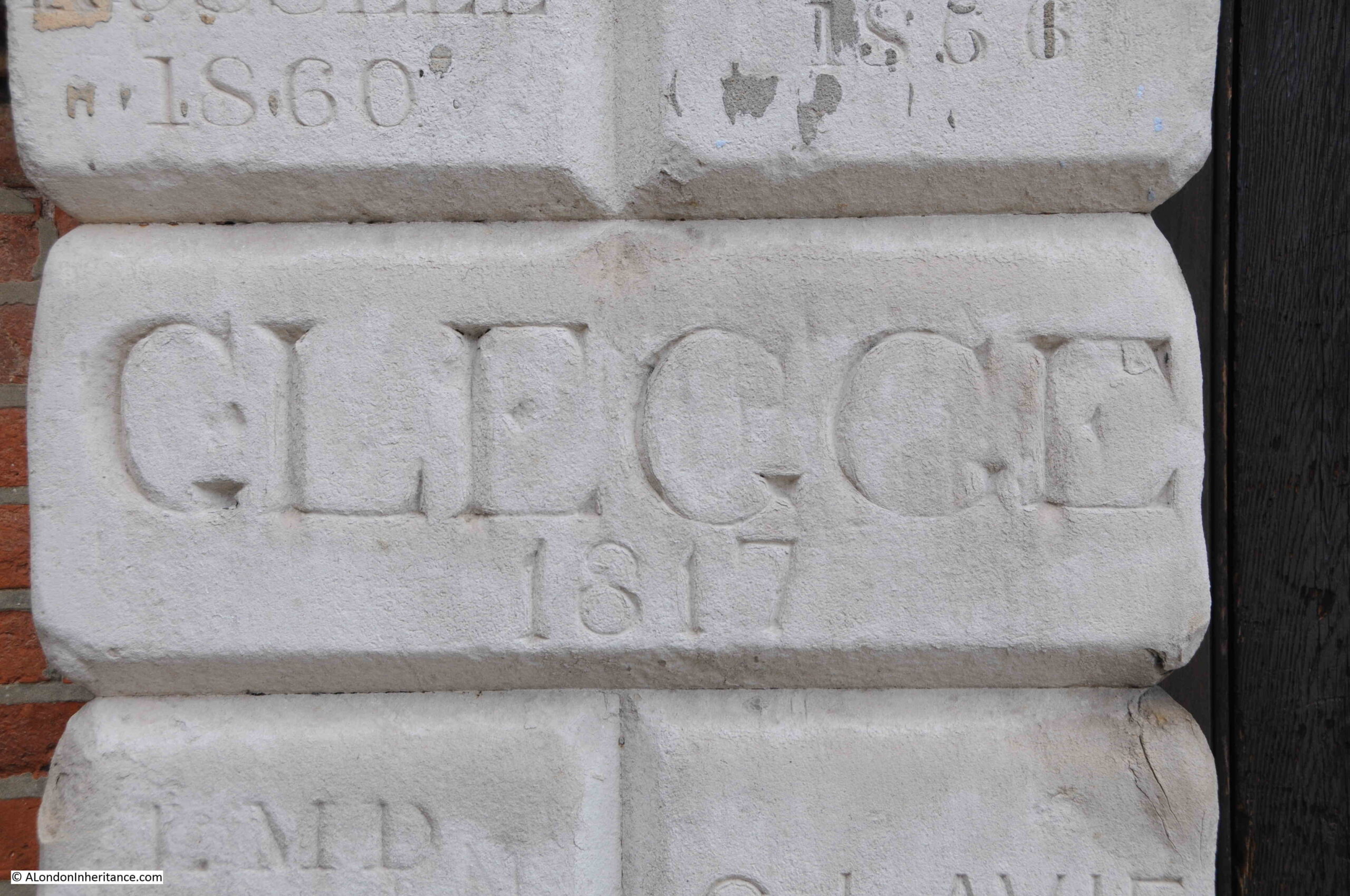
An example from the inventory, covering the name in the following photo:


LEGGE, GEORGE AUGUSTUS, eldest son of Hon. and Rev. Augustus George Legge FSA, Chancellor of Winchester, and Honora, eldest dau. of Walter Bagot 
Westminster School Gateway

The website also provides advice for those aspiring to leave their mark, and uses George August Legge’s carving as an example of why punctuation is important and that his name really needs a “.” between the initial and surname.

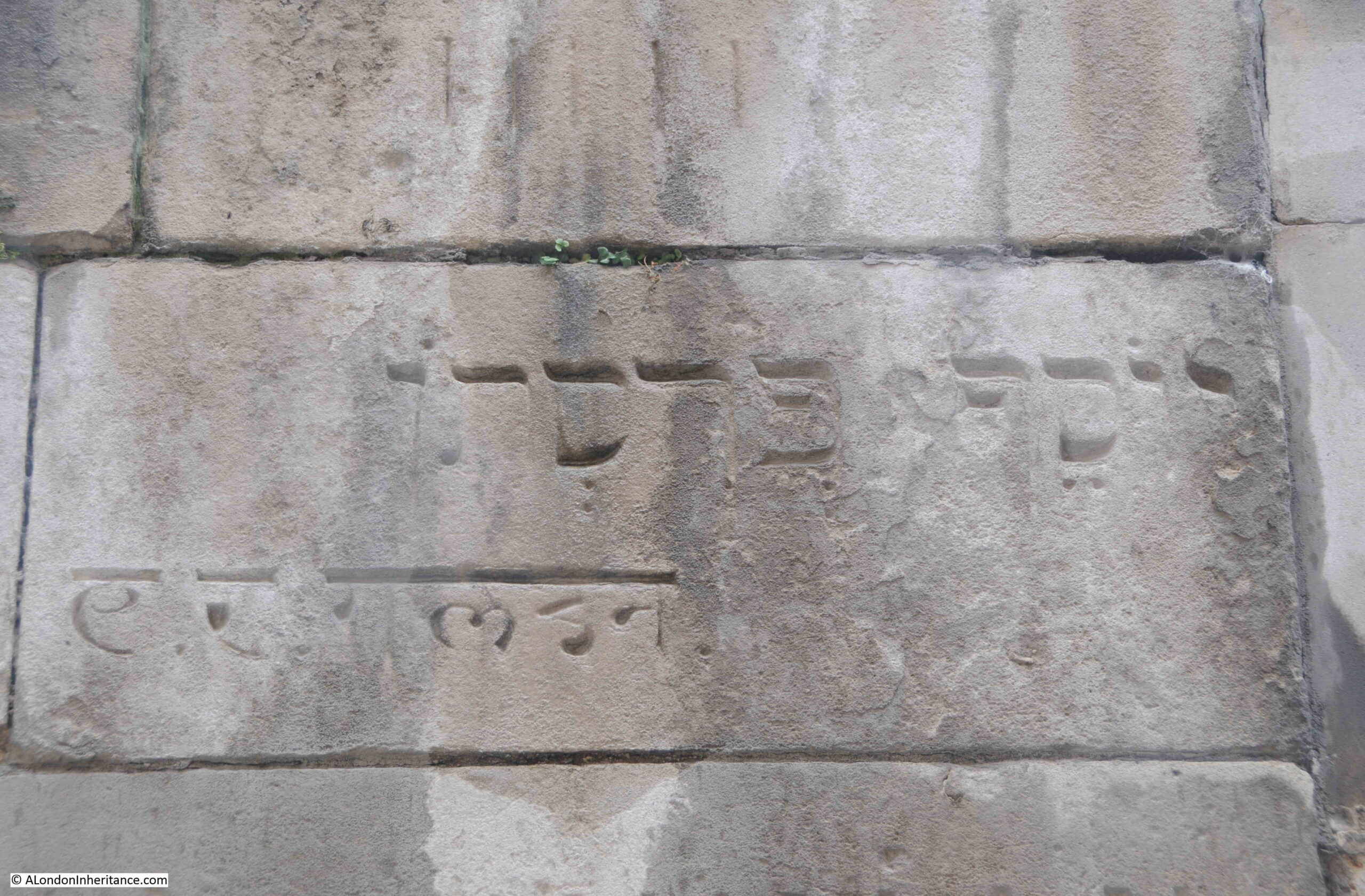
There are a couple of inscriptions in non English languages, as shown in the following photo with inscriptions in Hebrew and Devanagari (a North Indian script):

Westminster School Gateway

The Westminster School Gateway website has discovered the background to the above inscriptions, which can be found here.

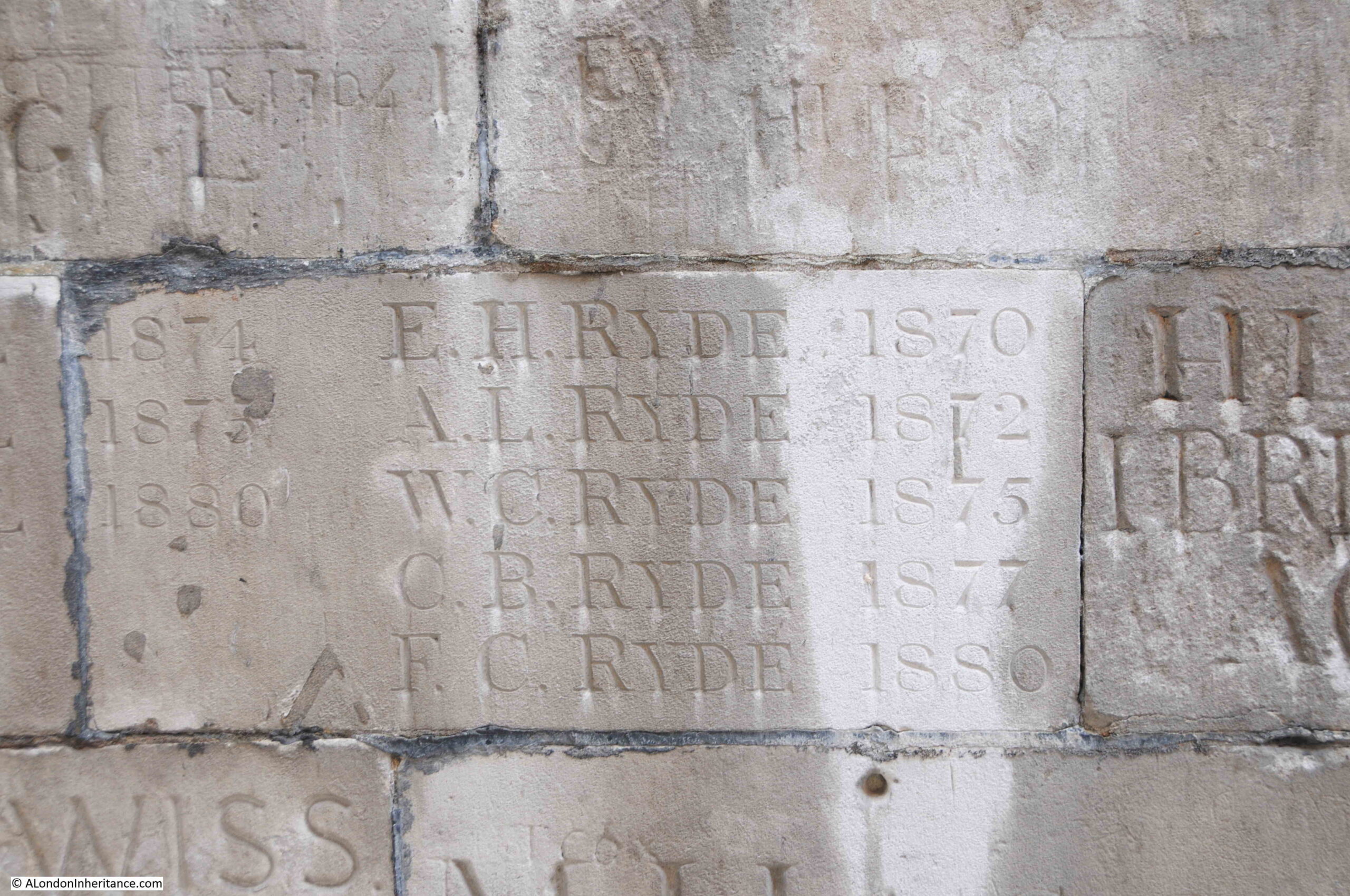
Five brothers:

Westminster School Gateway

The quality of the carving on the gate is excellent, the reason being is that the majority of the inscriptions were carved by stonemasons from Westminster Abbey, paid by the pupil to carve their name.

This is obvious when looking at the five Ryde brothers in the above photo as each instance of Ryde is identical to the other four.

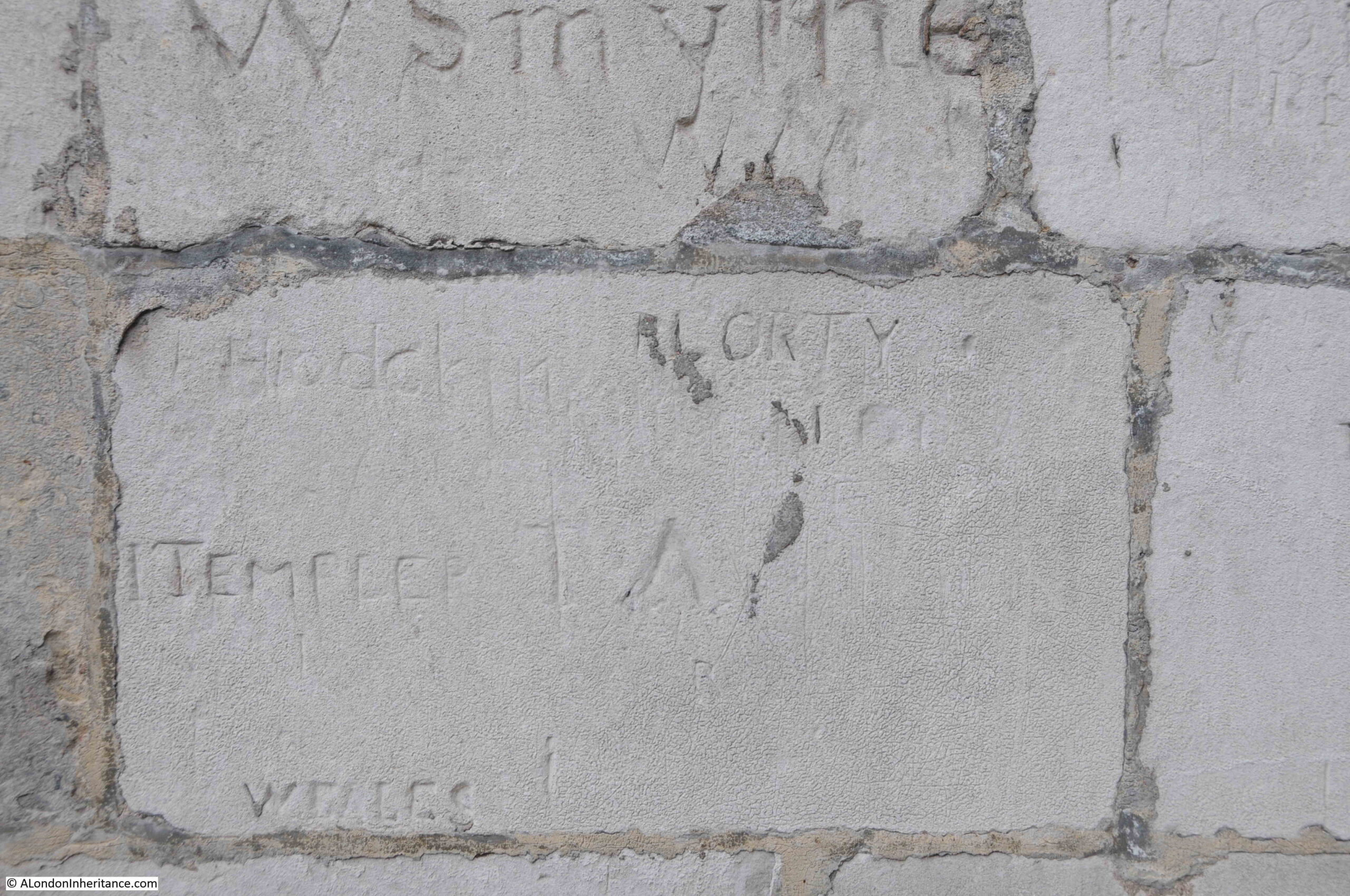
There are a number of names which have obviously been carved by the pupil, and the quality of these is very different from those by a trained stonemason as shown in the following photo:

Westminster School Gateway

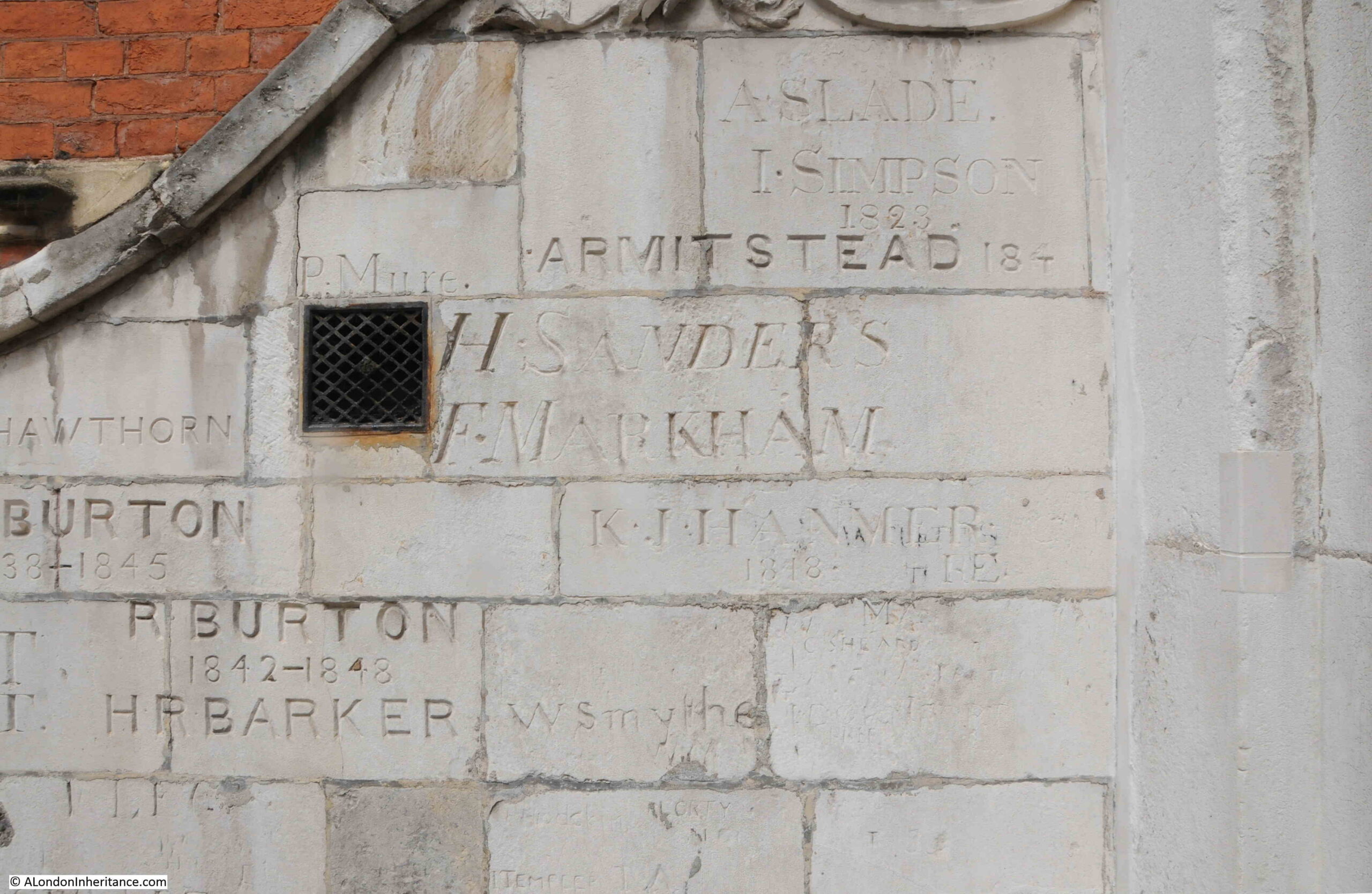
As well as the main body of the gateway, the side walls running up the stairs behind the gateway also have plenty of names:

Westminster School Gateway

And they are also on the rear of the gateway:

Westminster School Gateway

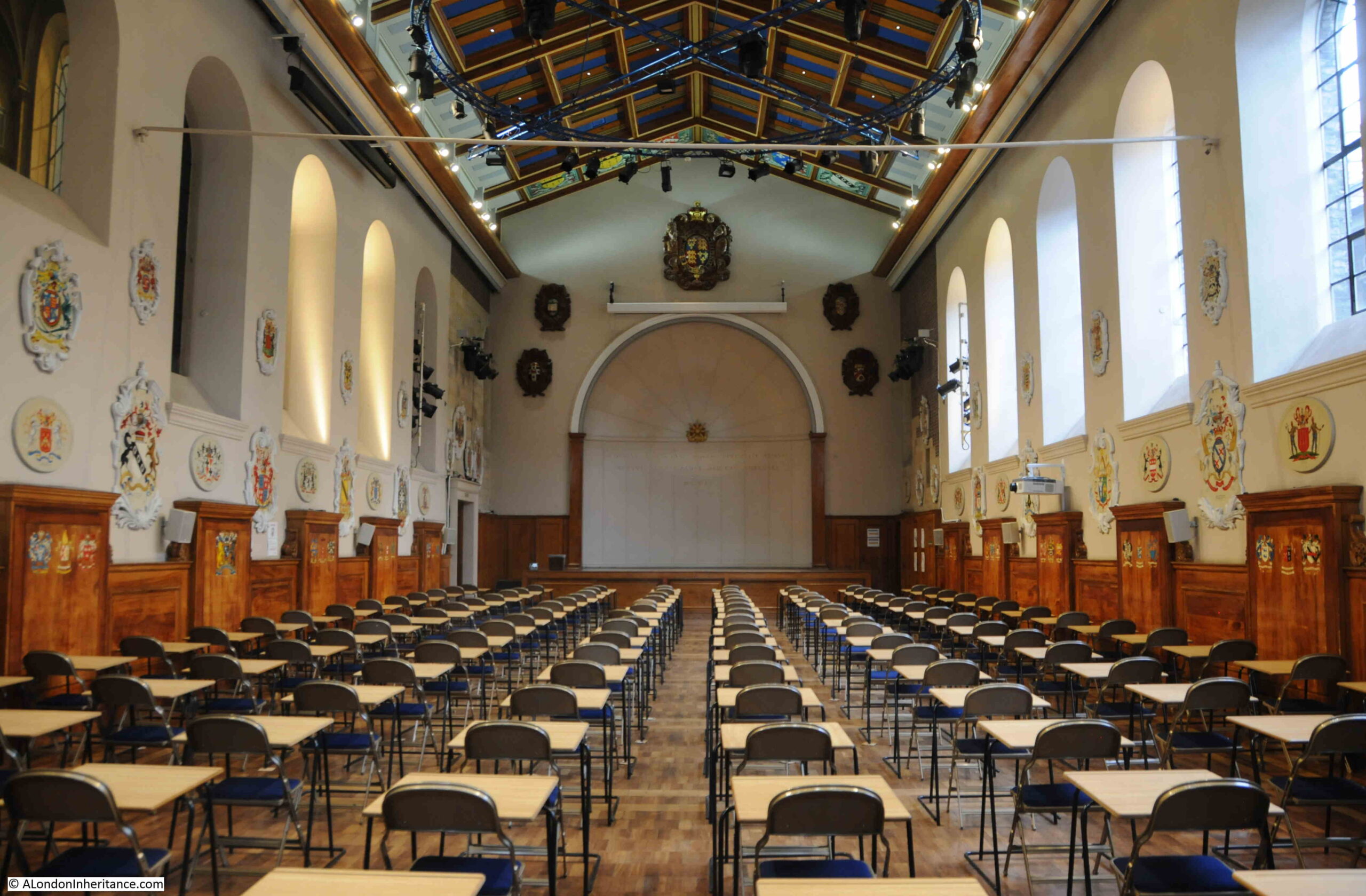
The school gateway leads to a small flight of stairs, a left turn which then opens out into the main school room, which on my visit was set-up for exams:

Westminster School room

This room was originally part of the monks dormitory in the time of the Benedictine monastery and it was first used as a schoolroom in 1599.

The LCC Bomb Damage maps show damage to some of the buildings on the eastern side of Little Dean’s Yard, including the schoolroom. This resulted in the refurbishment of the space, including the installation of a new roof which can be seen in the above photo.

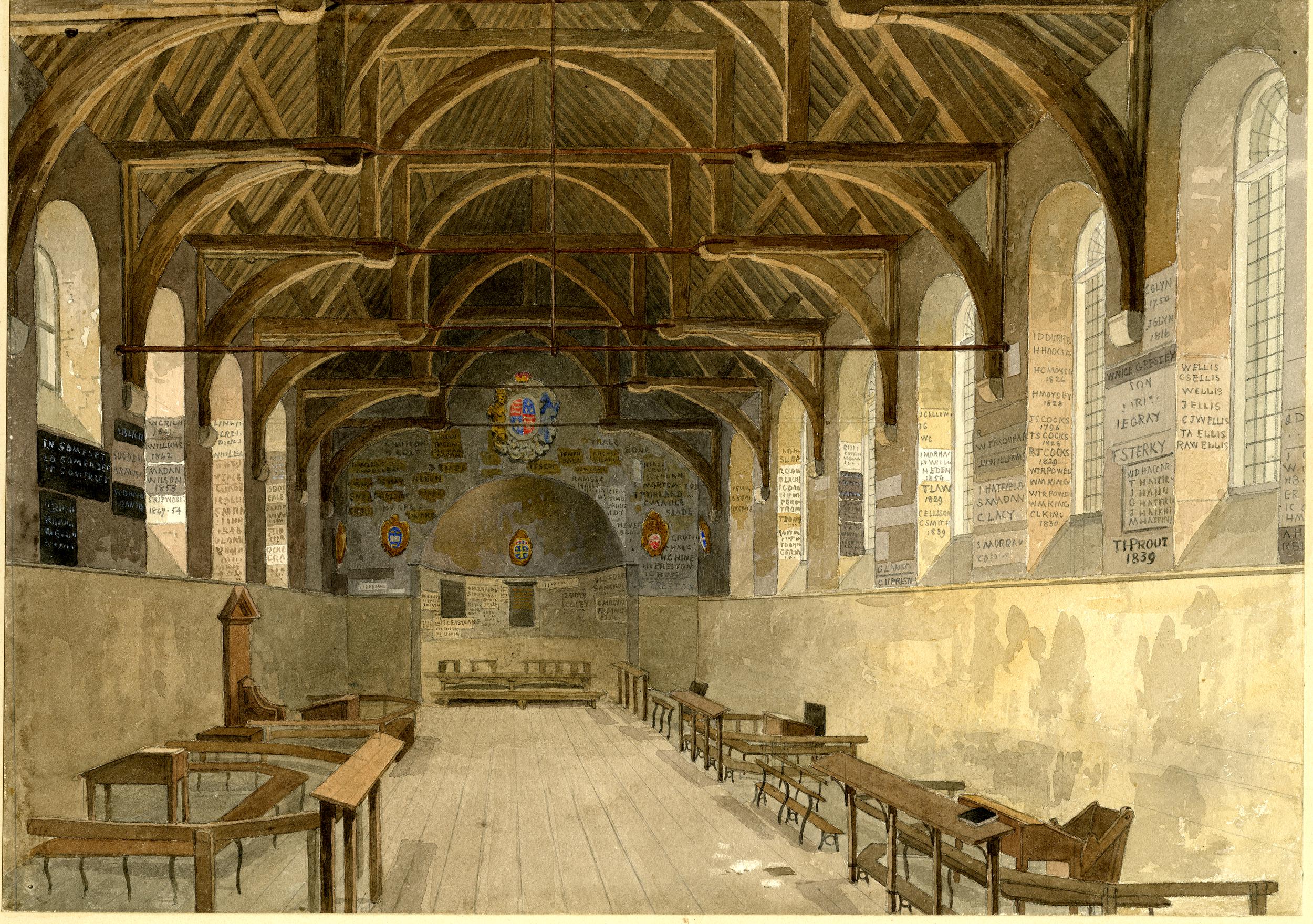
The following print shows the schoolroom in 1850. Desks and benches are set against the side walls (© The Trustees of the British Museum).

Westminster School room

On the walls between the windows there appear to be lots of inscriptions, so I assume the approach of carving inscriptions on the school gateway extended also into the schoolroom.

I could not see these inscriptions in the schoolroom today, so I suspect they were covered up during restoration work following the wartime bomb damage.

I was really pleased to recreate my father’s photo, one of those rare places in London where the view is almost exactly the same.

My thanks to the Archivist for providing access and information.

I have kept the post relatively high level as the school’s website dedicated to the gateway is comprehensive and fascinating.

I really recommend a read of the dedicated site to the gateway: “The School Gateway – The story behind Burlington’s Arch”

.alondoninheritance.com

Christchurch Greyfriars

Before heading to Christchurch Greyfriars, if you are interested in a walk exploring the history of Bankside, I have had one ticket returned from someone who cannot now attend the walk on Sunday 5th of June, and a couple of tickets are available for the walks later in July. The walk can be booked here.

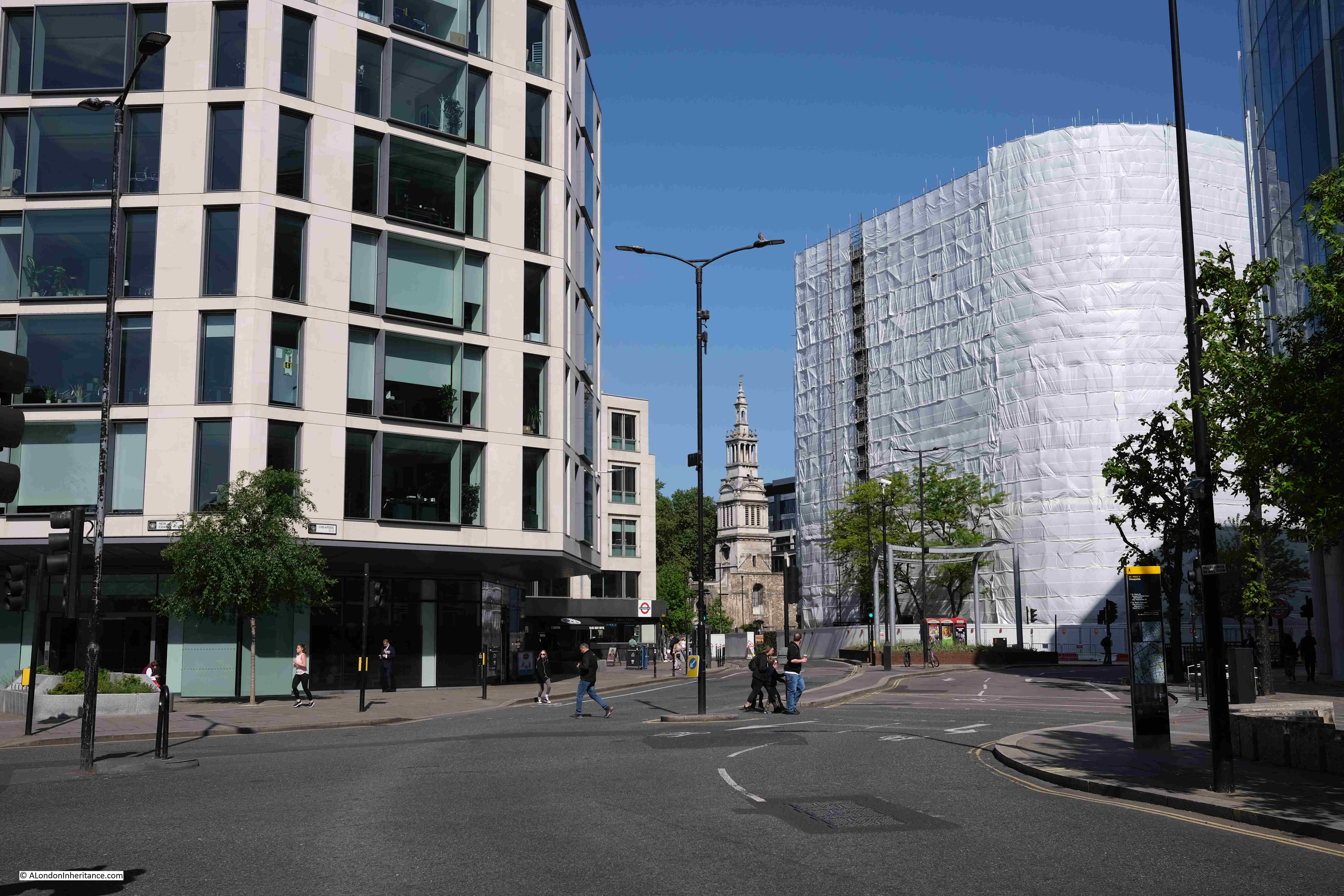
I took the following photo in 1973, taken from Cheapside, looking towards the church of Christchurch Greyfriars using my very first camera, a simple Kodak Instamatic:

Christchurch Greyfriars

Not a very good photo, the Kodak Instamatic was a very simple camera. All the film was contained within a large cartridge, which included the exposed film. Pre-set focus and the only setting for exposure and speed were a single switch which could be moved either to sunny or cloudy. A very child friendly camera.

Roughly the same view, around 50 years later, in 2022:

Christchurch Greyfriars

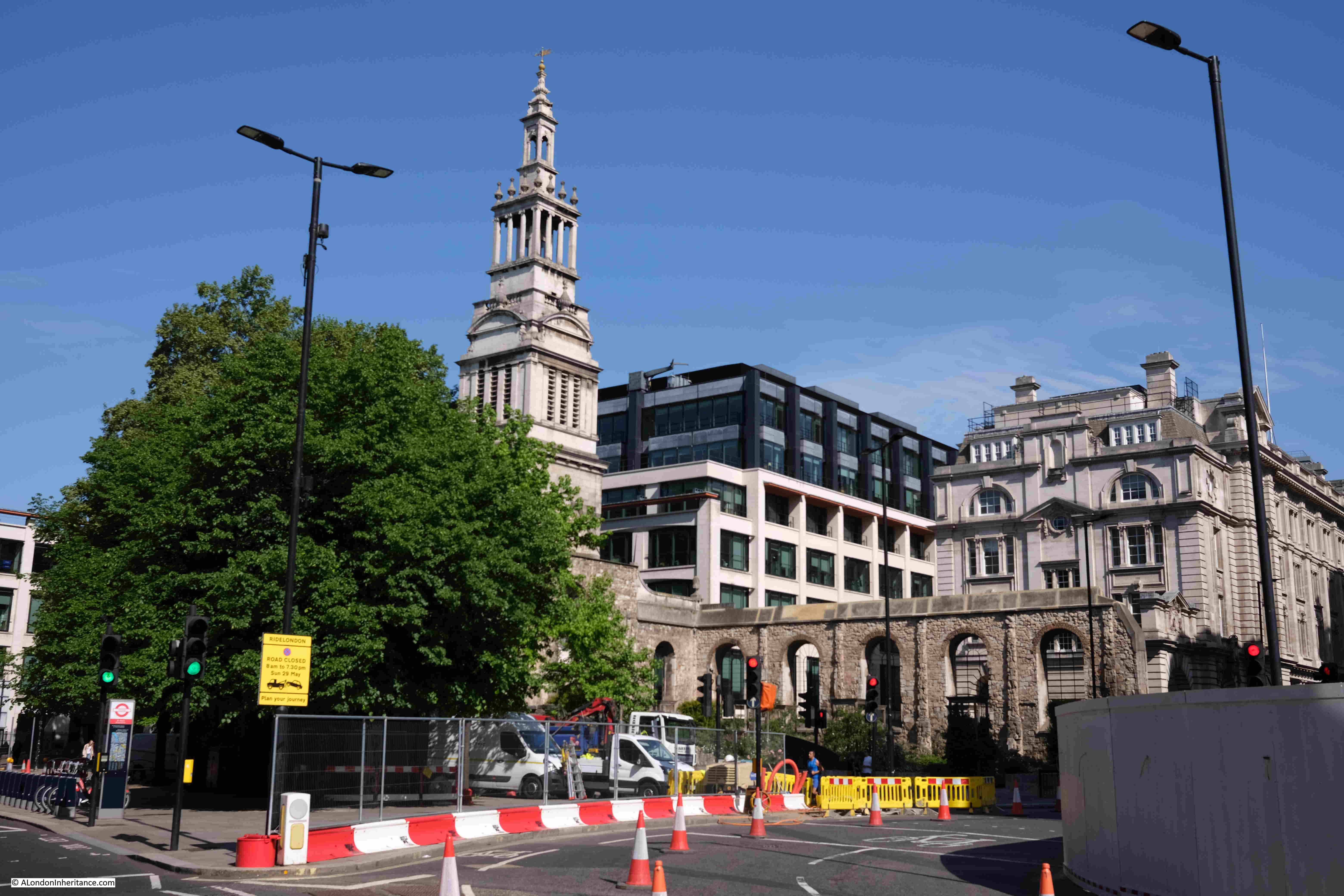
Christchurch Greyfriars is an interesting, and distinctive church. A very different history to many other City churches.

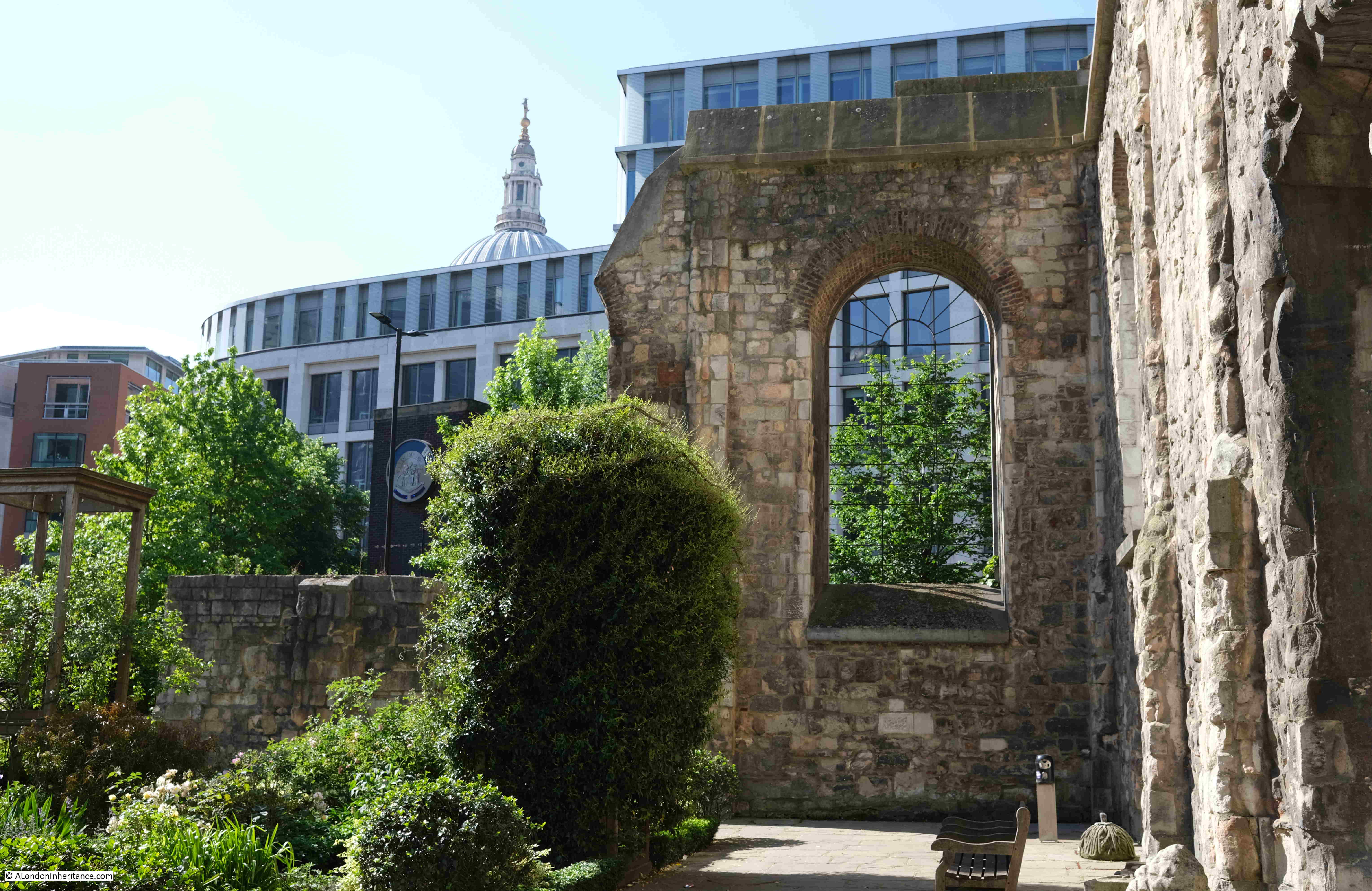
It is distinctive, as whilst the tower of the church is intact, the body of the church is now a garden, with only one main side wall standing, and a short stub of the other sidewall. The rear wall is completely missing.

Christchurch Greyfriars

The church was destroyed during the night of the 29th December 1940, when much of the area surrounding, and to the north and south of St Paul’s Cathedral, was engulfed by the fires started by incendiary bombs. This was the raid that destroyed the area that would later be rebuilt as the Golden Lane and Barbican estates.

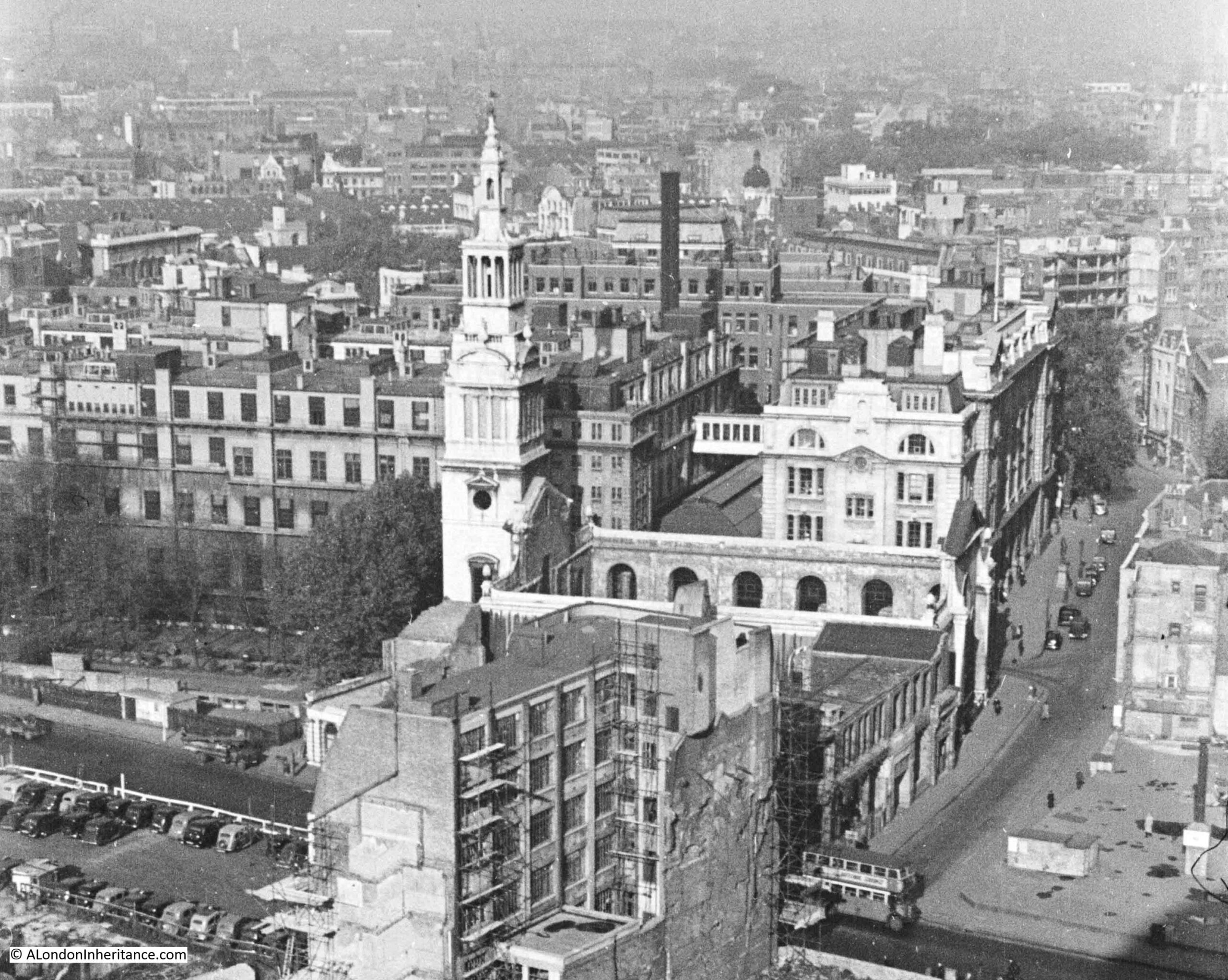
Christchurch Greyfriars was in one of my father’s photos taken from St Paul’s Cathedral just after the war, and can be seen in the following extract from one of the photos (the full series can be seen in this post, and this post):

Christchurch Greyfriars

As can be seen in the above photo, the church still retained its four walls. The church was destroyed by fire which burnt the contents of the church along with the roof, but left the walls standing.

In my 2022 photo you can count 5 windows in the remaining side wall. In the above photo, there are 6 windows (part of the 6th window on the right can just be seen to the left of the end wall of the church). There is also a two storey building which runs south from the end wall of the church.

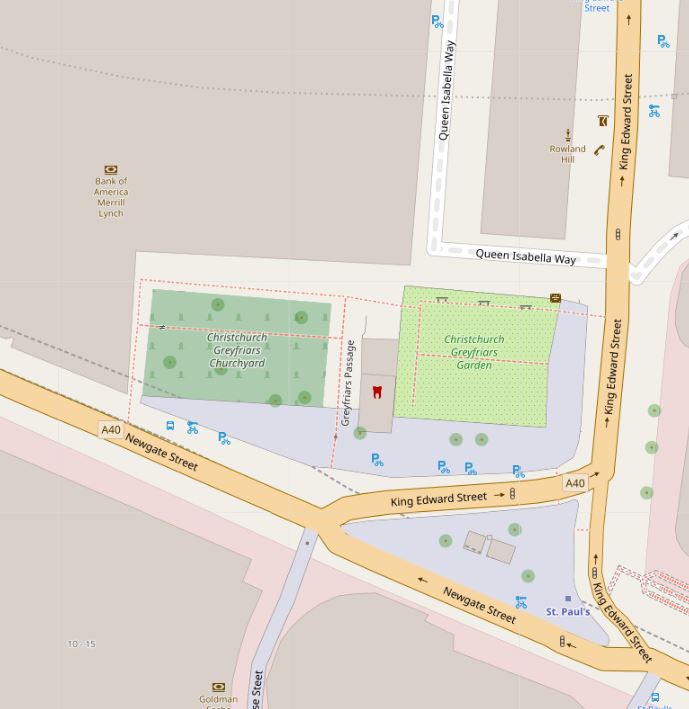
The reason for these differences, and for the loss of the rear and southern side wall were changes in 1973 to allow the widening of King Edward Street, and the construction of a spur from Newgate Street into King Edward Street.

Christchurch Greyfriars was Grade I listed in 1950, however this protection appears to have been insufficient to prevent the demolition of much of the surviving walls.

In the following map, Newgate Street runs from left to right, and the spur of King Edward Street can be seen cutting across where the two storey building was located. This, along with widening of King Edward Street, and the footpath along the street, resulted in the demolition of the end wall and shortening by one window of the north wall  (© OpenStreetMap contributors).

Christchurch Greyfriars

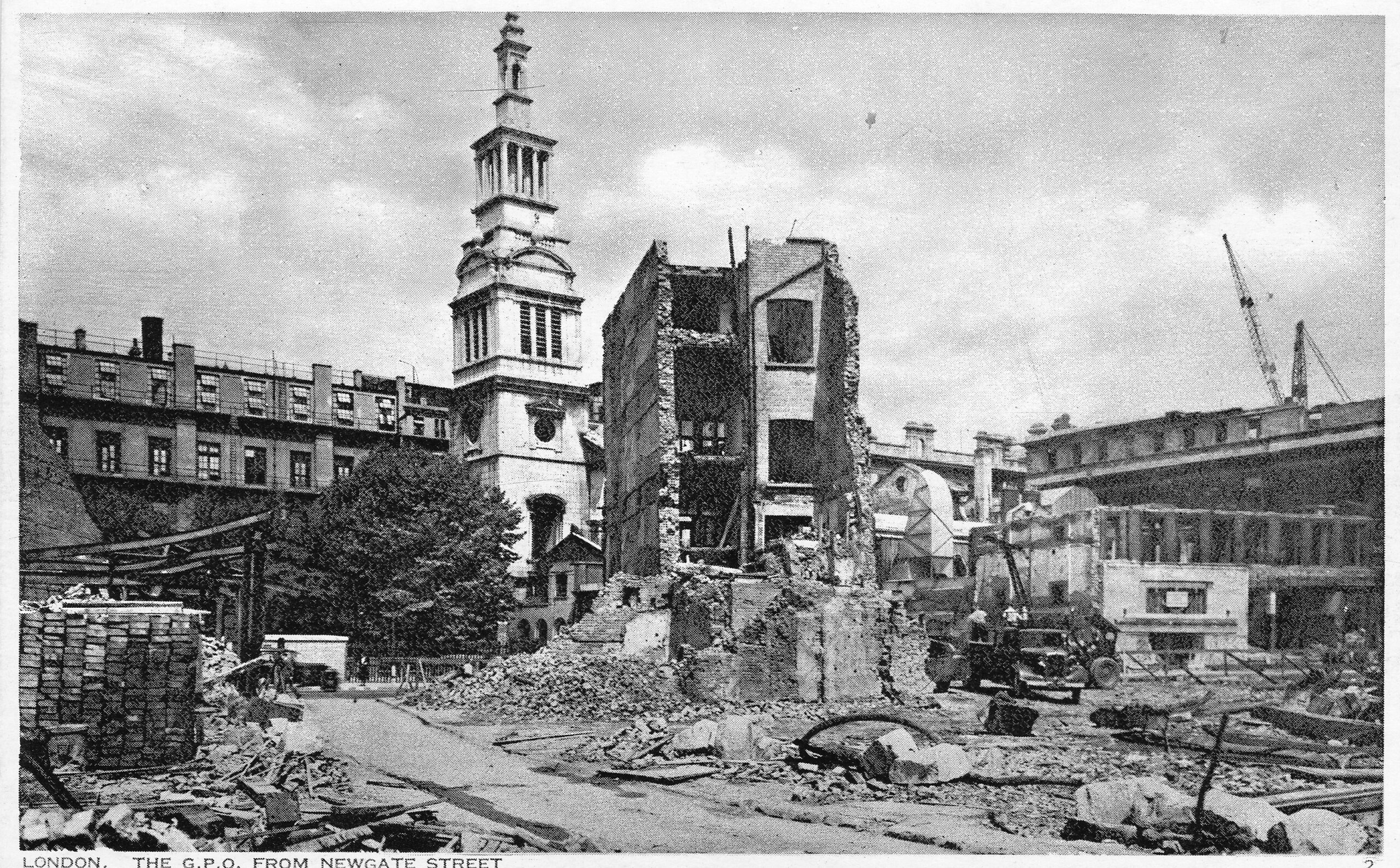
The church was included in the series of postcards “London under Fire”, issued during the war:

London Under Fire

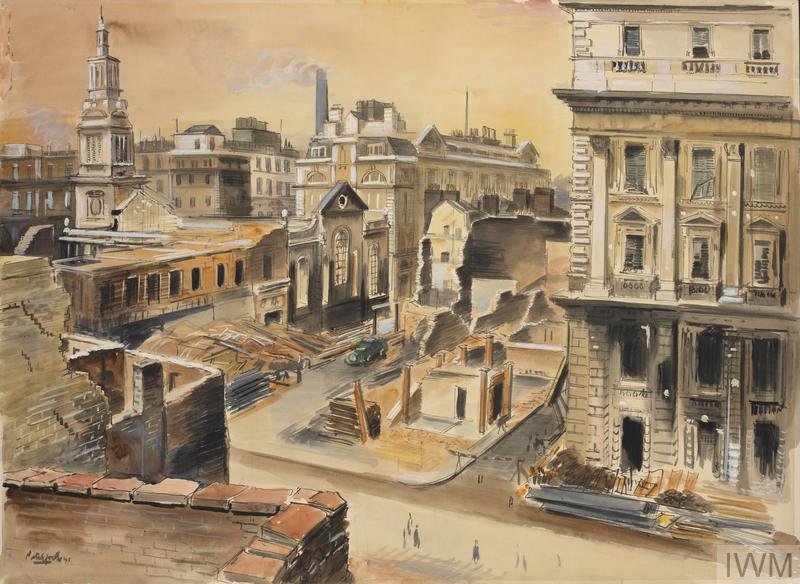
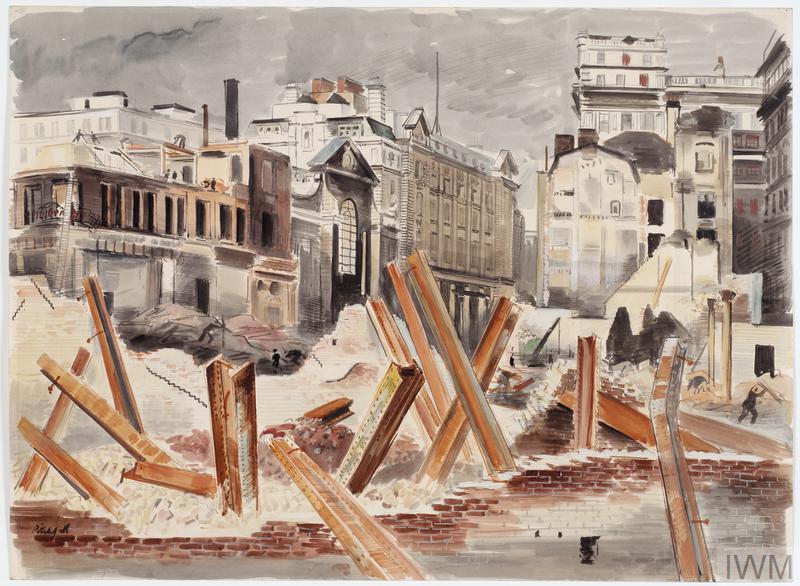
The church was also included in a couple of works by the artist Roland Vivian Pitchforth for the War Artists Advisory Committee. Both show the burnt out church with the surviving tower and walls:

War Artists Advisory Committee
Post Office Buildings : the Telephone Exchange (Art.IWM ART LD 938) image: a view looking down on a cleared bomb site in between other burnt-out buildings in the City. Copyright: © IWM. Original Source: http://www.iwm.org.uk/collections/item/object/21822

And both show the two storey building to the south of the church where the slip road from Newgate Street to King Edward Street now runs:

War Artists Advisory Committee
Post Office Buildings (Art.IWM ART LD 939) image: a bomb site in the foreground with steel girders sticking up out of the rubble. In the background buildings remain standing, however men can be seen at work securing the building on the right. Copyright: © IWM. Original Source: http://www.iwm.org.uk/collections/item/object/21823

Note that in the Imperial War Museum commentary for the above two prints, the focus in on the Post Office Buildings, one of which was the large building to the right of the church.

The Post Office, or British Telecom has had a long association with King Edward / Newgate Street, but has now moved away. In my 2022 photo there is a large building covered in white sheeting. This was the 1980s head office of British Telecom. It is now being converted into a mixed use development, and is unusual in the City in that the new building will retain the structural framework of the original rather than the usual full scale demolition and complete rebuild.

What has no doubt helped this approach is the height limitation around St Paul’s Cathedral so the usual high glass and steel tower was not an option.

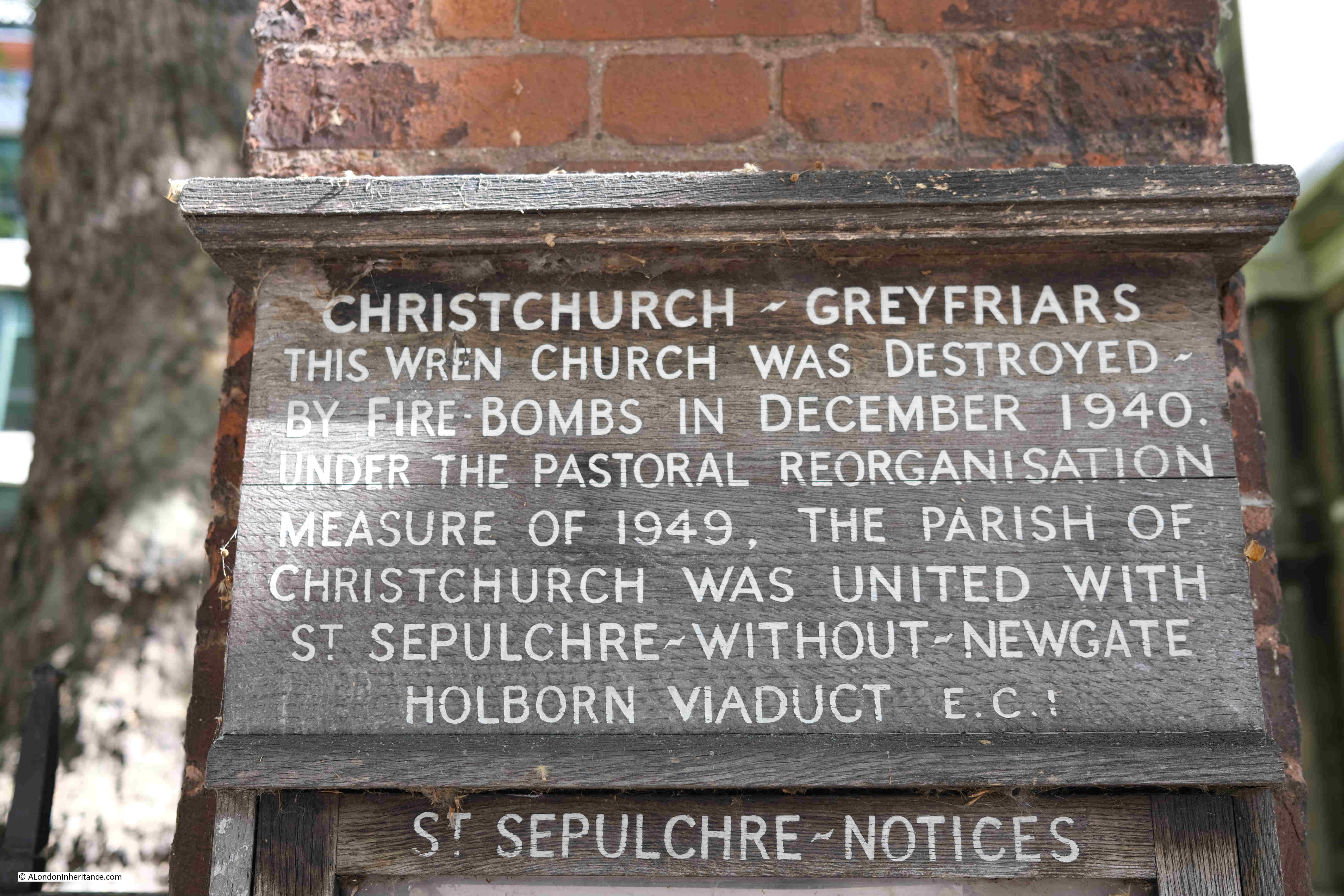
A sign close to the tower of the church confirms when and how Christchurch Greyfriars was destroyed (perhaps there should be a second plaque explaining how and why some of the walls disappeared).

Christchurch Greyfriars

The plaque also informs why there was no requirement to rebuild the church, as the old parish of the church was united with that of St Sepulchre-without-Newgate. The number of people living in the City had reached a point where there was an insufficient number of parishioners and regular church attendees to justify many of the old City churches.

A wooden font cover was rescued from the burning church on the 29th December 1940, and it can now be seen in the church of St Sepulchre.

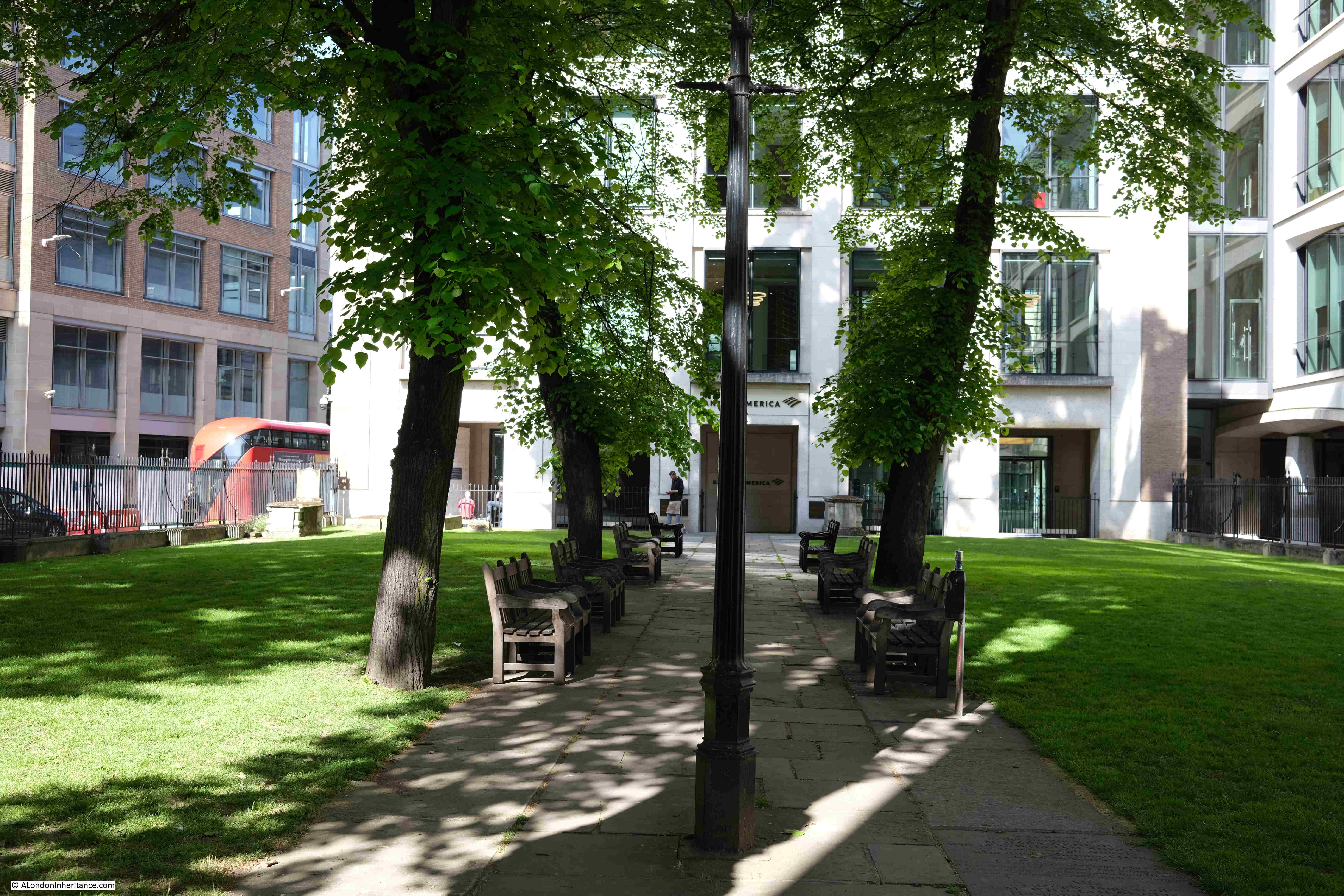
To the west of the church is a small open space – the Christchurch Greyfriars churchyard:

Christchurch Greyfriars

This is not the traditional churchyard. William Morgan’s 1682 map of London provides a clue:

Christchurch Greyfriars

The church can be seen to the right of centre (although it is facing the wrong way), and to the left of the picture of the church, there is a rectangle labelled “Old Church”.

The original church was the church of a monastery established around 1228 on land to the north of the church by the Franciscan’s, or Greyfriars.

The first church on the site was built in the 13th century, demolished in 1306, and a new church built in 1325. This church was much larger than the church we see today, and as well as the space occupied by the current church ruins, also occupied the green space to the west of the church, hence the comment “Old Church” in the map extract.

The church attached to the monastery was of some size. According to “London Churches Before The Great Fire” (Wilberforce Jenkinson, 1917), the church was described as being “300 feet in length, in breadth 89 feet, and in height 64 feet”.

The book also states that “no other parish church contained the remains of so many of the great, there being there buried four queens, four duchesses, four countesses, one duke, two earls, eight barons, thirty-five knights, etc”.

The queens I can identify are:

  • Queen Margaret, the second wife of King Edward I
  • Queen Isabella, the wife of Edward II
  • Queen Eleanor of Provence (just her heart so not sure if this really counts)

Cannot find who the fourth queen was, some sources reference Queen Joan of Scotland, however most sources state that she was buried in Perth.

Whether it was two and a bit queens, three or four, the church appears to have been a large and important church, as was the Franciscan monastery, with only St Paul’s Cathedral being greater in size.

The monastery was taken by the Crown during the Dissolution when Henry VIII took the properties of religious establishments across the country in the mid 16th century, and after a short period when the building was used for storage, the church became a local, although rather impressive, parish church.

“London Churches Before The Great Fire” records that Sir Martin Bowes, mayor of the City, sold all the ornate alabaster and marble monuments from the church for £50 in 1545.

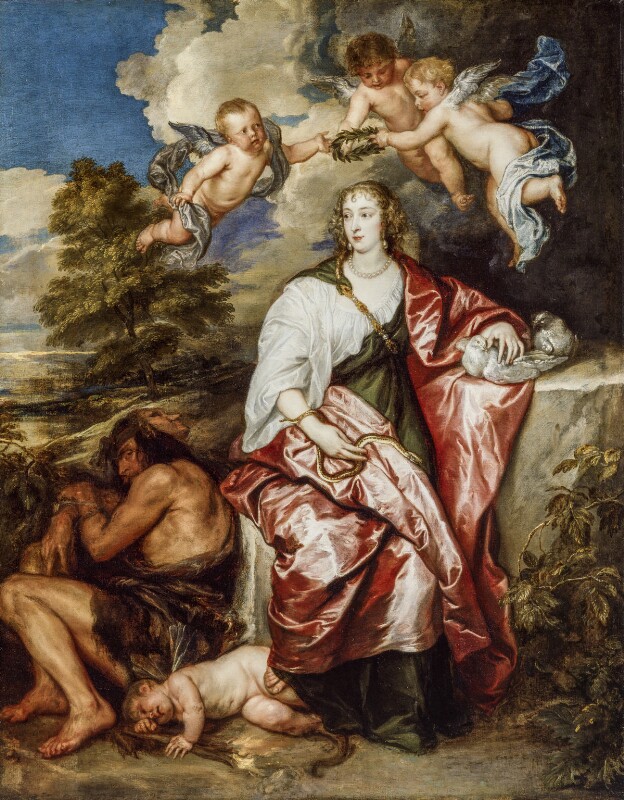
Ornate memorials did continue after the church became a parish church, and the same book also records a memorial to Venetia, the wife of Sir Kenelm Digby who was buried in the church:

“Her husband tried to preserve her beauty by cosmetics and after her death had her bust of copper-gilt set up in the church. The bust was injured in the fire and was afterwards seen in a broker’s stall. She was painted by Vandyke.”

Bit of a lesson there on fame and beauty, that no matter how good looking, or famous, eventually we may all end up on the equivalent of a broker’s stall.

van Dyke’s portrait of Venetia, Lady Digby:

Venetia, Lady Digby
Venetia, Lady Digby
by Sir Anthony van Dyck
oil on canvas, circa 1633-1634
NPG 5727
© National Portrait Gallery, London. Creative Commons Reproduction

View down the alley between the remaining side wall to the north, and what were the old Post Office buildings:

Christchurch Greyfriars

The church was one of those lost during the Great Fire of London in 1666.

It was rebuilt by Wren between 1687 and 1704 on the foundations of the chancel of the original church. There was no need for a parish church to be the same size as the pre-fire church, and it was also expensive to rebuild with even the smaller church being one of Wren’s most expensive at a cost of over eleven thousand pounds.

It is remarkable just how many churches there were in the City of London. Today it seems as if you only need to walk a short distance to find another church but there were many more in previous centuries.

When Christchurch Greyfriars was rebuilt after the Great Fire, the church absorbed two smaller parishes, the parish of the wonderfully named St Nicholas in the Shambles, and that of St Ewin or Ewine. The churches for these two smaller, adjacent parishes were not rebuilt.

The base of the tower has a number of monuments which were rescued from the war damaged church:

Christchurch Greyfriars

After the church and the monastic buildings of the Franciscans were taken by the Crown, the buildings continued to have a close relationship.

There was always a need to provide help for London’s poor. There were many children throughout the city who did not have a father, or were part of a family that was struggling to feed them. In 1552 King Edward VI responded to this need by working with the mayor of the City to form a charitable organisation to provide for some of these children.

The result being that the old buildings of the Franciscans were taken over, donations were received, a Board of Governors set-up and in November 1552, Christ’s Hospital opened with an initial 380 pupils.

There is a sculpture on the southern side of the church of some of the children of Christ’s Hospital in their traditional school uniform:

Christ's Hospital

Christchurch Greyfriars became the church for Christ’s Hospital.

The buildings of Christ’s Hospital were damaged during the Great Fire, rebuilt after, with a frontage designed by Wren.

The following print from 1724 shows the church to the right, along with the impressive buildings of Christ’s Hospital  (© The Trustees of the British Museum):

Christ's Hospital

The text below the print provides some background on the school in the early 18th century:

“This Hospital, formerly a House of Grey Friars was first founded by that pious Prince Edward the 6th and has since received many donations from other persons by which Charities poor Children to the number of about 820 boys and 80 girls are not only provided with Lodging, Diet, Clothing and Learning, but when discharged of the House are bound out Apprentices and some of the Boys who have made large advances in Learning are sent to University. The House is divided into handsome Wards, where the Children lodge and a particular Ward where the sick are removed. For their instruction, here are a Grammar School, a Mathematick School a Writing School, a School where Girls learn to Read, Sew and Mark, and of late years, Boys have been taught to Draw. This Hospital is under the care and patronage of the City and by prudent care taken therefor it has produced many famous for Wealth, Learning and Servicableness to the public.”

Christ’s Hospital school left the site in 1902 and moved to Horsham in West Sussex where the school continues to this day.

View from next to the tower into the old body of the church:

Christchurch Greyfriars

View looking south towards St Paul’s where only one window and surrounding part of the southern wall remains:

Christchurch Greyfriars

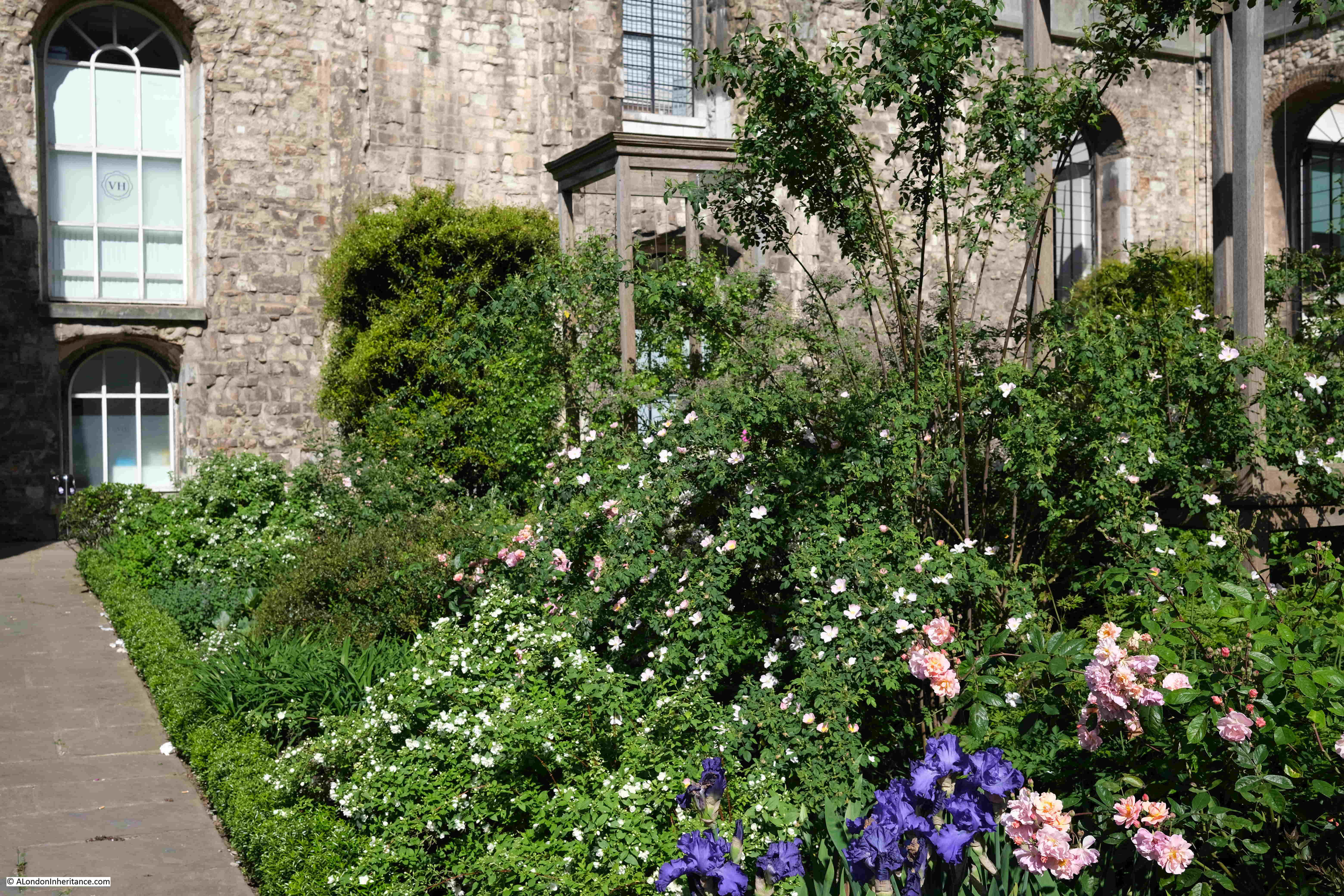
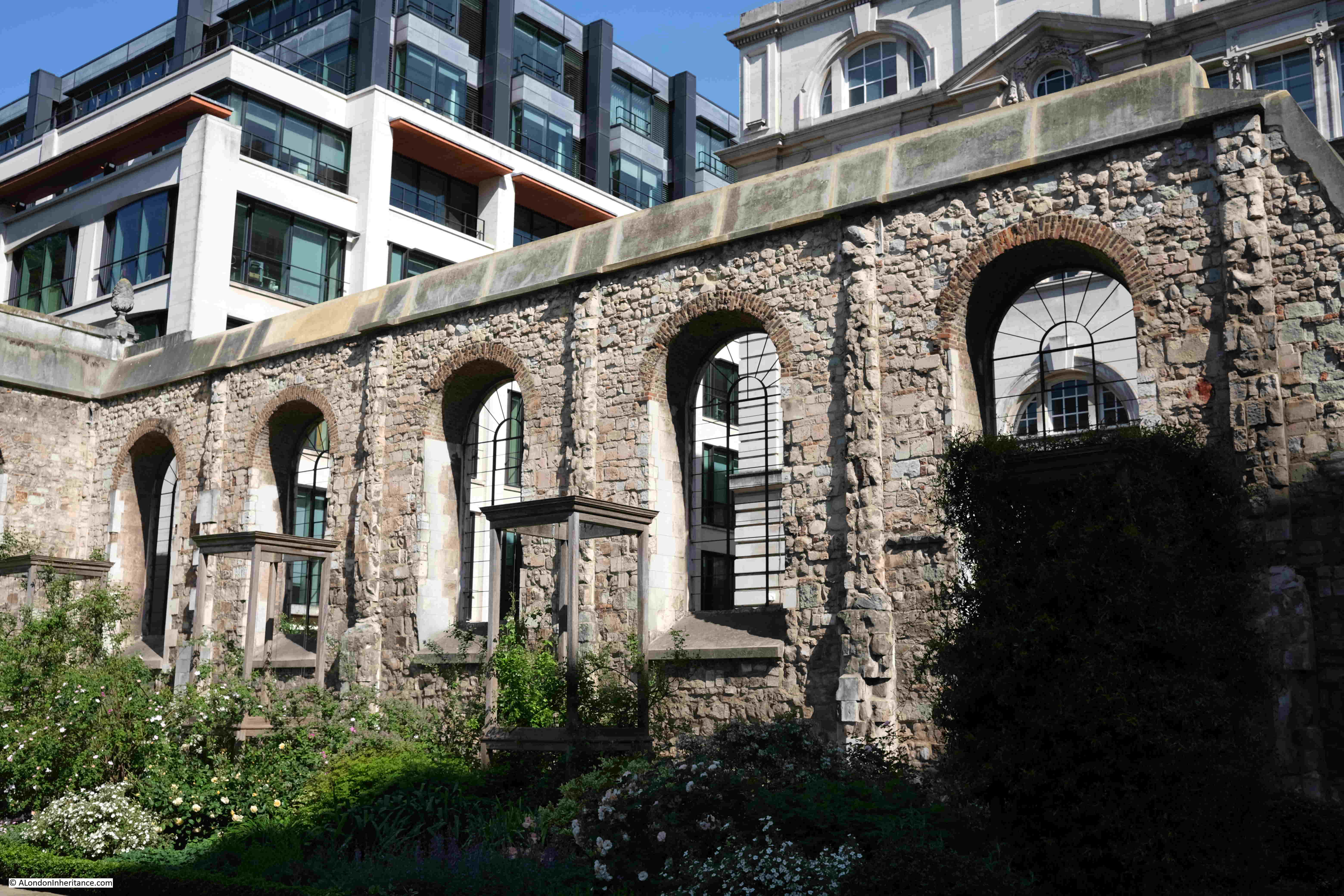
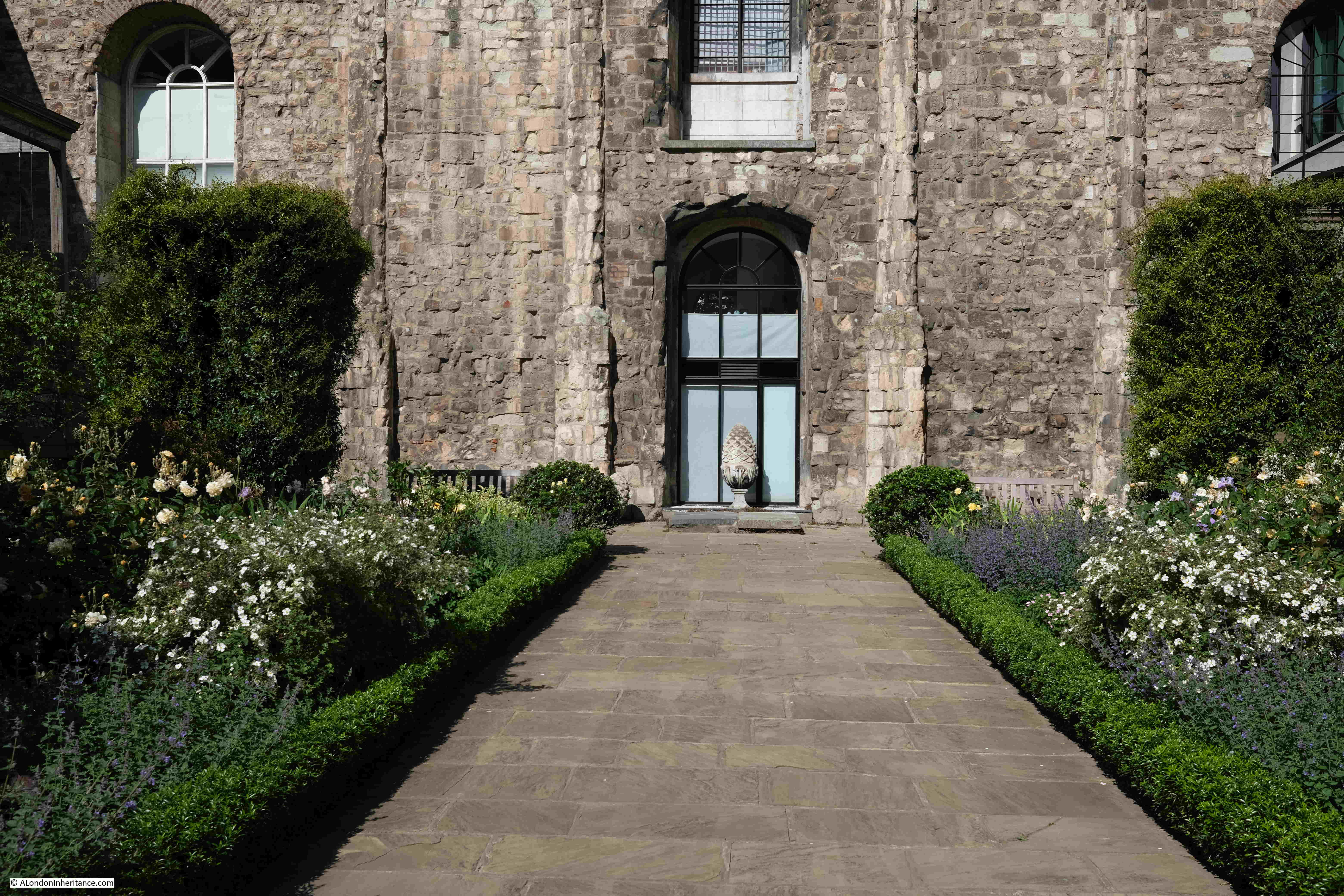
What was the interior of the church was laid out as a rose garden in 1989, with a major update to the gardens in 2011. The configuration of this garden is intended to reflect the Wren church with the position of pews marked by the box edges and wooden towers where the old stone columns were located:

Christchurch Greyfriars

The northern wall of the church from what was the interior of the church:

Christchurch Greyfriars

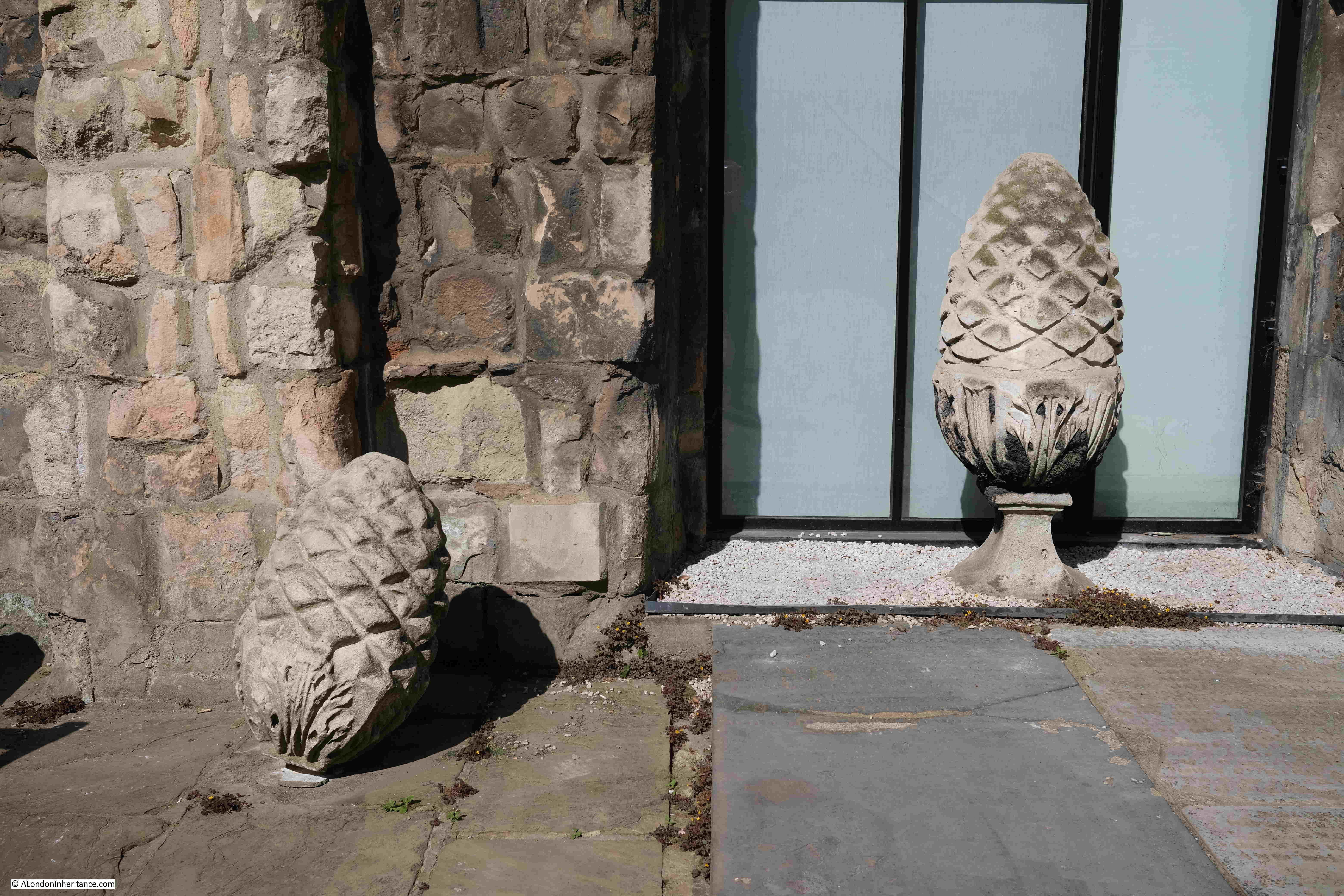
If you return to my father’s photo of the church, you can see at the top corners of the church walls, there were stone pineapples. The ones rescued from the demolished walls can be found on the ground in the garden, next to the tower:

Christchurch Greyfriars

View along the centre of the church, pews would have been on either side with the small box hedges marking the edge of the pews:

Christchurch Greyfriars

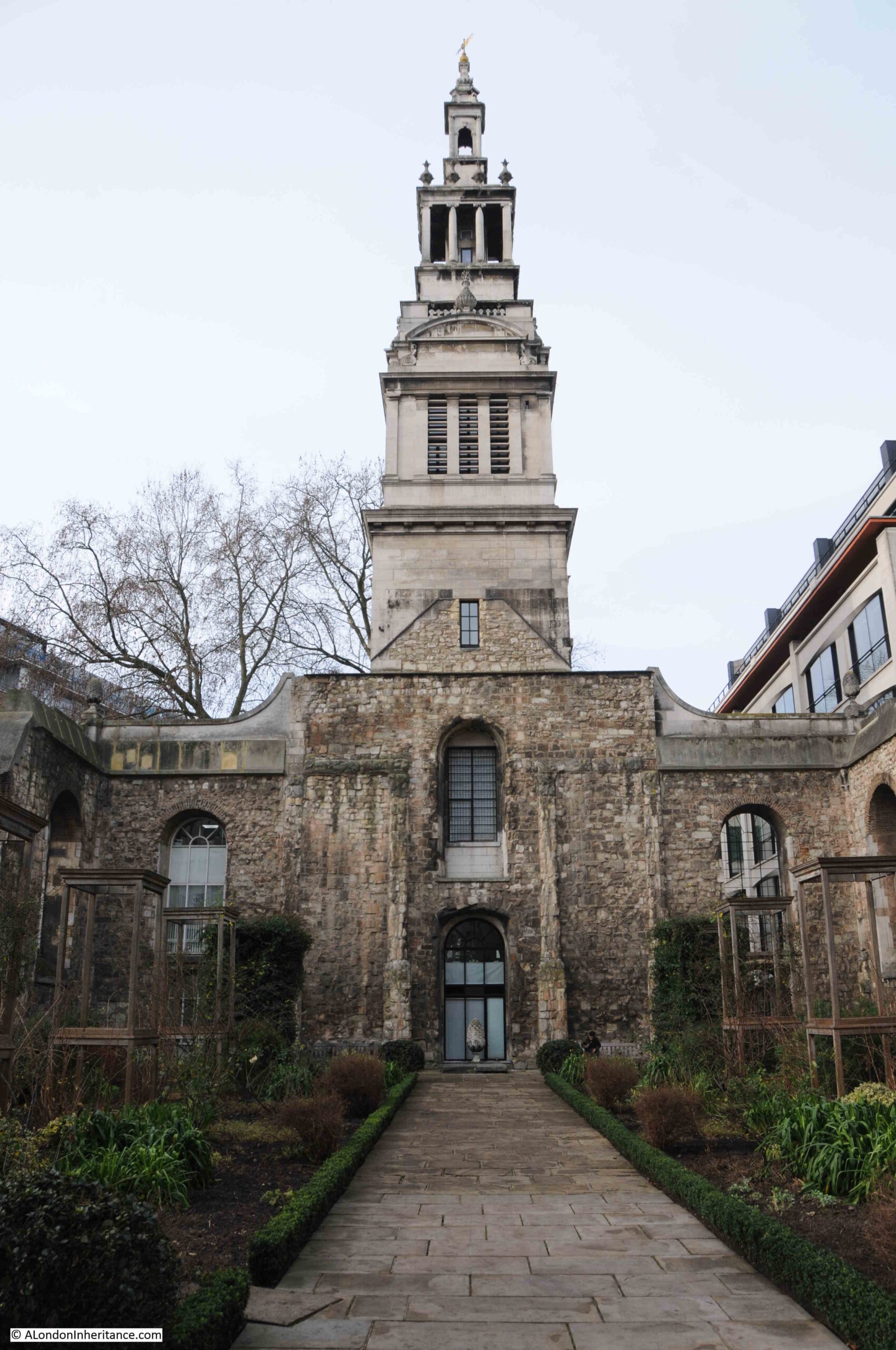
A view of the tower of the church and part of the garden earlier in the year:

Christchurch Greyfriars

Christchurch Greyfriars is a survivor. Originally dating from the 13th century, it has survived being part of a Franciscan monastery, a charitable hospital / school, the Great Fire, the London Blitz and post war road construction and extension.

During many of these events, the church has shrunk in size, leaving the view we see today.

There was a campaign a number of years ago to rebuild the missing walls of the church, and for the church to become a memorial “to honour all Londoners who have been the victims of bombings in wartime and peacetime during the modern era”, however nothing seems to have come of this.

On a sunny spring or summer’s day, the gardens are a wonderful place to sit and contemplate the history of the church, surrounded by plants, flowers and bees.

alondoninheritance.com

The Champion Pub and Oxford Market

All my walking tours have sold out, with the exception of a few tickets on the Bankside to Pickle Herring Street tour. Details and booking here.

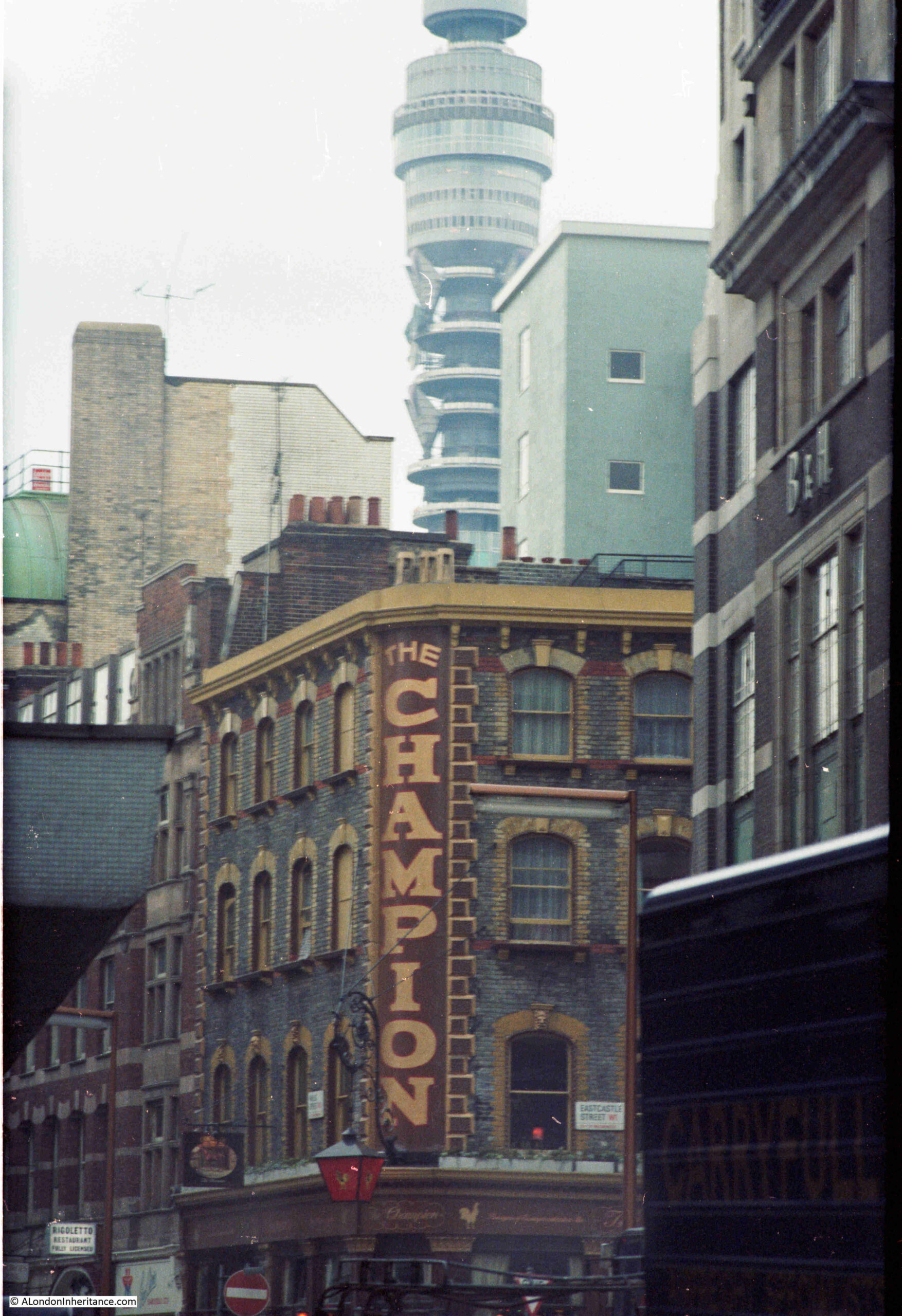
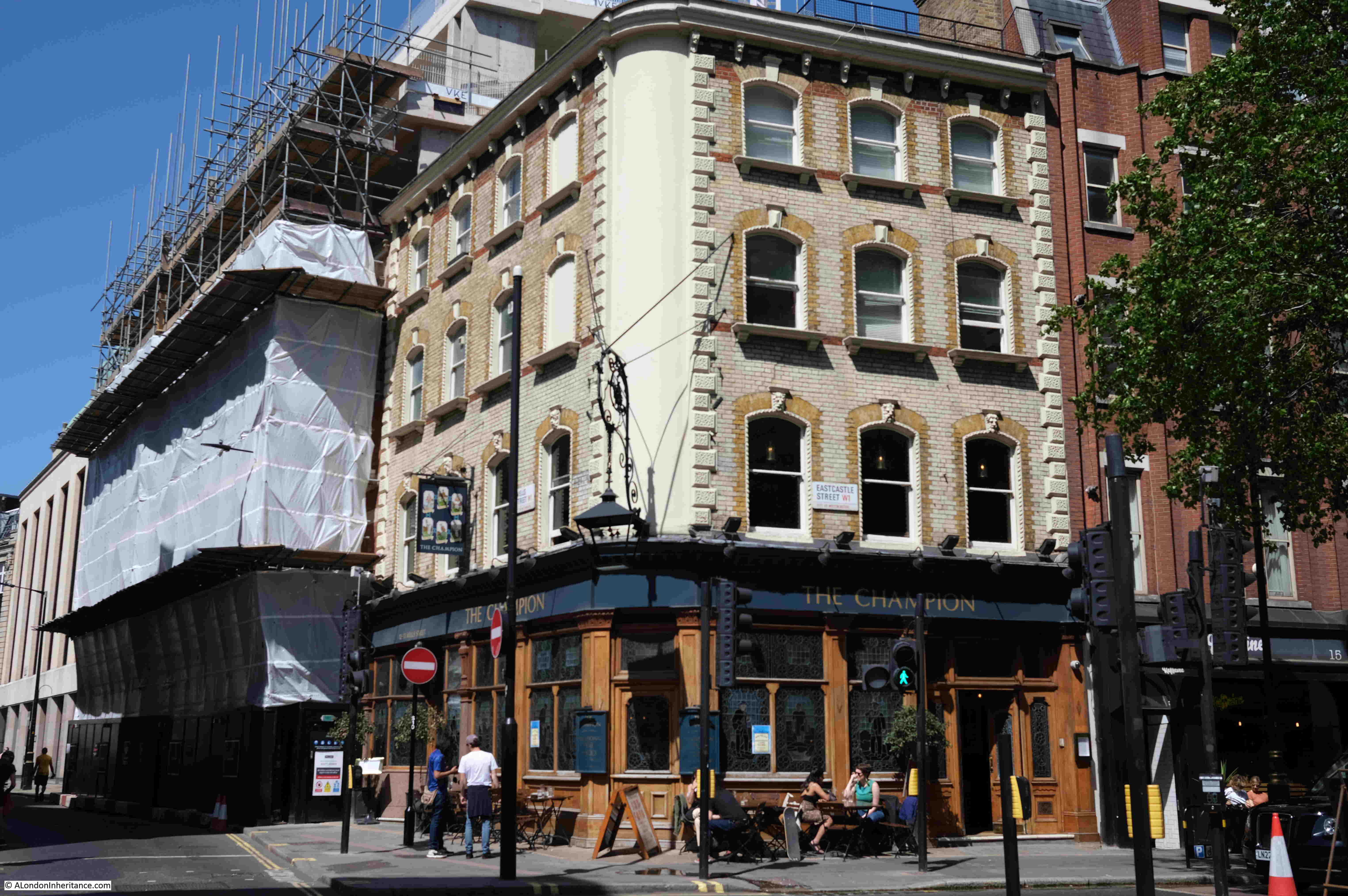
In 1980 I was wandering around London trying out a new zoom lens for my Canon AE-1 camera, taking some not very good photos. One of these was of the Champion Pub at the junction of Eastcastle Street and Wells Street, with the Post Office Tower in the background:

Champion pub

The photo was taken from the southern end of Wells Street towards Oxford Street, and a sign for Eastcastle Street can be seen on the right of the Champion pub. I think I was trying to contrast the old pub and the new telecoms tower.

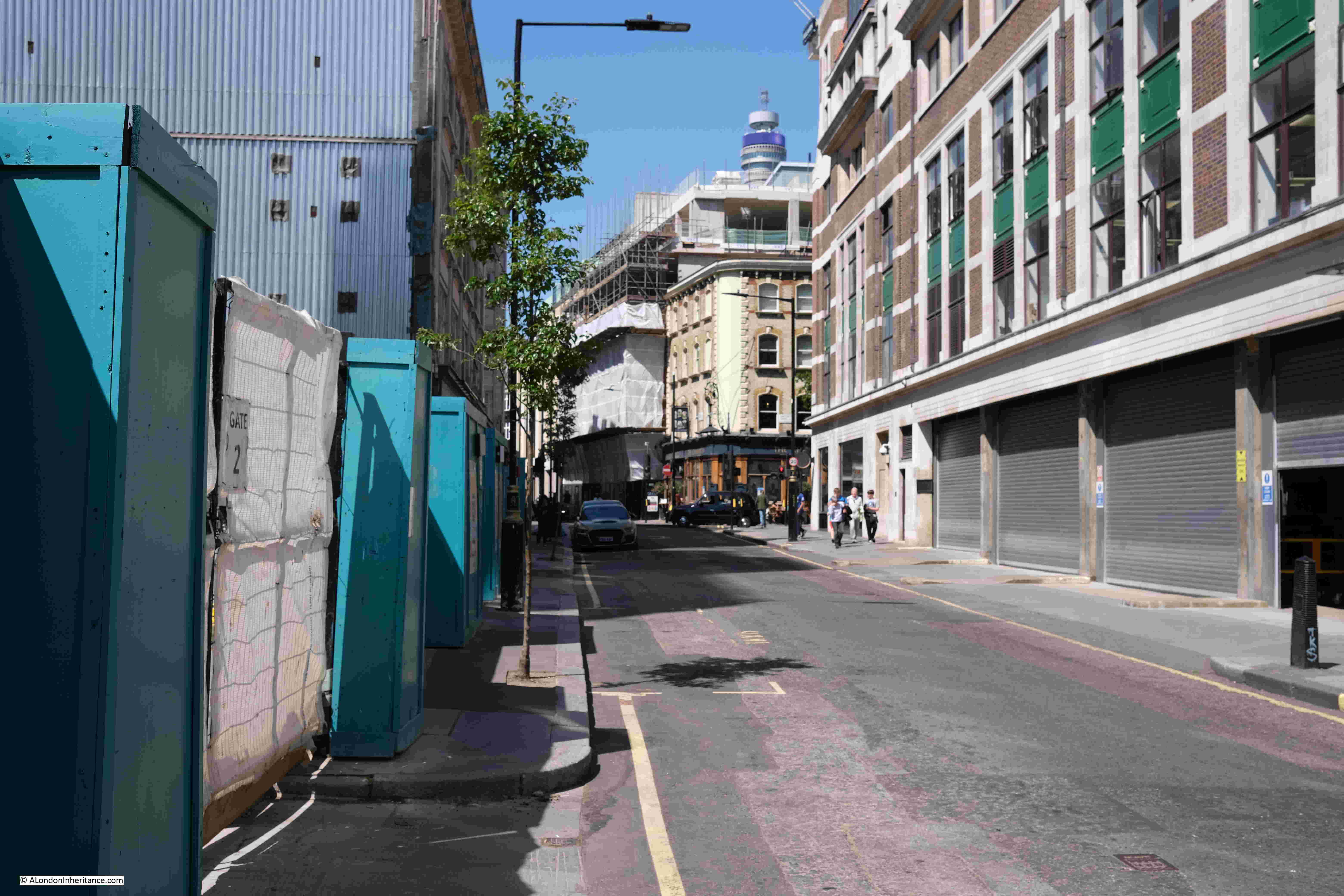
A wider view of the same scene today, with the BT Tower as it is now known, starting to disappear behind the new floors being added to the building behind the Champion:

Champion pub

A closer view of the pub in 2022, 42 years after my original photo:

Champion pub

Given how many pubs have closed over the last few decades, it is really good that the Champion has survived, although it is a shame that the curved corner of the building has been painted, and it has lost the name which ran the full length of the corner of the pub.

The large ornamental cast iron lamp still decorates the corner of the building.

The curved corner to the upper floors was a key feature of many 19th century London pubs. They were meant to advertise the pub, the name could be seen from a distance on crowded streets, and the name would often give an identity to the junction of streets.

For an example of a pub which had a very colourful corner in the 1980s, and today displays the current name of the pub on the curved corner, see my post on the Perseverance or Sun Pub, Lamb’s Conduit Street.

The Champion is Grade II listed, and the Historic England listing details provide some background:

Corner public house. c.1860-70. Gault brick with stucco dressings, slate roof. Lively classical detailing. 4 storeys. 3 windows wide to each front and inset stuccoed quadrant corner. Ground floor has bar front with corner and side entrances and fronted bar windows framed by crude pilasters carrying entablature- fascia with richly decorated modillion cornice. Upper floors have segmental arched sash windows, those on 1st floor with keystones and marks. Heavy moulded crowning cornice and blocking stuccoed. Large ornamental cast iron lamp bracket to corner. Interior bar fittings original in part with screens etc, some renewal.

The “some renewal” statement refers to a few changes to the pub since it was built.

The first post-war renewal came in the 1950s. As with so many Victorian pubs across London, the Champion was in need of some refurbishment. Over 80 years of serving Wells Street, and open during the years of the second world war, resulted in the owners, the brewers  Barclay Perkins, engaging architect and designer John and Sylvia Reid.

The Reid’s were better known as interior, furniture and lighting designers rather than architecture, and their changes to the Champion were mainly of design.

The large Champion name down the curved corner of the pub was a result of their work. The lettering was in 30 inch Roman, and the letters were shaded to give the impression that they had been engraved rather than painted. The new name replaced a number of old wooden signs that were mounted on the corner. The corner of the pub was floodlit at night, which must have looked rather magnificent, and ensured the pub stood out if you looked down Wells Street when walking along Oxford Street.

The interior had been rather plain and was painted in what were described as drab colours.

The Reid’s divided what had been two bars to form three, added button leather seating around the edge of the bars, restored the bar and some of the original iron tables, and they added new glass windows consisting of clear glass for the upper half and frosted, acid cut glass for the lower half.

Features inside the pub included the use of mahogany panels, etched and decorated glass windows between bars, and textured paper on the ceiling. refurbishment also included the first floor dining room.

Their refresh of the Champion pub did get some criticism as there were views that it was returning to Victorian design themes. The early 1950s were a time when design and architecture were looking at more modern forms, typified in the themes and designs used for the 1951 Festival of Britain.

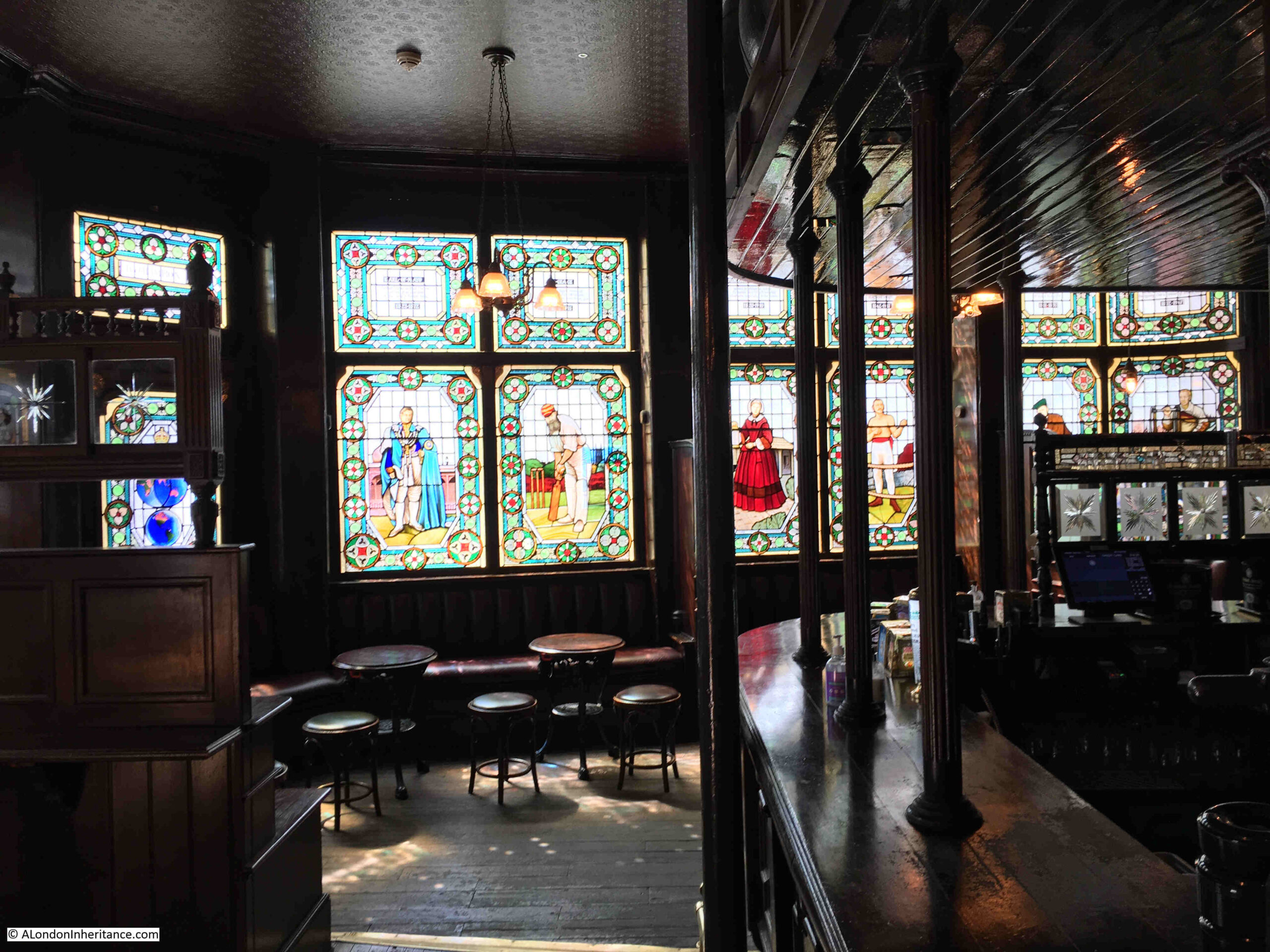
The early 1950s update to the pub included plain and frosted glass on the external windows, not the remarkable, stained glass windows that we see today. These are the work of Ann Sotheran, and were installed in 1989.

They feature a series of 19th century “champions”, with figures such as Florence Nightingale and the cricketer W.G. Grace.

On a sunny day, these windows are very impressive when seen from inside the bar:

Champion pub stained glass

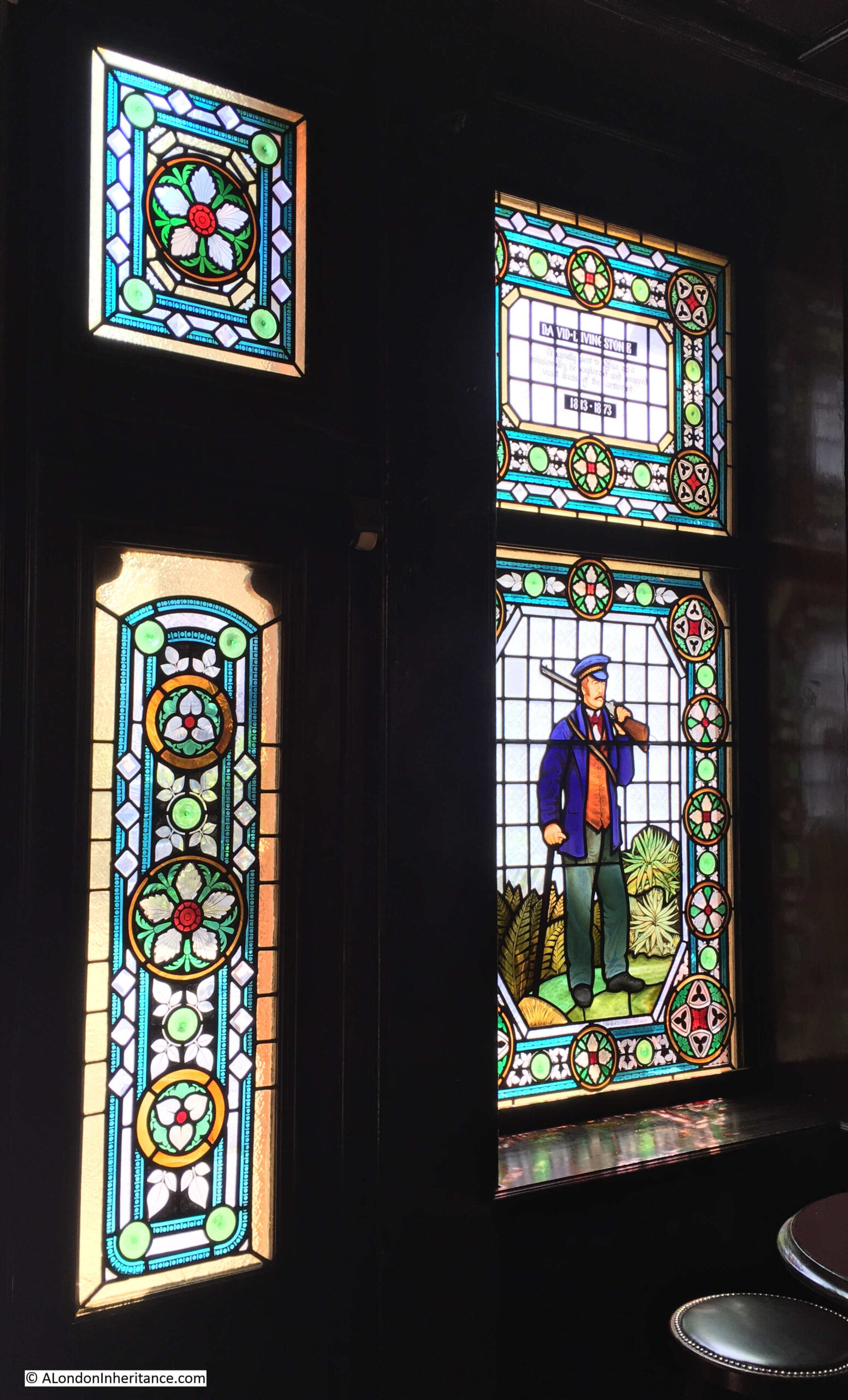
The missionary and explorer David Livingstone:

Champion pub

Newspaper reports mentioning the Champion cover all the usual job adverts, reports of crime and theft etc., however I found one interesting article that hinted at what the inside of the pub may have been like in the 1870s.

In September 1874, the Patent Gas Economiser Company held their first annual general meeting, where they reported that they had installed 50 lights in the Champion. Seems a rather large number, but spread across three floors, entering the pub in the 1870s would have been entering a reasonably brightly lit pub, with the hiss of gas lamps and the associated smell of burning gas.

The same report also mentions that the company had installed 1000 lights at the Royal Polytechnic Institution in Regent Street, 600 lights in the German Gymnastic Society in St Pancras Road, and 50 lights in the Hotel Cavour in Leicester Square.

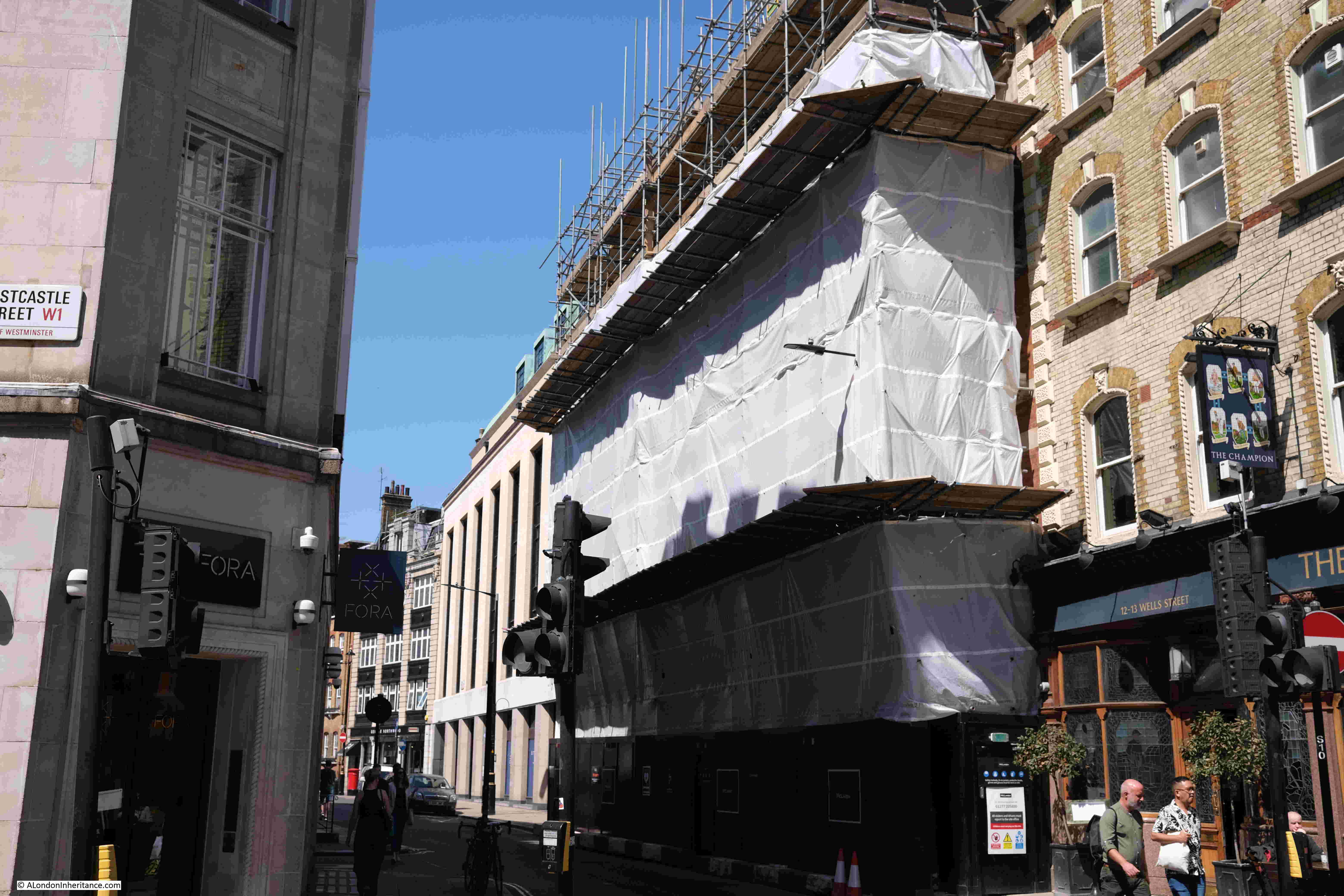
To the left of the Champion pub, along Wells Street, building work is transforming the building that was here, and is adding additional floors to the top, which partly obscures the view of the BT Tower from further south along the street:

Champion pub

There was one further site that I wanted to find, and this required a walk west, along Eastcastle Street.

Eastcastle Street was originally called Castle Street, a name taken from a pub that was in the street. The name change to Eastcastle Street happened in 1918. I cannot find the reason for the name change, but suspect it was one of the many name changes across London in the late 19th / early 20th centuries, to reduce the number of streets with the same name.

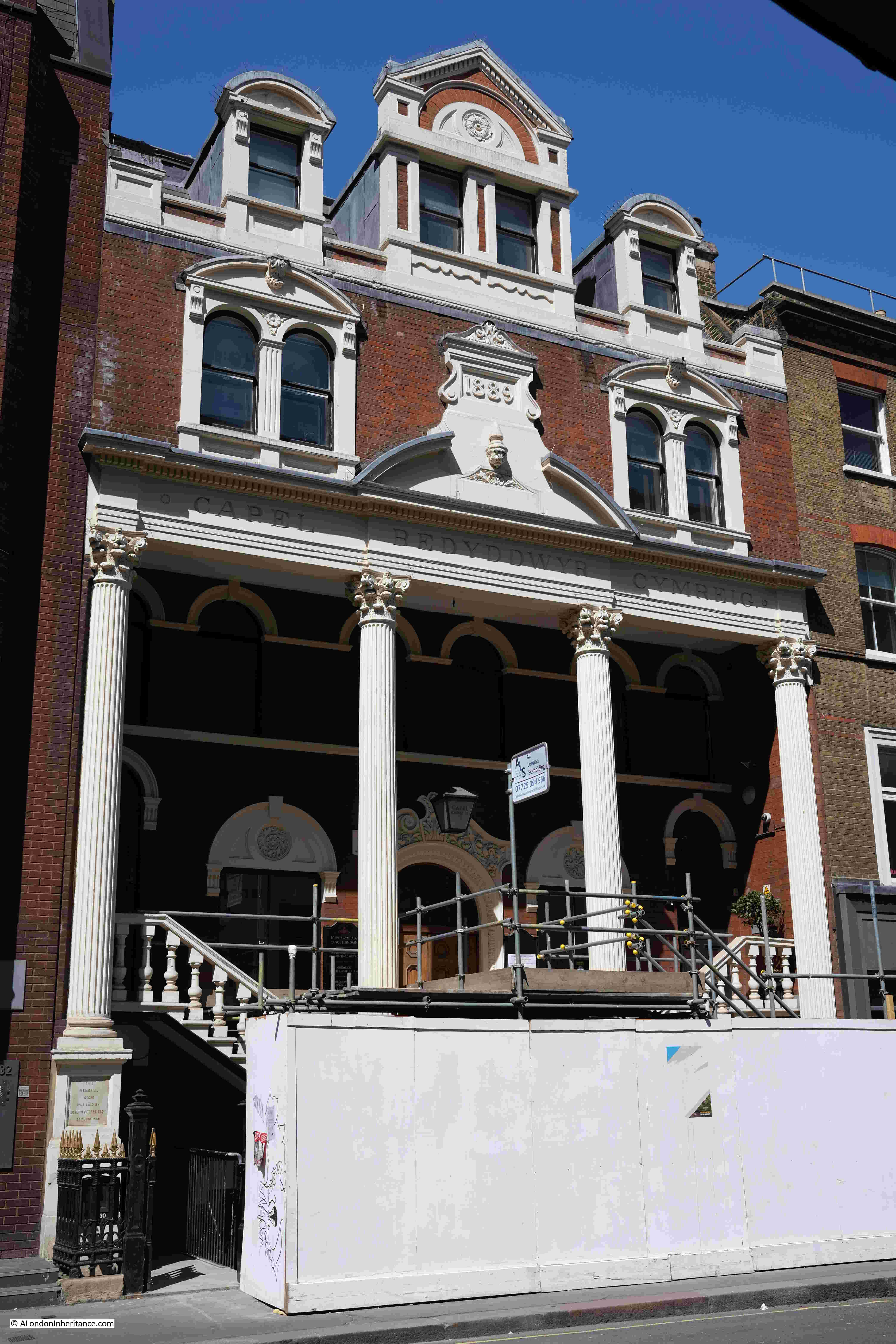
At 30 Eastcastle Street is this rather ornate building:

Eastcastle Street

Dating from 1889, this is the Grade II listed Welsh Baptist Chapel, the main church for Welsh Baptists in London.

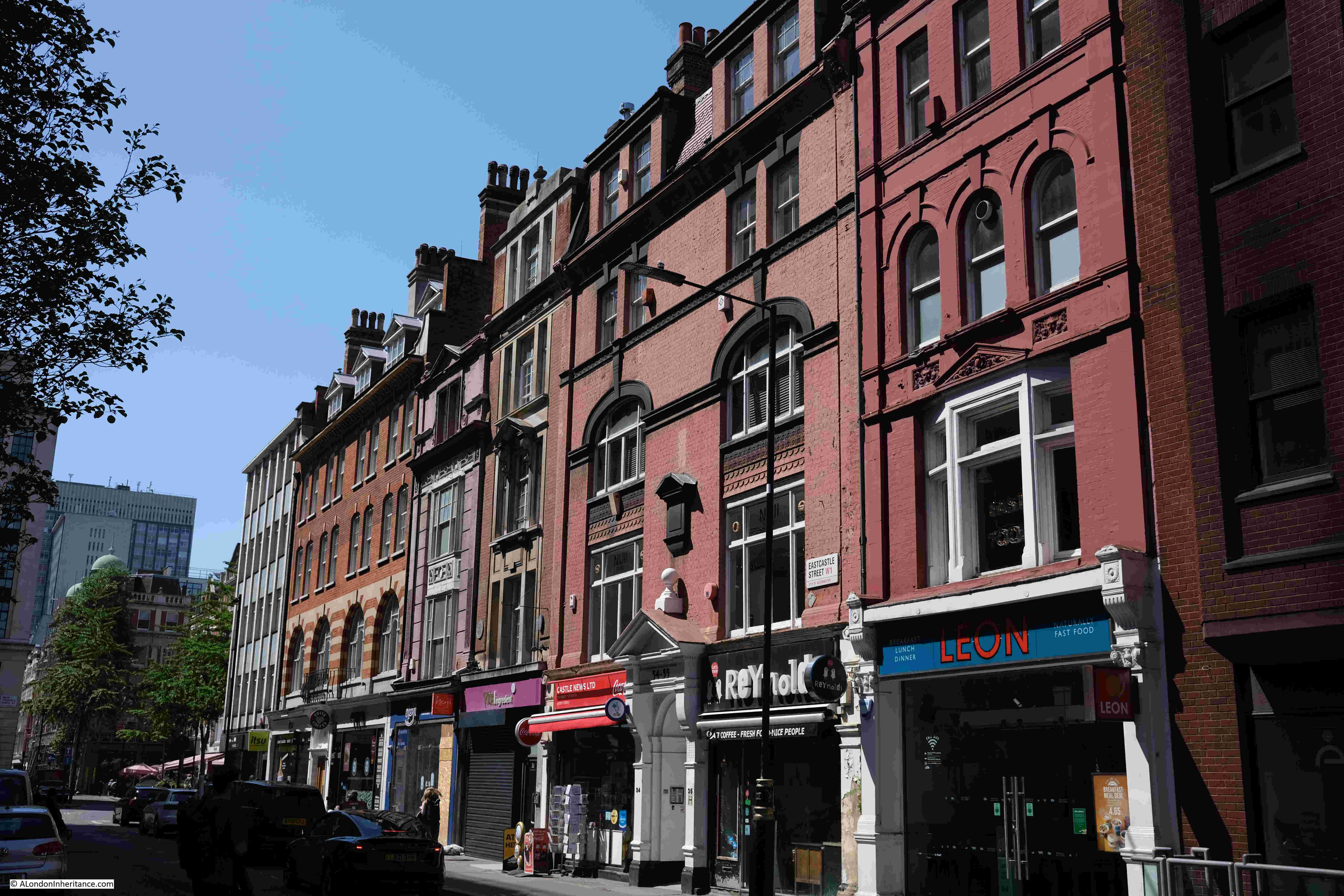
Eastcastle Street is a mix of architectural styles. Narrow buildings that retain the original building plots, buildings with decoration that does not seem to make any sense, and rows of the type of businesses that frequent the streets north of Oxford Street.

Eastcastle Street

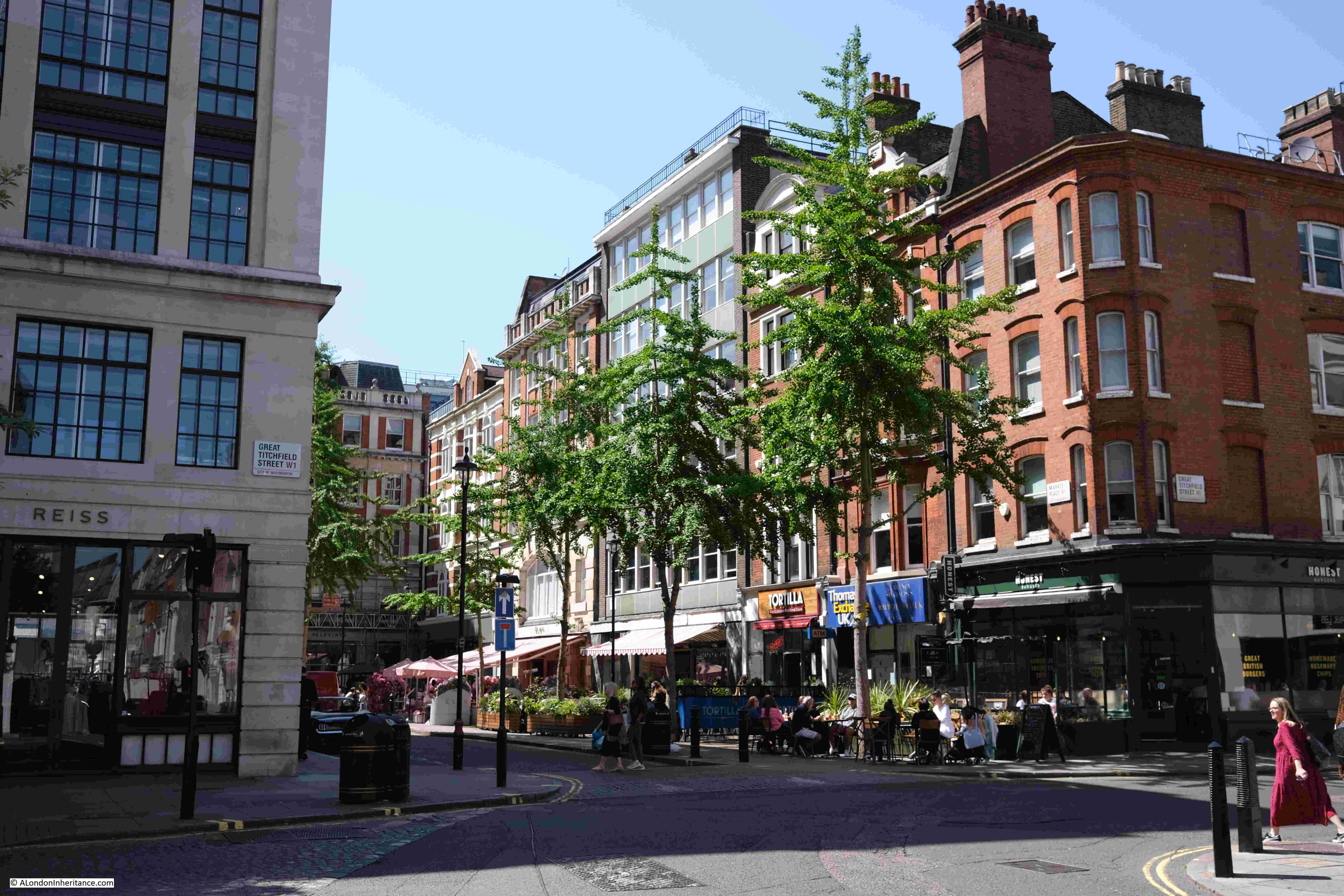
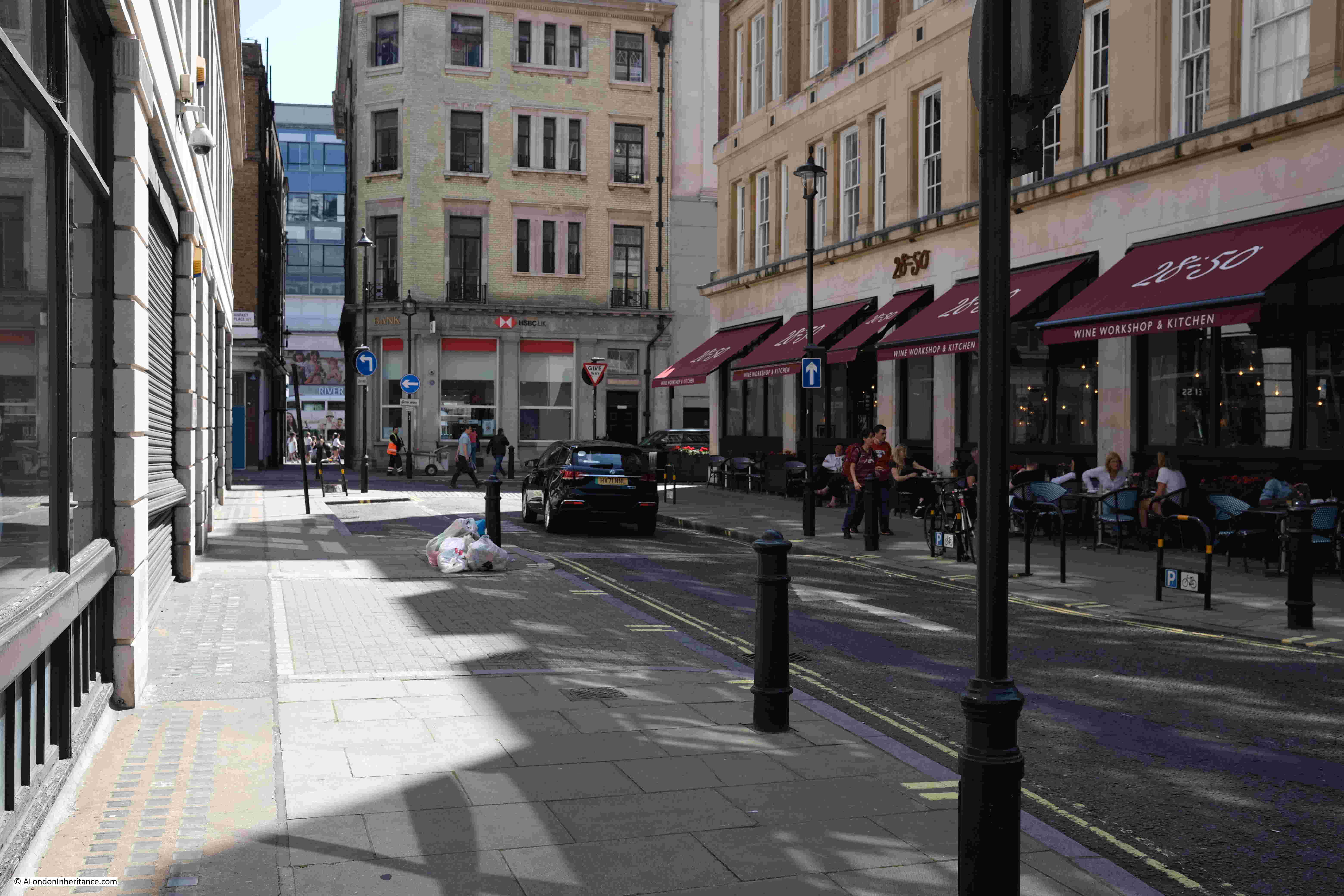
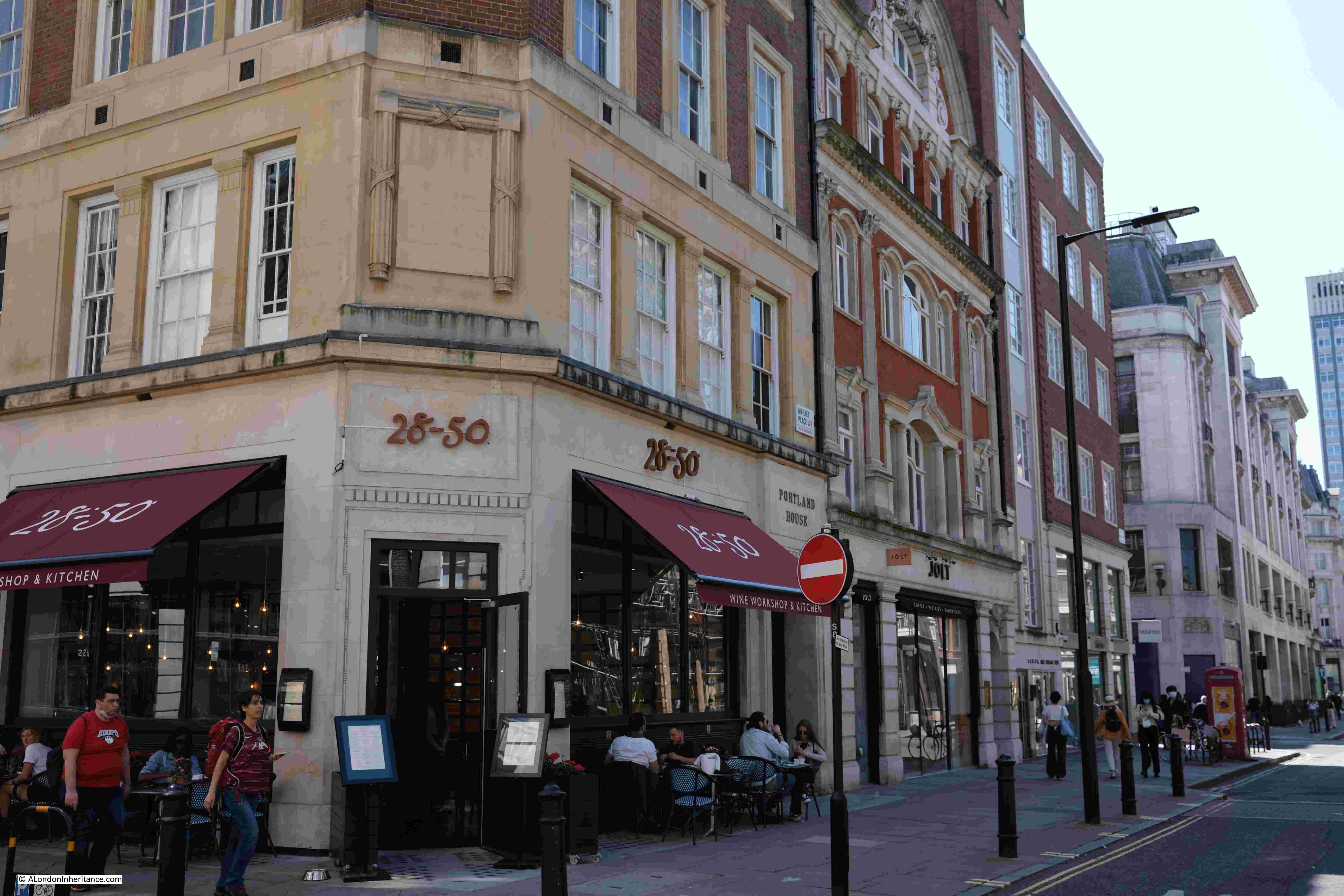
At the end of Eastcastle Street is the junction with Great Titchfield Street and Market Place:

Oxford Market

In the above photo, Great Titchfield Street runs left to right, and the larger open space opposite is part of Market Place.

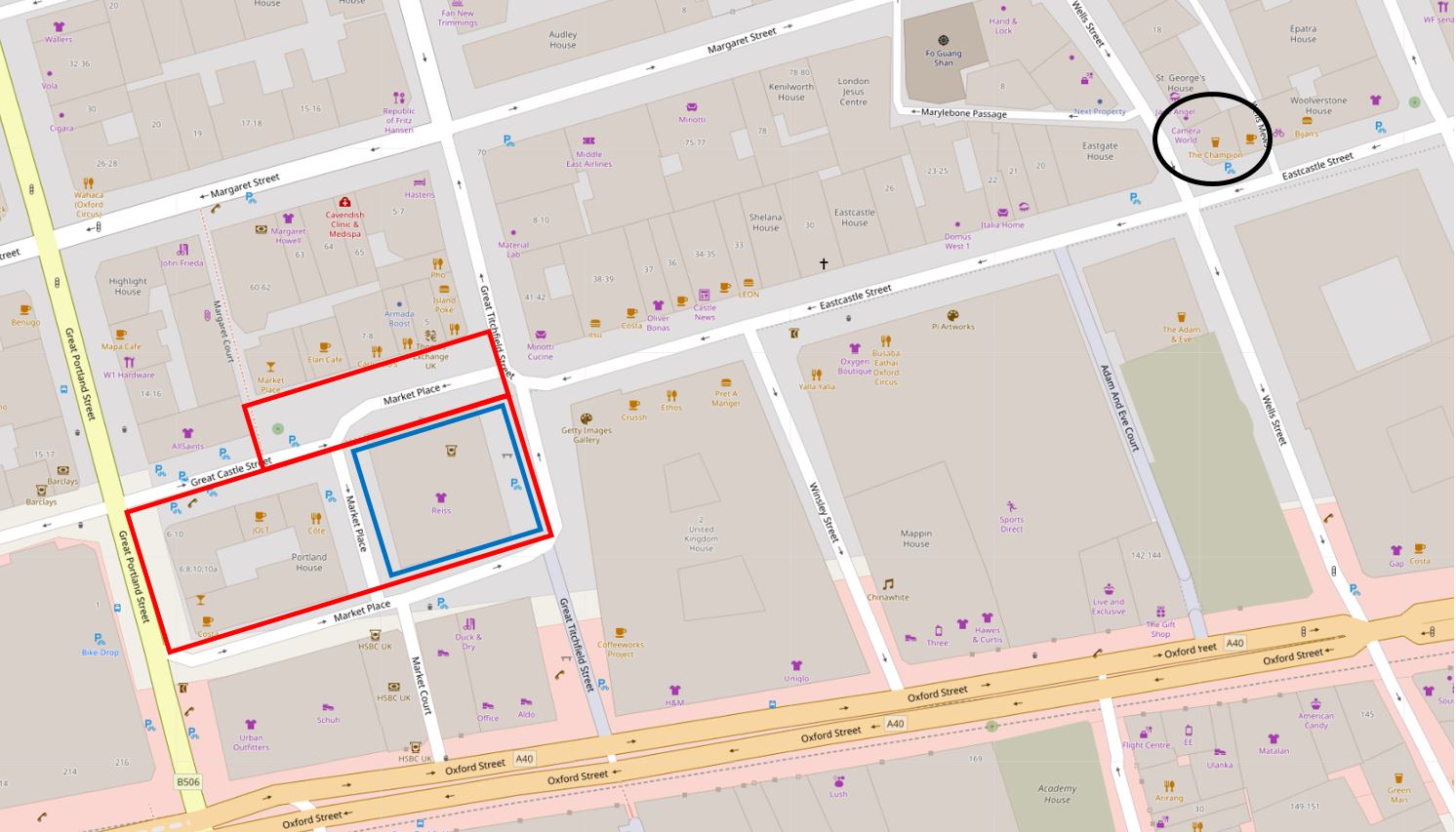
The name comes from Oxford Market, a market that originally occupied much of the space around the above photo, with the market building on the site of the building to the left, and the open space in the photo being part of the open space around the market building.

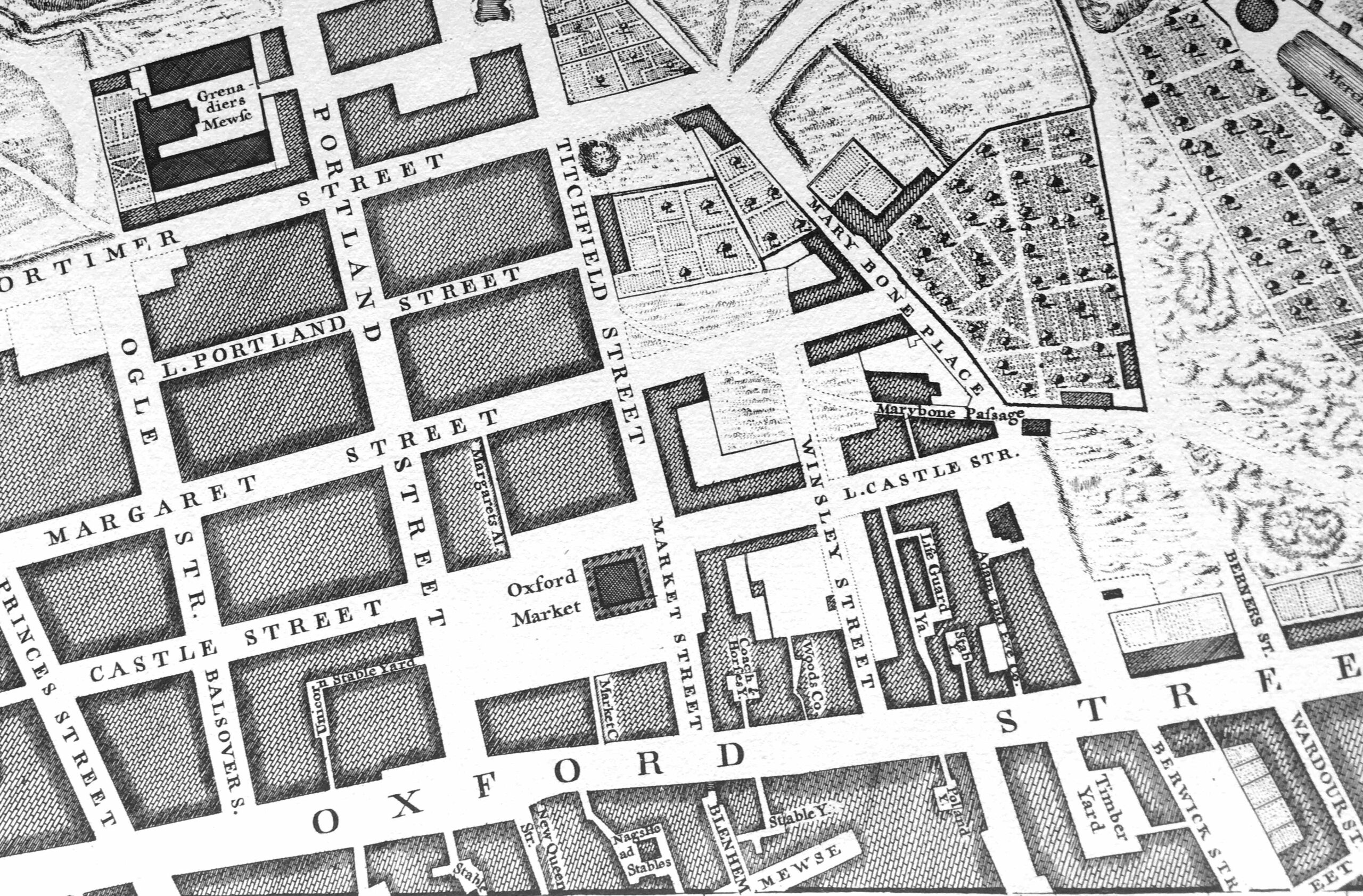
in the following map, the Champion pub is circled to the upper right. On the left of the map, the blue square is where the market building of Oxford Market was located, the red rectangles show the open space around the market with the upper rectangle being where the open space can still be seen today (© OpenStreetMap contributors):

Oxford Market

Rocque’s map of 1746 shows Oxford Market, just north of Oxford Street:

Oxford Market

Oxford Market had been completed by 1724, however the opening was delayed as Lord Craven, who owned land to the south of Oxford Street feared what the competition would do to his Carnaby Market, however Oxford Market was finally granted a Royal Grant to open on Mondays, Wednesdays and Saturdays.

The market was built to encourage activity in the area, as the fields to the north of Oxford Street were gradually being transformed into streets and housing.

The market took its name, either from Oxford Street to the south, or more likely, Edward, Lord Harley, the Earl of Oxford who was the owner of the land on which the market was built as well as much of the surrounding land.

Harley had come into possession of the land through his wife, Lady Henrietta Cavendish Holles, who was the only child of John Holles, the Duke of Newcastle, the original owner of the farmland around Oxford Street.

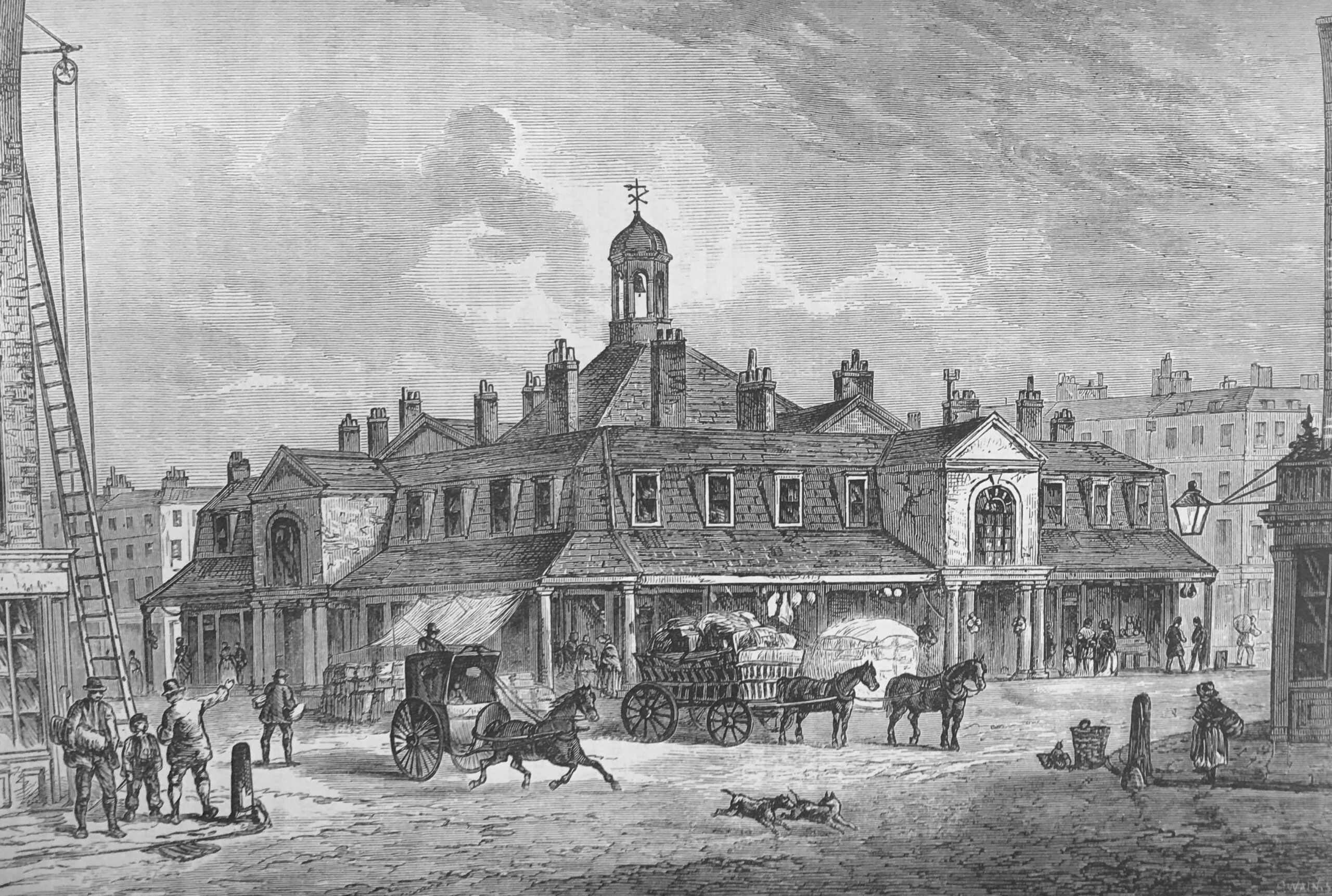
The original market buildings were of wood, and the market was rebuilt in a more substantial form in 1815. The following view of the second version of Oxford Market comes from Edward Walford’s Old and New London:

Oxford Market

We can get a view of what was for sale at Oxford Market from newspaper reports:
  • February 8th, 1826 – john Wollaston & Co were selling their Gin in quantities of no less than 2 gallons at a price of 15 shillings per gallon
  • January 20th, 1824 – A “Great Room” of 45 feet square in the interior of the market was being advertised as being suitable for upholsterers, warehousemen and flower gardeners. The room was fitted with an ornamental stone basin and fountain and was suited for a flower garden
  • April 25th, 1841 – The Oxford Market Loan Office was advertising loans of Ten Guineas, Ten and Fifteen Pounds, which could be had from their office at the market
  • May 18th, 1833 – Rippon’s Old Established Furnishing Ironmongery Warehouse was advertising Fire Irons, Coal Scuttles, Knives and Forks, Metal Teapots and Tea Urns for sale from their warehouse at the market
  • December 15th 1827 – The lease of a Pork Butcher and Cheesemonger store at the market was being advertised. The store had been taking in £3,800 per year
  • June 27th, 1801 – Several lumps of butter, deficient in weight, were seized by the Clerks of the Oxford Market and distributed to the poor

So traders in the Oxford Market were selling a wide range of products, butter, pork, teapots and coal scuttles, flowers and gin, and you could also take out a loan at the market.

Nothing to do with Oxford Market, however on the same page as the 1801 report of butter being seized, there was another report which tells some of the terrible stories of life in London:

“Wednesday were executed in the Old Bailey, pursuant to their sentences, J. McIntoth and J. Wooldridge, for forgery, and W. Cross, R. Nutts, J, Riley and J. Roberts, for highway robbery. The unfortunate convicts were all men of decent appearance, and their conduct on the scaffold was such as became their awful situation.

Some of the above prisoners attempted on Monday to make their escape from Newgate through the common sewer – they explored as far as Milk-street, Cheapside, when the intolerable stench and filth overpowered their senses; with great difficulty they found their way to the iron-grating and intreated by their cries to be liberated. assistance was immediately procured, when they were released without much difficulty.”

These two paragraphs say so much: that you could be hung for forgery, the statement that their conduct on the scaffold was “such as became their awful situation”, and their desperation in seeking an escape via the sewer. Milk Street is roughly 568 metres from the site of the Old Bailey so they had travelled a considerable distance in an early 19th century sewer.

Back to Oxford Market, and the following view is looking down Market Place towards Oxford Street which can be seen through the alley at the end of the street:

Oxford Market

In the above photo, the market building was on the left, and open space in front of the market occupied the space where the building is on the right, the corner of which is shown in the following photo. The block was all part of the open space in front of Oxford Market.

Oxford Market

Oxford Market was never really a financial success. For a London market it was relatively small which may have limited the number of suppliers and the range of goods available.

By the late 1830s, part of the market had been converted into offices from where out-pensioners of Chelsea Hospital were paid.

The market buildings was sold in 1876, demolished in 1881, and a block of flats built on the site.

Although Oxford Market is long gone, the street surrounding three sides of the old market building is still called Market Place, and the footprint of the building, and the surrounding open space can still be seen in the surrounding streets, and the wider open space and restaurants along the northern stretch of Market Place.

alondoninheritance.com

New River Walk – Alexandra Palace to New River Head

I have finally completed the post covering the last stage of the New River Walk, which covers from Alexandra Palace to New River Head in north Clerkenwell.

At the end of the previous stage, we had reached Bowes Park, where the New River disappeared in a tunnel, and for today’s post, we rejoin the New River where it exits the tunnel, opposite Alexandra Palace station.

This stage of the walk will follow the New River from Alexandra Palace to the east and west reservoirs, just south of the Seven Sisters Road, where it ends as a river. Then, the walk follows a Heritage Walk that follows the original route of the river to New River Head before the river was truncated at the reservoirs.

The map of the final stage, with key locations covered in the post is shown below  (© OpenStreetMap contributors):

New River Walk Alexandra Palace to New River Head

Point S on the map: Alexandra Palace station is at the north west tip of a patch of open, green space, and at the south east corner of this space, the New River exits the tunnel through which it has flowed from Bowes Park:

Alexandra Palace

There is nothing to see of the actual river between Bowes Park and Alexandra Palace, however there are a number of these New River Company pipe markers:
NRC Pipe

Point 1 on the map: Here, a rather over exposed Alexandra Palace can be seen on the high ground in the distance. Hornsey Water Treatment Works are behind the green metal fencing and the New River runs under the footbridge between the fencing:
Hornsey

The route through Hornsey is an example of where the New River has been straightened and does not follow the original early 17th century route.

The following map from 1861 shows the original early 17th century route (dark blue), along with the proposed new straightened route (light blue):

Hornsey

Hornsey Water Treatment Works are to the left, and the New River runs at the bottom of these works, and heads to Hornsey High Street which it crosses, before turning and crossing Middle Lane. It then heads towards the church and crosses the High Street again, heading up to the junction with Tottenham Lane.

Towards the top of the map, the Great Northern Railway runs from left to right, and below the railway can be seen the proposed new route of the New River, which is straight, and cuts of the large loop around Hornsey.

Roughly the same area as the above map, is shown in the following map of the area today, which includes the new route of the river just below the railway, and streets and buildings now covering the original route of the river around Hornsey  (© OpenStreetMap contributors):

Hornsey

There are a number of similar examples on the New River Walk where the route follows where the river has been straightened rather than the original route. It would be an interesting exercise to follow the early 17th century route, however I think I will put that walk on the long list of London walks.

Point 2 on the map: There were very few places on the entire route where it was not possible to follow the New River walk, however one place on this final stretch was also in Hornsey where the path had been closed off as Thames Water are carrying out some repair works on the river:

New River Walk

Following photo is looking along the closed section of the walk. This is another straightened section of the New River:

New River Walk

Point 3 on the map: The New River then runs through a housing estate which was built around the New River. The following map extract shows the river running between terrace housing and under streets. There is no path alongside this section of the river, and walking to where the river crosses each street, then back, would add a considerable distance to the walk, so the Thames Water New River path runs along Wightman Road to the left  (© OpenStreetMap contributors):

Wightman Road

The view looking down one of the streets from Wightman Road, the New River crosses the street half way down:

Wightman Road

In the above photo, the streets is dropping in height towards the point where the river crosses about half way down. This stretch of the New River demonstrates how the river follows the contours of the land, from the source in Ware to New River Head. A considerable distance which needed some careful planning, and is remarkable given the survey technologies available in the early 17th century.

The following map shows land height by colour, with blue being lower land, then increasing in height through green, yellow and red (from the excellent topographic-map.com):

New River height map

I have marked the route of the New River which is following the boundary between the higher land on the left (around Crouch Hill station), and the lower land on the right (south Tottenham and Seven Sisters station).

At one point in the map, an area of higher ground (yellow) juts out, and the New River has been tunneled under this, before emerging and running through the streets to the east of Wightman Road.

Point 4 on the map: After weaving through the streets of terrace housing, the New River emerges into the north east corner of Finsbury Park:

Finsbury Park

Where there is a plaque recording the origins and purpose of the river:

Finsbury Park

The New River stays in just the north east corner of Finsbury Park, before crossing under Green Lanes, and reaching:

Point 5 on the map: where the river runs along a narrow green space between an industrial area to the north, school and housing to the south:

New River

In the height map above, the New River is heading towards the reservoirs and is skirting around some higher land to the south, and this is visible as we walk alongside the river, with a downward slope from right to left requiring the river to be banked on the northern side:

New River

North of the M25, between Cheshunt and Ware, there were a number of points where water was being extracted from boreholes and pumped into the New River. There were no examples of this south of the M25, except for one point along this stretch of the walk where four pipes were pumping water into the river, although it was not clear from where this was being extracted.

New River

There is a brick building visible just to the left of where the water is pouring into the river. This is on Eade Road. It houses infrastructure of some sort, and has a 2003 plaque on the outside, but no indication of its function.

The British Geological Survey borehole map lists a borehole under this building, however it is marked as “Confidential” with no data available.

I assume the water running into the New River is from this borehole, however it is strange as to why the record is confidential.

This section of the walk was incredibly muddy, with some sections rather difficult to pass.

At the end, the path runs up to meet Seven Sisters Road, with an information panel covered in graffiti:

New River Walk

For a short distance, the New River Path has joined with another walking route, the Capital Ring:

Capital Ring

And one final loop through housing, with a rather muddy path:

New River Walk

Point 6 on the map: The New River now reaches the reservoirs, with what must have been a gauge house, some means of regulating or measuring the flow of the river, straddling the New River just before the reservoirs:

New River Walk

The New River was truncated at the reservoirs at Stoke Newington in 1946, and now feeds water into the reservoirs, as well as running to their north, through the Woodberry Wetlands, an area surrounding the reservoirs that is now managed as a wildlife haven:

New River Walk

Between the east and the west reservoirs is a building that was once part of the New River infrastructure and has now been refurbished as the Coal House Café. The area outside the café was full of families, so I will not include a photo online, however at the side of the building is a record of the creation of the reservoirs by the New River Company:

New River Company

Also on the side of the building is a wall tie with the initials of the Metropolitan Water Board, the organisation that took over the running of the New River Company’s assets:

New River Walk

View across the east reservoir:

New River Walk

View across the west reservoir:

New River Walk

And a short walk from the west reservoir, we reach the very end of the remaining route of the New River. The last point in the walk from Ware in Hertfordshire, where the river can be seen above ground. It ends in a rather sad dead end:

End of the New River

Just to the left of the above photo is the wonderful 19th century pumping station built by the New River Company:

Castle pumping station

The Metropolis Water Act of 1852 required that water companies supplying water to London, filter the water prior to distribution, and that any subsequent reservoirs after filtering be covered. The aim was to improve the quality of water and prevent much of the pollution from an industrial city from entering the water supply.

Prior to the act, the New River Company was supplying water directly from the reservoirs, however the act now required filter beds to be constructed, along with infrastructure such as a pumping station, and the building in the above photo was built between 1852 and 1856 by William Chadwell Mylne, the Surveyor for the New River Company.

The building housed steam engines and boilers until 1936 when these were replaced by diesel engines.

By 1971, the pumping station was rather dated and too small, and the design of the building did not support an upgrade, so the Metropolitan Water Board applied for permission to demolish the building.

There was considerable local support to retain the building as it was such a local landmark, resembling an industrial castle alongside Green Lanes.

This campaign resulted in the building being given a Grade II* listing in 1972, however it would continue to stay empty, and under threat.

The Historic England listing record provides a perfect description of the old pumping station, and why it is known as the Castle (Historic England source here):

Large building designed to resemble a mediaeval fortress with keep and bailey. 1854-6 by Chadwell Mylne. Stock brick with stone dressings. Battlements and large stepped buttresses all around. The “keep” is of 2 storeys with a tall basement plinth. 6 windows on main south-west front. At north-east and south-west corners round towers with square bartizans the former with a tall conical roof and both having battlements crow-stepped up towards them. Continuous quasi-entablature, with cable moulding, running right around towers. Taller octagonal chimney tower to east. 8 steps (the top one with bootscraper!) to entrance in forebuilding running along north wall and into “bailey” building, which is lower with segmental arcading and 2 slit windows in each bay. Important picturesque landmark.”

The building was empty until 1994 when it was converted into a climbing centre. The large internal spaces perfectly suited for such a use. If you walk past, it is worthwhile having a quick look inside, as the building is still the Castle Climbing Centre.

Leaving the pumping station, we are now following the heritage section of the New River Walk. This section of the route has not seen the New River as a stream of water for many years, as the river was buried in pipes during the 19th century, and since 1946, New River water has ended at the reservoirs.

Point 7 on the map: Here we turn off from Green Lanes and into Clissold Park.

The park retains a couple of stretches of the New River, however these are for decorative purposes only, and start and end within the park.

There is a bridge across one of these decorative runs of the river, which has the arms and motto of the New River Company on the side. “ET PLUI SUPER UNAM CIVITATEM” or “And I caused it to rain upon one city” indicated by the hand reaching down from a cloud, and showering rain drops on the city below.

Clissold Park

Part of the decorative New River feature running up to Clissold House:

Clissold House

Leaving Clissold Park, and walking along Stoke Newington Church Street, there is another reminder of the New River with the New River Café on the corner with Clissold Crescent:

New River cafe

Walk a short distance along Clissold Crescent, and there is a reminder of the New River:

Clissold Crescent

The plaque reads “The Park Lane bridge was demolished and the road widened June 1881”.

Park Lane was the original name of Clissold Crescent, and the bridge carried Park Lane over the New River.

A version of the Ordnance Survey map from the 1890s shows the Park Lane bridge and the New River, although by this time, the New River should have been carried underground in pipes, and as the plaque reads, the bridge was demolished in 1881 and the road widened, so I suspect the OS map was not updated at this point  (‘Reproduced with the permission of the National Library of Scotland“).

Clissold Crescent

In the above map, the New River heads south between houses, and the route has been preserved and now forms a series of allotments running along the old course of the river:

New River Walk

The path between the allotments ends at Green Lanes (again, almost a constant companion on the southern section of the walk). We cross over Green Lanes to reach;

Point 8 on the map: this is Petherton Road where the New River once ran down the centre of the street, and is now a walkway with trees and grass on either side:

Petherton Road

A rather nice ghost sign for Barnes Motors along Petherton Road:

Barnes Motors

At the end of Petherton Road, the green space gives way to a street which still follows the route of the New River, past Canonbury Station and cross over St Paul’s Road into another section of the New River route that has been transformed into a long green space, with a decorative water feature running the length of the space:

New River Walk

Towards the end of this green space is:
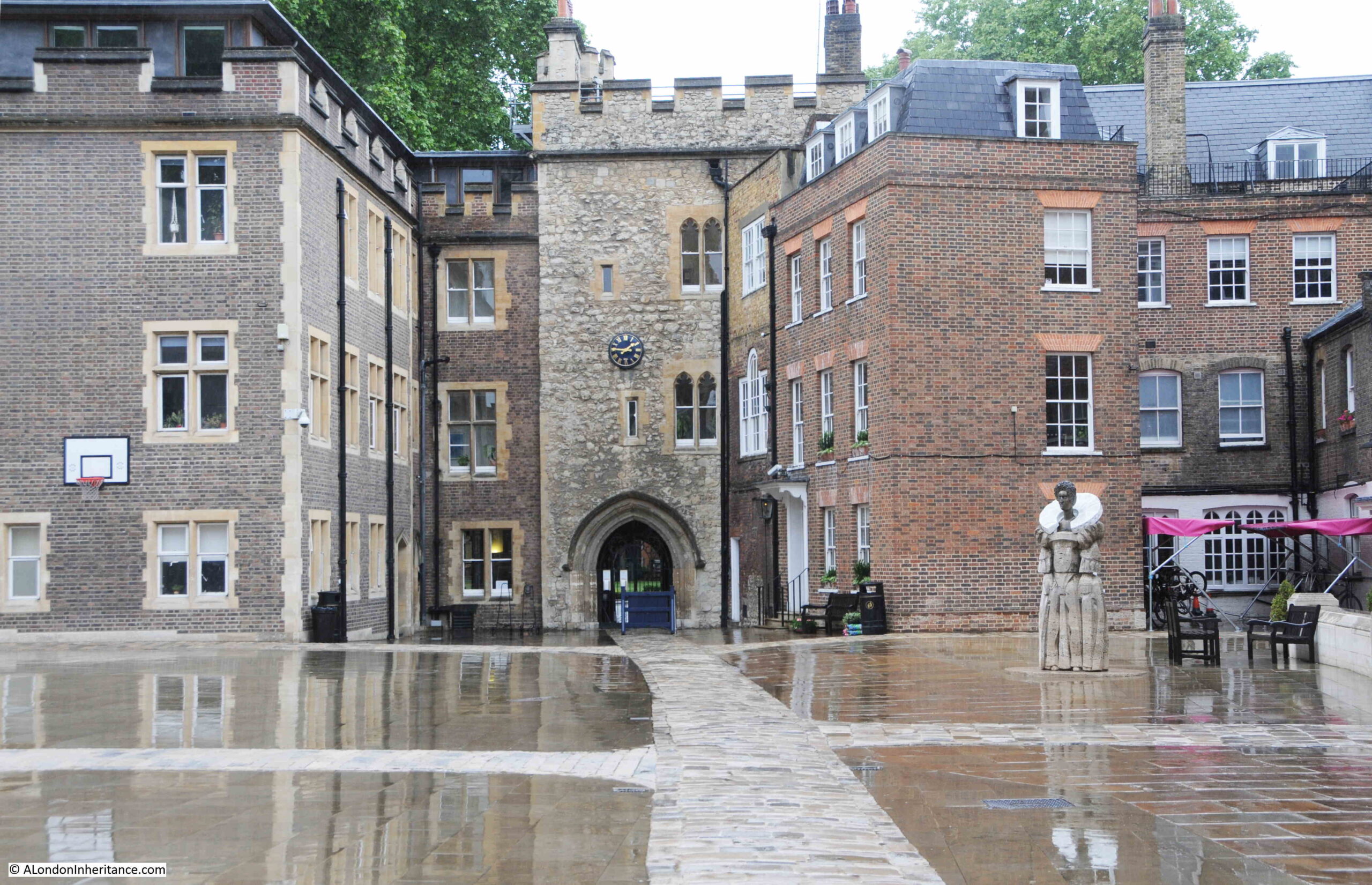
Point 9 on the map: where there is a round brick building alongside the original route of the New River:
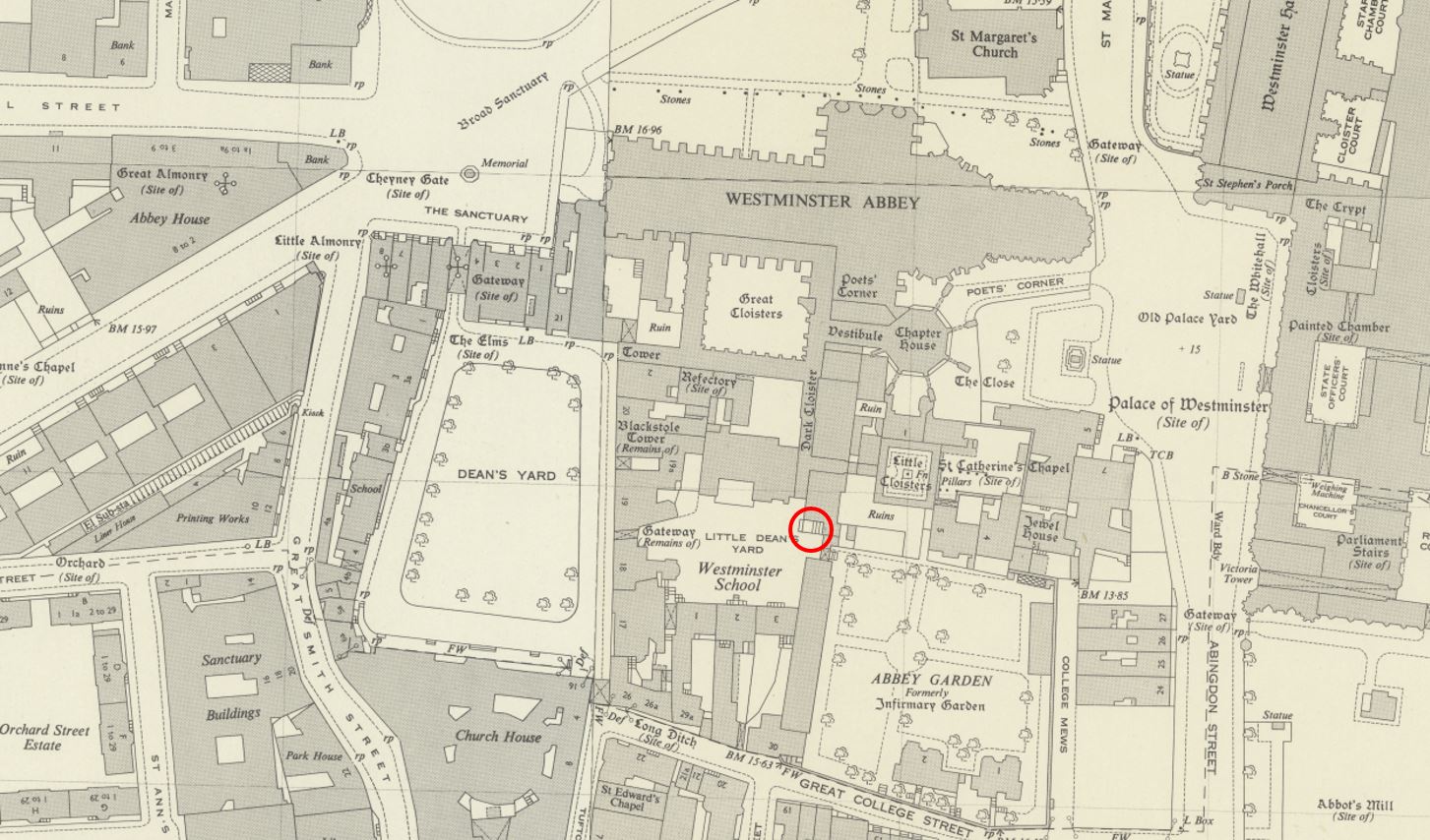
New River Watch House

The building appears to be a late 18th century watch hut. To protect the New River, the New River Company had a watchman or linesman stationed at points along the route of the river to keep the river clear of debris and also to prevent fishing and swimming in the water, or anything that could pollute the supply.

The brick hut is an example of where such a person would have been stationed to keep watch over the river.

The final stretch of the ornamental water that follows the original route of the New River:

New River Walk

Where the above green space ends, we then walk south along Essex Road, and turn off just before reaching Islington Green, to find Colebrooke Row.

This is another street where the houses were built facing on to the New River, and the space occupied by the river is now a green space running the length of the street.

In the following photo, the houses on the right once looked onto the New River where the grass and trees now run, with the street being on the left:

Charles Lamb's House

The white house on the right in the above photo was occupied by the poet and essayist Charles Lamb in the 1820s. The following print shows the house as it was, with the New River running directly in front of the house:

Charles Lamb's House

I have written a detailed post about Colebrooke Row and Charles Lambs which can be found here.

Leaving Colebrooke Row, we cross over City Road and Goswell Road, and cut through to St John Street. Then down to Owen’s Row (which is on the alignment of the New River, I wrote about Owen’s Row within this post).

Crossing over St John Street into Rosebery Avenue, and this is the view along the old route of the New River, with Sadlers Wells on the right (a post on Sadlers Wells and the New River is here):

Sadlers Wells

At the end of Sadlers Wells, turn right into Arlington Way, then left into Myddelton Passage, where we come to the official end of the New River Walk, at the viewing platform looking over what was New River Head:

New River Head

The route is marked on the ground of the viewing platform:

New River Head

And that completed the New River Walk, over four days / two weekends, from Ware in Hertfordshire to New River Head, Clerkenwell.

It was a fascinating journey, and whilst the route has been straightened at a number of points and does not fully trace the original early 17th century route, it did leave me with considerable admiration for those in the early 17th century who surveyed and built the route, following the contours of the land so it would only fall by roughly 20 feet along the entire route ( 5.5m in total or 5 inches per mile). This enabled the water to flow naturally without the need for any pumping.

You can find my posts covering the first two stages of the walk at the following links:

I have also written about the history of New River Head and London’s Water Industry, which you can find at this link.

In the following panorama from the viewing platform at New River Head, I have labeled some of the key features. On the right are the engine and pump house which will soon become the new Quentin Blake Centre for Illustration, a wonderful new use for these historic buildings.

Panorama of New River Head

David Fletcher creates remarkable 3D photogrammetry captures of heritage sites and has one for the historic buildings at New River Head. Hopefully this will work as I have embedded the model in the post (if you do not see this in the e-mail, click here for the post on the website).

You can walk through the site, both inside and out to see this remarkable, historic site in detail:

And finally, if you have not had enough about the New River, I purchased the following book, the Mercenary River by Nick Higham a few weeks ago.

The Mercenary River

It really is a fascinating history of London’s water supply, including, off course, the New River, and is highly recommended.

alondoninheritance.com

A London Inheritance Walks 2022 – Wapping, Bankside, Barbican and Southbank

Last year was my first year of running a number of guided walks based on the blog.

I really enjoyed talking about some fascinating places in London, and meeting so many readers of the blog.

For 2022, I have two new walks, exploring Wapping, and Bankside to Tower Bridge. I did intend to include a Bermondsey walk, but have run out of time to complete this, hopefully later in the summer.

I am also running a few of my Barbican and Southbank walks.

The walks are based on the blog, and use some of my father’s photos to show viewpoints as they were in the late 1940s.

The four walks are described in detail below, along with links for booking (or just go to my main Eventbrite page here).

I hope you find something of interest, and I plan to add additional dates, so please check again later if you do not find a suitable free date.

Wapping – A Seething Mass of Misery

A London Inheritance Walks

Wapping – A Seething Mass of Misery. So wrote Francis Wey in the 1850s in his book, “A Frenchman Sees the English in the Fifties”.

As London’s docks expanded to the east, Wapping developed to serve the docks and the river, and this expansion resulted in living conditions that would lead to Francis Wey’s description.

Wapping was different to the rest of east London as it developed a nautical subculture, one that existed to serve and exploit sailors arriving on the ships that would moor on the river, and the docks and wharves that lined the river.

This walk will discover the history of Wapping, and will run from near Tower Hill underground station, along Wapping High Street and Wapping Wall, across the old Ratcliff Highway to Shadwell Overground and DLR stations.

We will explore the development of the docks, the ancient gateways between land and river that are the Thames stairs, lost and surviving pubs, the history of the River Police, a sailor’s experience of Wapping, warehouses, crime and punishment, murders and a burial at a crossroads.

We will also meet some of the people who lived, worked and passed through Wapping, such as the Purlmen who worked on the river, and John Morrison, a ship’s boy on a collier, who in 1832 almost froze to death whilst waiting to row his master back to his ship after a night in Wapping’s pubs.

The walk will use some of my father’s photos to show the area post-war, and will look at how Wapping has developed to become the place we see today, and should be considerably more enjoyable than Francis Wey’s description.

The walk is about 2.5 miles and will take between two and a quarter, and two and a half hours.

The following dates for my tour of Wapping are available to book on Eventbrite. Click on any of the dates to go to the site where they can be booked.

Bankside to Pickle Herring Street – History between the Bridges

A London Inheritance Walks

This walk explores the remarkable history of Bankside and Southwark between Blackfriars and Tower Bridges.

Looking at how the river bank along the River Thames has developed, and using my father’s post-war photos to show just how much the area has changed, and what was here when this was a working part of the river.

From the sites of Roman discoveries to recent development of old wharfs and warehouses, the walk will explore pubs, theatres, Thames stairs, lost streets, the impact of electricity generation, fires, alleys, and the people who lived and worked along the river.

The walk will also look at how being opposite the City of London led Bankside and Southwark on a unique path through history.

Lasting around two and a quarter hours, the walk will start near Blackfriars Bridge and end at Tower Bridge.

The following dates for my tour of Bankside are available to book on Eventbrite. Click on any of the dates to go to the site where they can be book.

The Lost Streets of the Barbican

A London Inheritance Walks

On the evening of the 29th December 1940, one of the most devastating raids on London created fires that destroyed much of the area north of St Paul’s Cathedral and between London Wall and Old Street.

The raid destroyed a network of streets that had covered this area of Cripplegate for centuries. Lives, workplaces, homes and buildings were lost. Well-known names such as Shakespeare and Cromwell and their connection with the Barbican and Cripplegate will be discovered, as well as those lost to history such as the woman who sold milk from a half house, and that artisan dining is not a recent invention.

Out of the wartime destruction, a new London Wall emerged, along with the Barbican and Golden Lane estates that would dominate post-war reconstruction. Destruction of buildings would also reveal structures that had been hidden for many years.

On this walk, we will start at London Wall, and walk through the Barbican and Golden Lane estates, discovering the streets, buildings and people that have been lost and what can still be found. We will explore post-war reconstruction, and look at the significant estates that now dominate the area.

Lasting around two hours, by the end of the walk, we will have walked through 2,000 years of this unique area of London, the streets of today, and the streets lost to history.

The following dates for my tour of the Barbican are available to book on Eventbrite. Click on any of the dates to go to the site where they can be book.

The South Bank – Marsh, Industry, Culture and the Festival of Britain

A London Inheritance Walks

This walk will discover the story of the Festival of Britain, the main South Bank site, and how a festival which was meant to deliver a post war “tonic for the nation” created a futuristic view of a united country, and how the people of the country were rooted in the land and seas.

We will also discover the history of the South Bank of the Thames, from Westminster to Blackfriars Bridges, today one of London’s major tourist destinations, and with the Royal Festival Hall and National Theatre, also a significant cultural centre.

Along the South Bank we will discover a story of the tidal river, marsh, a Roman boat, pleasure gardens, industry, housing and crime. The South Bank has been the centre of governance for London, and the area is an example of how wartime plans for the redevelopment of London transformed what was a derelict and neglected place.

Lasting around 2 hours, the walk will start by Waterloo Station and end a short distance from Blackfriars Bridge.

At the end of the walk, we will have covered 2,000 years of history, and walked from a causeway running alongside a tidal marsh, to the South Bank we see today.

The following dates for my tour of the Southbank are available to book on Eventbrite. Click on any of the dates to go to the site where they can be book.

Details covering the location of the meeting point for all walks will be sent in the week prior to the walk.

I look forward to seeing you on a walk.

Normal posts will resume next Sunday.

alondoninheritance.com

Soho Square

Soho Square can be found near the junction of Charing Cross Road and Oxford Street. A busy square, with lots of traffic, parking and occasionally it is used as a film set.

The centre of Soho Square is a large open space, and the square is surrounded by a considerable mix of architectural styles, reflecting the number of times that buildings have been demolished and rebuilt since the square was originally laid out, and the range of individuals. organisations and companies that have made the square their home.

Soho Square is the rectangular green space in the centre of the following map (© OpenStreetMap contributors):

Soho Square

Soho Square was part of London’s northwards expansion and the first houses on the square were originally built around 1670.

The following extract from Rocque’s 1746 map of London shows Soho Square, with Oxford Street to the north, but still much open space further north, which would be developed during the second half of the 18th century.

Soho Square

Soho Square, as well as many of the surrounding streets, was built on open space known as Kemp’s Field or Soho Fields.

The site of the square was leased to a bricklayer by the name of Richard Frith, who started construction of the first houses, with the first leases of these houses dating to the 1670s and 1680s.

The square was originally called King’s Square, presumably after Charles II, who was on the throne during the early years of the square’s construction. It would keep this name until the first decades of the 18th century, when it would gradually become known as Soho Square, with formal recognition of the new name of the square on maps such as Rocque’s in 1746.

Today, only a couple of the original houses remain, although in a much modified state.

Soho Square has seen continual waves of development, and a walk around the square today reveals a large range of building size and architectural type. Some buildings are on the original narrow plot, larger buildings have incorporated several adjoining plots of land.

On a weekday, the square is a hive of activity. There is a considerable amount of traffic through the square, parking along both sides of the road around the square, and on the day of my visit, filming had taken over one side of the square.

The open space in the centre of the square was separate from all this activity, and provided a space to look at the buildings surrounding the square before being blocked by leaf growth on the trees.

The following photo is looking to the east, with the tower block of Centre Point in the background.

Soho Square

The brick tower in the background is part of St Patrick’s Catholic Church. During the first years of the square, there were a number of large houses leading back from the square, one of these was Carlisle House, which was built by the Earl of Carlisle around 1690.

Carlisle House was leased by Father Arthur O’Leary, a Franciscan Friar, who managed to raise sufficient financial support from a number of wealthy Catholic families.

The house was converted so that it could be used as a place of worship, and was consecrated on the 29th of September 1792. It was one of the first Catholic places of worship opened after the Catholic Relief Acts of 1778 and 1791, which removed many of the restrictions placed on the Catholic faith during the reformation.

The current church was built on the site of Carlisle House between 1891 and 1893.

In the centre of the square is a small wooden building:

Soho Square

The wooden building is Grade II listed, and is described by English Heritage as a “Garden arbour/tool shed”. It was built around 1925 for the Charing Cross Electricity Company to provide access to an electricity sub-station below ground. It did not serve this purpose for too long as the underground space would become an air raid shelter during the Second World War.

The electricity substation was not the first utility to be built in Soho Square.

When the first houses in the square were built, there was competition from the water companies that served London to provide water. One of these companies was the New River Company who supplied water from their reservoirs at north Clerkenwell.

Whilst the supply worked to the City, Soho was on higher ground, and this small difference in height between the reservoir and Soho Square, along with the haphazard way in which the water distribution system had grown, resulted in a poor, low pressure supply to the new houses of Soho Square.

Sir Christopher Wren was asked to help with understanding the problems of distributing water to Soho Square and the developing area of the West End, however Wren looked at the whole system and recommended that the problems could only be addressed by effectively replacing the entire system with a new, integrated design.

The New River Company also commissioned John Lowthorp (a clergyman, who was also a member of the Royal Society) to look at the distribution problems,

Lowthorpe established that it was not water supply problems to New River Head (indeed the New River supplied enough water for the whole of London), as with Wren, Lowthorpe identified the distribution network and the organisation of the company.

This would only be fixed over a number of years, one of the short term fixes was the construction of a cistern in Soho Square to store water from the New River Company’s reservoirs for onward distribution.

The north east corner of the square:

Soho Square

The north west corner of the square:

Soho Square

The above two photos show the range of different buildings around the square, and the changes in building height and roof line.

This is very different to when the square was built, as this print from around 1725 shows, with terrace housing lining three sides of the square  (© The Trustees of the British Museum).

Soho Square

The view is looking north, and shows that in the first decades of the 18th century, Soho Square was really on the northern edge of the built city. The name of the square at the top of the print uses the original name of King’s Square, as well as the future name of Soho Square.

The hills in the distance are those of Hampstead and Highgate, and the street running north from the square crosses Tiburn Road.

This would later be renamed Oxford Street, and was named Tiburn Road as it led to the Tiburn or Tyburn tree or gallows at the western end of Oxford Street, at the junction of Oxford Street with Edgware Road and Bayswater Road.

The above map uses the spelling of Tiburn, rather than the more common Tyburn. Rocque also uses the Tiburn spelling for the street and the gallows.

By the time of the above print, the centre of the square had been laid out as formal gardens.

A statue can just be seen in the centre of the above print. I have enlarged this below:

Charles II

The statue is of Charles II, above a fountain with a small surrounding pond.

Old and New London included a description of the statue and fountain:

“In the centre was a fountain with four streams. In the middle of the basin was the statue of Charles II, in armour, on a pedestal, enriched with fruit and flowers; on the four sides of the base were figures representing the four chief rivers of the kingdom—Thames, Severn, Tyne, and Humber; on the south side were figures of an old man and a young virgin, with a stream ascending; on the west lay the figure of a naked virgin (only nets wrapped about her) reposing on a fish, out of whose mouth flowed a stream of water; on the north, an old man recumbent on a coal-bed, and an urn in his hand whence issues a stream of water; on the east rested a very aged man, with water running from a vase, and his right hand laid upon a shell.”

Old and New London also comments that “the statue is now so mutilated and disfigured, and the inscription quite effaced”. There is also a comment that the statue could be the Duke of Monmouth (who we will come to later), rather than Charles II, however the consensus seems to be that it is the king rather than duke.

The statue was removed around the time that Old and New London was published. An article in the Illustrated London News on the 26th February 1938, records what happened to the statue, and its eventual restoration to the square:

“The statue of Charles II, by Caius Gabriel Cibber, the father of Colley Cibber, Poet Laureate, actor and dramatist, has been restored to Soho Square after an absence of sixty-two years. It was placed in the Square, then called King’s Square, during Charles II’s reign and surrounded a fountain bearing the emblematical figures of the Thames, Severn, Tyne and Humber.

In 1876 it was in such a bad condition that it was taken down and removed to Mr Goodall’s residence at Grims Dyke, Harrow Weald. There it was re-erected in the middle of a large pond, where it remained during the subsequent tenure of Sir. W.S. Gilbert. When Lady Gilbert died in 1936 she bequeathed the statue to the Soho Square Gardens Committee, who had it skilfully restored and have placed it on the north side of the Gardens.”

So although Charles II is no longer on his high pedestal, and the fountain and pond have long gone, he is back in Soho Square:

Charles II

There is a small plaque near the northern entrance to the central garden that records an event in recent history.

Two trees can be seen in the following photo, with a small concrete block between them:

Great Storm of 1987

The plaque records that one of the trees (I assume the one on the right) was planted to replace a tree lost during the Great Storm over the night of the 16th to 17th October 1987:

Great Storm of 1987

On the north west side of the square, the French Protestant church glows red and orange in the low sun of an early spring day. The church was built in 1891 on the land released when two of the original houses on the square were demolished.

Soho Square

The following photo shows the rather wonderful, number 3 Soho Square:

Soho Square

The building is very narrow compared to many of the other buildings on the street, and although it is the third building on the site, the width of the building is because it is on the same plot of land as the original house when the square was first built.

The first house was built in 1684, it was rebuilt in 1735, which in turn was demolished for the current building which dates from 1902. The mix of the concave upper floors with the large bay windows on floors one and two, along with subtle decoration make number 3 one of the more interesting of the 20th century buildings on Soho Square.

To the right of number 3, is a single building that now occupies the space of numbers 4 to 6, the corner brick building shown in the following photo:

Soho Bazaar

The building was originally constructed as a warehouse in 1804 by John Trotter, a contractor for army supplies.

With the end of the Napoleonic Wars, just eleven years after the warehouse was completed, John Trotter converted the warehouse into the Soho Bazaar.

The Soho Bazaar was a market place for a wide range of goods, and the bazaar would last for much of the 19th century. A newspaper report from the later years of the bazaar provides a good description of what could be found inside, and also why the bazaar was under pressure from the shops opening on nearby Oxford Street, and across the city. Published on the 17th of October, 1885:

“It is a long time since I walked round the Soho Bazaar, for the pretty stalls there have been greatly superseded by the many fancy shops that are now everywhere in London. but the old place, though somewhat changed in character, is the depot for many specialties which of themselves would not pay if a whole shop had to be hired for their sale.

All sorts and kinds of fancy work, of contrivances for the comfort of invalids, and such like inventions are to be seen, and, moreover, there is a large register office for domestic servants and convenience for interviews with them, in connection with the bazaar, and one great recommendation of it to me is that all the stall holders are women, not flighty girls, and they are attentive and pleasant to inquirers or purchasers of their own sex, and not on the look out for a possible flirtation, which is the great drawback to most bazaars.

I went there the other day to see myself the ladies work stall, and its appearance is most encouraging, for the work I saw was well executed, attractive, and useful. Every lady who desires to sell her work there is expected to pay a fee of a guinea a year for expenses.”

The stalls in the bazaar seem to have sold all manner of homemade products, and there was also a kindergarten, where babies were given special rugs to play / crawl on. The rugs had cutout animals and other figures to attract attention.

The following print shows the Soho Bazaar in 1819, soon after opening  (© The Trustees of the British Museum):

Soho Bazaar

Compare the above print with my 2022 photo of the building, and although the ground floor has been significantly remodeled, the upper floors are the same, after 200 years.

On the south side of the square is the Hospital for Women, which combined / rebuilt houses already on the site:

Soho Square

At the very top of the left building of the hospital, is the date “Founded 1842”. This refers to when the hospital was originally founded in Red Lion Square as the Hospital for the Diseases of Women, before moving to Soho Square in 1852.

Records in the National Archives state that “The Hospital was closed in 1939 on the outbreak of war, and a First Aid Post was opened in the Outpatients Department by Westminster City Council”, and that in 1948, the hospital “was amalgamated with St. Mary’s Hospital and The Hospital for Women became part of The Middlesex Hospital Group”.

The first building on the site of the Hospital for Women, was one of the earliest buildings to face onto Soho Square.

Monmouth House was built for the Duke of Monmouth, however he seems to have spent very little time there.

After Charles II’s death, Monmouth led a rebellion with the aim of taking the throne. He was defeated at the Battle of Sedgemoor on the 6th of July 1685. After capture, Monmouth was executed on Tower Hill on the 15th of July 1685.

Monmouth House  (© The Trustees of the British Museum):

Monmouth House

The house was sold after Monmouth’s death, converted to auction rooms in 1717, and demolished in 1773.

The house on the south east corner of Soho Square, at the junction with Greek Street, is the House of Charity / House of St Barnabas.

On the day of my visit, it was being used as a film set:

House of St Barnabas

Despite appearances, the building is not one of the original houses on the square. The house we see today was completed in 1747 after the original house on the site was demolished.

The building was used by one of the organisations that would eventually become the GLC. In 1811, the Westminster Commissioners of Sewers occupied the building, then the Metropolitan Board of Works who stayed on Soho Square until their move to Spring Gardens, before moving to County Hall on the South Bank as the London County Council.

When the Metropolitan Board of Works moved out, it was sold to the House of Charity, which had been established in 1846 for the relief of the destitute and the homeless poor in London.

Now the House of St Barnabas, which works to get people into secure, paid employment, through training and support. The interior of the building still has many of the original features, and is why the building is attractive as a film set.

To the west of the square, Sutton Row provides a route to Charing Cross Road, and St Patrick’s Catholic Church is on the right:

Sutton Row

On the left is Grade II listed, number 21 Soho Square, an 1838 / 1840 rebuild of the original house on the site, which, during the late 18th century had, as Old and New London tactfully described, been a “place of fashionable dissipation to which only the titled and wealthy classes had the privilege of admission”, basically a high-class brothel.

After being rebuilt, the building was taken on by Crosse & Blackwell, and numerous 19th century adverts give Soho Square as the address for Crosse & Blackwell – manufacturers of Pickles, Sauces & Jams etc.

There are three interesting buildings in the north-east corner of Soho Square. The building on the right in the photo below is one of the original houses on the square. Although considerably modified, it does give an indication on what the terrace houses would have looked like as the square was completed.

Mary Seacole

The centre house has a blue plaque, recording that Mary Seacole lived in the house:

Mary Seacole

Mary Seacole was a Jamaican nurse who learnt many of the local techniques for practicing medicine. She traveled widely, and was involved with the treatment of people suffering from cholera outbreaks in Jamaica and Panama.

In 1853 she was responsible for nursing services for the British Army in Jamaica, however she had heard about the suffering of soldiers in the Crimean War, and asked that she be sent to the Crimea to work as an army nurse.

This request was not approved, so she funded her own trip to Crimea where she set up the “British Hotel” to provide a place of rest and treatment for injured and sick soldiers. This was the same war where Florence Nightingale was also working, but Mary’s British Hotel was closer to the front.

After the end of the Crimean War she returned to Britain, however she had very little money left, having funded the trip to the Crimea, and in 1856 she was declared bankrupt, as the Globe on the 7th November 1856 reported:

“The bankrupts, Mrs Mary Seacole and Thomas Day the younger, are described as of Tavistock-street, Covent-garden, and Ratcliff-terrace, provision merchants, and formerly of Balaklava and Spring Hill, front of Sebastopol. Mrs. Seacole is a lady of colour, and has been honoured with four government medals for her kindness to British soldiery. She was present in person, and attracted much attention, the gaily coloured decorations on her breast being in perfect harmony with the rest of her attire.”

Whilst in London, she wrote and published her biography, and a review sums up how she was viewed:

“The Wonderful Adventures of Mrs Seacole in Many Lands has just been published by Mr James Blackwood of Paternoster Row. Of Mrs Seacole, Dr. Russell says in a brief preface ‘If singleness of heart, true charity and Christian works; if trials and sufferings, dangers and perils, encountered boldly by a helpless woman on her errand of mercy in the camp and battlefield, can excite sympathy and move curiosity, Mary Seacole will have many friends and many readers’. Mrs Seacole’s autobiography is interesting, includes many strange episodes, and, we doubt not, will obtain numerous readers.

Proceeds from the book, along with a fund raised by the Prince of Wales provided Mary with sufficient funding to live in comfort for the rest of her life. She died in London in 1881, and newspaper announcements of her death started with the headline “DEATH OF A DISTINQUISHED NURSE”.

Over the following decades, her name disappeared, with Florence Nightingale being more associated with the Crimean War.

A group of nurses from the Caribbean visited Mary’s grave at St. Mary’s Roman Catholic Cemetery in Kensal Green, and started to campaign for greater recognition for her. This was supported by the local MP to Kensal Green and in 2016, a statue was unveiled in the grounds of St Thomas’ Hospital on the south bank of the Thames just to the west of Westminster Bridge.

Mary Seacole

The large disk behind the statue of Mary is an impression taken from the ground in the Crimea where Mary Seacole worked to help soldiers during the Crimean War.

I cannot find out exactly when Mary Seacole lived in Soho Square. Newspaper reports of her life after she returned from the war mention a number of different addresses in London so she seems to have moved around.

Very little of the original Soho Square remains, the statue of Charles II, and a couple of the houses, although all have been repaired and modified, but the square does show how London streets have changed and adapted to different uses over hundreds of years, and how much there is to find in a London square.

alondoninheritance.com

An Accountant, Hall, Church and Shakespeare – City of London Blue Plaques

A couple of months ago, I wrote the first post of a series in which I hope I will track down the roughly 170 City of London plaques. The plaques tell a small part of the City’s long history, however due to the limited size of the plaque, they often just provide a name, leaving the viewer to wonder what is actually being commemorated.

For today’s post, I take a look at another five, some of which have plenty of information, others need some digging.

City of London plaques record the churches, Guild and Livery Company Halls, infrastructure, key events and people that have contributed to the City’s history. The majority of people are men, there are very few plaques to women, so to start this week’s wander through the City of London, let me start with:

Mary Harris Smith FCA – The Worlds First Female Chartered Accountant

Walk north along Queen Victoria Street, and just before the junction with Poultry and the Bank, you will find number 1 Queen Victoria Street. Walk to the right of this building, along Bucklersbury, and on the side you will see one of the most recent of the City of London plaques. Arrowed in the following photo, as in the shade on a bright day:

City of London Plaques

This plaque is less than two years old, and was installed on the building in September 2020. It records Mary Harris Smith, the world’s first female Chartered Accountant:

City of London Plaques

The story of Mary Harris Smith is the story of many women who were struggling to gain recognition in male dominated professions.

Mary Harris Smith had been an accountant for many years, firstly working for a City firm before setting up her own practice in Queen Victoria Street in 1887.

Despite working as an accountant, she was repeatedly refused admission to the accountants professional body, the Institute of Chartered Accountants, either through the route of recognition of her years of work, or through taking the exams set by the Institute.

Whilst there was some support for her admission, the Institute’s solicitor advised the applications committee that the charter only used the male terms of he, him etc. to refer to members, and there was no support to change the charter.

Mary Harris Smith’s persistence eventually worked. She had been seeking the support of other City professionals, members of the Institute and MPs, and in 1919 she was finally admitted to her first professional body, the Incorporated Society of Accountants and Auditors.

The Journal and Express on the 6th of December 1919 recorded the event:

“AFTER 31 YEARS – At a recent meeting of the Council of the Incorporated Society of Accountants and Auditors it was resolved to admit Miss Mary Harris Smith to the Honorary Membership of the Society. Miss Harris Smith has been in public practice in the City of London since the date of the Society’s incorporation and first made application for admission to membership in the year 1886. After 31 years of waiting Miss Harris Smith has seen removed the last obstacle to the admission of women to the Society, and we think there will be general agreement in the profession with the compliment the Council have paid Miss Harris Smith by electing her to Honorary membership”.

Although now a member, the above article refers to her admission as being the “compliment the Council have paid Miss Harris Smith” rather then her right to membership through her ability and years of experience.

A year later, in 1920, she was admitted to the Institute of Chartered Accountants – the event which is commemorated on the plaque.

The Vote newspaper, (subtitled the Organ of the Women’s Freedom League) had been running a series of articles on women in the professions and on the 8th of February 1924 included an article on Women Accountants which featured Mary Harris Smith, who had been elected as a Fellow.

The article also mentions Ethel Watts, who was the first women to pass the Institute of Chartered Accountants exams and gain the ACA qualification:

“The Institute of Chartered Accountants has at present two women members. One of these, Miss Harris Smith, admitted a Fellow of the Institute in May, 1920, was the first woman accountant in public practice before the examination system was started, and has been engaged on highly skilled work for over 30 years.

The other, Miss Ethel Watts, B.A. passed her final examination early this year, and is the first woman to write ‘A.C.A.’ after her name. She served her articles with a Manchester firm, but took her Honours degree at London University. During the war, she became an administrative assistant at the Ministry of Food, and was at one time the private secretary to the Director of Oils and Fats in the Ministry.

She had intended to study law, but her work at the Ministry gave her an interest in business, so she turned to accountancy. In addition to these members, there are 30 women training under articles.”

No idea if there is a plaque to Ethel Watts in Manchester. If not, there should be.

Mary Harris Smith had waited a long time for professional recognition, she was 76 when finally becoming a member. Ill heath forced her to give up work in the late 1920s and she died in 1934.

Mary Harris Smith photographed around the time of her membership of the Institute of Chartered Accountants in 1920:

Mary Harris Smith

I can think of only two or three City of London plaques to women, and Mary Harris Smith is a very recent addition – hopefully the first of many more to come.

The next plaque is to one of the many men commemorated across the City:

William Shakespeare and the Mountjoy Family.

If you start at the roundabout with the Museum of London in the Centre, and walk a short distance along London Wall, you will come to a small garden which is the site of the church of St Olave, a church that was destroyed in 1666 by the Great Fire.

On one of the low walls in the seating area, there is another of the City of London plaques, highlighted by the arrow:

City of London Plaques

The plaque records that “William Shakespeare had lodgings near here in 1604, at the house of Christopher and Mary Mountjoy“:

City of London Plaques

The discovery that William Shakespeare lived for a time at or near London Wall was made in the first decade of the 20th century. A Dr. Charles William Wallace who was Associate Professor of English Language and Literature at the University of Nebraska, had, along with his wife, spent their holidays in records offices searching for references to Shakespeare.

They found one set of documents from a legal case dating from May and June 1612, where Shakespeare had been a witness, and the documents included a very rare signature of Shakespeare.

The Illustrated London News on the 16th of February 1910 carried an article on the discovery, which included the core of the legal case:

“Christopher Montjoy or Mountjoy, a Huguenot refugee, living in Silver Street, with a wife and only child, Mary, carried on there the business of a tiremaker. The occupation would seem to have combined the making of Ladies head-dresses with the work of milliner.

In 1598 Mountjoy took as apprentice one Stephen Bellott, whose mother, a woman of Huguenot family, had married as a second husband an Englishman named Humphrey Fludd. Young Stephen Bellott proved an apt workman, and was much liked by his master and his master’s family.

The daughter, Mary Mountjoy, was attracted by her father’s apprentice, and her parents approved a marriage between the couple. But Stephen Bellott was no ardent wooer, and some pressure had to be brought to bear on him to ‘effect’ a match.

According to the evidence, ‘one Mr. Shakespeare laye in the house’ of the Mountjoy’s when their daughter’s engagement was under discussion. The statement suggests that Shakespeare lodged at the time with the Mountjoy’s, or, at any rate, that he was then staying there. Both parents appealed to Mr. Shakespeare to use his persuasions with the young man.

According to Shakespeare’s evidence, Mrs Mountjoy ‘did sollicitt and entreat’ him ‘to move and perswade’ Stephen Bellott to marry her daughter, and ‘ accordingly he did move and perswade’ him thereunto.

The young man regarded the proposal in a sternly practical light. He asserts that he yielded on specific conditions, namely that the young lady should receive from her father the sum of fifty pounds on her marriage, and the sum of two hundred pounds on her father’s death, together with ‘certaine house-hold stuff’ of substantial value.”

The marriage of Mary and Stephen took place on the 19th of November 1604 in St Olave’s, Silver Street, the site of the plaque.

Mrs Mountjoy died in 1606, and the relationship between Stephen Bellott and his father-in-law became very strained. He claimed that the “household stuff” that Mountjoy had given his daughter was old and worthless, and Mountjoy then denied he had ever made the promises to Bellott.

Bellott then took the case to court, trying to compel his father-in-law to comply with the terms of the alleged contract, and it was because of this that Shakespeare was a witness for the plaintiff.

In his signed deposition, Shakespeare stated that he had known both Mountjoy and Bellott for ten years, that Bellott did “well and honestly behave himself”, and that Mountjoy had promised a “marriage-portion” with his daughter, but he could not remember the amount.

The documents found by Dr. Wallace in the National Archives do not record the outcome of the case, and it seems to have been refered to another authority for judgement.

Dr. Wallace assumed that Shakespeare had lived with the Mountjoy’s from 1598 to 1604, which was the period of Bellott’s apprenticeship, although there is no evidence to confirm this. Dr. Wallace also made a number of claims, including that Shakespeare used the name Mountjoy as the French herald in Henry V from the name of the family he had been living with. Again, there is no evidence to confirm this.

Mountjoy’s house was on the corner of Silver Street and Monkwell Street – two streets that disappeared during the rebuilding of the area following the bombing of the last war. The following map is from Roque’s 1746 map of London, and I have marked the location of the house with a red circle. Just below the red circle is St Olave’s cemetery, the site of the garden we can see today.

Mountjoy House

The location today of Mountjoy’s house is just slightly north of the location of the plaque, and is probably under the current route of the dual carriageway of London Wall.

A pub, the Coopers Arms was later built on the site of the house and in 1931 it was reported that the Coopers Arms had an old inscription commemorating Shakespeare’s stay.

The Coopers Arms – Silver Street to the right, Monkwell Street disappearing to the left. Strange to think that London Wall now runs through this scene.

Coopers Arms

Two plaques covering people who have lived or worked in the City. Now for one of the staple of City of London plaques – one of the City’s Guilds or Companies.

Curriers’ Hall

Not far from the Shakespear / Mountjoy plaque is one to mark the site of Curriers’ Hall. Walk a short distance east along London Wall, up Wood Street, and a short distance along is a pedestrianised walkway to the east, which has some remnants of the City Wall alongside.

Opposite the wall is the goods entrance to one of the new buildings that cover the area, and to the right of the entrance is a City plaque:

City of London Plaques

The plaque marks the nearby sites of Curriers’ Hall between 1583 and 1940:

City of London Plaques

A Currier was a leather worker. Currying leather was the process by which tanned skins were stretched and shaved into a fine finish to produce leather which was suitable for the production of leather goods, such as shoes.

The coat of arms of the Curriers’ shows arms rising at the top, with hands holding the tool of the Currier, the shaving knife which was scrapped across a skin, gradually reducing the thickness and producing a smooth finish to the material. The tool is also shown on the shield.

Curriers Company

Curriers were originally part of the Cordwainers’ Guild, but an ordnance of 1272 brought about the separation of the professions by requiring that they should have separate working regulations.

Full self governance by the Curriers was achieved through a 1415 ordinance, with an extension of their powers through an Act of 1516, and the grant of a Charter on the 30th of April 1606.

The grant of a Charter was rather late, and was given “by prescription” where a company that had existed for a long time was assumed to have been granted a charter, but which had been lost.

The walkway shown in my photo of the plaque’s location was the original route of the street London Wall (see my post on the history of London Wall).

The location of the plaque is roughly where an entrance to a courtyard in front of the Curriers Hall would have been located.

The same extract from Roque’s 1746 map that I used for the Mountjoy’s house, also shows the location of the Curriers’ Hall, which I have ringed in the map below:

Curriers Hall

Halls of the City companies were often built back from the street, accessed via an alley from the street, into a courtyard with the hall. I assume this approach separated the hall from the busy street (see also my post on Monkwell Street and Barber Surgeons Hall).

The following print from the mid 1850s shows the alley leading from London Wall to Curriers’ Hall. I assume that the coat of arms of the Company are above the entrance (© The Trustees of the British Museum):

Curriers Hall

The last version of Curriers Hall was destroyed during the heavy bombing and fires that the area suffered in December 1940.

The Worshipful Company of Curriers still exist today. They do not have a hall, and use the halls of other City companies for their ceremonial events. As with other City companies, they do not have regulatory powers, and today support charitable activities in trades still involved in working leather, or where leather products are used, such as horse riding.

Another City Guild or Company that produced products that would have been used along with those of the Curriers is the:

Loriners’ Trade

Walk along Poultry, towards the Bank junction, and on the right is 1 Poultry. There is an access under the building just before reaching the Bank junction, called Bucklesbury Passage. Underneath the name sign for the passage is a plaque:

City of London Plaques

Stating “Site of the Loriners’ Trade 11th – 13th Centuries”:

City of London Plaques

I love the City of London plaques, however they are also rather frustrating. A casual passerby would have no idea what Loriners’ Trade means.

The Loriners were an old City Guild or Mistery, and were granted ordinances in 1260 / 1261 along with their rules of self government.

A Loriner is an example of how specific many of these skilled trades were, as a Loriner was a maker of bridle bits and other examples of metal work used for horses. The Loriner was also a maker of spurs, however spurs became a separate company before joining the Company of Blacksmiths in 1571.

The arms of the Loriners Company show three horse’s bits, along with three black metal bosses:

Loriners Company

The plaque in Bucklesbury is unusual in that it is recording where the trade was carried out, rather than the location of a hall.

The Loriners’ did have a hall, which remained until the mid 19th century. The hall was located on London Wall, opposite Basinghall Street (not sure if there is a City plaque at the location of the hall – I need to check). Rocque’s map again is useful in confirming the location of the hall, as shown circled in the following extract:

Loriners Hall

By the end of the 19th century, the Loriners’ Company had very little involvement with any aspects of the old profession, and it was more a club for social and dining activities. This was common with many other City companies, as this article from the Evening News on the 21st of January 1914 implies:

“They endure, these old guilds, because of the dinner. The Loriners who have very little knowledge of the loriners’s trade. Gold and Wire Drawers who might essay in that delicate little job of drawing gold and silver wires. I know a Citizen and Fishmonger whose lore is not enough to help him in choosing a middle cut of salmon at the stores. Nevertheless, these Loriners and Fishmongers and Wire drawers still flourish, branch and root, dining as their ancestors dined.”

The Worshipful Company of Loriners is still in existence, and still dining, using some of the other City Company halls for their events, but is also involved in a wide range of charitable and educational activities.

My final location in this ramble through a number of the City of London’s plaques is not far away from the Loriners.

Walk through number 1 Poultry to Queen Victoria Street and walk up to the Mansion House, where on the Walbrook corner of the building is a plaque recording the location of:

St Mary Woolchurch Haw

Tucked away on the corner of the Mansion House is a plaque, arrowed in the following photo:

City of London Plaques

Which records that the plaque marks the site of St Mary Woolchurch Haw:

City of London Plaques

St Mary Woolchurch Haw was one of the City’s churches that was destroyed during the 1666 Great Fire, and not rebuilt. It is remarkable how many churches were in the City before 1666. Many were not rebuilt. A further wave were lost during the late 19th century rebuild of much of the City, and a number were lost and not rebuilt during and after the last war, yet still whenever on a City street we are not far from a church.

The name of St Mary is interesting, but the plaque gives no further information. The dedication is to Mary Woolchurch a name which implies that the church was near to, or had some involvement with wool, but what does Haw mean?

To find out, I referred to the book I use most for learning about pre-1666 City churches – “London Churches Before The Great Fire”, by Wilberforce Jenkinson and published in 1917.

The section on St Mary Woolchurch Haw includes the following:

“St Mary Woolchurch formerly stood near the Stocks Market, which was on the site of the present Mansion House. Stow writes that it was so called ‘of a beam placed in the church yard, which was therefore called Wool Church Haw, of the Troanage, or weighing of Wool there used’

The church was built by Hubert de Ria in the time of William the Conqueror. The first rector whose name is recorded being William de Hynelond, 1349-50. The patronage was partly with the Crown and partly with the Convent of St John the Baptist, Colchester. The church was rebuilt in the 20th year of Henry VI.

John Tireman, rector in 1641, at the commencement of the Civil War was compelled to retire in consequence of his loyalty. john Bull was preacher during the Protectorate, and was afterwards Master of the Temple. The church was not rebuilt after the Fire, but the parish was annexed to that of St Mary Woolnoth”.

So a Haw was a form of beam which was used in the weighing of wool. The Victoria and Albert Museum have a Wool Weight which would have been used with a Haw (Source Link).

St Mary Woolchurch

The wool weight in the above photo dates from between 1550 and 1600. As can be seen in the photo, the weight has a hole at the top, and through this would have been threaded a leather strap which allowed the weight to be hung on one end of a beam or Haw.

Weights were typically of 7, 14 and 28lbs. The one in the photo is 14lbs.

The beam was pivoted in the middle, with wool suspended at one end, and weights added to the other end of the beam. When the beam balanced, the weight of the wool could be read from the number and weights of the weights used.

The extract from the book mentions that “St Mary Woolchurch formerly stood near the Stocks Market“.

The Stocks Market dates from the 13th century with a charter issued by Edward I. The market was named after the only set of fixed stocks in the City which were used for punishments, such as when William Sperlynge was pilloried in the stocks for trying to sell rotten meat, which was burnt under his nose whilst he was held in the stocks.

The market gradually specialised and by the 15th century it was known as a meat and fish market.

The market was destroyed during the Great Fire of 1666, along with the church of St Mary Woolchurch Haw.

Although the church was not rebuilt, the market was, and expanded to included the land once occupied by the church. It became a general market, which as well as meat and fish, included fruit and vegetables and was one of the major markets of the City.

The following print from 1753 shows the market in operation (© The Trustees of the British Museum):

Stocks Market

The church in the background of the above print with the dome and tower is St Stephen Walbrook. The large statue at the front of the Stocks Market is of Charles II, but it has a very interesting history.

The statue originally came from Italy and was an unfinished work showing the King of Poland, John Sobieski on his horse which was trampling on a Turk,

The statue had been brought to London by Sir Robert Vyner who was Lord Mayor of the City in 1675.

A Polish king would make no sense in a City market, and Robert Vyner had the head of the statue replaced with one of Charles II, and the head of the Turk was replaced by one of Oliver Cromwell (or possibly the original head was reworked).

The following side view of the statue gives a better idea of the modified statue. The rider does look like Charles II, however I am not sure whether the person underneath the horse looks like Oliver Cromwell, but this was probably not important. The statue was meant to show the triumph of the Monarchy over the Commonwealth created by the Civil War (© The Trustees of the British Museum).

Charles II

When the statue was removed, it was given to a descendant of Sir Robert Vyner who apparently relocated it from the City to a family estate in Lincolnshire, from where it was later moved to Newby Hall in North Yorkshire, where the statue that was originally on the site of the Stocks Market, and what is now the Mansion House, can still be seen today:

Charles II

Image credit / attribution: Chris Heaton / Statue at Newby Hall / CC BY-SA 2.0

When the Mansion House was built in 1739 on the site of the Stocks Market, a stone believed to have come from the church was found in the new foundations (© The Trustees of the British Museum):

St Mary Woolchurch

That is five more City of London plaques. They are fascinating as each one, although brief, opens up a whole volume of the City’s long history.

I also find it interesting how bits of London can be found scattered across the country. I have found numerous examples of these, with the statue of Charles II being the latest.

Now that Mary Harris Smith has a recent plaque, I hope that many more of the women who have been a part of the City’s history will also be getting their own plaques in the years to come.

alondoninheritance.com